FSAE China 2026: Domestic Timing System Gains ITU Certification
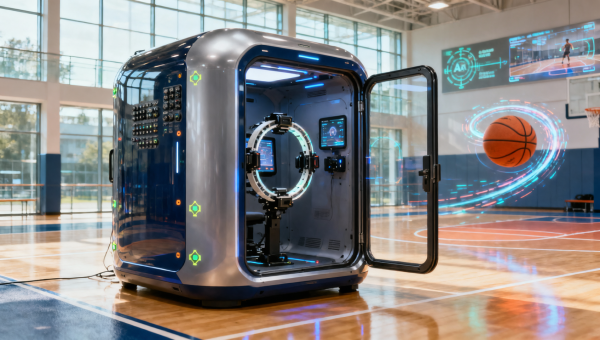
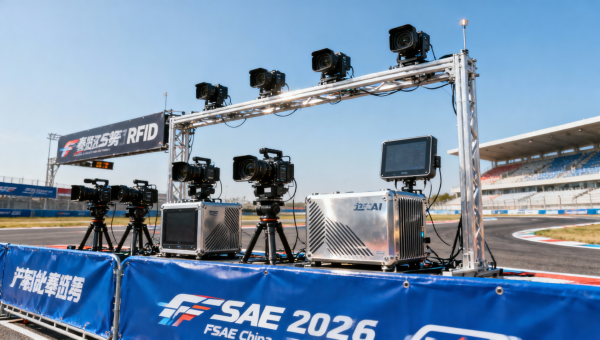
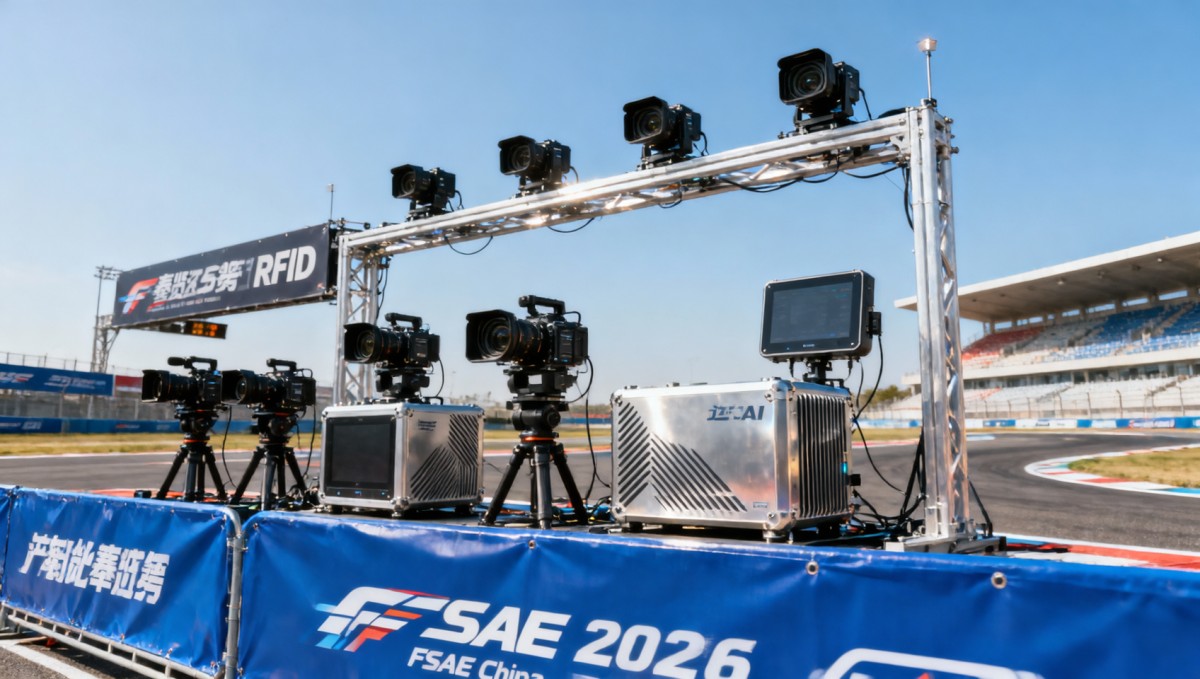
On April 17, 2026, the Formula SAE (FSAE) China competition took place in Fengxian Bay, Shanghai, featuring 29 university racing teams — all using a domestically developed intelligent timing system integrating RFID positioning and AI-powered video adjudication. The system received formal international recognition on the same date, achieving compliance with ITU-T G.9972 (Real-Time Data Transmission Reliability for Sporting Events), making it the first education-level motorsport timing solution globally endorsed by the International Telecommunication Union. This development signals potential implications for precision timing equipment providers, academic technology integrators, and standards-aligned test & certification service providers.
Event Overview
On April 17, 2026, the FSAE China event was held in Fengxian Bay, Shanghai. A total of 29 university-affiliated racing teams participated. All teams deployed a single domestic intelligent timing system combining RFID-based vehicle tracking and AI-assisted video-based finish-line adjudication. As confirmed by official announcements, this system passed ITU-T G.9972 certification on April 17, 2026 — the only education-tier motorsport timing solution to date awarded ITU endorsement under that standard.
Industries Affected
Precision Timing Equipment Manufacturers
Manufacturers developing or supplying timing hardware for academic, amateur, or semi-professional motorsport events may face increased scrutiny regarding data reliability benchmarks. The ITU-T G.9972 certification introduces a formal, internationally recognized benchmark for real-time transmission integrity — previously uncommon in non-commercial or low-budget educational赛事 contexts. Impact manifests in product validation requirements, interoperability expectations with AI video modules, and documentation rigor for latency, packet loss tolerance, and timestamp traceability.
Academic Technology Integration Providers
Organizations supporting STEM programs with embedded systems, IoT infrastructure, or edge-AI deployment for engineering education may need to reassess technical specifications for timing-critical applications. The dual-mode (RFID + AI video) architecture reflects an emerging design pattern where redundancy and cross-modal verification are prioritized over single-sensor simplicity. This affects system architecture decisions, training curricula for student developers, and procurement criteria for lab-grade instrumentation.
Standards Compliance & Certification Service Providers
Third-party labs and consultants offering conformity assessment for ITU, ISO/IEC, or national metrology standards may observe growing demand for test protocols aligned with G.9972 — especially for non-industrial, low-latency data pipelines. While G.9972 was originally drafted for professional broadcast and elite sports timing, its adoption in an education setting suggests early-stage expansion into lower-cost, high-availability use cases. This could influence future test scope definitions and calibration methodology adaptations.
What Enterprises and Practitioners Should Monitor and Prepare For
Track official updates on ITU-T Study Group 15’s work program
The G.9972 standard is maintained under ITU-T Study Group 15 (SG15), which oversees transport, access, and home networks. Current more-than-annual revision cycles mean any future amendments — particularly those addressing scalability, power efficiency, or multi-vendor interoperability — will directly affect implementation feasibility for academic and regional events.
Monitor timing system deployments beyond FSAE
Observe whether other student competitions — such as Formula Student Europe, Shell Eco-marathon, or national robotics championships — begin referencing or requiring G.9972-compliant timing. Early adoption signals a possible shift from de facto vendor-specific benchmarks toward standardized, auditable performance metrics in educational engineering evaluation.
Distinguish between certification signal and operational readiness
ITU-T G.9972 confirms conformance to defined transmission reliability parameters under controlled test conditions; it does not assess field robustness across variable RF environments, weather, or crowd interference. Practitioners should avoid conflating certification with full operational validation — especially when scaling deployments to larger venues or mixed-spectrum settings.
Prepare for tighter integration requirements between hardware and AI software layers
As dual-mode timing becomes normative, procurement and maintenance workflows must accommodate joint validation of RFID readers, edge AI inference units, synchronization clocks, and video metadata tagging. Teams managing such systems should review firmware update policies, timestamp alignment protocols, and audit logging capabilities — not just individual component specs.
Editorial Observation / Industry Perspective
From an industry perspective, this event is best understood not as a market breakthrough, but as a standards-anchored inflection point. The ITU endorsement does not signify immediate commercial displacement of legacy timing vendors; rather, it establishes a verifiable baseline for reliability in resource-constrained environments. Analysis来看, the significance lies less in current adoption scale and more in the precedent it sets: formal international standards are now being applied — and validated — at the education tier. Observation来看, this reflects a broader trend where academic engineering platforms increasingly serve as proving grounds for scalable, certifiable digital infrastructure. It is more accurately interpreted as an early signal of standardization pressure migrating downward from elite sports into pedagogical tooling — one that may gradually reshape procurement logic, R&D priorities, and interoperability expectations across adjacent domains.
In summary, the ITU-T G.9972 certification of a domestic intelligent timing system at FSAE China 2026 represents a milestone in the formal recognition of reliability requirements for academic-level real-time data systems. Its industry relevance stems not from immediate market impact, but from its role as a reference case for how international standards can be adapted — and validated — in cost-sensitive, pedagogically driven contexts. Currently, it is more appropriately understood as a procedural and architectural benchmark than a competitive differentiator — one that invites careful monitoring, not urgent recalibration.
Source: Official announcement of FSAE China 2026 event logistics and timing system deployment; ITU-T G.9972 compliance statement issued April 17, 2026. Note: Ongoing observation is warranted regarding broader adoption of G.9972 in non-professional motorsport or academic engineering contexts.
Search News
Hot Articles
Popular Tags
Need ExpertConsultation?
Connect with our specialized leisureengineering team for procurementstrategies.
Recommended News
 Apr 20, 20262026 Shanghai Smart Campus Expo: VR EdTech Gains ITU & ISO/IEC Dual CertificationVR EdTech gains ITU & ISO/IEC dual certification at 2026 Shanghai Smart Campus Expo—key for global edtech exporters, procurement agencies & VR integrators.● Institutional Buyer
 Apr 17, 20262026 Shanghai Smart Campus Expo: VR Teaching Devices Gain ITU & ISO/IEC Dual CertificationVR teaching devices with ITU & ISO/IEC dual certification headline the 2026 Shanghai Smart Campus Expo—unlock global edtech tenders now.● Institutional Buyer
 Apr 16, 20262026 Shanghai Smart Campus Expo Highlights VR EdTech ExportVR EdTech Export takes center stage at 2026 Shanghai Smart Campus Expo — discover VR learning rides, AR sand tables & global procurement opportunities.● Institutional Buyer
 Apr 13, 20262026 China International Education Tour: AI and Green Training Equipment in SpotlightExplore AI education platforms & green training equipment at 2026 China International Education Tour. 242 global exhibitors showcase ISO-certified VR tools & low-carbon solutions for international buyers.● Institutional Buyer
 Apr 11, 20262026 China Intl Education Expo: AI & Green Tech in SpotlightExplore AI & green tech trends at 2026 China Intl Education Expo: 242 global institutions showcase smart classrooms & sustainable training solutions. Discover export opportunities for EdTech and eco-friendly equipment.● Institutional Buyer
 Apr 11, 2026China-Russia Vocational Education Week Launches with Bilingual Textbook ReleaseThe China-Russia Vocational Education Week 2026 launched with bilingual textbook releases, boosting cross-border collaboration in electromechanics, healthcare & digital commerce. Explore new SCO education standards & partnership opportunities.● Institutional Buyer
 Apr 11, 2026China's Smart Education Platform Upgrade Spurs Global AI Teaching Tool DemandChina's AI-powered education platform upgrade boosts global demand for smart teaching tools, featuring multilingual assistants and API integration. Discover how this impacts EdTech exporters and vocational training providers.● Institutional Buyer
 Apr 09, 2026Chengdu Implements Spring Break for Schools, Boosting Study Tour and Camp Equipment ExportsChengdu's new spring break policy boosts study tour & camp equipment exports, creating a $200M opportunity for manufacturers. Learn how to capitalize on this demand surge now.● Institutional Buyer
 Apr 09, 2026China-Russia Vocational Education Week Launches with Bilingual Textbook ReleaseChina-Russia Vocational Education Week launches bilingual textbooks for智能制造 and新能源汽车 sectors, creating export opportunities for vocational training providers. Discover how this impacts edtech and curriculum localization markets.● Institutional Buyer
 Apr 09, 2026Vocational Health Education Collaboration Expands Global Reach with New StandardsVocational health education reaches new global standards with China's 2026 initiative, featuring Luban Workshop standards and cross-border cloud platforms. Explore opportunities for healthcare training, edtech, and equipment exports in emerging markets.● Institutional Buyer
 Apr 09, 2026China's Education Ministry Launches Sunshine Enrollment Campaign, Impacting International School ProgramsChina's Sunshine Enrollment Campaign tightens regulations on international school programs, impacting A-Level/IB/AP providers with new localization requirements. Learn how this affects curriculum partnerships and compliance strategies.● Institutional Buyer
 Apr 09, 2026China's Smart Education Platform Upgrade Sparks Global Demand for AI ToolsChina's AI education platform upgrade drives global demand for smart teaching tools, creating export opportunities in Southeast Asia and beyond. Discover how edtech exporters can capitalize on this trend.● Institutional Buyer
 Apr 21, 2026FSAE China 2026: Domestic Timing System Gains ITU CertificationFSAE China 2026: Domestic timing system wins ITU certification — first education-level motorsport solution compliant with ITU-T G.9972. Discover implications for timing tech, AI integration & standards adoption.● Institutional Buyer
 Apr 21, 20262026 Shanghai Smart Campus Expo: VR EdTech Gains ITU & ISO/IEC 23053 Dual CertificationVR EdTech gains ITU & ISO/IEC 23053 dual certification at 2026 Shanghai Smart Campus Expo—key for exporters, integrators & procurement pros.● Institutional Buyer
 Apr 19, 20262026 Shanghai Smart Campus Expo: VR EdTech Gains ITU & ISO/IEC Dual CertificationVR EdTech hits a milestone: 2026 Shanghai Smart Campus Expo unveils ITU & ISO/IEC dual-certified haptic teaching devices—game-changing for global edtech exporters, OEMs, and procurement agencies.● Institutional Buyer
 Apr 18, 20262026 Shanghai Smart Campus Expo: VR Teaching Devices Gain ITU & ISO/IEC Dual CertificationVR teaching devices gain ITU & ISO/IEC dual certification at 2026 Shanghai Smart Campus Expo — a must-have for edtech exporters targeting Saudi, Mexico & Poland.● Institutional Buyer
 Apr 17, 2026Smart campus tech integrations that break when you add new educational suppliesDiscover why commercial furniture, sensory playgrounds & educational supplies break smart campus tech—and how to ensure playground safety, interoperability & future-proof amusement equipment.● Institutional Buyer
 Apr 15, 2026Smart campus tech integrations that break when firmware updates dropDiscover firmware-resilient commercial furniture, sensory playgrounds, amusement equipment & hotel tables—engineered to stay safe, synced, and operational post-update.● Institutional Buyer
 Apr 15, 2026Educational supplies that teachers quietly replace after one semesterDiscover high-wear educational supplies, sensory playgrounds, playground climbers & commercial furniture—strategically replaced by teachers. Optimize procurement with GCT’s wear analytics and compliance insights.● Institutional Buyer
 Apr 12, 2026Educational supplies built for actual classroom chaos — not idealized lesson plansEducational supplies, office supplies & commercial furniture engineered for real classrooms—soundproofing materials, custom fabrication, luxury furniture & supply chain solutions.● Institutional Buyer
 Apr 07, 2026China's National Smart Education Platform Upgraded, Boosting AI EdTech ExportsChina's upgraded National Smart Education Platform boosts AI EdTech exports with new AI-driven features and international accessibility, creating opportunities for EdTech providers and localization services worldwide.● Institutional Buyer
 Apr 07, 2026China's 2026 School Admissions Policy Impacts International Education ProvidersChina's 2026 school admissions policy reshapes international education landscape, impacting IB, AP & A-Level providers with new compliance requirements. Learn how global education stakeholders can adapt.● Institutional Buyer
 Apr 04, 2026Smart Campus Tech Procurement Is Pulling From Office Supplies Manufacturers — Here’s WhyOffice supplies manufacturer? Smart campuses now choose trusted office supplies suppliers, OEM manufacturers & B2B exporters for integrated infrastructure—discover why.● Institutional Buyer
 Mar 31, 2026Nature Spotlights Tianli Education's AGI Path: AI+Education Export Model Gains Global Academic RecognitionNature highlights Tianli Education's AI+Education model, recognized globally for transforming teaching with AGI. Discover how this scalable, data-driven approach is reshaping EdTech and smart campuses worldwide.● Institutional Buyer