Vietnam Mandates Child Finger-Trap Sensors for Indoor Play Equipment
Vietnam’s Ministry of Industry and Trade (MOIT) issued Circular 12/2026/TT-BCT on April 16, 2026, requiring all imported commercial indoor playground equipment—including carousels, interactive projection walls, and soft-climbing structures—to integrate child finger-trap sensors compliant with TCVN 9507:2023. Effective July 1, 2026, non-compliant units will be denied entry. This regulation directly impacts manufacturers, importers, and distributors serving Vietnam’s growing indoor play and early childhood facility markets.
Event Overview
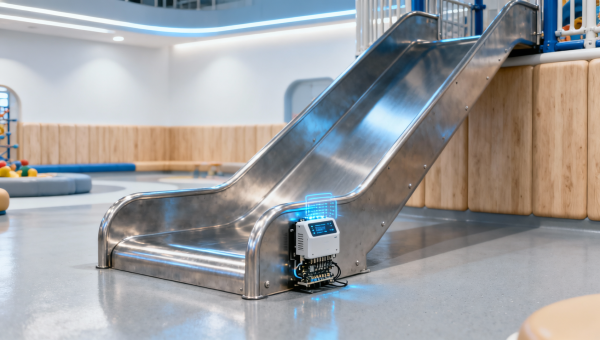
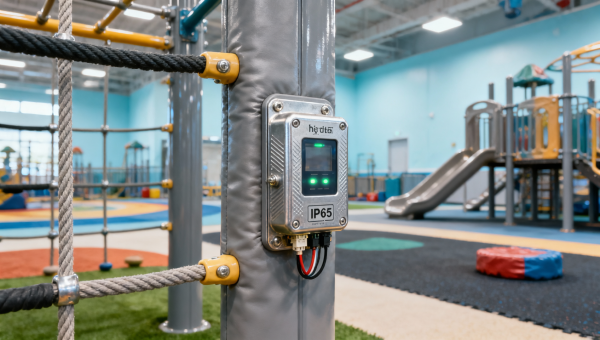
On April 16, 2026, Vietnam’s Ministry of Industry and Trade (MOIT) published Circular 12/2026/TT-BCT. The circular mandates that all commercially imported indoor playground equipment—specifically naming carousels, interactive projection walls, and soft-packaged climbing frames—must be equipped with built-in child finger-trap sensors meeting the national standard TCVN 9507:2023. Additionally, Vietnamese-language installation and maintenance manuals must accompany each shipment. Enforcement begins July 1, 2026; shipments lacking compliance will be rejected at Vietnamese ports of entry.
Industries Affected
Direct Importers and Exporters
Importers supplying indoor play equipment to Vietnam face immediate customs clearance risk. Non-compliance triggers automatic rejection—not just delays or fines—making pre-shipment verification essential. Impact centers on documentation (sensor certification, manual translation) and physical integration (sensor placement, wiring, firmware compatibility).
Equipment Manufacturers (OEM/ODM)
Manufacturers producing for Vietnam-bound supply chains must now redesign or retrofit sensor integration into product architecture. This affects bill-of-materials (BOM), assembly line workflows, and quality control protocols. Units previously certified for other ASEAN or EU markets may not meet TCVN 9507:2023’s specific mechanical response thresholds or failure-mode requirements.
Distributors and System Integrators
Distributors bundling equipment with software, lighting, or audio systems must verify sensor interoperability—especially where interactive elements involve moving parts or proximity-based triggers. Integration testing with Vietnamese-language UIs and service interfaces becomes a new pre-deployment requirement.
Aftermarket Service Providers
Providers offering installation, calibration, or maintenance in Vietnam must now handle sensor-specific diagnostics and replacement. Availability of certified spare sensors—and technician training on TCVN 9507:2023 test procedures—will affect service SLAs and warranty fulfillment.
What Relevant Businesses Should Monitor and Do Now
Confirm sensor certification scope against TCVN 9507:2023
TCVN 9507:2023 specifies performance criteria including activation force (≤15 N), response time (≤100 ms), and reset reliability. Suppliers should obtain third-party test reports explicitly referencing this standard—not generic “child safety” or IEC 60335-1 summaries.
Validate Vietnamese-language manual content with MOIT-approved terminology
MOIT requires manuals to use standardized technical vocabulary defined in Decision 284/QĐ-BKHCN (2022). Machine-translated or marketing-oriented documents risk rejection. Verification should include bilingual technical review—not just linguistic accuracy.
Assess lead-time impact on current orders scheduled for Q2–Q3 2026
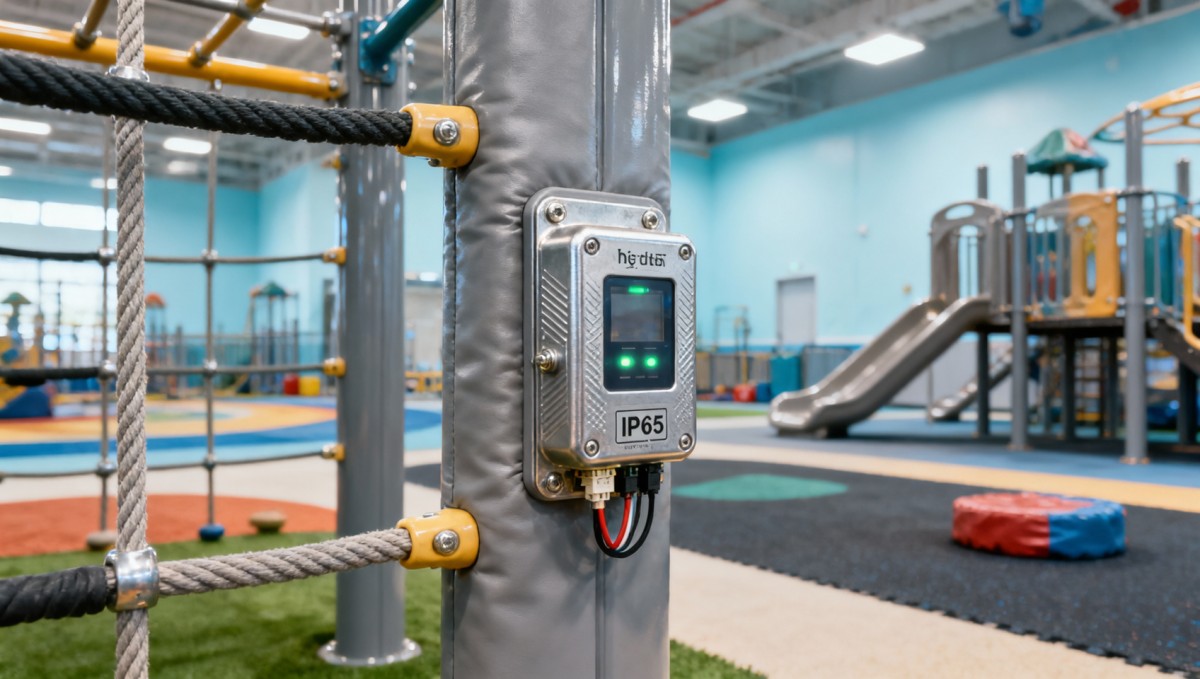
Integrating certified sensors may require PCB rework, firmware updates, or mechanical housing modifications. Lead times for certified components (e.g., capacitive edge sensors with IP65 rating) are currently extended per industry sources; procurement planning should begin immediately for shipments targeting July 2026 onward.
Monitor MOIT’s upcoming guidance on transitional arrangements
Circular 12/2026/TT-BCT does not specify grace periods for existing inventory or pending contracts. Analysis来看, MOIT may issue clarifications in May–June 2026 on whether consignments with pre-July bills of lading qualify for exemption. Importers should track official MOIT bulletins and avoid assuming grandfathering applies.
Editorial Perspective / Industry Observation
This regulation is better understood as an enforcement signal—not merely a technical update. From industry角度看, it reflects Vietnam’s broader shift toward aligning domestic safety enforcement with ASEAN Harmonized Standards (AHS), particularly for children’s environments in commercial settings. It is not yet indicative of a region-wide mandate, but rather a targeted step signaling increased scrutiny on mechanical safety in unstaffed or semi-supervised play zones. Current more appropriate interpretation is that Vietnam is prioritizing verifiable, hardware-based safeguards over procedural or staffing-based risk mitigation—suggesting future alignment with EU EN 1176 or ASTM F1487 may follow. Continuous monitoring is warranted, especially as MOIT prepares its first round of port inspections post-July 2026.
In summary, Circular 12/2026/TT-BCT marks a concrete regulatory inflection point for indoor play equipment exporters targeting Vietnam. Its significance lies less in novelty—similar sensor requirements exist in EU and South Korea—and more in Vietnam’s formalized, enforceable implementation timeline. For stakeholders, the priority is not speculation about future rules, but verified readiness for July 1, 2026: sensor certification, manual localization, and supply chain validation are now operational prerequisites—not optional enhancements.
Source: Ministry of Industry and Trade of Vietnam (MOIT), Circular 12/2026/TT-BCT, issued April 16, 2026. Further clarification on transitional provisions remains pending and will be tracked in subsequent updates.
Search News
Hot Articles
Popular Tags
Need ExpertConsultation?
Connect with our specialized leisureengineering team for procurementstrategies.
Recommended News
 Apr 20, 2026NES Launches Sports Community Curator ProgramSports Community Curator program launched by NES — join global fitness studios, uni clubs & outdoor groups to co-create, test gear & grow with Chinese sports brands.● Theme Park Strategist
 Apr 17, 2026CPSC AI Safety Alert: 200ms Delay in Child Playground AI Systems = HazardCPSC AI Safety Alert: 200ms delay in child playground AI systems = hazard. Learn how latency compliance impacts Target/Walmart listings, testing, and supply chain.● Theme Park Strategist
 Apr 17, 20262026 Shanghai Sailing Open Adopts Domestic SeaChronos Pro Timing SystemSeaChronos Pro timing system debuts at 2026 Shanghai Sailing Open — ITU-certified, millisecond-accurate, wind- and tide-integrated. A game-changer for marine sports tech.● Theme Park Strategist
 Apr 16, 2026FDA Proposes New Labeling Rules for Sports Nutrition Supplements with Chinese LabelsFDA's new labeling rules for sports nutrition supplements with Chinese labels take effect April 2026—learn compliance must-dos for U.S. importers, manufacturers & brands.● Theme Park Strategist
 Apr 15, 2026Saudi SASO Updates Amusement Ride Standards: VR Devices Now Require Mandatory EMC TestingSaudi SASO's new 2026 standard mandates EMC testing for VR amusement rides, impacting exporters. Learn key compliance strategies for Saudi market access.● Theme Park Strategist
 Apr 14, 2026Japan Mandates Multilingual E-Manuals for Fitness Equipment from April 2026Japan mandates multilingual e-manuals for fitness equipment from April 2026. Learn how this impacts manufacturers & importers with JIS T 0601-1 compliance requirements. Stay ahead of the regulation!● Theme Park Strategist
 Apr 13, 2026WTT Taiyuan Adopts Chinese AI Table Tennis Analysis System with ITTF Export CertificationWTT Taiyuan adopts Chinese AI table tennis analysis system with ITTF export certification, enabling real-time ball speed & spin tracking. A game-changer for sports tech in emerging markets like Southeast Asia & Middle East.● Theme Park Strategist
 Apr 13, 2026First Female Snooker Player Achieves Multiple Century Breaks as Chinese Table Gains WPBSA CertificationChinese snooker player Bai Yulu makes history with multiple century breaks using WPBSA-certified 'Tournament Pro X7' table, marking a milestone for Chinese manufacturing in professional snooker equipment. Discover how this impacts global markets.● Theme Park Strategist
 Apr 13, 2026RCEP Zero Tariff on China's TPU Sports Protective Gear Boosts ASEAN TradeRCEP's zero-tariff policy on China's TPU sports protective gear boosts ASEAN trade, giving Chinese exporters cost advantages over Korean rivals. Learn how manufacturers and distributors can capitalize on this opportunity.● Theme Park Strategist
 Apr 10, 2026Japan's JIS T 9001:2026 Sports Flooring Anti-Slip Standard Mandatory from April 2026Japan's JIS T 9001:2026 standard mandates anti-slip sports flooring (SCOF ≥ 0.6) from April 2026. Chinese exporters must adapt to meet new requirements. Learn key compliance strategies.● Theme Park Strategist
 Apr 10, 2026Bai Yulu Makes History at Snooker World Championship, Sparks Surge in Women's Sports Equipment DemandBai Yulu makes history at Snooker World Championship with two century breaks, sparking 185% surge in women's sports equipment demand. Discover how manufacturers, e-commerce & supply chains can capitalize on this trend.● Theme Park Strategist
 Apr 10, 20262026 Badminton Asia Championships Quarterfinals Schedule Announced, Shi Yuqi to Compete; Southeast Asia Racket Orders Face 6-8 Week Delays2026 Badminton Asia Championships quarterfinals schedule revealed with Shi Yuqi competing, while Southeast Asia faces 6-8 week racket delays. Learn how supply chain issues impact manufacturers and get strategies to navigate equipment shortages.● Theme Park Strategist
 Apr 10, 2026WTT Taiyuan Challenge Sparks Smart Equipment Demand: Japan Buyers Scrutinize AI Training TechDiscover how the WTT Taiyuan Challenge boosts demand for AI training tech as Japanese buyers evaluate smart sports equipment. Learn key opportunities for manufacturers with JIS-certified solutions.● Theme Park Strategist
 Apr 10, 2026Chinese Snooker Players' Success Spurs Global Demand for Cue AccessoriesChinese snooker players' success drives 210% global demand surge for cue accessories. Explore how manufacturers & exporters can capitalize on this trend with UK, German & Australian markets leading inquiries.● Theme Park Strategist
 Apr 10, 2026EU Updates EN 16830:2026 Eyewear Safety Standard, Impacting China's Sports Goggle ExportsEU's updated EN 16830:2026 eyewear safety standard impacts China's sports goggle exports with stricter CE certification requirements. Learn how manufacturers and exporters can adapt to new impact resistance, UV400+, and blue light blocking standards before the September 2026 deadline.● Theme Park Strategist
 Apr 21, 2026Vietnam Mandates Child Finger-Trap Sensors for Indoor Play EquipmentVietnam mandates child finger-trap sensors for indoor play equipment—comply with TCVN 9507:2023 by July 1, 2026 to clear customs & protect kids.● Theme Park Strategist
 Apr 19, 2026CPSC AI Delay Alert: >200ms = Substantial Hazard for Kids' Indoor Play EquipmentCPSC AI Delay Alert: >200ms latency = Substantial Hazard for kids' indoor play equipment. Learn compliance steps, testing mandates & urgent actions for OEMs and importers.● Theme Park Strategist
 Apr 18, 2026PopFeather AI Standard Launched at SMT Forum in ChengduPopFeather AI standard launched at SMT Forum in Chengdu — a breakthrough for AI-powered badminton training interoperability. Discover how this new interface protocol reshapes sports tech integration for manufacturers, AI platforms & global partners.● Theme Park Strategist
 Apr 18, 2026CPSC AI Safety Alert: >200ms Delay = Substantial HazardCPSC AI Safety Alert: >200ms latency = Substantial Hazard for indoor play equipment. Critical for exporters, ODMs & AI module suppliers targeting US markets.● Theme Park Strategist
 Apr 19, 2026Indoor playground themes that age badly after one seasonTrampoline park and indoor playground themes can age fast. Learn which concepts lose value after one season, how musical instruments, percussion instruments, wind instruments, string instruments, outdoor playground ideas, and playground swings inspire longer-lasting, click-worthy design decisions.● Theme Park Strategist
 Apr 19, 2026Trampoline park capacity planning is often wrong for weekendsTrampoline park weekend capacity planning often fails when indoor playground benchmarks are used. Learn how smarter forecasting boosts safety, flow, and revenue across mixed attractions.● Theme Park Strategist
 Apr 19, 2026Indoor playground equipment that wears out faster than expectedTrampoline park and indoor playground equipment wearing out too fast? Learn what commercial buyers should check across outdoor playground, playground swings, and system durability before sourcing.● Theme Park Strategist
 Apr 19, 2026What makes an indoor playground easier to maintain daily?Indoor playground and trampoline park buyers: discover low-maintenance design tips, from modular layouts to durable surfaces, and compare with outdoor playgrounds, playground swings, and musical instruments.● Theme Park Strategist
 Apr 19, 2026Trampoline park layout mistakes that reduce repeat visitsTrampoline park layout mistakes can hurt repeat visits. Learn how indoor playground, outdoor playground, and playground swings planning improves flow, safety, and family appeal.● Theme Park Strategist