Trampoline park layout mistakes that reduce repeat visits
A poorly planned trampoline park layout can quietly erode guest satisfaction, weaken safety perception, and reduce repeat visits. For buyers, operators, and distributors comparing indoor playground and outdoor playground concepts, even details like traffic flow, zoning, spectator areas, and links to family-oriented features such as playground swings matter. Understanding these layout mistakes helps commercial decision-makers source smarter, design better, and build venues that outperform adjacent leisure categories, from trampoline park attractions to themed spaces inspired by musical instruments.
In commercial leisure projects, layout is not just a design task. It affects capacity, safety supervision, queue time, secondary spending, maintenance access, and the overall guest journey from arrival to exit. For procurement teams and business evaluators, poor spatial planning can turn a promising concept into an underperforming asset within the first 6–12 months of operation.
This guide examines the most common trampoline park layout mistakes that reduce repeat visits, explains why they matter in B2B decision-making, and outlines practical design and sourcing checkpoints for indoor entertainment operators, distributors, and commercial project developers.
Traffic Flow Errors That Create Friction From the First Visit
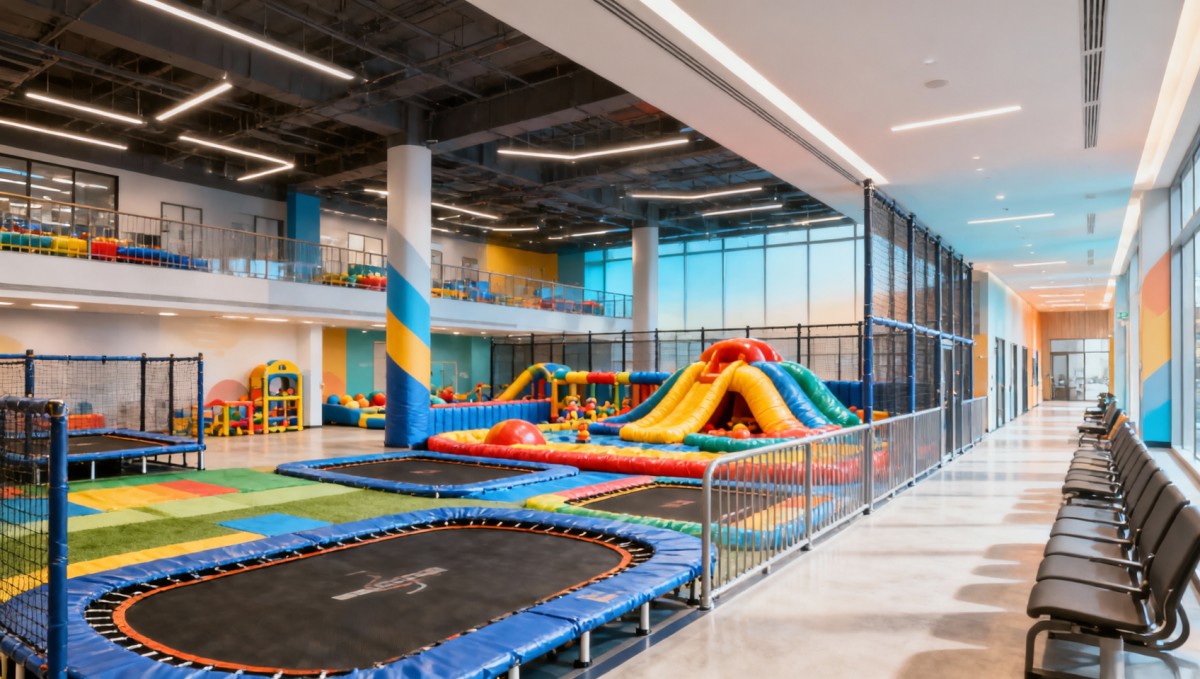
One of the most damaging trampoline park layout mistakes is poor circulation planning. Guests do not evaluate a venue only by the trampolines themselves. They judge the full experience: how quickly they enter, where they queue, whether shoes and belongings are stored efficiently, and how easily parents can follow children through different zones. A confusing path increases frustration before play even starts.
In many facilities, the check-in desk, waiver station, sock purchase point, and locker area are compressed into a single bottleneck. During peak windows such as weekends or school holidays, a park handling 150–300 visitors per hour can see queues extend 10–20 minutes if these functions are not split into stages. For family groups, that delay weakens the first impression and lowers the chance of immediate rebooking.
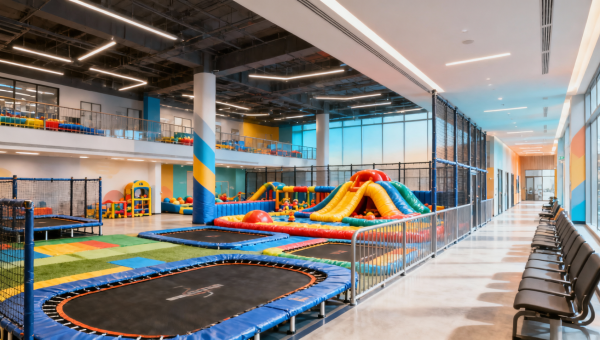
Flow issues also appear inside the attraction floor. When high-energy zones, toddler areas, and birthday party traffic intersect, collisions increase and staff supervision becomes less effective. Even if incident rates remain low, visible chaos affects safety perception. In leisure venues, perceived safety is almost as important as actual compliance when it comes to return visits.
Commercial buyers should assess movement patterns in 3 stages: arrival, active play, and exit. Each stage should have separate decision points, signage, and staffing visibility. A well-zoned route usually reduces cross-traffic by 20%–30% compared with open, unstructured floor plans, especially in medium-sized parks between 1,200 and 3,000 square meters.
Common circulation design mistakes
- Entry and exit share the same narrow path, creating congestion during session changeovers every 60–90 minutes.
- Lockers are placed deep inside the venue instead of near check-in, forcing guests to backtrack.
- Birthday rooms open directly into the main jumping court, causing repeated disruption.
- Café queues overlap with spectator seating, reducing comfort for non-participating visitors.
Recommended flow planning checkpoints
Before sourcing equipment, operators should map at least 4 core paths: general admission, birthday groups, toddlers with guardians, and staff/service routes. These paths should be tested against expected peak occupancy and session turnover timing. Procurement teams reviewing supplier proposals should ask for circulation diagrams, not only equipment renderings.
The table below shows how specific flow mistakes translate into commercial risk and repeat-visit loss.
The practical takeaway is simple: smooth circulation supports both safety and commercial performance. Buyers comparing trampoline park suppliers should prioritize layout capability, visitor routing logic, and operational simulation just as much as trampoline specifications.
Weak Zoning Decisions That Mix Incompatible User Groups
Another major reason trampoline park layouts reduce repeat visits is weak activity zoning. Not every guest uses a park in the same way. A 4-year-old in a foam-based soft jump area, a teenager using performance trampolines, and a corporate team booking a group event have different speed, risk tolerance, supervision needs, and expectations. If those groups are forced into adjacent or overlapping spaces, experience quality drops quickly.
In practical terms, poor zoning increases conflict. Younger children feel overwhelmed, older users feel restricted, and parents feel uncertain about where each child should be. A common mistake is overcommitting floor area to one headline attraction while underallocating space for transition, warm-up, or low-intensity family play. In parks below 2,000 square meters, every 50–80 square meters of misallocated space has visible effects on comfort and queue pressure.
This issue matters to procurement teams because zoning influences equipment mix. A venue may source premium trampoline beds, airbags, climbing features, or ninja-course elements, but if the adjacency logic is wrong, the equipment will not deliver the intended return. The best sourcing decisions align product selection with age segmentation, supervision demands, and session design.
Well-planned zoning usually includes at least 5 functional areas: reception and preparation, free jumping, challenge attractions, junior or toddler play, and spectator or food-and-beverage space. Larger parks may add party rooms, redemption zones, or crossover family areas linked to indoor playground features such as playground swings, soft obstacles, and low-impact climbers.
How to separate zones without harming energy and visibility
Good separation does not mean building hard barriers everywhere. In many modern amusement and leisure parks, the goal is controlled openness. Operators can use height changes, netted dividers, color-coded flooring, acoustic treatment, and directional signage to create distinct activity identities while preserving an exciting overall atmosphere.
Buyers should also confirm whether suppliers can support mixed-format planning. A commercial project may combine trampoline courts with soft play, climbing walls, rope elements, or themed installations. In family entertainment centers, these hybrid layouts often outperform single-format parks because they widen age appeal and increase the probability of group return visits within 30–60 days.
Typical zoning priorities by guest segment
The table below can be used during concept review to match zones with user needs and revenue logic.
The key conclusion is that zoning is not decorative. It shapes user comfort, risk management, and revenue mix. A park that serves multiple age groups without conflict is far more likely to generate repeat family traffic and distributor confidence.
Spectator Areas That Fail to Support Family Dwell Time and Secondary Spending
Many trampoline park layouts are designed almost entirely around active users, yet in family entertainment, non-jumping visitors influence spending and return intent. Parents, grandparents, group organizers, and caregivers often decide whether the venue feels worth revisiting. If spectator areas are cramped, noisy, poorly positioned, or visually disconnected from the play floor, the park loses one of its most important loyalty drivers.
A typical mistake is placing seating along the perimeter without adequate sightlines. Guests may have chairs, but if columns, attraction walls, or promotional displays block views, they still need to stand and move constantly. In venues with average dwell times of 90–150 minutes, discomfort in the seating zone can shorten visits and reduce café purchases, party upgrades, or sibling add-on activities.
Another issue is underestimating acoustic and service design. Spectator zones placed next to dodgeball courts, launch lanes, or speaker stacks create fatigue. Commercial buyers planning new builds or refurbishments should check whether the layout includes at least 1 quiet observation area, 1 social seating cluster, and clean service access for food, cleaning, and staff movement.
The strongest venues treat spectator space as a commercial asset, not leftover area. Comfortable seating, direct views, charging points, stroller parking, and a visible café can increase stay duration and support repeat visits from mixed-age family groups. This is especially important when trampoline parks compete with broader indoor playground and themed leisure formats.
Features that improve spectator satisfaction
- Seat placement with direct views to at least 2–3 major attraction zones.
- Walking aisles of roughly 1.2–1.8 meters so strollers and staff can pass without conflict.
- Visible distance to toilets, café counters, and party rooms within a short walking range.
- Separated sound intensity where waiting adults can stay for 45–90 minutes without fatigue.
Why this matters in procurement
When reviewing supplier proposals, ask whether the design package includes furniture planning, family waiting behavior analysis, and line-of-sight studies. A low-cost equipment-heavy concept may seem efficient on paper, but if it sacrifices observation comfort, customer retention will often suffer. Repeat visits depend on the whole family saying yes, not only the active participant.
Distributors and agents can also use spectator-zone quality as a selling point when positioning premium commercial playground concepts. In many markets, the difference between a venue that feels functional and one that feels family-friendly is what protects pricing and supports referrals.
Ignoring Safety Visibility and Maintenance Access in the Layout Stage
A layout can meet basic attraction goals and still fail commercially if it hides supervision points or complicates maintenance. Guests quickly notice when staff cannot see key zones, when response time feels slow, or when worn components remain visible for too long. These issues directly influence trust and, over time, repeat attendance.
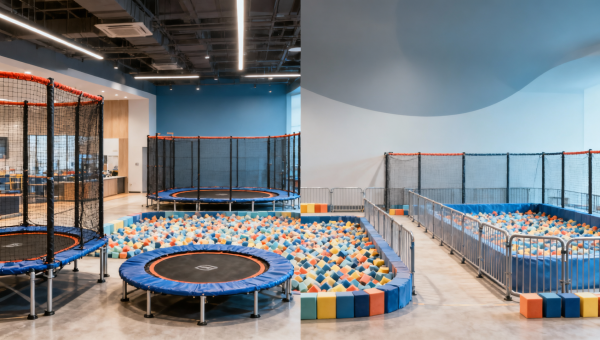
From an operational perspective, every high-use trampoline park should be planned around clear sightlines, rapid intervention paths, and service access to pads, frames, nets, foam pits, airbags, and mechanical components. If technicians need to close a large area just to inspect one element, downtime increases. In busy venues, even a 2–4 hour closure during peak periods can affect revenue and customer sentiment.
Maintenance-friendly design is especially important for B2B buyers sourcing across borders. Spare parts lead times may range from 7 days to 6 weeks depending on the component and shipping route. Layouts should therefore allow modular replacement and localized repairs without shutting down the full park. Procurement teams should ask suppliers whether wear parts are standardized, how often key components are inspected, and which zones require daily versus weekly checks.
Visibility and maintenance are also linked to staffing costs. If one supervisor can safely monitor only a small fraction of the floor due to blind spots, labor needs rise. Over a 12-month operating cycle, that layout inefficiency can become more expensive than the original equipment package savings.
Practical layout checks before purchase approval
- Verify that supervisors can view entries, landings, and queue areas without obstruction.
- Confirm that at least 2 service routes exist for high-maintenance attractions.
- Review inspection frequency by zone, such as daily visual checks and weekly fastening reviews.
- Check that consumable or wear-prone components can be replaced without major floor shutdown.
The table below helps commercial buyers compare layout decisions through an operations lens rather than only a sales lens.
A trampoline park that looks impressive at launch but is difficult to supervise and maintain will often struggle to preserve guest trust. For distributors and commercial buyers, serviceability should be treated as a core layout criterion, not an afterthought.
Overlooking Multi-Attraction Integration and Revisit Triggers
Repeat visits rarely come from one attraction alone. They come from variety, progression, and reasons to come back with different age groups or social groups. A common trampoline park layout mistake is treating the venue as a single-use jump hall rather than a layered family entertainment environment. This narrows audience appeal and shortens the venue’s lifecycle advantage.
For example, a layout that leaves no room for future add-ons such as interactive walls, soft play elements, low-height adventure zones, or themed party spaces limits revenue expansion. In contrast, parks that reserve 10%–15% of floor planning flexibility can introduce seasonal or age-specific features without major reconstruction. This matters when competing against broader leisure destinations that combine sports play with themed storytelling, digital interaction, or adjacent family activities.
Themed integration can also increase memorability. Some commercial venues borrow cues from music, adventure, or urban challenge design to create recognizable micro-zones. Even subtle inspiration from categories such as musical instruments, rhythm walls, or sound-reactive play can help a trampoline park feel more differentiated without leaving its sports and entertainment core.
From a sourcing perspective, the right question is not only “What should the park open with?” but also “What can the park add in 12, 24, and 36 months?” Layouts that support phased upgrades are more resilient for owners, distributors, and financing stakeholders.
What commercial buyers should plan for early
- Reserve utility and floor planning capacity for future attractions or re-theming.
- Design party and event rooms so they can serve school, corporate, and family bookings.
- Create at least 2 revisit triggers, such as age-specific zones or rotating challenge features.
- Keep circulation adaptable so new elements do not break existing supervision logic.
FAQ for buyers and project evaluators
How much space should be reserved for non-trampoline functions?
In many commercial formats, 20%–35% of the total venue footprint is allocated to support functions and complementary zones, including reception, seating, parties, food service, toddler space, storage, and circulation. The right ratio depends on target age mix and expected session turnover.
What is a common refurbishment cycle for a trampoline park layout?
Minor aesthetic updates may happen every 2–3 years, while more meaningful attraction reconfiguration often appears within 4–6 years. Planning for modular upgrades from day one reduces later disruption and cost.
Which procurement documents matter most during layout review?
Buyers should request zoning plans, visitor flow diagrams, supervision maps, maintenance access notes, parts replacement logic, and indicative delivery schedules. These documents are often more useful than a visually polished concept rendering alone.
Trampoline park layout mistakes do not always appear dramatic at launch, but they often surface later as shorter dwell time, lower family comfort, operational strain, and weaker revisit rates. Traffic bottlenecks, poor zoning, weak spectator planning, limited safety visibility, and no upgrade path are among the most common reasons promising venues underperform.
For information researchers, procurement managers, business evaluators, and channel partners, the strongest commercial projects are the ones that balance attraction appeal with circulation logic, serviceability, family comfort, and long-term flexibility. A smarter layout supports safer operations, better guest memory, and more sustainable revenue across changing leisure trends.
If you are comparing trampoline park concepts, indoor playground integrations, or broader amusement and leisure sourcing options, now is the time to review your layout assumptions before equipment selection is finalized. Contact GCT to discuss tailored commercial sourcing insights, evaluate supplier capabilities, and explore practical solutions built for repeat visits and long-term venue performance.
Search News
Hot Articles
Popular Tags
Need ExpertConsultation?
Connect with our specialized leisureengineering team for procurementstrategies.
Recommended News
 Apr 17, 2026CPSC AI Safety Alert: 200ms Delay in Child Playground AI Systems = HazardCPSC AI Safety Alert: 200ms delay in child playground AI systems = hazard. Learn how latency compliance impacts Target/Walmart listings, testing, and supply chain.● Theme Park Strategist
 Apr 17, 20262026 Shanghai Sailing Open Adopts Domestic SeaChronos Pro Timing SystemSeaChronos Pro timing system debuts at 2026 Shanghai Sailing Open — ITU-certified, millisecond-accurate, wind- and tide-integrated. A game-changer for marine sports tech.● Theme Park Strategist
 Apr 16, 2026FDA Proposes New Labeling Rules for Sports Nutrition Supplements with Chinese LabelsFDA's new labeling rules for sports nutrition supplements with Chinese labels take effect April 2026—learn compliance must-dos for U.S. importers, manufacturers & brands.● Theme Park Strategist
 Apr 15, 2026Saudi SASO Updates Amusement Ride Standards: VR Devices Now Require Mandatory EMC TestingSaudi SASO's new 2026 standard mandates EMC testing for VR amusement rides, impacting exporters. Learn key compliance strategies for Saudi market access.● Theme Park Strategist
 Apr 14, 2026Japan Mandates Multilingual E-Manuals for Fitness Equipment from April 2026Japan mandates multilingual e-manuals for fitness equipment from April 2026. Learn how this impacts manufacturers & importers with JIS T 0601-1 compliance requirements. Stay ahead of the regulation!● Theme Park Strategist
 Apr 13, 2026WTT Taiyuan Adopts Chinese AI Table Tennis Analysis System with ITTF Export CertificationWTT Taiyuan adopts Chinese AI table tennis analysis system with ITTF export certification, enabling real-time ball speed & spin tracking. A game-changer for sports tech in emerging markets like Southeast Asia & Middle East.● Theme Park Strategist
 Apr 13, 2026First Female Snooker Player Achieves Multiple Century Breaks as Chinese Table Gains WPBSA CertificationChinese snooker player Bai Yulu makes history with multiple century breaks using WPBSA-certified 'Tournament Pro X7' table, marking a milestone for Chinese manufacturing in professional snooker equipment. Discover how this impacts global markets.● Theme Park Strategist
 Apr 13, 2026RCEP Zero Tariff on China's TPU Sports Protective Gear Boosts ASEAN TradeRCEP's zero-tariff policy on China's TPU sports protective gear boosts ASEAN trade, giving Chinese exporters cost advantages over Korean rivals. Learn how manufacturers and distributors can capitalize on this opportunity.● Theme Park Strategist
 Apr 10, 2026Japan's JIS T 9001:2026 Sports Flooring Anti-Slip Standard Mandatory from April 2026Japan's JIS T 9001:2026 standard mandates anti-slip sports flooring (SCOF ≥ 0.6) from April 2026. Chinese exporters must adapt to meet new requirements. Learn key compliance strategies.● Theme Park Strategist
 Apr 10, 2026Bai Yulu Makes History at Snooker World Championship, Sparks Surge in Women's Sports Equipment DemandBai Yulu makes history at Snooker World Championship with two century breaks, sparking 185% surge in women's sports equipment demand. Discover how manufacturers, e-commerce & supply chains can capitalize on this trend.● Theme Park Strategist
 Apr 10, 20262026 Badminton Asia Championships Quarterfinals Schedule Announced, Shi Yuqi to Compete; Southeast Asia Racket Orders Face 6-8 Week Delays2026 Badminton Asia Championships quarterfinals schedule revealed with Shi Yuqi competing, while Southeast Asia faces 6-8 week racket delays. Learn how supply chain issues impact manufacturers and get strategies to navigate equipment shortages.● Theme Park Strategist
 Apr 10, 2026WTT Taiyuan Challenge Sparks Smart Equipment Demand: Japan Buyers Scrutinize AI Training TechDiscover how the WTT Taiyuan Challenge boosts demand for AI training tech as Japanese buyers evaluate smart sports equipment. Learn key opportunities for manufacturers with JIS-certified solutions.● Theme Park Strategist
 Apr 10, 2026Chinese Snooker Players' Success Spurs Global Demand for Cue AccessoriesChinese snooker players' success drives 210% global demand surge for cue accessories. Explore how manufacturers & exporters can capitalize on this trend with UK, German & Australian markets leading inquiries.● Theme Park Strategist
 Apr 10, 2026EU Updates EN 16830:2026 Eyewear Safety Standard, Impacting China's Sports Goggle ExportsEU's updated EN 16830:2026 eyewear safety standard impacts China's sports goggle exports with stricter CE certification requirements. Learn how manufacturers and exporters can adapt to new impact resistance, UV400+, and blue light blocking standards before the September 2026 deadline.● Theme Park Strategist
 Apr 18, 2026PopFeather AI Standard Launched at SMT Forum in ChengduPopFeather AI standard launched at SMT Forum in Chengdu — a breakthrough for AI-powered badminton training interoperability. Discover how this new interface protocol reshapes sports tech integration for manufacturers, AI platforms & global partners.● Theme Park Strategist
 Apr 18, 2026CPSC AI Safety Alert: >200ms Delay = Substantial HazardCPSC AI Safety Alert: >200ms latency = Substantial Hazard for indoor play equipment. Critical for exporters, ODMs & AI module suppliers targeting US markets.● Theme Park Strategist
 Apr 19, 2026Indoor playground equipment that wears out faster than expectedTrampoline park and indoor playground equipment wearing out too fast? Learn what commercial buyers should check across outdoor playground, playground swings, and system durability before sourcing.● Theme Park Strategist
 Apr 19, 2026What makes an indoor playground easier to maintain daily?Indoor playground and trampoline park buyers: discover low-maintenance design tips, from modular layouts to durable surfaces, and compare with outdoor playgrounds, playground swings, and musical instruments.● Theme Park Strategist
 Apr 19, 2026Trampoline park layout mistakes that reduce repeat visitsTrampoline park layout mistakes can hurt repeat visits. Learn how indoor playground, outdoor playground, and playground swings planning improves flow, safety, and family appeal.● Theme Park Strategist
 Apr 19, 2026Why trampoline park insurance costs vary more than expectedTrampoline park insurance costs vary with layout, staffing, claims, and mixed-use features like an indoor playground, outdoor playground, and playground swings—learn what drives premiums.● Theme Park Strategist
 Apr 18, 2026Inclusive playground handrails: Are height and grip diameter truly standardized across brands?Inclusive playground handrails: Discover if height & grip diameter truly meet ADA/EN standards—get verified OEM data, real-world benchmarks, and compliant sourcing for leisure parks, theme park rides & more.● Theme Park Strategist
 Apr 18, 2026Soundproofing materials for indoor playgrounds: Which types actually reduce impact noise?Soundproofing materials for indoor playgrounds that actually reduce impact noise—tested for swings, structures & inclusive play. Expert OEM/ODM sourcing.● Theme Park Strategist
 Apr 18, 2026Inclusive playground surfacing: Is rubber mulch still the safest bet in 2026?Inclusive playground surfacing insights for leisure parks, theme park rides & playground structures—compare rubber mulch vs. PIP/EWFP for 2026 ADA/EN1176 compliance.● Theme Park Strategist
 Apr 18, 2026Soundproofing materials in theme parks: Are decibel claims realistic?Soundproofing materials for theme parks: Are decibel claims realistic? Explore verified performance data for playground swings, rides, hotel beds, custom furniture & more.● Theme Park Strategist