What makes an indoor playground easier to maintain daily?
Daily maintenance can make or break the profitability of an indoor playground or trampoline park. For buyers comparing commercial solutions, easy-clean surfaces, modular layouts, durable materials, and low-downtime equipment are critical factors. Whether evaluating an indoor playground against an outdoor playground, playground swings, or even adjacent family entertainment categories like musical instruments, percussion instruments, wind instruments, and string instruments, maintenance efficiency directly impacts safety, operating costs, and long-term return on investment.
For procurement teams, distributors, and commercial evaluators, maintenance is not a secondary issue after design and safety. It is a core selection criterion that affects labor hours, cleaning frequency, spare parts planning, reopening speed after incidents, and the lifetime value of the facility. In busy family entertainment venues, even a 20- to 30-minute daily delay in cleaning or inspection can reduce session turnover and strain staffing schedules.
That is why the most maintainable indoor playgrounds are designed from the start with operations in mind. Materials, module geometry, access panels, soft play covers, netting systems, and floor transitions all influence how quickly a team can clean, inspect, repair, and reopen the site. Buyers who focus on these details early usually reduce operating friction over the next 3 to 7 years.
The core design features that reduce daily maintenance work
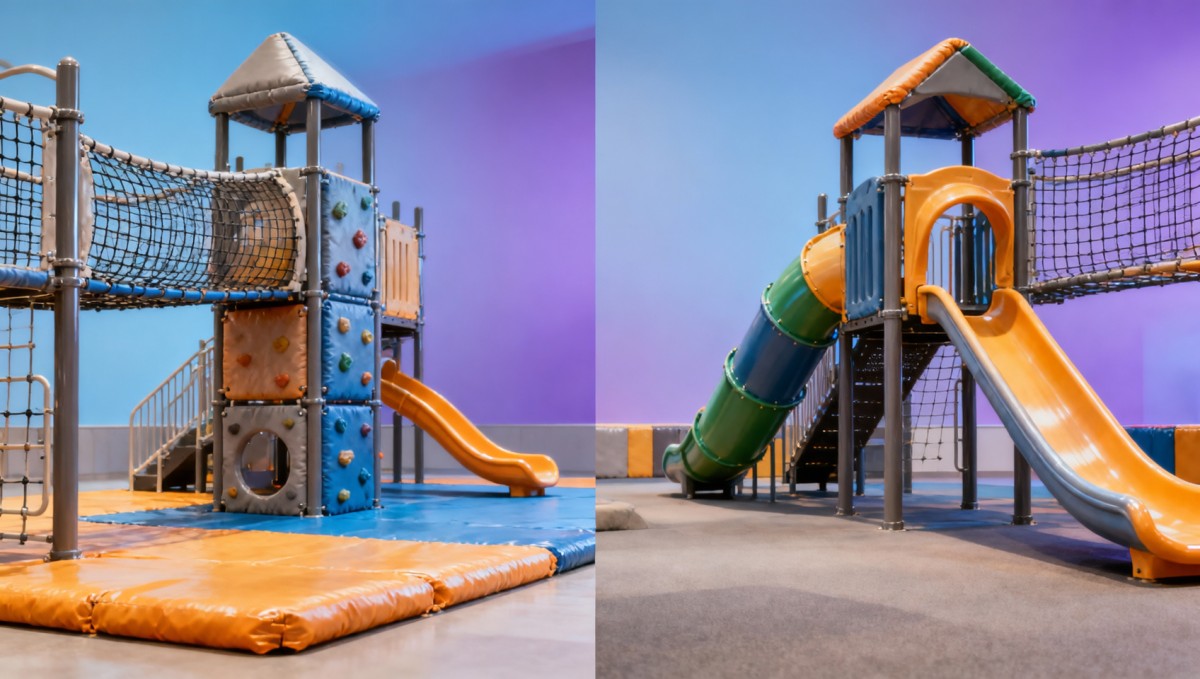
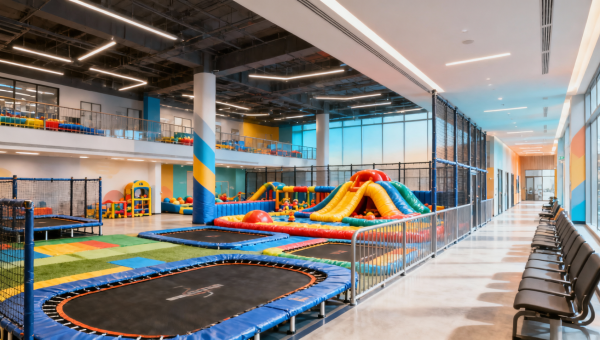
An indoor playground becomes easier to maintain when its physical design reduces dust traps, hidden damage points, and labor-intensive cleaning routines. In practice, the most efficient systems combine smooth wipe-clean surfaces, removable protective pads, modular sections, and inspection-friendly joints. These features do not eliminate maintenance, but they can cut daily routine time from 2 hours to around 60–90 minutes in a mid-sized venue.
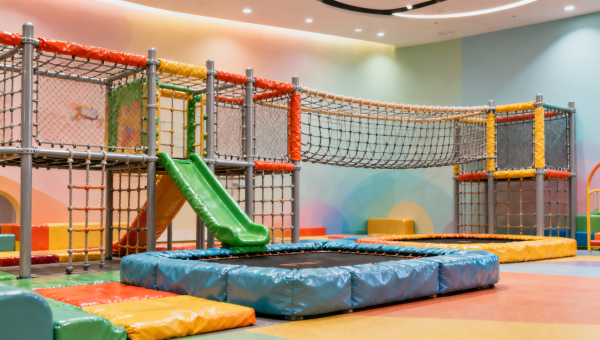
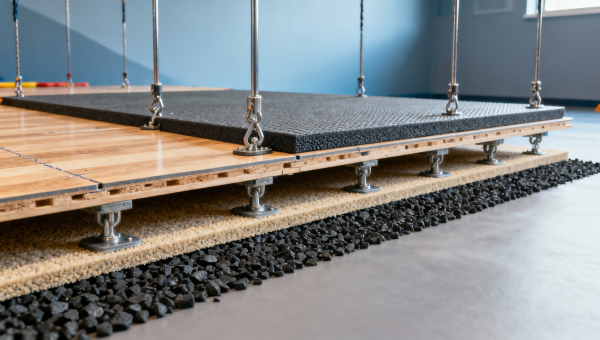
Soft play structures with sealed padding edges are typically easier to sanitize than units with exposed stitching or deep seams. Likewise, powder-coated metal frames often perform better in repeated cleaning cycles than finishes that scratch easily or retain moisture. Flooring also matters. Rubber, EVA, or PVC-coated surfaces should allow fast spot cleaning and predictable drying within 10–30 minutes, especially in high-footfall zones such as entrances, slide landings, and toddler areas.
Layout planning is another major factor. Narrow crawl zones, overly dense equipment clustering, and inaccessible elevated sections all increase inspection difficulty. A commercial operator should be able to visually check at least 80% of the play structure without dismantling components. For maintenance crews, direct access paths and service openings reduce both safety risk and labor cost.
High-impact features buyers should prioritize
- Non-porous contact surfaces that tolerate daily disinfection without swelling, cracking, or color transfer.
- Replaceable pads and covers that can be changed individually rather than replacing an entire section.
- Open under-structure access for vacuuming, debris removal, and rapid visual checks.
- Colorfast materials that still look presentable after 500+ cleaning cycles in a commercial environment.
- Modular nets, steps, and slide interfaces that reduce downtime when one component is damaged.
Why modularity matters in real operations
In a fixed one-piece structure, a damaged panel or worn pad can affect a large play zone and force broader closure. In a modular system, staff can isolate a 1- to 2-meter section, replace it, and reopen the rest of the area quickly. For parks targeting high occupancy on weekends, that difference can protect revenue during peak periods.
The table below shows how specific design choices influence maintenance effort in a commercial indoor playground setting.
The key takeaway is that maintainability starts at the specification stage. A visually impressive indoor playground may still be expensive to operate if maintenance access is poor or if wear components are not individually replaceable. For B2B buyers, design efficiency and cleaning logic should be reviewed alongside safety, capacity, and theme appeal.
Materials, finishes, and wear points that affect long-term upkeep
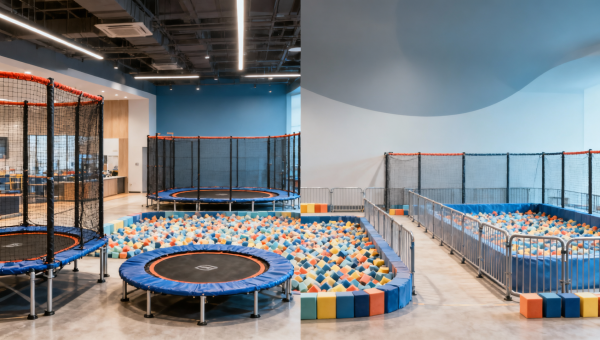
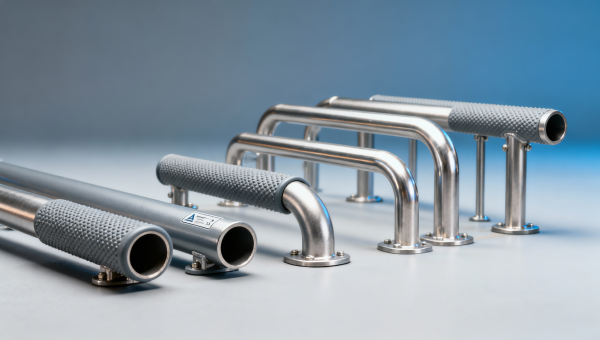
Daily maintenance becomes much easier when materials are selected for commercial use rather than short-term visual appeal. In indoor playgrounds, the highest wear points are usually slide entries, stair grips, impact pads, ball pit edges, trampoline borders, and high-touch handrails. These are the first zones where cleaning difficulty and cosmetic aging become visible within 6 to 18 months.
Commercial buyers should ask not only what a surface is made of, but how it behaves after repeated abrasion, disinfectant exposure, and temperature fluctuation. For example, a coating that looks smooth in a showroom may become tacky or faded after frequent sanitizing. Similarly, low-density foam can deform faster, leading to wrinkled covers that trap dirt and require earlier replacement.
Frame corrosion resistance is especially important in humid indoor environments or mixed-use entertainment centers where food service is present. Steel elements should be protected with durable finishes, and connectors should resist loosening under repetitive vibration. Even if a play area is not exposed to rain like an outdoor playground, indoor moisture, spills, and cleaning chemicals still create a demanding maintenance environment.
What to inspect in supplier material specifications
- Surface cleanability: Can staff remove common residues in 1 pass or does it require repeated scrubbing?
- Abrasion tolerance: Does the finish hold up in high-contact zones for 12–24 months?
- Replacement format: Can individual sleeves, pads, nets, or floor tiles be swapped separately?
- Chemical compatibility: Are standard commercial cleaners suitable for daily or weekly use?
- Color aging: Will visible fading make the site look neglected before structural replacement is necessary?
Typical maintenance behavior of common components
The next table compares common indoor playground components by maintenance burden and replacement practicality. This type of comparison helps procurement teams estimate not just purchase cost, but also service cost over a 3- to 5-year operating period.
The practical lesson is simple: maintenance-friendly materials are not only durable, they are serviceable. Buyers should prefer assemblies that allow partial replacement over systems that force full-area shutdown or full-set replacement. That approach supports better inventory planning for distributors and smoother after-sales service for operators.
For sourcing teams working through GCT-style commercial evaluation processes, this means requesting maintenance manuals, recommended cleaner lists, expected replacement intervals, and spare part availability before final order confirmation. These details often reveal the true operational quality of a supplier.
Operational planning: cleaning routes, inspections, and downtime control
Even the best indoor playground design will underperform if the daily maintenance workflow is inefficient. Operators should map cleaning and inspection routines by zone, frequency, and task duration. In many commercial sites, the most effective model is a 3-layer system: quick checks before opening, touchpoint cleaning during operation, and detailed inspection after closing. This structure helps control labor without overlooking risk points.
A practical daily routine may include a 15- to 20-minute pre-opening walkthrough, 2 to 4 scheduled spot-cleaning rounds during operating hours, and a 45- to 90-minute end-of-day service block. The exact duration depends on capacity, but the principle remains the same: maintenance must follow traffic patterns, not just staff convenience.
Downtime control depends heavily on access, stock, and documentation. If a trampoline edge pad tears or a tunnel net loosens, staff should know whether the issue requires immediate closure, temporary isolation, or scheduled replacement within 24–72 hours. Clear escalation rules prevent both unnecessary shutdowns and unsafe delays.
A workable daily maintenance framework
- Before opening: visual sweep, debris removal, surface disinfection, fastening check, and incident log review.
- During operation: rapid sanitation of high-touch zones every 2–3 hours and immediate spill control.
- After closing: deeper cleaning, wear-point inspection, photo documentation, and spare part request notes.
- Weekly: net tension, frame junction, flooring edge, and padding compression review.
- Monthly: more detailed technical inspection and replacement planning for the next 30–90 days.
Typical maintenance tasks by zone
To support purchasing decisions, the table below breaks down maintenance by area. This is useful when comparing large multi-zone indoor playgrounds, trampoline parks, and hybrid family entertainment installations.
The most maintainable venues are not necessarily the smallest. They are the ones with clear service routines, predictable component access, and documented task ownership. For distributors and commercial buyers, this means maintenance planning should be discussed before installation, not after the venue starts receiving guests.
How procurement teams should evaluate low-maintenance playground solutions
When comparing suppliers, many buyers still prioritize appearance, price, and play value first. Those factors matter, but a better procurement model uses at least 4 equal pillars: safety compliance, maintenance burden, replacement logistics, and lifecycle cost. A lower upfront quotation can become expensive if common wear parts take 6 to 10 weeks to replace or if daily cleaning requires more labor than expected.
Commercial evaluation should include both documentation review and practical questioning. Ask suppliers how many parts are considered normal wear components, what the usual reorder lead time is, and whether installation drawings identify service access points. Also verify whether after-sales support covers troubleshooting response within 24–48 hours for urgent operating issues.
For distributors and agents, maintainability also affects channel viability. Products that are difficult to service create friction in local markets, increase callback rates, and reduce repeat business. A maintainable indoor playground is easier to sell because customers can understand its operating logic and budget for upkeep with greater confidence.
Procurement checklist for maintenance efficiency
- Request a parts list with normal replacement categories such as pads, nets, floor tiles, sleeves, springs, or covers.
- Confirm whether damaged modules can be isolated without closing the entire play area.
- Review recommended cleaning agents and verify they are locally obtainable.
- Ask for a sample maintenance calendar covering daily, weekly, monthly, and annual checks.
- Clarify spare part lead times, packaging standards, and remote support procedures.
Questions that reveal true after-sales quality
A supplier may present attractive visuals, but maintenance quality becomes clearer when buyers ask operational questions. Can one worn foam sleeve be reordered separately? Are fasteners standardized or custom? Does the supplier provide video guidance for routine replacement tasks? Can local teams handle 70% to 80% of common repairs without waiting for a technician visit?
These questions are especially valuable for international sourcing. For global buyers working across hotels, malls, educational entertainment sites, and family activity centers, dependable spare parts and straightforward service guidance often matter more than small price differences at the quotation stage.
Common maintenance mistakes and practical ways to avoid them
One common mistake is assuming that a premium-looking indoor playground will naturally be easy to maintain. In reality, complex decorative details, hidden cavities, and custom-shaped pads may increase cleaning time and replacement complexity. Operators should distinguish between design value and service practicality before signing off on final production drawings.
Another mistake is underestimating consumables and wear inventory. If a venue waits until parts fail before ordering replacements, the result can be avoidable closures. For a medium to high-traffic site, it is often sensible to keep a 1- to 3-month supply of the most frequently replaced items, especially pads, covers, net ties, and selected floor sections.
A third error is separating procurement from operations. The team that negotiates price should also understand who will clean, inspect, and service the equipment every day. If the operating team is not consulted, the chosen system may look efficient on paper but create repetitive labor challenges in real use.
FAQ for buyers and operators
How often should an indoor playground be inspected?
A practical baseline is daily visual inspection, weekly functional checks, and monthly deeper technical review. High-traffic venues or trampoline-heavy areas may require more frequent monitoring, especially for pads, nets, springs, floor seams, and entry points.
What type of layout is easiest to maintain?
Layouts with open circulation, clear zoning, accessible corners, and modular sections are usually the easiest to maintain. Avoid designs where staff must crawl into multiple blind spaces just to inspect high-risk points. Good visibility and service access can save significant labor every week.
Are indoor playgrounds easier to maintain than outdoor playgrounds?
Indoor playgrounds avoid weather exposure, UV degradation, and rain-related cleaning, so in many cases they are easier to control. However, they still face heavy hygiene demands, frequent touchpoint cleaning, and faster cosmetic scrutiny from customers. Ease of maintenance depends more on design and material selection than on location alone.
What should buyers ask before placing an order?
Ask for maintenance instructions, replacement intervals, spare part lead times, access diagrams, and recommended cleaning chemicals. If possible, request photos or videos showing how common wear components are removed and replaced. This reduces uncertainty before the project enters production and installation.
In the end, a low-maintenance indoor playground is not defined by one feature alone. It results from the right combination of serviceable design, durable materials, modular replacement logic, practical cleaning routes, and responsive supplier support. For research teams, procurement managers, and channel partners, these are the factors that protect uptime and support stronger long-term returns.
If you are evaluating commercial indoor playground solutions for family entertainment venues, malls, hospitality projects, or multi-use leisure spaces, a structured sourcing review can help you compare not just what looks attractive today, but what remains efficient to operate over the next several years. Contact us to discuss product details, request a customized sourcing plan, or explore more maintenance-focused amusement and leisure solutions.
Search News
Hot Articles
Popular Tags
Need ExpertConsultation?
Connect with our specialized leisureengineering team for procurementstrategies.
Recommended News
 Apr 17, 2026CPSC AI Safety Alert: 200ms Delay in Child Playground AI Systems = HazardCPSC AI Safety Alert: 200ms delay in child playground AI systems = hazard. Learn how latency compliance impacts Target/Walmart listings, testing, and supply chain.● Theme Park Strategist
 Apr 17, 20262026 Shanghai Sailing Open Adopts Domestic SeaChronos Pro Timing SystemSeaChronos Pro timing system debuts at 2026 Shanghai Sailing Open — ITU-certified, millisecond-accurate, wind- and tide-integrated. A game-changer for marine sports tech.● Theme Park Strategist
 Apr 16, 2026FDA Proposes New Labeling Rules for Sports Nutrition Supplements with Chinese LabelsFDA's new labeling rules for sports nutrition supplements with Chinese labels take effect April 2026—learn compliance must-dos for U.S. importers, manufacturers & brands.● Theme Park Strategist
 Apr 15, 2026Saudi SASO Updates Amusement Ride Standards: VR Devices Now Require Mandatory EMC TestingSaudi SASO's new 2026 standard mandates EMC testing for VR amusement rides, impacting exporters. Learn key compliance strategies for Saudi market access.● Theme Park Strategist
 Apr 14, 2026Japan Mandates Multilingual E-Manuals for Fitness Equipment from April 2026Japan mandates multilingual e-manuals for fitness equipment from April 2026. Learn how this impacts manufacturers & importers with JIS T 0601-1 compliance requirements. Stay ahead of the regulation!● Theme Park Strategist
 Apr 13, 2026WTT Taiyuan Adopts Chinese AI Table Tennis Analysis System with ITTF Export CertificationWTT Taiyuan adopts Chinese AI table tennis analysis system with ITTF export certification, enabling real-time ball speed & spin tracking. A game-changer for sports tech in emerging markets like Southeast Asia & Middle East.● Theme Park Strategist
 Apr 13, 2026First Female Snooker Player Achieves Multiple Century Breaks as Chinese Table Gains WPBSA CertificationChinese snooker player Bai Yulu makes history with multiple century breaks using WPBSA-certified 'Tournament Pro X7' table, marking a milestone for Chinese manufacturing in professional snooker equipment. Discover how this impacts global markets.● Theme Park Strategist
 Apr 13, 2026RCEP Zero Tariff on China's TPU Sports Protective Gear Boosts ASEAN TradeRCEP's zero-tariff policy on China's TPU sports protective gear boosts ASEAN trade, giving Chinese exporters cost advantages over Korean rivals. Learn how manufacturers and distributors can capitalize on this opportunity.● Theme Park Strategist
 Apr 10, 2026Japan's JIS T 9001:2026 Sports Flooring Anti-Slip Standard Mandatory from April 2026Japan's JIS T 9001:2026 standard mandates anti-slip sports flooring (SCOF ≥ 0.6) from April 2026. Chinese exporters must adapt to meet new requirements. Learn key compliance strategies.● Theme Park Strategist
 Apr 10, 2026Bai Yulu Makes History at Snooker World Championship, Sparks Surge in Women's Sports Equipment DemandBai Yulu makes history at Snooker World Championship with two century breaks, sparking 185% surge in women's sports equipment demand. Discover how manufacturers, e-commerce & supply chains can capitalize on this trend.● Theme Park Strategist
 Apr 10, 20262026 Badminton Asia Championships Quarterfinals Schedule Announced, Shi Yuqi to Compete; Southeast Asia Racket Orders Face 6-8 Week Delays2026 Badminton Asia Championships quarterfinals schedule revealed with Shi Yuqi competing, while Southeast Asia faces 6-8 week racket delays. Learn how supply chain issues impact manufacturers and get strategies to navigate equipment shortages.● Theme Park Strategist
 Apr 10, 2026WTT Taiyuan Challenge Sparks Smart Equipment Demand: Japan Buyers Scrutinize AI Training TechDiscover how the WTT Taiyuan Challenge boosts demand for AI training tech as Japanese buyers evaluate smart sports equipment. Learn key opportunities for manufacturers with JIS-certified solutions.● Theme Park Strategist
 Apr 10, 2026Chinese Snooker Players' Success Spurs Global Demand for Cue AccessoriesChinese snooker players' success drives 210% global demand surge for cue accessories. Explore how manufacturers & exporters can capitalize on this trend with UK, German & Australian markets leading inquiries.● Theme Park Strategist
 Apr 10, 2026EU Updates EN 16830:2026 Eyewear Safety Standard, Impacting China's Sports Goggle ExportsEU's updated EN 16830:2026 eyewear safety standard impacts China's sports goggle exports with stricter CE certification requirements. Learn how manufacturers and exporters can adapt to new impact resistance, UV400+, and blue light blocking standards before the September 2026 deadline.● Theme Park Strategist
 Apr 18, 2026PopFeather AI Standard Launched at SMT Forum in ChengduPopFeather AI standard launched at SMT Forum in Chengdu — a breakthrough for AI-powered badminton training interoperability. Discover how this new interface protocol reshapes sports tech integration for manufacturers, AI platforms & global partners.● Theme Park Strategist
 Apr 18, 2026CPSC AI Safety Alert: >200ms Delay = Substantial HazardCPSC AI Safety Alert: >200ms latency = Substantial Hazard for indoor play equipment. Critical for exporters, ODMs & AI module suppliers targeting US markets.● Theme Park Strategist
 Apr 19, 2026Indoor playground equipment that wears out faster than expectedTrampoline park and indoor playground equipment wearing out too fast? Learn what commercial buyers should check across outdoor playground, playground swings, and system durability before sourcing.● Theme Park Strategist
 Apr 19, 2026What makes an indoor playground easier to maintain daily?Indoor playground and trampoline park buyers: discover low-maintenance design tips, from modular layouts to durable surfaces, and compare with outdoor playgrounds, playground swings, and musical instruments.● Theme Park Strategist
 Apr 19, 2026Trampoline park layout mistakes that reduce repeat visitsTrampoline park layout mistakes can hurt repeat visits. Learn how indoor playground, outdoor playground, and playground swings planning improves flow, safety, and family appeal.● Theme Park Strategist
 Apr 19, 2026Why trampoline park insurance costs vary more than expectedTrampoline park insurance costs vary with layout, staffing, claims, and mixed-use features like an indoor playground, outdoor playground, and playground swings—learn what drives premiums.● Theme Park Strategist
 Apr 18, 2026Inclusive playground handrails: Are height and grip diameter truly standardized across brands?Inclusive playground handrails: Discover if height & grip diameter truly meet ADA/EN standards—get verified OEM data, real-world benchmarks, and compliant sourcing for leisure parks, theme park rides & more.● Theme Park Strategist
 Apr 18, 2026Soundproofing materials for indoor playgrounds: Which types actually reduce impact noise?Soundproofing materials for indoor playgrounds that actually reduce impact noise—tested for swings, structures & inclusive play. Expert OEM/ODM sourcing.● Theme Park Strategist
 Apr 18, 2026Inclusive playground surfacing: Is rubber mulch still the safest bet in 2026?Inclusive playground surfacing insights for leisure parks, theme park rides & playground structures—compare rubber mulch vs. PIP/EWFP for 2026 ADA/EN1176 compliance.● Theme Park Strategist
 Apr 18, 2026Soundproofing materials in theme parks: Are decibel claims realistic?Soundproofing materials for theme parks: Are decibel claims realistic? Explore verified performance data for playground swings, rides, hotel beds, custom furniture & more.● Theme Park Strategist