Why trampoline park insurance costs vary more than expected
Insurance premiums for a trampoline park can differ far more than many buyers expect. From venue size and safety systems to claims history and mixed-use layouts that combine an indoor playground, outdoor playground, or playground swings, every factor changes risk. For procurement teams comparing suppliers across amusement and leisure parks—even those evaluating adjacent categories like musical instruments, percussion instruments, wind instruments, or string instruments—understanding these cost drivers is essential for smarter commercial planning.
For B2B buyers, insurance is not just an operating expense. It influences lease negotiations, equipment selection, staffing plans, maintenance budgets, and the long-term viability of an entertainment venue. A park that appears similar on paper to another site may face a premium difference of 20% to 80% because the underwriter is pricing operational risk, not just square footage.
That is why trampoline park insurance costs often surprise developers, distributors, and commercial evaluators. The real variable is not the trampoline alone. It is the full risk profile: layout design, age mix of users, supervision ratio, incident response, product quality, and whether the venue combines party rooms, arcades, climbing features, cafés, or redemption areas.
For sourcing teams working through Global Commercial Trade (GCT), a structured understanding of these cost drivers supports stronger supplier screening and more accurate project modeling. It also helps compare amusement and leisure park concepts across regions where local regulation, insurer appetite, and public liability expectations can differ significantly.
Why insurance pricing in trampoline parks is more complex than many operators assume
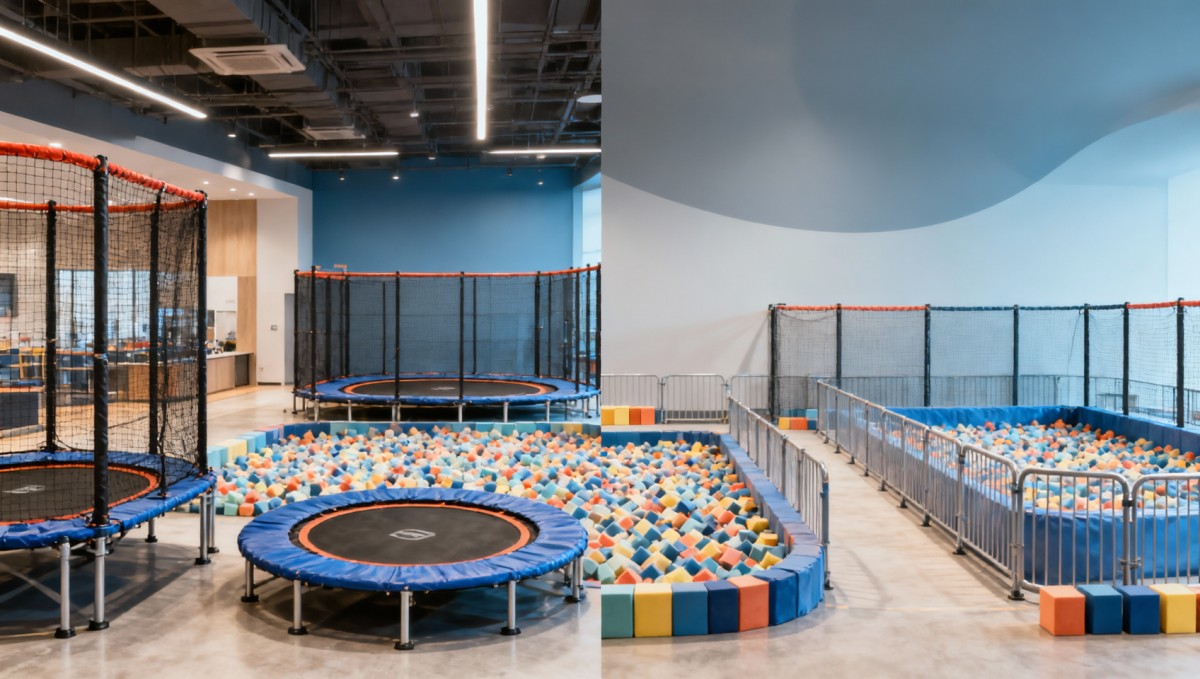
A trampoline park is typically classified as a higher-risk recreational venue because it combines active movement, elevated surfaces, repetitive impacts, and multi-user interaction. Even when two facilities operate with the same brand concept, insurers may rate them differently based on 4 major factors: injury frequency, injury severity, supervision quality, and physical design control.
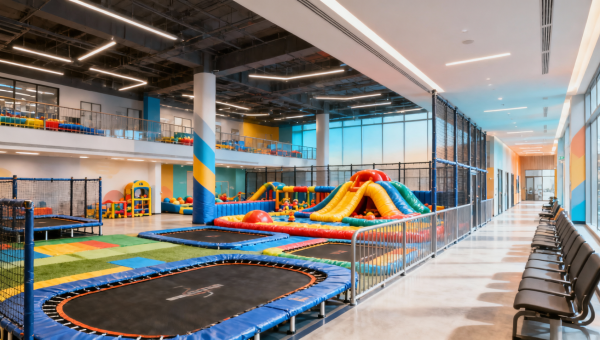
Venue size is only the starting point. A 1,200 square meter park with one main jump court may be easier to insure than a 900 square meter site that mixes dodgeball lanes, foam pits, ninja courses, birthday rooms, and unsupervised free-play zones. More features usually mean more interaction points, more staffing complexity, and more claim scenarios within a single operating day.
Insurers also look closely at user turnover. A site handling 150 to 300 visitors on a weekday may present a very different exposure from one processing 800 to 1,200 admissions on weekends. High throughput increases the chance of collisions, waiver management errors, delayed floor checks, and inconsistent rule enforcement, all of which affect pricing.
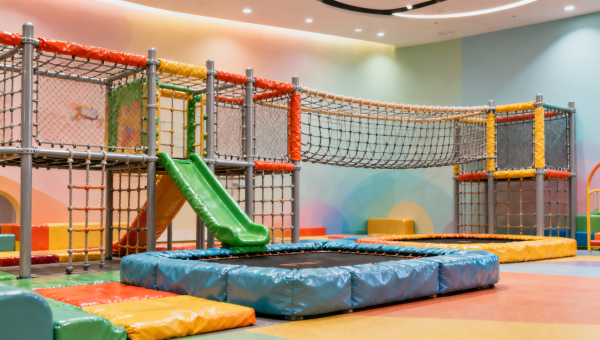
Another overlooked factor is mixed-use positioning. Parks that integrate indoor playground areas for younger children, outdoor playground extensions, or swing zones can broaden market appeal, but they also create age-segment risk. A facility serving toddlers, school-age children, teenagers, and adults under one roof usually requires tighter zoning, stronger signage, and more disciplined supervision than a single-age attraction model.
How underwriters typically break down exposure
In practical terms, insurers often evaluate a trampoline park through several linked policies rather than one broad premium. These may include general liability, property coverage, employer liability or workers’ compensation, business interruption, and in some cases abuse and molestation coverage, cyber coverage for booking platforms, or product liability if branded equipment is imported and installed under the operator’s responsibility.
The following comparison shows why two venues with similar revenue can still receive very different insurance terms.
The key takeaway is simple: insurers are pricing how the park is run, not just what equipment is installed. For procurement teams, this means supplier selection must include documentation quality, maintenance design, and training support instead of focusing only on initial capex.
The operational and design variables that move premiums up or down
Design decisions made during sourcing and fit-out can materially affect insurance costs before the venue even opens. The most influential variables usually include ceiling height, impact attenuation, netting design, separation barriers, slip resistance, padding condition, emergency exits, and the ability of staff to maintain uninterrupted sightlines across active zones.
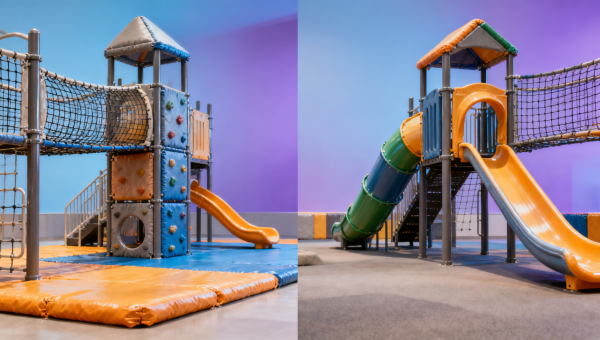
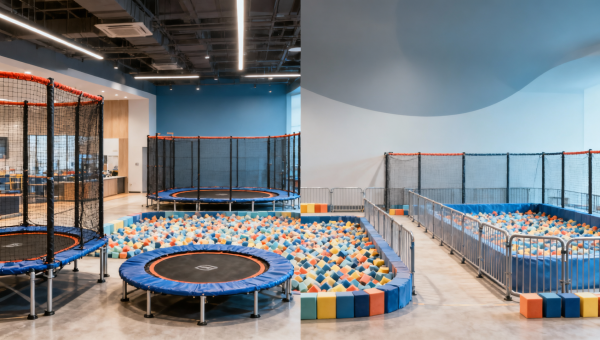
A park with 5 to 7 distinct attraction types often generates more revenue opportunities, but each added feature creates another inspection schedule, another training protocol, and another possible injury mechanism. Foam pits, air bags, climbing walls, and wipeout-style rotating features may each carry different underwriting assumptions compared with standard interconnected trampoline beds.
Safety systems have a direct insurance impact when they are measurable and documented. For example, CCTV retention for 30 to 90 days, digital waiver tracking, daily opening checklists, and signed maintenance logs can improve underwriting confidence. By contrast, undocumented verbal procedures usually do little to support negotiations on premium or deductible levels.
Location matters too. Urban malls with high walk-in traffic may have stronger fire systems and easier emergency response access, but they can also face higher occupancy density and landlord-imposed liability requirements. Standalone suburban parks may gain more control over circulation and parking, while taking on greater responsibility for perimeter safety, weather exposure, and building maintenance.
Common design choices that influence insurer confidence
- Dedicated age zoning, such as separate sessions or enclosed areas for under-6, 6–12, and teen/adult users.
- Staff-to-visitor ratios during peak periods, often tightened on weekends or school holidays.
- Protective surfacing and padding replacement cycles, typically reviewed every 6–12 months depending on usage.
- Clear incident escalation procedures, including first-aid readiness and documented closure of defective areas within minutes, not hours.
Mixed-use concepts need tighter risk segmentation
Many developers now combine trampoline functions with soft play, party hosting, cafés, arcade machines, or seasonal outdoor zones. This model can improve dwell time by 30 to 90 minutes per visit and support stronger per-capita spend, but it also changes the insurance profile. Food service introduces slip hazards, party rooms raise supervision gaps, and arcade zones increase property and electrical exposure.
For distributors and agents advising clients, the practical lesson is that every new revenue module should be matched with a risk-control module. If the concept adds playground swings outdoors, for example, buyers should also review weather shutdown protocols, corrosion-resistant materials, and inspection frequency for moving parts.
Claims history, staffing, and compliance: the hidden cost multipliers
Claims history is one of the strongest predictors of future insurance pricing. Even a single severe bodily injury claim can reshape premium negotiations for 2 to 5 renewal cycles, especially if the incident reveals poor supervision, inadequate maintenance records, or unclear operating rules. Frequency matters, but severity matters even more.
Staffing is equally important because insurers assume that written safety policies are only effective when personnel can execute them consistently. A park that schedules one floor monitor for every major attraction zone during peak windows will usually be viewed more favorably than a venue relying on floating staff with no fixed coverage. Training refreshers every 3 or 6 months can also strengthen the operator’s risk profile.
Compliance standards vary by market, but underwriters generally expect evidence that the park follows local building codes, fire regulations, occupancy limits, and equipment inspection protocols. Imported equipment may be commercially attractive, yet insufficient installation documentation or missing maintenance instructions can increase insurer concern even if the hardware itself is well manufactured.
This is where B2B procurement has a direct role. Commercial buyers should request not only product specifications, but also installation manuals, maintenance checklists, spare-part plans, training documentation, and operating guidance in the relevant market language. Weak paperwork often becomes a hidden premium driver because it makes risk harder to verify.
A practical checklist for buyers before binding coverage
Before finalizing a supplier package or opening a venue, procurement teams can use the following framework to reduce insurance friction and improve the quality of insurer submissions.
Buyers that package these documents well can often shorten underwriting review by 1 to 3 weeks. More importantly, they reduce the chance that the insurer will apply a broad risk surcharge simply because too many operational details are unclear.
Common mistakes that increase long-term insurance cost
- Treating waivers as a substitute for supervision and maintenance.
- Combining too many age groups in one session to maximize throughput.
- Choosing the lowest equipment bid without checking parts support and inspection guidance.
- Failing to record near-miss incidents that could reveal a pattern before a major claim occurs.
How procurement teams can evaluate insurance impact before selecting suppliers
For sourcing professionals, the best time to manage trampoline park insurance costs is before contracts are signed. Once the layout, attraction mix, and supplier obligations are fixed, it becomes harder to negotiate better premiums without redesign, retrofits, or revised staffing plans. Early-stage risk review can therefore protect both capital budgets and operating margins.
A practical approach is to score suppliers across 5 dimensions: design safety, documentation quality, installation accountability, maintenance support, and operational training. This goes beyond simple price comparison. A supplier offering a lower equipment cost may create higher annual insurance expenses if the design produces blind spots or if spare parts take 8 to 12 weeks to arrive.
Commercial evaluators should also check whether the supplier understands local market expectations. A layout accepted in one country may need modified barrier heights, different signage, or revised emergency routing in another region. These changes can affect both compliance cost and underwriting outcome. For cross-border projects, alignment between sourcing, legal review, and insurance broking should begin at concept stage.
At GCT, this is where intelligence-led sourcing becomes valuable. Buyers in amusement and leisure parks are rarely purchasing isolated products. They are building full commercial experiences that must perform operationally, financially, and reputationally over several years. Insurance visibility helps connect those three priorities into one procurement framework.
Recommended pre-purchase evaluation workflow
- Step 1: Define the attraction mix, expected age profile, and peak daily capacity, such as 400, 800, or 1,200 visitors.
- Step 2: Request supplier drawings, material details, maintenance plans, and installation responsibilities in writing.
- Step 3: Review the concept with an insurance adviser or broker before final equipment sign-off.
- Step 4: Adjust layout, zoning, or staffing assumptions where underwriting concerns appear.
- Step 5: Build premium estimates into the full 3-year operating model, not just year-one launch costs.
FAQ for buyers and project evaluators
How much can layout design affect trampoline park insurance?
It can be significant. If a design improves sightlines, separates age groups, and reduces collision points, the insurance difference may be substantial over a 12-month policy period. While exact percentages depend on the market and claims context, design quality often influences both premium level and deductible structure.
Does adding an indoor or outdoor playground always raise cost?
Usually it adds exposure, but not always disproportionately. If the added area is well segmented, age-appropriate, and supported by inspection routines, the extra premium can be manageable. Problems arise when mixed-use zones share staff loosely or lack clear operating rules.
What documents should a distributor or agent request from manufacturers?
At minimum, request technical drawings, materials information, installation guidance, maintenance schedules, spare-parts lists, and staff training recommendations. These documents support both project delivery and insurer review, especially for international sourcing deals.
Trampoline park insurance costs vary more than expected because insurers assess the total operating environment, not just the presence of trampoline equipment. Layout complexity, visitor mix, staffing discipline, maintenance records, and claims history can all shift the premium outcome in measurable ways. For procurement teams, the smartest strategy is to integrate insurance thinking into sourcing, design review, and supplier evaluation from day one.
If you are comparing manufacturers, planning a new amusement venue, or reviewing a mixed-use entertainment concept, GCT can help you connect sourcing decisions with practical commercial risk considerations. Contact us to discuss your project, request a tailored evaluation framework, or explore more solutions for amusement and leisure park development.
Search News
Hot Articles
Popular Tags
Need ExpertConsultation?
Connect with our specialized leisureengineering team for procurementstrategies.
Recommended News
 Apr 17, 2026CPSC AI Safety Alert: 200ms Delay in Child Playground AI Systems = HazardCPSC AI Safety Alert: 200ms delay in child playground AI systems = hazard. Learn how latency compliance impacts Target/Walmart listings, testing, and supply chain.● Theme Park Strategist
 Apr 17, 20262026 Shanghai Sailing Open Adopts Domestic SeaChronos Pro Timing SystemSeaChronos Pro timing system debuts at 2026 Shanghai Sailing Open — ITU-certified, millisecond-accurate, wind- and tide-integrated. A game-changer for marine sports tech.● Theme Park Strategist
 Apr 16, 2026FDA Proposes New Labeling Rules for Sports Nutrition Supplements with Chinese LabelsFDA's new labeling rules for sports nutrition supplements with Chinese labels take effect April 2026—learn compliance must-dos for U.S. importers, manufacturers & brands.● Theme Park Strategist
 Apr 15, 2026Saudi SASO Updates Amusement Ride Standards: VR Devices Now Require Mandatory EMC TestingSaudi SASO's new 2026 standard mandates EMC testing for VR amusement rides, impacting exporters. Learn key compliance strategies for Saudi market access.● Theme Park Strategist
 Apr 14, 2026Japan Mandates Multilingual E-Manuals for Fitness Equipment from April 2026Japan mandates multilingual e-manuals for fitness equipment from April 2026. Learn how this impacts manufacturers & importers with JIS T 0601-1 compliance requirements. Stay ahead of the regulation!● Theme Park Strategist
 Apr 13, 2026WTT Taiyuan Adopts Chinese AI Table Tennis Analysis System with ITTF Export CertificationWTT Taiyuan adopts Chinese AI table tennis analysis system with ITTF export certification, enabling real-time ball speed & spin tracking. A game-changer for sports tech in emerging markets like Southeast Asia & Middle East.● Theme Park Strategist
 Apr 13, 2026First Female Snooker Player Achieves Multiple Century Breaks as Chinese Table Gains WPBSA CertificationChinese snooker player Bai Yulu makes history with multiple century breaks using WPBSA-certified 'Tournament Pro X7' table, marking a milestone for Chinese manufacturing in professional snooker equipment. Discover how this impacts global markets.● Theme Park Strategist
 Apr 13, 2026RCEP Zero Tariff on China's TPU Sports Protective Gear Boosts ASEAN TradeRCEP's zero-tariff policy on China's TPU sports protective gear boosts ASEAN trade, giving Chinese exporters cost advantages over Korean rivals. Learn how manufacturers and distributors can capitalize on this opportunity.● Theme Park Strategist
 Apr 10, 2026Japan's JIS T 9001:2026 Sports Flooring Anti-Slip Standard Mandatory from April 2026Japan's JIS T 9001:2026 standard mandates anti-slip sports flooring (SCOF ≥ 0.6) from April 2026. Chinese exporters must adapt to meet new requirements. Learn key compliance strategies.● Theme Park Strategist
 Apr 10, 2026Bai Yulu Makes History at Snooker World Championship, Sparks Surge in Women's Sports Equipment DemandBai Yulu makes history at Snooker World Championship with two century breaks, sparking 185% surge in women's sports equipment demand. Discover how manufacturers, e-commerce & supply chains can capitalize on this trend.● Theme Park Strategist
 Apr 10, 20262026 Badminton Asia Championships Quarterfinals Schedule Announced, Shi Yuqi to Compete; Southeast Asia Racket Orders Face 6-8 Week Delays2026 Badminton Asia Championships quarterfinals schedule revealed with Shi Yuqi competing, while Southeast Asia faces 6-8 week racket delays. Learn how supply chain issues impact manufacturers and get strategies to navigate equipment shortages.● Theme Park Strategist
 Apr 10, 2026WTT Taiyuan Challenge Sparks Smart Equipment Demand: Japan Buyers Scrutinize AI Training TechDiscover how the WTT Taiyuan Challenge boosts demand for AI training tech as Japanese buyers evaluate smart sports equipment. Learn key opportunities for manufacturers with JIS-certified solutions.● Theme Park Strategist
 Apr 10, 2026Chinese Snooker Players' Success Spurs Global Demand for Cue AccessoriesChinese snooker players' success drives 210% global demand surge for cue accessories. Explore how manufacturers & exporters can capitalize on this trend with UK, German & Australian markets leading inquiries.● Theme Park Strategist
 Apr 10, 2026EU Updates EN 16830:2026 Eyewear Safety Standard, Impacting China's Sports Goggle ExportsEU's updated EN 16830:2026 eyewear safety standard impacts China's sports goggle exports with stricter CE certification requirements. Learn how manufacturers and exporters can adapt to new impact resistance, UV400+, and blue light blocking standards before the September 2026 deadline.● Theme Park Strategist
 Apr 18, 2026PopFeather AI Standard Launched at SMT Forum in ChengduPopFeather AI standard launched at SMT Forum in Chengdu — a breakthrough for AI-powered badminton training interoperability. Discover how this new interface protocol reshapes sports tech integration for manufacturers, AI platforms & global partners.● Theme Park Strategist
 Apr 18, 2026CPSC AI Safety Alert: >200ms Delay = Substantial HazardCPSC AI Safety Alert: >200ms latency = Substantial Hazard for indoor play equipment. Critical for exporters, ODMs & AI module suppliers targeting US markets.● Theme Park Strategist
 Apr 19, 2026Indoor playground equipment that wears out faster than expectedTrampoline park and indoor playground equipment wearing out too fast? Learn what commercial buyers should check across outdoor playground, playground swings, and system durability before sourcing.● Theme Park Strategist
 Apr 19, 2026What makes an indoor playground easier to maintain daily?Indoor playground and trampoline park buyers: discover low-maintenance design tips, from modular layouts to durable surfaces, and compare with outdoor playgrounds, playground swings, and musical instruments.● Theme Park Strategist
 Apr 19, 2026Trampoline park layout mistakes that reduce repeat visitsTrampoline park layout mistakes can hurt repeat visits. Learn how indoor playground, outdoor playground, and playground swings planning improves flow, safety, and family appeal.● Theme Park Strategist
 Apr 19, 2026Why trampoline park insurance costs vary more than expectedTrampoline park insurance costs vary with layout, staffing, claims, and mixed-use features like an indoor playground, outdoor playground, and playground swings—learn what drives premiums.● Theme Park Strategist
 Apr 18, 2026Inclusive playground handrails: Are height and grip diameter truly standardized across brands?Inclusive playground handrails: Discover if height & grip diameter truly meet ADA/EN standards—get verified OEM data, real-world benchmarks, and compliant sourcing for leisure parks, theme park rides & more.● Theme Park Strategist
 Apr 18, 2026Soundproofing materials for indoor playgrounds: Which types actually reduce impact noise?Soundproofing materials for indoor playgrounds that actually reduce impact noise—tested for swings, structures & inclusive play. Expert OEM/ODM sourcing.● Theme Park Strategist
 Apr 18, 2026Inclusive playground surfacing: Is rubber mulch still the safest bet in 2026?Inclusive playground surfacing insights for leisure parks, theme park rides & playground structures—compare rubber mulch vs. PIP/EWFP for 2026 ADA/EN1176 compliance.● Theme Park Strategist
 Apr 18, 2026Soundproofing materials in theme parks: Are decibel claims realistic?Soundproofing materials for theme parks: Are decibel claims realistic? Explore verified performance data for playground swings, rides, hotel beds, custom furniture & more.● Theme Park Strategist