Indoor playground equipment that wears out faster than expected
In a competitive indoor playground or trampoline park, equipment that wears out too quickly can drive up maintenance costs, disrupt operations, and weaken buyer confidence. For procurement teams, distributors, and commercial evaluators comparing indoor playground, outdoor playground, and playground swings solutions, understanding why certain systems fail early is essential. This guide explores the key causes of premature wear and what commercial buyers should assess before sourcing.
For B2B buyers in the sports and entertainment sector, premature wear is rarely caused by one single defect. In most projects, it results from a mismatch between traffic load, material grade, structural design, cleaning practices, and supplier quality control. A soft play frame that performs well at 80 children per day may deteriorate far faster when the venue receives 250 to 400 users daily.
This matters not only for operators but also for sourcing teams, dealers, and agents responsible for lifecycle cost, after-sales exposure, and brand reputation. A lower purchase price can quickly become uncompetitive if replacement pads, nets, springs, or connection hardware need attention every 6 to 12 months instead of the expected 24 to 36 months.
Why Some Indoor Playground Equipment Fails Earlier Than Expected
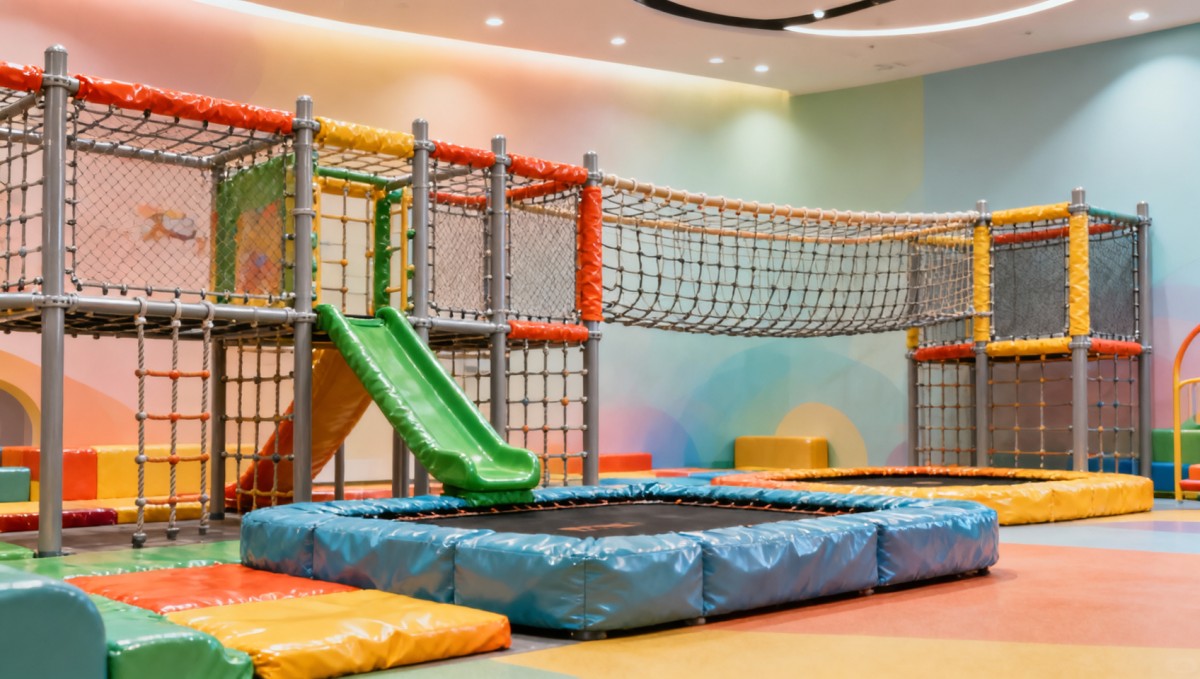
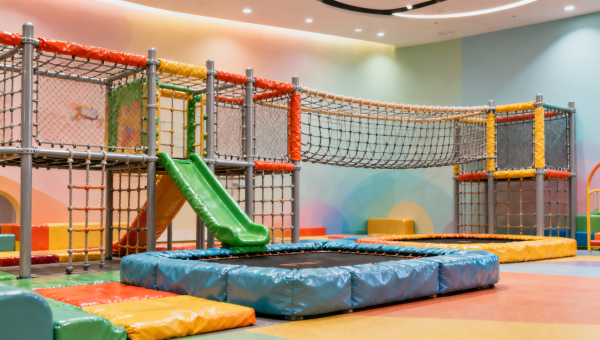
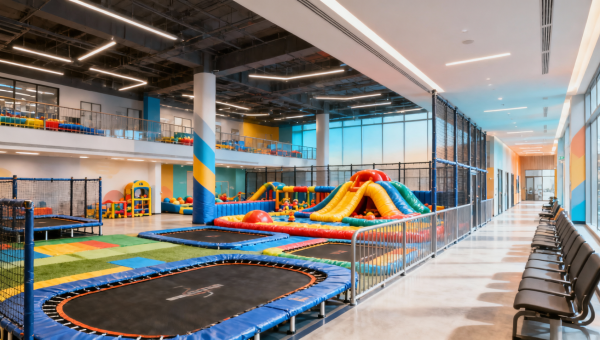
Indoor playground equipment operates under repeated impact, friction, body weight transfer, and constant sanitation cycles. In trampoline parks, climbing zones, and soft play areas, the most stressed components are usually foam padding, PVC coverings, jumping mats, springs, netting, grip surfaces, and welded or bolted joints. When these parts are specified too lightly, early wear is almost guaranteed.
A common sourcing mistake is evaluating equipment mainly by appearance or headline dimensions. Two play systems may look nearly identical in a catalog, yet one may use 0.45 mm PVC covers, lighter foam density, and thinner steel wall thickness, while another uses 0.60 to 0.75 mm PVC, higher density foam, and stronger structural tubing. The visual difference is small; the durability gap is significant.
High traffic intensity accelerates failure. In commercial family entertainment centers, a unit designed for light-use settings such as cafés, preschools, or residential clubs may lose shape, split seams, or loosen hardware within 9 to 18 months. In contrast, equipment engineered for continuous public use is usually designed around higher impact cycles, more robust joining methods, and easier replacement access.
Climate control also plays an overlooked role. Even indoors, temperature fluctuations, high humidity above 65%, and direct sunlight from glass façades can harden plastics, weaken adhesive bonds, and accelerate color fading. This is especially relevant in mixed indoor-outdoor leisure parks, hotel recreation zones, and venues with large atrium windows.
The most common early-failure points
Commercial evaluators should inspect where wear concentrates first. In most indoor playground and trampoline systems, failures cluster in 4 to 6 repeat zones rather than across the whole structure.
- Entry and landing pads, where repeated impact compresses foam and cracks outer covers.
- Net junctions and rope intersections, where abrasion causes fraying after 8 to 15 months in busy venues.
- Springs, clips, and mat anchors, where metal fatigue or weak protective coating leads to noise, rust, or tension loss.
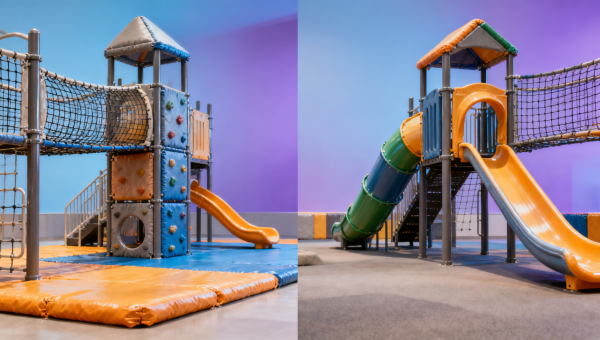
- Slides and crawl tunnels, where surface friction gradually thins the finish and exposes the substrate.
- Fastening points around playground swings or suspended play elements, where movement loosens joints faster than static structures.
Understanding these wear zones helps buyers compare quotations more accurately. A supplier that clearly identifies replaceable high-wear parts usually offers a more practical commercial solution than one selling a visually attractive but maintenance-heavy package.
Materials and Design Choices That Influence Lifespan
Material selection has a direct impact on service life, cleaning tolerance, and repair frequency. In commercial indoor playground equipment, soft surfaces are expected to absorb impact, but they must also resist tearing, compression, moisture, and repeated disinfection. If any one of these properties is weak, the entire user experience declines.
Foam density is one practical indicator. Lower-density padding may reduce upfront cost, but under sustained use it can flatten, shift, or crack at edges. In high-volume sites, buyers often prefer foam and pad systems built for repeated compression cycles rather than basic low-duty use. The same logic applies to tube covers, deck surfaces, and molded plastic elements.
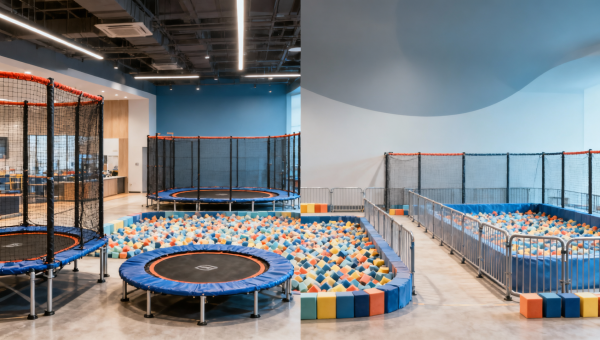
Frame engineering matters just as much as outer materials. Poorly aligned welds, inconsistent tubing gauge, and weak anti-corrosion treatment can shorten functional life even when the visible soft play surfaces still look acceptable. In trampoline zones, if spring geometry and frame anchoring are poorly balanced, the stress transfers unevenly and speeds up wear on both the mat and metal components.
For distributors and sourcing hubs, the best approach is to compare wear-critical materials side by side instead of relying on generic claims such as “premium quality” or “heavy duty.” The table below shows what buyers should verify before finalizing a commercial indoor playground or mixed amusement order.
The key takeaway is that durability is cumulative. A venue may tolerate one lower-grade component, but when low-grade padding, average netting, and lightly protected metalwork appear in the same system, the wear curve steepens quickly. Commercial buyers should therefore evaluate complete system durability rather than isolated material samples.
Design details that reduce long-term wear
Small design features often create major differences in operating life. Rounded transitions, removable pad modules, segmented replacement zones, and protected hardware access points can reduce downtime by 20% to 40% during routine maintenance cycles, depending on venue traffic.
Practical design checks
- Confirm whether high-impact zones use modular pads that can be replaced individually instead of replacing entire assemblies.
- Check whether netting, swing connections, and climbing ropes are positioned to avoid unnecessary friction against hard frame edges.
- Review how easily staff can inspect springs, bolts, and anchors every 30 to 90 days without dismantling large sections.
For procurement teams handling multiple amusement and leisure park projects, design-for-maintenance is often a stronger long-term value signal than a low initial quotation.
Operational Conditions That Speed Up Wear in Real Venues
Even well-built equipment wears out prematurely when operating conditions are not matched to the design brief. Many indoor playground failures begin after installation, when user volume, supervision policy, cleaning chemicals, and maintenance frequency differ from the assumptions made during product selection.
Traffic load is the first variable to quantify. A site receiving 150 visitors on weekdays and 500 on weekends creates a different stress pattern from a school or hotel kids’ zone with short, predictable daily sessions. When buyers do not provide realistic attendance forecasts, suppliers may quote equipment that is technically compliant but commercially under-specified.
Cleaning methods also matter. In family entertainment centers, high-touch surfaces are often wiped several times per day. Aggressive cleaners, excessive moisture, or unsuitable disinfectants can stiffen PVC, discolor plastics, and degrade stitching over 12 to 24 months. Sourcing teams should ask for approved cleaning ranges and care restrictions before comparing bids.
User behavior is another major factor. Mixed-age play areas, unsupervised trampoline use, and adults entering child-designed structures can multiply impact loads. Components around basketball dunk lanes, ninja elements, suspended bridges, and playground swings are especially vulnerable if user weight ranges are not clearly controlled.
Site conditions buyers should disclose to suppliers
The more accurate the operating profile, the more reliable the sourcing outcome. Before requesting a final quotation, buyers should provide a practical venue brief that covers at least the following points:
- Estimated daily and peak hourly traffic, such as 120 users per day or 60 users per hour in holiday periods.
- Age segmentation, for example 2 to 5 years, 6 to 12 years, and teen trampoline participation.
- Operating schedule, such as 7 days per week, 10 to 12 hours daily.
- Cleaning frequency and chemical type used on pads, nets, and hand-contact surfaces.
- Local climate conditions, humidity levels, and exposure to sunlight near glass façades.
These details help suppliers recommend better wear packages, such as reinforced landing zones, quicker replacement kits, or stronger suspension points for active-use attractions.
The following comparison table highlights how venue conditions influence wear patterns across different playground categories.
This comparison shows that “faster than expected” is often a planning problem as much as a manufacturing issue. Buyers that define traffic level, user mix, and maintenance routines early usually obtain better lifecycle performance and more realistic spare-part planning.
How Procurement Teams Should Evaluate Commercial Playground Durability
For procurement personnel and business evaluators, the right question is not simply “How long will it last?” but “Under what user volume, maintenance routine, and replacement plan will this equipment remain commercially efficient?” A durable system is one that sustains safe operation with predictable upkeep, not one that avoids all wear.
A practical commercial review usually includes 5 core dimensions: structural specification, high-wear material quality, safety compliance pathway, replaceability, and supplier support speed. If one of these areas is weak, the project may still launch successfully but become costly during the first 12 to 24 months.
Distributors and agents should pay close attention to spare-part logic. If pad modules, ropes, nets, springs, or swing connectors can be reordered separately with a lead time of 2 to 8 weeks, the buyer’s risk profile improves. If replacements require custom remanufacture of large sections, downtime exposure rises sharply.
Another critical factor is documentation clarity. Strong suppliers typically provide installation drawings, maintenance points, inspection schedules, and cleaning guidance. This reduces disputes after handover and helps channel partners support clients more effectively across multiple projects.
A commercial durability checklist
Before approving an indoor playground equipment order, sourcing teams can use the following evaluation sequence:
- Map expected user load by age group, peak hours, and annual seasonality.
- Identify 4 to 6 highest-wear zones in the design, including landing points and moving elements.
- Request material and structure details for those zones rather than generic whole-system claims.
- Confirm spare-part availability, normal lead time, and recommended inspection intervals.
- Review after-sales scope, including remote support, replacement guidance, and claim handling workflow.
Questions that improve supplier comparison
Buyers can often expose durability differences by asking suppliers a few direct operational questions rather than broad quality questions.
- Which components are expected to be inspected monthly, quarterly, and annually?
- Which wear parts are designed for field replacement without major shutdown?
- What maintenance issues appear most often in high-volume venues after 6, 12, and 24 months?
- How are rope, net, pad, and spring replacements packaged and shipped for international orders?
These questions create a stronger basis for business evaluation than relying only on brochures or showroom visuals.
Maintenance Strategy, Common Mistakes, and Long-Term Value
The lifespan of indoor playground equipment does not end at installation. In commercial use, maintenance discipline often determines whether a venue sees stable performance for 3 to 5 years or begins repeated repairs within the first 12 months. The goal is not to eliminate wear, but to manage it before safety, appearance, and uptime are affected.
One of the most common mistakes is delaying small repairs. A minor tear in a landing pad, a loose connection near a climbing module, or localized spring fatigue may seem manageable for a few weeks. In reality, small defects can spread rapidly under weekend traffic, increasing both shutdown time and replacement cost.
Another mistake is inconsistent inspection ownership. Some venues depend on staff observation alone, while others perform only ad hoc checks before school holidays or promotional events. A better model is a 3-level routine: daily visual checks, monthly functional checks, and quarterly technical review of high-stress areas.
For B2B buyers evaluating suppliers, after-sales practicality should therefore be part of the sourcing decision. The strongest commercial partners help operators establish replacement planning, cleaning limits, and wear tracking, especially for trampoline parks and busy indoor playground sites.
Typical maintenance rhythm for commercial sites
Maintenance planning should reflect traffic level and attraction type. A practical schedule for most amusement and leisure parks may include the following:
- Daily: visual scan of pads, nets, slide surfaces, swing points, and obvious hardware movement.
- Every 30 days: check seam integrity, tension consistency, fasteners, and landing area compression.
- Every 90 days: review structural joints, corrosion signs, wear concentration, and spare-part stock level.
- Every 12 months: assess whether high-use modules should be rotated, refurbished, or replaced.
This schedule is especially useful for operators managing multiple zones such as soft play, trampolines, climbing sections, and playground swings within one venue.
FAQ for buyers and channel partners
How can buyers tell whether low price means higher long-term cost?
Compare replacement frequency, spare-part access, and labor impact. If a lower-cost system needs pad replacement every 9 to 12 months while a better-engineered system is designed for 18 to 36 months in similar traffic conditions, the apparent savings may disappear quickly.
Is outdoor playground equipment always more durable than indoor playground equipment?
Not necessarily. Outdoor systems are built for UV and weather exposure, but indoor equipment may be optimized for higher contact frequency and active impact. Durability depends on whether the product is specified for the actual duty cycle, not only whether it is indoor or outdoor.
Which parts usually need the earliest replacement?
In busy venues, the earliest replacements commonly involve landing pads, PVC covers, netting edges, trampoline springs, and some connection hardware. The exact sequence depends on user density, supervision, and maintenance quality.
What should distributors ask manufacturers before taking on a product line?
Ask about spare-part lead times, installation support, maintenance documents, wear-prone components, and how claims are handled across international markets. A product line with clear replacement planning is easier to support and resell than one focused only on visual customization.
Premature wear in indoor playground equipment is usually preventable when sourcing decisions are based on real operating conditions, material quality, maintainable design, and practical after-sales support. For procurement teams, commercial evaluators, and channel partners, the best results come from comparing lifecycle value rather than only purchase price.
Global Commercial Trade supports buyers in the sports and entertainment sector with sourcing intelligence that helps identify durable, commercially suitable solutions for indoor playgrounds, trampoline parks, outdoor playground systems, and playground swings. If you are reviewing suppliers, planning a new venue, or refining a distribution portfolio, contact us to discuss specifications, sourcing priorities, and tailored commercial options.
Search News
Hot Articles
Popular Tags
Need ExpertConsultation?
Connect with our specialized leisureengineering team for procurementstrategies.
Recommended News
 Apr 17, 2026CPSC AI Safety Alert: 200ms Delay in Child Playground AI Systems = HazardCPSC AI Safety Alert: 200ms delay in child playground AI systems = hazard. Learn how latency compliance impacts Target/Walmart listings, testing, and supply chain.● Theme Park Strategist
 Apr 17, 20262026 Shanghai Sailing Open Adopts Domestic SeaChronos Pro Timing SystemSeaChronos Pro timing system debuts at 2026 Shanghai Sailing Open — ITU-certified, millisecond-accurate, wind- and tide-integrated. A game-changer for marine sports tech.● Theme Park Strategist
 Apr 16, 2026FDA Proposes New Labeling Rules for Sports Nutrition Supplements with Chinese LabelsFDA's new labeling rules for sports nutrition supplements with Chinese labels take effect April 2026—learn compliance must-dos for U.S. importers, manufacturers & brands.● Theme Park Strategist
 Apr 15, 2026Saudi SASO Updates Amusement Ride Standards: VR Devices Now Require Mandatory EMC TestingSaudi SASO's new 2026 standard mandates EMC testing for VR amusement rides, impacting exporters. Learn key compliance strategies for Saudi market access.● Theme Park Strategist
 Apr 14, 2026Japan Mandates Multilingual E-Manuals for Fitness Equipment from April 2026Japan mandates multilingual e-manuals for fitness equipment from April 2026. Learn how this impacts manufacturers & importers with JIS T 0601-1 compliance requirements. Stay ahead of the regulation!● Theme Park Strategist
 Apr 13, 2026WTT Taiyuan Adopts Chinese AI Table Tennis Analysis System with ITTF Export CertificationWTT Taiyuan adopts Chinese AI table tennis analysis system with ITTF export certification, enabling real-time ball speed & spin tracking. A game-changer for sports tech in emerging markets like Southeast Asia & Middle East.● Theme Park Strategist
 Apr 13, 2026First Female Snooker Player Achieves Multiple Century Breaks as Chinese Table Gains WPBSA CertificationChinese snooker player Bai Yulu makes history with multiple century breaks using WPBSA-certified 'Tournament Pro X7' table, marking a milestone for Chinese manufacturing in professional snooker equipment. Discover how this impacts global markets.● Theme Park Strategist
 Apr 13, 2026RCEP Zero Tariff on China's TPU Sports Protective Gear Boosts ASEAN TradeRCEP's zero-tariff policy on China's TPU sports protective gear boosts ASEAN trade, giving Chinese exporters cost advantages over Korean rivals. Learn how manufacturers and distributors can capitalize on this opportunity.● Theme Park Strategist
 Apr 10, 2026Japan's JIS T 9001:2026 Sports Flooring Anti-Slip Standard Mandatory from April 2026Japan's JIS T 9001:2026 standard mandates anti-slip sports flooring (SCOF ≥ 0.6) from April 2026. Chinese exporters must adapt to meet new requirements. Learn key compliance strategies.● Theme Park Strategist
 Apr 10, 2026Bai Yulu Makes History at Snooker World Championship, Sparks Surge in Women's Sports Equipment DemandBai Yulu makes history at Snooker World Championship with two century breaks, sparking 185% surge in women's sports equipment demand. Discover how manufacturers, e-commerce & supply chains can capitalize on this trend.● Theme Park Strategist
 Apr 10, 20262026 Badminton Asia Championships Quarterfinals Schedule Announced, Shi Yuqi to Compete; Southeast Asia Racket Orders Face 6-8 Week Delays2026 Badminton Asia Championships quarterfinals schedule revealed with Shi Yuqi competing, while Southeast Asia faces 6-8 week racket delays. Learn how supply chain issues impact manufacturers and get strategies to navigate equipment shortages.● Theme Park Strategist
 Apr 10, 2026WTT Taiyuan Challenge Sparks Smart Equipment Demand: Japan Buyers Scrutinize AI Training TechDiscover how the WTT Taiyuan Challenge boosts demand for AI training tech as Japanese buyers evaluate smart sports equipment. Learn key opportunities for manufacturers with JIS-certified solutions.● Theme Park Strategist
 Apr 10, 2026Chinese Snooker Players' Success Spurs Global Demand for Cue AccessoriesChinese snooker players' success drives 210% global demand surge for cue accessories. Explore how manufacturers & exporters can capitalize on this trend with UK, German & Australian markets leading inquiries.● Theme Park Strategist
 Apr 10, 2026EU Updates EN 16830:2026 Eyewear Safety Standard, Impacting China's Sports Goggle ExportsEU's updated EN 16830:2026 eyewear safety standard impacts China's sports goggle exports with stricter CE certification requirements. Learn how manufacturers and exporters can adapt to new impact resistance, UV400+, and blue light blocking standards before the September 2026 deadline.● Theme Park Strategist
 Apr 18, 2026PopFeather AI Standard Launched at SMT Forum in ChengduPopFeather AI standard launched at SMT Forum in Chengdu — a breakthrough for AI-powered badminton training interoperability. Discover how this new interface protocol reshapes sports tech integration for manufacturers, AI platforms & global partners.● Theme Park Strategist
 Apr 18, 2026CPSC AI Safety Alert: >200ms Delay = Substantial HazardCPSC AI Safety Alert: >200ms latency = Substantial Hazard for indoor play equipment. Critical for exporters, ODMs & AI module suppliers targeting US markets.● Theme Park Strategist
 Apr 19, 2026Indoor playground equipment that wears out faster than expectedTrampoline park and indoor playground equipment wearing out too fast? Learn what commercial buyers should check across outdoor playground, playground swings, and system durability before sourcing.● Theme Park Strategist
 Apr 19, 2026What makes an indoor playground easier to maintain daily?Indoor playground and trampoline park buyers: discover low-maintenance design tips, from modular layouts to durable surfaces, and compare with outdoor playgrounds, playground swings, and musical instruments.● Theme Park Strategist
 Apr 19, 2026Trampoline park layout mistakes that reduce repeat visitsTrampoline park layout mistakes can hurt repeat visits. Learn how indoor playground, outdoor playground, and playground swings planning improves flow, safety, and family appeal.● Theme Park Strategist
 Apr 19, 2026Why trampoline park insurance costs vary more than expectedTrampoline park insurance costs vary with layout, staffing, claims, and mixed-use features like an indoor playground, outdoor playground, and playground swings—learn what drives premiums.● Theme Park Strategist
 Apr 18, 2026Inclusive playground handrails: Are height and grip diameter truly standardized across brands?Inclusive playground handrails: Discover if height & grip diameter truly meet ADA/EN standards—get verified OEM data, real-world benchmarks, and compliant sourcing for leisure parks, theme park rides & more.● Theme Park Strategist
 Apr 18, 2026Soundproofing materials for indoor playgrounds: Which types actually reduce impact noise?Soundproofing materials for indoor playgrounds that actually reduce impact noise—tested for swings, structures & inclusive play. Expert OEM/ODM sourcing.● Theme Park Strategist
 Apr 18, 2026Inclusive playground surfacing: Is rubber mulch still the safest bet in 2026?Inclusive playground surfacing insights for leisure parks, theme park rides & playground structures—compare rubber mulch vs. PIP/EWFP for 2026 ADA/EN1176 compliance.● Theme Park Strategist
 Apr 18, 2026Soundproofing materials in theme parks: Are decibel claims realistic?Soundproofing materials for theme parks: Are decibel claims realistic? Explore verified performance data for playground swings, rides, hotel beds, custom furniture & more.● Theme Park Strategist