Trampoline park capacity planning is often wrong for weekends
Weekend demand can overwhelm a trampoline park when capacity planning relies on weekday averages or generic indoor playground benchmarks. For buyers, distributors, and evaluators comparing amusement layouts with outdoor playground, playground swings, or even adjacent family attractions, accurate forecasting is critical. This guide explains why weekend traffic patterns, dwell time, and safety throughput are often misread—and how better planning protects revenue, guest experience, and commercial viability.
In the amusement and leisure parks sector, capacity planning is not just an operations issue. It affects layout selection, equipment procurement, staffing ratios, queue design, revenue per square meter, and long-term commercial resilience. For B2B decision-makers, the key question is not how many visitors a trampoline park can attract on paper, but how many it can safely process during its busiest 6 to 10 weekend hours.
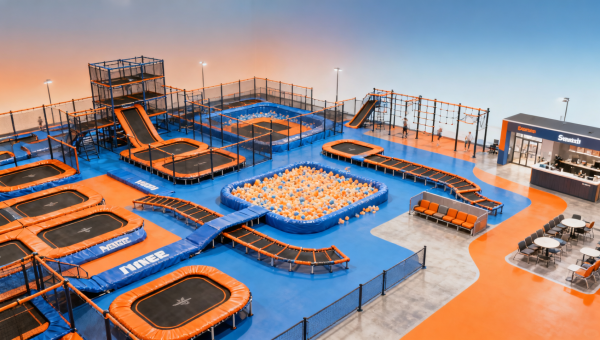
This matters even more when a project includes mixed attractions such as foam pits, ninja courses, soft play zones, birthday rooms, café seating, or nearby family entertainment concepts. A park that appears large enough at 2,000-4,000 square meters may still underperform if circulation, session turnover, and safety supervision were modeled with the wrong assumptions. Sound weekend planning helps procurement teams compare suppliers more accurately and helps commercial operators avoid hidden bottlenecks.
Why Weekend Capacity Forecasts Fail in Trampoline Parks
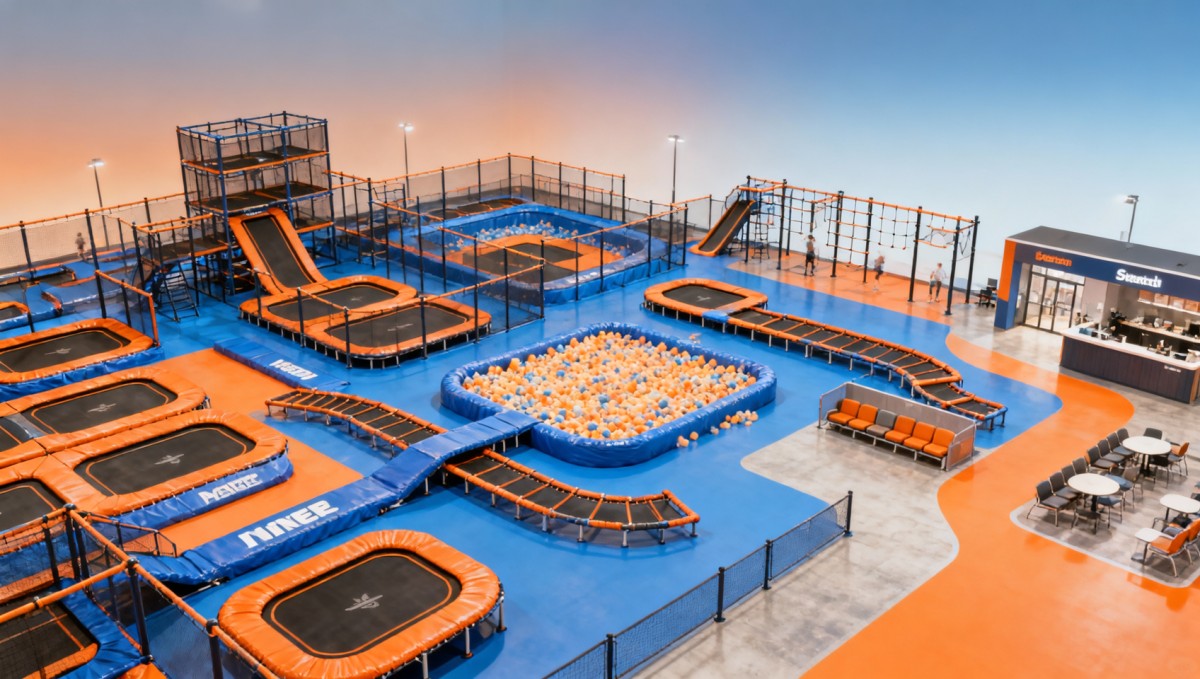
Many trampoline park business plans begin with average daily attendance. That approach is convenient, but weekends rarely behave like an average day. In practice, Saturday traffic can be 1.8x to 3x higher than a Tuesday baseline, while peak arrival windows often compress into just 3 or 4 high-pressure periods. When buyers assess equipment layouts using a flat daily number, they overlook how demand clusters in short bursts.
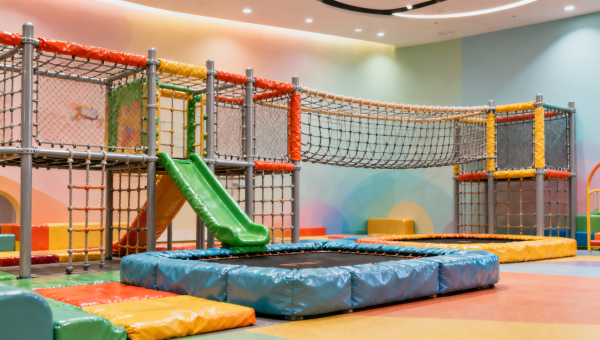
A second mistake is borrowing benchmarks from indoor playgrounds or family activity centers that have different dwell-time patterns. A trampoline park may run 60-minute or 90-minute sessions, but total guest occupancy often lasts 90-150 minutes once check-in, waivers, socks purchase, café time, and birthday gatherings are included. That means a venue can look manageable based on jump capacity alone while lobby, lockers, restrooms, and party rooms become the real weekend limiters.
There is also a safety throughput issue. A jump zone might theoretically accommodate 120 users per cycle, yet actual safe throughput can be 15%-30% lower after accounting for age segregation, platform transitions, staff intervention, and cleaning intervals. This gap becomes critical in mixed-age parks where toddlers, teens, and adult groups share the same commercial envelope but require different supervision and circulation logic.
For distributors and sourcing teams, these errors often appear upstream during concept evaluation. A manufacturer may present a compelling equipment count, while an investor focuses on attraction density and aesthetics. However, weekend reliability depends on the relationship between gross area, net playable area, queue lines, exits, viewing zones, and operational staffing. A park with more installed attractions is not always the park with higher weekend revenue stability.
Common planning assumptions that distort real performance
- Using weekday attendance averages to size weekend staffing, front desk stations, and waiver processing.
- Calculating capacity from trampoline bed count alone without adding circulation losses and supervision limits.
- Assuming all visitors enter evenly across the day rather than in 30- to 90-minute arrival waves.
- Ignoring non-jumping companions, who may add 20%-40% to total on-site occupancy.
- Treating birthday parties as incremental revenue without modeling their impact on seating, queue times, and restroom load.
The table below shows how common planning inputs differ from more realistic weekend operating inputs used by experienced buyers and park developers.
The key takeaway is simple: weekend planning fails when park capacity is treated as a static equipment number instead of a dynamic flow system. Procurement teams that evaluate both attraction density and operational throughput are more likely to select layouts that remain commercially viable after opening.
The Real Capacity Drivers Buyers Should Measure
For commercial evaluation, the most useful metric is not only maximum occupancy but effective peak-hour throughput. This measures how many guests can enter, gear up, jump, circulate, rest, and exit without degrading safety or the guest experience. In many trampoline parks, effective throughput is determined by 5 linked constraints: reception, waiver processing, sock sales, jump zone release timing, and support-area congestion.
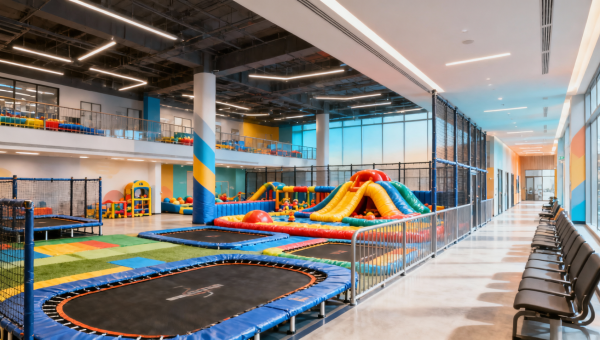
A well-designed venue should separate gross facility area from net active play area. As a practical guide, a park may dedicate 45%-60% of total floor area to actual attractions, while the remaining 40%-55% is needed for circulation, food and beverage, party rooms, lockers, briefing zones, and parent seating. If a supplier proposal over-prioritizes installed equipment and leaves too little service space, weekend crowding will appear quickly even before the jump beds reach their theoretical limit.
Staffing density also changes real capacity. A venue may need 1 floor monitor per 20-35 active jumpers depending on attraction type, age mix, and local safety expectations. Dodgeball courts, wipeout games, foam pits, and climbing features usually require tighter observation than open jump zones. If labor availability is limited, it may be wiser to specify fewer high-intensity features and more balanced circulation space.
Commercial buyers should also examine queue tolerance. Families often accept a 5-10 minute check-in wait, but dissatisfaction rises when equipment queues exceed 15-20 minutes during a paid session. This is especially damaging for birthday groups, where one delayed activity can disrupt catering schedules, room turnover, and party host utilization. In weekend-heavy parks, capacity planning must protect both physical safety and perceived value for time paid.
Key metrics to request from suppliers and planners
- Net playable area as a percentage of total leased area, including how circulation and viewing zones are defined.
- Theoretical versus safe operating capacity for each attraction cluster, not just for the park as a whole.
- Recommended staffing ratio by zone during standard and peak weekend trading periods.
- Average turnover interval for 60-minute, 90-minute, and party-led use cases.
- Projected queue duration under 80%, 90%, and 100% weekend demand scenarios.
Commercial layout areas that are often under-sized
Reception and waiver areas are frequent weak points. If check-in counters, kiosks, or digital waiver stations cannot process the first 80-120 arrivals of the day efficiently, delays cascade into every later session. In many projects, adding 2 self-service terminals and a clearer queuing lane creates more weekend benefit than adding one more premium attraction module.
Parent seating is another overlooked factor. A family entertainment venue may host 1 non-participating adult for every 1.5 to 2 child guests on peak days. If there is insufficient seating, adults spill into circulation routes and reduce visibility near high-activity zones. This can create both operational friction and a weaker premium impression for visitors comparing nearby leisure alternatives.
Restrooms, party rooms, and food service counters matter as much as the attraction mix. A park can win on booking volume and still lose on repeat visits if support infrastructure becomes saturated at midday. For procurement teams, a commercially strong design is one where all core service nodes scale together rather than one where only the play area scales.
How to Model Weekend Throughput More Accurately
A practical weekend model starts with demand waves, not daily totals. Instead of forecasting 1,000 weekend visitors and dividing by opening hours, planners should map arrivals in 30-minute blocks. In many urban or mall-based trampoline parks, 45%-60% of total Saturday traffic can cluster between late morning and late afternoon. This approach reveals where queues, staffing shortages, or zone conflicts will actually appear.
The second step is to split occupancy into at least 4 user groups: active jumpers, waiting jumpers, companions, and party guests. These groups consume different resources. Active jumpers need safe play capacity, waiting jumpers require queue and briefing space, companions occupy lounges and cafés, and party guests often create synchronized surges in food, room, and restroom demand. A single occupancy number hides these differences and produces weak procurement decisions.
The third step is to apply a utilization factor to each attraction. For example, open jump areas may operate at 80%-85% of theoretical capacity during well-supervised sessions, while obstacle or challenge features may run at 60%-75% due to reset time and slower user flow. Applying one blanket utilization rate to the whole park can overstate usable capacity by 10%-25%.
Finally, planners should run at least 3 weekend scenarios: a normal Saturday, a promotional weekend, and a holiday spike. This allows buyers to compare whether a layout only works at 75% occupancy or remains stable when the site reaches 95% of expected peak. For distributors, these scenario tests are valuable sales tools because they shift procurement discussions from equipment quantity to operational confidence.
Sample weekend throughput framework
The following table presents a practical planning framework that B2B evaluators can use during concept review, supplier comparison, or site feasibility discussions.
This framework helps separate attractive design from dependable operating performance. When a supplier can explain throughput at each layer, procurement teams gain a stronger basis for comparing offers, forecasting labor needs, and reducing costly redesign after installation.
Procurement and Layout Decisions That Improve Weekend Performance
Better weekend capacity starts during sourcing. Buyers should evaluate whether a proposed trampoline park is optimized for traffic flow rather than just attraction count. In many commercial tenders, 3 suppliers may offer similar feature lists, but only one will present a zoning strategy that separates beginner users, high-energy teenagers, party groups, and parents. That separation can reduce conflict points and improve session utilization without increasing the lease footprint.
A balanced attraction mix usually outperforms a dense one. Overloading a floor with too many premium modules can shrink walkways, reduce visibility, and create supervision blind spots. In weekend-led business models, buyers should prioritize clear entry sequencing, age segmentation, spectator comfort, and ease of staff intervention. A slightly lower feature count can deliver higher realized revenue if it supports more reliable turnover and better reviews.
It is also important to review the surrounding commercial ecosystem. A trampoline park next to restaurants, cinemas, arcades, or outdoor playground areas may experience stronger batch arrivals, especially on Friday evenings and weekend afternoons. That changes ticketing strategy, parking pressure, and waiting-zone demand. Commercial planners should assess adjacency effects within a 5- to 15-minute walking catchment rather than evaluating the park in isolation.
From a distributor or sourcing perspective, the most credible proposals include an implementation roadmap. This may cover design review, manufacturing lead time, shipment planning, installation sequencing, staff training, and post-opening optimization. For international projects, total delivery from approved design to commissioning may range from 8 to 20 weeks depending on scope, customization, freight mode, and local site readiness.
Buyer checklist for weekend-resilient trampoline park projects
- Confirm whether attraction capacity is shown as theoretical capacity, safe capacity, or recommended operating capacity.
- Request age-zoned layouts and circulation diagrams, not only equipment renders.
- Review staffing assumptions by zone, especially for foam pits, challenge courses, and party operations.
- Check whether the support area can handle 20%-40% additional companion occupancy.
- Ask for scenario planning for rain weekends, holiday peaks, and promotional events.
- Evaluate spare parts, maintenance response, and training support as part of capacity continuity.
Comparison points during supplier selection
The table below can be used by procurement managers and business evaluators to compare competing layouts on practical weekend performance criteria.
When comparing suppliers, commercial buyers should give extra weight to throughput clarity and post-installation support. A park that can maintain smooth weekend operations for 12 months will usually outperform a cheaper installation that creates crowding, high labor strain, and preventable complaints.
FAQ for Evaluators, Distributors, and Procurement Teams
How much buffer should a trampoline park keep for weekend peaks?
A practical target is to preserve a 10%-15% operating buffer above normal peak demand, especially in reception, seating, staffing, and transition areas. This does not mean leaving expensive attraction space idle. It means ensuring the park can absorb weather-driven surges, party overlap, or delayed session exits without immediately degrading queue times and supervision quality.
What is the biggest mistake in comparing trampoline parks with indoor playground projects?
The biggest mistake is assuming similar guest flow just because both serve families. Trampoline parks typically involve stricter release timing, more active supervision, higher movement intensity, and stronger peaks tied to session schedules. Indoor playgrounds may support freer circulation over longer stays, while trampoline venues face harder pressure on check-in, safety monitoring, and synchronized turnover.
Which areas should be reviewed first if a weekend-heavy park feels crowded?
Start with the first 20 minutes of the customer journey: parking access, entrance queuing, waiver completion, sock purchase, locker access, and safety briefing. If these steps are under-sized, crowding can occur even when jump beds are not full. After that, review party room release, parent seating, and restroom load during the midday period.
How long does it usually take to refine capacity planning during procurement?
For a medium-scale commercial project, concept refinement may take 2-4 weeks if the site plan, target age groups, and commercial positioning are already defined. Larger mixed-use leisure venues can require 4-8 weeks, especially when buyers request multiple layout options, phased investment plans, or localization for building code and operations requirements.
Weekend capacity planning in trampoline parks is often wrong because it relies on averages, equipment counts, or borrowed benchmarks instead of real peak-hour flow. For B2B buyers, business evaluators, and channel partners, the better approach is to model demand waves, separate user types, apply safe throughput factors, and assess support infrastructure with the same rigor as attraction selection.
At Global Commercial Trade, sourcing decisions are strongest when layout logic, safety practicality, and commercial throughput are reviewed together. If you are comparing trampoline park concepts, supplier capabilities, or mixed-attraction family entertainment projects, now is the time to request a more detailed capacity review. Contact us to explore tailored sourcing insight, layout evaluation support, and commercially grounded amusement solutions.
Search News
Hot Articles
Popular Tags
Need ExpertConsultation?
Connect with our specialized leisureengineering team for procurementstrategies.
Recommended News
 Apr 17, 2026CPSC AI Safety Alert: 200ms Delay in Child Playground AI Systems = HazardCPSC AI Safety Alert: 200ms delay in child playground AI systems = hazard. Learn how latency compliance impacts Target/Walmart listings, testing, and supply chain.● Theme Park Strategist
 Apr 17, 20262026 Shanghai Sailing Open Adopts Domestic SeaChronos Pro Timing SystemSeaChronos Pro timing system debuts at 2026 Shanghai Sailing Open — ITU-certified, millisecond-accurate, wind- and tide-integrated. A game-changer for marine sports tech.● Theme Park Strategist
 Apr 16, 2026FDA Proposes New Labeling Rules for Sports Nutrition Supplements with Chinese LabelsFDA's new labeling rules for sports nutrition supplements with Chinese labels take effect April 2026—learn compliance must-dos for U.S. importers, manufacturers & brands.● Theme Park Strategist
 Apr 15, 2026Saudi SASO Updates Amusement Ride Standards: VR Devices Now Require Mandatory EMC TestingSaudi SASO's new 2026 standard mandates EMC testing for VR amusement rides, impacting exporters. Learn key compliance strategies for Saudi market access.● Theme Park Strategist
 Apr 14, 2026Japan Mandates Multilingual E-Manuals for Fitness Equipment from April 2026Japan mandates multilingual e-manuals for fitness equipment from April 2026. Learn how this impacts manufacturers & importers with JIS T 0601-1 compliance requirements. Stay ahead of the regulation!● Theme Park Strategist
 Apr 13, 2026WTT Taiyuan Adopts Chinese AI Table Tennis Analysis System with ITTF Export CertificationWTT Taiyuan adopts Chinese AI table tennis analysis system with ITTF export certification, enabling real-time ball speed & spin tracking. A game-changer for sports tech in emerging markets like Southeast Asia & Middle East.● Theme Park Strategist
 Apr 13, 2026First Female Snooker Player Achieves Multiple Century Breaks as Chinese Table Gains WPBSA CertificationChinese snooker player Bai Yulu makes history with multiple century breaks using WPBSA-certified 'Tournament Pro X7' table, marking a milestone for Chinese manufacturing in professional snooker equipment. Discover how this impacts global markets.● Theme Park Strategist
 Apr 13, 2026RCEP Zero Tariff on China's TPU Sports Protective Gear Boosts ASEAN TradeRCEP's zero-tariff policy on China's TPU sports protective gear boosts ASEAN trade, giving Chinese exporters cost advantages over Korean rivals. Learn how manufacturers and distributors can capitalize on this opportunity.● Theme Park Strategist
 Apr 10, 2026Japan's JIS T 9001:2026 Sports Flooring Anti-Slip Standard Mandatory from April 2026Japan's JIS T 9001:2026 standard mandates anti-slip sports flooring (SCOF ≥ 0.6) from April 2026. Chinese exporters must adapt to meet new requirements. Learn key compliance strategies.● Theme Park Strategist
 Apr 10, 2026Bai Yulu Makes History at Snooker World Championship, Sparks Surge in Women's Sports Equipment DemandBai Yulu makes history at Snooker World Championship with two century breaks, sparking 185% surge in women's sports equipment demand. Discover how manufacturers, e-commerce & supply chains can capitalize on this trend.● Theme Park Strategist
 Apr 10, 20262026 Badminton Asia Championships Quarterfinals Schedule Announced, Shi Yuqi to Compete; Southeast Asia Racket Orders Face 6-8 Week Delays2026 Badminton Asia Championships quarterfinals schedule revealed with Shi Yuqi competing, while Southeast Asia faces 6-8 week racket delays. Learn how supply chain issues impact manufacturers and get strategies to navigate equipment shortages.● Theme Park Strategist
 Apr 10, 2026WTT Taiyuan Challenge Sparks Smart Equipment Demand: Japan Buyers Scrutinize AI Training TechDiscover how the WTT Taiyuan Challenge boosts demand for AI training tech as Japanese buyers evaluate smart sports equipment. Learn key opportunities for manufacturers with JIS-certified solutions.● Theme Park Strategist
 Apr 10, 2026Chinese Snooker Players' Success Spurs Global Demand for Cue AccessoriesChinese snooker players' success drives 210% global demand surge for cue accessories. Explore how manufacturers & exporters can capitalize on this trend with UK, German & Australian markets leading inquiries.● Theme Park Strategist
 Apr 10, 2026EU Updates EN 16830:2026 Eyewear Safety Standard, Impacting China's Sports Goggle ExportsEU's updated EN 16830:2026 eyewear safety standard impacts China's sports goggle exports with stricter CE certification requirements. Learn how manufacturers and exporters can adapt to new impact resistance, UV400+, and blue light blocking standards before the September 2026 deadline.● Theme Park Strategist
 Apr 18, 2026PopFeather AI Standard Launched at SMT Forum in ChengduPopFeather AI standard launched at SMT Forum in Chengdu — a breakthrough for AI-powered badminton training interoperability. Discover how this new interface protocol reshapes sports tech integration for manufacturers, AI platforms & global partners.● Theme Park Strategist
 Apr 18, 2026CPSC AI Safety Alert: >200ms Delay = Substantial HazardCPSC AI Safety Alert: >200ms latency = Substantial Hazard for indoor play equipment. Critical for exporters, ODMs & AI module suppliers targeting US markets.● Theme Park Strategist
 Apr 19, 2026Indoor playground themes that age badly after one seasonTrampoline park and indoor playground themes can age fast. Learn which concepts lose value after one season, how musical instruments, percussion instruments, wind instruments, string instruments, outdoor playground ideas, and playground swings inspire longer-lasting, click-worthy design decisions.● Theme Park Strategist
 Apr 19, 2026Trampoline park capacity planning is often wrong for weekendsTrampoline park weekend capacity planning often fails when indoor playground benchmarks are used. Learn how smarter forecasting boosts safety, flow, and revenue across mixed attractions.● Theme Park Strategist
 Apr 19, 2026Indoor playground equipment that wears out faster than expectedTrampoline park and indoor playground equipment wearing out too fast? Learn what commercial buyers should check across outdoor playground, playground swings, and system durability before sourcing.● Theme Park Strategist
 Apr 19, 2026What makes an indoor playground easier to maintain daily?Indoor playground and trampoline park buyers: discover low-maintenance design tips, from modular layouts to durable surfaces, and compare with outdoor playgrounds, playground swings, and musical instruments.● Theme Park Strategist
 Apr 19, 2026Trampoline park layout mistakes that reduce repeat visitsTrampoline park layout mistakes can hurt repeat visits. Learn how indoor playground, outdoor playground, and playground swings planning improves flow, safety, and family appeal.● Theme Park Strategist
 Apr 19, 2026Why trampoline park insurance costs vary more than expectedTrampoline park insurance costs vary with layout, staffing, claims, and mixed-use features like an indoor playground, outdoor playground, and playground swings—learn what drives premiums.● Theme Park Strategist
 Apr 18, 2026Inclusive playground handrails: Are height and grip diameter truly standardized across brands?Inclusive playground handrails: Discover if height & grip diameter truly meet ADA/EN standards—get verified OEM data, real-world benchmarks, and compliant sourcing for leisure parks, theme park rides & more.● Theme Park Strategist
 Apr 18, 2026Soundproofing materials for indoor playgrounds: Which types actually reduce impact noise?Soundproofing materials for indoor playgrounds that actually reduce impact noise—tested for swings, structures & inclusive play. Expert OEM/ODM sourcing.● Theme Park Strategist