SASO Updates EMC Standard for VR Haptic Devices in Saudi Arabia
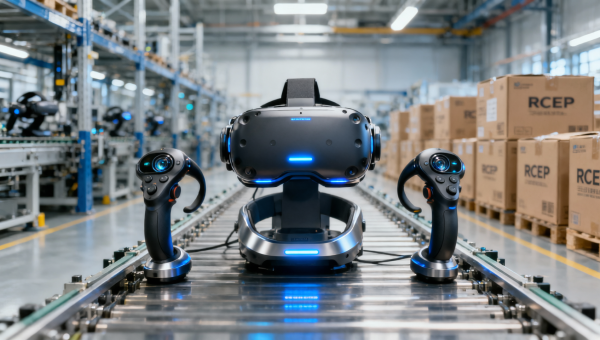
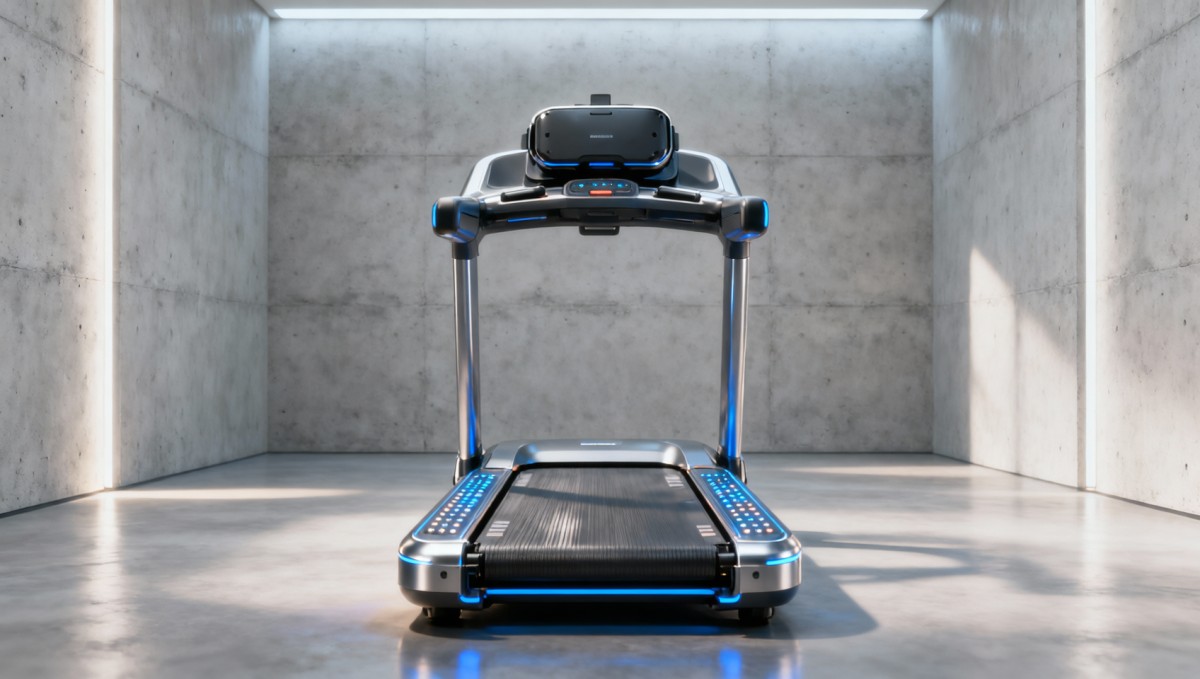
Saudi Arabia’s Standards, Metrology and Quality Organization (SASO) revised its electromagnetic compatibility (EMC) standard for VR haptic devices on April 18, 2026 — mandating Class B emission limits for commercial-grade VR haptic equipment. This update directly affects manufacturers and exporters of VR treadmills, AR interactive walls, and immersive training pods targeting the Saudi market.
Event Overview
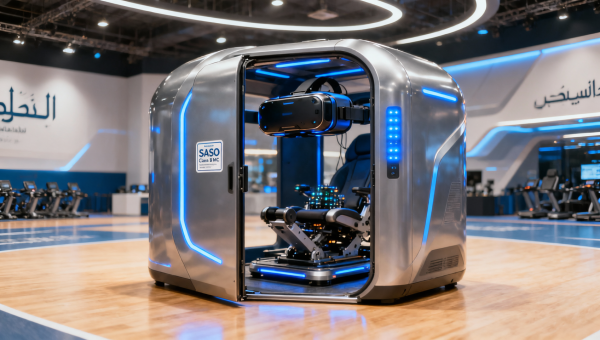
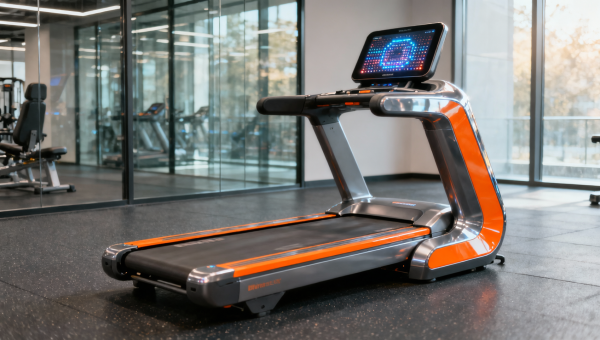
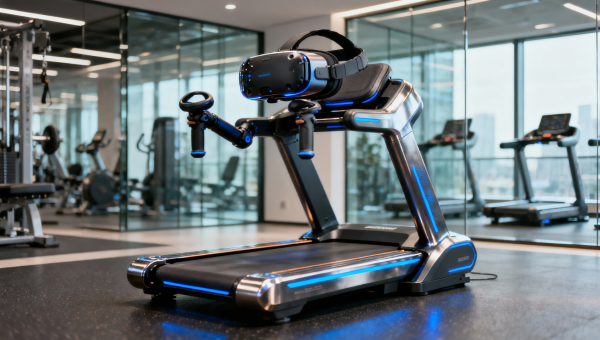
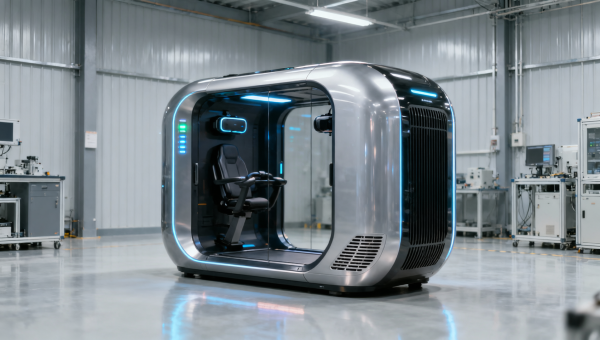
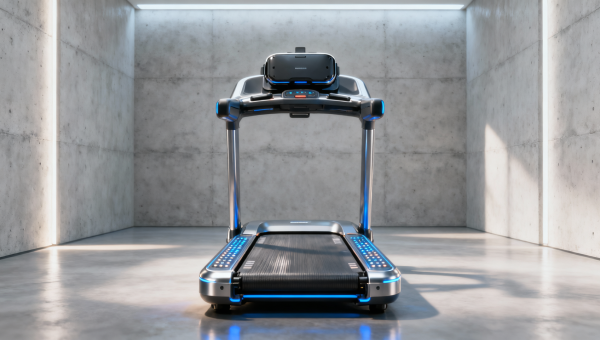
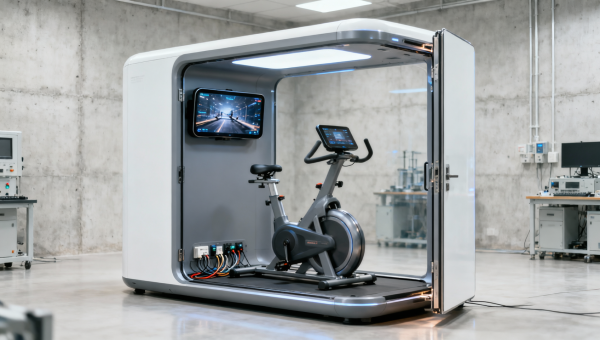
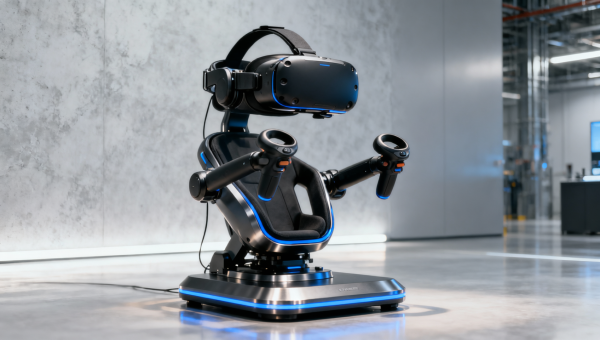
On April 18, 2026, SASO published the updated standard SASO IEC 61000-6-3:2026. The revision upgrades the required EMC emission limits for commercial VR haptic devices — including VR treadmills, AR interactive walls, and immersive training cabins — from Class A to Class B. Class B applies to equipment intended for residential and mixed commercial-residential environments. Products failing to meet the new Class B limits will be prohibited from customs clearance in Saudi Arabia starting July 1, 2026. Chinese manufacturers must complete technical compliance adjustments and SASO registration (including application of the updated conformity mark) within 60 days of the standard’s publication.
Industries Affected
VR/AR Hardware Manufacturers (OEM/ODM)
Manufacturers producing VR haptic systems for export to Saudi Arabia are directly impacted because Class B imposes stricter radiated and conducted emission thresholds than Class A — particularly at lower frequencies (e.g., 150 kHz–30 MHz). Compliance may require redesign of power supplies, shielding of control boards, or retesting of entire system configurations.
Export Trading Companies & Distributors
Trading firms handling VR haptic equipment destined for Saudi Arabia face heightened pre-shipment verification responsibilities. Under the new rule, customs rejection risk increases significantly if products lack valid SASO registration tied to the 2026 Class B declaration. Documentation alignment — especially between test reports, technical files, and SASO’s e-SASO portal entries — becomes a critical operational checkpoint.
EMC Testing Laboratories & Certification Bodies
Laboratories accredited for SASO EMC testing must confirm their test protocols and report templates align with SASO IEC 61000-6-3:2026. Notably, the standard references updated measurement setups and uncertainty requirements under Class B. Labs serving Chinese exporters may see increased demand for pre-compliance scans and full-system Class B validation — especially for multi-component immersive setups where subsystem interactions affect overall emissions.
What Relevant Enterprises Should Monitor and Do Now
Confirm product classification against SASO’s official scope notes
Analysis shows SASO’s definition of “commercial VR haptic devices” explicitly includes VR treadmills, AR interactive walls, and immersive training cabins — but excludes standalone VR headsets without integrated motion feedback or environmental actuation. Exporters should verify whether their specific models fall within the regulated scope before initiating redesign or retesting.
Validate existing test reports against the 2026 edition’s technical annexes
From industry perspective, many Class A test reports issued under prior editions (e.g., SASO IEC 61000-6-3:2019) do not cover Class B margin assessments or updated test site validation criteria. Firms should cross-check report dates, test standards cited, and measurement uncertainty statements — rather than assuming prior certification remains valid.
Initiate SASO registration updates no later than June 17, 2026
Current more suitable understanding is that SASO’s e-SASO portal requires separate product registrations for each model line, and newly submitted registrations must reference SASO IEC 61000-6-3:2026 and include Class B-compliant test reports. Registration processing times can exceed 10 working days; submitting by mid-June allows buffer for document correction or clarification requests.
Review supply chain components for potential EMC ripple effects
Observation shows that even minor changes — such as switching to a different AC-DC adapter or motor driver IC — may shift emission profiles beyond Class B limits. Manufacturers should audit bill-of-materials (BOM) revisions made since last certification and re-evaluate high-risk subassemblies (e.g., motion-control modules, haptic feedback actuators) for retesting.
Editorial Perspective / Industry Observation
This update is better understood as a regulatory signal confirming SASO’s strategic shift toward harmonizing EMC enforcement with end-user environment realities — especially as immersive training and experiential retail spaces expand across Saudi cities. From industry angle, it reflects tightening alignment with IEC 61000-6-3:2023 (Ed. 4.0), suggesting future SASO revisions may further emphasize real-world installation conditions over lab-only performance. It is not yet a broad-based market barrier, but rather a targeted technical gate — one that rewards proactive compliance planning over reactive remediation.
More importantly, this change signals that SASO is increasingly treating immersive technology hardware not as niche industrial equipment (Class A), but as consumer-facing infrastructure — placing greater emphasis on coexistence with residential electronics and wireless networks. That framing may inform future requirements in areas such as cybersecurity or energy efficiency.
Therefore, the current impact is operational and time-bound — not structural. However, sustained attention is warranted: SASO has indicated that additional updates to the broader SASO IEC 61000 series are under review, with possible announcements expected in Q3 2026.
Conclusion
This SASO update does not represent a wholesale market access shift, but rather a precise technical recalibration for a defined subset of VR haptic products. Its significance lies in the compressed timeline (60-day implementation window) and the explicit linkage between EMC class designation and physical deployment context. For affected stakeholders, the priority is not speculation about future standards — but ensuring traceable, documented, and portal-aligned Class B compliance by the July 1, 2026 enforcement date.
Information Source
Main source: SASO Official Gazette Notice No. SASO/EMC/VR/2026-001, published April 18, 2026. Pending observation: SASO’s official interpretation of ‘immersive training cabin’ boundaries — particularly regarding modular or retrofit installations — remains subject to case-by-case evaluation and is not yet codified in publicly available guidance documents.
Search News
Hot Articles
- Stage Lighting & TrussCCTV5 Snooker Broadcast Drives 37% Surge in Stage Lighting Export InquiriesApr 21, 2026
- Indoor PlaygroundVietnam Mandates Child Finger-Trap Sensors for Indoor Play EquipmentApr 21, 2026
- Stage Lighting & TrussGuangdong vs. Shanxi CBA Game Highlights Domestic Smart Arena LightingApr 21, 2026
Popular Tags
Need ExpertConsultation?
Connect with our specialized leisureengineering team for procurementstrategies.
Recommended News
 Apr 21, 2026Global VR Fitness Equipment Export Prices Rise 12% in Q1 2026VR fitness equipment export prices surge 12% in Q1 2026—driven by EU safety mandates. Discover cost impacts, compliance risks & supply chain insights.● Theme Park Strategist
 Apr 21, 2026Vietnam TUV SUD Enforces Local Type Testing for VR Fitness CabinsVR fitness cabins entering Vietnam must now undergo local TUV SUD type testing—EMC & safety checks in Hanoi or Ho Chi Minh City starting April 2026. Key for exporters, certifiers & distributors.● Theme Park Strategist
 Apr 21, 2026SASO Updates EMC Standard for VR Motion Devices in Saudi ArabiaSASO EMC update for VR motion devices in Saudi Arabia: Class B compliance now mandatory for fitness pods, edutainment cabins & arcade systems—act now to avoid shipment delays.● Theme Park Strategist
 Apr 20, 2026Global VR Fitness Device Export Price Up 12% in Q1 2026VR fitness device export prices surged 12% in Q1 2026—discover key drivers, regional impacts, and strategic actions for exporters, suppliers & logistics partners.● Theme Park Strategist
 Apr 20, 2026SASO Updates VR Haptic Device EMC Standard to Class B in Saudi ArabiaSASO VR haptic device EMC update: Class B standard now mandatory in Saudi Arabia from July 1, 2026. Ensure compliance for VR/AR hardware, imports & venues.● Theme Park Strategist
 Apr 20, 2026Vietnam TUV SUD Enforces Local Type Test for Commercial VR Fitness CabinsVietnam TUV SUD now mandates local type testing for commercial VR fitness cabins — including latency, EMC & safety checks. Act now to secure QCVN compliance and market access.● Theme Park Strategist
 Apr 17, 2026Global VR Fitness Equipment Export Prices Rise 12% in Q1 2026VR fitness equipment export prices surge 12.3% in Q1 2026—key insights for exporters, manufacturers & supply chain partners on compliance, pricing, and delivery trends.● Theme Park Strategist
 Apr 17, 2026SASO 2891:2026 Updated: VR Haptic Devices Now Require EMC Class B in Saudi ArabiaSASO 2891:2026 update mandates EMC Class B for VR haptic devices in Saudi Arabia — critical for OEMs, exporters & EdTech suppliers. Act now to avoid delays!● Theme Park Strategist
 Apr 17, 2026Vietnam TUV SUD Mandates Local Type Testing for VR Fitness CabinsVR fitness cabins for gyms & hotels in Vietnam now require local type testing—EMC, thermal, and AI fall detection—to obtain VIEC certification. Act now to avoid delays!● Theme Park Strategist
 Apr 16, 2026VR Fitness Device Export Prices Up 12% — China Supply Stability LeadsVR fitness device export prices up 12%—China’s supply stability and modular hardware-software delivery redefine global competitiveness. Act now.● Theme Park Strategist
 Apr 16, 2026Vietnam Mandates Local TUV SUD Type Testing for VR Fitness CabinsVR fitness cabins entering Vietnam must now pass local TÜV SÜD type testing in Hanoi—key for compliance, customs clearance & market access by July 1, 2026.● Theme Park Strategist
 Apr 16, 2026SASO Updates Playground Standards: VR Devices Now Require EMC TestingSASO now mandates EMC testing for VR playground devices in Saudi Arabia—key update for VR cycling, climbing & motion cabins exporters.● Theme Park Strategist
 Apr 15, 2026Vietnam's New Regulation: Commercial VR Fitness Pods Require Local TUV SUD TestingVietnam's new regulation mandates TUV SUD testing for commercial VR fitness pods. Learn how this impacts exporters, compliance timelines, and market entry strategies for Chinese manufacturers.● Theme Park Strategist
 Apr 15, 2026Global VR Fitness Equipment Export Prices Rise 12% YoY, China Maintains Supply Chain StabilityGlobal VR fitness equipment export prices surge 12% YoY in 2026 Q1, with China maintaining 96.3% delivery reliability. Key insights for VR hardware manufacturers & fitness distributors facing cost pressures.● Theme Park Strategist
 Apr 14, 2026US CPSC Seeks Comments on New Fitness Tracker Rules, Chinese Exporters Need UL/ETL ComplianceUS CPSC proposes new UL/ETL compliance rules for fitness trackers, impacting Chinese exporters. Learn key action points and industry impacts to stay ahead of regulatory changes affecting wearable tech exports to America.● Theme Park Strategist
 Apr 13, 20262026 Chinese Youth League Upgrades Format with VR Training PodsDiscover how China's 2026 Youth League VR training pods revolutionize football development, boosting exports by 210%. Learn about FIFA-certified tech transforming player training.● Theme Park Strategist
 Apr 09, 2026US CPSC Proposes New VR Safety Standards for Children's Indoor Play EquipmentUS CPSC proposes new VR safety standards for children's indoor play equipment, including dizziness testing and age grading. Learn how these regulations impact VR manufacturers and get compliance strategies.● Theme Park Strategist
 Apr 22, 2026SASO Updates EMC Standard for VR Haptic Devices in Saudi ArabiaSASO EMC standard update for VR haptic devices in Saudi Arabia: Class B compliance required by July 1, 2026 — critical for VR treadmills, AR walls & training pods.● Theme Park Strategist
 Apr 22, 2026Global VR Fitness Device Export Price Up 12% in Q1 2026VR fitness device export prices surge 12% to $1,842/unit in Q1 2026 — discover why China’s 38-day lead times are reshaping global procurement strategies.● Theme Park Strategist
 Apr 22, 2026Vietnam TUV SUD New Rule: VR Fitness Pods Require Local Type TestVR fitness pods now require local type testing in Vietnam per TUV SUD’s new rule—impacting exporters, costs & lead times. Act now!● Theme Park Strategist
 Apr 22, 2026Why Some Arcade Games Perform Well at First Then Fade FastArcade games can shine early then fade fast. Learn how trampoline park, indoor playground, and adventure playground buyers can spot ROI risks and choose longer-lasting winners.● Theme Park Strategist
 Apr 22, 2026Arcade Games That Keep Players Longer Without Prize InflationArcade games that boost dwell time in trampoline park, indoor playground, and adventure playground venues—discover smarter, prize-controlled strategies that improve replay, margins, and ROI.● Theme Park Strategist
 Apr 19, 2026Global VR Fitness Device Export Prices Rise 12.3% QoQVR fitness device export prices surge 12.3% QoQ to $2,840 — driven by EU EN 1176-7 & US CPSC compliance. Key insights for exporters, manufacturers & logistics partners.● Theme Park Strategist
 Apr 19, 2026SASO Updates EMC Standard for VR Haptic Devices in Saudi ArabiaSASO EMC update for VR haptic devices in Saudi Arabia: Class B limits effective July 2026 — retest now to avoid shipment delays & customs hold.● Theme Park Strategist