Why Some Arcade Games Perform Well at First Then Fade Fast
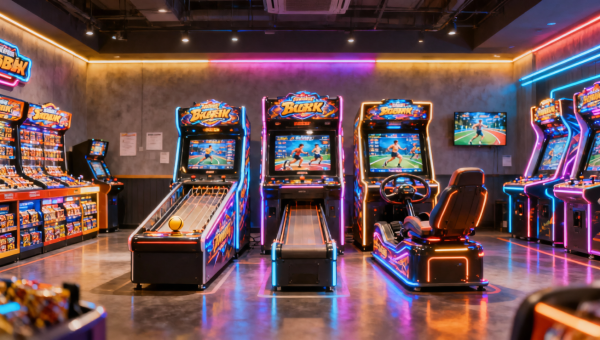
Some arcade games generate strong day-one interest, deliver a short burst of revenue, and then decline much faster than operators expected. For buyers comparing arcade machines for a family entertainment center, indoor playground, trampoline park, or broader amusement project, this is not just a product issue—it is an investment risk. In most cases, fast fade happens when a game is built for novelty rather than repeat play, when its revenue model does not match the venue’s customer flow, or when operators overestimate trend demand and underestimate lifecycle management. The key is not simply asking whether a game is popular now, but whether it can sustain engagement, fit the site’s audience, and support reliable long-term returns.
What buyers are really trying to understand before investing in arcade games
The core search intent behind this topic is commercial decision-making. Buyers, sourcing teams, distributors, and business evaluators are usually not looking for a simple explanation of player behavior. They want to know why some arcade games perform well at first then fade fast, how to spot those risks early, and what evaluation criteria can reduce poor purchasing decisions.
For this audience, the most important questions are practical:
- Which types of arcade games tend to peak early and decline quickly?
- How can a buyer tell the difference between a trend-driven hit and a durable revenue generator?
- What operating signals indicate that performance is weakening?
- How should game selection change depending on venue type, traffic pattern, and customer age group?
- What should be checked with suppliers before placing an order?
These are sourcing and ROI questions, not just entertainment questions. That is why the right evaluation framework matters more than short-term sales claims.
Why some arcade games start strong but lose momentum quickly
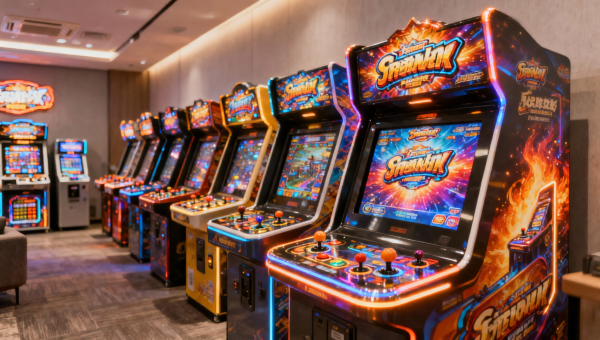
In commercial amusement environments, early success is often driven by visibility, novelty, and impulse play. A new machine with eye-catching design, lights, sound, or a recognizable theme can attract attention immediately. But attention alone does not guarantee long-term earning power.
There are several common reasons for rapid decline:
1. The game is built around novelty, not replay value
Many machines deliver a strong first impression but a shallow repeat experience. Once players understand the mechanic, there may be little challenge progression, social competition, or skill development to bring them back. This is especially common in games that rely on a single visual gimmick or one repeated action.
2. Initial performance is boosted by curiosity rather than true demand
New arrivals often benefit from launch excitement. Customers try the machine because it is different, not because it matches their long-term entertainment preferences. This creates misleading early revenue data. Operators may interpret the first few weeks as proof of strong product-market fit when the real driver was simply curiosity.
3. The game does not match the venue’s core traffic profile
A game may perform well in a high-volume mall arcade but not in a destination-based trampoline park or adventure playground. Venues differ in dwell time, repeat visitation, age mix, and spending behavior. If the machine was selected because it performed elsewhere without adjusting for local audience patterns, decline is more likely.
4. The reward loop is poorly designed
Games that are too easy, too hard, too repetitive, or too dependent on luck often lose player interest. Good long-term arcade performance usually depends on a balanced reward loop: immediate satisfaction, visible progress, and a reason to try again. Without that, players move on quickly.
5. Social media hype creates a distorted purchasing signal
Some products gain visibility because they are highly shareable online. That can create urgency among buyers and distributors. But “viral” does not always mean operationally durable. In B2B procurement, trend amplification should never replace site-based revenue analysis.
6. Maintenance or uptime issues erode repeat play
Even a promising machine can fade if sensors become unreliable, components wear out quickly, or downtime interrupts customer trust. In commercial settings, inconsistent performance damages both player experience and operator confidence.
Which arcade games are most vulnerable to the “fast fade” pattern?
Not every product category carries the same lifecycle risk. Buyers should be particularly cautious with the following types:
- Single-mechanic novelty games: easy to understand, strong first try appeal, but limited depth.
- Trend-licensed machines: dependent on short-lived pop culture relevance.
- Overly passive redemption games: attractive to try once, but not compelling enough for repeat spending.
- Poorly balanced skill games: if challenge calibration is off, players disengage quickly.
- Tech-forward units without content refresh: immersive at launch, but stale if gameplay never evolves.
That does not mean these categories should always be avoided. It means they require closer scrutiny. In some venues, a small percentage of high-novelty machines can still play a useful role in driving attention and supporting visual merchandising. The mistake is overcommitting floor space or budget to products that have limited retention power.
How to evaluate whether an arcade game has long-term earning potential
Commercial buyers need a more disciplined framework than “this machine is popular right now.” A stronger evaluation should include the following factors.
Replayability
Ask whether the game gives players a reason to come back after the first or second attempt. Strong replayability often comes from progressive challenge, score competition, multiplayer interaction, collectible outcomes, or skill mastery.
Audience fit
Review whether the game suits the venue’s actual users. A family entertainment center with mixed-age traffic needs a different game mix than a teen-focused arcade or a trampoline park with short dwell-time bursts between physical activities.
Revenue consistency, not just launch revenue
Request data beyond opening weeks. Buyers should ask suppliers, operators, or distributors for medium-term performance indicators such as 60-day, 90-day, or seasonal earning patterns. Stable earnings matter more than explosive but short-lived starts.
Operational resilience
Check maintenance frequency, spare parts availability, software stability, warranty terms, and service responsiveness. Long-term commercial performance depends heavily on uptime.
Content or engagement refresh potential
Some games maintain performance better because settings, levels, themes, or reward structures can be adjusted over time. Machines with update potential often outperform static experiences in competitive venues.
Floor strategy compatibility
A game should be evaluated as part of a wider mix. Some machines are anchors, some are impulse attractors, and some are steady earners. A product may still be worth buying if its role is understood correctly. Problems arise when an attention-grabbing game is mistakenly treated as a long-term revenue core.
What market signals should procurement teams watch before buying?
For sourcing professionals and business evaluators, several signals can help identify whether demand is durable or inflated:
- Repeat order behavior from established operators: repeat purchases are usually more meaningful than launch buzz.
- Cross-market performance: if a machine works across different venue formats and regions, it may have stronger fundamentals.
- Distributor feedback on replacement cycles: ask how often operators rotate the game out.
- Service ticket patterns: high complaint or repair volume can weaken long-term returns.
- Player retention indicators: if possible, look for data on repeat use rather than just first-play conversion.
- Prize cost and payout balance: in redemption models, bad economics can make apparent popularity commercially weak.
Procurement decisions improve significantly when buyers compare commercial durability signals instead of relying only on show-floor impressions or promotional materials.
Why venue context matters more than trend ranking
One of the biggest mistakes in arcade game sourcing is assuming that a top-performing machine in one setting will automatically succeed in another. Venue context changes everything.
For example:
- Indoor playgrounds often need games that appeal to children quickly, are easy to understand, and support parent-approved spending.
- Trampoline parks typically benefit from games that fit shorter play windows and complement high-energy visitor behavior.
- Adventure playground or active entertainment projects may need machines that add variety without competing directly with physical attractions.
- Traditional arcades or FECs often require a more balanced mix of skill, redemption, social, and visual attraction games.
A machine that fades fast in one venue may still be useful in another if the traffic model, age mix, and play motivation are aligned. This is why commercial buyers should always translate product claims into site-specific fit.
Questions buyers should ask arcade game suppliers before placing an order
Strong supplier conversations can prevent expensive mistakes. Before buying, ask questions such as:
- What is the typical revenue curve after the launch period?
- Which venue types has this game performed best in?
- What percentage of operators reorder or expand with this model?
- What are the most common maintenance issues?
- How quickly are spare parts delivered internationally?
- Can gameplay, payout, difficulty, or content be adjusted over time?
- What is the expected lifecycle before major refresh or replacement?
- Is there field data from similar commercial projects?
Suppliers with real experience should be able to answer these questions with reasonable specificity. If the conversation stays focused only on appearance, launch popularity, or trade show response, buyers should be cautious.
How to build a more resilient arcade game mix
The best commercial operators rarely depend on one “hot” machine. Instead, they create a portfolio approach. A resilient arcade mix usually includes:
- Attention drivers: visually strong games that pull people in.
- Reliable repeat earners: proven machines with broad demographic appeal.
- Skill-based engagement games: products that build loyalty through mastery and competition.
- Flexible family titles: easy-entry options for mixed groups.
- Selective novelty units: limited in number and rotated strategically.
This approach reduces dependence on short trend cycles and improves revenue stability. For distributors and procurement teams, it also creates a stronger basis for category planning and phased investment.
Final takeaway for commercial buyers
When arcade games perform well at first then fade fast, the issue is usually not random. It is often the result of novelty-led demand, weak replayability, poor venue fit, inflated trend signals, or overlooked operational weaknesses. For commercial buyers, the lesson is clear: evaluate arcade games as long-term business assets, not just short-term attractions.
The most successful sourcing decisions come from looking beyond launch excitement and focusing on replay value, audience match, uptime, service support, and lifecycle economics. Whether you are planning a new amusement space, expanding a family entertainment center, or selecting products for distribution, the goal is not simply to buy what is hot. The goal is to identify what can keep earning after the novelty wears off.
Search News
Hot Articles
- Stage Lighting & TrussCCTV5 Snooker Broadcast Drives 37% Surge in Stage Lighting Export InquiriesApr 21, 2026
- Indoor PlaygroundVietnam Mandates Child Finger-Trap Sensors for Indoor Play EquipmentApr 21, 2026
- Stage Lighting & TrussGuangdong vs. Shanxi CBA Game Highlights Domestic Smart Arena LightingApr 21, 2026
Popular Tags
Need ExpertConsultation?
Connect with our specialized leisureengineering team for procurementstrategies.
Recommended News
 Apr 21, 2026Global VR Fitness Equipment Export Prices Rise 12% in Q1 2026VR fitness equipment export prices surge 12% in Q1 2026—driven by EU safety mandates. Discover cost impacts, compliance risks & supply chain insights.● Theme Park Strategist
 Apr 21, 2026Vietnam TUV SUD Enforces Local Type Testing for VR Fitness CabinsVR fitness cabins entering Vietnam must now undergo local TUV SUD type testing—EMC & safety checks in Hanoi or Ho Chi Minh City starting April 2026. Key for exporters, certifiers & distributors.● Theme Park Strategist
 Apr 21, 2026SASO Updates EMC Standard for VR Motion Devices in Saudi ArabiaSASO EMC update for VR motion devices in Saudi Arabia: Class B compliance now mandatory for fitness pods, edutainment cabins & arcade systems—act now to avoid shipment delays.● Theme Park Strategist
 Apr 20, 2026Global VR Fitness Device Export Price Up 12% in Q1 2026VR fitness device export prices surged 12% in Q1 2026—discover key drivers, regional impacts, and strategic actions for exporters, suppliers & logistics partners.● Theme Park Strategist
 Apr 20, 2026SASO Updates VR Haptic Device EMC Standard to Class B in Saudi ArabiaSASO VR haptic device EMC update: Class B standard now mandatory in Saudi Arabia from July 1, 2026. Ensure compliance for VR/AR hardware, imports & venues.● Theme Park Strategist
 Apr 20, 2026Vietnam TUV SUD Enforces Local Type Test for Commercial VR Fitness CabinsVietnam TUV SUD now mandates local type testing for commercial VR fitness cabins — including latency, EMC & safety checks. Act now to secure QCVN compliance and market access.● Theme Park Strategist
 Apr 17, 2026Global VR Fitness Equipment Export Prices Rise 12% in Q1 2026VR fitness equipment export prices surge 12.3% in Q1 2026—key insights for exporters, manufacturers & supply chain partners on compliance, pricing, and delivery trends.● Theme Park Strategist
 Apr 17, 2026SASO 2891:2026 Updated: VR Haptic Devices Now Require EMC Class B in Saudi ArabiaSASO 2891:2026 update mandates EMC Class B for VR haptic devices in Saudi Arabia — critical for OEMs, exporters & EdTech suppliers. Act now to avoid delays!● Theme Park Strategist
 Apr 17, 2026Vietnam TUV SUD Mandates Local Type Testing for VR Fitness CabinsVR fitness cabins for gyms & hotels in Vietnam now require local type testing—EMC, thermal, and AI fall detection—to obtain VIEC certification. Act now to avoid delays!● Theme Park Strategist
 Apr 16, 2026VR Fitness Device Export Prices Up 12% — China Supply Stability LeadsVR fitness device export prices up 12%—China’s supply stability and modular hardware-software delivery redefine global competitiveness. Act now.● Theme Park Strategist
 Apr 16, 2026Vietnam Mandates Local TUV SUD Type Testing for VR Fitness CabinsVR fitness cabins entering Vietnam must now pass local TÜV SÜD type testing in Hanoi—key for compliance, customs clearance & market access by July 1, 2026.● Theme Park Strategist
 Apr 16, 2026SASO Updates Playground Standards: VR Devices Now Require EMC TestingSASO now mandates EMC testing for VR playground devices in Saudi Arabia—key update for VR cycling, climbing & motion cabins exporters.● Theme Park Strategist
 Apr 15, 2026Vietnam's New Regulation: Commercial VR Fitness Pods Require Local TUV SUD TestingVietnam's new regulation mandates TUV SUD testing for commercial VR fitness pods. Learn how this impacts exporters, compliance timelines, and market entry strategies for Chinese manufacturers.● Theme Park Strategist
 Apr 15, 2026Global VR Fitness Equipment Export Prices Rise 12% YoY, China Maintains Supply Chain StabilityGlobal VR fitness equipment export prices surge 12% YoY in 2026 Q1, with China maintaining 96.3% delivery reliability. Key insights for VR hardware manufacturers & fitness distributors facing cost pressures.● Theme Park Strategist
 Apr 14, 2026US CPSC Seeks Comments on New Fitness Tracker Rules, Chinese Exporters Need UL/ETL ComplianceUS CPSC proposes new UL/ETL compliance rules for fitness trackers, impacting Chinese exporters. Learn key action points and industry impacts to stay ahead of regulatory changes affecting wearable tech exports to America.● Theme Park Strategist
 Apr 13, 20262026 Chinese Youth League Upgrades Format with VR Training PodsDiscover how China's 2026 Youth League VR training pods revolutionize football development, boosting exports by 210%. Learn about FIFA-certified tech transforming player training.● Theme Park Strategist
 Apr 09, 2026US CPSC Proposes New VR Safety Standards for Children's Indoor Play EquipmentUS CPSC proposes new VR safety standards for children's indoor play equipment, including dizziness testing and age grading. Learn how these regulations impact VR manufacturers and get compliance strategies.● Theme Park Strategist
 Apr 22, 2026SASO Updates EMC Standard for VR Haptic Devices in Saudi ArabiaSASO EMC standard update for VR haptic devices in Saudi Arabia: Class B compliance required by July 1, 2026 — critical for VR treadmills, AR walls & training pods.● Theme Park Strategist
 Apr 22, 2026Global VR Fitness Device Export Price Up 12% in Q1 2026VR fitness device export prices surge 12% to $1,842/unit in Q1 2026 — discover why China’s 38-day lead times are reshaping global procurement strategies.● Theme Park Strategist
 Apr 22, 2026Vietnam TUV SUD New Rule: VR Fitness Pods Require Local Type TestVR fitness pods now require local type testing in Vietnam per TUV SUD’s new rule—impacting exporters, costs & lead times. Act now!● Theme Park Strategist
 Apr 22, 2026Why Some Arcade Games Perform Well at First Then Fade FastArcade games can shine early then fade fast. Learn how trampoline park, indoor playground, and adventure playground buyers can spot ROI risks and choose longer-lasting winners.● Theme Park Strategist
 Apr 22, 2026Arcade Games That Keep Players Longer Without Prize InflationArcade games that boost dwell time in trampoline park, indoor playground, and adventure playground venues—discover smarter, prize-controlled strategies that improve replay, margins, and ROI.● Theme Park Strategist
 Apr 19, 2026Global VR Fitness Device Export Prices Rise 12.3% QoQVR fitness device export prices surge 12.3% QoQ to $2,840 — driven by EU EN 1176-7 & US CPSC compliance. Key insights for exporters, manufacturers & logistics partners.● Theme Park Strategist
 Apr 19, 2026SASO Updates EMC Standard for VR Haptic Devices in Saudi ArabiaSASO EMC update for VR haptic devices in Saudi Arabia: Class B limits effective July 2026 — retest now to avoid shipment delays & customs hold.● Theme Park Strategist