Percussion Instruments That Handle Heavy Use Better in Classrooms
Choosing percussion instruments for busy classrooms requires more than a focus on sound alone. For buyers comparing musical instruments across educational settings, durability, safety, and long-term value matter just as much as performance. This guide explores which percussion instruments handle heavy daily use better, helping procurement teams, distributors, and school decision-makers identify reliable options within the wider market of string instruments, wind instruments, and office supplies.
For most classroom environments, the percussion instruments that hold up best under heavy use are hand drums with reinforced shells, tambourines with durable synthetic heads or solid frames, woodblocks and claves made from dense hardwood or impact-resistant composites, castanets designed for education use, and classroom xylophones or metallophones built with replaceable bars and sturdy resonator frames. In practical procurement terms, the best choice is usually not the cheapest unit item, but the model that combines impact resistance, easy maintenance, safe construction, and predictable replacement-part availability.
What buyers are really trying to determine when comparing classroom percussion instruments
When schools, distributors, and institutional buyers search for percussion instruments that handle heavy use better in classrooms, they are usually not looking for a general history of percussion. They want to know which products survive frequent handling by different age groups, require fewer replacements, stay safe in group settings, and justify the budget over time.
For procurement and evaluation teams, the main questions are straightforward:
- Which percussion instruments are least likely to crack, loosen, dent, or go out of tune in daily classroom use?
- Which materials perform better under repeated student handling?
- Which models are easier to sanitize, stack, store, and maintain?
- Which products reduce replacement costs over a school year or multi-year purchasing cycle?
- Which suppliers can support consistent quality, OEM/ODM requirements, and bulk delivery?
That means durability, classroom safety, and total cost of ownership should lead the discussion, with sound quality evaluated in context rather than in isolation.
Which percussion instruments usually last longer in busy classrooms
Not every percussion instrument is equally suited to heavy educational use. Some are excellent musically but less ideal for high-frequency handling by large student groups. Below are the categories that typically perform better in demanding classroom settings.
1. Hand drums with reinforced synthetic heads
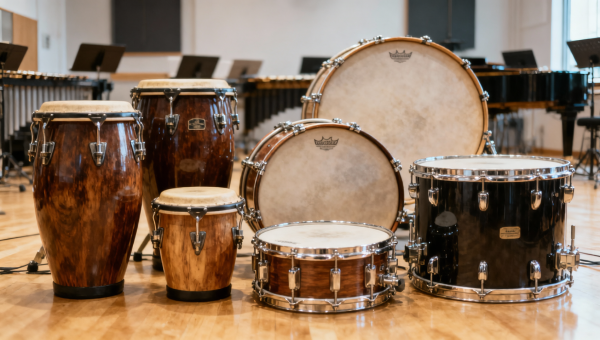
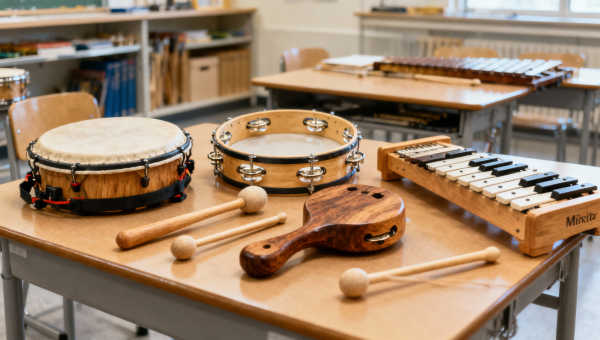
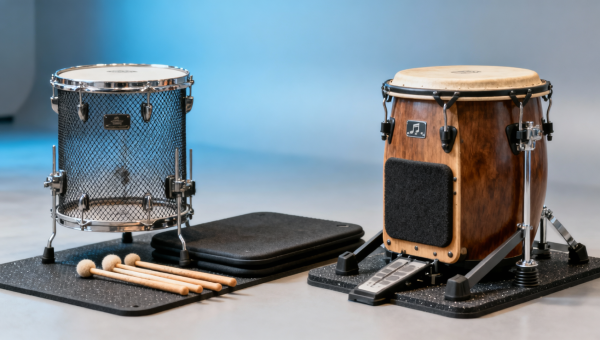
Classroom hand drums are among the best-performing options when built with reinforced rims, stable shells, and synthetic drumheads. Compared with natural skin heads, synthetic heads generally offer better resistance to humidity, accidental impacts, and inconsistent storage conditions. That makes them a more practical fit for schools, especially where instruments move between classrooms or multipurpose rooms.
Buyers should look for:
- Rounded bearing edges to reduce head damage
- Impact-resistant shells such as molded composite or quality plywood
- Protected tuning hardware or fixed-head designs for younger users
- Non-slip bases or rubberized contact points
Frame drums and tubanos often outperform lower-grade bongos in general classroom durability because they have fewer small components exposed to rough handling.
2. Tambourines with solid frames and fewer failure points
Tambourines are common in music education, but not all versions are built for institutional use. Models with thin plastic bodies, poorly fixed jingles, or weak head attachments can fail quickly. For heavy classroom use, solid wood tambourines with reinforced construction or robust molded polymer frames are often the better choice.
Headless tambourines can be especially durable because they eliminate one of the most vulnerable parts. For early-years or general rhythm activities, this can significantly reduce replacement frequency.
3. Woodblocks, claves, and rhythm sticks made from dense materials
These are often among the most durable classroom percussion instruments because they are simple, compact, and have no tuning systems or fragile fittings. Dense hardwood models usually deliver strong longevity, but high-quality composite alternatives can also perform well, especially where moisture exposure or sanitation routines are frequent.
For buyers focused on lifecycle value, this category often offers one of the best cost-to-durability ratios in the percussion family.
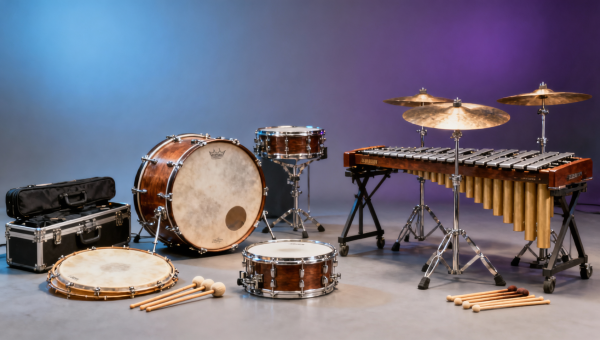
4. Classroom xylophones and metallophones with replaceable parts
Melodic percussion is a higher-investment category, so durability depends heavily on design quality. The best classroom xylophones and metallophones feature secure bar mounting, stable resonator boxes, and easy access to replacement bars, mallets, and hardware. Instruments that cannot be repaired economically may create hidden long-term costs even if the initial purchase price is lower.
In high-use environments, models with labeled bars, protected corners, and reinforced frames are generally more procurement-friendly than lightweight entry-level units made for occasional home use.
5. Maracas, egg shakers, and handheld shakers with sealed construction
These are highly practical for group rhythm work, but only if build quality is consistent. Poorly sealed joints, thin handles, and brittle plastic shells tend to fail quickly. Sealed one-piece designs or professionally bonded assemblies usually offer better durability and improved classroom safety.
What material choices make the biggest difference in durability
Material selection has a direct impact on how percussion instruments perform under heavy classroom use. For buyers and distributors, this is one of the most important comparison points because material quality affects lifespan, maintenance needs, and user safety.
Synthetic heads vs. natural heads
Synthetic drumheads are usually the better classroom choice. They are less sensitive to humidity and temperature changes, easier to clean, and more predictable in large educational inventories. Natural heads may appeal in certain specialized music programs, but for general classroom use, they often introduce more maintenance risk.
Hardwood vs. low-density wood
Dense hardwood tends to withstand repeated striking better than softer wood. In instruments such as claves, blocks, and rhythm sticks, hardwood can significantly improve service life. However, finish quality matters too. Poor sealing can still lead to chipping, splintering, or moisture-related degradation.
Engineered composites and molded polymers
Well-made composite and polymer instruments can perform extremely well in schools. They resist cracking, tolerate frequent cleaning, and often provide greater consistency across large orders. For institutions prioritizing standardization and lower maintenance, these materials can be highly attractive.
Metal components and fastening systems
In tambourines, xylophones, and other classroom percussion instruments, weak screws, exposed staples, and low-grade jingle mounts often become early failure points. Buyers should assess how metal hardware is attached and whether repeated vibration is likely to loosen components over time.
How to judge long-term value instead of just purchase price
For schools and commercial buyers, the better question is not “Which percussion instruments are cheapest?” but “Which instruments create the lowest cost per year of reliable use?” This is where many buying decisions improve.
Long-term value usually depends on five factors:
- Durability under repeated handling: Can the instrument tolerate drops, stacking, and use by multiple age groups?
- Maintenance burden: Does it require tuning, part replacement, or special environmental control?
- Safety profile: Are there sharp edges, detachable small pieces, or breakable surfaces?
- Replacement-part support: Can bars, mallets, heads, or hardware be sourced efficiently?
- Useful lifespan across school cycles: Will it still perform after one, three, or five years of regular use?
A lower-priced instrument that fails every semester is usually more expensive than a better-built education-grade model that remains in service for several years. This is especially relevant for distributors and institutional purchasing teams managing tenders, framework agreements, or multi-campus rollouts.
What safety and maintenance issues matter most in educational settings
In classrooms, durability and safety are closely linked. Instruments that break easily can create direct user risks and extra administrative burden. Procurement teams should evaluate classroom percussion instruments not only for performance, but also for how safely they age over time.
Key safety checks
- Smooth edges and child-safe finishes
- Securely fixed jingles, bars, and handles
- No splinter-prone wood or brittle low-grade plastic
- No sharp exposed hardware
- Compliance with relevant material and safety standards in the destination market
Key maintenance checks
- Ease of cleaning between classes
- Resistance to humidity and storage fluctuation
- Simple repair procedures for school staff or service partners
- Availability of mallets, replacement bars, and drumheads
- Clear documentation from the supplier
These factors are often more important in real educational use than subtle tonal differences that may matter in advanced performance settings but not in general classroom instruction.
Best-fit recommendations by classroom use case
Different educational environments place different demands on percussion instruments. Matching the product type to the use case helps buyers avoid overpaying or under-specifying.
Early years and primary classrooms
Prioritize simple, sealed, impact-resistant instruments such as egg shakers, headless tambourines, rhythm sticks, and fixed-head hand drums. These reduce safety concerns and usually withstand broad, unsupervised handling better.
General music classrooms
A balanced set often includes durable hand percussion, woodblocks, tambourines, triangles with secure beaters, and selected melodic percussion with replaceable parts. The goal is versatility with manageable maintenance.
Shared institutional inventory
If instruments are moved between rooms or campuses, reinforced frames, molded components, and stackable storage-friendly designs become more valuable. Portability and ruggedness should be prioritized over decorative finishes.
Distributor and wholesale channel supply
For distributors, the most commercially viable classroom percussion instruments are often those with low return rates, broad curriculum compatibility, and stable repeat demand. Consistency across batches and the ability to support private label or OEM requirements can also shape profitability.
What procurement teams should ask suppliers before placing larger orders
For B2B buyers, product durability claims should be validated through supplier discussion and documentation. Before committing to volume purchases, it is worth asking a targeted set of questions.
- What testing has been done for repeated impact or classroom use simulation?
- Which materials are used in heads, shells, bars, and handles?
- Are spare parts available, and for how long?
- Can the supplier provide safety and compliance documentation for target markets?
- What is the defect rate across recent educational supply orders?
- Can packaging be optimized for institutional distribution and lower freight damage?
- Are OEM/ODM adaptations available for school programs or branded educational lines?
These questions help buyers move beyond catalog descriptions and make decisions based on operational reliability, not marketing language alone.
Final buying takeaway: the most durable classroom percussion instruments are usually the simplest, safest, and easiest to maintain
If the goal is to source percussion instruments that handle heavy use better in classrooms, the strongest options are typically education-grade hand drums with synthetic heads, reinforced tambourines, dense-material rhythm instruments, and xylophones or metallophones designed with replaceable parts. The best-performing products are not always the most expensive, but they are usually the ones engineered for repeated institutional use rather than occasional recreational play.
For information researchers, procurement specialists, business evaluators, and distributors, the smartest buying decision comes from assessing durability, safety, maintenance, and supply continuity together. In classroom environments, long-term value is created by instruments that stay functional, stay safe, and stay serviceable across years of daily use.
Search News
Hot Articles
- Stage Lighting & TrussCCTV5 Snooker Broadcast Drives 37% Surge in Stage Lighting Export InquiriesApr 21, 2026
- Indoor PlaygroundVietnam Mandates Child Finger-Trap Sensors for Indoor Play EquipmentApr 21, 2026
- Stage Lighting & TrussGuangdong vs. Shanxi CBA Game Highlights Domestic Smart Arena LightingApr 21, 2026
Popular Tags
Need ExpertConsultation?
Connect with our specialized leisureengineering team for procurementstrategies.
Recommended News
 Apr 22, 2026Why String Instruments Can Look Similar but Sound Very DifferentString instruments may look alike yet sound vastly different. Explore sourcing insights across musical instruments, plus comparisons with wind instruments and percussion instruments.● Pro Audio Engineer
 Apr 22, 2026String Instruments: Solid Wood or Laminate for Long-Term Use?String instruments guide: compare solid wood vs laminate for long-term use, durability, tone, and sourcing value across musical instruments. Click for smarter B2B buying insights.● Pro Audio Engineer
 Apr 22, 2026What Affects Tone Consistency in Student Wind Instruments?Wind instruments buying guide: discover what affects tone consistency in student musical instruments, with insights comparing percussion instruments and string instruments for smarter school sourcing.● Pro Audio Engineer
 Apr 22, 2026Wind Instruments That Need More Maintenance Than ExpectedWind instruments maintenance guide for buyers: compare musical instruments, string instruments and percussion instruments to reduce service costs and source smarter.● Pro Audio Engineer
 Apr 22, 2026Common Tuning Problems in Percussion Instruments and Their CausesPercussion instruments tuning problems explained for buyers of musical instruments, with practical tips on comparing percussion instruments, string instruments, and wind instruments for reliable commercial sourcing.● Pro Audio Engineer
 Apr 22, 2026Percussion Instruments That Handle Heavy Use Better in ClassroomsPercussion instruments built for classrooms: compare durable musical instruments, from percussion instruments to wind instruments and string instruments, for safer, longer-lasting school use.● Pro Audio Engineer
 Apr 22, 2026What Shortens the Lifespan of Musical Instruments in Daily Use?Musical instruments wear out faster from humidity, poor storage, and rough handling. Learn how string instruments, wind instruments, and percussion instruments last longer with smarter B2B care.● Pro Audio Engineer
 Apr 22, 2026Musical Instruments With the Strongest School Market DemandMusical instruments with strong school demand: compare percussion instruments, wind instruments, and string instruments to find durable, curriculum-ready solutions for smarter school sourcing.● Pro Audio Engineer
 Apr 21, 2026Choosing musical instruments for bands in small venuesMusical instruments for bands in small venues: learn how buyers choose compact, durable setups with better sound control, lower costs, and stronger audience appeal.● Pro Audio Engineer
 Apr 20, 2026Music Accessories Often Overlooked Until They Start Causing ProblemsMusic accessories often cause hidden issues across musical instruments, percussion instruments, wind instruments, string instruments, keyboard instruments, orchestral instruments, music stands, instrument cables, and pro audio equipment.● Pro Audio Engineer
 Apr 20, 2026When Orchestral Instruments Need Custom Cases and Why It MattersMusical instruments and orchestral instruments need custom cases to protect string instruments, wind instruments, percussion instruments, and keyboard instruments during transport. Learn when buyers should upgrade for safer logistics.● Pro Audio Engineer
 Apr 20, 2026Keyboard Instruments in 2026: What Features Are Becoming Standard?Keyboard instruments in 2026 are redefining musical instruments with smarter connectivity, durable builds, and seamless integration with pro audio equipment, instrument cables, music stands, and music accessories.● Pro Audio Engineer
 Apr 20, 2026Music Stands With Folding Designs: Convenient or Less Reliable?Music stands buyers compare folding convenience with long-term reliability across musical instruments, percussion instruments, wind instruments, string instruments, and pro audio equipment.● Pro Audio Engineer
 Apr 20, 2026String Instruments With Better Tuning Stability in Busy Use CyclesExplore string instruments with better tuning stability for busy venues. Compare musical instruments, percussion instruments, and wind instruments to source reliable, low-maintenance performance solutions.● Pro Audio Engineer
 Apr 20, 2026Why Wind Instruments React So Differently to Climate and StorageWind instruments react fast to climate and storage. Compare musical instruments, percussion instruments, string instruments, and music accessories to cut maintenance risk and buy smarter.● Pro Audio Engineer
 Apr 20, 2026Percussion Instruments for Shared Spaces: What Reduces Noise Most?Percussion instruments for shared spaces: discover what reduces noise most across musical instruments, with smart comparisons to wind instruments, string instruments, keyboard instruments, and practical accessories.● Pro Audio Engineer
 Apr 20, 2026How to Spot Musical Instruments That Look Fine but Wear Out FastDiscover how to spot musical instruments that look premium but wear out fast. Learn key checks for percussion instruments, wind instruments, string instruments, keyboard instruments, music stands, instrument cables, pro audio equipment, and music accessories before you buy.● Pro Audio Engineer
 Apr 20, 2026Music Accessories That Quietly Affect Daily Performance QualityExplore how music accessories shape daily performance quality—from music stands and instrument cables to pro audio equipment for musical instruments, percussion instruments, wind instruments, string instruments, and keyboard instruments.● Pro Audio Engineer
 Apr 20, 2026Orchestral Instruments With the Highest Repair RatesExplore which orchestral instruments have the highest repair rates across wind instruments, string instruments, percussion instruments, and keyboard instruments, with smart buying tips for musical instruments, music accessories, music stands, instrument cables, and pro audio equipment.● Pro Audio Engineer
 Apr 20, 2026Are Keyboard Instruments With Weighted Keys Worth the Extra Cost?Keyboard instruments with weighted keys: discover if the extra cost pays off for musical instruments buyers, with smart tips on music accessories, instrument cables, and pro audio equipment.● Pro Audio Engineer
 Apr 20, 2026Music Stands That Stay Stable on Stage: What Makes the Difference?Music stands for musical instruments: discover what keeps them stable on stage for string instruments, wind instruments, percussion instruments, and keyboard instruments—plus smart buying tips.● Pro Audio Engineer
 Apr 20, 2026String Instruments: Solid Wood or Laminated for Regular Use?String instruments guide for regular use: compare solid wood vs laminated models across musical instruments setups with music accessories, pro audio equipment, and smarter sourcing insights.● Pro Audio Engineer
 Apr 20, 2026Wind Instruments for Schools and Venues: What Affects Longevity?Wind instruments longevity guide for schools and venues: compare musical instruments, percussion instruments, string instruments, and keyboard instruments to source smarter and reduce total cost.● Pro Audio Engineer
 Apr 20, 2026Why Some Percussion Instruments Cost More to Maintain Than ExpectedExplore why percussion instruments can cost more to maintain than expected, and compare musical instruments, orchestral instruments, music accessories, music stands, instrument cables, and pro audio equipment.● Pro Audio Engineer