Are Keyboard Instruments With Weighted Keys Worth the Extra Cost?
For buyers comparing keyboard instruments, the question is not just price but long-term value. Weighted keys can significantly improve playing feel, training results, and commercial appeal, especially when sourcing musical instruments for schools, studios, retailers, or entertainment venues. This guide explores whether the extra cost makes sense and how keyboard instruments fit alongside string instruments, wind instruments, percussion instruments, music stands, music accessories, instrument cables, and pro audio equipment in smarter purchasing decisions.
Why do weighted keys matter in commercial keyboard instrument purchasing?
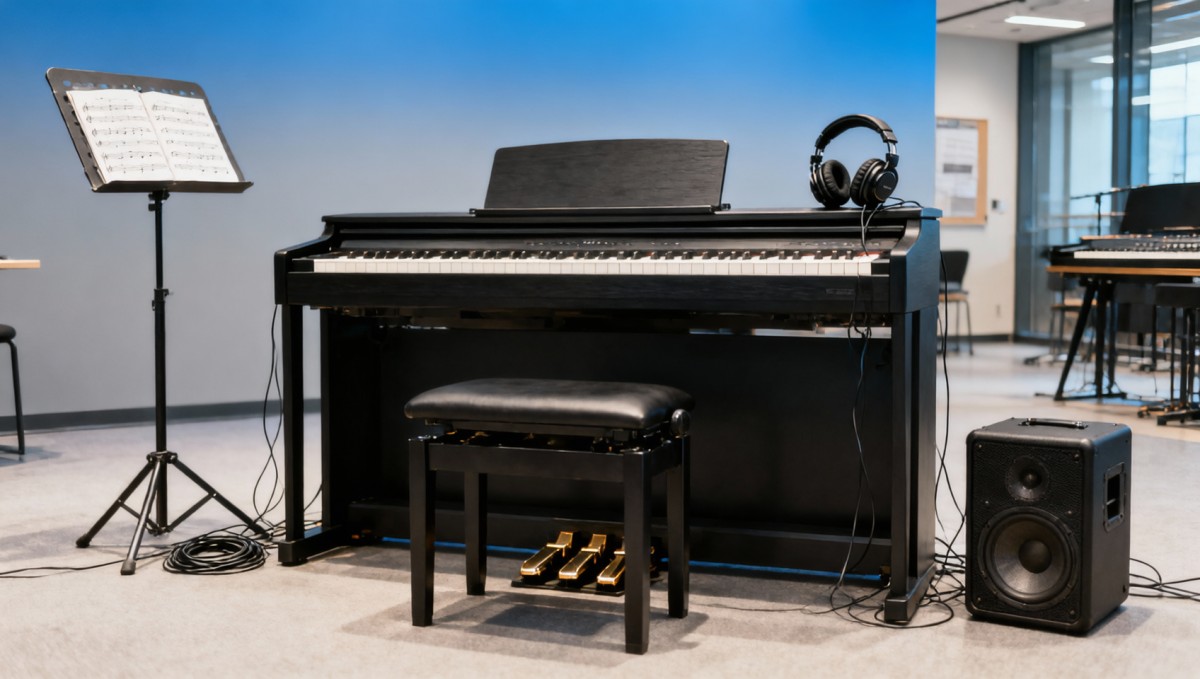
In the sports and entertainment supply chain, keyboard instruments are rarely bought in isolation. Buyers often evaluate them as part of a broader performance, education, or venue package that may also include pro audio equipment, music stands, instrument cables, and accessories. In that context, weighted keys are not only a player preference. They affect training outcomes, perceived product quality, and the resale or rental appeal of the instrument over a 2–5 year equipment cycle.
A weighted keyboard instrument is designed to simulate the resistance of an acoustic piano. Depending on product positioning, the mechanism may range from semi-weighted action to fully weighted hammer action. For procurement teams, that difference matters because a practice room, education center, or hospitality entertainment lounge will see different user expectations, session lengths, and maintenance pressure. A low-cost keyboard may suit casual use, but it can underperform in programs that require technique development.
For distributors and commercial evaluators, the real question is whether the extra unit cost produces measurable value. In many cases, it does when the buyer serves beginner-to-intermediate learners, piano-focused retail traffic, or premium entertainment environments. Better key response improves user satisfaction during repeated play sessions of 30–90 minutes, which can influence customer retention, lesson quality, and product reputation in-store.
GCT approaches this category from a sourcing intelligence perspective. That means comparing weighted and non-weighted keyboard instruments not only by feel, but also by deployment scenario, accessory compatibility, installation planning, and supplier consistency. For B2B buyers, the value decision becomes clearer when the instrument is assessed as part of a complete commercial experience rather than as a standalone SKU.
What buyers usually expect from weighted keyboard instruments
- A more realistic piano touch for student training, audition rooms, and music education environments.
- Higher commercial appeal in retail showrooms, branded leisure venues, and hospitality settings where users compare products quickly.
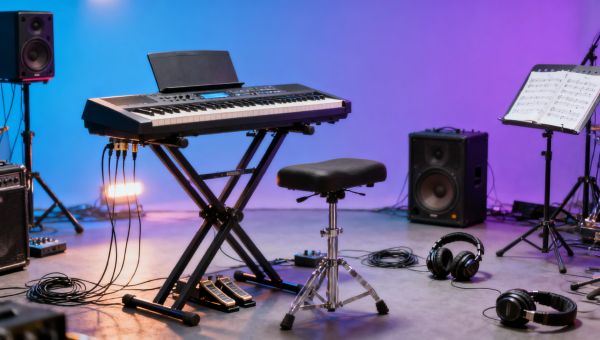
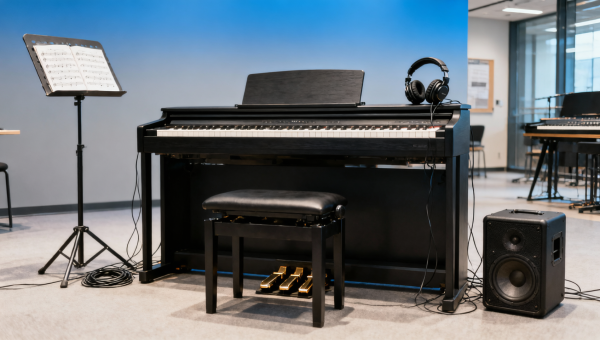
- More stable upselling opportunities when bundled with benches, pedals, headphones, instrument cables, and compact PA solutions.
- Better alignment with buyers seeking 88-key formats and longer service value instead of the lowest initial purchase cost.
Weighted vs non-weighted keys: where does the extra cost really go?
The cost difference between keyboard instruments with weighted keys and lighter-action models is usually driven by mechanism complexity, cabinet structure, shipping weight, and target user profile. A fully weighted 88-key digital piano typically requires more robust internal action components than a 61-key entry keyboard. That affects carton size, pallet planning, and freight efficiency, which commercial buyers should include in landed cost analysis rather than looking only at the ex-factory quote.
There is also a hidden value factor. Weighted key instruments often support stronger positioning in music schools, piano training studios, and mid-to-premium retail floors. In these settings, the buyer is not only paying for mechanics. The buyer is paying for a more convincing user experience, lower objection rates during product demonstrations, and better continuity for learners who may later progress to acoustic piano study.
That said, the extra cost is not always justified. If the target use is short-session entertainment, event triggering, portable stage use, or casual guest interaction in a leisure venue, non-weighted or semi-weighted instruments may be more practical. They are usually lighter, easier to move, and simpler to integrate into multipurpose entertainment packages where mobility matters more than piano realism.
The comparison below helps procurement teams separate feature value from cost inflation. It is particularly useful for distributors, project buyers, and sourcing managers who need to explain purchasing logic to finance teams or end clients.
The key takeaway is simple: the extra cost usually pays off when the keyboard instrument is expected to support structured learning, premium presentation, or repeat user engagement. It is less compelling when portability, lower freight cost, or casual entertainment is the main requirement. For most B2B projects, the decision should be made at scenario level, not at feature level alone.
A practical 4-point cost evaluation framework
- Compare initial unit cost with expected service cycle, often 24–60 months in institutional or commercial environments.
- Estimate freight and handling differences, especially for 88-key cabinet-style units versus portable keyboards.
- Assess user expectations: training realism, showroom conversion, or casual interaction.
- Review bundle revenue from pedals, stands, benches, headphones, and pro audio add-ons.
Which application scenarios justify weighted keys most clearly?
Not every buyer needs weighted keys, but several commercial scenarios strongly benefit from them. The first is education. Schools, academies, and training studios need keyboard instruments that help students develop proper finger strength and control. When lesson programs run weekly or daily and each session lasts 45–60 minutes, a realistic key response becomes part of the teaching method, not just a premium extra.
The second scenario is music retail. Weighted keys help retailers present a clearer upgrade path from entry keyboards to digital pianos. Customers comparing instruments side by side often decide within a short in-store window. If the touch response feels too light, the product may be judged as less serious, even if the sound engine is acceptable. For distributors and dealers, that affects margin structure and product positioning across multiple tiers.
A third scenario is premium hospitality and entertainment venues. Hotels, cruise entertainment spaces, upscale lounges, and branded leisure environments increasingly use music as part of experiential consumption. In such projects, the instrument contributes to atmosphere, visual quality, and guest interaction. Weighted keyboard instruments often align better with that premium expectation, especially when paired with elegant furniture stands, controlled lighting, and integrated pro audio systems.
A fourth scenario is studio and content creation use. While not every producer needs a hammer-action keyboard, many rooms that record piano-based material benefit from weighted action. It improves expressive performance and can reduce the gap between MIDI performance and acoustic technique. In commercial studios, this matters for client satisfaction over repeated bookings across 3–12 month operating periods.
Application fit by buyer type
The following table helps sourcing teams match keyboard instruments to real operating environments. It also shows where weighted keys create stronger value than lower-cost alternatives.
This application-based view is often more useful than a generic premium-versus-budget discussion. A buyer may be right to pay extra in one zone of a project and wrong to do so in another. That is why commercial sourcing plans should separate fixed installation, mobile performance, education, and retail demonstration requirements before confirming the product mix.
Where buyers often overspend
- Installing premium weighted keyboard instruments in low-use public areas where guests play only 5–10 minutes at a time.
- Choosing full hammer action for highly mobile event fleets that must be moved several times each week.
- Ignoring related equipment such as sustain pedals, benches, instrument cables, DI boxes, and compact speakers that affect actual performance quality.
What technical and procurement factors should buyers check before approving budget?
When comparing keyboard instruments with weighted keys, commercial buyers should review more than key feel. At minimum, there are 5 critical checkpoints: key action type, key count, amplification needs, output connectivity, and installation environment. For many projects, 88 keys are preferred, but some compact venues may accept smaller formats if the playing application is limited and the visual footprint matters more than full-range performance.
Connectivity is especially important when the keyboard instrument is part of a larger sports and entertainment system. Buyers should confirm whether the unit needs headphone outputs for education, line outputs for PA integration, USB or MIDI for studio control, and compatibility with nearby pro audio equipment. A keyboard that sounds good on its own may still underperform if it cannot connect cleanly to mixers, stage boxes, or installed sound systems.
Procurement teams should also ask about packaging, lead time, spare parts planning, and after-sales support. Typical production and shipping cycles may range from 2–4 weeks for available stock to 6–10 weeks for customized orders, depending on finish, branding, bundled accessories, and destination market. That affects tender timing, seasonal sales planning, and dealer launch windows.
For institutional and hospitality projects, compliance review should not be ignored. While exact requirements vary by market, buyers commonly check electrical safety, labeling, user manuals, packaging durability, and accessory conformity. If the project includes export distribution, those review points should be clarified before sample approval, not after mass production has started.
A practical procurement checklist for weighted key keyboard instruments
- Confirm whether the action is semi-weighted, graded hammer, or fully weighted, and match it to the target user level.
- Verify key count and cabinet dimensions to avoid installation issues in classrooms, retail aisles, or lounge corners.
- Check audio outputs, pedal inputs, and compatibility with mixers, powered speakers, or recording interfaces.
- Review standard accessories, including stand type, sustain pedal, adapter, bench options, and headphones where relevant.
- Ask for sample lead time, repeat order cycle, carton details, and spare parts policy for at least 12–24 months of support planning.
Common compliance and risk checks
In cross-border sourcing, a low quoted price can become expensive if documentation, labeling, or power specifications are not aligned with the destination market. Buyers should confirm voltage options, plug formats, user instructions, and packaging marks early in the process. For distributors, these details influence customs clearance, channel acceptance, and return rates.
Another frequent risk is underestimating delivery conditions. Weighted keyboard instruments can be more sensitive to rough handling because of their internal action assemblies and greater mass. If the project requires regional distribution, warehouse transfer, or last-mile installation across multiple venues, packaging durability and carton stack planning deserve as much attention as sound specifications.
Are there cost-effective alternatives to weighted keys, and when should buyers choose them?
Yes. Semi-weighted and light-action keyboard instruments remain commercially valuable in many sports and entertainment projects. They are often the smarter choice when transport frequency is high, users are casual rather than trained, and the keyboard serves as part of a flexible event package. In these cases, the lower weight and faster deployment can create more operational value than a more realistic key action.
A practical strategy for dealers and project buyers is to build a tiered portfolio rather than make one action type serve every need. For example, a music retailer may stock entry keyboards for budget-conscious buyers, semi-weighted units for performers and creators, and fully weighted models for education and piano-focused customers. This 3-tier structure makes assortment planning clearer and reduces mismatch between buyer expectation and actual use.
There is also room for hybrid purchasing. A school group may equip primary practice rooms with weighted keyboard instruments while placing lighter, more mobile units in rehearsal, accompaniment, or extracurricular spaces. A hotel may install one weighted digital piano in a premium guest or lounge zone and use portable keyboards in event support areas. That approach controls capital expense without reducing program quality where it matters most.
For sourcing teams, the most cost-effective solution is rarely the cheapest instrument. It is the configuration that produces the fewest complaints, the best user fit, and the least operational friction over the full project period. GCT helps buyers compare those trade-offs across product category, venue type, and supply chain practicality rather than through isolated price benchmarking.
FAQ: key questions buyers ask before purchasing
Do beginners in schools really need weighted keys?
If the program is piano-focused, often yes. Weighted keys help learners develop finger control and transition more naturally to acoustic instruments. For casual music exposure or short club-based activities, lighter keyboards may be sufficient. The decision depends on whether the program runs as general music enrichment or structured piano training over 1–3 academic terms or longer.
How much should freight and handling affect the decision?
More than many buyers expect. Weighted keyboard instruments are usually heavier and may require stronger packaging and more careful unloading. If the project includes multi-site distribution, upstairs delivery, or repeated venue changes, logistics can materially affect total cost. That is why landed cost and installation effort should be reviewed alongside unit price.
Can weighted keys improve retail conversion?
In piano-oriented retail environments, they often can. When customers test instruments for even a few minutes, realistic resistance and control can influence perceived quality. Weighted key models also support better accessory bundling, especially with benches, pedals, cabinets, headphones, and compact amplification solutions.
What is a realistic lead time for commercial orders?
For standard configurations, buyers often see 2–4 week availability from stock-oriented programs, while customized orders may require 6–10 weeks. Variables include finish, private labeling, accessory packs, carton requirements, destination compliance needs, and shipping method. Buyers with seasonal launches or fixed venue opening dates should lock specifications early.
Why work with GCT when evaluating weighted keyboard instruments for B2B supply?
For information researchers, procurement managers, business evaluators, and distributors, the challenge is not simply finding a keyboard instrument supplier. The challenge is making the right sourcing decision across product quality, application fit, logistics, accessory ecosystem, and market positioning. GCT supports that decision process by connecting musical instruments sourcing with broader commercial experience planning, especially where keyboards must work alongside pro audio equipment, stands, accessories, and venue requirements.
This matters when projects involve multiple stakeholders. A school buyer may focus on training results. A distributor may focus on assortment structure and repeat ordering. A hotel project team may care about aesthetics, reliability, and guest perception. GCT helps align those priorities into a workable sourcing framework so the final recommendation is based on usage logic, not only on a single price sheet.
If you are assessing whether weighted keys are worth the extra cost, the most useful next step is to compare your target scenarios, budget bands, and delivery requirements side by side. In many cases, a mixed procurement strategy produces the best result. In others, a fully weighted range is justified because the commercial environment demands stronger training performance or premium user appeal.
Contact GCT to discuss parameter confirmation, model selection, accessory matching, delivery cycle planning, customization options, sample support, destination compliance requirements, and quotation comparison. Whether you are building a retail lineup, equipping a music education project, or sourcing for an entertainment venue, a clearer specification process will help you control cost, reduce mismatch, and buy keyboard instruments with greater confidence.
Search News
Hot Articles
Popular Tags
Need ExpertConsultation?
Connect with our specialized leisureengineering team for procurementstrategies.
Recommended News
 Apr 20, 2026Music Accessories Often Overlooked Until They Start Causing ProblemsMusic accessories often cause hidden issues across musical instruments, percussion instruments, wind instruments, string instruments, keyboard instruments, orchestral instruments, music stands, instrument cables, and pro audio equipment.● Pro Audio Engineer
 Apr 20, 2026When Orchestral Instruments Need Custom Cases and Why It MattersMusical instruments and orchestral instruments need custom cases to protect string instruments, wind instruments, percussion instruments, and keyboard instruments during transport. Learn when buyers should upgrade for safer logistics.● Pro Audio Engineer
 Apr 20, 2026Keyboard Instruments in 2026: What Features Are Becoming Standard?Keyboard instruments in 2026 are redefining musical instruments with smarter connectivity, durable builds, and seamless integration with pro audio equipment, instrument cables, music stands, and music accessories.● Pro Audio Engineer
 Apr 20, 2026Music Stands With Folding Designs: Convenient or Less Reliable?Music stands buyers compare folding convenience with long-term reliability across musical instruments, percussion instruments, wind instruments, string instruments, and pro audio equipment.● Pro Audio Engineer
 Apr 20, 2026String Instruments With Better Tuning Stability in Busy Use CyclesExplore string instruments with better tuning stability for busy venues. Compare musical instruments, percussion instruments, and wind instruments to source reliable, low-maintenance performance solutions.● Pro Audio Engineer
 Apr 20, 2026Why Wind Instruments React So Differently to Climate and StorageWind instruments react fast to climate and storage. Compare musical instruments, percussion instruments, string instruments, and music accessories to cut maintenance risk and buy smarter.● Pro Audio Engineer
 Apr 20, 2026Percussion Instruments for Shared Spaces: What Reduces Noise Most?Percussion instruments for shared spaces: discover what reduces noise most across musical instruments, with smart comparisons to wind instruments, string instruments, keyboard instruments, and practical accessories.● Pro Audio Engineer
 Apr 20, 2026How to Spot Musical Instruments That Look Fine but Wear Out FastDiscover how to spot musical instruments that look premium but wear out fast. Learn key checks for percussion instruments, wind instruments, string instruments, keyboard instruments, music stands, instrument cables, pro audio equipment, and music accessories before you buy.● Pro Audio Engineer
 Apr 20, 2026Music Accessories That Quietly Affect Daily Performance QualityExplore how music accessories shape daily performance quality—from music stands and instrument cables to pro audio equipment for musical instruments, percussion instruments, wind instruments, string instruments, and keyboard instruments.● Pro Audio Engineer
 Apr 20, 2026Orchestral Instruments With the Highest Repair RatesExplore which orchestral instruments have the highest repair rates across wind instruments, string instruments, percussion instruments, and keyboard instruments, with smart buying tips for musical instruments, music accessories, music stands, instrument cables, and pro audio equipment.● Pro Audio Engineer
 Apr 20, 2026Are Keyboard Instruments With Weighted Keys Worth the Extra Cost?Keyboard instruments with weighted keys: discover if the extra cost pays off for musical instruments buyers, with smart tips on music accessories, instrument cables, and pro audio equipment.● Pro Audio Engineer
 Apr 20, 2026Music Stands That Stay Stable on Stage: What Makes the Difference?Music stands for musical instruments: discover what keeps them stable on stage for string instruments, wind instruments, percussion instruments, and keyboard instruments—plus smart buying tips.● Pro Audio Engineer
 Apr 20, 2026String Instruments: Solid Wood or Laminated for Regular Use?String instruments guide for regular use: compare solid wood vs laminated models across musical instruments setups with music accessories, pro audio equipment, and smarter sourcing insights.● Pro Audio Engineer
 Apr 20, 2026Wind Instruments for Schools and Venues: What Affects Longevity?Wind instruments longevity guide for schools and venues: compare musical instruments, percussion instruments, string instruments, and keyboard instruments to source smarter and reduce total cost.● Pro Audio Engineer
 Apr 20, 2026Why Some Percussion Instruments Cost More to Maintain Than ExpectedExplore why percussion instruments can cost more to maintain than expected, and compare musical instruments, orchestral instruments, music accessories, music stands, instrument cables, and pro audio equipment.● Pro Audio Engineer
 Apr 20, 2026Which Musical Instruments Hold Up Best in High-Use Venues?Musical instruments for high-use venues: compare percussion instruments, wind instruments, string instruments, keyboard instruments, music stands, instrument cables, pro audio equipment, and music accessories.● Pro Audio Engineer
 Apr 19, 2026What changed in musical instruments demand in 2026?Musical instruments demand in 2026 is shifting fast across trampoline park and indoor playground projects. Explore trends in percussion instruments, wind instruments, string instruments, and crossover demand from outdoor playground and playground swings.● Pro Audio Engineer
 Apr 19, 2026Why string instruments react so differently to climate changesString instruments react faster to climate changes than percussion instruments or wind instruments. Discover smart sourcing tips for trampoline park, indoor playground, and outdoor playground projects.● Pro Audio Engineer
 Apr 19, 2026String instruments: solid wood or laminate for long-term use?String instruments guide for buyers: compare solid wood vs laminate for long-term use, durability, maintenance, and value across musical instruments, percussion instruments, and wind instruments.● Pro Audio Engineer
 Apr 19, 2026When do wind instruments need repair sooner than expected?Wind instruments need repair sooner in trampoline park and indoor playground venues due to heavy use, humidity, and poor storage. Compare musical instruments, percussion instruments, string instruments, outdoor playground planning, and playground swings with expert sourcing tips.● Pro Audio Engineer
 Apr 19, 2026Wind instruments that handle frequent transport more reliablyWind instruments guide for buyers: compare durable musical instruments for frequent transport, with insights across percussion instruments, string instruments, trampoline park and indoor playground venues.● Pro Audio Engineer
 Apr 19, 2026Common tuning issues with percussion instruments in humid areasPercussion instruments in humid venues can lose tuning fast. Learn how musical instruments perform in trampoline park, indoor playground, and outdoor playground spaces for smarter sourcing.● Pro Audio Engineer
 Apr 19, 2026Percussion instruments with lower upkeep in heavy-use spacesDiscover low-upkeep percussion instruments for trampoline park, indoor playground, and outdoor playground spaces—durable musical instruments that outperform wind instruments, string instruments, and fit playground swings zones.● Pro Audio Engineer
 Apr 19, 2026How to compare musical instruments for school and venue useCompare musical instruments for schools and venues with practical tips on percussion instruments, wind instruments, and string instruments. Ideal for indoor playground, trampoline park, outdoor playground, and playground swings projects.● Pro Audio Engineer