Keyboard Instruments in 2026: What Features Are Becoming Standard?
As commercial buyers plan for 2026, keyboard instruments are evolving alongside broader demand for musical instruments that combine smart connectivity, durability, and stage-ready performance. From pro audio equipment and instrument cables to music stands and music accessories, standard features are reshaping sourcing decisions across entertainment venues, education, and retail. This guide examines the upgrades distributors, procurement teams, and evaluators should expect when comparing modern keyboard instruments with other orchestral instruments, string instruments, wind instruments, and percussion instruments.
What is becoming standard in keyboard instruments for 2026?
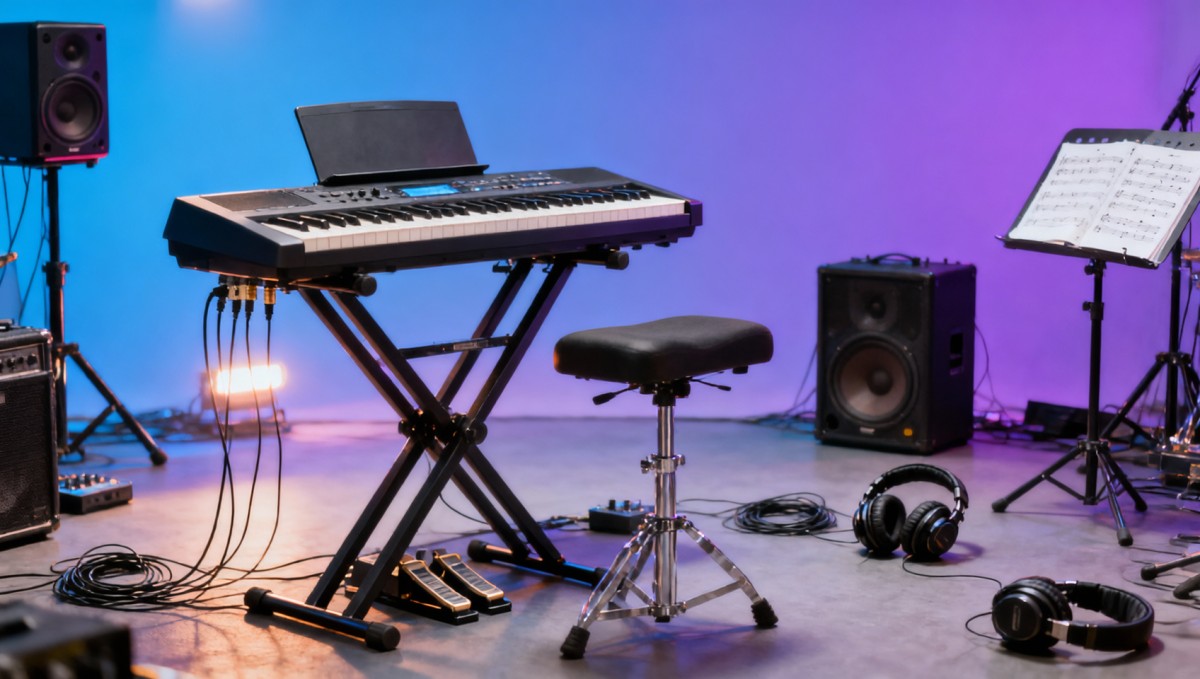
For buyers in sports and entertainment environments, the phrase “standard feature” no longer refers only to key count or tone library. In 2026, keyboard instruments are increasingly judged as connected performance systems. Commercial users now expect practical integration with mixers, powered speakers, recording interfaces, tablets, and venue control workflows. This shift matters in hotels, leisure parks, education spaces, worship venues, and live entertainment rooms where setup speed and reliability directly affect operations.
Across entry commercial, mid-tier performance, and upper professional categories, several features are moving from optional to expected. USB audio or USB MIDI connectivity, Bluetooth support for selected control functions, onboard lesson or split modes, weighted or semi-weighted action depending on category, and improved patch recall are now frequently requested during sourcing. Buyers comparing keyboard instruments in 2026 should also pay close attention to amplifier output, chassis durability, and firmware update pathways over a 2–4 year ownership cycle.
In B2B procurement, the issue is not simply whether a feature exists, but whether it supports repeated commercial use. A keyboard that works well in a home studio may fail in a venue if its outputs are limited, its stand compatibility is poor, or its panel controls are too fragile for daily handling. Procurement teams should therefore evaluate standard features through three lenses: operational compatibility, user turnover, and after-sales continuity.
This is where a sourcing platform such as Global Commercial Trade becomes relevant. For distributors, procurement officers, and commercial evaluators, the challenge is filtering product claims into usable buying intelligence. Standardization in keyboard instruments is now tied to commercial deployment realities, not only to retail marketing language.
Core feature groups buyers should now expect
When commercial teams review product sheets, five feature groups are increasingly treated as baseline rather than premium. Not every keyboard will include all five at the same level, but missing too many of them can create sourcing risk in 2026.
- Connectivity: USB MIDI is widely expected, while USB audio, line outputs, headphone monitoring, pedal inputs, and app integration are becoming common in many commercial-use models.
- Performance control: Layer, split, transpose, quick registration memory, and patch recall reduce setup time during classes, rehearsals, and live programs.
- Action and feel: 61-key, 76-key, and 88-key formats remain standard ranges, with weighted action more often expected in institutional and stage piano procurement.
- Durability: Reinforced casing, stable key response, and dependable knobs or buttons matter where the instrument is used 5–7 days per week.
- Service support: Firmware updates, spare parts planning, and accessory compatibility increasingly influence distributor and dealer selection.
For multi-site buyers, these feature groups help standardize internal approvals. A simple checklist can shorten comparison cycles from several rounds of informal discussion to a clearer 4-step evaluation process.
Which keyboard instrument features matter most by commercial use scenario?
Not every venue needs the same keyboard instrument specification. A resort lounge, a smart campus music room, and a retail demonstration zone may all source keyboards, yet their priorities differ sharply. Commercial buyers should match standard features to user profile, expected duty cycle, and the surrounding pro audio environment.
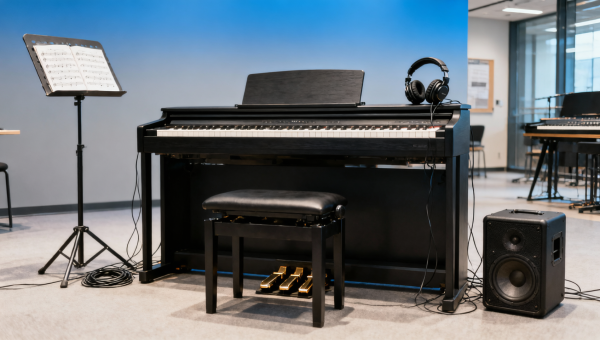
In sports and entertainment settings, the wrong specification often creates hidden cost. For example, underpowered onboard speakers can force external amplification purchases. A model without dedicated line outputs may complicate mixer integration. An advanced workstation may be excessive for a training room that only needs stable piano tones, headphone distribution, and easy lesson controls.
The table below helps procurement teams align common keyboard instrument standards with typical commercial application scenarios. It is especially useful for distributors and business evaluators building a product assortment for more than one customer segment.
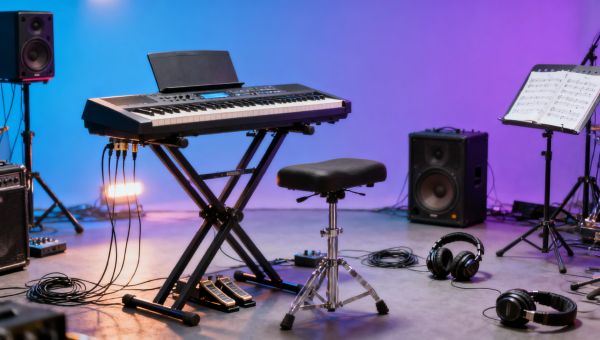
The practical takeaway is clear: keyboard instruments should be sourced as part of a use environment, not in isolation. Commercial buyers should review stands, benches, sustain pedals, instrument cables, power requirements, and nearby pro audio equipment as part of one specification package rather than separate decisions.
Scenario-specific evaluation points
A venue with rotating performers may prioritize output flexibility and fast preset recall. A campus may value easy maintenance and standardized control panels across 20–50 units. A distributor serving multiple regional dealers may prefer platforms with broad accessory compatibility and fewer return risks.
Three common sourcing mistakes
- Buying by sound count alone without checking whether outputs, pedals, and stands meet venue needs.
- Over-specifying for casual use, which increases budget pressure without improving daily operation.
- Ignoring replacement planning for accessories that often wear out faster than the instrument itself over 12–24 months.
For commercial entertainment projects, these mistakes can slow deployment and increase total procurement cost even when the initial unit price seems attractive.
How should procurement teams compare specifications, durability, and integration?
A strong keyboard instrument sourcing decision usually combines technical fit with operational fit. Procurement teams often compare specifications across 3 categories: player interface, signal integration, and ownership practicality. This method works better than focusing on one headline feature such as polyphony or speaker wattage alone.
For example, 88-key weighted instruments remain a frequent benchmark for piano-focused applications, but they are not automatically the best choice for every sports and entertainment setting. A 61-key or 76-key format may improve portability and reduce handling risk for mobile stage use. Likewise, higher onboard amplification can help in small rooms but matters less when the keyboard is consistently routed through external PA systems.
The comparison table below can support internal review meetings, dealer planning, and RFQ preparation. It focuses on commercially relevant criteria rather than consumer marketing language.
This comparison framework is especially useful when keyboard instruments are sourced alongside other musical instruments and accessories. It helps teams avoid mismatches between the instrument, the venue’s signal chain, and the real behavior of end users.
A practical 4-step procurement check
- Define the use case: performance, teaching, demo retail, or mixed application. This determines whether portability or piano feel takes priority.
- Confirm integration points: identify cables, outputs, stands, pedals, mixers, and speaker systems before final model approval.
- Assess duty cycle: estimate whether the instrument will be used occasionally, daily, or in back-to-back sessions over 6–8 hours.
- Review support terms: ask about spare parts, packaging for export, sample lead time, and batch consistency for repeat orders.
Teams that formalize this process usually reduce re-evaluation later, particularly when multiple stakeholders such as purchasing, technical staff, and regional sales teams all influence the decision.
What standards, compliance points, and sourcing risks should buyers review?
Commercial buyers often focus on visible features first, but compliance and supply chain details are just as important. Keyboard instruments used in public or institutional spaces may need to align with destination-market electrical requirements, product labeling expectations, packaging durability, and documentation readiness. The exact requirement depends on market and application, so early verification is essential.
A common mistake is assuming that a keyboard instrument suitable for one region can be shipped globally with no adaptation. In practice, buyers should check power specifications, plug configurations, manuals, labeling, and any relevant declarations before confirming volume orders. For cross-border trade, even a 7–15 day documentation delay can affect launch timing for entertainment projects, school openings, or seasonal retail campaigns.
Global Commercial Trade is well positioned in this stage because sourcing intelligence is not only about product discovery. It is about helping buyers connect product fit, supply continuity, and commercial deployment requirements. For procurement officers and distributors, this reduces the risk of approving a technically attractive model that later creates logistical or compliance friction.
Five compliance and supply checks worth documenting
- Electrical compatibility: confirm voltage range, power adapter format, and destination plug requirements before PO release.
- Product documentation: verify user instructions, carton markings, serial traceability, and any requested shipping documents.
- Packaging protection: check whether cartons and internal protection are suitable for pallet movement and international transport cycles.
- Accessory consistency: ensure pedals, power supplies, music stands, and cables are matched to the correct SKU and region.
- Batch repeatability: ask how the supplier handles repeat orders over 3–6 months if a project expands after initial deployment.
These checks do not require exaggerated claims or complicated audit language. They simply create a cleaner purchasing file and reduce the chance of avoidable after-sales issues.
Risk signals during vendor evaluation
Buyers should be cautious if a supplier cannot clearly explain output options, packaging structure, accessory compatibility, or typical lead times. Another warning sign is vague communication around firmware updates or replacement part availability. In commercial entertainment settings, delayed answers often translate into delayed installations.
As a rule, if a keyboard instrument will be placed in a multi-user environment, buyers should request a sample review or at least a detailed specification confirmation sheet. This is particularly important for dealer networks and agents who carry reputational risk after installation.
How can buyers control cost without sacrificing the features that are becoming standard?
Budget pressure is common in entertainment and institutional procurement, but cost control should not mean stripping out every advanced function. The better approach is to separate essential standard features from optional premium layers. For many commercial keyboard instruments, the cost difference between a workable model and an over-specified one comes from workflow extras rather than mission-critical connectivity or durability.
A practical budget model often divides procurement into three tiers. The first tier supports training rooms and low-complexity spaces. The second supports mixed commercial use, including rehearsals and light performance. The third is reserved for more demanding stage or premium hospitality settings. This 3-tier method helps distributors and project buyers explain pricing logic to internal decision makers.
The cost question should also include ownership factors over 12–36 months. An instrument with poor connector layout, fragile controls, or inconsistent accessories can generate service calls, replacement purchases, and customer dissatisfaction that outweigh a lower upfront quote.
Where to save, and where not to save
- Possible savings: reduce onboard speaker power if the keyboard will always run through a PA system; choose a simpler display if operators only need core sounds and preset recall.
- Do not cut too deeply on outputs: dedicated line outputs and stable USB connectivity are often essential in commercial installations.
- Do not ignore accessories: a poor stand, unreliable pedal, or incorrect power supply can disrupt performance even if the keyboard itself is acceptable.
- Do not undervalue repeatability: for chain venues or dealer programs, consistent supply matters more than chasing the lowest one-time price.
In many projects, the most efficient purchasing decision is not the cheapest keyboard instrument. It is the one that meets the use case with the fewest downstream corrections.
FAQ for distributors, procurement teams, and commercial evaluators
How many keys are usually best for commercial keyboard instruments?
There is no single answer. A 61-key format may suit portable entertainment use and retail demos. A 76-key format often balances portability with broader performance range. An 88-key weighted model is commonly preferred for piano-focused education rooms, premium venues, and stage piano applications. The right choice depends on transport demands, user expectations, and whether authentic piano touch is necessary.
What connectivity should be considered standard in 2026?
USB MIDI is increasingly treated as a baseline. Many buyers also expect headphone output, pedal input, and practical line-out options for connection to pro audio equipment. USB audio and selected Bluetooth functions are becoming more common, especially in education, demo retail, and hybrid performance environments. However, buyers should verify whether Bluetooth is for audio streaming, control, or both.
What is a normal lead-time discussion point for B2B orders?
Lead time varies by model, customization level, and destination, but commercial teams should discuss sampling, documentation review, and repeat-order planning separately. Even when product lead time seems acceptable, packaging approval, accessory matching, and shipping documents can add 1–3 extra process stages. Early clarification is more valuable than optimistic assumptions.
Are bundled accessories worth including in a keyboard instrument purchase?
Often yes, especially for education rooms, dealer starter packages, and venue installations. Music stands, sustain pedals, benches, and suitable instrument cables can simplify deployment. The key is to confirm that bundled accessories are not generic placeholders but functional items matched to the actual use case and regional power setup.
How should buyers compare keyboard instruments with other musical instruments in mixed procurement?
The comparison should focus on role, not category prestige. Keyboard instruments often offer broad tonal flexibility and easy signal integration, which can reduce setup complexity compared with some orchestral instruments. But if the project needs ensemble authenticity, buyers may still need string instruments, wind instruments, or percussion instruments in parallel. A mixed-instrument procurement plan should standardize accessories, storage, maintenance, and room layout across all categories.
Why work with GCT when sourcing keyboard instruments for 2026 projects?
For commercial buyers, the main challenge is rarely finding a keyboard instrument in isolation. The harder task is selecting the right specification, matching it to venue use, verifying supply readiness, and coordinating related categories such as pro audio equipment, music accessories, and support hardware. GCT addresses this need through sector-focused sourcing intelligence built for real commercial decision making.
If you are evaluating keyboard instruments for hotels, entertainment venues, smart campuses, retail programs, or dealer distribution, GCT can support discussions around 5 key areas: parameter confirmation, model selection, delivery planning, customization feasibility, and compliance expectations. This helps reduce time lost between initial inquiry, technical comparison, and commercial approval.
You can also use GCT to structure a more efficient sourcing conversation. Instead of asking only for a price, buyers can request side-by-side specification review, accessory bundle matching, sample support options, packaging considerations, and order planning for small, medium, or larger batch requirements. That produces a clearer RFQ and a more dependable procurement path.
For distributors, agents, and procurement teams preparing 2026 buying plans, the next step is to define your target application, preferred key range, connectivity needs, accessory scope, and expected delivery window. Contact GCT to discuss keyboard instrument selection, compare commercial-use configurations, confirm practical lead-time factors, and explore tailored sourcing solutions that fit your entertainment or institutional project.
Search News
Hot Articles
Popular Tags
Need ExpertConsultation?
Connect with our specialized leisureengineering team for procurementstrategies.
Recommended News
 Apr 20, 2026Music Accessories Often Overlooked Until They Start Causing ProblemsMusic accessories often cause hidden issues across musical instruments, percussion instruments, wind instruments, string instruments, keyboard instruments, orchestral instruments, music stands, instrument cables, and pro audio equipment.● Pro Audio Engineer
 Apr 20, 2026When Orchestral Instruments Need Custom Cases and Why It MattersMusical instruments and orchestral instruments need custom cases to protect string instruments, wind instruments, percussion instruments, and keyboard instruments during transport. Learn when buyers should upgrade for safer logistics.● Pro Audio Engineer
 Apr 20, 2026Keyboard Instruments in 2026: What Features Are Becoming Standard?Keyboard instruments in 2026 are redefining musical instruments with smarter connectivity, durable builds, and seamless integration with pro audio equipment, instrument cables, music stands, and music accessories.● Pro Audio Engineer
 Apr 20, 2026Music Stands With Folding Designs: Convenient or Less Reliable?Music stands buyers compare folding convenience with long-term reliability across musical instruments, percussion instruments, wind instruments, string instruments, and pro audio equipment.● Pro Audio Engineer
 Apr 20, 2026String Instruments With Better Tuning Stability in Busy Use CyclesExplore string instruments with better tuning stability for busy venues. Compare musical instruments, percussion instruments, and wind instruments to source reliable, low-maintenance performance solutions.● Pro Audio Engineer
 Apr 20, 2026Why Wind Instruments React So Differently to Climate and StorageWind instruments react fast to climate and storage. Compare musical instruments, percussion instruments, string instruments, and music accessories to cut maintenance risk and buy smarter.● Pro Audio Engineer
 Apr 20, 2026Percussion Instruments for Shared Spaces: What Reduces Noise Most?Percussion instruments for shared spaces: discover what reduces noise most across musical instruments, with smart comparisons to wind instruments, string instruments, keyboard instruments, and practical accessories.● Pro Audio Engineer
 Apr 20, 2026How to Spot Musical Instruments That Look Fine but Wear Out FastDiscover how to spot musical instruments that look premium but wear out fast. Learn key checks for percussion instruments, wind instruments, string instruments, keyboard instruments, music stands, instrument cables, pro audio equipment, and music accessories before you buy.● Pro Audio Engineer
 Apr 20, 2026Music Accessories That Quietly Affect Daily Performance QualityExplore how music accessories shape daily performance quality—from music stands and instrument cables to pro audio equipment for musical instruments, percussion instruments, wind instruments, string instruments, and keyboard instruments.● Pro Audio Engineer
 Apr 20, 2026Orchestral Instruments With the Highest Repair RatesExplore which orchestral instruments have the highest repair rates across wind instruments, string instruments, percussion instruments, and keyboard instruments, with smart buying tips for musical instruments, music accessories, music stands, instrument cables, and pro audio equipment.● Pro Audio Engineer
 Apr 20, 2026Are Keyboard Instruments With Weighted Keys Worth the Extra Cost?Keyboard instruments with weighted keys: discover if the extra cost pays off for musical instruments buyers, with smart tips on music accessories, instrument cables, and pro audio equipment.● Pro Audio Engineer
 Apr 20, 2026Music Stands That Stay Stable on Stage: What Makes the Difference?Music stands for musical instruments: discover what keeps them stable on stage for string instruments, wind instruments, percussion instruments, and keyboard instruments—plus smart buying tips.● Pro Audio Engineer
 Apr 20, 2026String Instruments: Solid Wood or Laminated for Regular Use?String instruments guide for regular use: compare solid wood vs laminated models across musical instruments setups with music accessories, pro audio equipment, and smarter sourcing insights.● Pro Audio Engineer
 Apr 20, 2026Wind Instruments for Schools and Venues: What Affects Longevity?Wind instruments longevity guide for schools and venues: compare musical instruments, percussion instruments, string instruments, and keyboard instruments to source smarter and reduce total cost.● Pro Audio Engineer
 Apr 20, 2026Why Some Percussion Instruments Cost More to Maintain Than ExpectedExplore why percussion instruments can cost more to maintain than expected, and compare musical instruments, orchestral instruments, music accessories, music stands, instrument cables, and pro audio equipment.● Pro Audio Engineer
 Apr 20, 2026Which Musical Instruments Hold Up Best in High-Use Venues?Musical instruments for high-use venues: compare percussion instruments, wind instruments, string instruments, keyboard instruments, music stands, instrument cables, pro audio equipment, and music accessories.● Pro Audio Engineer
 Apr 19, 2026What changed in musical instruments demand in 2026?Musical instruments demand in 2026 is shifting fast across trampoline park and indoor playground projects. Explore trends in percussion instruments, wind instruments, string instruments, and crossover demand from outdoor playground and playground swings.● Pro Audio Engineer
 Apr 19, 2026Why string instruments react so differently to climate changesString instruments react faster to climate changes than percussion instruments or wind instruments. Discover smart sourcing tips for trampoline park, indoor playground, and outdoor playground projects.● Pro Audio Engineer
 Apr 19, 2026String instruments: solid wood or laminate for long-term use?String instruments guide for buyers: compare solid wood vs laminate for long-term use, durability, maintenance, and value across musical instruments, percussion instruments, and wind instruments.● Pro Audio Engineer
 Apr 19, 2026When do wind instruments need repair sooner than expected?Wind instruments need repair sooner in trampoline park and indoor playground venues due to heavy use, humidity, and poor storage. Compare musical instruments, percussion instruments, string instruments, outdoor playground planning, and playground swings with expert sourcing tips.● Pro Audio Engineer
 Apr 19, 2026Wind instruments that handle frequent transport more reliablyWind instruments guide for buyers: compare durable musical instruments for frequent transport, with insights across percussion instruments, string instruments, trampoline park and indoor playground venues.● Pro Audio Engineer
 Apr 19, 2026Common tuning issues with percussion instruments in humid areasPercussion instruments in humid venues can lose tuning fast. Learn how musical instruments perform in trampoline park, indoor playground, and outdoor playground spaces for smarter sourcing.● Pro Audio Engineer
 Apr 19, 2026Percussion instruments with lower upkeep in heavy-use spacesDiscover low-upkeep percussion instruments for trampoline park, indoor playground, and outdoor playground spaces—durable musical instruments that outperform wind instruments, string instruments, and fit playground swings zones.● Pro Audio Engineer
 Apr 19, 2026How to compare musical instruments for school and venue useCompare musical instruments for schools and venues with practical tips on percussion instruments, wind instruments, and string instruments. Ideal for indoor playground, trampoline park, outdoor playground, and playground swings projects.● Pro Audio Engineer