Music Accessories Often Overlooked Until They Start Causing Problems
From instrument cables and music stands to the small components behind musical instruments, music accessories are often ignored until failures disrupt performance, storage, or daily use. For buyers evaluating percussion instruments, wind instruments, string instruments, keyboard instruments, orchestral instruments, and pro audio equipment, understanding these overlooked essentials is critical to reducing risk, improving reliability, and making smarter sourcing decisions.
Why do overlooked music accessories create outsized problems in commercial music environments?
In the sports and entertainment sector, procurement teams often focus on the main asset: the drum set, digital piano, brass instrument, stage monitor, or mixer. Yet in real operating conditions, accessory failure is what stops rehearsals, delays venue turnover, and increases maintenance workload. A damaged cable, unstable stand, poorly fitted case, or low-grade mouthpiece can interrupt use within a single event cycle or after 3–6 months of routine handling.
This problem becomes larger in commercial settings such as theme parks, music schools, hotel performance lounges, entertainment venues, cruise programs, and public cultural facilities. These environments involve high-frequency setup, transport, storage, and mixed-user handling. Accessories are no longer optional add-ons. They become operational components tied to safety, uptime, and replacement planning.
For information researchers and business evaluators, the key issue is not whether accessories matter, but which ones create the highest hidden risk. In many sourcing reviews, 5 core categories deserve early assessment: connectivity items, support hardware, protective storage, consumables, and maintenance tools. Missing just 1 of these categories can distort total cost calculations and post-purchase performance.
Global Commercial Trade (GCT) supports buyers by connecting product intelligence with commercial-use context. That matters because a distributor sourcing for retail turnover, a venue buyer sourcing for daily operation, and an institutional purchaser sourcing for multi-room deployment will not prioritize the same accessory specifications, replacement cycles, or supplier service conditions.
The accessory groups most often underestimated
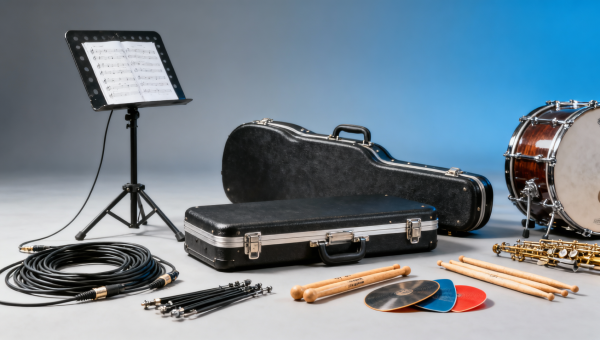
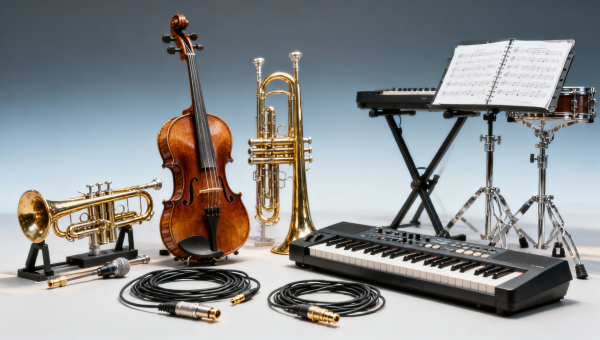
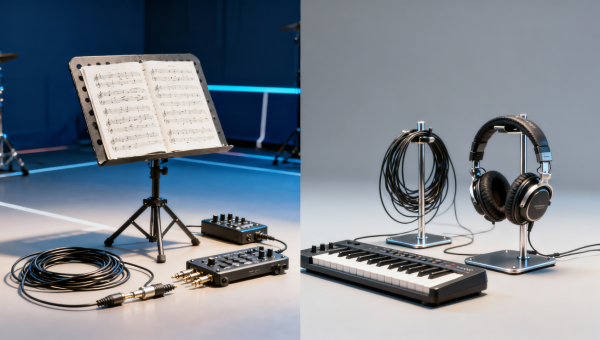
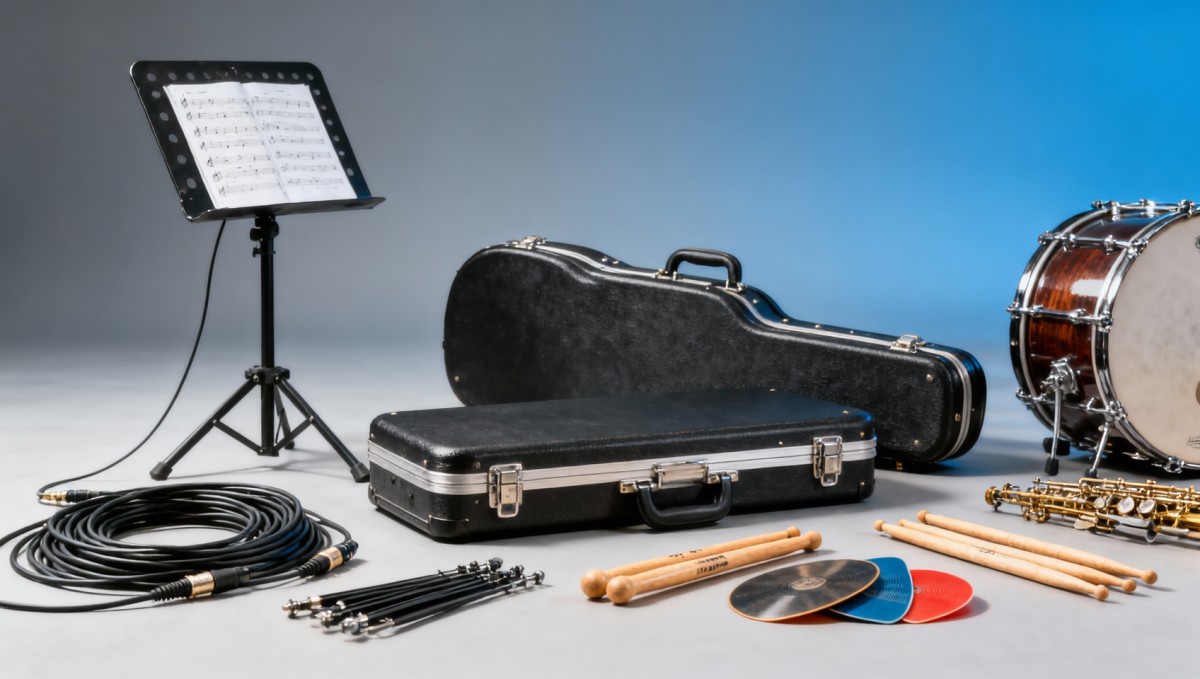
- Instrument cables and connectors, where shielding quality, plug durability, and strain relief directly affect signal stability and service life.
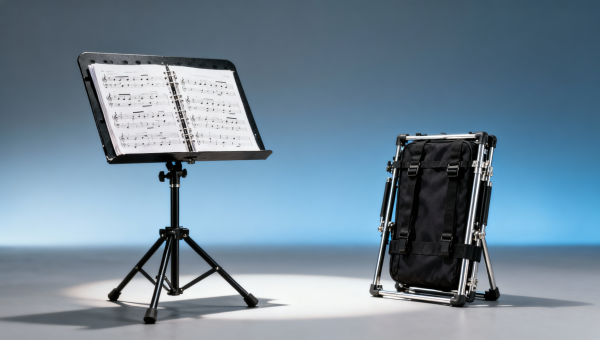
- Stands, mounts, and brackets, where base design, locking mechanisms, and load range influence safety during performance and storage.
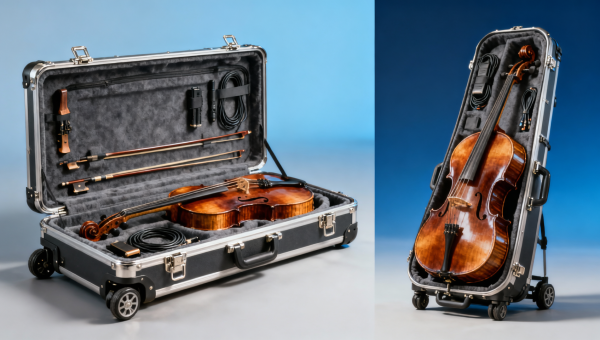
- Cases, gig bags, and protective covers, where padding level, shell rigidity, and moisture resistance shape transport risk.
- Consumables such as strings, reeds, drum heads, sticks, picks, and cleaning materials, which create recurring replacement demand every few weeks or every quarter depending on usage intensity.
Which music accessories should buyers assess first by instrument and use scenario?
Accessory priorities differ by category. A buyer sourcing orchestral instruments for an academy must think about tuning stability, storage protection, and maintenance access. A pro audio distributor may rank cable reliability, rack accessories, and connector consistency higher. A hotel or leisure venue with rotating performers may need versatile stands, compact storage solutions, and fast-replacement consumables that reduce downtime between events.
To make early-stage screening easier, procurement teams can divide music accessories into three practical layers: operation-critical, protection-critical, and replenishment-critical. This creates a clearer budget map and helps prevent overspending on cosmetic extras while underinvesting in failure-prone essentials.
The table below summarizes common accessory priorities across major musical instrument and pro audio segments. It is especially useful for distributors, project buyers, and sourcing managers comparing mixed-category orders across educational, hospitality, and entertainment environments.
A structured accessory map reduces reactive purchasing. Instead of treating music accessories as low-value extras, buyers should classify them as performance enablers, protection assets, and recurring operating supplies. This shift improves quote comparison, stocking strategy, and distributor planning.
Scenario-based priority setting
For venues and entertainment operators
Focus on fast setup, durability, and spare availability. A practical benchmark is to keep 10%–15% extra stock for cables, sticks, reeds, and adapters if the site supports daily or weekly performances. This is especially relevant where multiple user groups share equipment.
For institutional or educational buyers
Prioritize hygiene, standardization, and replacement cycles. Uniform accessories simplify training and inventory control across 5, 10, or 20 rooms. Common failures should be measurable and reorderable, not left to emergency sourcing.
For distributors and agents
Balance price competitiveness with category depth. A broader accessory line often improves basket value and repeat ordering because consumables and replacement parts generate more frequent purchasing than the main instrument itself.
What technical details and quality checkpoints matter most during procurement?
In accessory sourcing, the most expensive mistake is buying on appearance alone. Commercial buyers need measurable checkpoints. For cables, that includes connector fit, shielding quality, jacket flexibility, and strain relief. For stands, it includes load range, locking consistency, footprint stability, and finish durability. For cases and bags, it includes interior fit, padding thickness, zipper quality, handle reinforcement, and moisture resistance.
A useful procurement practice is to split technical review into 4 stages: specification confirmation, sample inspection, small-batch validation, and full-order consistency review. This process is practical whether the order is for 50 music stands, 200 cables, or recurring monthly consumables. It also helps business evaluators compare suppliers beyond ex-factory price.
The following table highlights practical checkpoints that can be used in RFQ review, supplier meetings, or distributor qualification. These are not abstract quality ideas. They are operational details that influence return rates, safety incidents, and maintenance cost across sports and entertainment projects.
Buyers should also review packaging and carton logic. Commercial projects often fail at the last meter, not the factory gate. If accessories are not labeled by room, instrument family, or replenishment type, receiving teams lose time and increase handling errors. In mixed orders, simple carton grouping can save several hours during site installation.
A 5-point accessory inspection checklist
- Confirm compatibility with the target instrument, stand interface, connector type, or carrying size before price comparison begins.
- Request sample validation for moving parts, foldable hardware, or consumables with performance sensitivity.
- Review replacement frequency assumptions over 6–12 months, not only initial purchase cost.
- Ask about spare availability and repeat-order consistency, especially for distributors and venue operators.
- Check export packaging, labeling logic, and shipment readiness for multi-site deployment.
How should buyers compare cost, replacement cycles, and sourcing options?
Low unit price can be misleading in music accessories. In B2B environments, the better question is cost over use cycle. A cable that fails after repeated setup, a bench that loosens after several months, or a low-grade case that increases instrument repair claims can quickly erase any visible savings. Procurement teams should compare at least 3 layers of cost: initial purchase, replacement frequency, and operational disruption.
This is where GCT’s sourcing perspective becomes useful. Buyers do not only need supplier access; they need decision support across OEM/ODM capability, commercial fit, and fulfillment reliability. For example, a distributor may choose standardized accessories for easier replenishment, while a premium venue may require custom finishes, branded packaging, or specific case dimensions aligned with interior design and artist expectations.
The table below offers a practical comparison framework for evaluating music accessories beyond quotation level. It helps buyers determine when economy-grade products are acceptable and when mid-tier or project-grade options reduce risk in sports and entertainment environments.
In many projects, a hybrid strategy works best. Put budget into high-failure or safety-sensitive accessories, and standardize simpler replenishment items where user tolerance is wider. This method is especially relevant when delivery windows are 2–4 weeks and inventory precision matters.
Common cost mistakes in accessory procurement
- Using the same quality tier for all accessories, instead of separating critical-use items from low-risk items.
- Ignoring freight efficiency, especially for bulky stands, hard cases, and mixed cartons.
- Failing to define minimum spare ratios for consumables and high-turnover accessories.
- Treating replacement cycles as unpredictable when many categories can be planned quarterly or semiannually.
What compliance, delivery, and implementation issues should commercial buyers watch?
Music accessories may seem simple, but compliance and delivery details still matter. Depending on product type and market, buyers may need to review material safety, electrical safety for powered accessories, packaging compliance, labeling, and basic traceability. This is particularly relevant for institutional buyers, international distributors, and venue groups operating across more than one region.
Lead time is another common blind spot. Standard accessories may ship faster than custom instruments, but mixed procurement often creates hidden delays. If one order includes stands, cases, cable assemblies, and branded packaging, the full timeline may move from 7–15 days for stock items to 3–6 weeks for coordinated commercial delivery. Buyers should ask for milestone visibility, not just a shipping promise.
A practical implementation plan should define 4 service nodes: technical confirmation, sample or pre-production review, packing verification, and shipment release. This is especially useful for business evaluators comparing multiple factories or agents. Without these checkpoints, small accessory issues often surface only after site arrival, when correction is slower and more expensive.
Risk areas that deserve early clarification
Compatibility and fit
Cases, stands, pedals, connectors, and mounting parts should be matched against actual instrument or equipment dimensions. A small mismatch can make the accessory unusable even if manufacturing quality is acceptable.
Durability under commercial frequency
Ask whether the accessory is intended for occasional home use, retail resale, or repeated commercial handling. Those are different duty conditions. Daily venue use can expose hinges, locks, threads, and cable joints to far more stress than personal ownership.
After-sales replenishment logic
For consumables and frequently replaced accessories, confirm whether identical reorders can be supported across the next 6–12 months. This matters for brand consistency, user training, and distributor margin planning.
FAQ: what do buyers and distributors ask most about music accessories?
Search behavior around music accessories is often practical rather than theoretical. Buyers want to know what fails first, which items should be stocked, how much to standardize, and how to avoid low-value purchasing mistakes. The following questions reflect common decision points in commercial sourcing.
How should we choose music accessories for mixed instrument projects?
Start by grouping items into fixed hardware, protective storage, signal accessories, and consumables. Then separate daily-use items from backup items. In mixed projects, 20% of SKUs usually generate most urgent replacement demand, so identify those first and secure recurring supply.
Which music accessories are most suitable for hospitality and entertainment venues?
Durable stands, dependable cables, compact protective cases, and fast-replace consumables are usually the most important. These venues need accessories that support repeated setup and teardown, compact storage, and predictable replenishment rather than highly specialized single-user configurations.
What should procurement teams check before requesting a quotation?
Prepare 5 basic inputs: target instrument or equipment model, intended frequency of use, required quantity by SKU, packaging expectations, and delivery window. This improves quote accuracy and helps suppliers recommend whether a standard, commercial-grade, or custom solution is more suitable.
How long is the usual delivery cycle for music accessories?
Stock items may move within 7–15 days, while customized accessories, branded packaging, or mixed project consolidation often require 3–6 weeks. The key variable is not only production, but also sample confirmation, accessory matching, and final packing accuracy.
Why work with GCT when sourcing music accessories for commercial projects?
Commercial music sourcing is rarely about a single accessory. It is about building a reliable package around musical instruments, pro audio systems, venue operations, and distribution strategy. GCT helps buyers, evaluators, and channel partners navigate that complexity with focused intelligence across Pro Audio & Musical Instruments and adjacent commercial-use sectors.
This matters when your project requires more than price discovery. You may need support comparing standard versus OEM/ODM options, screening suppliers for consistency, aligning accessory specifications with premium hospitality or educational environments, or reducing risk in multi-category sourcing. Those decisions affect uptime, user experience, and long-term procurement efficiency.
If you are planning a new sourcing round, GCT can support practical discussions around accessory parameters, instrument matching, replacement planning, commercial packaging, expected lead times, sample support, and compliance-related questions. For distributors and agents, this also includes category expansion logic and repeat-order viability.
Contact GCT to discuss your music accessories requirements in detail, whether you need help with product selection, project-grade configurations, quotation comparison, delivery scheduling, OEM/ODM possibilities, or sourcing alignment for sports and entertainment environments. Clear accessory decisions made early often prevent the most avoidable problems later.
Search News
Hot Articles
Popular Tags
Need ExpertConsultation?
Connect with our specialized leisureengineering team for procurementstrategies.
Recommended News
 Apr 20, 2026Music Accessories Often Overlooked Until They Start Causing ProblemsMusic accessories often cause hidden issues across musical instruments, percussion instruments, wind instruments, string instruments, keyboard instruments, orchestral instruments, music stands, instrument cables, and pro audio equipment.● Pro Audio Engineer
 Apr 20, 2026When Orchestral Instruments Need Custom Cases and Why It MattersMusical instruments and orchestral instruments need custom cases to protect string instruments, wind instruments, percussion instruments, and keyboard instruments during transport. Learn when buyers should upgrade for safer logistics.● Pro Audio Engineer
 Apr 20, 2026Keyboard Instruments in 2026: What Features Are Becoming Standard?Keyboard instruments in 2026 are redefining musical instruments with smarter connectivity, durable builds, and seamless integration with pro audio equipment, instrument cables, music stands, and music accessories.● Pro Audio Engineer
 Apr 20, 2026Music Stands With Folding Designs: Convenient or Less Reliable?Music stands buyers compare folding convenience with long-term reliability across musical instruments, percussion instruments, wind instruments, string instruments, and pro audio equipment.● Pro Audio Engineer
 Apr 20, 2026String Instruments With Better Tuning Stability in Busy Use CyclesExplore string instruments with better tuning stability for busy venues. Compare musical instruments, percussion instruments, and wind instruments to source reliable, low-maintenance performance solutions.● Pro Audio Engineer
 Apr 20, 2026Why Wind Instruments React So Differently to Climate and StorageWind instruments react fast to climate and storage. Compare musical instruments, percussion instruments, string instruments, and music accessories to cut maintenance risk and buy smarter.● Pro Audio Engineer
 Apr 20, 2026Percussion Instruments for Shared Spaces: What Reduces Noise Most?Percussion instruments for shared spaces: discover what reduces noise most across musical instruments, with smart comparisons to wind instruments, string instruments, keyboard instruments, and practical accessories.● Pro Audio Engineer
 Apr 20, 2026How to Spot Musical Instruments That Look Fine but Wear Out FastDiscover how to spot musical instruments that look premium but wear out fast. Learn key checks for percussion instruments, wind instruments, string instruments, keyboard instruments, music stands, instrument cables, pro audio equipment, and music accessories before you buy.● Pro Audio Engineer
 Apr 20, 2026Music Accessories That Quietly Affect Daily Performance QualityExplore how music accessories shape daily performance quality—from music stands and instrument cables to pro audio equipment for musical instruments, percussion instruments, wind instruments, string instruments, and keyboard instruments.● Pro Audio Engineer
 Apr 20, 2026Orchestral Instruments With the Highest Repair RatesExplore which orchestral instruments have the highest repair rates across wind instruments, string instruments, percussion instruments, and keyboard instruments, with smart buying tips for musical instruments, music accessories, music stands, instrument cables, and pro audio equipment.● Pro Audio Engineer
 Apr 20, 2026Are Keyboard Instruments With Weighted Keys Worth the Extra Cost?Keyboard instruments with weighted keys: discover if the extra cost pays off for musical instruments buyers, with smart tips on music accessories, instrument cables, and pro audio equipment.● Pro Audio Engineer
 Apr 20, 2026Music Stands That Stay Stable on Stage: What Makes the Difference?Music stands for musical instruments: discover what keeps them stable on stage for string instruments, wind instruments, percussion instruments, and keyboard instruments—plus smart buying tips.● Pro Audio Engineer
 Apr 20, 2026String Instruments: Solid Wood or Laminated for Regular Use?String instruments guide for regular use: compare solid wood vs laminated models across musical instruments setups with music accessories, pro audio equipment, and smarter sourcing insights.● Pro Audio Engineer
 Apr 20, 2026Wind Instruments for Schools and Venues: What Affects Longevity?Wind instruments longevity guide for schools and venues: compare musical instruments, percussion instruments, string instruments, and keyboard instruments to source smarter and reduce total cost.● Pro Audio Engineer
 Apr 20, 2026Why Some Percussion Instruments Cost More to Maintain Than ExpectedExplore why percussion instruments can cost more to maintain than expected, and compare musical instruments, orchestral instruments, music accessories, music stands, instrument cables, and pro audio equipment.● Pro Audio Engineer
 Apr 20, 2026Which Musical Instruments Hold Up Best in High-Use Venues?Musical instruments for high-use venues: compare percussion instruments, wind instruments, string instruments, keyboard instruments, music stands, instrument cables, pro audio equipment, and music accessories.● Pro Audio Engineer
 Apr 19, 2026What changed in musical instruments demand in 2026?Musical instruments demand in 2026 is shifting fast across trampoline park and indoor playground projects. Explore trends in percussion instruments, wind instruments, string instruments, and crossover demand from outdoor playground and playground swings.● Pro Audio Engineer
 Apr 19, 2026Why string instruments react so differently to climate changesString instruments react faster to climate changes than percussion instruments or wind instruments. Discover smart sourcing tips for trampoline park, indoor playground, and outdoor playground projects.● Pro Audio Engineer
 Apr 19, 2026String instruments: solid wood or laminate for long-term use?String instruments guide for buyers: compare solid wood vs laminate for long-term use, durability, maintenance, and value across musical instruments, percussion instruments, and wind instruments.● Pro Audio Engineer
 Apr 19, 2026When do wind instruments need repair sooner than expected?Wind instruments need repair sooner in trampoline park and indoor playground venues due to heavy use, humidity, and poor storage. Compare musical instruments, percussion instruments, string instruments, outdoor playground planning, and playground swings with expert sourcing tips.● Pro Audio Engineer
 Apr 19, 2026Wind instruments that handle frequent transport more reliablyWind instruments guide for buyers: compare durable musical instruments for frequent transport, with insights across percussion instruments, string instruments, trampoline park and indoor playground venues.● Pro Audio Engineer
 Apr 19, 2026Common tuning issues with percussion instruments in humid areasPercussion instruments in humid venues can lose tuning fast. Learn how musical instruments perform in trampoline park, indoor playground, and outdoor playground spaces for smarter sourcing.● Pro Audio Engineer
 Apr 19, 2026Percussion instruments with lower upkeep in heavy-use spacesDiscover low-upkeep percussion instruments for trampoline park, indoor playground, and outdoor playground spaces—durable musical instruments that outperform wind instruments, string instruments, and fit playground swings zones.● Pro Audio Engineer
 Apr 19, 2026How to compare musical instruments for school and venue useCompare musical instruments for schools and venues with practical tips on percussion instruments, wind instruments, and string instruments. Ideal for indoor playground, trampoline park, outdoor playground, and playground swings projects.● Pro Audio Engineer