Music Stands That Stay Stable on Stage: What Makes the Difference?
On a live stage, a stable stand can matter as much as the performance itself. For buyers comparing music stands for musical instruments—from string instruments and wind instruments to percussion instruments and keyboard instruments—the real difference lies in materials, base design, adjustability, and compatibility with music accessories, instrument cables, and pro audio equipment. This guide explores what makes a stand reliable for orchestral instruments and demanding commercial use.
Why do some music stands stay stable on stage while others fail?

For procurement teams in sports and entertainment venues, stage stability is not a cosmetic feature. It affects performance flow, player confidence, and replacement cost over a 12–36 month usage cycle. A music stand that shifts under vibration, collapses during fast page turns, or tips when loaded with thick scores creates operational risk in concert halls, schools, worship venues, rehearsal studios, and touring productions.
The main difference usually comes down to four engineering factors: material rigidity, center of gravity, joint locking strength, and footprint geometry. Buyers often focus on height range first, but in commercial use the more important questions are whether the desk flexes under weight, whether the tripod or cast base holds position on uneven flooring, and whether the stand remains balanced after 2–4 hours of continuous use under stage movement.
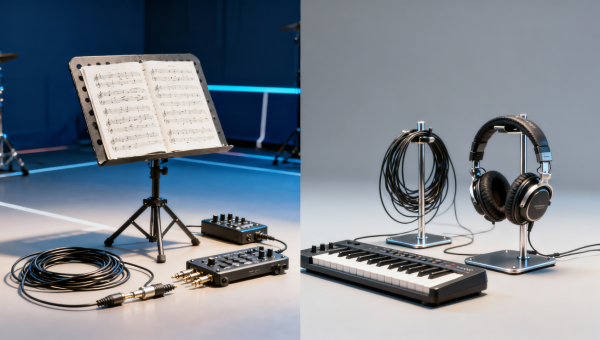
In live entertainment environments, the stand must work alongside pro audio equipment, instrument cables, floor monitors, risers, and music accessories. That means stability is not evaluated in isolation. It must be assessed in a real setup where performers move quickly, lighting is low, and changeovers may happen within 5–15 minutes between acts. A stable stand reduces disruption and helps venue operators protect schedule discipline.
For distributors, agents, and B2B sourcing teams, this also becomes a portfolio issue. A low-cost stand may look acceptable in a product sheet but produce high complaint rates in orchestral instruments programs or institutional procurement. Returns, spare parts, and damaged reputation often erase the initial unit-price advantage. That is why experienced buyers compare not only appearance and cost, but also hardware thickness, base spread, and fatigue resistance.
The 4 stability drivers buyers should inspect first
- Material gauge and rigidity: steel usually offers higher mass and resistance to twisting, while aluminum can reduce transport weight but must be well reinforced at the joints.
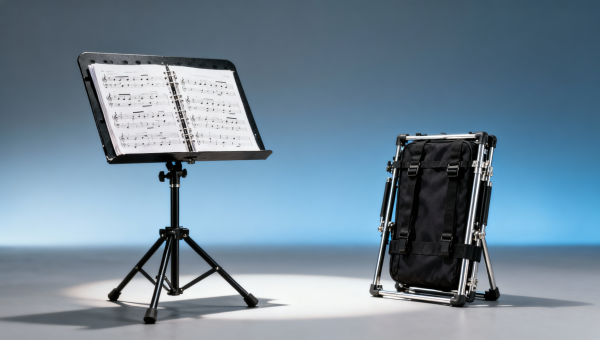
- Base design: tripod leg angle, cast-iron plate base, or hybrid support changes the center of gravity and determines how the stand reacts to side loads.
- Locking mechanism: friction collars, threaded knobs, and clutch systems vary widely in how well they hold height after repeated adjustment cycles.
- Desk compatibility: a wider desk carrying heavy folders, tablets, or accessory trays needs stronger connection points and better anti-tilt balance.
These four checks can eliminate many weak options before sample review. In practical sourcing, they often matter more than color finish, branding, or packaging. For high-frequency commercial use, stable performance over repeated handling is what separates a reliable music stand from a short-life accessory.
Which stand structures work best for different performance scenarios?
A stand that performs well in a rehearsal room may not be suitable for a touring stage or a hotel ballroom event. Buyers should match structure to scenario. In entertainment procurement, there is no single universal format. The best music stand depends on transport frequency, floor conditions, score weight, and how often users adjust height and desk angle during a typical week.
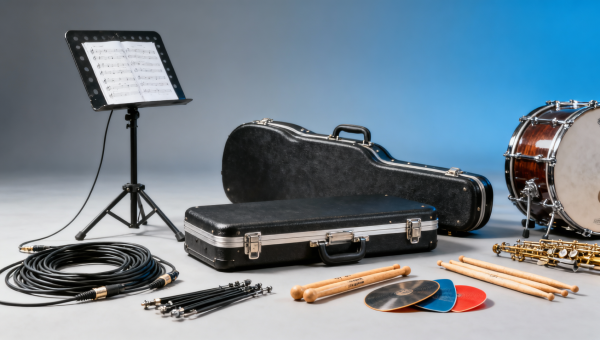
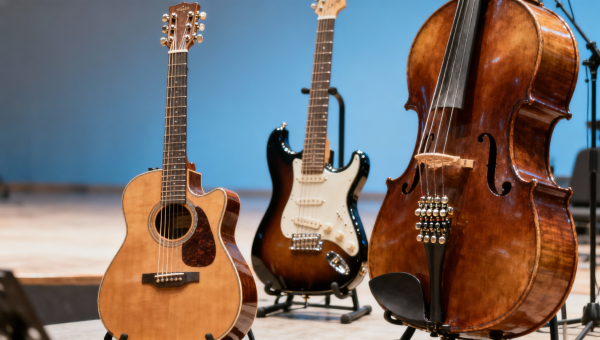
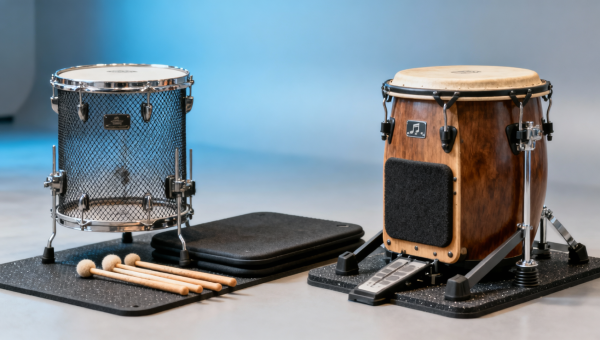
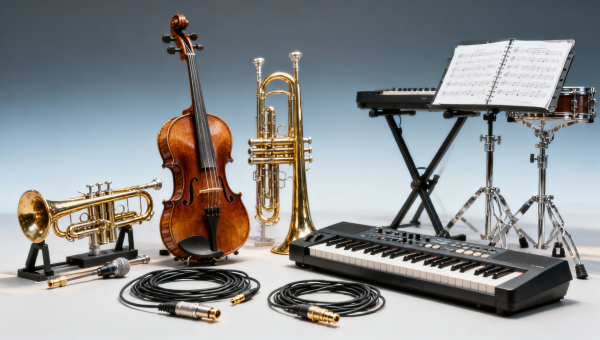
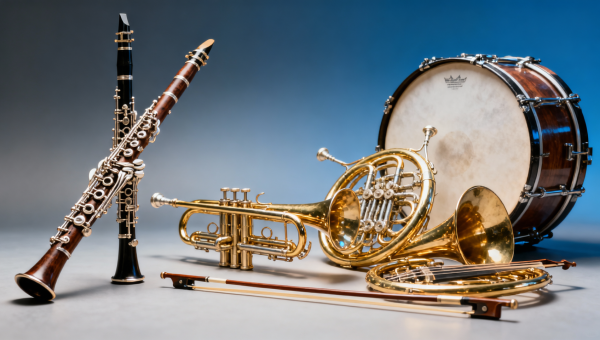
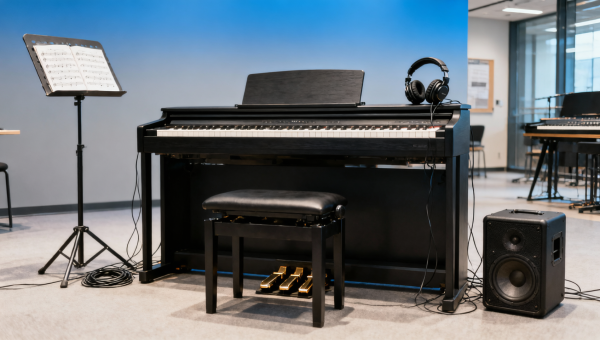
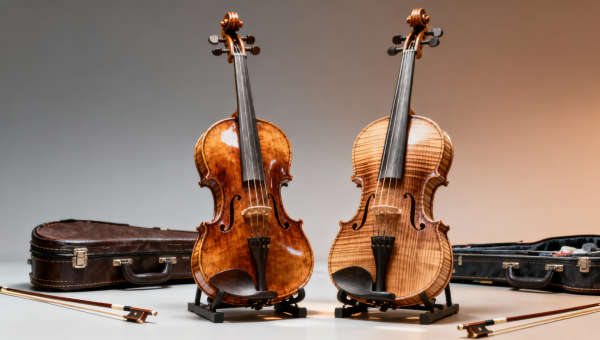
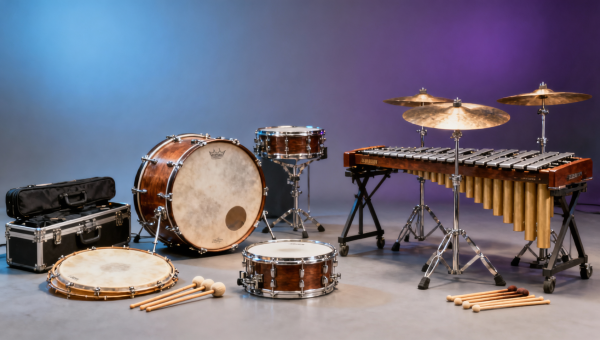
String instruments in seated orchestral settings often benefit from wider desks and low-vibration bases. Wind instruments may require flexible height positioning and clear leg spacing around chairs and foot placement. Keyboard instruments and percussion instruments can require stands that fit around pedals, mallets, racks, and cable routes. This is why scenario-based selection usually produces better lifecycle value than one-size-fits-all buying.
The table below summarizes common stand types used in commercial entertainment spaces. It helps procurement personnel compare stability, transport suitability, and stage practicality across typical applications.
The key insight is that stability must be defined by use case. A plate-base stand may outperform a light tripod in a permanent venue, but a touring reseller may still prefer a reinforced tripod because freight efficiency and storage density matter across dozens or hundreds of units. Commercial buyers need to balance stability against handling and logistics, not just judge the product by isolated showroom feel.
Scenario-based selection logic
For fixed installations with weekly or daily use, prioritize heavier structures, thicker tubing, and fewer plastic stress points. For mobile event suppliers handling 20–100 stands per project, foldability, setup time, and packed volume become equally important. In these cases, reinforced mid-weight designs often deliver the best total value.
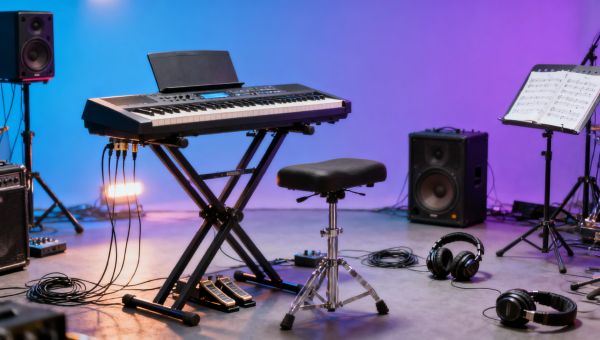
Where stages include dense instrument cables, monitor wedges, and shared risers, leg shape matters more than many buyers expect. A stand can be technically stable but operationally awkward if its footprint interferes with pedal use, chair movement, or fast position changes. This is especially relevant for keyboard instruments and wind sections on compact stages.
Distributors serving schools and community venues should also consider misuse tolerance. Products in these channels may face daily adjustment by many users, limited maintenance, and rough storage practices. A stand built for 3–5 years of moderate institutional use should have simple mechanisms, replaceable knobs where possible, and packaging suited to repeated handling.
What technical specifications actually predict stage stability?
Many catalogs list height range and color finish but say little about the features that affect real stage performance. Buyers should ask suppliers for measurable construction details. Even when exact test reports are not available, technical clarity around tube diameter, material thickness, connection hardware, and desk dimensions gives a more reliable basis for comparison than marketing language alone.
A typical commercial music stand may offer a height adjustment range of around 650–1200 mm, but range alone says very little. A stand can reach a comfortable height and still become unstable near its upper limit. In practice, buyers should confirm stable working range, not only maximum extension. Ask whether the desk remains level and vibration-resistant at the top 15–20% of its adjustable height.
The following specification table highlights common evaluation points for commercial entertainment procurement. These are not fixed universal standards, but they provide a practical framework for comparing models intended for orchestral instruments, school use, venue rental, and performance stages.
These parameters should be reviewed together. For example, a large desk combined with a narrow base often produces avoidable tipping risk. Likewise, a wide base with weak locking hardware may still drift downward during performance. Stable music stands are systems, not isolated parts. The most reliable sourcing decisions come from evaluating interactions between geometry, weight, and repeated adjustment stress.
How to test a sample in 3 practical stages
- Load test: place a normal score, then a heavier binder or tablet setup, and check tilt, twist, and desk bounce during page turns.
- Adjustment test: cycle height and angle settings 20–30 times to see whether knobs loosen, collars slip, or hardware binds.
- Stage simulation: position the stand near instrument cables, chairs, pedals, or risers to evaluate real operational clearance.
This three-stage review helps procurement personnel reduce risk before larger orders. It is especially useful when comparing OEM or ODM sourcing options where visual similarity can hide major differences in hardware quality.
How should procurement teams compare cost, durability, and sourcing risk?
The cheapest stand rarely remains the cheapest after freight, replacements, and service issues are added. In B2B buying, total cost of ownership should be evaluated across at least 3 dimensions: unit price, operating lifespan, and post-sale disruption. A lower-cost model may fit entry-level distribution, but for performance venues, institutional buyers, and rental fleets, failure rates and handling efficiency can quickly dominate the cost picture.
Procurement managers should also account for storage density, carton durability, spare-part availability, and reorder consistency. If a supplier changes hardware specification between batches, the same product code can perform differently six months later. This is a serious issue for agents and distributors who need catalog continuity and predictable claims handling across multiple markets.
When comparing options, it helps to use a weighted selection approach rather than a simple price sort. The following checklist reflects common concerns among sourcing teams, venue operators, and commercial resellers in the pro audio and musical instruments channel.
A practical 6-point procurement checklist
- Define use intensity: light rehearsal, institutional daily use, or touring/rental use. The answer changes the acceptable hardware grade.
- Set score-load expectations: standard sheets, large binders, tablets, or accessory trays require different desk reinforcement.
- Review packaging and freight factors: heavier bases improve stability but can increase landed cost and manual handling effort.
- Confirm finish and corrosion resistance: venues near coastal or humid environments may need more durable coating performance over 12–24 months.
- Ask about production consistency: repeated batches should keep the same locking parts, tube dimensions, and accessory compatibility.
- Clarify sample and lead-time expectations: common commercial cycles may range from sample review in 7–15 days to production in 3–6 weeks, depending on customization and order size.
Where many buyers make the wrong comparison
A common mistake is to compare music stands only by weight and appearance. Heavier is not automatically better, and lighter is not automatically unstable. The better question is whether the weight is placed where it improves balance and whether the structure remains serviceable after repeated handling. For example, a well-designed mid-weight stand may outperform a poorly balanced heavy model in schools and portable event use.
Another error is ignoring compatibility with the wider stage ecosystem. If the stand collides with microphone stands, blocks cable paths, or slows stage reset, it creates hidden operating cost. Entertainment buyers should compare products in full layout context, especially when supporting orchestral instruments, ensemble work, or mixed live sound setups.
This is where Global Commercial Trade adds value for sourcing and evaluation teams. GCT helps buyers move beyond basic catalog browsing by aligning product review with venue use case, commercial risk, and supplier capability. For distributors and project buyers, that means more efficient shortlisting and fewer surprises after shipment.
What compliance, service details, and supplier questions matter before placing an order?
Music stands are mechanically simple products, but commercial procurement still requires disciplined documentation. Buyers should confirm material declarations where relevant, packaging suitability for export handling, finish consistency, and any applicable safety or labelling requirements in the target market. While these products may not require the same certification scope as powered pro audio equipment, importers still need clear technical and commercial records.
For projects involving hotels, smart campuses, educational institutions, performance venues, or public entertainment spaces, the stand may be a small line item inside a larger sourcing package. That makes delivery coordination important. Procurement teams should ask whether the supplier can support mixed-SKU orders, spare components, color or logo customization, and carton marking for phased deployment over 2–3 delivery waves.
Before commitment, ask suppliers a structured set of questions. This reduces ambiguity and gives business evaluators a stronger basis for commercial approval.
Key supplier questions to ask
- What is the intended usage class: home practice, school use, venue use, or rental/touring use?
- Which components are metal, which are polymer, and which points carry the highest stress during adjustment?
- Can the stand support large-format scores or tablet holders without angle drift?
- What is the typical reorder lead time for standard models and for OEM/ODM variants?
- Are spare knobs, desks, or support parts available for after-sales maintenance?
- How is export packaging designed to reduce damage during palletization and container transport?
FAQ for buyers, evaluators, and channel partners
How do I choose between a tripod and a plate-base music stand?
Choose based on operating environment. Tripod stands usually suit mobile, educational, and cost-sensitive projects because they fold efficiently and reduce freight burden. Plate-base stands are often better for fixed stages and premium venues where higher mass and lower tipping risk are priorities. If your stage layout is dense, also compare footprint interference with chairs, pedals, and instrument cables.
What should buyers prioritize if performers use large scores or tablets?
Look at desk width, hinge strength, neck reinforcement, and stable angle retention. A larger surface increases leverage on the support joint. In many cases, the weak point is not the desk itself but the connector between desk and shaft. Sample testing with the actual load is the safest approach before quantity commitment.
Are lightweight stands always unsuitable for professional use?
No. Lightweight designs can work well when reinforced correctly and matched to the right application. They are often suitable for mobile event suppliers, student distribution, and travel-oriented setups. The issue is not low weight alone, but whether the structure resists twist, slippage, and tipping within the expected use intensity.
What lead times are common for commercial orders?
For standard items, sample confirmation may take around 7–15 days and regular production often falls in a 3–6 week range, depending on order size, season, and packaging requirements. OEM/ODM projects usually need extra time for drawing approval, pre-production verification, and final packing alignment.
Why work with GCT when sourcing stage-stable music stands?
For information researchers, procurement teams, business evaluators, and channel partners, the challenge is rarely finding a music stand supplier. The challenge is identifying which product structure truly fits the target venue, user intensity, and commercial risk profile. Global Commercial Trade supports that decision by connecting product analysis with real commercial scenarios across pro audio and musical instruments sourcing.
Instead of treating music stands as generic accessories, GCT helps buyers review them as part of a wider commercial experience system that includes stage layout, instrument categories, accessories, logistics planning, and supplier capability. This is especially useful for hotels, schools, performance spaces, entertainment operators, and distributors building product lines for multiple customer tiers.
If you are comparing models now, you can consult GCT for 6 concrete topics: parameter confirmation, scenario-based product selection, lead-time planning, OEM/ODM customization options, target-market compliance considerations, and sample or quotation coordination. That gives your team a clearer path from shortlist to commercial approval.
To move faster, share your intended application, estimated quantity, preferred stand type, target delivery window, and any requirements related to accessories, packaging, or distribution channel. With that information, GCT can help you refine product positioning, reduce sourcing uncertainty, and identify music stands that stay stable on stage for the users who depend on them most.
Search News
Hot Articles
Popular Tags
Need ExpertConsultation?
Connect with our specialized leisureengineering team for procurementstrategies.
Recommended News
 Apr 20, 2026Music Accessories Often Overlooked Until They Start Causing ProblemsMusic accessories often cause hidden issues across musical instruments, percussion instruments, wind instruments, string instruments, keyboard instruments, orchestral instruments, music stands, instrument cables, and pro audio equipment.● Pro Audio Engineer
 Apr 20, 2026When Orchestral Instruments Need Custom Cases and Why It MattersMusical instruments and orchestral instruments need custom cases to protect string instruments, wind instruments, percussion instruments, and keyboard instruments during transport. Learn when buyers should upgrade for safer logistics.● Pro Audio Engineer
 Apr 20, 2026Keyboard Instruments in 2026: What Features Are Becoming Standard?Keyboard instruments in 2026 are redefining musical instruments with smarter connectivity, durable builds, and seamless integration with pro audio equipment, instrument cables, music stands, and music accessories.● Pro Audio Engineer
 Apr 20, 2026Music Stands With Folding Designs: Convenient or Less Reliable?Music stands buyers compare folding convenience with long-term reliability across musical instruments, percussion instruments, wind instruments, string instruments, and pro audio equipment.● Pro Audio Engineer
 Apr 20, 2026String Instruments With Better Tuning Stability in Busy Use CyclesExplore string instruments with better tuning stability for busy venues. Compare musical instruments, percussion instruments, and wind instruments to source reliable, low-maintenance performance solutions.● Pro Audio Engineer
 Apr 20, 2026Why Wind Instruments React So Differently to Climate and StorageWind instruments react fast to climate and storage. Compare musical instruments, percussion instruments, string instruments, and music accessories to cut maintenance risk and buy smarter.● Pro Audio Engineer
 Apr 20, 2026Percussion Instruments for Shared Spaces: What Reduces Noise Most?Percussion instruments for shared spaces: discover what reduces noise most across musical instruments, with smart comparisons to wind instruments, string instruments, keyboard instruments, and practical accessories.● Pro Audio Engineer
 Apr 20, 2026How to Spot Musical Instruments That Look Fine but Wear Out FastDiscover how to spot musical instruments that look premium but wear out fast. Learn key checks for percussion instruments, wind instruments, string instruments, keyboard instruments, music stands, instrument cables, pro audio equipment, and music accessories before you buy.● Pro Audio Engineer
 Apr 20, 2026Music Accessories That Quietly Affect Daily Performance QualityExplore how music accessories shape daily performance quality—from music stands and instrument cables to pro audio equipment for musical instruments, percussion instruments, wind instruments, string instruments, and keyboard instruments.● Pro Audio Engineer
 Apr 20, 2026Orchestral Instruments With the Highest Repair RatesExplore which orchestral instruments have the highest repair rates across wind instruments, string instruments, percussion instruments, and keyboard instruments, with smart buying tips for musical instruments, music accessories, music stands, instrument cables, and pro audio equipment.● Pro Audio Engineer
 Apr 20, 2026Are Keyboard Instruments With Weighted Keys Worth the Extra Cost?Keyboard instruments with weighted keys: discover if the extra cost pays off for musical instruments buyers, with smart tips on music accessories, instrument cables, and pro audio equipment.● Pro Audio Engineer
 Apr 20, 2026Music Stands That Stay Stable on Stage: What Makes the Difference?Music stands for musical instruments: discover what keeps them stable on stage for string instruments, wind instruments, percussion instruments, and keyboard instruments—plus smart buying tips.● Pro Audio Engineer
 Apr 20, 2026String Instruments: Solid Wood or Laminated for Regular Use?String instruments guide for regular use: compare solid wood vs laminated models across musical instruments setups with music accessories, pro audio equipment, and smarter sourcing insights.● Pro Audio Engineer
 Apr 20, 2026Wind Instruments for Schools and Venues: What Affects Longevity?Wind instruments longevity guide for schools and venues: compare musical instruments, percussion instruments, string instruments, and keyboard instruments to source smarter and reduce total cost.● Pro Audio Engineer
 Apr 20, 2026Why Some Percussion Instruments Cost More to Maintain Than ExpectedExplore why percussion instruments can cost more to maintain than expected, and compare musical instruments, orchestral instruments, music accessories, music stands, instrument cables, and pro audio equipment.● Pro Audio Engineer
 Apr 20, 2026Which Musical Instruments Hold Up Best in High-Use Venues?Musical instruments for high-use venues: compare percussion instruments, wind instruments, string instruments, keyboard instruments, music stands, instrument cables, pro audio equipment, and music accessories.● Pro Audio Engineer
 Apr 19, 2026What changed in musical instruments demand in 2026?Musical instruments demand in 2026 is shifting fast across trampoline park and indoor playground projects. Explore trends in percussion instruments, wind instruments, string instruments, and crossover demand from outdoor playground and playground swings.● Pro Audio Engineer
 Apr 19, 2026Why string instruments react so differently to climate changesString instruments react faster to climate changes than percussion instruments or wind instruments. Discover smart sourcing tips for trampoline park, indoor playground, and outdoor playground projects.● Pro Audio Engineer
 Apr 19, 2026String instruments: solid wood or laminate for long-term use?String instruments guide for buyers: compare solid wood vs laminate for long-term use, durability, maintenance, and value across musical instruments, percussion instruments, and wind instruments.● Pro Audio Engineer
 Apr 19, 2026When do wind instruments need repair sooner than expected?Wind instruments need repair sooner in trampoline park and indoor playground venues due to heavy use, humidity, and poor storage. Compare musical instruments, percussion instruments, string instruments, outdoor playground planning, and playground swings with expert sourcing tips.● Pro Audio Engineer
 Apr 19, 2026Wind instruments that handle frequent transport more reliablyWind instruments guide for buyers: compare durable musical instruments for frequent transport, with insights across percussion instruments, string instruments, trampoline park and indoor playground venues.● Pro Audio Engineer
 Apr 19, 2026Common tuning issues with percussion instruments in humid areasPercussion instruments in humid venues can lose tuning fast. Learn how musical instruments perform in trampoline park, indoor playground, and outdoor playground spaces for smarter sourcing.● Pro Audio Engineer
 Apr 19, 2026Percussion instruments with lower upkeep in heavy-use spacesDiscover low-upkeep percussion instruments for trampoline park, indoor playground, and outdoor playground spaces—durable musical instruments that outperform wind instruments, string instruments, and fit playground swings zones.● Pro Audio Engineer
 Apr 19, 2026How to compare musical instruments for school and venue useCompare musical instruments for schools and venues with practical tips on percussion instruments, wind instruments, and string instruments. Ideal for indoor playground, trampoline park, outdoor playground, and playground swings projects.● Pro Audio Engineer