String instruments: solid wood or laminate for long-term use?
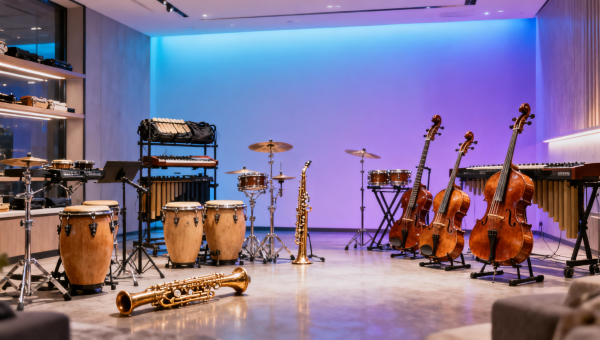
For buyers, dealers, and market researchers in musical instruments, choosing between solid wood and laminate string instruments is more than a tone question—it affects durability, maintenance, pricing, and long-term value. In commercial settings that may also source percussion instruments or wind instruments for schools, studios, and entertainment venues, understanding material differences helps support smarter procurement and distribution decisions.
In B2B procurement, the decision is rarely about craftsmanship alone. A distributor may need entry-level violins for 200 students, a hotel lounge may require visually attractive acoustic guitars for daily use, and a studio retailer may want premium instruments that justify higher margins. In each case, the material choice changes inventory planning, after-sales service, climate risk, and customer satisfaction.
This guide examines how solid wood and laminate string instruments perform over time, where each option fits best, and which checkpoints commercial buyers should use before placing orders. The focus is practical: durability, maintenance cycles, procurement logic, and resale or replacement value across real entertainment and education scenarios.
Material Basics: What Solid Wood and Laminate Really Mean
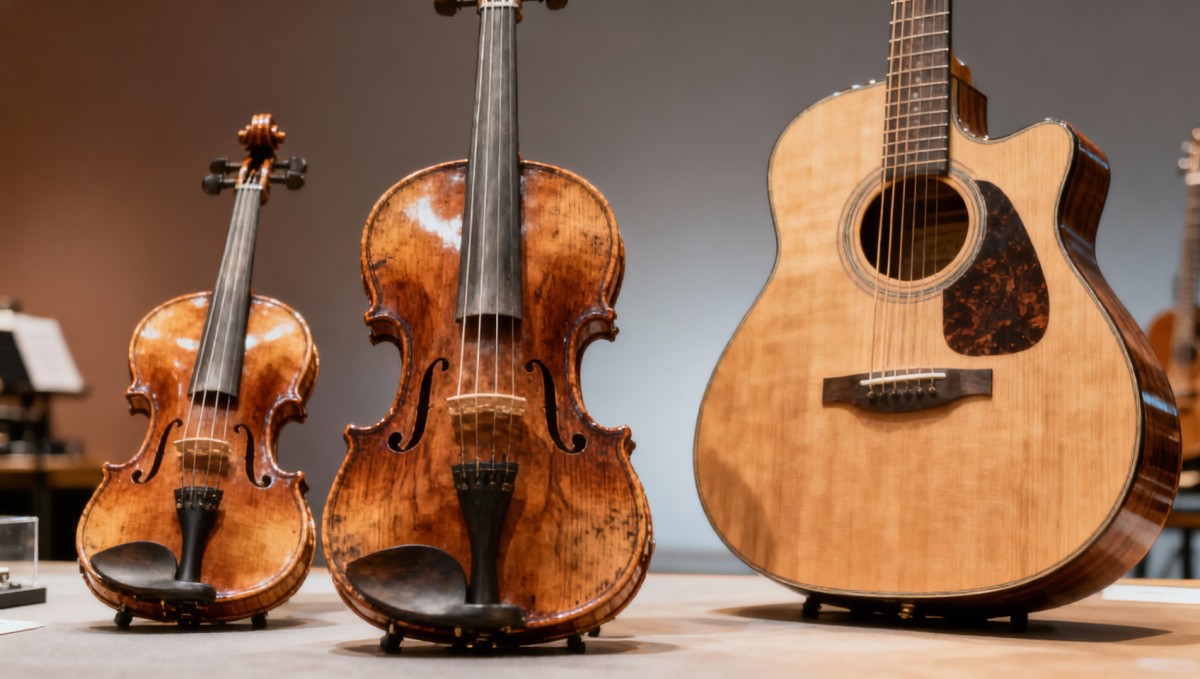
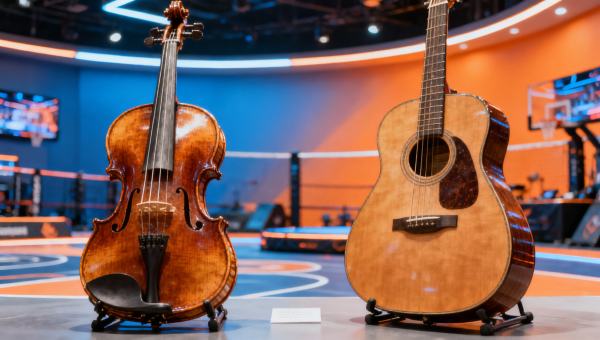
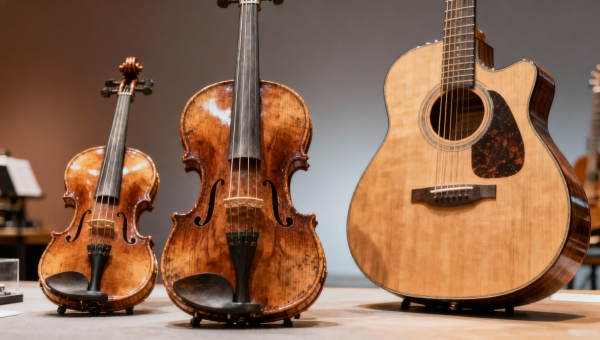
In string instruments, “solid wood” usually means that the top, back, or sides are made from single pieces of tonewood rather than layered sheets. “Laminate” generally refers to multiple bonded wood layers pressed together under heat and pressure. Both can look similar from a distance, but their structural behavior over 3–10 years can differ significantly.
For violins, cellos, acoustic guitars, ukuleles, and some orchestral folk instruments, the soundboard is the most critical part. A solid spruce or cedar top tends to respond more dynamically as it ages, while laminate tops prioritize structural consistency. For institutional buyers, that consistency can be a major advantage where usage volume is high and handling conditions are not ideal.
The phrase “solid wood instrument” also needs verification. Some models have a solid top but laminate back and sides. Others are fully solid. In procurement sheets, this difference can move the price by 20%–60%, especially in mid-range acoustic guitars and student stringed instruments.
How construction affects commercial evaluation
For B2B buyers, material should be assessed alongside finish quality, neck stability, glue consistency, fret or fingerboard work, and humidity tolerance. A poorly built solid wood instrument may create more returns than a well-made laminate model. Material is important, but build control remains the first filter.
The table below outlines the practical differences most relevant to procurement teams, dealers, and sourcing analysts comparing long-term use cases rather than showroom impressions.
The key takeaway is simple: solid wood tends to deliver more acoustic value and stronger premium positioning, while laminate often wins on stability, predictable cost, and operational practicality. That is why schools, rental fleets, and leisure venues often choose differently from boutique retailers or professional resellers.
Long-Term Use: Durability, Climate Risk, and Maintenance Cost
When the question is long-term use, the answer depends on where and how the instruments will be used. A solid wood violin stored at 45%–55% relative humidity and serviced every 6–12 months can remain highly stable for many years. The same instrument placed in a dry classroom, a seaside resort, or a touring entertainment venue may develop cracks, seam issues, or warping much faster.
Laminate instruments are usually more forgiving. Their layered construction reduces movement caused by humidity swings, making them suitable for institutions without dedicated climate control. In practical terms, this means fewer emergency repairs during seasonal transitions and less maintenance pressure on large inventories of 50, 100, or 300 units.
That said, “durable” should not be confused with “maintenance-free.” Laminate instruments still require string replacement, tuning setup, bridge checks, and finish inspection. For school or rental fleets, a basic service cycle every 4–8 months is still advisable, especially when users are beginners.
Common long-term risk points
- Solid wood tops may crack if humidity stays below 35% for extended periods.
- Fingerboards and neck joints need regular inspection after transport or seasonal storage.
- Budget laminate models can still fail if glue quality, internal bracing, or finish curing is poor.
- Instruments used 5–7 days per week in entertainment venues need faster replacement of strings, pegs, and accessories.
Maintenance planning for commercial operators
Procurement teams should calculate total ownership cost over at least 24–36 months. A cheaper laminate instrument may reduce breakage and service frequency, while a higher-value solid wood instrument may offer better resale appeal or stronger customer conversion in premium retail channels. The right decision depends on the operating model, not on material prestige alone.
The next table compares maintenance and risk considerations by typical commercial environment, helping buyers align material choice with real usage intensity.
A clear pattern emerges: laminate tends to reduce operational risk in high-contact, low-control environments, while solid wood performs best when storage, handling, and customer expectations support a more premium lifecycle.
Procurement Strategy by Buyer Type and Application Scenario
Different buyers should not use the same specification sheet. A distributor needs sell-through efficiency, return control, and balanced price tiers. A procurement manager at an education group needs consistency across batches, easy maintenance, and safe packaging for regional delivery. A commercial venue may prioritize design appearance, audience-facing sound, and replacement availability within 7–21 days.
This is why many successful sourcing programs use a tiered portfolio rather than a single material standard. For example, 60% laminate for training and daily-use fleets, 30% solid-top models for intermediate users, and 10% full solid wood for premium display, performance, or higher-margin channels.
For dealers and agents, the material choice also affects how products are positioned. Laminate models often move better in entry-level retail and institutional tenders, while solid wood instruments support expert selling, demonstration-based conversion, and stronger differentiation from mass-market inventory.
A practical 5-point selection framework
- Define the use cycle: occasional, weekly, or daily. Daily use usually favors durability over tonal refinement.
- Measure climate control: if storage humidity cannot be stabilized, laminate may reduce service issues.
- Estimate user skill level: beginners are harder on instruments than advanced players.
- Set the acceptable maintenance interval: every 4 months, 6 months, or annually.
- Match product tier to sales channel: educational bulk, rental, hospitality, performance, or premium retail.
Specification checkpoints before order confirmation
Beyond the wood itself, buyers should confirm neck straightness tolerance, bridge fit, finish uniformity, accessory pack contents, carton protection, and batch consistency. In export-oriented sourcing, it is also useful to ask whether 5-unit pilot orders, 20-unit sample batches, or mixed-model loading plans are available before committing to larger purchase volumes.
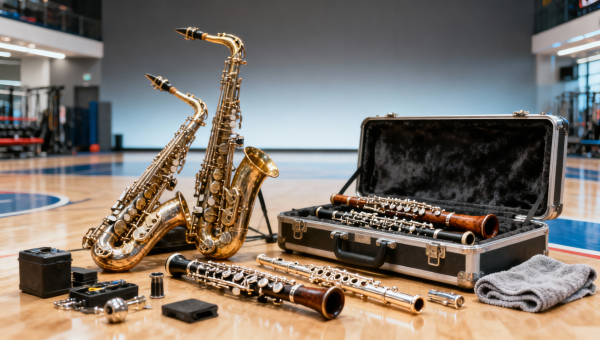
Commercial buyers that also source percussion instruments or wind instruments can benefit from unified vendor scorecards. This makes it easier to compare suppliers on lead time, packaging failure rate, replacement part support, and responsiveness across multiple instrument categories.
Cost, Margin, and Inventory Logic for Dealers and Distributors
From a business perspective, long-term value is not always tied to the lowest purchase price. Solid wood instruments usually require more capital per unit, but they can support better margin percentages, stronger storytelling, and improved customer retention in serious-player segments. Laminate instruments, on the other hand, often provide faster turnover and lower dead-stock risk in price-sensitive markets.
For distributors managing mixed sales channels, a common mistake is overstocking premium solid wood models in markets where climate control and user education are weak. Another mistake is underinvesting in higher-grade instruments where the market is ready to trade up. Material strategy should reflect local demand maturity, not just catalog availability.
Inventory planning often improves when businesses separate products into three commercial groups: training grade, intermediate performance grade, and premium display or artist grade. This structure makes it easier to plan reorder frequency, after-sales support, and promotional resources over a 12-month cycle.
Example of margin-oriented assortment planning
The table below shows how material choice can align with channel strategy. It is not a fixed rule, but it offers a practical model for balancing margin, service pressure, and replacement speed.
The commercial insight is that “best” material depends on profit model and channel behavior. A laminate instrument that turns quickly and generates fewer service claims may outperform a premium model in one market, while the reverse may be true in another.
Quality Control, Delivery Planning, and Common Buying Mistakes
A reliable sourcing decision combines product selection with execution discipline. In string instruments, defects often appear not at the quotation stage but after shipping, unpacking, acclimatization, or first use. This is especially relevant for bulk orders crossing multiple climate zones or serving mixed commercial applications.
Lead time for standard batch orders is often in the range of 30–60 days, depending on finish complexity, packaging requirements, and model mix. If custom branding, accessory bundling, or mixed cartons are required, buyers should allow additional coordination time and ask for pre-shipment inspection checkpoints.
A practical acceptance process should include visual inspection, setup verification, carton drop-risk review, and random testing from at least 3%–5% of the shipment where order volume allows. This is particularly useful for school tenders, dealer networks, and destination venues that cannot absorb high return rates.
Common mistakes to avoid
- Buying full solid wood for uncontrolled environments simply because the market associates it with higher quality.
- Assuming all laminate models are low grade without checking bracing, setup, and finish consistency.
- Skipping humidity and packaging questions during sourcing discussions.
- Comparing quotations without separating solid-top, full solid, and fully laminated constructions.
- Ignoring after-sales parts support for bridges, pegs, cases, strings, and fittings.
Recommended incoming inspection checklist
- Check body seams, top flatness, and finish marks within 24 hours of unpacking.
- Allow acclimatization for 12–24 hours before tuning to pitch in new environments.
- Test action height, neck alignment, and bridge position on sample units.
- Confirm accessory completeness and carton condition by batch number.
- Record defect type by category to improve future supplier evaluation.
For professional sourcing teams, these controls reduce avoidable disputes and create better long-term vendor comparisons. They also help distinguish whether a problem comes from material sensitivity, manufacturing inconsistency, or logistics handling.
FAQ for Commercial Buyers of String Instruments
Which lasts longer: solid wood or laminate string instruments?
In uncontrolled environments, laminate often lasts longer with fewer structural issues. In controlled environments with proper maintenance, solid wood can remain serviceable for many years and may gain acoustic value over time. The deciding factor is not the calendar alone, but storage conditions, handling frequency, and service discipline.
Are solid wood instruments always better for resale or premium channels?
Often yes, but not always. Solid wood supports premium positioning, especially for advancing players and specialist retail. However, a poorly set-up or unstable solid wood instrument can underperform commercially. Buyers should evaluate tone, finish, consistency, and market fit together rather than relying on material label alone.
What is the safest option for schools, rental fleets, or beginner programs?
For fleets with 20+ units and frequent user turnover, laminate or solid-top hybrid instruments are usually the safest choice. They offer better resistance to accidental handling stress and reduce maintenance surprises. This is especially useful when instruments are moved between classrooms, rehearsal spaces, and storage rooms.
How often should commercial operators service string instruments?
For daily-use or institutional settings, a basic check every 4–8 months is a practical minimum. Premium retail display stock may need lighter but more frequent review, especially for humidity control and setup condition. High-use hospitality or entertainment venues should also monitor strings and fittings more closely during peak seasons.
Choosing between solid wood and laminate string instruments is ultimately a sourcing decision about environment, user profile, service capacity, and commercial objective. Solid wood is often the stronger choice for premium retail, specialist dealers, and curated performance settings. Laminate remains highly practical for education, rental, and high-handling entertainment applications where stability and cost control matter most.
For buyers, distributors, and evaluation teams working across musical instruments, the most effective strategy is to match material choice to use case, maintenance reality, and inventory plan rather than relying on a one-size-fits-all rule. If you are comparing product lines, planning a sourcing program, or refining your dealer assortment, GCT can help you assess the right specification path for your market. Contact us today to discuss product details, sourcing options, or a tailored commercial instrument solution.
Search News
Hot Articles
Popular Tags
Need ExpertConsultation?
Connect with our specialized leisureengineering team for procurementstrategies.
Recommended News
 Apr 19, 2026What changed in musical instruments demand in 2026?Musical instruments demand in 2026 is shifting fast across trampoline park and indoor playground projects. Explore trends in percussion instruments, wind instruments, string instruments, and crossover demand from outdoor playground and playground swings.● Pro Audio Engineer
 Apr 19, 2026Why string instruments react so differently to climate changesString instruments react faster to climate changes than percussion instruments or wind instruments. Discover smart sourcing tips for trampoline park, indoor playground, and outdoor playground projects.● Pro Audio Engineer
 Apr 19, 2026String instruments: solid wood or laminate for long-term use?String instruments guide for buyers: compare solid wood vs laminate for long-term use, durability, maintenance, and value across musical instruments, percussion instruments, and wind instruments.● Pro Audio Engineer
 Apr 19, 2026When do wind instruments need repair sooner than expected?Wind instruments need repair sooner in trampoline park and indoor playground venues due to heavy use, humidity, and poor storage. Compare musical instruments, percussion instruments, string instruments, outdoor playground planning, and playground swings with expert sourcing tips.● Pro Audio Engineer
 Apr 19, 2026Wind instruments that handle frequent transport more reliablyWind instruments guide for buyers: compare durable musical instruments for frequent transport, with insights across percussion instruments, string instruments, trampoline park and indoor playground venues.● Pro Audio Engineer
 Apr 19, 2026Common tuning issues with percussion instruments in humid areasPercussion instruments in humid venues can lose tuning fast. Learn how musical instruments perform in trampoline park, indoor playground, and outdoor playground spaces for smarter sourcing.● Pro Audio Engineer
 Apr 19, 2026Percussion instruments with lower upkeep in heavy-use spacesDiscover low-upkeep percussion instruments for trampoline park, indoor playground, and outdoor playground spaces—durable musical instruments that outperform wind instruments, string instruments, and fit playground swings zones.● Pro Audio Engineer
 Apr 19, 2026How to compare musical instruments for school and venue useCompare musical instruments for schools and venues with practical tips on percussion instruments, wind instruments, and string instruments. Ideal for indoor playground, trampoline park, outdoor playground, and playground swings projects.● Pro Audio Engineer
 Apr 19, 2026Why some musical instruments lose value faster in storageMusical instruments lose value in storage for clear reasons. Learn how string instruments, wind instruments, and percussion instruments compare, with smart insights for trampoline park, indoor playground, outdoor playground, and playground swings buyers.● Pro Audio Engineer
 Apr 18, 2026String instruments bow hair replacement: Frequency myths vs workshop dataString instruments bow hair replacement data debunks myths—critical for trampoline parks, indoor playgrounds, adventure playgrounds & luxury venues.● Pro Audio Engineer
 Apr 18, 2026Musical instruments shipping damage: Why padded cases aren’t always enoughMusical instruments shipping damage hits trampoline parks, indoor playgrounds & luxury venues hard—padded cases aren’t enough. Discover why—and how to protect percussion, wind & string instruments.● Pro Audio Engineer
 Apr 17, 2026String instruments setup costs: What’s included—and what’s notString instruments setup costs revealed—what’s included (nut/saddle, intonation, climate acclimation) and hidden fees for trampoline parks, indoor playgrounds, arcade games & more.● Pro Audio Engineer
 Apr 17, 2026Wind instruments for beginners: Why student models vary so much in resale valueWind instruments for beginners: Discover why student models' resale value varies wildly—key insights for trampoline parks, indoor playgrounds, luxury hotels & more.● Pro Audio Engineer
 Apr 17, 2026Percussion instruments durability: How humidity affects touring gearPercussion instruments durability under humidity is critical for trampoline parks, indoor playgrounds & adventure playgrounds—discover proven resilience strategies.● Pro Audio Engineer
 Apr 17, 2026Musical instruments for schools: Why secondhand wind instruments need extra checksMusical instruments for schools: Essential checks for secondhand wind instruments—plus trampoline park, indoor playground & arcade games sourcing.● Pro Audio Engineer
 Apr 17, 2026Music accessories for schools: Why durability beats brand name every timeMusic accessories for schools demand commercial-grade durability—not just brand names. Discover why resilience beats recognition in playground borders, sensory playgrounds, and educational supplies.● Pro Audio Engineer
 Apr 16, 2026Orchestral instrument cases rated for airline cargo handlingAirline-certified orchestral instruments cases for secure global transport—engineered alongside luxury furniture, music stands, DJ equipment & custom jewelry.● Pro Audio Engineer
 Apr 16, 2026Keyboard instruments with low-latency MIDI integrationDiscover premium keyboard instruments with ultra-low-latency MIDI integration—engineered for offices, campuses & luxury retail. Includes music stands, orchestral instruments, DJ equipment & more.● Pro Audio Engineer
 Apr 16, 2026Music stands compatible with both printed and tablet scoresPremium music stands for printed scores & tablets—engineered for orchestral instruments, keyboard instruments, and pro audio. Luxury furniture-grade build, ADA-compliant, EN 13150 certified.● Pro Audio Engineer
 Apr 15, 2026Orchestral instruments made for touring durabilityOrchestral instruments built for touring durability — rugged, compliant & precision-engineered. Also explore music stands, keyboard instruments, luxury furniture, DJ equipment and more.● Pro Audio Engineer
 Apr 15, 2026Keyboard instruments with built-in serviceability featuresKeyboard instruments with built-in serviceability features—engineered for longevity, low TCO, and seamless integration alongside luxury furniture, orchestral instruments, and DJ equipment.● Pro Audio Engineer
 Apr 15, 2026Music stands that won’t wobble during live rehearsalsStable, professional music stands for orchestral instruments, keyboard instruments & DJ equipment—engineered to eliminate wobble. Luxury-grade durability meets precision design.● Pro Audio Engineer
 Apr 15, 2026Music accessories built for touring — not just studio useMusic accessories built for touring—durable, portable & safety-certified for hotels, sensory playgrounds, and commercial venues. Discover OEM/ODM solutions meeting playground safety, hotel tables, and amusement equipment standards.● Pro Audio Engineer
 Apr 13, 2026Instrument cases that survive airline cargo—tested durability vs. marketing claimsInstrument cases built for airline cargo abuse—real-tested durability vs. marketing hype. Also covers stage equipment, microphone systems, contract furniture, hospitality furniture, outdoor play structures, playground installation, commercial playgrounds, and trampoline park manufacturer solutions.● Pro Audio Engineer