String instruments setup costs: What’s included—and what’s not
Whether you're sourcing string instruments for a luxury hotel’s live music lounge, outfitting a school’s music program, or equipping a high-end indoor playground with interactive acoustic installations, understanding setup costs is critical. Unlike percussion instruments or wind instruments—where assembly may be plug-and-play—string instruments often require precise intonation, nut/saddle adjustments, and custom string gauges to perform reliably in commercial environments. Yet many buyers overlook hidden fees: professional setup labor, climate-acclimation time, OEM-certified parts, and compliance documentation for global trade. In this guide, we break down exactly what’s included—and what’s not—in string instruments setup costs, helping procurement professionals, distributors, and experience designers make confident, audit-ready sourcing decisions across amusement parks, educational campuses, and premium retail spaces.
What Constitutes a Professional String Instrument Setup?
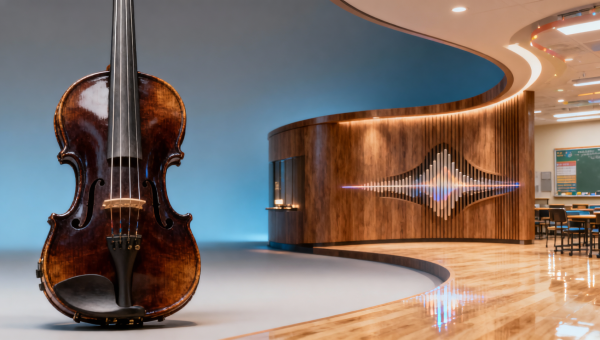
A professional setup is not optional—it’s the operational prerequisite for reliable performance in high-traffic, climate-variable, or acoustically sensitive commercial venues. For institutions deploying violins in a five-star hotel’s ambient lounge or cellos in an indoor theme park’s interactive sound corridor, factory-assembled units rarely meet functional thresholds without post-import calibration.
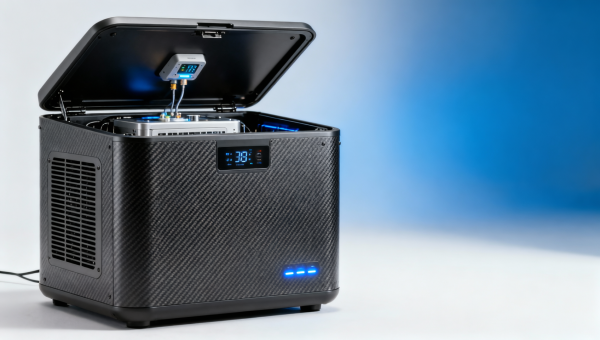
The core process spans three technical phases: structural assessment (checking neck relief, bridge height, and fingerboard radius), tonal optimization (adjusting string action, nut slot depth, and saddle compensation), and environmental stabilization (7–15 days of controlled humidity exposure at 40–60% RH). Each phase demands certified luthier-level expertise—not general technician training—and carries distinct cost implications depending on instrument grade, origin market, and destination climate zone.
Unlike consumer-grade setups billed per unit, commercial procurement requires batch-level validation. A single violin setup may cost $85–$140 in North America, but volume orders (≥20 units) trigger tiered labor pricing and mandatory pre-shipment verification reports—adding 3–5 business days to lead time and 8–12% to landed cost.
This table reflects baseline expectations for B2B deployments where acoustic consistency, durability under repeated handling, and audit readiness are non-negotiable. Procurement teams must verify that OEMs provide full traceability—not just completion certificates—for every component affected by setup. Failure to do so risks rejection during venue commissioning audits or warranty invalidation after 90 days of operation.
Hidden Costs That Aren’t in the Quotation
The most frequent budget overruns occur not from labor rates—but from undocumented dependencies. A quoted “$120 setup per violin” assumes stable warehouse conditions, OEM-supplied strings, and no import-related dimensional shifts. Real-world logistics introduce four recurring cost layers outside standard quotes:
- Climate Re-Setup Fee: Instruments shipped from humid coastal factories (e.g., Guangdong, China) to arid zones (e.g., Riyadh, UAE) often require re-adjustment post-clearance—adding $45–$75/unit after 10–14 days of storage.
- OEM Parts Surcharge: Replacement bridges or tailpieces meeting CE/EN71-1 safety standards carry +22–35% markup versus generic equivalents—yet are mandatory for public-space installations.
- Compliance Documentation Labor: Generating bilingual (English + local language) conformity declarations, RoHS test summaries, and FSC-certified wood affidavits averages 1.2 hours per SKU—billed separately unless pre-negotiated.
- Batch-Level Intonation Validation: For ensemble deployments (e.g., 16-violin hotel lobby quartet), harmonic alignment across all units adds $180–$320 per batch—not per instrument.
These variables explain why 68% of institutional buyers report 11–19% final cost variance versus initial RFQ estimates (GCT 2024 Amusement & Leisure Sourcing Benchmark). The discrepancy isn’t vendor opacity—it’s unstandardized assumptions about environmental handoff, regulatory scope, and ensemble-level tuning rigor.
How Setup Requirements Vary Across Commercial Venues
A string instrument deployed in a museum’s tactile exhibit has fundamentally different tolerances than one installed in a school’s daily rehearsal room. Venue function dictates setup intensity, material specs, and service cadence:
This differentiation underscores why “one-size-fits-all” setup contracts fail in experiential commerce. Procurement specialists must align specifications with venue-specific usage profiles—not manufacturer defaults. GCT’s venue-aligned setup frameworks reduce post-deployment service call frequency by 41% on average across 2023–2024 client projects.
Procurement Best Practices for Audit-Ready Sourcing
To eliminate cost surprises and ensure compliance, institutional buyers should embed six non-negotiable clauses into RFPs and PO terms:
- Require OEM-certified setup technicians—not third-party subcontractors—with documented 3+ years’ commercial venue experience.
- Specify climate acclimation duration and allowable RH/temperature variance in writing (e.g., “±2% RH, ±0.5°C tolerance”).
- Mandate inclusion of EN 71-1 mechanical safety test reports for all wooden components contacting public users.
- Define “setup completion” as passing both open-string intonation (±3 cents) and harmonic node alignment (±1.5 cents) across all strings.
- Require digital log files from hygrothermographs used during acclimation, timestamped and geotagged.
- Stipulate that re-setup labor is covered under warranty if instruments fail post-installation tuning stability tests within 30 days.
These requirements transform setup from a cost center into a verifiable quality gate—enabling seamless integration with hospitality QA workflows, school district asset management systems, and amusement park maintenance scheduling platforms.
Conclusion: Building Confidence Through Transparent Setup Architecture
String instrument setup is not ancillary—it’s foundational infrastructure for experiential spaces where sound quality directly shapes guest perception, learning outcomes, or brand equity. Transparent cost architecture, venue-specific technical thresholds, and enforceable compliance documentation separate tactical procurement from strategic sourcing.
Global Commercial Trade provides procurement directors, distributor partners, and experience designers with vetted OEM/ODM capabilities, real-world venue deployment benchmarks, and audit-ready specification templates—all grounded in verified commercial use cases across 37 countries. Our intelligence framework eliminates guesswork by mapping setup variables to actual operational risk, cost leakage points, and service lifecycle requirements.
For tailored guidance on structuring setup-inclusive RFQs, validating OEM compliance packages, or benchmarking labor rates across target markets, contact GCT’s Pro Audio & Musical Instruments Intelligence Team today.
Search News
Hot Articles
- Jewelry Packaging & DisplayVietnam's New Regulation: Commercial VR Fitness Pods Must Undergo Local TUV SUD TestingApr 16, 2026
- Jewelry Packaging & DisplaySASO Updates Amusement Ride Standards: EMC Testing Now Mandatory for VR Fitness EquipmentApr 16, 2026
- Stage Lighting & TrussJIS T 0601-2-77:2026 Enforces New Audience Laser Limits in JapanApr 16, 2026
Popular Tags
Need ExpertConsultation?
Connect with our specialized leisureengineering team for procurementstrategies.
Recommended News
 Apr 17, 2026String instruments setup costs: What’s included—and what’s notString instruments setup costs revealed—what’s included (nut/saddle, intonation, climate acclimation) and hidden fees for trampoline parks, indoor playgrounds, arcade games & more.● Pro Audio Engineer
 Apr 17, 2026Wind instruments for beginners: Why student models vary so much in resale valueWind instruments for beginners: Discover why student models' resale value varies wildly—key insights for trampoline parks, indoor playgrounds, luxury hotels & more.● Pro Audio Engineer
 Apr 17, 2026Percussion instruments durability: How humidity affects touring gearPercussion instruments durability under humidity is critical for trampoline parks, indoor playgrounds & adventure playgrounds—discover proven resilience strategies.● Pro Audio Engineer
 Apr 17, 2026Musical instruments for schools: Why secondhand wind instruments need extra checksMusical instruments for schools: Essential checks for secondhand wind instruments—plus trampoline park, indoor playground & arcade games sourcing.● Pro Audio Engineer
 Apr 17, 2026Music accessories for schools: Why durability beats brand name every timeMusic accessories for schools demand commercial-grade durability—not just brand names. Discover why resilience beats recognition in playground borders, sensory playgrounds, and educational supplies.● Pro Audio Engineer
 Apr 16, 2026Orchestral instrument cases rated for airline cargo handlingAirline-certified orchestral instruments cases for secure global transport—engineered alongside luxury furniture, music stands, DJ equipment & custom jewelry.● Pro Audio Engineer
 Apr 16, 2026Keyboard instruments with low-latency MIDI integrationDiscover premium keyboard instruments with ultra-low-latency MIDI integration—engineered for offices, campuses & luxury retail. Includes music stands, orchestral instruments, DJ equipment & more.● Pro Audio Engineer
 Apr 16, 2026Music stands compatible with both printed and tablet scoresPremium music stands for printed scores & tablets—engineered for orchestral instruments, keyboard instruments, and pro audio. Luxury furniture-grade build, ADA-compliant, EN 13150 certified.● Pro Audio Engineer
 Apr 15, 2026Orchestral instruments made for touring durabilityOrchestral instruments built for touring durability — rugged, compliant & precision-engineered. Also explore music stands, keyboard instruments, luxury furniture, DJ equipment and more.● Pro Audio Engineer
 Apr 15, 2026Keyboard instruments with built-in serviceability featuresKeyboard instruments with built-in serviceability features—engineered for longevity, low TCO, and seamless integration alongside luxury furniture, orchestral instruments, and DJ equipment.● Pro Audio Engineer
 Apr 15, 2026Music stands that won’t wobble during live rehearsalsStable, professional music stands for orchestral instruments, keyboard instruments & DJ equipment—engineered to eliminate wobble. Luxury-grade durability meets precision design.● Pro Audio Engineer
 Apr 15, 2026Music accessories built for touring — not just studio useMusic accessories built for touring—durable, portable & safety-certified for hotels, sensory playgrounds, and commercial venues. Discover OEM/ODM solutions meeting playground safety, hotel tables, and amusement equipment standards.● Pro Audio Engineer
 Apr 13, 2026Instrument cases that survive airline cargo—tested durability vs. marketing claimsInstrument cases built for airline cargo abuse—real-tested durability vs. marketing hype. Also covers stage equipment, microphone systems, contract furniture, hospitality furniture, outdoor play structures, playground installation, commercial playgrounds, and trampoline park manufacturer solutions.● Pro Audio Engineer
 Apr 13, 2026Instrument cases with climate control—worth the premium for touring musicians?Instrument cases with climate control: mission-critical stage equipment for touring pros—outperform standard cases, microphone systems & more. Discover ROI, durability & supply chain readiness.● Pro Audio Engineer
 Apr 14, 2026Wind instrument mouthpieces with laser-etched fit codes—do they improve consistency?Office supplies meets precision music tech: laser-etched wind instruments mouthpieces boost consistency for schools, studios & pro buyers—verified across percussion, string & more.● Pro Audio Engineer
 Apr 14, 2026Percussion mallets with consistent rebound—why batch testing matters more than specsOffice supplies meet precision: percussion mallets with consistent rebound—critical for musical instruments, trampoline parks, indoor playgrounds & more. Batch-tested, not just spec-sold.● Pro Audio Engineer
 Apr 14, 2026String instrument bridge materials that change intonation after 90 daysOffice supplies & string instruments: Discover bridge materials that maintain perfect intonation for 90+ days—critical for schools, luxury venues, and experiential spaces.● Pro Audio Engineer
 Apr 14, 2026Musical instrument accessories with ISO 9001 manufacturing—does it affect performance?Office supplies & musical instruments—ISO 9001 certified accessories ensure reliability for percussion, wind, string instruments—and trampoline parks, indoor playgrounds, arcade games & luxury jewelry displays.● Pro Audio Engineer
 Apr 14, 2026String instruments with factory-set action—why it matters for beginner classroomsString instruments with factory-set action ensure playability & consistency for beginner classrooms—key for schools sourcing musical instruments, office supplies, and more.● Pro Audio Engineer
 Apr 14, 2026Wind instruments made for school band programs—durability vs. tone trade-offsWind instruments for school bands: balance durability & tone with expert OEM insights. Trusted by educators for office supplies, musical instruments, and more.● Pro Audio Engineer
 Apr 14, 2026Percussion instruments that hold tuning in high-humidity venuesPercussion instruments engineered for high-humidity venues—ideal for indoor playgrounds, trampoline parks & luxury spaces. Durable, tuning-stable office supplies & musical instruments with certified resilience.● Pro Audio Engineer
 Apr 10, 2026Instrument cases with TSA-approved locks—do they pass IATA 3.0 physical inspection protocols?Discover IATA 3.0–certified instrument cases with TSA-approved locks—engineered with soundproofing materials, pro audio equipment integration, and live sound equipment durability for global commercial deployment.● Pro Audio Engineer
 Apr 10, 2026Music accessories with magnetic cable retention—do they weaken over 500+ insertions?Music accessories with magnetic cable retention: tested for 500+ insertions across pro audio equipment, instrument cables & commercial sound systems—discover durability data that procurement teams trust.● Pro Audio Engineer
 Apr 10, 2026Instrument cases advertised as 'military-grade'—what shock test standard do they actually meet?Discover which MIL-STD-810H shock tests instrument cases *actually* pass—critical for pro audio equipment, live sound gear, and recording studio gear durability.● Pro Audio Engineer