Common Tuning Problems in Percussion Instruments and Their Causes
Tuning issues in percussion instruments can affect tone, consistency, and player confidence, especially in commercial settings where musical instruments must perform reliably. From unstable drumheads to environmental changes and hardware wear, understanding the root causes helps buyers, distributors, and sourcing professionals compare percussion instruments more accurately alongside string instruments and wind instruments.
In B2B purchasing, tuning stability is not just a performer concern. It directly influences after-sales service frequency, replacement planning, venue uptime, and overall product reputation. For hotels, schools, entertainment venues, rehearsal studios, and music retailers, a percussion instrument that drifts out of tune too quickly can create avoidable operating costs within 3–12 months of deployment.
This article examines the most common tuning problems in percussion instruments, explains their mechanical and environmental causes, and outlines practical sourcing criteria for commercial buyers. The focus is on usable decision support: what goes wrong, why it happens, how to prevent it, and what procurement teams should verify before placing volume orders.
Why Tuning Stability Matters in Commercial Percussion Supply
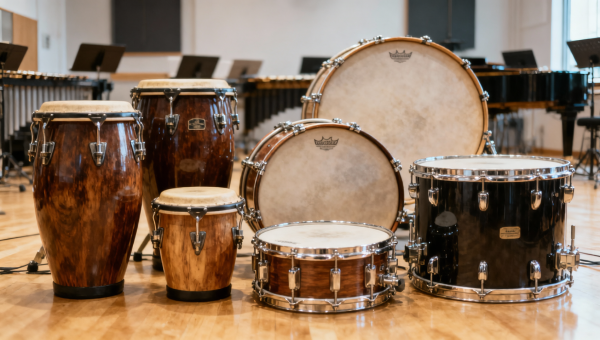
Percussion instruments are often perceived as durable and simple, yet tuning reliability varies widely across drum kits, marching drums, congas, bongos, timpani, frame drums, and orchestral percussion. In commercial use, the issue is magnified because instruments may be played by multiple users, moved between rooms, or exposed to shifting temperature and humidity conditions for 8–12 hours per day.
Unlike a single-user studio setup, institutional and venue-based environments create repeated stress on heads, shells, rims, lugs, and tension rods. Even a small loss of tension can alter pitch balance, sustain, and projection. In ensemble settings, that inconsistency can reduce musical coherence and force extra setup time before each performance or training session.
For procurement teams, tuning stability should be evaluated as part of total cost of ownership rather than unit price alone. A lower-cost instrument that requires head adjustment every 2 weeks, hardware replacement every 6 months, or frequent technician intervention may become more expensive than a better-built model over a 24-month cycle.
Commercial buyers also need to consider the user profile. Beginner-heavy environments such as schools or leisure venues tend to overtighten or unevenly tune heads. Professional venues demand finer control and lower tolerance for pitch drift. In both cases, the instrument must maintain stable tuning across repeated use, transport, and cleaning routines.
Operational impact of poor tuning retention
- Longer setup windows before shows, lessons, or events, often adding 10–20 minutes per instrument group.
- Higher maintenance labor, especially in facilities managing 20–100 percussion units.
- More customer complaints and product returns for distributors and resellers.
- Reduced confidence in mixed instrument packages sold alongside wind instruments and string instruments.
The table below summarizes why tuning problems matter differently across major commercial application settings.
The key takeaway is that tuning stability should be specified upfront. Buyers should ask not only how the instrument sounds on day one, but how well it holds pitch after transport, repeated impact, and 30–90 days of routine use.
The Most Common Tuning Problems in Percussion Instruments
Most percussion tuning issues fall into a handful of repeat patterns. These include uneven head tension, rapid pitch loss after playing, localized dead spots, overtones that mask the fundamental note, and hardware that loosens under vibration. Each problem affects not only tone but also ease of maintenance and user satisfaction.
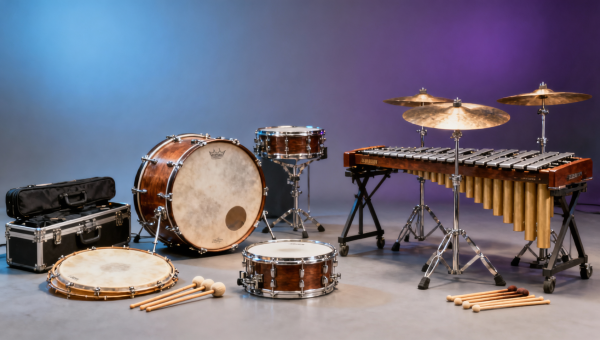
Drum kits and marching drums often suffer from inconsistent lug tension across the head. Hand percussion such as congas and bongos may experience skin or synthetic head stretch after installation. Timpani present a different challenge: pedal mechanisms, bowl resonance, and head seating must all align or the pitch center becomes unstable across the tuning range.
In commercial sourcing, it is useful to separate “normal tuning drift” from “structural tuning weakness.” A minor pitch adjustment after 1–2 sessions is common. A drop severe enough to require full retuning after every rehearsal, however, usually points to material fatigue, poor hardware tolerances, or flawed assembly.
The following list highlights the most common problems observed in multi-user or venue-driven percussion setups.
Primary tuning problems buyers should recognize
- Uneven pitch around the head, often caused by inconsistent torque across 6, 8, or 10 lugs.
- Head slippage or stretching during the first 24–72 hours after installation.
- Buzzing, rattling, or sympathetic vibration from loose tension rods, hoops, or mounts.
- Pitch drop after transport due to shell stress, climate shifts, or hardware movement.
- Over-choked tone from overtightening, especially in beginner or institutional environments.
Problem 1: Uneven tension across the playing surface
This is one of the most frequent causes of poor tuning in snare drums, toms, and hand drums. If one section of the head is tighter than another by even a small margin, the drum may produce conflicting partials, weak attack, or unstable sustain. In practical terms, a player hears a drum that never seems “finished” even after repeated adjustment.
Problem 2: Tension loss after short playing cycles
If a drum loses tuning after 30–60 minutes of performance, the likely causes include stretched heads, worn threads, low-friction washers missing from the lug assembly, or shell-bearing edges that do not allow consistent head seating. This issue is especially costly for rental fleets and educational institutions where quick turnover matters.
Problem 3: Mechanical noise mistaken for tuning error
Not every tuning complaint is a pitch problem. Rattling throw-offs, loose stands, unstable tom mounts, or snare wire imbalance can create the impression of poor tuning. For buyers, this means evaluation should include both tonal testing and hardware vibration checks at soft, medium, and high playing intensity.
Commercial symptom-to-cause reference
To support sourcing comparisons, the table below links visible tuning symptoms to likely root causes and typical corrective actions.
For distributors and commercial evaluators, symptom-based diagnosis reduces guesswork. Instead of assuming all instability is player error, teams can identify whether the underlying problem is head material, shell construction, or hardware quality.
Root Causes: Materials, Environment, and Hardware Wear
The cause of tuning problems usually falls into three categories: material behavior, environmental exposure, and component wear. These categories often overlap. For example, a natural skin head in a humid coastal venue may stretch more quickly, while an older tension rod in the same drum loses its ability to hold position under repeated vibration.
Material choice is the first variable. Natural heads can offer warm tone and rich response, but they are more sensitive to humidity swings than synthetic heads. In indoor environments, a relative humidity shift from 40% to 65% can noticeably affect tension and tone. Synthetic heads usually perform more consistently, which is why many commercial buyers prefer them for institutional fleets.
Shell material also influences tuning behavior. Wood shells may react subtly to climate, particularly if storage conditions fluctuate between 18°C and 30°C. Metal shells are less climate-sensitive, but their brightness can make uneven tension more audible. On hand percussion, shell shape and rigidity determine how evenly the head seats and how predictably the pitch responds under load.
Hardware wear is often underestimated. Lug casings, tension rods, washers, hoop contact points, pedal linkages, and mounting systems all affect tuning retention. Over time, thread wear and metal fatigue reduce clamping reliability. In high-use environments, noticeable degradation can appear after 12–18 months if maintenance is irregular.
Environmental triggers buyers should plan for
- Humidity variation above 15% within a short period can alter head tension, especially on natural-skin models.
- Storage near HVAC vents or windows may expose drums to repeated hot-cold cycles.
- Transport between air-conditioned storage and outdoor performance areas can shift tuning within 20–40 minutes.
- Stacking or rough handling may distort hoops and affect even pressure distribution.
Bearing edges and shell roundness
A drumhead can only tune consistently if it seats evenly on the shell. Imperfect bearing edges or slight out-of-round shells create micro-gaps that prevent uniform tension. This is not always visible during initial inspection, but it becomes clear when one or two lugs require disproportionately more turning to reach the same pitch as the rest.
Thread and washer performance
Retention hardware matters. Smooth thread travel, proper washer friction, and stable lug alignment help maintain tuning between sessions. Commercial buyers should be cautious with products that feel easy to tune at first but fail to hold position after repeated striking. That usually indicates inadequate resistance or weak component tolerances.
For sourcing teams, the practical lesson is clear: tuning problems are rarely caused by a single factor. Instruments should be assessed as systems, with materials, climate exposure, and hardware durability all reviewed together before order approval.
How Buyers and Distributors Should Evaluate Tuning Reliability Before Purchase
A strong procurement process can detect many tuning weaknesses before a bulk order is placed. This is especially important for dealers, agents, and institutional buyers managing multiple brands or OEM options. Evaluation should combine physical inspection, play testing, and serviceability review rather than relying only on catalog specifications.
Start with a controlled tuning test. Tune the instrument to a moderate working range, play it for 20–30 minutes, and recheck the pitch near each lug or tension point. If one section drops faster than the others, investigate head seating, shell accuracy, and thread integrity. For hand percussion, test both dry and moderately humid room conditions where possible.
Next, evaluate replacement parts availability. Commercial instruments should have accessible heads, rods, washers, snare wires, and mounting components. If spare parts require a lead time of 8–12 weeks, operational risk increases significantly for venues and resellers. A technically acceptable instrument can still become a poor commercial choice if support logistics are weak.
Finally, confirm assembly consistency across sample units. One reliable sample is not enough for volume procurement. Buyers should compare at least 2–3 units from the same batch when possible, checking whether lug feel, hoop fit, and tuning response are consistent. Batch variation is a major hidden cause of field complaints.
A practical 5-step evaluation process
- Inspect shell roundness, edge finish, rim alignment, and visible hardware looseness.
- Install or verify a properly seated head and tune across all points in a cross pattern.
- Play at three intensity levels for 20–30 minutes to simulate real use.
- Recheck pitch stability and hardware movement immediately and again after 24 hours.
- Review spare part availability, maintenance instructions, and packaging protection for transport.
The table below can be used as a purchasing checklist for distributors and procurement managers comparing percussion product lines.
For B2B buyers, the best percussion instrument is not always the one with the brightest initial sound. It is the one that remains predictable under repeated use, supports efficient maintenance, and can be serviced without disrupting business operations.
Maintenance, User Training, and Preventive Control Measures
Even well-built percussion instruments can develop tuning problems if maintenance practices are weak. In commercial environments, preventive control should be scheduled rather than reactive. A basic inspection every 30 days is often sufficient for moderate-use venues, while schools, rental inventories, and performance-heavy sites may need checks every 7–14 days.
One of the most effective preventive measures is standardized tuning procedure. Staff should tighten in a cross pattern, avoid large single-point turns, and stop before the head is overstressed. For institutional settings, even a short 15-minute training session can reduce overtightening, lug strain, and uneven pitch problems across an entire instrument pool.
Climate control also matters. Storing percussion instruments in stable indoor conditions, ideally around 40%–55% relative humidity and away from direct heat, helps preserve tuning stability. For venues with frequent load-ins and load-outs, allowing instruments to acclimate for 20–30 minutes before final tuning can reduce sudden pitch drift.
Distributors and agents can add value by offering basic maintenance guidance at the point of sale. This lowers return rates and improves end-user satisfaction. In many cases, the difference between a “problem product” and a “reliable product” is simply whether the buyer receives realistic setup and care instructions.
Routine maintenance checklist
- Check all tension points for even resistance at least once every 2–4 weeks.
- Inspect rims, rods, and washers for corrosion or thread damage every quarter.
- Replace heavily stretched or dented heads before they destabilize the full instrument.
- Verify stand mounts and accessory fittings to eliminate rattling that can mimic tuning faults.
- Document service dates for fleets larger than 10 units to track repeated failure points.
Common maintenance mistakes
The most common errors are uneven tightening, excessive force, ignoring early hardware wear, and storing drums in unstable environments. Another frequent mistake is replacing heads without checking the bearing edge and hoop condition. If the seating surface is compromised, even a new head may tune poorly from the start.
When replacement is more efficient than repair
If an instrument requires repeated corrective work within a short cycle, replacement may be more economical. As a practical rule, if maintenance cost approaches 20%–30% of replacement value within a year for entry or mid-range commercial percussion, buyers should reconsider the original sourcing specification.
Preventive discipline improves both performance and asset life. It also provides better field feedback to manufacturers and sourcing platforms, making future product comparisons more accurate and commercially useful.
FAQ for Procurement Teams, Dealers, and Commercial Evaluators
How can buyers tell whether tuning instability is a product issue or a user issue?
Run a controlled test with an experienced technician or trained player. If the instrument still loses pitch rapidly after correct tuning and moderate play, the issue is likely structural or hardware-related. If instability appears only after untrained handling, the problem may be process-related and solvable through user guidance.
Are synthetic heads always better for commercial percussion instruments?
Not always, but they are often more practical for multi-user and climate-variable environments. Synthetic heads generally deliver more predictable tuning retention and lower sensitivity to humidity. Natural heads may still be preferred for specific tonal goals, but they require tighter environmental control and more frequent monitoring.
What spare parts should distributors keep in stock?
At minimum, distributors should consider stocking common drumheads, tension rods, washers, snare wires where relevant, and selected hoop or mount components. For active commercial channels, holding 3–5% spare quantity relative to moving inventory can reduce service delays and support customer retention.
How long should commercial buyers expect percussion instruments to hold tuning?
That depends on the instrument category, head type, playing intensity, and environment. In general, a properly built and correctly tuned percussion instrument should not require full retuning after every short session. Minor adjustments after transport or several hours of use are normal; constant major correction is not.
What is the best way to compare percussion instruments with other musical instrument categories during sourcing?
Use category-specific reliability criteria. For percussion, emphasize tuning retention, hardware durability, parts support, and climate tolerance. When compared alongside string instruments and wind instruments, this creates a more balanced sourcing matrix based on maintenance burden, lifecycle cost, and performance consistency rather than price alone.
Common tuning problems in percussion instruments usually trace back to identifiable causes: uneven tension, material sensitivity, environmental fluctuation, or hardware wear. For commercial buyers, these issues affect more than sound quality. They influence service frequency, customer satisfaction, resale confidence, and long-term operating cost.
A disciplined sourcing approach includes play testing, hardware inspection, spare-part planning, and realistic maintenance protocols. That is especially important for procurement teams, dealers, and evaluators working across hospitality, education, leisure, and music distribution channels.
If you are assessing percussion instruments for commercial projects or comparing product lines across broader musical instrument categories, now is the right time to request a tailored sourcing review. Contact GCT to discuss product details, evaluation criteria, and practical solutions for reliable, commercially ready instrument supply.
Search News
Hot Articles
- Stage Lighting & TrussCCTV5 Snooker Broadcast Drives 37% Surge in Stage Lighting Export InquiriesApr 21, 2026
- Indoor PlaygroundVietnam Mandates Child Finger-Trap Sensors for Indoor Play EquipmentApr 21, 2026
- Stage Lighting & TrussGuangdong vs. Shanxi CBA Game Highlights Domestic Smart Arena LightingApr 21, 2026
Popular Tags
Need ExpertConsultation?
Connect with our specialized leisureengineering team for procurementstrategies.
Recommended News
 Apr 22, 2026Why String Instruments Can Look Similar but Sound Very DifferentString instruments may look alike yet sound vastly different. Explore sourcing insights across musical instruments, plus comparisons with wind instruments and percussion instruments.● Pro Audio Engineer
 Apr 22, 2026String Instruments: Solid Wood or Laminate for Long-Term Use?String instruments guide: compare solid wood vs laminate for long-term use, durability, tone, and sourcing value across musical instruments. Click for smarter B2B buying insights.● Pro Audio Engineer
 Apr 22, 2026What Affects Tone Consistency in Student Wind Instruments?Wind instruments buying guide: discover what affects tone consistency in student musical instruments, with insights comparing percussion instruments and string instruments for smarter school sourcing.● Pro Audio Engineer
 Apr 22, 2026Wind Instruments That Need More Maintenance Than ExpectedWind instruments maintenance guide for buyers: compare musical instruments, string instruments and percussion instruments to reduce service costs and source smarter.● Pro Audio Engineer
 Apr 22, 2026Common Tuning Problems in Percussion Instruments and Their CausesPercussion instruments tuning problems explained for buyers of musical instruments, with practical tips on comparing percussion instruments, string instruments, and wind instruments for reliable commercial sourcing.● Pro Audio Engineer
 Apr 22, 2026Percussion Instruments That Handle Heavy Use Better in ClassroomsPercussion instruments built for classrooms: compare durable musical instruments, from percussion instruments to wind instruments and string instruments, for safer, longer-lasting school use.● Pro Audio Engineer
 Apr 22, 2026What Shortens the Lifespan of Musical Instruments in Daily Use?Musical instruments wear out faster from humidity, poor storage, and rough handling. Learn how string instruments, wind instruments, and percussion instruments last longer with smarter B2B care.● Pro Audio Engineer
 Apr 22, 2026Musical Instruments With the Strongest School Market DemandMusical instruments with strong school demand: compare percussion instruments, wind instruments, and string instruments to find durable, curriculum-ready solutions for smarter school sourcing.● Pro Audio Engineer
 Apr 21, 2026Choosing musical instruments for bands in small venuesMusical instruments for bands in small venues: learn how buyers choose compact, durable setups with better sound control, lower costs, and stronger audience appeal.● Pro Audio Engineer
 Apr 20, 2026Music Accessories Often Overlooked Until They Start Causing ProblemsMusic accessories often cause hidden issues across musical instruments, percussion instruments, wind instruments, string instruments, keyboard instruments, orchestral instruments, music stands, instrument cables, and pro audio equipment.● Pro Audio Engineer
 Apr 20, 2026When Orchestral Instruments Need Custom Cases and Why It MattersMusical instruments and orchestral instruments need custom cases to protect string instruments, wind instruments, percussion instruments, and keyboard instruments during transport. Learn when buyers should upgrade for safer logistics.● Pro Audio Engineer
 Apr 20, 2026Keyboard Instruments in 2026: What Features Are Becoming Standard?Keyboard instruments in 2026 are redefining musical instruments with smarter connectivity, durable builds, and seamless integration with pro audio equipment, instrument cables, music stands, and music accessories.● Pro Audio Engineer
 Apr 20, 2026Music Stands With Folding Designs: Convenient or Less Reliable?Music stands buyers compare folding convenience with long-term reliability across musical instruments, percussion instruments, wind instruments, string instruments, and pro audio equipment.● Pro Audio Engineer
 Apr 20, 2026String Instruments With Better Tuning Stability in Busy Use CyclesExplore string instruments with better tuning stability for busy venues. Compare musical instruments, percussion instruments, and wind instruments to source reliable, low-maintenance performance solutions.● Pro Audio Engineer
 Apr 20, 2026Why Wind Instruments React So Differently to Climate and StorageWind instruments react fast to climate and storage. Compare musical instruments, percussion instruments, string instruments, and music accessories to cut maintenance risk and buy smarter.● Pro Audio Engineer
 Apr 20, 2026Percussion Instruments for Shared Spaces: What Reduces Noise Most?Percussion instruments for shared spaces: discover what reduces noise most across musical instruments, with smart comparisons to wind instruments, string instruments, keyboard instruments, and practical accessories.● Pro Audio Engineer
 Apr 20, 2026How to Spot Musical Instruments That Look Fine but Wear Out FastDiscover how to spot musical instruments that look premium but wear out fast. Learn key checks for percussion instruments, wind instruments, string instruments, keyboard instruments, music stands, instrument cables, pro audio equipment, and music accessories before you buy.● Pro Audio Engineer
 Apr 20, 2026Music Accessories That Quietly Affect Daily Performance QualityExplore how music accessories shape daily performance quality—from music stands and instrument cables to pro audio equipment for musical instruments, percussion instruments, wind instruments, string instruments, and keyboard instruments.● Pro Audio Engineer
 Apr 20, 2026Orchestral Instruments With the Highest Repair RatesExplore which orchestral instruments have the highest repair rates across wind instruments, string instruments, percussion instruments, and keyboard instruments, with smart buying tips for musical instruments, music accessories, music stands, instrument cables, and pro audio equipment.● Pro Audio Engineer
 Apr 20, 2026Are Keyboard Instruments With Weighted Keys Worth the Extra Cost?Keyboard instruments with weighted keys: discover if the extra cost pays off for musical instruments buyers, with smart tips on music accessories, instrument cables, and pro audio equipment.● Pro Audio Engineer
 Apr 20, 2026Music Stands That Stay Stable on Stage: What Makes the Difference?Music stands for musical instruments: discover what keeps them stable on stage for string instruments, wind instruments, percussion instruments, and keyboard instruments—plus smart buying tips.● Pro Audio Engineer
 Apr 20, 2026String Instruments: Solid Wood or Laminated for Regular Use?String instruments guide for regular use: compare solid wood vs laminated models across musical instruments setups with music accessories, pro audio equipment, and smarter sourcing insights.● Pro Audio Engineer
 Apr 20, 2026Wind Instruments for Schools and Venues: What Affects Longevity?Wind instruments longevity guide for schools and venues: compare musical instruments, percussion instruments, string instruments, and keyboard instruments to source smarter and reduce total cost.● Pro Audio Engineer
 Apr 20, 2026Why Some Percussion Instruments Cost More to Maintain Than ExpectedExplore why percussion instruments can cost more to maintain than expected, and compare musical instruments, orchestral instruments, music accessories, music stands, instrument cables, and pro audio equipment.● Pro Audio Engineer