Custom jewelry manufacturer red flags before mass production
Before scaling any custom jewelry design project, buyers should know how to identify a custom jewelry manufacturer that looks polished on paper but fails in production reality. For procurement teams, distributors, and commercial evaluators, spotting red flags early can prevent delays, quality disputes, and costly rework—especially when sourcing luxury accessories for men or other high-value collections at scale.
Why mass production risk is higher in sports and entertainment jewelry sourcing
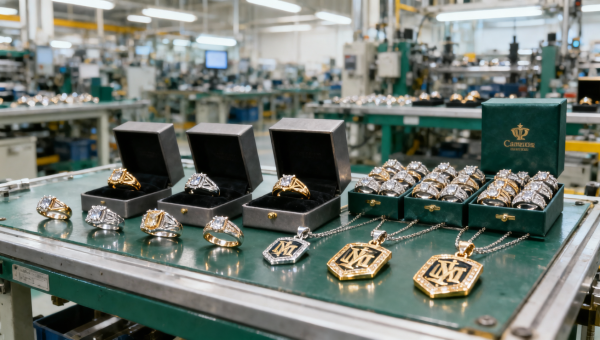
Custom jewelry manufacturing for the sports and entertainment sector is not the same as sourcing generic fashion accessories. Buyers often need branded rings, pendants, commemorative items, VIP gifts, artist merchandise, fan-club collectibles, or premium men’s luxury accessories tied to events, teams, venues, or celebrity collaborations. In these projects, visual appeal matters, but repeatability matters more. A sample that looks right once is not enough if the factory cannot reproduce the same finish across 500, 2,000, or 10,000 units.
The main risk comes from the gap between prototype presentation and production discipline. A custom jewelry manufacturer may offer strong renderings, fast quotes, and attractive communication during the first 7–10 days. Yet once tooling, stone setting, plating, polishing, and packing move into batch execution, weak process control becomes visible. This is where procurement teams encounter color inconsistency, logo distortion, plating wear, loose components, and missed delivery windows.
In sports and entertainment programs, deadlines are usually non-negotiable. Jewelry linked to a seasonal launch, tournament opening, concert tour, resort retail activation, or leisure-park merchandising campaign may have a fixed release date. A delay of even 2–3 weeks can wipe out a selling window. That is why red-flag detection before mass production is not a quality preference. It is a commercial protection measure.
Global Commercial Trade supports buyers by filtering suppliers through a sourcing lens that goes beyond image-based sales claims. For commercial projects, the right evaluation framework must combine design feasibility, manufacturing capacity, compliance awareness, and supply continuity. When those four pillars are checked early, distributors and procurement managers can reduce preventable failure before deposits, molds, and launch schedules are locked.
Where procurement teams usually get misled
- They approve based on a polished showroom sample without requesting evidence of batch consistency over at least 3 production lots.
- They focus on unit price while ignoring mold ownership, remake policy, plating thickness discussion, and acceptable defect thresholds.
- They treat custom jewelry manufacturers like traders, when in reality sports and entertainment projects require factory-level process visibility.
- They skip packaging validation, even though premium retail presentation often drives returns, shelf impact, and distributor acceptance.
What red flags should you identify before approving mass production?
A reliable custom jewelry manufacturer should be able to explain how a design moves from CAD file to sample to pilot run to full output. If that path sounds vague, changes from call to call, or depends heavily on “we will check later,” that is a warning sign. In commercial sourcing, uncertainty in the first 2–4 weeks often becomes failure in weeks 5–8.
One major red flag is unrealistic quoting behavior. If a supplier quotes significantly below the normal market range but does not break down metal type, plating process, stone grade, labor steps, and packaging assumptions, the quote may be masking shortcuts. In men’s jewelry and event merchandise, price compression often shows up later as thinner plating, lighter metal weight, simplified clasps, or lower inspection standards.
Another red flag is poor response quality during technical clarification. Buyers should ask direct questions about tolerance, logo depth, stone retention, electroplating options, alloy composition, and repair or remake policy. A strong manufacturer answers with process language and limitations. A weak one answers only with confidence statements. Procurement decisions should be built on technical transparency, not sales tone.
The final warning sign is lack of production evidence. A custom jewelry manufacturer may share beautiful images, but buyers need proof of live manufacturing workflow, batch inspection records, packaging lines, and export handling. For sports and entertainment collections, especially licensed or premium gift lines, traceable production control is essential because volume variability and event-driven deadlines create little room for correction.
Seven high-priority warning signals
- No clear sample-to-mass-production approval workflow, including revision rounds and sign-off checkpoints.
- No discussion of plating thickness, wear expectation, or finish durability for repeated handling.
- No documented quality plan covering incoming material checks, in-process inspections, and final AQL-style review.
- Lead times that sound too short for custom mold work, stone setting, and premium packaging integration.
- Inability to explain defect handling, replacement ratios, or after-shipment issue resolution.
- No consistency in communication between sales, engineering, and production representatives.
- No export-ready understanding of labeling, packing lists, carton marks, or destination compliance basics.
Fast evaluation matrix for factory screening
The table below helps procurement teams compare a custom jewelry manufacturer that is ready for scale with one that carries elevated production risk. This is especially useful when reviewing suppliers for sports merchandise, entertainment VIP gifts, resort retail collections, or men’s luxury accessories where launch timing and repeat quality carry equal weight.
This screening approach is practical because it turns abstract confidence into observable evidence. Buyers do not need perfect factories; they need suppliers whose process control is visible, repeatable, and compatible with the risk level of the program. For mass production, a transparent mid-priced supplier is often safer than a low-priced but opaque option.
How to evaluate production readiness beyond the sample stage
A sample proves appearance. It does not prove production readiness. For a sports and entertainment buyer, the better question is whether the custom jewelry manufacturer can hold the same standard over multiple production stages. A useful approach is to divide qualification into 3 checkpoints: design feasibility, pilot consistency, and batch control. Each checkpoint should have approval criteria before the next payment milestone.
Design feasibility covers mold logic, structural strength, finish options, packaging compatibility, and logo execution. During this stage, buyers should verify whether sharp corners, thin joints, moving parts, magnets, stones, or enamel areas create failure risk. This is especially relevant for souvenir jewelry, branded pendants, and men’s rings used in fan retail or hospitality-linked entertainment sales, where handling frequency is often high.
Pilot consistency is the most overlooked checkpoint. Instead of approving one perfect piece, request a small pre-production lot, often 10–30 units depending on complexity. This helps reveal common batch issues such as plating shade drift, uneven polishing, logo filling inconsistency, loose stones, or packaging variation. If problems appear in 10 units, they will multiply in 1,000 units.
Batch control should include documented inspections, defect criteria, pack-out logic, and shipment preparation. Ask who checks each stage, how defects are separated, and when replacement decisions are made. For launch-driven projects, procurement teams should also confirm whether the factory can split shipments, prioritize SKUs, or handle phased dispatch in 2–3 waves if retail timing requires flexibility.
Six questions that expose real production readiness
- What changes between the approved sample and the full production process, including tooling, polishing sequence, and plating setup?
- What is the normal variation range for color, weight, and logo detail across one batch?
- How many inspection points exist before final packing, and who signs each release?
- Can the factory provide a pilot lot before mass production and define the acceptance basis?
- How are mixed materials such as metal, enamel, synthetic stones, leather, or packaging inserts controlled?
- What is the recovery plan if one process stage runs 5–7 days late?
Procurement checkpoints by stage
The next table translates those questions into an operational review flow. It is useful for buyers comparing several custom jewelry manufacturers, especially when the project supports amusement parks, entertainment venues, tournament merchandising, or resort retail programs with fixed calendar deadlines.
This step-by-step review reduces ambiguity. It also helps distributors and agents communicate clearly with their downstream customers. Instead of promising a date based on optimistic supplier language, they can align the launch around confirmed checkpoints, which is far safer for event retail and commercial gifting programs.
Compliance, materials, and quality issues buyers should not ignore
Not every custom jewelry manufacturer is prepared for commercial compliance expectations. Even when the product is decorative, material declarations, plating chemistry awareness, packaging safety, and labeling accuracy matter. If the jewelry is sold in hospitality retail, amusement parks, entertainment venues, or international distribution channels, buyers should not assume all markets accept the same material choices or packaging language.
The first priority is material clarity. Buyers should ask what base metal is being used, what plating finish is applied, whether stones are natural or synthetic, and whether adhesives or surface coatings are involved. If the supplier cannot describe the construction bill in practical terms, the risk is not only technical. It also affects import review, customer claims, and long-term distributor confidence.
The second priority is durability under realistic use. Sports and entertainment jewelry may be handled repeatedly in retail stores, worn at live events, carried in travel settings, or sold as collectible merchandise. A finish that looks strong in a studio photo may wear quickly under sweat, friction, or frequent contact. That is why buyers should discuss expected use conditions and ask for practical recommendations rather than generic “premium quality” language.
The third priority is packing and shipment protection. Many quality disputes happen after production, not during it. Individual pouches, trays, inserts, anti-scratch separation, and carton layering all affect arrival condition. For premium men’s accessories or venue gift programs, damaged retail presentation can create an immediate downgrade in perceived value even when the jewelry itself is technically acceptable.
A practical compliance and quality checklist
- Confirm the base material, coating, decorative components, and packaging materials in writing before order release.
- Match product claims to realistic use, such as occasional wear, retail gifting, event use, or collector display.
- Request a packaging drop and abrasion review for export shipments, especially for premium boxed items.
- Clarify destination market expectations for labeling, carton marks, and any relevant material declarations.
Common misconceptions that raise sourcing risk
One common mistake is thinking that a luxury look always means durable construction. In reality, decorative shine can hide thin plating, soft detailing, or weak assembly points. Another mistake is assuming that all factories with jewelry capability can handle entertainment licensing, seasonal schedules, or retail-ready pack-out. Commercial execution requires documentation discipline as much as craft skill.
A further misconception is that compliance only matters for children’s items or electronic products. While requirements vary by market and product type, jewelry buyers still need accurate material understanding and sensible documentation. For commercial procurement, incomplete material visibility creates avoidable risk in sales channels, distributor onboarding, and post-delivery dispute handling.
How GCT helps buyers compare suppliers and reduce sourcing mistakes
For procurement professionals, the hardest part is not finding a custom jewelry manufacturer. It is filtering out the wrong ones before commercial damage occurs. GCT approaches this challenge as a sourcing intelligence partner for sectors where brand presentation, launch timing, and operational reliability intersect. That is highly relevant to sports and entertainment buyers managing merchandise programs, VIP gifting, venue retail, and premium accessory lines.
Instead of relying on supplier self-description alone, GCT helps structure evaluation around project-fit questions: Can the factory handle repeat quality? Can it support phased production? Does it understand presentation packaging? Can it align with distributor documentation needs? These are the questions that matter when buyers are not simply purchasing jewelry, but protecting a branded commercial experience.
This is especially useful for global buyers working across 2–5 candidate suppliers in different sourcing regions. Comparing price sheets without normalizing process assumptions often leads to false savings. GCT reduces that problem by focusing attention on capability proof, category alignment, production logic, and commercial readiness. That makes supplier selection more disciplined and easier to explain internally to finance, brand, and operations teams.
For distributors, agents, and business evaluators, this structured sourcing support also improves negotiation quality. When buyers ask better questions about sample control, lead time stages, packaging specs, and defect response, factories respond more clearly. The result is not just lower risk. It is better leverage, better documentation, and stronger launch planning from the start.
What a more reliable sourcing workflow looks like
- Define the commercial use case first: event retail, resort boutique, fan collectible, VIP gift, or men’s premium accessory line.
- Shortlist suppliers based on category fit and process transparency, not only catalog breadth or lowest quotation.
- Validate the design through sample review plus a pilot lot, ideally before committing full packaging inventory.
- Track mass production by milestone, with updates every 5–7 days for deadline-sensitive programs.
- Confirm final packing, shipping marks, and replacement handling before dispatch release.
FAQ for buyers screening a custom jewelry manufacturer
How long does custom jewelry mass production usually take after sample approval?
For many commercial projects, a practical range is 3–8 weeks after final sample approval, depending on mold complexity, quantity, plating method, stone setting, and packaging requirements. Very simple projects may move faster, but buyers should be cautious if a supplier promises unusually short timelines without explaining each production stage.
What is the best way to reduce quality disputes?
Use a written approval package. It should include drawings, material notes, finish reference, packaging details, acceptable variation points, and pilot-lot sign-off. Most disputes come from assumptions made during early communication. A controlled approval file reduces room for interpretation once production scales.
Should distributors request a pilot lot even for smaller orders?
Yes, especially for new suppliers, new finishes, or event-driven launches. Even 10–20 units can expose repeatability issues that a single hero sample cannot reveal. For smaller but premium orders, the cost of a pilot lot is often far lower than the cost of return claims, repacking, or launch delay.
What matters more: price or process transparency?
For mass production, process transparency usually matters more. A low quote with vague assumptions can become more expensive through delay, inconsistent finish, or replacement claims. Buyers should compare total commercial risk, not only unit price. In sports and entertainment programs, timing failure alone can erase the apparent savings of a cheaper supplier.
Why choose us for custom jewelry sourcing decisions
GCT is built for commercial buyers who need more than a supplier directory. We support sourcing decisions across experience-led industries where aesthetics, delivery discipline, and operational trust all affect revenue. For custom jewelry manufacturer evaluation, that means helping you review not only design appeal, but also production readiness, packaging execution, compliance awareness, and suitability for sports and entertainment channels.
If you are comparing factories for men’s luxury accessories, venue merchandise, premium souvenir collections, resort retail jewelry, or distributor-led private label programs, we can help organize the decision around practical checkpoints. That includes parameter confirmation, sample strategy, lead-time review, packaging alignment, supplier comparison, and risk screening before mass production starts.
You can contact us to discuss 5 key areas: product selection, custom design feasibility, sample support, expected production schedule, and destination-market documentation needs. If you already have drawings or reference photos, we can help frame the right questions to ask a custom jewelry manufacturer before you commit tooling cost or deposit structure.
For buyers under launch pressure, early consultation is often the fastest way to avoid expensive correction later. Share your target quantity, preferred finish, packaging expectation, delivery window, and application scenario. GCT can help you build a clearer sourcing brief, compare factory responses more intelligently, and move toward mass production with better control.
Search News
Hot Articles
- Stage Lighting & TrussCCTV5 Snooker Broadcast Drives 37% Surge in Stage Lighting Export InquiriesApr 21, 2026
- Indoor PlaygroundVietnam Mandates Child Finger-Trap Sensors for Indoor Play EquipmentApr 21, 2026
- Stage Lighting & TrussGuangdong vs. Shanxi CBA Game Highlights Domestic Smart Arena LightingApr 21, 2026
Popular Tags
Need ExpertConsultation?
Connect with our specialized leisureengineering team for procurementstrategies.
Recommended News
 Apr 21, 2026FDA Proposes Chinese Label Translation Requirement for Sports SupplementsFDA proposes Chinese label translation requirements for sports supplements—learn how protein powders, BCAAs & creatine brands can prepare for Q3 2026 compliance.● Luxury Retail Analyst
 Apr 21, 2026CPSC Urgent Alert: PFAS in Fitness Apparel Risks US Import DelaysPFAS in fitness apparel triggers CPSC alerts—avoid US import delays! Get CPSC-recognized PFAS testing, compliance tips & port detention prevention now.● Luxury Retail Analyst
 Apr 20, 2026US CPSC Alert: PFAS in Fitness Apparel May Delay US Import ClearancePFAS in fitness apparel may delay US import clearance—learn how the Texas AG probe & CPSC alert impact compliance, testing, and supply chains now.● Luxury Retail Analyst
 Apr 15, 2026FDA Updates Guidelines for Sports Nutrition Supplement Labels: Chinese Translations Must Be FDA-CertifiedFDA now requires Chinese translations on sports nutrition supplement labels to be FDA-certified. Learn how this impacts manufacturers, importers, and compliance timelines for US market access.● Luxury Retail Analyst
 Apr 14, 2026Japan Updates Jewelry Labeling Rules: Mandatory China Factory Codes from April 2026Japan's new jewelry labeling rules mandate 'Country of Origin + China Factory Code' (CN-FAC-XXXXX) from April 2026. Learn how this impacts Chinese exporters and Japanese importers in the $2.1B precious metals market.● Luxury Retail Analyst
 Apr 14, 2026RCEP Tariff Cuts Boost China's Optical Lens Exports to ASEANRCEP tariff cuts boost China's optical lens exports to ASEAN with 0% duties on CR-39 & polycarbonate lenses. Learn how this + faster logistics create new trade opportunities.● Luxury Retail Analyst
 Apr 14, 2026US CPSC Proposes Stricter Lead Limits in Children's Jewelry, Impacting Chinese ExportersUS CPSC proposes stricter lead limits (40ppm) in children's jewelry, impacting Chinese exporters with new compliance challenges. Learn how this 2026 regulation affects manufacturers & supply chains.● Luxury Retail Analyst
 Apr 14, 2026EU's Revised EN 14138:2026 Eyewear Nickel Standard Takes Effect, Impacting Chinese ExportersEU's EN 14138:2026 eyewear standard tightens nickel limits to 0.2μg/cm²/week, impacting Chinese exporters. Learn compliance strategies for EU market access.● Luxury Retail Analyst
 Apr 22, 2026Why Some Luxury Jewelry Collections Lose Value in DisplayLuxury jewelry in a trampoline park, indoor playground, arcade games or musical instruments venue can lose value fast. Discover smarter display strategies that protect premium appeal and buyer confidence.● Luxury Retail Analyst
 Apr 22, 2026Luxury Jewelry Trends in 2026 That Are Shaping Retail DemandLuxury jewelry trends in 2026 reveal how luxury jewelry, trampoline park, indoor playground, arcade games, office supplies, and musical instruments shape premium retail demand.● Luxury Retail Analyst
 Apr 21, 2026Custom jewelry design mistakes that delay samplingCustom jewelry design mistakes that delay sampling: learn how to brief a custom jewelry manufacturer, avoid costly revisions, and keep sports & entertainment launches on schedule.● Luxury Retail Analyst
 Apr 22, 2026Luxury accessories for men that still feel relevant in 2026Luxury accessories for men in 2026: discover how custom jewelry design and the right custom jewelry manufacturer help sports and entertainment buyers boost premium retail, gifting, and venue profits.● Luxury Retail Analyst
 Apr 22, 2026Custom jewelry manufacturer red flags before mass productionCustom jewelry manufacturer red flags before mass production: learn how to assess custom jewelry design quality, protect luxury accessories for men, and avoid costly sourcing mistakes.● Luxury Retail Analyst
 Apr 18, 2026Luxury jewelry authenticity verification: Can UV light spot fake gemstones?Trampoline park, luxury jewelry & adventure playground buyers: Discover how UV light detects fake gemstones—fast, non-destructive, field-proven verification for experiential retail and entertainment environments.● Luxury Retail Analyst
 Apr 16, 2026Designer eyewear MOQs that quietly exclude small-batch collectionsDesigner eyewear MOQs stifle creativity—discover agile OEM manufacturing, supply chain solutions & custom fabrication for small-batch luxury collections.● Luxury Retail Analyst
 Apr 16, 2026Designer eyewear supply chain risks no one talks about—beyond MOQ and color matchingDiscover hidden designer eyewear supply chain risks—from lens certification delays to acetate traceability gaps—and get actionable OEM manufacturing & supply chain solutions.● Luxury Retail Analyst
 Apr 16, 2026Luxury accessories with traceable material sourcingLuxury accessories, custom jewelry & luxury timepieces with fully traceable material sourcing—verified for park benches, music stands, orchestral instruments, DJ equipment and more.● Luxury Retail Analyst
 Apr 15, 2026Luxury accessories that actually hold value over timeDiscover luxury accessories that hold value—custom jewelry, orchestral instruments, keyboard instruments, luxury timepieces, park benches & more. Built to last, appreciate, and elevate your procurement strategy.● Luxury Retail Analyst
 Apr 15, 2026Why custom jewelry orders take longer than expected in 2026Discover why custom jewelry, luxury accessories & timepieces face delays in 2026—linked to park benches, music stands, DJ equipment & office supply bottlenecks. Optimize timelines now.● Luxury Retail Analyst
 Apr 13, 2026Designer eyewear materials that age gracefully—or fail silentlyDesigner eyewear materials impact hotel furniture, indoor playground equipment & pro audio gear longevity. Discover which age gracefully—or fail silently.● Luxury Retail Analyst
 Apr 13, 2026OEM manufacturing for eyewear: How small-batch runs affect hinge consistencyOEM manufacturing for eyewear demands precision hinge consistency—especially for designer eyewear, indoor playground equipment & pro audio equipment. Discover how small-batch runs impact durability, brand trust & supply chain solutions.● Luxury Retail Analyst
 Apr 14, 2026Designer eyewear OEM: How lens compatibility affects frame durability over timeDesigner eyewear OEM durability hinges on precise lens compatibility—critical for hotel furniture, indoor playground equipment & pro audio gear. Discover how smart supply chain solutions prevent frame failure.● Luxury Retail Analyst
 Apr 10, 2026OEM jewelry casting defects appear identical across factories — until you check mold maintenance logsUnlock supply chain solutions with OEM manufacturing transparency—spot hidden jewelry, watch & eyewear defects through mold maintenance logs.● Luxury Retail Analyst
 Apr 10, 2026Commercial procurement of premium accessories reveals unexpected inventory biasDiscover how supply chain solutions for premium accessories—ODM watches, OEM jewelry & designer eyewear—are shifting. Optimize commercial procurement today.● Luxury Retail Analyst