What Gets Lost When Custom Luxury Jewelry Is Rushed
When custom luxury jewelry is rushed, buyers do not simply gain a faster delivery window—they often inherit hidden quality risks, weaker design differentiation, and reduced long-term commercial value. For procurement teams, distributors, and brand decision-makers sourcing high-end luxury jewelry and luxury accessories for women, speed can be expensive when it disrupts craftsmanship, material control, and brand positioning. In premium retail and commercial environments, the real question is not how fast a piece can be made, but what is quietly sacrificed to make that timeline possible.
Why this matters to commercial buyers, not just designers
The core search intent behind this topic is practical: buyers want to understand the business consequences of rushing custom luxury jewelry and how to evaluate whether a supplier can deliver both speed and premium quality. This is especially relevant for information researchers, procurement professionals, business evaluators, and distribution partners who must compare suppliers, manage timelines, and protect margin, reputation, and customer trust.
In commercial sourcing, luxury jewelry is rarely just a product. It is a brand statement, a retail traffic driver, a gifting asset, a collection anchor, or a high-margin category that must justify premium pricing. If a custom piece is rushed, the cost may appear later in the form of returns, customer disappointment, inconsistent finishing, delayed approvals, or a collection that looks expensive on paper but feels ordinary in hand.
That is why experienced buyers do not evaluate custom luxury jewelry only by design sketch, metal type, or quoted lead time. They evaluate process discipline, sampling logic, supplier communication, QC checkpoints, and the supplier’s ability to preserve design intent under real production constraints.
What gets lost first: craftsmanship quality
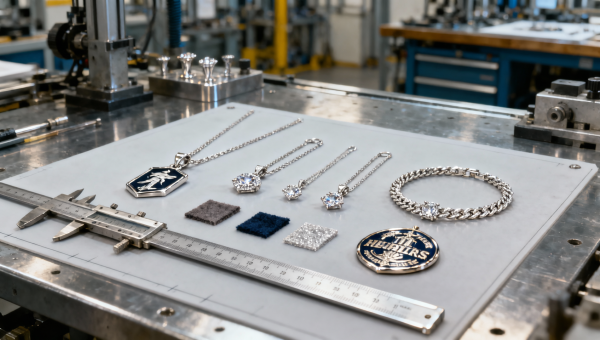
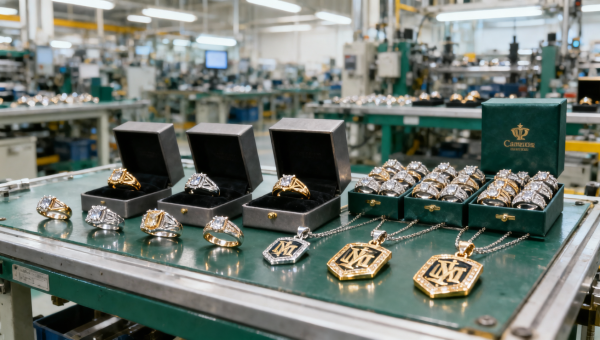
The first and most visible loss in rushed production is craftsmanship. Luxury jewelry depends on exacting detail. Stone setting, surface finishing, symmetry, soldering precision, clasp construction, polishing, plating consistency, and wear comfort all require time and skilled hands. Compressing production often means one of three things: fewer process checks, less experienced labor allocation, or reduced finishing time.
For a commercial buyer, this matters because quality problems in jewelry are not always obvious during first inspection. A piece may look acceptable in a showroom sample yet fail under repeated handling, store display conditions, e-commerce returns, or customer wear. Common signs of rushed production include:
- Uneven stone alignment or insecure settings
- Inconsistent polish and micro-scratches
- Weak solder joints or fragile connection points
- Irregular plating thickness or premature discoloration
- Poor closure mechanisms that affect usability
- Slight asymmetry that weakens perceived luxury
In high-end jewelry, buyers are not paying only for raw materials. They are paying for precision that creates confidence at first touch. Once craftsmanship slips, the entire premium proposition weakens.
Design storytelling and brand identity also suffer
Custom luxury jewelry is valuable because it can communicate something distinct: heritage, exclusivity, artistic direction, seasonal narrative, cultural influence, or a brand’s visual signature. When a project is rushed, design storytelling is often the next casualty after workmanship.
Important creative stages may be shortened or skipped altogether. That can include concept refinement, wearability testing, prototype review, material matching, stone calibration, packaging alignment, and final visual edits. The result is not necessarily a defective product, but often a less intentional one.
For luxury buyers and specialty retailers, this distinction matters. A custom piece that lacks narrative clarity becomes easier to substitute. It no longer carries the full emotional or merchandising power expected from premium luxury accessories for women. In retail terms, that can lead to weaker sell-through, less press appeal, lower repeat interest, and reduced differentiation from competitors.
In other words, rushing may not only reduce product quality; it can erase the strategic reason for choosing custom in the first place.
Material integrity becomes harder to verify
Another major risk in rushed custom luxury jewelry is weaker material control. Premium jewelry sourcing requires time for metal confirmation, gemstone grading review, supplier documentation, plating tests, color consistency checks, and compliance verification. If the schedule is compressed, validation steps may become superficial.
This raises several concerns for procurement and evaluation teams:
- Are the stated precious metal standards fully documented?
- Have gemstone quality and matching been consistently verified?
- Is plating durable enough for the intended market position?
- Are there enough records for traceability and after-sales claims?
- Does the factory maintain the same material standard from sample to bulk production?
In B2B sourcing, material inconsistency is more damaging than a simple production delay. Delays can be explained and managed. Material trust failures can affect legal exposure, channel relationships, and long-term brand credibility. For distributors and agents, this is particularly serious because they often absorb market complaints first, even when the production issue began upstream.
Sampling loses its real decision-making value
One of the most costly mistakes in luxury jewelry sourcing is treating the sample as a formality instead of a decision tool. In rushed projects, sampling is often reduced to visual approval only. That creates false confidence.
A true luxury sample should answer commercial questions, not just aesthetic ones. It should help buyers judge:
- Whether the piece feels premium in hand
- Whether the weight supports the price point
- Whether finishing quality can be repeated at scale
- Whether wearability meets customer expectations
- Whether packaging and presentation align with positioning
- Whether design details survive mass-production realities
When sampling is rushed, these insights are lost. Buyers may approve a piece based on renderings, edited photos, or an incomplete prototype, only to discover later that the production version cannot reproduce the intended luxury effect consistently. That gap between approved sample and delivered bulk order is where many sourcing disputes begin.
Commercial timelines become more fragile, not more reliable
Many buyers rush custom projects because they believe speed reduces risk. In reality, excessive acceleration often creates a more fragile delivery plan. When development, material confirmation, and quality control are compressed, there is less room to absorb normal disruptions such as stone shortages, mold corrections, plating rework, or packaging misalignment.
This means a rushed order can be more likely to miss launch dates than a well-planned one. Even if it ships on time, the buyer may face downstream losses through inspection failures, urgent replacements, fragmented shipments, or post-launch complaints.
For commercial programs tied to seasonal campaigns, hospitality gifting, retail launches, or distributor rollouts, reliability matters more than headline speed. A supplier who promises an unrealistically short lead time may actually be transferring risk to the buyer rather than solving it.
Margin erosion is a hidden consequence of rushing
Luxury sourcing decisions are often evaluated through unit cost and delivery date. But experienced commercial buyers know that the true cost of rushed custom jewelry is broader. A project that appears efficient upfront may generate avoidable expenses across the full business cycle.
These hidden costs can include:
- More sample revisions and internal approval rounds
- Expedited freight and emergency logistics
- Higher QC and inspection intervention costs
- Retail markdowns due to underwhelming presentation
- Returns, repairs, or replacement inventory
- Damage to distributor or client confidence
For buyers responsible for ROI, this is the key takeaway: rushed production can destroy premium margin even when the invoice price appears competitive. Custom luxury jewelry should strengthen pricing power, exclusivity, and brand authority. If speed compromises those outcomes, the business case weakens quickly.
How experienced buyers evaluate whether a timeline is too aggressive
Not every fast project is reckless. Some suppliers are genuinely capable, with strong in-house development, disciplined quality systems, and mature sourcing networks. The issue is not speed itself, but whether the timeline is supported by process reality.
Buyers can assess this by asking a few practical questions:
- What are the exact stages from concept approval to bulk shipment?
- Which stages can be shortened safely, and which cannot?
- What quality checkpoints are mandatory before production release?
- How does the supplier control sample-to-bulk consistency?
- What material documentation is available before production starts?
- What contingency plan exists if development changes are needed?
- Has the supplier completed similar custom luxury jewelry programs at this level before?
If a supplier cannot answer these clearly, the timeline may be driven by sales pressure rather than operational capability. Strong suppliers do not simply say yes to urgency; they define what can be protected, what may be at risk, and how trade-offs will be managed.
Where patience creates the most value in custom luxury jewelry
For premium commercial sourcing, patience should be applied strategically, not passively. Buyers do not need slow suppliers; they need disciplined ones. The most valuable areas to protect in the timeline are usually the ones buyers regret skipping later:
- Concept and design refinement
- Accurate prototype development
- Material verification and matching
- Wearability and structural testing
- Finishing and plating review
- Final QC before shipment
These are the stages where luxury is built. They shape how a product looks, feels, performs, and justifies its price in market. In sectors where commercial experiences and premium positioning matter, these details are not decorative extras. They are the product’s value architecture.
A smarter sourcing mindset for high-end custom projects
For procurement teams, evaluators, and distribution partners, the best sourcing approach is not to ask, “How fast can this be done?” but “What process is required to do this at a luxury standard?” That shift changes vendor selection, project planning, and risk management.
In practice, that means favoring suppliers who provide:
- Transparent development timelines
- Clear sample and approval protocols
- Documented material and compliance controls
- Evidence of craftsmanship in comparable projects
- Realistic communication about risks and revisions
- Operational consistency from design through delivery
This is especially important in custom luxury jewelry, where visual appeal alone does not guarantee commercial success. Buyers need confidence that the product will perform across retail presentation, customer perception, product durability, and brand storytelling.
Conclusion
What gets lost when custom luxury jewelry is rushed is not just time for production—it is the precision, narrative, consistency, and trust that make luxury valuable. For B2B buyers sourcing high-end jewelry and luxury accessories for women, the biggest risk is assuming that faster always means better business. In reality, premium outcomes depend on disciplined development, verified materials, craftsmanship control, and realistic scheduling.
The strongest sourcing decisions come from recognizing that luxury cannot be compressed without consequence. When buyers protect the right stages of the process, they do more than reduce quality risk. They preserve margin, brand equity, and the commercial impact that custom luxury jewelry is meant to deliver.
Search News
Hot Articles
- Pro Stage AudioFIFA Adopts Chinese Mini-LED Displays for 2026 World Cup VAR SystemApr 24, 2026
- Outdoor RidesChina FA Warns Nanjing City Over Fan Conduct; ISO 20785 Compliance AcceleratesApr 24, 2026
- Pro Stage AudioFan Zhendong Visits Silicon Valley as MLTT Investor, AI Ping-Pong Tech Draws US InterestApr 24, 2026
Popular Tags
Need ExpertConsultation?
Connect with our specialized leisureengineering team for procurementstrategies.
Recommended News
 Apr 23, 2026Texas Launches PFAS Probe Against Lululemon, Export Compliance Risks RisePFAS probe against Lululemon in Texas escalates export compliance risks for sportswear ODMs, testing labs & chemical suppliers — act now.● Luxury Retail Analyst
 Apr 21, 2026FDA Proposes Chinese Label Translation Requirement for Sports SupplementsFDA proposes Chinese label translation requirements for sports supplements—learn how protein powders, BCAAs & creatine brands can prepare for Q3 2026 compliance.● Luxury Retail Analyst
 Apr 21, 2026CPSC Urgent Alert: PFAS in Fitness Apparel Risks US Import DelaysPFAS in fitness apparel triggers CPSC alerts—avoid US import delays! Get CPSC-recognized PFAS testing, compliance tips & port detention prevention now.● Luxury Retail Analyst
 Apr 20, 2026US CPSC Alert: PFAS in Fitness Apparel May Delay US Import ClearancePFAS in fitness apparel may delay US import clearance—learn how the Texas AG probe & CPSC alert impact compliance, testing, and supply chains now.● Luxury Retail Analyst
 Apr 15, 2026FDA Updates Guidelines for Sports Nutrition Supplement Labels: Chinese Translations Must Be FDA-CertifiedFDA now requires Chinese translations on sports nutrition supplement labels to be FDA-certified. Learn how this impacts manufacturers, importers, and compliance timelines for US market access.● Luxury Retail Analyst
 Apr 14, 2026Japan Updates Jewelry Labeling Rules: Mandatory China Factory Codes from April 2026Japan's new jewelry labeling rules mandate 'Country of Origin + China Factory Code' (CN-FAC-XXXXX) from April 2026. Learn how this impacts Chinese exporters and Japanese importers in the $2.1B precious metals market.● Luxury Retail Analyst
 Apr 14, 2026RCEP Tariff Cuts Boost China's Optical Lens Exports to ASEANRCEP tariff cuts boost China's optical lens exports to ASEAN with 0% duties on CR-39 & polycarbonate lenses. Learn how this + faster logistics create new trade opportunities.● Luxury Retail Analyst
 Apr 14, 2026US CPSC Proposes Stricter Lead Limits in Children's Jewelry, Impacting Chinese ExportersUS CPSC proposes stricter lead limits (40ppm) in children's jewelry, impacting Chinese exporters with new compliance challenges. Learn how this 2026 regulation affects manufacturers & supply chains.● Luxury Retail Analyst
 Apr 14, 2026EU's Revised EN 14138:2026 Eyewear Nickel Standard Takes Effect, Impacting Chinese ExportersEU's EN 14138:2026 eyewear standard tightens nickel limits to 0.2μg/cm²/week, impacting Chinese exporters. Learn compliance strategies for EU market access.● Luxury Retail Analyst
 Apr 25, 2026Custom Jewelry for Corporate Gifts That LastCustom jewelry for corporate gifts from a trusted custom jewelry manufacturer—discover custom jewelry design, high-end luxury jewelry, and scalable luxury jewelry B2B solutions.● Luxury Retail Analyst
 Apr 25, 2026What a Good Luxury Accessories Catalog IncludesLuxury accessories catalog guide covering custom jewelry design, high-end luxury jewelry, luxury accessories for men and women, and trusted luxury jewelry B2B sourcing insights.● Luxury Retail Analyst
 Apr 22, 2026Why Some Luxury Jewelry Collections Lose Value in DisplayLuxury jewelry in a trampoline park, indoor playground, arcade games or musical instruments venue can lose value fast. Discover smarter display strategies that protect premium appeal and buyer confidence.● Luxury Retail Analyst
 Apr 22, 2026Luxury Jewelry Trends in 2026 That Are Shaping Retail DemandLuxury jewelry trends in 2026 reveal how luxury jewelry, trampoline park, indoor playground, arcade games, office supplies, and musical instruments shape premium retail demand.● Luxury Retail Analyst
 Apr 25, 2026Luxury Accessories for Women That Hold Value Beyond TrendsLuxury accessories for women that hold value beyond trends—compare high-end luxury jewelry, custom luxury jewelry, and smart B2B sourcing insights for premium sport and entertainment retail.● Luxury Retail Analyst
 Apr 25, 2026Why Some Luxury Accessories for Women Feel Premium and Others Do NotLuxury accessories for women that feel truly premium rely on craftsmanship, materials, and supplier credibility. Explore custom luxury jewelry and high-end luxury jewelry sourcing insights for smarter B2B buying.● Luxury Retail Analyst
 Apr 25, 2026High-End Luxury Jewelry: What Actually Sets It Apart?High-end luxury jewelry buying guide: compare custom luxury jewelry, craftsmanship, compliance, and supplier reliability for premium retail and luxury accessories for women.● Luxury Retail Analyst
 Apr 25, 2026When High-End Luxury Jewelry Pricing Stops Making SenseHigh-end luxury jewelry pricing explained: learn when custom luxury jewelry delivers real value, how luxury accessories for women compare, and what buyers should ask before paying a premium.● Luxury Retail Analyst
 Apr 25, 2026Custom Luxury Jewelry: How Long Does True Customization Take?Custom luxury jewelry lead times explained: compare true customization, high-end luxury jewelry value, and luxury accessories for women to plan sourcing with confidence.● Luxury Retail Analyst
 Apr 25, 2026What Gets Lost When Custom Luxury Jewelry Is RushedCustom luxury jewelry rushed too fast can undermine craftsmanship, material trust, and brand value. Learn how high-end luxury jewelry buyers protect quality, margin, and sourcing success.● Luxury Retail Analyst
 Apr 25, 2026Why some luxury accessories for men lose value fastLuxury accessories for men lose value fast when hype, weak craftsmanship, and poor sourcing collide. Explore custom jewelry design insights and how a custom jewelry manufacturer can help buyers protect margins.● Luxury Retail Analyst
 Apr 25, 2026What a reliable custom jewelry manufacturer should confirm firstCustom jewelry manufacturer guide: learn what to confirm first in custom jewelry design, from materials and compliance to timelines, to source smarter and reduce risk.● Luxury Retail Analyst
 Apr 21, 2026Custom jewelry design mistakes that delay samplingCustom jewelry design mistakes that delay sampling: learn how to brief a custom jewelry manufacturer, avoid costly revisions, and keep sports & entertainment launches on schedule.● Luxury Retail Analyst
 Apr 22, 2026Luxury accessories for men that still feel relevant in 2026Luxury accessories for men in 2026: discover how custom jewelry design and the right custom jewelry manufacturer help sports and entertainment buyers boost premium retail, gifting, and venue profits.● Luxury Retail Analyst
 Apr 22, 2026Custom jewelry manufacturer red flags before mass productionCustom jewelry manufacturer red flags before mass production: learn how to assess custom jewelry design quality, protect luxury accessories for men, and avoid costly sourcing mistakes.● Luxury Retail Analyst