Fan Zhendong Visits Silicon Valley as MLTT Investor, AI Ping-Pong Tech Draws US Interest
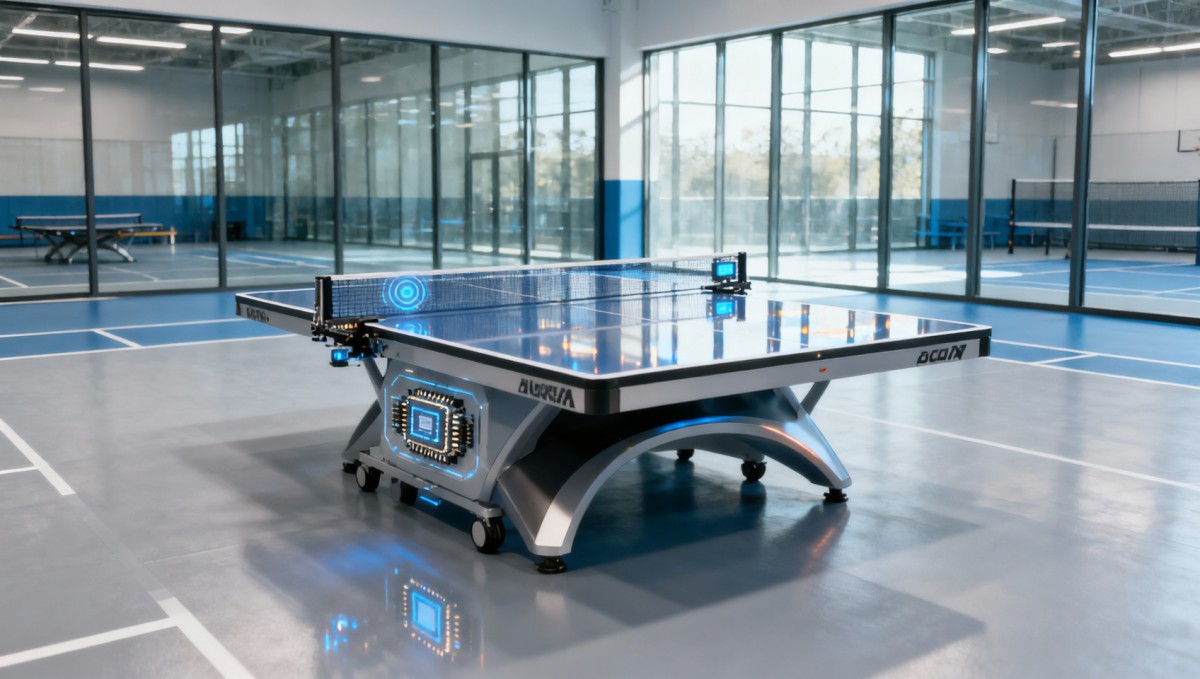
Fan Zhendong, former Olympic table tennis champion, visited San Francisco on April 22, 2026, in his capacity as a strategic investor of Major League Table Tennis (MLTT). His trip spotlighted China-developed smart table tennis tables—integrated with millimeter-wave radar and edge AI chips—and their companion AI coaching system. The demonstration attracted serious commercial interest from U.S.-based youth training operators, signaling early cross-border traction for AI-augmented sports hardware—particularly among facility operators, hardware integrators, and youth sports edtech providers.
Event Overview
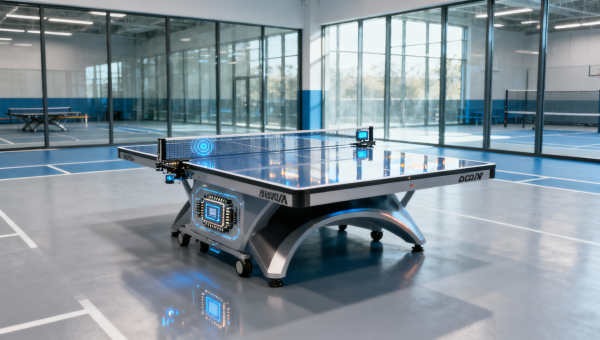
On April 22, 2026, Fan Zhendong traveled to San Francisco as a strategic investor of MLTT. During the visit, he engaged with multiple Silicon Valley AI hardware companies to explore collaboration opportunities. The Chinese smart table tennis table—featuring millimeter-wave radar and embedded edge AI chips—and its associated AI coaching system were presented. U.S. youth table tennis training chains—including PongNation and SpinLab—initiated bulk inquiries. First pilot orders are expected to enter factory verification in May 2026.
Industries Affected by This Development
Smart Sports Hardware Manufacturers
Manufacturers producing AI-integrated sports equipment may face increased competitive pressure or new benchmarking expectations. The demonstrated integration of millimeter-wave sensing with low-latency edge AI processing sets a functional reference point for real-time motion analysis in compact sports hardware.
Youth Sports Training Facility Operators
U.S. and global youth training chains (e.g., PongNation, SpinLab) are actively evaluating procurement feasibility. Their inquiries suggest growing willingness to adopt standardized, data-driven coaching tools—potentially shifting operational workflows toward tech-enabled instruction and performance analytics.
AI Edge-Device Integrators & Component Suppliers
Suppliers of millimeter-wave radar modules, low-power AI inference chips, and embedded firmware development services may see renewed demand signals. The pilot’s focus on edge-based processing—not cloud-dependent latency—highlights a specific technical requirement profile for sports applications.
Sports EdTech Platform Developers
Developers building coaching analytics dashboards or skill-tracking SaaS tools may need to assess interoperability with hardware-level sensor outputs. The AI coaching system’s data format and API accessibility—though unconfirmed—could influence future platform integration strategies.
What Relevant Enterprises or Practitioners Should Monitor and Do Now
Track official rollout timelines and verification criteria
Current information confirms only that pilot orders will undergo factory verification in May 2026. Stakeholders should monitor whether verification includes third-party safety certification (e.g., FCC/UL), software update protocols, or data privacy compliance for U.S. minors—factors that directly impact deployment readiness.
Assess supply chain readiness for low-volume, high-spec hardware
Early U.S. interest targets niche, technically demanding units—not mass-market consumer devices. Companies involved in small-batch assembly, precision calibration, or edge-AI firmware validation should review current capacity alignment with such requirements.
Distinguish between market signal and near-term revenue impact
The inquiries from PongNation and SpinLab reflect exploratory engagement—not signed contracts. From industry perspective, this remains an early-stage market signal; actual order volumes, pricing terms, and delivery schedules remain unconfirmed and subject to verification outcomes.
Prepare for potential interoperability and support protocol discussions
If pilots advance, stakeholders may need to engage on data output standards (e.g., pose estimation coordinates, rally segmentation timestamps), remote diagnostics access, and localized technical support models—areas not yet disclosed but operationally critical for facility-scale deployment.
Editorial Observation / Industry Perspective
This event is best understood not as a commercial milestone, but as a convergence signal: it reflects growing alignment between elite-sports investment networks (e.g., MLTT), hardware-enabled coaching innovation, and U.S. youth sports infrastructure modernization efforts. Analysis来看, the involvement of a globally recognized athlete-investor adds credibility—but does not substitute for product validation in regulated markets. Observation来看, interest centers on functionality (real-time feedback, minimal setup) rather than brand or novelty alone. From industry angle, the emphasis on edge AI—rather than cloud-heavy models—suggests a pragmatic adaptation to facility constraints like bandwidth, latency, and data governance. Current more appropriate interpretation is that this marks the start of a multi-step evaluation cycle—not an immediate shift in procurement norms.
In summary, Fan Zhendong’s visit underscores emerging demand for interoperable, regulation-aware AI sports hardware in North American youth training environments. It does not indicate broad market adoption, but rather highlights a specific inflection point where technical capability, investor visibility, and institutional buyer interest have temporarily converged. For industry participants, the value lies not in extrapolating scale, but in observing how verification, compliance, and integration challenges unfold over the coming months.
Source: Confirmed details derived solely from the provided event summary. No external data, background context, or speculative expansion has been introduced. The status of factory verification outcomes, contract finalization, and technical specifications remains pending observation.
Search News
Hot Articles
- Pro Stage AudioFIFA Adopts Chinese Mini-LED Displays for 2026 World Cup VAR SystemApr 24, 2026
- Outdoor RidesChina FA Warns Nanjing City Over Fan Conduct; ISO 20785 Compliance AcceleratesApr 24, 2026
- Pro Stage AudioFan Zhendong Visits Silicon Valley as MLTT Investor, AI Ping-Pong Tech Draws US InterestApr 24, 2026
Popular Tags
Need ExpertConsultation?
Connect with our specialized leisureengineering team for procurementstrategies.
Recommended News
 Apr 24, 2026FIFA Adopts Chinese Mini-LED Displays for 2026 World Cup VAR SystemFIFA adopts Chinese Mini-LED displays for 2026 World Cup VAR—ultra-low latency (≤3ms), 1500+ nits, FIFA TMS 4.2 certified. Game-changing for sports tech suppliers.● Pro Audio Engineer
 Apr 24, 2026Fan Zhendong Visits Silicon Valley as MLTT Investor, AI Ping-Pong Tech Draws US InterestAI ping-pong tech: Fan Zhendong’s MLTT-backed smart table & coaching system draws US youth training interest—edge AI, radar sensing, pilot orders inbound.● Pro Audio Engineer
 Apr 24, 2026FIBA Women's World Cup 2026 Draw: China in 'Group of Death', Lighting & Timing Systems Export Window OpensFIBA Women's World Cup 2026 draw sparks global demand for FIBA Level 3–certified LED lighting & timing systems—act now to qualify.● Pro Audio Engineer
 Apr 23, 2026China Upgrades Security Compliance for International Sports EventsChina mandates ISO 22301 business continuity planning for venues hosting international sports events—key for stadium tech, ops, and compliance providers.● Pro Audio Engineer
 Apr 22, 2026China's UWB Timing System Gains ITU Certification at Haiwan EventChina's UWB timing system wins ITU-T Y.3506 certification—key for sports tech exporters targeting GCC & SADC stadium tenders.● Pro Audio Engineer
 Apr 20, 2026Snooker World Championship: Xiao Guodong Secures Third Chinese SpotSnooker World Championship: Xiao Guodong secures third Chinese spot amid AI officiating & 4K HDR broadcast — tech and talent converge in elite cue sports.● Pro Audio Engineer
 Apr 20, 2026FDA Proposes Chinese Label Translation Requirements for Sports SupplementsFDA proposes Chinese label translation requirements for sports supplements—key for importers, manufacturers & global brands. Act now to ensure compliance by Jan 2027.● Pro Audio Engineer
 Apr 17, 2026FDA Drafts New Labeling Rule for Chinese-Labeled Sports SupplementsFDA's new draft rule for Chinese-labeled sports supplements mandates certified English translations—key for brands, CMOs & importers navigating U.S. market entry.● Pro Audio Engineer
 Apr 16, 20262026 Yangtze River Delta Triathlon Uses Certified Chinese Timing System2026 Yangtze River Delta Triathlon uses certified Chinese timing system — ChronoLink Pro, ITU-approved RFID+GPS dual-mode solution for global race organizers.● Pro Audio Engineer
 Apr 13, 2026Asian University Basketball League Secures Funding, Launches Smart Venue ProgramThe Asian University Basketball League (AUBL) secures Series A funding and launches its Smart Venue Program, partnering with tech firms for sustainable sports infrastructure. A key opportunity for sports tech exporters with ISO 50001 certification.● Pro Audio Engineer
 Apr 24, 2026Best Music Production Tools for Small StudiosMusic production tools for small studios: compare scalable setups, sourcing tips, and smart procurement for hospitality procurement, hotel room furniture, and playground planning projects.● Pro Audio Engineer
 Apr 24, 2026How to Choose Music Production Tools in 2026Music production tools in 2026: learn how to compare workflow, scalability, and supplier reliability for venues, hospitality procurement, and entertainment projects with confidence.● Pro Audio Engineer
 Apr 23, 2026Best Soundproofing Materials for VenuesBest soundproofing materials for venues: compare solutions for hotel beds, custom furniture, catering equipment, instrument cables, playground structures, and theme park rides to improve comfort, compliance, and sourcing efficiency.● Pro Audio Engineer
 Apr 22, 2026Do Soundproofing Materials Really WorkSoundproofing materials really work when matched to hotels, leisure park venues, and pro audio needs. Explore practical solutions for hotel beds, custom furniture, catering equipment, theme park rides, and inclusive playground projects.● Pro Audio Engineer
 Apr 19, 20262026 Shanghai Sailing Open Adopts ITU-Certified Chinese Timing System2026 Shanghai Sailing Open adopts ITU-certified Chinese timing system — a breakthrough for precision sports tech exporters, certifiers & event organizers.● Pro Audio Engineer
 Apr 20, 2026What Causes Early Failure in Pro Audio Equipment?Pro audio equipment fails early due to heat, dust, unstable power, and weak components. Learn how musical instruments, instrument cables, music accessories, and sourcing choices affect reliability.● Pro Audio Engineer
 Apr 20, 2026Instrument Cables: Shielding, Durability, and the Price Gap ExplainedInstrument cables guide for buyers of pro audio equipment and music accessories across musical instruments, string instruments, keyboard instruments, percussion instruments, wind instruments, and orchestral instruments.● Pro Audio Engineer
 Apr 20, 2026Pro Audio Equipment Upgrades That Improve Sound Without OverspendingPro audio equipment upgrades for musical instruments: improve sound with instrument cables, music stands, and music accessories for keyboard, percussion, wind, string, and orchestral instruments—without overspending.● Pro Audio Engineer
 Apr 20, 2026Instrument Cables: Why Cheap Options Often Fail During Live UseInstrument cables for musical instruments often fail live when cheap builds meet pro audio equipment demands. Compare smarter options for string, wind, percussion, and keyboard instruments.● Pro Audio Engineer
 Apr 18, 2026Instrument cables with gold-plated connectors: Do they improve tone—or just resale value?Instrument cables with gold-plated connectors boost reliability & resale value in theme parks, leisure parks, and hotels—proven for soundproofing, playground structures, and catering equipment.● Pro Audio Engineer
 Apr 18, 2026Instrument cables that degrade mid-show—what causes sudden signal drop?Instrument cables failing mid-show? Discover why—bending fatigue, EMI, corrosion & thermal stress—in theme parks, hotels, playgrounds & leisure venues.● Pro Audio Engineer
 Apr 17, 2026Pro stage audio setups where music accessories become acoustic liabilitiesDiscover how commercial furniture, playground borders, sensory playground gear & music accessories impact acoustic safety—avoid liability in pro audio environments.● Pro Audio Engineer
 Apr 16, 2026Pro stage audio gear warranties: What ‘lifetime’ really covers when used in hospitality venuesPro audio equipment & designer eyewear warranties decoded for hotels. See what ‘lifetime’ really covers—OEM manufacturing, custom fabrication, supply chain solutions & more.● Pro Audio Engineer
 Apr 16, 2026Recording studio gear sourcing: Why local compliance often overrides ‘best-in-class’ specsRecording studio gear sourcing for luxury spaces: compliance-first pro audio equipment, designer eyewear integration, and OEM manufacturing solutions—avoid costly delays.● Pro Audio Engineer