High-End Luxury Jewelry: What Actually Sets It Apart?
In a market where premium sourcing shapes brand perception, understanding what defines high-end luxury jewelry goes far beyond price. From craftsmanship and gemstone selection to compliance, customization, and supply reliability, today’s buyers compare custom luxury jewelry alongside luxury accessories for women and other high-value commercial categories. For procurement teams, distributors, and business evaluators, knowing these distinctions is essential to making smarter, more profitable sourcing decisions.
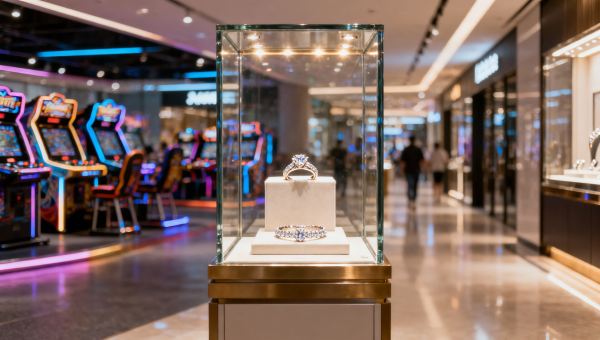
For buyers in sports and entertainment, luxury jewelry is not simply a fashion category. It plays a commercial role in VIP hospitality, premium retail, celebrity collaborations, casino boutiques, resort gift programs, cruise retail, music event merchandising, and branded experience spaces. In these settings, the gap between standard fine jewelry and true high-end luxury jewelry directly affects margin, reputation, and customer retention.
This is why B2B sourcing decisions require more than visual appeal. Decision-makers must assess craftsmanship standards, gemstone consistency, metal purity, production control, lead times, customization capacity, and after-sales support. For distributors and commercial buyers, the real question is not whether a piece looks expensive, but whether it can perform as a reliable premium product across multiple sales and presentation environments.
What High-End Luxury Jewelry Really Means in Commercial Sports and Entertainment Settings
In consumer language, “luxury” is often used loosely. In commercial sourcing, however, high-end luxury jewelry usually refers to products that combine premium materials, advanced finishing, strict quality tolerances, and strong brand or design value. For a resort boutique, stadium VIP lounge, or cruise retail operator, these factors must translate into repeatable quality across 50, 200, or even 1,000 units over multiple production cycles.
The sports and entertainment industry adds another layer of complexity. Products may need to align with seasonal campaigns, celebrity events, championship hospitality programs, or limited-edition entertainment launches. In many cases, buyers operate on narrow windows of 6–12 weeks, making supplier responsiveness and sample accuracy just as important as the jewelry itself.
High-end luxury jewelry also differs from standard premium accessories because the value is distributed across several dimensions at once. Material quality may account for one portion of cost, but craftsmanship, rarity, design rights, finishing labor, and customization can significantly shape the final commercial price. A piece with 18K gold, calibrated stones, hand-set pavé work, and custom packaging has a very different sourcing profile from a mass-market plated accessory.
For commercial buyers, the category becomes even more specific when products are intended for women’s luxury accessory assortments in entertainment venues. In such cases, products must support visual merchandising, premium storytelling, secure logistics, and retail conversion. A beautifully designed item that lacks supply consistency or documentation can become a costly problem during launch.
Core traits that separate high-end from standard fine jewelry
- Use of precious metals such as 18K gold or platinum rather than lower-cost plated bases.
- Tighter gemstone matching for color, clarity, cut, and size, often with visible consistency across sets.
- More labor-intensive processes, including hand-setting, hand-polishing, engraving, and custom finishing.
- Better traceability, from stone sourcing records to metal declarations and packing control.
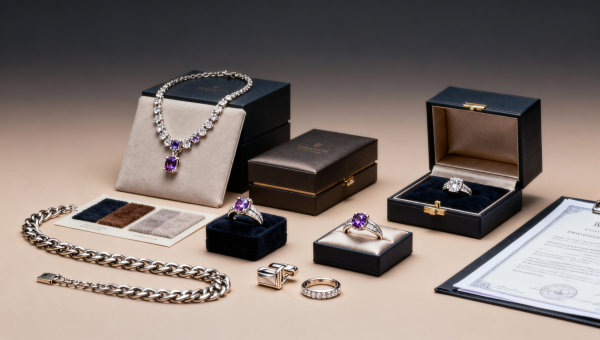
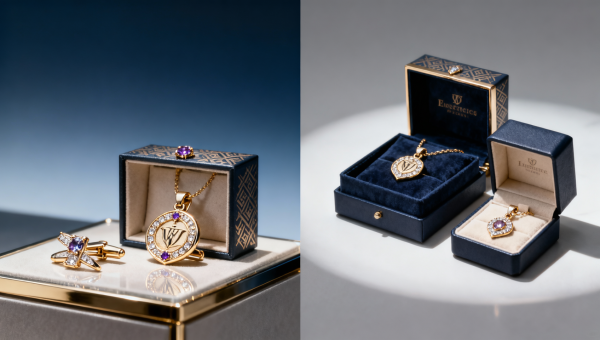
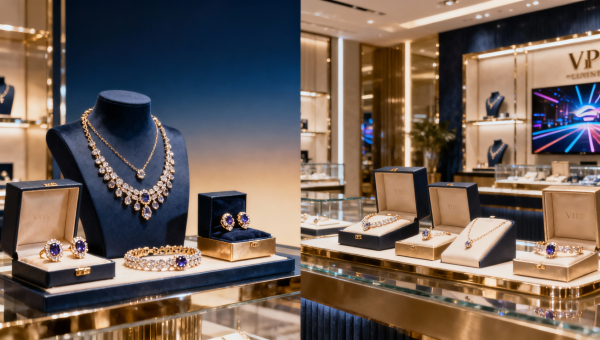
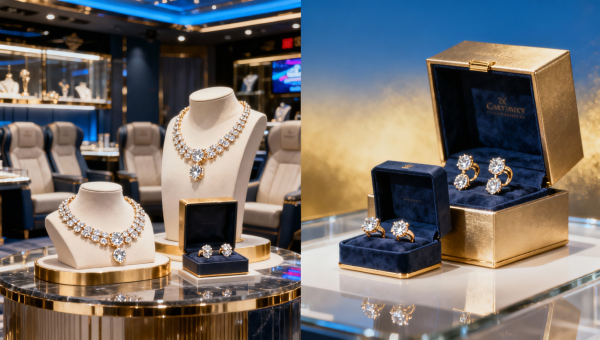
- Stronger presentation standards, including premium boxes, certificates, cleaning cloths, and display-ready packaging.
Why this matters for B2B evaluation
In entertainment retail, price alone is a weak decision metric. A product line with a 15% lower unit cost may generate higher return rates, lower perceived value, and more display damage over a 90-day selling period. Commercial buyers therefore evaluate not just acquisition cost, but sell-through support, durability, visual impact under retail lighting, and consistency from sample to bulk order.
The Material and Craftsmanship Standards Buyers Should Examine
When sourcing custom luxury jewelry, the first commercial checkpoint is material integrity. Precious metal content affects durability, color stability, resale perception, and long-term brand trust. In most high-end programs, buyers commonly review 14K, 18K, and platinum options, but 18K remains especially relevant for luxury hospitality and entertainment retail because it balances premium perception with practical wear resistance.
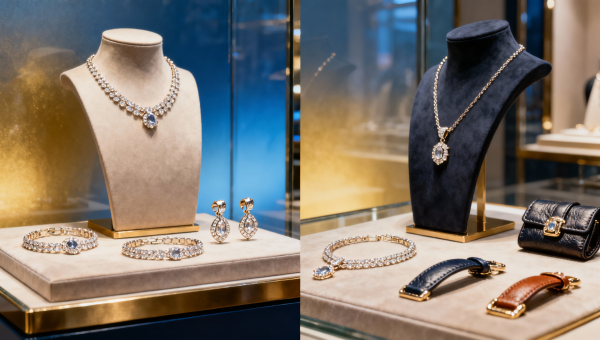
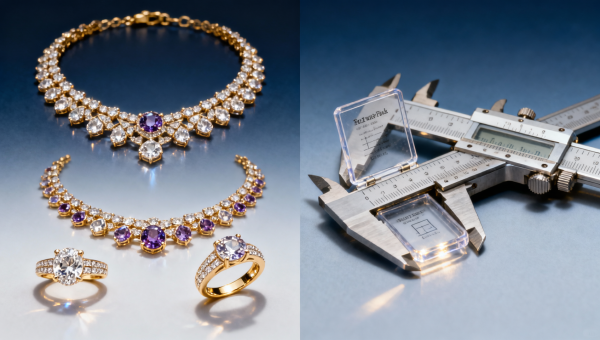
Gemstone quality should also be evaluated as a system rather than as individual pieces. A single attractive stone in a pre-production sample means little if bulk orders show visible variation in hue, brilliance, or dimensions. For earrings, necklaces, and coordinated women’s luxury accessories, even a 0.2 mm mismatch in stone size or uneven color grading can reduce visual harmony on the shelf.
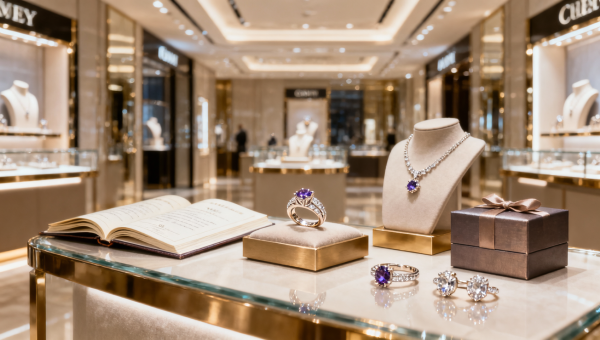
Craftsmanship is where many sourcing errors become visible. High-end jewelry usually features cleaner solder joints, more even prong alignment, smoother polish, better clasp tension, and improved finishing on hidden surfaces. These details matter in entertainment retail because customers often handle products under direct lighting at close range, especially in resorts, casino galleries, and VIP boutiques.
Another critical point is wear performance. Rings, pendants, bracelets, and earrings sold in premium leisure environments should withstand repeated try-ons, transport vibration, and standard display handling. Buyers should request wear and finishing checks covering clasp cycle durability, plating or polish consistency where applicable, and stone security over repeated handling.
Key sourcing criteria by component
The table below helps procurement teams compare the most practical checkpoints when evaluating high-end luxury jewelry for entertainment and specialty retail channels.
The practical takeaway is simple: a premium-looking sample is not enough. Buyers should compare sample quality with documented production controls, inspection photos, and packaging readiness. In most commercial programs, these factors determine whether the line performs consistently across 1 season or 4 consecutive buying cycles.
A useful inspection routine
- Review metal declaration and target weight tolerance before sampling.
- Request close-up photos at 3–5 angles under neutral lighting.
- Check stone matching on at least 3 paired or grouped pieces.
- Test clasps, closures, and movable parts for 20–50 cycles where relevant.
- Confirm packaging fit and barcode or SKU readiness before bulk approval.
Customization, Branding, and Limited Editions for Experiential Commerce
One of the strongest differentiators in high-end luxury jewelry is the ability to support customization without losing finish quality or delivery discipline. In sports and entertainment, this capability is especially valuable because demand often centers on exclusive collections, artist collaborations, championship editions, VIP membership gifts, and resort-branded accessories that cannot look generic.
Customization may involve logo engraving, exclusive stone colors, event-linked motifs, signature shapes, collector packaging, or bespoke display concepts. However, every extra design layer affects tooling, sample cycles, approvals, and minimum order strategy. A buyer who ignores this relationship may encounter delays of 2–4 weeks or cost increases of 8%–20%, particularly on highly detailed settings.
For distributors and agents, the commercial upside of customized luxury jewelry is clear. Exclusive SKUs reduce direct price comparison, improve dealer positioning, and strengthen negotiations with venue operators. A limited run of 100–300 units for a music residency, premium golf event, or casino anniversary can command stronger margins than an open-market product with similar raw material cost.
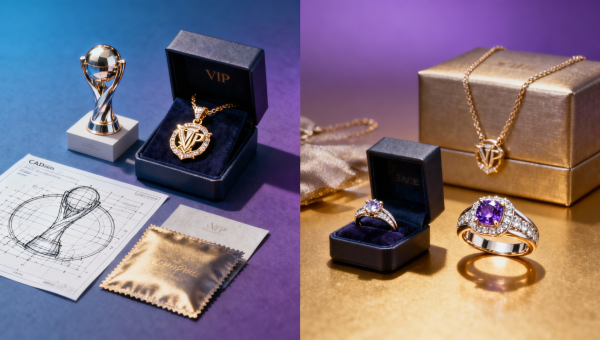
Still, customization only creates value when it is operationally controlled. The best suppliers translate creative concepts into drawings, prototypes, confirmation samples, packaging specs, and shipping milestones with minimal ambiguity. Commercial buyers should expect a structured development path rather than informal revisions through chat and screenshots.
Typical customization paths in entertainment retail
- Venue identity collections for resort boutiques, VIP clubs, or cruise retail stores.
- Event-based drops linked to sports finals, concerts, anniversaries, or seasonal campaigns.
- Private-label programs for distributors seeking channel exclusivity across 3–10 markets.
- Corporate gifting editions for premium ticket holders, sponsors, or executive hospitality guests.
Development stages that reduce launch risk
A disciplined supplier will typically move through 5 stages: concept briefing, design rendering, prototype review, pre-production sample approval, and bulk production. For complex pieces with multiple stones or layered branding details, buyers should plan 3–6 weeks for development before mass production begins. Rushing this phase often creates expensive rework later.
It is also wise to align customization decisions with sales channel realities. Jewelry intended for luxury accessories for women in resort retail may favor elegant, versatile forms. Products for artist merchandise or sports commemorative use may require stronger symbolism, serial-numbered packaging, or more visible branding. The same supplier is not always equally strong in both directions.
Compliance, Traceability, and Supply Chain Reliability
Luxury appearance alone does not protect a commercial buyer. In cross-border trade, high-end jewelry must also satisfy documentation, labeling, material declarations, and shipment consistency. For hotel groups, casino operators, cruise retailers, and entertainment distributors, weak compliance can cause customs delays, channel rejection, or reputational damage that outweighs any short-term cost savings.
A reliable supplier should be able to explain metal content, gemstone category, country-specific labeling needs, and packaging details in a clear format. Buyers do not always need complex certification for every program, but they do need consistent paperwork and transparent communication. Even a 7-day shipping delay can disrupt a time-sensitive launch for an event, tournament, or seasonal leisure campaign.
Traceability matters because high-end positioning depends on confidence. If stones are upgraded, replaced, or inconsistently sourced between batches, the product line may lose visual integrity and pricing credibility. This is especially damaging when the collection is marketed as exclusive or tied to a branded entertainment experience.
Supply chain reliability also includes production capacity. A workshop that performs beautifully on 30 samples may fail on a 500-unit commercial order if it lacks stone matching discipline, packaging control, or final inspection staff. Buyers should therefore ask not only “Can you make this?” but also “Can you repeat this quality at our target volume and delivery schedule?”
Risk control checklist for procurement teams
The following table highlights the areas most often reviewed during supplier qualification and bulk order approval.
The commercial lesson is that premium sourcing requires operational evidence. If a supplier can show clear timelines, inspection stages, and documentation discipline, the buyer reduces launch risk. In experiential commerce, reliability is often the deciding factor between two visually similar offers.
Common sourcing mistakes
- Approving a beautiful sample without confirming bulk stone matching standards.
- Ignoring packaging development until the final 10 days before shipment.
- Assuming all custom jewelry suppliers can support event-driven lead times.
- Failing to align MOQ, order split, and replenishment expectations early.
How Buyers, Distributors, and Evaluators Should Compare Suppliers
A strong supplier evaluation process goes beyond catalog review. For sports and entertainment buyers, the ideal partner is one that can balance aesthetics, commercial practicality, and delivery discipline. This is particularly important when a jewelry line is part of a broader premium assortment that includes women’s luxury accessories, gifting products, or hospitality retail items.
Procurement teams should compare suppliers against at least 4 major dimensions: product quality, customization capability, operational reliability, and channel fit. Channel fit matters because the needs of a luxury resort boutique differ from those of a music venue gift store or a casino retail operator. The same product may perform differently depending on display format, price point, and customer behavior.
Business evaluators should also review how the supplier communicates. Clear technical answers, realistic lead time commitments, and organized approval procedures often indicate stronger execution. Vague promises, unstable sampling costs, or missing production milestones can signal future difficulties, even when the initial quotation looks attractive.
Distributors and agents, in particular, should look at whether the supplier can support repeat business. Can they handle restocks of 50–150 units? Can they maintain stone matching across reorder cycles? Can they update packaging for local market needs without restarting the full development process? These are the practical questions that shape long-term profitability.
Supplier comparison framework
The matrix below offers a useful structure for comparing potential partners before moving into contract negotiation or pilot orders.
A structured comparison often reveals that the cheapest offer is rarely the most competitive over a 12-month period. In high-end luxury jewelry, commercial success depends on quality stability, lower friction in communication, and the ability to support premium retail storytelling across multiple entertainment environments.
Practical buying advice
- Start with a pilot collection of 20–80 units per style if entering a new venue or market.
- Approve packaging and labeling at the same time as jewelry samples, not later.
- Build reorder clauses around stone consistency, finish matching, and lead time expectations.
- Use at least 1 final inspection checkpoint before balance payment and dispatch.
FAQ for Commercial Buyers of High-End Luxury Jewelry
How is high-end luxury jewelry different from premium fashion jewelry?
The difference usually lies in material composition, craftsmanship detail, durability, and resale perception. High-end luxury jewelry commonly uses precious metals such as 14K or 18K gold and may include better-matched natural or premium-grade stones. Premium fashion jewelry can still look attractive, but it often serves shorter trend cycles and may not support the same pricing, exclusivity, or long-term brand positioning in entertainment retail.
What order quantities are common for custom programs?
MOQ varies by design complexity, metal type, and packaging needs. For custom luxury jewelry in B2B channels, small pilot quantities may begin around 20–50 units per style, while more cost-efficient production often starts at 100–300 units. Highly complex pieces with hand-setting or exclusive molds may require higher commitment to maintain commercial feasibility.
How long does a typical project take?
A realistic timeline often includes 2–4 weeks for development and sampling, plus 4–8 weeks for bulk production after approval. Buyers should add extra time for packaging, branding revisions, and international logistics. If a launch is tied to a sports season, music event, or holiday resort campaign, backward planning by at least 10–14 weeks is safer.
Which details matter most during supplier qualification?
Focus on 4 checkpoints: material clarity, sample-to-bulk consistency, communication discipline, and packaging readiness. In addition, ask for close-up workmanship images, production stage explanations, and realistic replenishment capacity. These factors usually predict execution quality more accurately than a low initial quote.
Is custom luxury jewelry suitable for sports and entertainment channels?
Yes, especially for VIP retail, resort boutiques, branded experiences, casino stores, premium gifting, and limited-edition collaborations. The key is matching design direction to audience profile. Elegant women’s luxury accessories may suit hospitality-driven environments, while bold commemorative pieces may work better for artist or event-led programs.
Turning Premium Jewelry Sourcing into a Stronger Commercial Strategy
What truly sets high-end luxury jewelry apart is not one single factor but a disciplined combination of premium materials, refined craftsmanship, customization depth, compliance awareness, and dependable delivery. In sports and entertainment, where product value is closely tied to experience and perception, these details directly shape retail performance and brand credibility.
For information researchers, procurement teams, business evaluators, and distributors, the smartest sourcing approach is to compare suppliers through a commercial lens. Look at repeatability, timeline control, packaging readiness, and channel fit alongside design appeal. That is how custom luxury jewelry becomes more than a beautiful product—it becomes a dependable premium business asset.
Global Commercial Trade supports buyers navigating these decisions by focusing on sourcing intelligence for high-value commercial environments, including jewelry and luxury accessories within hospitality, leisure, and experiential retail. If you are evaluating a new supplier, planning a limited-edition program, or building a premium women’s accessories assortment for an entertainment venue, a better sourcing framework can reduce risk and improve returns.
Contact us to discuss your sourcing objectives, request a tailored supplier evaluation framework, or explore more commercial solutions for luxury jewelry, hospitality retail, and experience-driven premium merchandising.
Search News
Hot Articles
- Pro Stage AudioFIFA Adopts Chinese Mini-LED Displays for 2026 World Cup VAR SystemApr 24, 2026
- Outdoor RidesChina FA Warns Nanjing City Over Fan Conduct; ISO 20785 Compliance AcceleratesApr 24, 2026
- Pro Stage AudioFan Zhendong Visits Silicon Valley as MLTT Investor, AI Ping-Pong Tech Draws US InterestApr 24, 2026
Popular Tags
Need ExpertConsultation?
Connect with our specialized leisureengineering team for procurementstrategies.
Recommended News
 Apr 23, 2026Texas Launches PFAS Probe Against Lululemon, Export Compliance Risks RisePFAS probe against Lululemon in Texas escalates export compliance risks for sportswear ODMs, testing labs & chemical suppliers — act now.● Luxury Retail Analyst
 Apr 21, 2026FDA Proposes Chinese Label Translation Requirement for Sports SupplementsFDA proposes Chinese label translation requirements for sports supplements—learn how protein powders, BCAAs & creatine brands can prepare for Q3 2026 compliance.● Luxury Retail Analyst
 Apr 21, 2026CPSC Urgent Alert: PFAS in Fitness Apparel Risks US Import DelaysPFAS in fitness apparel triggers CPSC alerts—avoid US import delays! Get CPSC-recognized PFAS testing, compliance tips & port detention prevention now.● Luxury Retail Analyst
 Apr 20, 2026US CPSC Alert: PFAS in Fitness Apparel May Delay US Import ClearancePFAS in fitness apparel may delay US import clearance—learn how the Texas AG probe & CPSC alert impact compliance, testing, and supply chains now.● Luxury Retail Analyst
 Apr 15, 2026FDA Updates Guidelines for Sports Nutrition Supplement Labels: Chinese Translations Must Be FDA-CertifiedFDA now requires Chinese translations on sports nutrition supplement labels to be FDA-certified. Learn how this impacts manufacturers, importers, and compliance timelines for US market access.● Luxury Retail Analyst
 Apr 14, 2026Japan Updates Jewelry Labeling Rules: Mandatory China Factory Codes from April 2026Japan's new jewelry labeling rules mandate 'Country of Origin + China Factory Code' (CN-FAC-XXXXX) from April 2026. Learn how this impacts Chinese exporters and Japanese importers in the $2.1B precious metals market.● Luxury Retail Analyst
 Apr 14, 2026RCEP Tariff Cuts Boost China's Optical Lens Exports to ASEANRCEP tariff cuts boost China's optical lens exports to ASEAN with 0% duties on CR-39 & polycarbonate lenses. Learn how this + faster logistics create new trade opportunities.● Luxury Retail Analyst
 Apr 14, 2026US CPSC Proposes Stricter Lead Limits in Children's Jewelry, Impacting Chinese ExportersUS CPSC proposes stricter lead limits (40ppm) in children's jewelry, impacting Chinese exporters with new compliance challenges. Learn how this 2026 regulation affects manufacturers & supply chains.● Luxury Retail Analyst
 Apr 14, 2026EU's Revised EN 14138:2026 Eyewear Nickel Standard Takes Effect, Impacting Chinese ExportersEU's EN 14138:2026 eyewear standard tightens nickel limits to 0.2μg/cm²/week, impacting Chinese exporters. Learn compliance strategies for EU market access.● Luxury Retail Analyst
 Apr 25, 2026Luxury Jewelry B2B in 2026: What Changes?Luxury jewelry B2B in 2026: explore custom jewelry design, custom jewelry manufacturer trends, luxury jewelry wholesale shifts, and how custom luxury jewelry drives faster, safer growth.● Luxury Retail Analyst
 Apr 25, 2026How to Grow a Luxury Accessories Online StoreLearn how to grow a luxury accessories online store with custom jewelry design, a trusted custom jewelry manufacturer, luxury accessories wholesale strategy, and high-end luxury jewelry that converts.● Luxury Retail Analyst
 Apr 25, 2026Custom Jewelry for Corporate Gifts That LastCustom jewelry for corporate gifts from a trusted custom jewelry manufacturer—discover custom jewelry design, high-end luxury jewelry, and scalable luxury jewelry B2B solutions.● Luxury Retail Analyst
 Apr 25, 2026What a Good Luxury Accessories Catalog IncludesLuxury accessories catalog guide covering custom jewelry design, high-end luxury jewelry, luxury accessories for men and women, and trusted luxury jewelry B2B sourcing insights.● Luxury Retail Analyst
 Apr 22, 2026Why Some Luxury Jewelry Collections Lose Value in DisplayLuxury jewelry in a trampoline park, indoor playground, arcade games or musical instruments venue can lose value fast. Discover smarter display strategies that protect premium appeal and buyer confidence.● Luxury Retail Analyst
 Apr 22, 2026Luxury Jewelry Trends in 2026 That Are Shaping Retail DemandLuxury jewelry trends in 2026 reveal how luxury jewelry, trampoline park, indoor playground, arcade games, office supplies, and musical instruments shape premium retail demand.● Luxury Retail Analyst
 Apr 25, 2026Luxury Accessories for Women That Hold Value Beyond TrendsLuxury accessories for women that hold value beyond trends—compare high-end luxury jewelry, custom luxury jewelry, and smart B2B sourcing insights for premium sport and entertainment retail.● Luxury Retail Analyst
 Apr 25, 2026Why Some Luxury Accessories for Women Feel Premium and Others Do NotLuxury accessories for women that feel truly premium rely on craftsmanship, materials, and supplier credibility. Explore custom luxury jewelry and high-end luxury jewelry sourcing insights for smarter B2B buying.● Luxury Retail Analyst
 Apr 25, 2026High-End Luxury Jewelry: What Actually Sets It Apart?High-end luxury jewelry buying guide: compare custom luxury jewelry, craftsmanship, compliance, and supplier reliability for premium retail and luxury accessories for women.● Luxury Retail Analyst
 Apr 25, 2026When High-End Luxury Jewelry Pricing Stops Making SenseHigh-end luxury jewelry pricing explained: learn when custom luxury jewelry delivers real value, how luxury accessories for women compare, and what buyers should ask before paying a premium.● Luxury Retail Analyst
 Apr 25, 2026Custom Luxury Jewelry: How Long Does True Customization Take?Custom luxury jewelry lead times explained: compare true customization, high-end luxury jewelry value, and luxury accessories for women to plan sourcing with confidence.● Luxury Retail Analyst
 Apr 25, 2026What Gets Lost When Custom Luxury Jewelry Is RushedCustom luxury jewelry rushed too fast can undermine craftsmanship, material trust, and brand value. Learn how high-end luxury jewelry buyers protect quality, margin, and sourcing success.● Luxury Retail Analyst
 Apr 25, 2026Why some luxury accessories for men lose value fastLuxury accessories for men lose value fast when hype, weak craftsmanship, and poor sourcing collide. Explore custom jewelry design insights and how a custom jewelry manufacturer can help buyers protect margins.● Luxury Retail Analyst
 Apr 25, 2026What a reliable custom jewelry manufacturer should confirm firstCustom jewelry manufacturer guide: learn what to confirm first in custom jewelry design, from materials and compliance to timelines, to source smarter and reduce risk.● Luxury Retail Analyst
 Apr 21, 2026Custom jewelry design mistakes that delay samplingCustom jewelry design mistakes that delay sampling: learn how to brief a custom jewelry manufacturer, avoid costly revisions, and keep sports & entertainment launches on schedule.● Luxury Retail Analyst