What a reliable custom jewelry manufacturer should confirm first
Before moving into sampling, pricing, or custom jewelry design, a reliable custom jewelry manufacturer should first confirm your product goals, material standards, compliance needs, and delivery expectations. For procurement teams, distributors, and commercial buyers, this early alignment reduces sourcing risk, protects brand value, and creates a stronger foundation for quality control, scalable production, and long-term partnership success.
For most buyers, the key question is not simply whether a factory can make jewelry. It is whether the manufacturer can clearly verify the commercial requirements behind the product before any commitment is made. A reliable custom jewelry manufacturer should confirm the intended market, target price range, material specifications, branding requirements, certification needs, production volume, and delivery schedule at the very beginning. If these points are not clarified early, problems usually appear later in the form of inconsistent quality, delayed timelines, pricing disputes, failed compliance checks, or products that do not fit the brand position.
What buyers actually need a custom jewelry manufacturer to confirm first
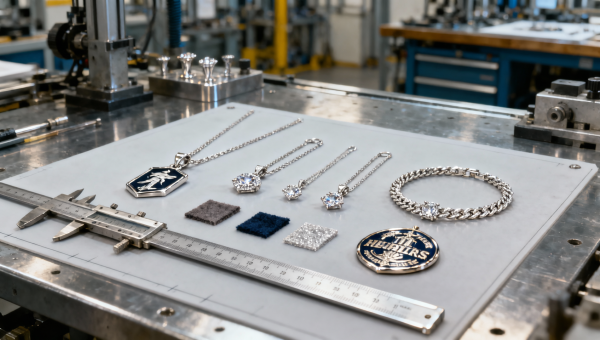
For procurement professionals and commercial evaluators, the first confirmation step should be requirement alignment. This goes beyond asking for a sketch or a reference image. A dependable manufacturer should actively verify the full commercial brief before discussing final quotation or sample development.
At this stage, the manufacturer should confirm:
- Product type and collection purpose: fashion jewelry, demi-fine jewelry, sterling silver pieces, gold-plated collections, branded gift lines, or luxury accessories.
- Target customer and market positioning: entry-level retail, mid-range commercial distribution, premium gifting, or luxury brand extension.
- Expected material standards: brass, 925 silver, stainless steel, gold vermeil, natural stones, lab-grown stones, plating thickness, hypoallergenic requirements, and finishing quality.
- Compliance and regulatory expectations: nickel release limits, lead and cadmium standards, REACH considerations, CPSIA-related needs for relevant markets, and documentation for import or retail channels.
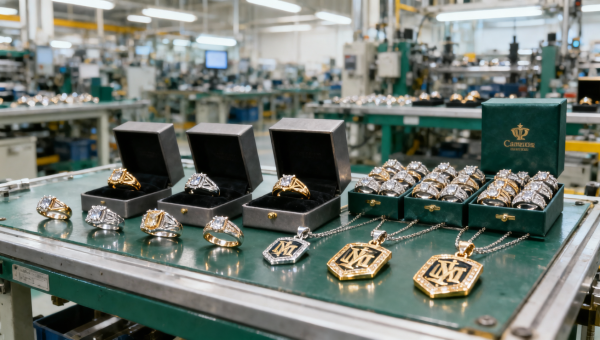
- Order structure: MOQ, trial order quantity, repeatability, assortment complexity, and scalability for future volume.
- Branding and packaging details: logo application, custom tags, gift boxes, anti-tarnish packaging, barcodes, and retail-ready presentation.
- Timeline and delivery model: sample lead time, mass production timing, shipping method, replenishment frequency, and launch deadlines.
If a supplier jumps directly to price without clarifying these points, that is often a warning sign. In custom jewelry manufacturing, inaccurate early assumptions almost always create higher cost and higher risk later.
Why product goals must be clarified before design or quotation
Many sourcing issues begin because the product goal is not clearly defined. A buyer may ask for a “custom necklace” or “private label ring,” but those descriptions are too broad for commercial production planning. The manufacturer needs to know what the product is expected to achieve in the market.
For example, a distributor may need a durable, cost-controlled line for multi-country resale. A luxury retailer may need a lower-volume collection with stronger finishing standards, premium packaging, and strict brand consistency. A promotional gifting buyer may care most about timeline and visual impact rather than precious material value. These are very different manufacturing paths.
When the manufacturer confirms product goals first, several important decisions become more accurate:
- Material selection matches the intended retail price and customer expectations.
- Production methods are chosen based on required detail, durability, and volume.
- Sampling cost is kept realistic and aligned with commercial purpose.
- Quality control checkpoints reflect actual market use and buyer risk.
- Packaging and presentation support the correct brand position.
For commercial buyers, this step is essential because custom jewelry is not only a design item. It is a packaged market product with margin, compliance, and reputational consequences.
Material standards are one of the first real trust tests
A reliable custom jewelry manufacturer should never treat materials as a vague topic. Material confirmation is one of the earliest and most practical tests of supplier professionalism.
Buyers should expect the factory to ask detailed questions such as:
- What base metal is required?
- What plating color and thickness are expected?
- Will the product be exposed to skin for long wear?
- Are anti-tarnish performance or sweat resistance important?
- Do stones need grading consistency or certified origin?
- Is the market sensitive to allergen content or restricted substances?
These questions matter because material choices influence not just product appearance, but also durability, return rate, legal risk, and customer satisfaction. For example, a buyer sourcing jewelry for department store distribution may require stronger anti-fade performance and more stable plating consistency than a short-cycle fashion campaign buyer. Likewise, a hospitality or branded gifting project may prioritize visual consistency across bulk runs over precious metal complexity.
If the supplier cannot explain material trade-offs clearly, or avoids confirming tolerances and finishing standards, the buyer should be cautious. Good manufacturers do not only say what they can produce; they explain what each material choice means for cost, quality, lead time, and product lifespan.
Compliance needs should be addressed before production risk appears
For procurement teams, compliance is not a final-stage checkbox. It should be confirmed early, especially for cross-border trade and multi-channel retail distribution. A reliable custom jewelry manufacturer should ask where the products will be sold and what standards must be met in those markets.
This is especially important for buyers serving Europe, North America, and regulated retail environments. Depending on product category and target market, issues may include:
- Nickel release requirements
- Lead and cadmium content restrictions
- Material traceability
- Testing documentation
- Labeling or packaging compliance
- Claims related to hypoallergenic or precious metal content
A reliable manufacturer should not promise compliance casually. Instead, they should define what can be supported through internal controls, supplier documentation, third-party testing, or batch-specific verification. This protects the buyer from a common sourcing problem: products that look acceptable during sampling but fail documentation or lab review when entering a formal distribution channel.
For business evaluators, one useful sign of maturity is whether the manufacturer can discuss compliance as part of the sourcing plan rather than as an afterthought.
Delivery expectations are just as important as jewelry craftsmanship
Many buyers focus on aesthetics first and timeline second. In commercial sourcing, this order should be reversed. A custom jewelry manufacturer may produce attractive samples, but if production scheduling is weak, the business result can still fail.
That is why delivery expectations should be confirmed before sample approval moves too far. Buyers should ask the manufacturer to clarify:
- Sample development lead time
- Revision cycles and approval process
- Raw material sourcing time
- Mass production capacity
- Peak season constraints
- Packaging preparation time
- Inspection and shipment schedule
For distributors, agents, and private label programs, delivery reliability often matters as much as unit cost. A delayed shipment may cause a missed launch, lost retail space, damaged client trust, or excess promotional cost. A good supplier should therefore confirm not just whether the requested date is possible, but what assumptions must hold true to achieve it.
This is also where experienced suppliers stand out. They usually separate sample timing from production timing, identify critical path items early, and explain which parts of the schedule depend on design lock, stone availability, plating process, or packaging approval.
How procurement teams can evaluate whether a manufacturer is truly reliable
Reliability is not measured by catalog size or by how quickly a supplier says “yes.” It is measured by the quality of their questions, the clarity of their process, and the consistency of their documentation.
When assessing a custom jewelry manufacturer, buyers should look for the following signs:
- They ask commercial questions before quoting, not just design questions.
- They explain material options transparently, including limitations and cost implications.
- They define sampling, revision, and approval workflows clearly.
- They discuss compliance based on destination market rather than using generic claims.
- They can describe quality control points in practical terms, such as plating checks, stone setting inspection, logo accuracy, or packaging verification.
- They are realistic about MOQ and lead time rather than overpromising.
- They understand repeat orders and scaling, not just one-off production.
For commercial buyers, this evaluation framework is more useful than relying on appearance alone. A polished website or a fast first response may look impressive, but sourcing success usually depends on process discipline, technical communication, and supply chain control.
Questions buyers should ask before moving to samples
Before approving development, procurement teams and sourcing managers can reduce risk by asking a structured set of questions. These questions help reveal whether the manufacturer is ready for a serious partnership.
- What information do you need from us before providing an accurate quotation?
- Which materials do you recommend for our target market and price point?
- How do you verify plating quality, color consistency, and wear performance?
- What compliance support can you provide for our destination market?
- What are the usual causes of delay in similar custom jewelry projects?
- How do you manage revisions after sample feedback?
- Can you support packaging, labeling, and retail presentation requirements?
- What is your approach to repeatability across future production runs?
- How do you handle defect reporting, remake policy, or shipment quality claims?
A strong manufacturer will answer these questions with detail and structure. A weak one will remain vague, focus only on selling, or avoid discussing control points.
What should be prioritized and what should not
For readers researching how to select a reliable custom jewelry manufacturer, the most valuable content is not generic advice about creativity or trends. What matters more is knowing how to identify early-stage sourcing discipline.
The priority should be on:
- Requirement confirmation
- Material and finish validation
- Compliance understanding
- Production and delivery realism
- Scalability and repeat-order consistency
- Commercial communication quality
What should be treated as secondary are broad statements such as “high quality craftsmanship,” “competitive prices,” or “one-stop service” unless they are backed by specific process details. For professional buyers, vague promises do not reduce risk.
Final takeaway for sourcing and evaluation teams
A reliable custom jewelry manufacturer should confirm the business fundamentals first: what you are trying to sell, who it is for, what standards it must meet, how it should be presented, and when it must arrive. This early clarification is the foundation of successful custom jewelry sourcing.
For procurement teams, distributors, and commercial decision-makers, the best manufacturer is not simply the one with the lowest quote or the fastest sample promise. It is the one that can translate your product idea into a controlled, compliant, scalable production plan. When a supplier confirms product goals, material standards, compliance requirements, and delivery expectations at the start, they are not slowing the process down. They are protecting your margins, your timeline, and your brand.
In practical terms, that is what reliability looks like in custom jewelry manufacturing.
Search News
Hot Articles
- Pro Stage AudioFIFA Adopts Chinese Mini-LED Displays for 2026 World Cup VAR SystemApr 24, 2026
- Outdoor RidesChina FA Warns Nanjing City Over Fan Conduct; ISO 20785 Compliance AcceleratesApr 24, 2026
- Pro Stage AudioFan Zhendong Visits Silicon Valley as MLTT Investor, AI Ping-Pong Tech Draws US InterestApr 24, 2026
Popular Tags
Need ExpertConsultation?
Connect with our specialized leisureengineering team for procurementstrategies.
Recommended News
 Apr 23, 2026Texas Launches PFAS Probe Against Lululemon, Export Compliance Risks RisePFAS probe against Lululemon in Texas escalates export compliance risks for sportswear ODMs, testing labs & chemical suppliers — act now.● Luxury Retail Analyst
 Apr 21, 2026FDA Proposes Chinese Label Translation Requirement for Sports SupplementsFDA proposes Chinese label translation requirements for sports supplements—learn how protein powders, BCAAs & creatine brands can prepare for Q3 2026 compliance.● Luxury Retail Analyst
 Apr 21, 2026CPSC Urgent Alert: PFAS in Fitness Apparel Risks US Import DelaysPFAS in fitness apparel triggers CPSC alerts—avoid US import delays! Get CPSC-recognized PFAS testing, compliance tips & port detention prevention now.● Luxury Retail Analyst
 Apr 20, 2026US CPSC Alert: PFAS in Fitness Apparel May Delay US Import ClearancePFAS in fitness apparel may delay US import clearance—learn how the Texas AG probe & CPSC alert impact compliance, testing, and supply chains now.● Luxury Retail Analyst
 Apr 15, 2026FDA Updates Guidelines for Sports Nutrition Supplement Labels: Chinese Translations Must Be FDA-CertifiedFDA now requires Chinese translations on sports nutrition supplement labels to be FDA-certified. Learn how this impacts manufacturers, importers, and compliance timelines for US market access.● Luxury Retail Analyst
 Apr 14, 2026Japan Updates Jewelry Labeling Rules: Mandatory China Factory Codes from April 2026Japan's new jewelry labeling rules mandate 'Country of Origin + China Factory Code' (CN-FAC-XXXXX) from April 2026. Learn how this impacts Chinese exporters and Japanese importers in the $2.1B precious metals market.● Luxury Retail Analyst
 Apr 14, 2026RCEP Tariff Cuts Boost China's Optical Lens Exports to ASEANRCEP tariff cuts boost China's optical lens exports to ASEAN with 0% duties on CR-39 & polycarbonate lenses. Learn how this + faster logistics create new trade opportunities.● Luxury Retail Analyst
 Apr 14, 2026US CPSC Proposes Stricter Lead Limits in Children's Jewelry, Impacting Chinese ExportersUS CPSC proposes stricter lead limits (40ppm) in children's jewelry, impacting Chinese exporters with new compliance challenges. Learn how this 2026 regulation affects manufacturers & supply chains.● Luxury Retail Analyst
 Apr 14, 2026EU's Revised EN 14138:2026 Eyewear Nickel Standard Takes Effect, Impacting Chinese ExportersEU's EN 14138:2026 eyewear standard tightens nickel limits to 0.2μg/cm²/week, impacting Chinese exporters. Learn compliance strategies for EU market access.● Luxury Retail Analyst
 Apr 25, 2026Custom Jewelry for Corporate Gifts That LastCustom jewelry for corporate gifts from a trusted custom jewelry manufacturer—discover custom jewelry design, high-end luxury jewelry, and scalable luxury jewelry B2B solutions.● Luxury Retail Analyst
 Apr 25, 2026What a Good Luxury Accessories Catalog IncludesLuxury accessories catalog guide covering custom jewelry design, high-end luxury jewelry, luxury accessories for men and women, and trusted luxury jewelry B2B sourcing insights.● Luxury Retail Analyst
 Apr 22, 2026Why Some Luxury Jewelry Collections Lose Value in DisplayLuxury jewelry in a trampoline park, indoor playground, arcade games or musical instruments venue can lose value fast. Discover smarter display strategies that protect premium appeal and buyer confidence.● Luxury Retail Analyst
 Apr 22, 2026Luxury Jewelry Trends in 2026 That Are Shaping Retail DemandLuxury jewelry trends in 2026 reveal how luxury jewelry, trampoline park, indoor playground, arcade games, office supplies, and musical instruments shape premium retail demand.● Luxury Retail Analyst
 Apr 25, 2026Luxury Accessories for Women That Hold Value Beyond TrendsLuxury accessories for women that hold value beyond trends—compare high-end luxury jewelry, custom luxury jewelry, and smart B2B sourcing insights for premium sport and entertainment retail.● Luxury Retail Analyst
 Apr 25, 2026Why Some Luxury Accessories for Women Feel Premium and Others Do NotLuxury accessories for women that feel truly premium rely on craftsmanship, materials, and supplier credibility. Explore custom luxury jewelry and high-end luxury jewelry sourcing insights for smarter B2B buying.● Luxury Retail Analyst
 Apr 25, 2026High-End Luxury Jewelry: What Actually Sets It Apart?High-end luxury jewelry buying guide: compare custom luxury jewelry, craftsmanship, compliance, and supplier reliability for premium retail and luxury accessories for women.● Luxury Retail Analyst
 Apr 25, 2026When High-End Luxury Jewelry Pricing Stops Making SenseHigh-end luxury jewelry pricing explained: learn when custom luxury jewelry delivers real value, how luxury accessories for women compare, and what buyers should ask before paying a premium.● Luxury Retail Analyst
 Apr 25, 2026Custom Luxury Jewelry: How Long Does True Customization Take?Custom luxury jewelry lead times explained: compare true customization, high-end luxury jewelry value, and luxury accessories for women to plan sourcing with confidence.● Luxury Retail Analyst
 Apr 25, 2026What Gets Lost When Custom Luxury Jewelry Is RushedCustom luxury jewelry rushed too fast can undermine craftsmanship, material trust, and brand value. Learn how high-end luxury jewelry buyers protect quality, margin, and sourcing success.● Luxury Retail Analyst
 Apr 25, 2026Why some luxury accessories for men lose value fastLuxury accessories for men lose value fast when hype, weak craftsmanship, and poor sourcing collide. Explore custom jewelry design insights and how a custom jewelry manufacturer can help buyers protect margins.● Luxury Retail Analyst
 Apr 25, 2026What a reliable custom jewelry manufacturer should confirm firstCustom jewelry manufacturer guide: learn what to confirm first in custom jewelry design, from materials and compliance to timelines, to source smarter and reduce risk.● Luxury Retail Analyst
 Apr 21, 2026Custom jewelry design mistakes that delay samplingCustom jewelry design mistakes that delay sampling: learn how to brief a custom jewelry manufacturer, avoid costly revisions, and keep sports & entertainment launches on schedule.● Luxury Retail Analyst
 Apr 22, 2026Luxury accessories for men that still feel relevant in 2026Luxury accessories for men in 2026: discover how custom jewelry design and the right custom jewelry manufacturer help sports and entertainment buyers boost premium retail, gifting, and venue profits.● Luxury Retail Analyst
 Apr 22, 2026Custom jewelry manufacturer red flags before mass productionCustom jewelry manufacturer red flags before mass production: learn how to assess custom jewelry design quality, protect luxury accessories for men, and avoid costly sourcing mistakes.● Luxury Retail Analyst