Educational Supplies That Wear Out Fast in Shared Use
In shared-use environments such as schools, activity centers, and public learning spaces, educational supplies often wear out faster than expected, driving up replacement costs and safety concerns. From music accessories and commercial furniture to playground borders, playground climbers, and sensory playground components, buyers must balance durability, compliance, and value. This guide explores which high-use items fail first and how smarter sourcing supports playground safety and long-term performance.
For most buyers, the key answer is straightforward: the supplies that wear out fastest in shared use are not always the cheapest items, but the products exposed to constant touch, impact, friction, moisture, and weak maintenance routines. In education and recreation settings, fast-wearing products usually include seating and desks, storage hardware, writing surfaces, music accessories, soft-play and sensory components, playground edging, climbing elements, and high-contact safety surfaces. The real purchasing challenge is not just replacing them cheaply, but identifying which items create the highest lifetime cost, safety risk, and operational disruption when they fail early.
What shared-use educational supplies typically wear out first?
Buyers evaluating office and educational supplies for shared spaces should first focus on high-frequency contact points. These are the items most likely to degrade early under institutional use:
- Student chairs and desks: loose joints, cracked plastic shells, chipped edges, bent legs, and unstable frames are common in classrooms, training rooms, and activity areas.
- Storage units and lockers: hinges, drawer slides, handles, and locking systems often fail before the body structure does.
- Whiteboards and writing surfaces: ghosting, staining, scratched coatings, and frame warping reduce usability quickly.
- Music accessories: drumsticks, mallets, straps, cables, mouthpieces, and stands deteriorate quickly due to repeated handling and transport.
- Playground borders and edging: these face impact, UV exposure, moisture, and foot traffic, making them prone to cracking, loosening, or displacement.
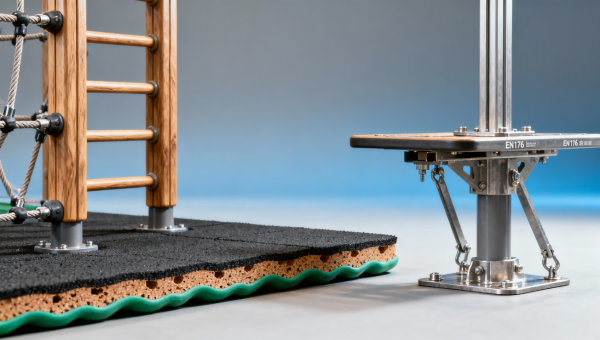
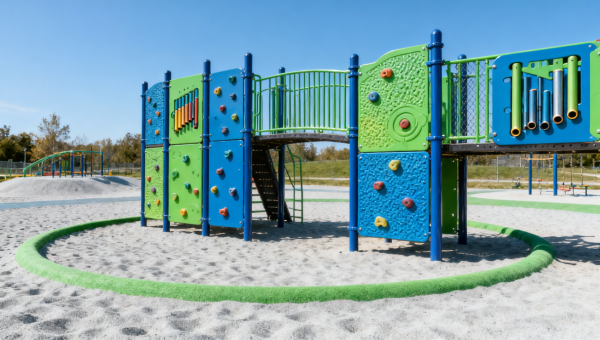
- Playground climbers: ropes, grips, coated metal parts, platforms, fasteners, and connection points can wear rapidly if materials are not commercial grade.
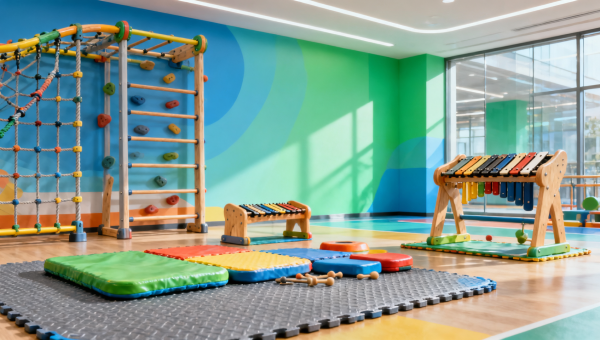
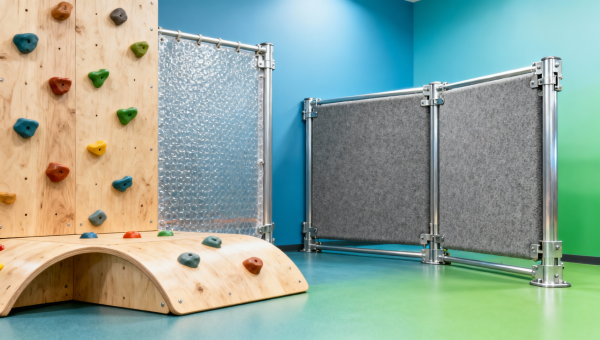
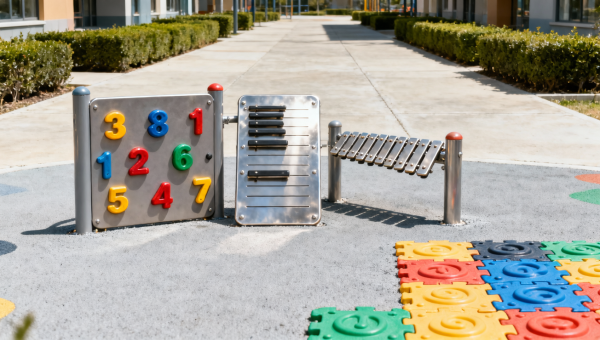
- Sensory playground components: moving parts, textured panels, tactile finishes, spinners, and sensory elements often degrade under weather and repeated use.
- Floor mats and protective surfaces: compression, tearing, edge lift, and reduced slip resistance are frequent issues in active learning spaces.
In practical procurement terms, the fastest-wearing items are usually those combining high usage frequency with moving parts, exposed finishes, or safety-critical performance.
Why do these products fail so quickly in schools and public learning spaces?
Early wear rarely happens for one reason alone. In most shared-use settings, product failure is caused by a combination of operational realities:
- Heavy daily cycling: institutional products may be used by dozens or hundreds of users per day, far beyond the patterns seen in household use.
- Different user behaviors: children, teens, and the general public do not interact with equipment in predictable ways. Dragging, dropping, leaning, climbing, and misuse all accelerate wear.
- Frequent cleaning: disinfectants, moisture, and harsh cleaning methods can shorten the life of coatings, fabrics, wood composites, and plastic surfaces.
- Indoor-outdoor exposure: UV radiation, rain, temperature swings, and humidity are major causes of cracking, fading, rust, and material instability in playground products.
- Low-grade hardware: inexpensive hinges, screws, casters, bearings, connectors, and fasteners often fail before the main structure shows visible damage.
- Poor repairability: once one small part breaks, the entire unit may become unsafe or unusable if spare parts are unavailable.
For procurement teams, this means that low upfront pricing can hide a much higher total cost of ownership. A product that lasts only half as long, or requires repeated service calls, is rarely the better deal.
Which categories create the highest replacement cost and safety risk?
Not all worn-out supplies have the same business impact. Buyers should prioritize categories where failure affects safety, supervision, uptime, or liability exposure.
1. Playground climbers and structural play elements
These components demand close attention because wear can lead directly to injury risk. Buyers should monitor corrosion, loosened anchors, frayed rope systems, cracked molded components, surface breakdown, and grip wear. In commercial playground sourcing, structural integrity matters more than cosmetic lifespan.
2. Playground borders and surfacing transitions
Borders that shift, crack, or separate from adjacent surfacing can create trip hazards, drainage issues, and containment problems. In schools and recreation sites, this is often an overlooked maintenance cost until safety inspections reveal problems.
3. Sensory playground components
Because these are touched, spun, pushed, and explored repeatedly, they can wear faster than standard decorative panels. If textures peel, hardware loosens, or finishes degrade, both user experience and safety decline.
4. Classroom seating and collaborative furniture
Furniture failures create frequent disruptions. Wobbling chairs, broken casters, unstable tables, and split laminate edges affect not only safety but also the professional quality of the learning environment.
5. Music accessories and shared-use performance equipment
Though often lower in unit cost, these items can generate high replacement frequency. For institutions running music rooms, events, or activity programming, recurring spend adds up quickly unless supplies are standardized and sourced for institutional durability.
How should buyers evaluate durability before purchasing?
For information researchers, procurement teams, and distributors, the most useful approach is to move beyond catalog claims and assess durability through commercial-use criteria. The following questions are more valuable than generic marketing language:
- What is the product made from? Check substrate quality, thickness, surface treatment, UV resistance, corrosion resistance, and load-bearing material specifications.
- Where are the weak points? Identify seams, hinges, welds, connectors, moving parts, anchor points, and exposed edges.
- What testing or certification supports the claim? Look for relevant safety and performance standards, especially for playground safety and institutional use.
- Can wear parts be replaced? Ask whether ropes, handles, caps, panels, fasteners, glides, or surface sections can be serviced independently.
- Is the product designed for commercial traffic? Residential-grade products often fail early in schools and public facilities.
- What does maintenance require? A durable product with unrealistic maintenance demands may still perform poorly in the field.
- What warranty terms actually cover? Buyers should distinguish between structural warranties and exclusions for finish wear, moving parts, and high-use conditions.
When comparing suppliers, it is wise to request installation references, project case studies, replacement-part availability, and evidence of long-term use in similar institutional settings.
What sourcing strategies reduce long-term cost instead of just lowering purchase price?
Smarter sourcing starts by recognizing that fast-wearing educational supplies should be managed by lifecycle priority, not by unit price alone. The best sourcing strategies include:
- Segmenting products by wear intensity: identify consumable, serviceable, and long-life categories separately.
- Standardizing high-replacement items: keeping dimensions, colors, fittings, and parts consistent simplifies replenishment and reduces downtime.
- Using commercial-grade specifications: especially for furniture, playground climbers, and sensory playground components.
- Negotiating spare-part support: this is often more valuable than a slight price discount.
- Reviewing maintenance access: products that are easier to inspect and repair usually deliver better long-term value.
- Balancing compliance with operating reality: certified safety is essential, but products must also survive real user behavior in shared environments.
For distributors and agents, these same points also support stronger market positioning. End users increasingly want proof of durability, compliance, and lifecycle value rather than broad promises about quality.
What should buyers look for in playground safety and performance products?
Because the introduction highlights playground safety, this area deserves special emphasis. Buyers sourcing playground borders, playground climbers, and sensory playground components should evaluate products through both durability and risk control.
- Stable anchoring and installation integrity: even well-made products fail if installation systems are weak or unsuitable for site conditions.
- Weather-resistant materials: coatings, plastics, rubber, rope, and metal finishes should match the climate and expected exposure.
- Rounded edges and secure connections: essential for user protection in high-contact play areas.
- Surface and grip retention: climbing and tactile features must remain safe after long-term wear.
- Ease of inspection: hidden failures are harder to catch early, increasing safety risk.
- Compliance documentation: institutional buyers should request clear conformity records, test evidence, and technical specifications.
In many cases, playground products fail not because the original design was poor, but because the material selection or component grade was not aligned with the intensity of shared public use.
How can procurement teams make better decisions during supplier evaluation?
When comparing manufacturers or sourcing partners, buyers should structure evaluation around performance confidence rather than presentation quality. A practical supplier review process should include:
- Commercial project references in schools, municipal sites, learning centers, or recreation facilities
- Evidence of OEM/ODM capability where customization is needed
- Consistency in materials and batch quality
- Documentation for safety, testing, and international compliance
- Clear lead times for both finished products and spare parts
- Support for after-sales service and replacement planning
- Transparency on warranty limitations and expected service life
For business evaluators, the strongest suppliers are usually those that can explain not just how a product looks or ships, but how it performs after years of shared use.
Conclusion: focus on lifecycle value, not just visible wear
In shared educational and recreational environments, the supplies that wear out fastest are typically the ones under the most physical stress: seating, desks, hardware, writing surfaces, music accessories, playground borders, playground climbers, and sensory playground components. For buyers, the most important insight is that visible damage is only part of the story. The bigger issue is how wear affects safety, usability, maintenance burden, and replacement frequency.
A better sourcing strategy starts with identifying high-risk categories, specifying commercial-grade durability, verifying compliance, and securing repair and replacement support. For procurement teams, distributors, and commercial decision-makers, this approach delivers more than cost control. It improves operational continuity, protects users, and creates stronger long-term value across shared-use learning spaces.
Search News
Hot Articles
- Indoor PlaygroundFan Zhendong Visits Silicon Valley as MLTT Investor, AI Ping-Pong Tech Draws AttentionApr 23, 2026
- Stage Lighting & Truss2026 FIBA Women's World Cup Draw Opens Export Window for Arena Lighting & Timing SystemsApr 23, 2026
- Pro Stage AudioChina Upgrades Security Compliance for International Sports EventsApr 23, 2026
Popular Tags
Need ExpertConsultation?
Connect with our specialized leisureengineering team for procurementstrategies.
Recommended News
 Apr 14, 2026HaiRong Tech Serves 85°C Bakery Brands: Custom Packaging Demand RisesHaiRong Tech partners with 85°C bakery brands to offer custom packaging solutions, blending food-grade standards with office supplies. Discover how this innovation creates new OEM/ODM opportunities for global distributors.● Institutional Buyer
 Apr 11, 2026New Carbon Neutrality Standard for Printing Industry Impacts Global Green Office SuppliesDiscover how the new Carbon Neutrality Standard for the printing industry impacts global green office supplies. Learn about key metrics, compliance for EU/Canada exports, and strategic actions for manufacturers and suppliers.● Institutional Buyer
 Apr 11, 2026Wuhan East Lake High-Tech Zone Office Supplies Tender: Deli Wins with 78% DiscountDeli wins Wuhan East Lake High-Tech Zone office supplies tender with 78% discount, showcasing China's cost-efficient manufacturing. Learn how this impacts office supplies industry trends and green procurement strategies.● Institutional Buyer
 Apr 23, 2026How to Compare Educational Supplies Beyond Unit PriceEducational supplies buying guide: compare commercial furniture, sensory playground, music accessories, and playground safety beyond unit price to cut risk and boost long-term value.● Institutional Buyer
 Apr 23, 2026Educational Supplies That Wear Out Fast in Shared UseEducational supplies wear out fast in shared spaces. Learn how commercial furniture, music accessories, playground borders, playground climbers, sensory playground systems, and playground safety solutions reduce risk and replacement costs.● Institutional Buyer
 Apr 22, 2026When Cheap Office Supplies End Up Costing MoreOffice supplies that seem cheap can cost more over time for trampoline park, indoor playground, arcade games, musical instruments, and luxury jewelry businesses—discover smarter sourcing tips.● Institutional Buyer
 Apr 22, 2026Office Supplies Costs That Quietly Add Up Over a YearOffice supplies costs can quietly rise alongside arcade games, musical instruments, indoor playground and trampoline park operations. Discover smarter sourcing to protect margins.● Institutional Buyer
 Apr 21, 2026Office supplies wholesaler terms that cause reorder problemsOffice supplies wholesaler terms can quietly trigger costly reorders. Learn how a reliable office supplies supplier should handle MOQ, lead times, substitutions, and pricing before you sign.● Institutional Buyer
 Apr 21, 2026The hidden service gaps between office supplies suppliersOffice supplies supplier insights: uncover hidden service gaps in office supplies wholesaler selection, plus sourcing links to musical instruments for bands, custom jewelry manufacturer, and indoor playground supplier.● Institutional Buyer
 Apr 18, 2026Office supplies sustainability claims: Which certifications actually hold up?Trampoline park, indoor playground & office supplies sustainability claims—cut through greenwashing. See which certifications truly hold up for adventure playgrounds, musical instruments & arcade games.● Institutional Buyer
 Apr 17, 2026Office supplies for hybrid teams: Are bulk orders still cost-effective?Trampoline park, indoor playground & adventure playground suppliers: Discover if bulk office supplies still cut costs—plus arcade games, musical instruments & luxury jewelry sourcing insights.● Institutional Buyer
 Apr 17, 2026Educational supplies: When 'eco-friendly' labels hide real safety gapsEducational supplies, playground safety & commercial furniture—uncover hidden risks behind 'eco-friendly' labels. Get actionable compliance insights now.● Institutional Buyer
 Apr 15, 2026Stationery & uniforms that hold up to school laundry cycles — not just first-day wearDurable educational supplies, playground safety gear & commercial furniture—engineered for 30+ wash cycles, ASTM/EN compliance, and high-traffic school & amusement environments.● Institutional Buyer
 Apr 14, 2026Office supplies with BPA-free plastics: verified claims vs. third-party test reportsOffice supplies with verified BPA-free plastics — backed by third-party test reports. Trusted for trampoline parks, indoor playgrounds, luxury jewelry packaging & more.● Institutional Buyer
 Apr 14, 2026Office supplies that actually reduce desk clutter—tested and rankedOffice supplies that cut desk clutter—tested for luxury jewelry counters, trampoline parks, indoor playgrounds & more. Smart, certified, space-saving solutions.● Institutional Buyer
 Apr 12, 2026Office supplies with inconsistent color matching across batches — why it happensOffice supplies color inconsistency? Discover why luxury furniture, contract furniture & educational supplies mismatch—and how top suppliers ensure perfect chromatic fidelity across batches.● Institutional Buyer
 Apr 08, 2026Weifang's 100% Green Office Supplies Procurement Signals Shift in Sustainable SourcingDiscover how Weifang's 100% green office supplies procurement with FSC-certified paper & recycled PP signals China's sustainable sourcing shift. Learn key impacts on stationery manufacturers & suppliers.● Institutional Buyer
 Apr 08, 2026Sichuan Drug Testing Institute Restarts Office Supplies Procurement with Digital RequirementsSichuan Drug Testing Institute mandates digital integration & GPS logistics tracking in office supplies procurement. Key impact for B2G suppliers in healthcare, education sectors. Stay ahead of China's procurement digitization trends.● Institutional Buyer
 Apr 08, 2026China's NMPA CDE Launches 2026 Office Supplies Procurement with Green and Domestic FocusChina's NMPA CDE launches 2026 office supplies procurement with 80M RMB budget, mandating green standards (GB/T 38375-2022 & HJ 572-2020) and prioritizing MIIT-certified suppliers. Learn how this impacts manufacturers and exporters.● Institutional Buyer
 Apr 08, 2026Chinese Stationery Suppliers Accelerate Low-Carbon Notebook Production, Extending Delivery TimesChinese stationery suppliers like Deli Group and Lifeng are accelerating low-carbon notebook production with FSC-certified materials, causing 5-7 day delivery delays for欧美 markets. Learn how this ESG shift impacts文具 manufacturers and global distributors.● Institutional Buyer
 Apr 08, 2026Printing Industry's Carbon Neutrality Standard Impacts Global Green Office SuppliesExplore how the Printing Industry's Carbon Neutrality Standard is reshaping global green office supplies. Learn about its impact on export compliance, eco-friendly materials, and sustainable procurement practices in 2026.● Institutional Buyer
 Apr 06, 2026Educational supplies for playgrounds: When curriculum alignment doesn’t translate to physical usabilityDiscover durable playground borders, sensory playground elements, music accessories & educational supplies—engineered for safety, weather resilience, and real-world usability.● Institutional Buyer
 Apr 05, 2026Educational supplies for outdoor play: When 'learning-focused' becomes a marketing label onlyDiscover verified playground borders, sensory playgrounds & music accessories—truly educational supplies, not just marketing labels. OEM-certified amusement equipment, hotel tables & desks included.● Institutional Buyer
 Apr 04, 2026Stationery & Uniforms Suppliers Often Overlook This Compliance Gap in Office Supplies LinesOffice supplies supplier? Avoid shipment rejections—discover how top office supplies wholesalers, manufacturers & B2B suppliers ensure REACH, CPSIA & ISO compliance.● Institutional Buyer