New Carbon Neutrality Standard for Printing Industry Impacts Global Green Office Supplies
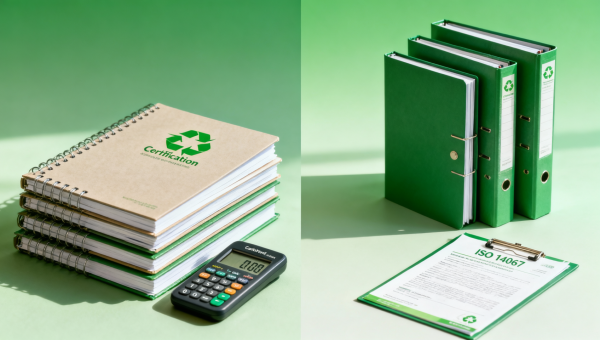
On April 8, 2026, the Guangdong-Hong Kong-Macao Printing Industry Exchange Conference released the group standard "Technical Specification for Carbon Neutrality Assessment of Printing Enterprises." This standard introduces new evaluation criteria for office printing products such as notebooks, folders, and document cases, including paper recycling ratios, VOC emissions from inks, and transportation carbon intensity. While voluntary, the standard has already been adopted by customs in Shenzhen and Dongguan as a reference for green trade facilitation, affecting compliance for exports to carbon-sensitive markets like the EU and Canada.
Event Overview
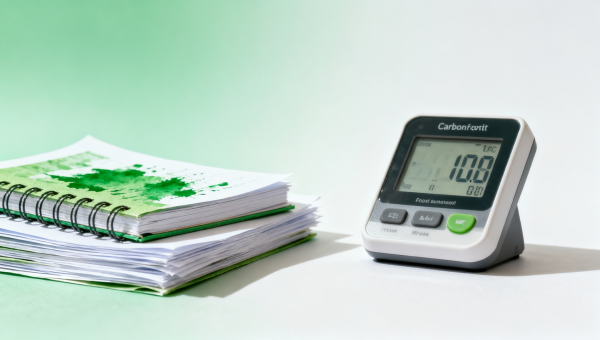
The "Technical Specification for Carbon Neutrality Assessment of Printing Enterprises" was officially published on April 8, 2026. It establishes measurable criteria for assessing the carbon neutrality of printing companies, particularly those producing office supplies. Key metrics include recycled paper content, VOC emissions from printing processes, and carbon intensity in logistics. Though initially a group standard, it has gained traction as a reference for green trade policies in southern China.
Impact on Sub-Industries
Export-Oriented Printing Manufacturers
Printing companies supplying to EU and Canadian markets will face stricter compliance requirements. The standard may influence buyer preferences and contractual terms, especially for tenders requiring carbon-neutral certifications.
Office Supplies Procurement
Corporate procurement teams prioritizing ESG goals may adjust supplier selection criteria. Large-scale buyers are likely to request documentation aligning with this standard for audit purposes.
Raw Material Suppliers
Suppliers of recycled paper and low-VOC inks could see increased demand. Conversely, traditional material providers may need to adapt formulations to meet new emission thresholds.
Key Focus Areas and Recommended Actions
Monitor Policy Adoption
Track how customs authorities in other regions incorporate this standard. Early adopters may gain preferential treatment in green trade lanes.
Supply Chain Audits
Conduct granular assessments of paper sourcing, printing processes, and logistics partners. Identify high-carbon components requiring mitigation strategies.
Certification Preparedness
Evaluate existing production data against the standard's metrics. Preemptive adjustments could reduce future compliance costs.
Industry Perspective
Analysis suggests this standard represents more than symbolic ESG positioning. Its rapid adoption by customs authorities indicates potential for broader regulatory influence. The printing industry should view this as an early signal of tightening sustainability requirements, particularly for cross-border trade.
Conclusion
This technical specification introduces measurable sustainability benchmarks for office printing products. While currently a regional initiative, its alignment with global carbon reduction trends suggests wider implications. Industry participants should approach this as a proactive compliance opportunity rather than reactive compliance pressure.
Source
Guangdong-Hong Kong-Macao Printing Industry Exchange Conference (April 8, 2026)
Search News
Hot Articles
- Watch OEM & SmartwatchesWatches & Wonders Geneva 2026: Audemars Piguet Returns, 10 New Brands Join, Behrens as Sole Chinese ExhibitorApr 11, 2026
- Watch OEM & SmartwatchesEU EN 16830:2026 Eyewear Standard Mandatory from April 2026, Chinese Exporters Need Certification Within 6 MonthsApr 11, 2026
- Smart Campus Tech2026 China Intl Education Expo: AI & Green Tech in SpotlightApr 11, 2026
Popular Tags
Need ExpertConsultation?
Connect with our specialized leisureengineering team for procurementstrategies.
Recommended News
 Apr 11, 2026New Carbon Neutrality Standard for Printing Industry Impacts Global Green Office SuppliesDiscover how the new Carbon Neutrality Standard for the printing industry impacts global green office supplies. Learn about key metrics, compliance for EU/Canada exports, and strategic actions for manufacturers and suppliers.● Institutional Buyer
 Apr 11, 2026Wuhan East Lake High-Tech Zone Office Supplies Tender: Deli Wins with 78% DiscountDeli wins Wuhan East Lake High-Tech Zone office supplies tender with 78% discount, showcasing China's cost-efficient manufacturing. Learn how this impacts office supplies industry trends and green procurement strategies.● Institutional Buyer
 Apr 08, 2026Weifang's 100% Green Office Supplies Procurement Signals Shift in Sustainable SourcingDiscover how Weifang's 100% green office supplies procurement with FSC-certified paper & recycled PP signals China's sustainable sourcing shift. Learn key impacts on stationery manufacturers & suppliers.● Institutional Buyer
 Apr 08, 2026Sichuan Drug Testing Institute Restarts Office Supplies Procurement with Digital RequirementsSichuan Drug Testing Institute mandates digital integration & GPS logistics tracking in office supplies procurement. Key impact for B2G suppliers in healthcare, education sectors. Stay ahead of China's procurement digitization trends.● Institutional Buyer
 Apr 08, 2026China's NMPA CDE Launches 2026 Office Supplies Procurement with Green and Domestic FocusChina's NMPA CDE launches 2026 office supplies procurement with 80M RMB budget, mandating green standards (GB/T 38375-2022 & HJ 572-2020) and prioritizing MIIT-certified suppliers. Learn how this impacts manufacturers and exporters.● Institutional Buyer
 Apr 08, 2026Chinese Stationery Suppliers Accelerate Low-Carbon Notebook Production, Extending Delivery TimesChinese stationery suppliers like Deli Group and Lifeng are accelerating low-carbon notebook production with FSC-certified materials, causing 5-7 day delivery delays for欧美 markets. Learn how this ESG shift impacts文具 manufacturers and global distributors.● Institutional Buyer
 Apr 08, 2026Printing Industry's Carbon Neutrality Standard Impacts Global Green Office SuppliesExplore how the Printing Industry's Carbon Neutrality Standard is reshaping global green office supplies. Learn about its impact on export compliance, eco-friendly materials, and sustainable procurement practices in 2026.● Institutional Buyer
 Apr 06, 2026Educational supplies for playgrounds: When curriculum alignment doesn’t translate to physical usabilityDiscover durable playground borders, sensory playground elements, music accessories & educational supplies—engineered for safety, weather resilience, and real-world usability.● Institutional Buyer
 Apr 05, 2026Educational supplies for outdoor play: When 'learning-focused' becomes a marketing label onlyDiscover verified playground borders, sensory playgrounds & music accessories—truly educational supplies, not just marketing labels. OEM-certified amusement equipment, hotel tables & desks included.● Institutional Buyer
 Apr 04, 2026Stationery & Uniforms Suppliers Often Overlook This Compliance Gap in Office Supplies LinesOffice supplies supplier? Avoid shipment rejections—discover how top office supplies wholesalers, manufacturers & B2B suppliers ensure REACH, CPSIA & ISO compliance.● Institutional Buyer
 Mar 28, 2026TikTok E-commerce Releases '2026 Trends Report for Culture & Education Industry': Southeast Asia's 'KOL Unboxing + Localized Sticker DIY' Emerges as Breakthrough Path, China's Flexible Supply Chain Accelerates ResponseTikTok E-commerce's 2026 Trends Report reveals Southeast Asia's booming 'KOL unboxing + localized sticker DIY' trend, with 210% growth in stationery videos. China's flexible supply chain enables rapid response to this hyper-localized demand.● Institutional Buyer
 Mar 28, 20262026 Ningbo Stationery Fair Releases China's First Cross-Border Compliance Guide Covering 21 Countries' Labeling and Environmental Standards2026 Ningbo Stationery Fair unveils China's first cross-border compliance guide for 21 countries' labeling & environmental standards. Essential for $25B export sector to navigate global regulations efficiently.● Institutional Buyer
 Mar 28, 2026Chenguang Holdings Announces Spin-off of Kelipu for Hong Kong IPO to Strengthen Global B2B Stationery Procurement PlatformChenguang Holdings spins off Kelipu for Hong Kong IPO, boosting its global B2B stationery procurement platform. Discover how this move impacts manufacturers, distributors & digital supply chains in 2026.● Institutional Buyer
 Mar 28, 20262026 Ningbo International Stationery Fair Attracts 26,586 Visitors on Opening Day, Highlighting AI and IP Collaboration Trends2026 Ningbo International Stationery Fair drew 26,586 visitors, showcasing AI-powered文具 and IP collaborations. Discover emerging trends in smart stationery and eco-friendly products for global markets.● Institutional Buyer
 Mar 27, 2026What quality control checkpoints matter most for educational supplies during OEM manufacturing handover?Discover critical OEM manufacturing QC checkpoints for educational supplies—key for amusement park equipment, pro audio, and supply chain solutions. Ensure compliance, safety & durability.● Institutional Buyer
 Mar 19, 2026Designer Eyewear for Staff Uniform Programs: Why Frame Durability Testing Matters More Than AestheticsDesigner eyewear for amusement staff: durability testing beats aesthetics. Essential for commercial sourcing, hotel equipment, premium accessories & ODM watches.● Institutional Buyer