When to Work With an Office Supplies Manufacturer
Choosing the right office supplies manufacturer can determine product quality, cost control, and long-term supply stability. Whether you are comparing an office supplies supplier, evaluating an office supplies wholesaler, or sourcing from an office supplies OEM manufacturer, knowing when to partner directly with a factory is essential. This guide helps procurement teams, distributors, and B2B buyers identify the right timing, risks, and opportunities in global sourcing.
When does it make sense to work directly with an office supplies manufacturer?
Not every purchase requires a direct factory relationship. For many routine orders, an office supplies supplier or office supplies wholesaler can provide enough assortment, faster consolidation, and lower coordination effort. However, once your sourcing plan involves recurring volume, private labeling, packaging control, or consistent quality across multiple shipments, working with an office supplies manufacturer becomes a strategic decision rather than a transactional one.
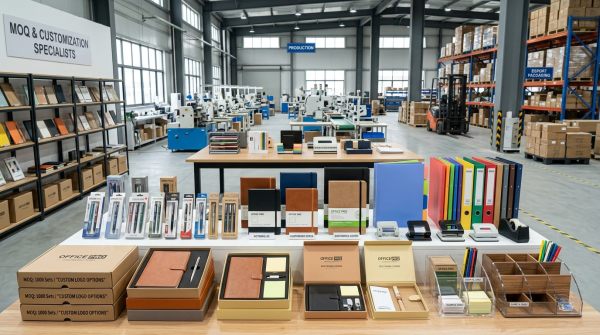
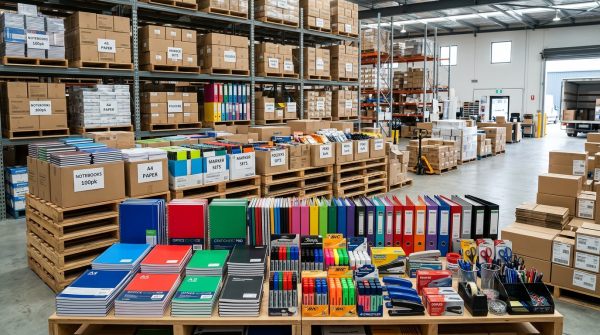
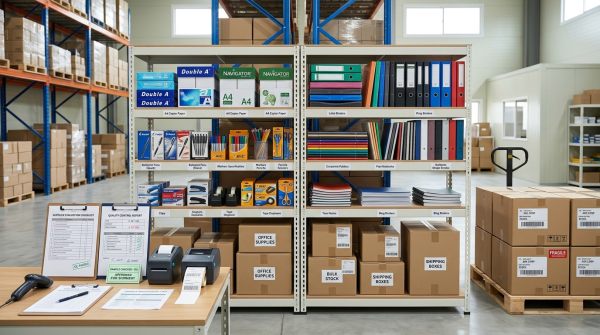
In practical B2B terms, buyers usually move closer to the factory at one of 4 moments: when annual demand becomes predictable, when customization is required, when margin pressure increases, or when product compliance becomes more important. This is common in categories such as notebooks, filing systems, writing instruments, desk accessories, educational stationery, and workplace organization products supplied to offices, schools, hospitality groups, or institutional projects.
A direct manufacturing relationship is especially valuable when supply continuity matters over 2–4 quarters rather than one shipment. If your team must keep the same material finish, logo application, carton labeling, barcode format, and refill compatibility across repeated purchase cycles, the factory has more control than a trader that sources from changing upstream partners.
For distributors and agents, the decision often comes down to channel strategy. If you are building a house brand or defending market share in a competitive price band, factory-level cooperation can create room for differentiated SKUs, negotiated MOQ planning, and more stable landed cost forecasting. If you only need mixed cartons from many brands in small quantities, a wholesaler may still be the better route.
4 common triggers for factory-direct sourcing
- Your purchase volume has moved from occasional orders to monthly or quarterly replenishment, making unit-cost optimization more meaningful.
- You need OEM or ODM support, including logo printing, custom color matching, retail-ready packaging, or product set bundling.
- Your buyers require consistent documentation, such as material declarations, labeling details, carton specifications, and test-related paperwork.
- You want better control over lead times, production scheduling, and corrective action if defects appear across a 7–15 day or 3–6 week shipping cycle.
A simple decision rule
If your order is standardized, low-risk, and multi-category, start with a wholesaler. If your order is repeated, branded, compliance-sensitive, or margin-driven, evaluate an office supplies OEM manufacturer. This shift is less about cutting out middlemen and more about aligning the supply model with product complexity and commercial objectives.
Factory, wholesaler, or supplier: which sourcing model fits your office supplies business?
Procurement teams often compare sourcing channels without using the same decision criteria. Price alone is not enough. In office supplies, you also need to evaluate MOQ, assortment flexibility, packaging control, compliance visibility, replenishment speed, and after-sales coordination. The right model depends on whether you prioritize project supply, distribution resale, brand building, or urgent inventory coverage.
The comparison below helps separate 3 common paths: buying from an office supplies manufacturer, an office supplies supplier, or an office supplies wholesaler. Each option serves a different commercial purpose, and choosing the wrong one can lead to overstock, weak quality consistency, or avoidable communication layers.
Use this table when you need a quick sourcing framework for recurring B2B office supplies procurement, especially for schools, offices, dealers, and contract purchasing teams.
The key takeaway is that factory-direct sourcing is strongest when your commercial plan needs consistency and leverage. A wholesaler is stronger when speed and assortment matter more than customization. A supplier sits in the middle, often useful for buyers entering a category before they commit to a direct office supplies manufacturer.
Questions buyers should ask before switching models
Before moving from wholesale to manufacturing, confirm 5 points: annual demand range, target price band, packaging requirements, acceptable lead time, and compliance documents needed for your market. If even 2 of these remain unclear, premature factory sourcing can create delays instead of savings.
This is where GCT adds value. Instead of treating office supplies as generic commodities, GCT helps commercial buyers compare sourcing structures by project logic, product category, and supply-chain risk. That matters for institutional procurement, campus fit-outs, commercial interiors, and distributor expansion where the wrong sourcing channel affects margins for 6–12 months, not just one purchase order.
What should procurement teams evaluate before selecting an office supplies OEM manufacturer?
A factory can offer lower ex-works pricing, but procurement success depends on more than the quoted number. Buyers should evaluate manufacturing fit across 3 layers: product capability, operational reliability, and commercial flexibility. This is particularly important when sourcing custom stationery sets, branded office kits, filing products, desk organizers, and educational or workplace consumables for repeat programs.
Start with product capability. Ask whether the office supplies manufacturer truly makes the relevant category in-house or mainly assembles outsourced components. In office supplies, the answer affects print quality, color consistency, binding durability, plastic finish, edge treatment, and packaging accuracy. If your product mix spans paper, plastic, metal, and textile elements, capability mapping becomes even more important.
Next, review operational reliability. Typical checkpoints include sampling time, production lead time, quality control stages, carton drop-test expectations where relevant, barcode application, and shipment documentation. For example, if samples take 7–10 days but bulk production needs 30–45 days, your replenishment planning must account for both approval and manufacturing windows.
Finally, assess commercial flexibility. A strong office supplies OEM manufacturer should discuss MOQ by SKU, color, print run, and packaging format rather than giving one rigid number for all products. This matters for distributors testing 3–5 new SKUs, retailers preparing seasonal sets, or institutional buyers balancing standard items with custom-branded subsets.
Core procurement checklist for manufacturer evaluation
- Category specialization: Can the factory consistently produce the office supplies you need, not just source them?
- MOQ structure: Is the minimum based on item, color, logo method, or export carton quantity?
- Lead time visibility: What are the usual timelines for sample approval, production, and shipment booking?
- Quality process: Are there at least 3 control points such as incoming material check, in-line inspection, and final packing review?
- Documentation readiness: Can the supplier support labeling details, packing lists, material information, and market-specific compliance files?
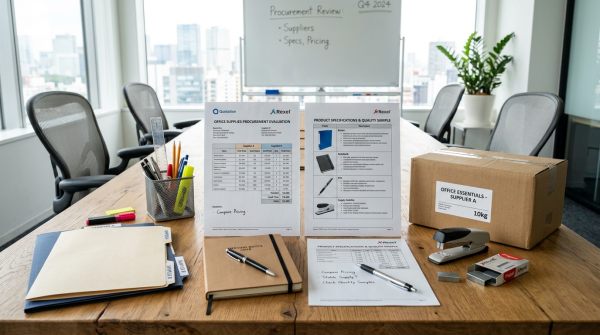
To make supplier comparisons more objective, procurement teams should score each candidate against the same criteria. A structured scorecard reduces the risk of choosing a factory that quotes well but underperforms in execution.
When buyers use a matrix like this, the strongest office supplies manufacturer is not always the one with the lowest first quote. The better partner is the one that can deliver the right SKU, with the right documentation, in the right time window, for at least the next 2–3 replenishment cycles.
Which office supplies sourcing scenarios benefit most from direct manufacturing?
Different buying scenarios call for different sourcing structures. Direct factory cooperation is most effective when the buyer needs control, repeatability, or product differentiation. In office supplies, this often applies to school supply programs, corporate welcome kits, office standardization projects, dealer private labels, and branded stationery for hotels, campuses, and premium workspaces.
For institutional procurement, direct manufacturing helps when the same specification must be rolled out across multiple sites in 2 or more regions. A shared factory specification reduces variation in color, dimensions, packaging, and logo placement. This is useful for offices, education groups, and commercial property operators that cannot afford inconsistent procurement outcomes between branches or project phases.
For distributors, the best time to work with an office supplies OEM manufacturer is when a standard catalog no longer protects margin. A direct relationship can support differentiated bundles, exclusive packaging, and controlled reorder patterns. Instead of competing only on price, the distributor can compete on specification, presentation, or channel-specific product combinations.
For market researchers and business evaluators, factory cooperation becomes relevant when sourcing data reveals repeat demand in a narrow group of SKUs. If 20% of the assortment drives 80% of order volume, shifting those core items to direct manufacturing may create better predictability than buying the whole range through a broad wholesaler model.
Typical scenarios and the right sourcing choice
The table below shows how common office supplies purchasing scenarios align with manufacturer-direct sourcing versus channel-based buying.
Search News
Hot Articles
- Stage Lighting & Truss2026 FIBA Women's World Cup Draw Sets LED Timing Screen RequirementsApr 27, 2026
- Hotel Room AmenitiesIranian Delegation’s Ritual Gesture at Sanya ASG Sparks Mideast Hospitality Procurement ShiftApr 27, 2026
- Arcade & VR MachinesSnooker World Championship 'China Derby' Drives VR Viewing DemandApr 27, 2026
Popular Tags
Need ExpertConsultation?
Connect with our specialized leisureengineering team for procurementstrategies.
Recommended News
 Apr 27, 2026Office Supplies Manufacturer MOQ ExplainedOffice supplies manufacturer MOQ explained: compare an office supplies supplier, wholesaler, distributor, OEM manufacturer, and factory to reduce cost, improve flexibility, and source smarter.● Institutional Buyer
 Apr 27, 2026Distributor or Supplier for Fast ReordersOffice supplies supplier or distributor for fast reorders? Compare lead times, stock stability, and bulk supply options to choose a reliable office supplies B2B supplier.● Institutional Buyer
 Apr 27, 2026How Wholesalers Cut Office Supply CostsOffice supplies supplier and office supplies wholesaler solutions help cut costs through bulk buying, OEM options, and smarter sourcing. Compare distributors and manufacturers to save more.● Institutional Buyer
 Apr 27, 2026Office Supplies Supplier Pricing Red FlagsOffice supplies supplier pricing red flags explained: compare an office supplies wholesaler, distributor, or manufacturer, spot hidden risks, and choose a reliable B2B partner with confidence.● Institutional Buyer
 Apr 27, 2026How to Vet an Office Supplies ExporterOffice supplies supplier vetting made simple: learn how to assess an office supplies exporter, manufacturer, wholesaler, and distributor for quality, compliance, and reliable B2B growth.● Institutional Buyer
 Apr 27, 2026What to Ask an Office Supplies Producer FirstOffice supplies supplier screening starts with the right questions. Learn how to evaluate an office supplies manufacturer, wholesaler, or producer on quality, OEM, compliance, pricing, and delivery.● Institutional Buyer
 Apr 27, 2026How to Compare Office Supplies Bulk SuppliersCompare every office supplies supplier model—wholesaler, distributor, OEM manufacturer, and bulk supplier—to evaluate quality, compliance, lead times, and costs for smarter B2B sourcing.● Institutional Buyer
 Apr 27, 2026Is an Office Supplies OEM Manufacturer Worth ItOffice supplies OEM manufacturer or standard sourcing? Compare an office supplies supplier, wholesaler, and distributor to find the best B2B fit for cost, branding, and scalable growth.● Institutional Buyer
 Apr 27, 2026Best Office Supplies B2B Supplier for ScaleFind the best office supplies B2B supplier for scale. Compare an office supplies supplier, wholesaler, distributor, and OEM manufacturer to secure reliable bulk sourcing and growth.● Institutional Buyer
 Apr 27, 2026Office Supplies Factory Audit ChecklistOffice supplies factory audit checklist for choosing a reliable office supplies manufacturer, supplier, or OEM partner. Learn key quality, compliance, and capacity checks before sourcing.● Institutional Buyer
 Apr 27, 2026When to Work With an Office Supplies ManufacturerOffice supplies manufacturer or office supplies supplier? Learn when to source direct, compare wholesaler vs OEM options, and improve cost, quality, and supply stability.● Institutional Buyer
 Apr 27, 2026What Makes a Reliable Office Supplies DistributorDiscover what sets a reliable office supplies distributor apart. Compare an office supplies supplier, wholesaler, or B2B supplier by quality, lead times, inventory, and global delivery.● Institutional Buyer
 Apr 27, 2026Office Supplies Wholesaler vs DistributorOffice supplies wholesaler vs distributor: learn how an office supplies supplier, distributor, or manufacturer impacts pricing, lead time, and growth—choose the best B2B sourcing model.● Institutional Buyer
 Apr 27, 2026How to Choose an Office Supplies SupplierLearn how to choose the right office supplies supplier by comparing an office supplies wholesaler, distributor, manufacturer, or B2B supplier for quality, price, delivery, and growth.● Institutional Buyer
 Apr 24, 2026How to Pick Educational Supplies by AgeEducational supplies by age: discover how commercial furniture, sensory playground designs, playground safety, climbers, borders, music accessories, hotel tables and amusement equipment improve ROI.● Institutional Buyer
 Apr 24, 2026Educational Supplies That Schools Reorder MostEducational supplies schools reorder most: from commercial furniture support and music accessories to playground safety, playground borders, and sensory playground essentials—discover high-demand categories buyers need year-round.● Institutional Buyer
 Apr 23, 2026How to Compare Educational Supplies Beyond Unit PriceEducational supplies buying guide: compare commercial furniture, sensory playground, music accessories, and playground safety beyond unit price to cut risk and boost long-term value.● Institutional Buyer
 Apr 23, 2026Educational Supplies That Wear Out Fast in Shared UseEducational supplies wear out fast in shared spaces. Learn how commercial furniture, music accessories, playground borders, playground climbers, sensory playground systems, and playground safety solutions reduce risk and replacement costs.● Institutional Buyer
 Apr 22, 2026When Cheap Office Supplies End Up Costing MoreOffice supplies that seem cheap can cost more over time for trampoline park, indoor playground, arcade games, musical instruments, and luxury jewelry businesses—discover smarter sourcing tips.● Institutional Buyer
 Apr 22, 2026Office Supplies Costs That Quietly Add Up Over a YearOffice supplies costs can quietly rise alongside arcade games, musical instruments, indoor playground and trampoline park operations. Discover smarter sourcing to protect margins.● Institutional Buyer
 Apr 21, 2026Office supplies wholesaler terms that cause reorder problemsOffice supplies wholesaler terms can quietly trigger costly reorders. Learn how a reliable office supplies supplier should handle MOQ, lead times, substitutions, and pricing before you sign.● Institutional Buyer
 Apr 21, 2026The hidden service gaps between office supplies suppliersOffice supplies supplier insights: uncover hidden service gaps in office supplies wholesaler selection, plus sourcing links to musical instruments for bands, custom jewelry manufacturer, and indoor playground supplier.● Institutional Buyer
 Apr 24, 2026Why office supplies wholesalers vary so much on MOQ and lead timeOffice supplies supplier insights: learn why an office supplies wholesaler differs on MOQ and lead time, and compare sourcing logic across custom jewelry manufacturer and indoor playground supplier options.● Institutional Buyer
 Apr 24, 2026How to compare an office supplies supplier beyond priceCompare an office supplies supplier beyond price—evaluate quality, compliance, customization, and delivery. Learn how the right office supplies wholesaler reduces risk and boosts long-term value.● Institutional Buyer