Snooker World Championship 'China Derby' Drives VR Viewing Demand
On April 24, 2026, Zhao Xintong’s 13–9 victory over Ding Junhui in the first round of the World Snooker Championship — dubbed the ‘China Derby’ — triggered a notable surge in commercial VR viewing infrastructure demand at the Crucible Theatre. This event signals emerging cross-sector impacts for VR hardware manufacturers, localization service providers, and international compliance specialists — particularly those engaged in UK and EU markets.
Event Overview
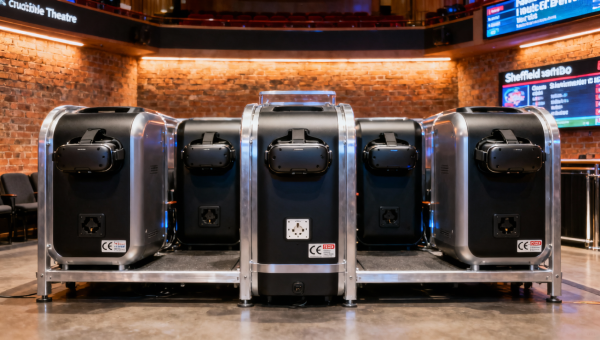
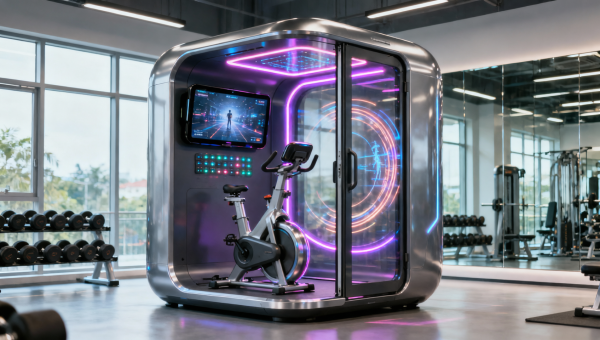
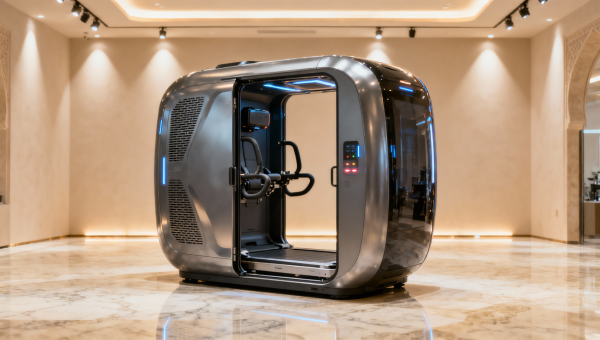
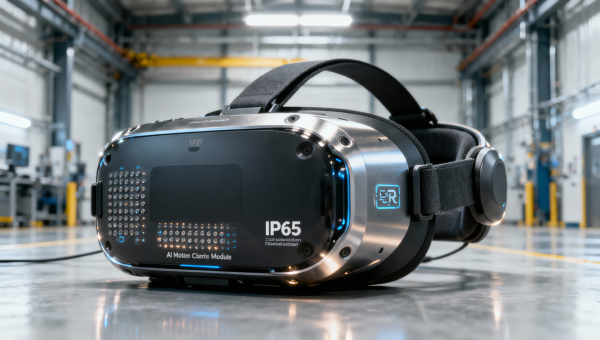
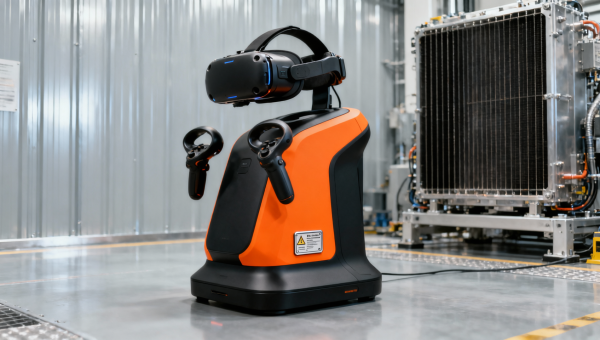
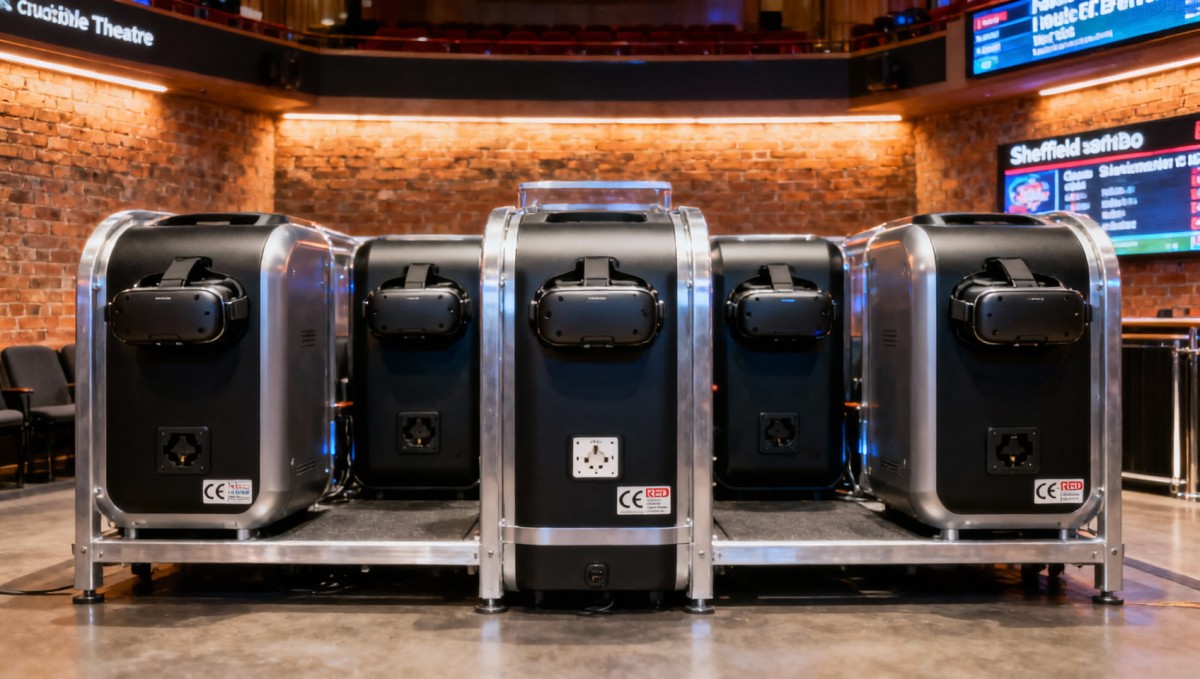
On April 24, 2026, Zhao Xintong defeated Ding Junhui 13–9 in the opening round of the 2026 World Snooker Championship at the Crucible Theatre in Sheffield. According to a report published by SportBusiness on April 26, 2026, commercial VR viewing pod bookings around the Crucible Theatre rose 340% year-on-year. Concurrently, inquiries for multilingual AI-powered remote commentary systems — supporting Cantonese, English, and Malay — reached 2.8 times the total inquiry volume for all of 2025. Chinese arcade and VR machine manufacturers are reported to be accelerating adaptation to UK power standards (BS 1363) and CE-RED radio equipment directive certification.
Which Subsectors Are Affected
VR Hardware Manufacturers (Export-Oriented)
These firms face immediate pressure to align product specifications with UK and EU regulatory requirements. The reported acceleration in BS 1363 and CE-RED compliance efforts indicates that demand is shifting from generic consumer-grade units toward certified, venue-deployable systems.
Localization & AI Audio Service Providers
The 2.8× increase in inquiries for multilingual remote commentary systems reflects heightened demand for real-time, low-latency audio delivery across non-English language pairs — especially Cantonese and Malay. This suggests growing expectations for culturally contextualized, not just linguistically translated, broadcast support in live sports viewing environments.
International Regulatory Compliance & Certification Support Firms
Increased focus on CE-RED and UK-specific electrical safety standards implies rising need for third-party testing, documentation support, and market access advisory services — particularly for mid-tier Chinese OEMs entering European public-venue segments.
What Relevant Businesses or Practitioners Should Focus On
Monitor official updates from UKCA/CE-RED enforcement bodies
While CE-RED remains applicable in the UK under current transitional arrangements, formal UKCA alignment pathways are evolving. Firms preparing for UK deployment should track guidance from the UK’s Office for Product Safety and Standards (OPSS), especially regarding RF emissions thresholds for public-space VR devices.
Prioritize certification readiness for high-demand configurations
Based on the reported surge in VR pod bookings, configurations intended for fixed-location, multi-user, commercial use — rather than home-consumer models — are seeing accelerated adoption. Certification efforts should prioritize these higher-power, networked variants first.
Distinguish between inquiry volume and actual deployment timelines
The 2.8× increase in commentary system inquiries reflects early-stage market interest, not confirmed orders or integration timelines. Firms should treat this as a signal of near-term localization capability gaps — not an indicator of imminent large-scale rollout.
Align supply chain planning with venue operator procurement cycles
Crucible-adjacent VR pod deployments likely follow venue-level tender processes with lead times exceeding six months. Manufacturers should coordinate with UK-based integrators and venue management partners now — rather than waiting for post-event order confirmation.
Editorial Perspective / Industry Observation
From industry perspective, this event is best understood not as a one-off spike, but as a stress test for the convergence of live sports fandom, immersive technology, and cross-border regulatory readiness. Analysis来看, the scale of demand growth — especially the 340% jump in physical VR infrastructure bookings — suggests that commercial venues are beginning to treat VR-enhanced viewing as an operational necessity, not a novelty. Observation来看, the emphasis on Cantonese and Malay language support points to strategic targeting of diaspora audiences beyond mainland China — indicating a broader shift in how global sports rights holders define ‘local’ engagement. Current more appropriate interpretation is that this represents an early-stage inflection point: strong demand signals exist, but widespread standardization, interoperability, and regulatory harmonization remain pending.
In summary, the ‘China Derby’ outcome has catalyzed measurable demand shifts in VR hardware certification, multilingual AI audio infrastructure, and venue-integrated viewing solutions. It does not yet represent a mature market — but it does reflect a tangible acceleration in the commercial validation of immersive, location-aware sports consumption. For stakeholders, the priority is not scaling production, but verifying regulatory alignment and building flexible localization pipelines.
Source: SportBusiness, April 26, 2026 report (citing booking and inquiry data from Crucible-adjacent VR venue operators and Chinese OEM supply chain sources). Note: CE-RED applicability in UK contexts remains subject to ongoing OPSS guidance; formal UKCA transition timelines for RF equipment are still under review.
Search News
Hot Articles
- Stage Lighting & Truss2026 FIBA Women's World Cup Draw Sets LED Timing Screen RequirementsApr 27, 2026
- Hotel Room AmenitiesIranian Delegation’s Ritual Gesture at Sanya ASG Sparks Mideast Hospitality Procurement ShiftApr 27, 2026
- Arcade & VR MachinesSnooker World Championship 'China Derby' Drives VR Viewing DemandApr 27, 2026
Popular Tags
Need ExpertConsultation?
Connect with our specialized leisureengineering team for procurementstrategies.
Recommended News
 Apr 27, 2026Snooker World Championship 'China Derby' Drives VR Viewing DemandVR viewing demand surges after Snooker World Championship 'China Derby' — key opportunity for VR hardware, localization & compliance firms in UK/EU markets.● Theme Park Strategist
 Apr 27, 2026Global VR Fitness Equipment Export Prices Rise 12.3% QoQVR fitness equipment export prices surge 12.3% QoQ — discover why IPX5, ISO 20685, and cloud readiness now drive premium pricing & market share.● Theme Park Strategist
 Apr 27, 2026SASO Updates EMC Rules for VR & Immersive Fitness Devices in Saudi ArabiaSASO EMC updates for VR & immersive fitness devices in Saudi Arabia—Class B compliance mandatory from 25 Apr 2026. Act now to avoid delays & ensure market access.● Theme Park Strategist
 Apr 26, 2026Global VR Fitness Equipment Export Prices Up 12% in Q1 2026VR fitness equipment export prices surge 12.3% in Q1 2026 — discover why reliability-driven pricing is reshaping global gym hardware procurement.● Theme Park Strategist
 Apr 26, 2026SASO Updates EMC Standard for VR Motion Devices in Saudi ArabiaSASO EMC standard update for VR motion devices in Saudi Arabia—Class B limits effective Oct 2026. Ensure compliance now to avoid customs delays & market access risks.● Theme Park Strategist
 Apr 26, 2026Snooker World Championship 'China Derby' Drives VR Viewing DemandSnooker World Championship 'China Derby' drives surging VR viewing demand—CE/UKCA-certified hardware, AI commentary & rapid logistics now critical for venues.● Theme Park Strategist
 Apr 25, 2026Global VR Fitness Equipment Export Prices Up 12% in Q1 2026VR fitness equipment export prices rose 12% in Q1 2026 — discover why $2,840/unit reflects rising value, not just cost, and how OTD leadership reshapes global sourcing.● Theme Park Strategist
 Apr 25, 2026SASO Updates EMC Standard for VR Haptic Devices in Saudi ArabiaSASO updates EMC standard SR 2305:2026 for VR haptic devices in Saudi Arabia—Class B compliance now mandatory for fitness pods & training stations. Act now to avoid port delays.● Theme Park Strategist
![]() Apr 25, 2026Vietnam Enforces Local Type Testing for Commercial VR Fitness CabinsVR fitness cabins for commercial use in Vietnam must now pass local type testing & TÜV SÜD-VN certification—key for exporters, distributors & OEMs. Act before April 24, 2026.● Theme Park Strategist
Apr 25, 2026Vietnam Enforces Local Type Testing for Commercial VR Fitness CabinsVR fitness cabins for commercial use in Vietnam must now pass local type testing & TÜV SÜD-VN certification—key for exporters, distributors & OEMs. Act before April 24, 2026.● Theme Park Strategist Apr 24, 2026Global VR Fitness Equipment Export Prices Up 12% QoQVR fitness equipment export prices surge 12% QoQ to $4,280 — driven by EU 2026/789 & UL 62368-1:Ed4 compliance. Key insight for exporters, suppliers & logistics teams.● Theme Park Strategist
 Apr 24, 2026Vietnam TUV SUD New Rule: VR Fitness Cabins Require Local Type TestVR fitness cabins entering Vietnam now require local type testing per new TUV SUD rule—impacting exporters, distributors & supply chains. Act now to avoid delays & added costs.● Theme Park Strategist
 Apr 24, 2026SASO Updates EMC Standard for VR Motion Devices in Saudi ArabiaSASO EMC update for VR motion devices in Saudi Arabia: Class B compliance now mandatory for fitness, entertainment & edutainment pods—avoid customs rejection!● Theme Park Strategist
 Apr 23, 2026Global VR Fitness Device Export Prices Rise 12% QoQVR fitness device export prices surge 12% QoQ to $3,820 — discover why IP65, AI calibration & 98.7% on-time delivery now define premium global supply.● Theme Park Strategist
 Apr 23, 2026Vietnam TUV SUD Enforces Local Type Testing for VR Fitness CabinsVR fitness cabins entering Vietnam must now undergo local TUV SUD type testing—mandatory from Apr 22, 2026. Learn costs, timelines & compliance steps.● Theme Park Strategist
 Apr 23, 2026SASO Updates EMC Standard for VR Motion Devices to Class BSASO Updates EMC Standard for VR Motion Devices to Class B: Critical compliance shift for VR fitness pods, AR/VR amusement systems & exporters targeting Saudi Arabia.● Theme Park Strategist
 Apr 22, 2026SASO Updates EMC Standard for VR Haptic Devices in Saudi ArabiaSASO EMC standard update for VR haptic devices in Saudi Arabia: Class B compliance required by July 1, 2026 — critical for VR treadmills, AR walls & training pods.● Theme Park Strategist
 Apr 22, 2026Global VR Fitness Device Export Price Up 12% in Q1 2026VR fitness device export prices surge 12% to $1,842/unit in Q1 2026 — discover why China’s 38-day lead times are reshaping global procurement strategies.● Theme Park Strategist
 Apr 22, 2026Vietnam TUV SUD New Rule: VR Fitness Pods Require Local Type TestVR fitness pods now require local type testing in Vietnam per TUV SUD’s new rule—impacting exporters, costs & lead times. Act now!● Theme Park Strategist
 Apr 22, 2026Why Some Arcade Games Perform Well at First Then Fade FastArcade games can shine early then fade fast. Learn how trampoline park, indoor playground, and adventure playground buyers can spot ROI risks and choose longer-lasting winners.● Theme Park Strategist
 Apr 22, 2026Arcade Games That Keep Players Longer Without Prize InflationArcade games that boost dwell time in trampoline park, indoor playground, and adventure playground venues—discover smarter, prize-controlled strategies that improve replay, margins, and ROI.● Theme Park Strategist
 Apr 21, 2026Global VR Fitness Equipment Export Prices Rise 12% in Q1 2026VR fitness equipment export prices surge 12% in Q1 2026—driven by EU safety mandates. Discover cost impacts, compliance risks & supply chain insights.● Theme Park Strategist
 Apr 21, 2026Vietnam TUV SUD Enforces Local Type Testing for VR Fitness CabinsVR fitness cabins entering Vietnam must now undergo local TUV SUD type testing—EMC & safety checks in Hanoi or Ho Chi Minh City starting April 2026. Key for exporters, certifiers & distributors.● Theme Park Strategist
 Apr 21, 2026SASO Updates EMC Standard for VR Motion Devices in Saudi ArabiaSASO EMC update for VR motion devices in Saudi Arabia: Class B compliance now mandatory for fitness pods, edutainment cabins & arcade systems—act now to avoid shipment delays.● Theme Park Strategist
 Apr 20, 2026Global VR Fitness Device Export Price Up 12% in Q1 2026VR fitness device export prices surged 12% in Q1 2026—discover key drivers, regional impacts, and strategic actions for exporters, suppliers & logistics partners.● Theme Park Strategist