Global VR Fitness Equipment Export Prices Up 12% in Q1 2026
Global export prices for VR fitness equipment rose 12.3% quarter-on-quarter to $1,842 per unit in Q1 2026, according to China’s General Administration of Customs data released on April 22, 2026. This shift is prompting recalibration among trade, manufacturing, and distribution stakeholders — particularly those engaged with commercial gym chains in North America and Europe.
Event Overview
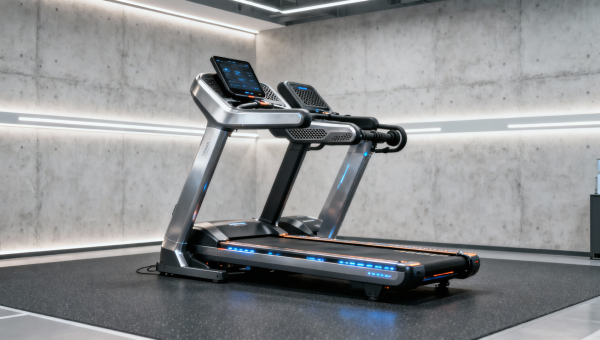
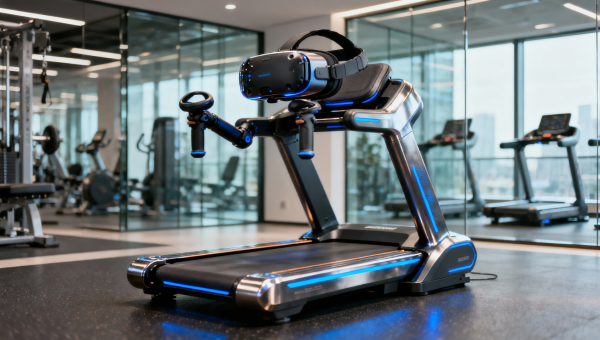
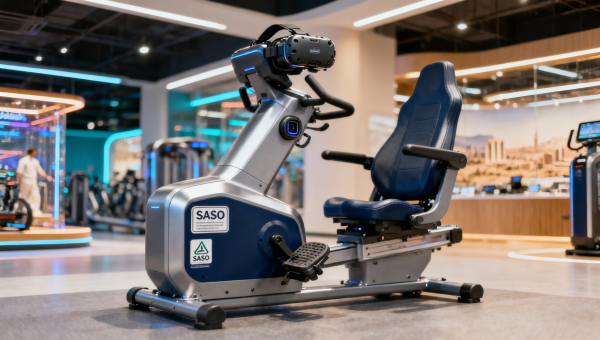
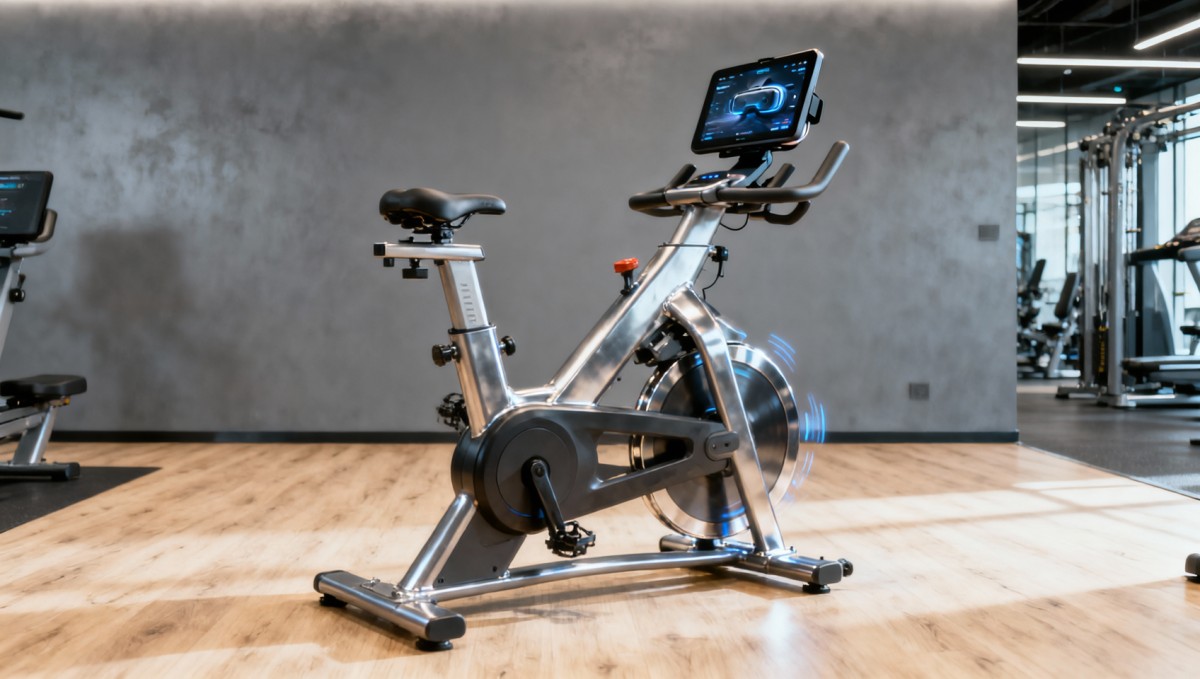
On April 22, 2026, China’s General Administration of Customs published its Q1 2026 statistics showing that the average export price for VR fitness equipment — defined as commercial treadmill VR modules and interactive VR kits for stationary bikes — reached $1,842 per unit, a 12.3% increase year-on-year. Concurrently, the top three Chinese ODM manufacturers reported an average on-time delivery rate of 98.7%, outperforming counterparts in Vietnam (92.1%) and Mexico (89.4%). Major Western gym chain brands are increasingly allocating orders to Chinese suppliers certified for delivery stability.
Industries Affected
Direct Export Trading Firms
These firms face tighter margin pressure as upstream pricing rises, yet may benefit from improved order allocation if aligned with certified stable suppliers. The 12.3% price increase reflects both cost pass-through and selective demand for reliability — not broad-based inflation.
Component & Raw Material Procurement Entities
Procurement teams should monitor whether the price uptick correlates with specific subcomponents (e.g., motion-tracking sensors or high-refresh-rate displays), though the source data does not specify underlying drivers. No change in material cost indices is confirmed in the release.
OEM/ODM Manufacturing Service Providers
Delivery performance — not just unit volume — is now a documented differentiator. The 98.7% on-time rate among top Chinese ODMs signals growing client emphasis on schedule adherence over marginal cost savings, especially for B2B commercial deployments.
Distribution & Channel Partners Serving Gym Chains
Partners handling logistics, integration, and after-sales support for VR-enabled gym hardware may see revised SLA expectations from end clients, as brand-level procurement shifts toward ‘certified stable’ suppliers — implying stricter timeline enforcement and documentation requirements.
What Stakeholders Should Watch & Do Now
Track official updates on export classification and tariff treatment
The Customs data refers to ‘VR fitness equipment’ as a consolidated category; stakeholders should monitor whether future revisions split subcategories (e.g., modularity vs. integrated units), which could affect HS code application and preferential trade treatment.
Monitor order allocation patterns by major gym chain brands
The report notes a directional shift toward ‘certified stable’ suppliers — but does not quantify volume changes or name specific brands. Observing tender announcements or supplier disclosures from companies like Planet Fitness, Equinox, or EGYM over the next 60 days will clarify actual traction.
Distinguish between pricing signal and structural cost shift
The 12.3% rise is measured at export value — not production cost. Analysis来看, this better reflects negotiated contract terms and buyer willingness to pay for reliability than wholesale input inflation. It should not be assumed as a proxy for broader manufacturing cost trends.
Review and stress-test current supply commitments
Manufacturers and exporters serving Western gym channels should verify internal delivery tracking systems against the 98.7% benchmark cited. If below 97%, readiness for audit-style documentation (e.g., shipment timestamps, customs clearance logs) may become a de facto requirement for new tenders.
Editorial Perspective / Industry Observation
From industry角度看, this data point functions less as a standalone trend and more as a validation signal: it confirms that delivery reliability has formally entered the commercial VR fitness procurement calculus — alongside price and functionality. It is not yet evidence of market consolidation, nor does it indicate regulatory intervention. Rather, it marks a phase where operational discipline — measured in on-time delivery — begins translating directly into export pricing power and order share. Continued observation is warranted to determine whether this dynamic spreads beyond top-tier ODMs to mid-tier suppliers, and whether similar metrics emerge in other smart-fitness categories (e.g., AI-powered strength training systems).
Conclusion
This update reflects a measurable tightening of commercial expectations in the global VR fitness hardware supply chain — one where consistent execution is now priced into export transactions. It is best understood not as a short-term price spike, but as an early indicator of shifting procurement priorities among professional fitness operators. Stakeholders should treat it as a calibration point for service-level commitments — not a trigger for reactive pricing or capacity expansion.
Source Attribution
Main source: General Administration of Customs of the People’s Republic of China — Q1 2026 Export Statistics Release (published April 22, 2026).
Items requiring ongoing observation: Specific brand-level order reallocations, subcomponent-level cost drivers, and potential reclassification of VR fitness equipment in future customs bulletins.
Search News
Hot Articles
- Pro Stage AudioFIFA Adopts Chinese Mini-LED Displays for 2026 World Cup VAR SystemApr 24, 2026
- Outdoor RidesChina FA Warns Nanjing City Over Fan Conduct; ISO 20785 Compliance AcceleratesApr 24, 2026
- Pro Stage AudioFan Zhendong Visits Silicon Valley as MLTT Investor, AI Ping-Pong Tech Draws US InterestApr 24, 2026
Popular Tags
Need ExpertConsultation?
Connect with our specialized leisureengineering team for procurementstrategies.
Recommended News
 Apr 24, 2026Global VR Fitness Equipment Export Prices Up 12% QoQVR fitness equipment export prices surge 12% QoQ to $4,280 — driven by EU 2026/789 & UL 62368-1:Ed4 compliance. Key insight for exporters, suppliers & logistics teams.● Theme Park Strategist
 Apr 24, 2026Vietnam TUV SUD New Rule: VR Fitness Cabins Require Local Type TestVR fitness cabins entering Vietnam now require local type testing per new TUV SUD rule—impacting exporters, distributors & supply chains. Act now to avoid delays & added costs.● Theme Park Strategist
 Apr 24, 2026SASO Updates EMC Standard for VR Motion Devices in Saudi ArabiaSASO EMC update for VR motion devices in Saudi Arabia: Class B compliance now mandatory for fitness, entertainment & edutainment pods—avoid customs rejection!● Theme Park Strategist
 Apr 23, 2026Global VR Fitness Device Export Prices Rise 12% QoQVR fitness device export prices surge 12% QoQ to $3,820 — discover why IP65, AI calibration & 98.7% on-time delivery now define premium global supply.● Theme Park Strategist
 Apr 23, 2026Vietnam TUV SUD Enforces Local Type Testing for VR Fitness CabinsVR fitness cabins entering Vietnam must now undergo local TUV SUD type testing—mandatory from Apr 22, 2026. Learn costs, timelines & compliance steps.● Theme Park Strategist
 Apr 23, 2026SASO Updates EMC Standard for VR Motion Devices to Class BSASO Updates EMC Standard for VR Motion Devices to Class B: Critical compliance shift for VR fitness pods, AR/VR amusement systems & exporters targeting Saudi Arabia.● Theme Park Strategist
 Apr 22, 2026SASO Updates EMC Standard for VR Haptic Devices in Saudi ArabiaSASO EMC standard update for VR haptic devices in Saudi Arabia: Class B compliance required by July 1, 2026 — critical for VR treadmills, AR walls & training pods.● Theme Park Strategist
 Apr 22, 2026Global VR Fitness Device Export Price Up 12% in Q1 2026VR fitness device export prices surge 12% to $1,842/unit in Q1 2026 — discover why China’s 38-day lead times are reshaping global procurement strategies.● Theme Park Strategist
 Apr 22, 2026Vietnam TUV SUD New Rule: VR Fitness Pods Require Local Type TestVR fitness pods now require local type testing in Vietnam per TUV SUD’s new rule—impacting exporters, costs & lead times. Act now!● Theme Park Strategist
 Apr 21, 2026Global VR Fitness Equipment Export Prices Rise 12% in Q1 2026VR fitness equipment export prices surge 12% in Q1 2026—driven by EU safety mandates. Discover cost impacts, compliance risks & supply chain insights.● Theme Park Strategist
 Apr 21, 2026Vietnam TUV SUD Enforces Local Type Testing for VR Fitness CabinsVR fitness cabins entering Vietnam must now undergo local TUV SUD type testing—EMC & safety checks in Hanoi or Ho Chi Minh City starting April 2026. Key for exporters, certifiers & distributors.● Theme Park Strategist
 Apr 21, 2026SASO Updates EMC Standard for VR Motion Devices in Saudi ArabiaSASO EMC update for VR motion devices in Saudi Arabia: Class B compliance now mandatory for fitness pods, edutainment cabins & arcade systems—act now to avoid shipment delays.● Theme Park Strategist
 Apr 20, 2026Global VR Fitness Device Export Price Up 12% in Q1 2026VR fitness device export prices surged 12% in Q1 2026—discover key drivers, regional impacts, and strategic actions for exporters, suppliers & logistics partners.● Theme Park Strategist
 Apr 20, 2026SASO Updates VR Haptic Device EMC Standard to Class B in Saudi ArabiaSASO VR haptic device EMC update: Class B standard now mandatory in Saudi Arabia from July 1, 2026. Ensure compliance for VR/AR hardware, imports & venues.● Theme Park Strategist
 Apr 20, 2026Vietnam TUV SUD Enforces Local Type Test for Commercial VR Fitness CabinsVietnam TUV SUD now mandates local type testing for commercial VR fitness cabins — including latency, EMC & safety checks. Act now to secure QCVN compliance and market access.● Theme Park Strategist
 Apr 17, 2026Global VR Fitness Equipment Export Prices Rise 12% in Q1 2026VR fitness equipment export prices surge 12.3% in Q1 2026—key insights for exporters, manufacturers & supply chain partners on compliance, pricing, and delivery trends.● Theme Park Strategist
 Apr 17, 2026SASO 2891:2026 Updated: VR Haptic Devices Now Require EMC Class B in Saudi ArabiaSASO 2891:2026 update mandates EMC Class B for VR haptic devices in Saudi Arabia — critical for OEMs, exporters & EdTech suppliers. Act now to avoid delays!● Theme Park Strategist
 Apr 17, 2026Vietnam TUV SUD Mandates Local Type Testing for VR Fitness CabinsVR fitness cabins for gyms & hotels in Vietnam now require local type testing—EMC, thermal, and AI fall detection—to obtain VIEC certification. Act now to avoid delays!● Theme Park Strategist
 Apr 16, 2026VR Fitness Device Export Prices Up 12% — China Supply Stability LeadsVR fitness device export prices up 12%—China’s supply stability and modular hardware-software delivery redefine global competitiveness. Act now.● Theme Park Strategist
 Apr 16, 2026Vietnam Mandates Local TUV SUD Type Testing for VR Fitness CabinsVR fitness cabins entering Vietnam must now pass local TÜV SÜD type testing in Hanoi—key for compliance, customs clearance & market access by July 1, 2026.● Theme Park Strategist
 Apr 16, 2026SASO Updates Playground Standards: VR Devices Now Require EMC TestingSASO now mandates EMC testing for VR playground devices in Saudi Arabia—key update for VR cycling, climbing & motion cabins exporters.● Theme Park Strategist
 Apr 15, 2026Vietnam's New Regulation: Commercial VR Fitness Pods Require Local TUV SUD TestingVietnam's new regulation mandates TUV SUD testing for commercial VR fitness pods. Learn how this impacts exporters, compliance timelines, and market entry strategies for Chinese manufacturers.● Theme Park Strategist
 Apr 15, 2026Global VR Fitness Equipment Export Prices Rise 12% YoY, China Maintains Supply Chain StabilityGlobal VR fitness equipment export prices surge 12% YoY in 2026 Q1, with China maintaining 96.3% delivery reliability. Key insights for VR hardware manufacturers & fitness distributors facing cost pressures.● Theme Park Strategist
 Apr 14, 2026US CPSC Seeks Comments on New Fitness Tracker Rules, Chinese Exporters Need UL/ETL ComplianceUS CPSC proposes new UL/ETL compliance rules for fitness trackers, impacting Chinese exporters. Learn key action points and industry impacts to stay ahead of regulatory changes affecting wearable tech exports to America.● Theme Park Strategist