Fan Zhendong Visits SF as MLTT Investor; Chinese AI Ping Pong Tech Draws Silicon Valley Interest
Fan Zhendong, former Olympic table tennis champion, visited San Francisco on April 25, 2026, in his capacity as an investor in Major League Table Tennis (MLTT). His visit—centered on a joint demonstration of Chinese-developed smart table tennis equipment and AI coaching systems—has drawn attention from U.S. fitness technology investors and regulatory advisors, particularly regarding market entry pathways for AI-powered sports hardware in commercial fitness settings. This development is especially relevant for companies operating at the intersection of sports technology, AI hardware, FDA-regulated consumer devices, and cross-border B2B fitness equipment trade.
Event Overview
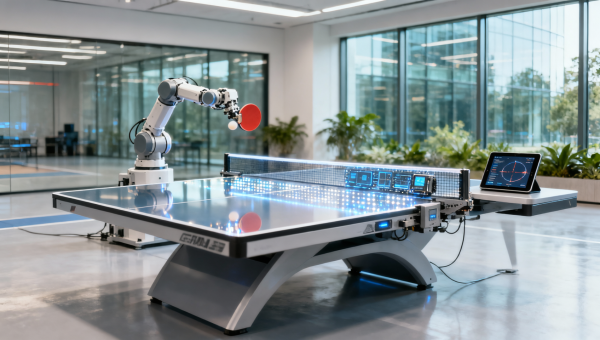
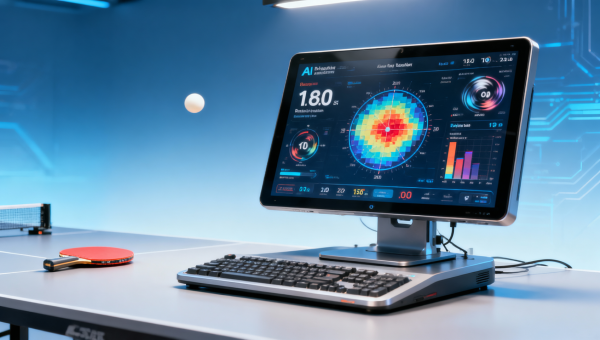
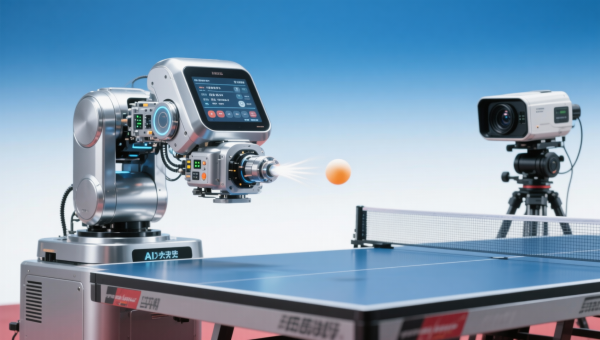
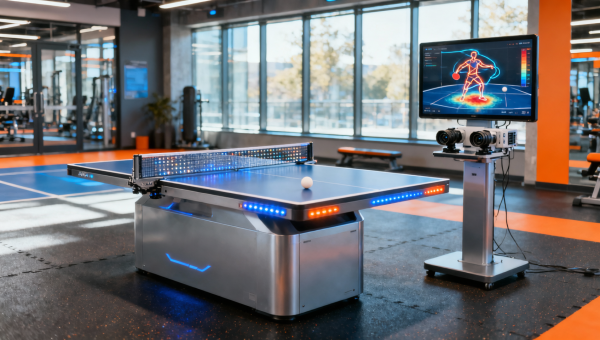
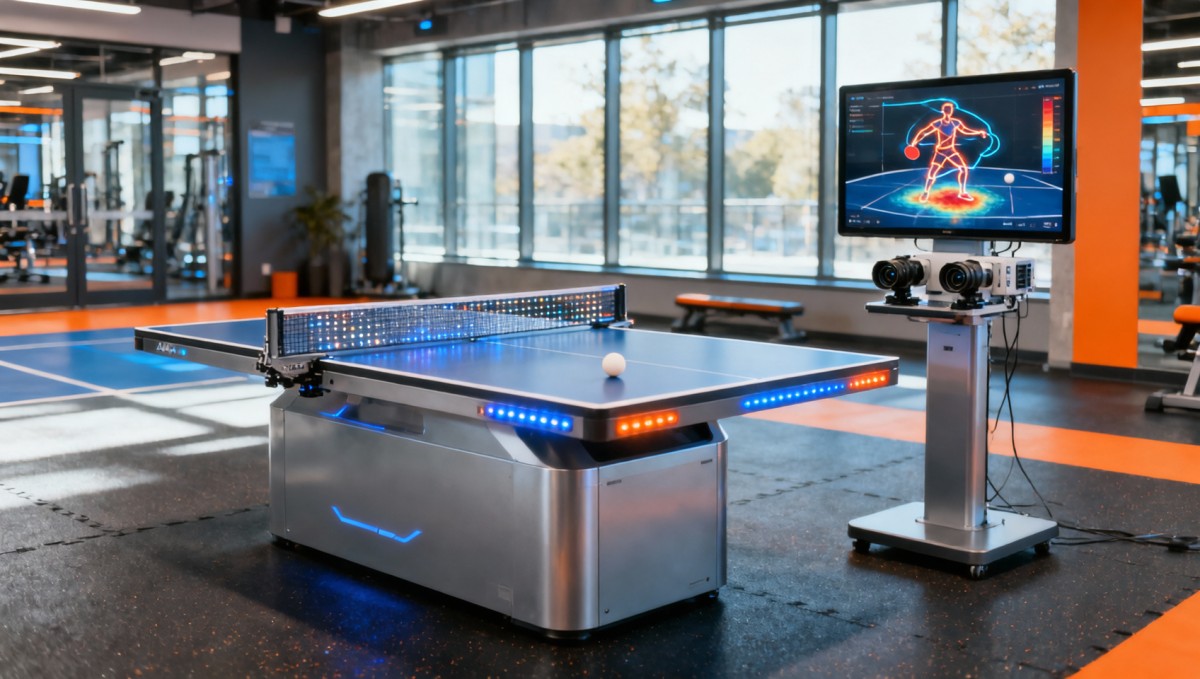
On April 25, 2026, Fan Zhendong traveled to San Francisco as an MLTT investor. He participated in a demonstration organized jointly with a Chinese smart table tennis equipment manufacturer. The demonstration featured three core capabilities: AI-powered serve analysis, 3D motion capture of player movement, and generation of personalized training pathways. Multiple Silicon Valley–based fitness technology venture funds indicated they would prioritize evaluating the U.S. commercial market entry feasibility for these systems—specifically assessing alignment with the FDA’s 510(k) exemption pathway for low-to-moderate risk medical device equivalents.
Industries Affected by Segment
Smart Sports Hardware Manufacturers (OEM/ODM)
Chinese manufacturers of AI-integrated sports training equipment are directly affected because the demonstration signals early validation of their technical architecture in a high-barrier regulatory environment. Impact centers on product classification strategy: whether systems will be positioned as general wellness tools (exempt), fitness analytics platforms (potentially subject to FTC or state-level data privacy rules), or borderline medical devices (triggering FDA review).
Cross-Border Fitness Equipment Distributors & Importers
Distributors handling physical hardware—including tables, sensor arrays, and edge-computing units—face new compliance due diligence requirements. Impact manifests in customs classification, labeling standards (e.g., English-language safety and performance claims), and documentation needed to support FDA 510(k) exemption assertions—even if formal submission is not yet required.
AI Software Providers Specializing in Sports Analytics
Developers of motion-tracking algorithms, biomechanical modeling engines, or adaptive training logic may see shifting demand signals. The focus on “customized training path generation” highlights that U.S. investors value software interoperability, real-time feedback latency, and explainability—not just accuracy. Impact includes increased scrutiny of data provenance, model transparency, and integration readiness with third-party hardware ecosystems.
Regulatory & Market Access Consultants (U.S.-China Focus)
Firms advising on FDA, FCC, or CPSC compliance for connected fitness devices now face higher demand for nuanced interpretation of 510(k) exemption criteria as applied to non-clinical sports performance tools. Impact lies in the need to distinguish between promotional claims (e.g., “improves reaction time”) versus clinical claims (e.g., “treats motor coordination deficits”), which determines regulatory scope.
What Relevant Companies or Practitioners Should Monitor and Do Now
Track official FDA guidance updates on AI-enabled wellness devices
While no formal FDA clearance was announced, multiple funds referenced the 510(k) exemption pathway. Companies should monitor FDA’s evolving Digital Health Center of Excellence publications—particularly those addressing “low-risk AI/ML-based software as a medical device”—to assess whether current marketing language or intended use statements could unintentionally trigger regulatory review.
Review product labeling, user documentation, and cloud data policies for U.S. market readiness
Even if exempt from 510(k), devices entering U.S. commerce must comply with FCC Part 15 (for wireless components), California Proposition 65 (if applicable), and GDPR/CCPA-aligned data handling if user biometrics are stored or processed. Current action includes auditing existing English-language manuals, privacy notices, and firmware update protocols.
Distinguish between investor interest and near-term commercial deployment
The expressed interest from Silicon Valley funds reflects early-stage technical due diligence—not purchase commitments or distribution agreements. Companies should avoid conflating this signal with imminent revenue opportunity; instead, treat it as a prompt to align internal R&D roadmaps with U.S. interoperability standards (e.g., HL7 FHIR for health data exchange, Bluetooth SIG sport profiles).
Prepare for coordinated technical and regulatory briefing packages
Given the emphasis on FDA pathway evaluation, manufacturers and their U.S. partners should begin assembling modular documentation: system architecture diagrams, algorithm validation summaries (e.g., test-retest reliability metrics), and use-case boundary definitions (e.g., “for recreational skill development only”). These materials support faster response to potential investor or distributor inquiries.
Editorial Perspective / Industry Observation
This event is best understood not as a market entry milestone, but as a regulatory signaling exercise. From industry perspective, Fan Zhendong’s role as an MLTT investor lends visibility—but does not alter FDA jurisdiction or classification rules. Analysis来看, the focus on 510(k) exemption suggests investors are applying medical device frameworks to assess scalability, liability exposure, and long-term defensibility—not because the systems are clinically intended. Observation来看, U.S. fitness tech capital is increasingly using regulatory rigor as a proxy for engineering maturity and product discipline. It is more accurate to interpret this as an early filter for hardware-AI convergence players, rather than confirmation of imminent commercial adoption.
Conclusion
This engagement underscores growing investor attention toward AI-augmented sports training infrastructure—but remains a preliminary step in U.S. market assessment. It does not indicate regulatory approval, commercial partnership, or immediate sales channel establishment. Rather, it signals heightened scrutiny of how Chinese smart sports hardware positions itself within U.S. regulatory categories—and why alignment with FDA’s low-risk device logic may become a de facto benchmark for investor confidence in cross-border fitness tech ventures.
Information Sources
Main source: Public statement issued by MLTT and the participating Chinese equipment manufacturer on April 25, 2026. No additional background data, financial terms, or FDA correspondence has been disclosed. Ongoing observation is warranted for any subsequent FDA guidance documents referencing AI in athletic performance or consumer motion analytics.
Search News
Hot Articles
- Pro Stage AudioFIFA Adopts Chinese Mini-LED Displays for 2026 World Cup VAR SystemApr 24, 2026
- Outdoor RidesChina FA Warns Nanjing City Over Fan Conduct; ISO 20785 Compliance AcceleratesApr 24, 2026
- Pro Stage AudioFan Zhendong Visits Silicon Valley as MLTT Investor, AI Ping-Pong Tech Draws US InterestApr 24, 2026
Popular Tags
Need ExpertConsultation?
Connect with our specialized leisureengineering team for procurementstrategies.
Recommended News
 Apr 24, 2026Vietnam Mandates Child Finger-Trap Sensors for Indoor Playground EquipmentVietnam mandates child finger-trap sensors for indoor playground equipment—VINA-CE certified & third-party tested. Act now to ensure compliance, avoid shipment delays, and meet April 23, 2026 deadline.● Theme Park Strategist
 Apr 23, 2026Fan Zhendong Visits Silicon Valley as MLTT Investor, AI Ping-Pong Tech Draws AttentionAI ping-pong tech takes center stage as Fan Zhendong visits Silicon Valley as MLTT investor—key for smart sports hardware, AI coaching platforms & SaaS providers.● Theme Park Strategist
 Apr 23, 2026Vietnam Mandates Child Finger-Trap Sensors for Indoor Play EquipmentChild finger-trap sensors now mandatory for indoor play equipment in Vietnam—learn how QCVN 121:2026 impacts exporters, manufacturers & suppliers ahead of July 1, 2026 enforcement.● Theme Park Strategist
 Apr 22, 2026Vietnam Mandates Child Finger-Trap Sensors for Indoor Playground EquipmentVietnam mandates child finger-trap sensors for indoor playground equipment—comply with QCVN 128:2026 & TCVN 9350:2023 before Oct 2026!● Theme Park Strategist
 Apr 21, 2026Vietnam Mandates Child Finger-Trap Sensors for Indoor Play EquipmentVietnam mandates child finger-trap sensors for indoor play equipment—comply with TCVN 9507:2023 by July 1, 2026 to clear customs & protect kids.● Theme Park Strategist
 Apr 20, 2026NES Launches Sports Community Curator ProgramSports Community Curator program launched by NES — join global fitness studios, uni clubs & outdoor groups to co-create, test gear & grow with Chinese sports brands.● Theme Park Strategist
 Apr 17, 2026CPSC AI Safety Alert: 200ms Delay in Child Playground AI Systems = HazardCPSC AI Safety Alert: 200ms delay in child playground AI systems = hazard. Learn how latency compliance impacts Target/Walmart listings, testing, and supply chain.● Theme Park Strategist
 Apr 17, 20262026 Shanghai Sailing Open Adopts Domestic SeaChronos Pro Timing SystemSeaChronos Pro timing system debuts at 2026 Shanghai Sailing Open — ITU-certified, millisecond-accurate, wind- and tide-integrated. A game-changer for marine sports tech.● Theme Park Strategist
 Apr 16, 2026FDA Proposes New Labeling Rules for Sports Nutrition Supplements with Chinese LabelsFDA's new labeling rules for sports nutrition supplements with Chinese labels take effect April 2026—learn compliance must-dos for U.S. importers, manufacturers & brands.● Theme Park Strategist
 Apr 15, 2026Saudi SASO Updates Amusement Ride Standards: VR Devices Now Require Mandatory EMC TestingSaudi SASO's new 2026 standard mandates EMC testing for VR amusement rides, impacting exporters. Learn key compliance strategies for Saudi market access.● Theme Park Strategist
 Apr 14, 2026Japan Mandates Multilingual E-Manuals for Fitness Equipment from April 2026Japan mandates multilingual e-manuals for fitness equipment from April 2026. Learn how this impacts manufacturers & importers with JIS T 0601-1 compliance requirements. Stay ahead of the regulation!● Theme Park Strategist
 Apr 13, 2026WTT Taiyuan Adopts Chinese AI Table Tennis Analysis System with ITTF Export CertificationWTT Taiyuan adopts Chinese AI table tennis analysis system with ITTF export certification, enabling real-time ball speed & spin tracking. A game-changer for sports tech in emerging markets like Southeast Asia & Middle East.● Theme Park Strategist
 Apr 13, 2026First Female Snooker Player Achieves Multiple Century Breaks as Chinese Table Gains WPBSA CertificationChinese snooker player Bai Yulu makes history with multiple century breaks using WPBSA-certified 'Tournament Pro X7' table, marking a milestone for Chinese manufacturing in professional snooker equipment. Discover how this impacts global markets.● Theme Park Strategist
 Apr 13, 2026RCEP Zero Tariff on China's TPU Sports Protective Gear Boosts ASEAN TradeRCEP's zero-tariff policy on China's TPU sports protective gear boosts ASEAN trade, giving Chinese exporters cost advantages over Korean rivals. Learn how manufacturers and distributors can capitalize on this opportunity.● Theme Park Strategist
 Apr 10, 2026Japan's JIS T 9001:2026 Sports Flooring Anti-Slip Standard Mandatory from April 2026Japan's JIS T 9001:2026 standard mandates anti-slip sports flooring (SCOF ≥ 0.6) from April 2026. Chinese exporters must adapt to meet new requirements. Learn key compliance strategies.● Theme Park Strategist
 Apr 10, 2026Bai Yulu Makes History at Snooker World Championship, Sparks Surge in Women's Sports Equipment DemandBai Yulu makes history at Snooker World Championship with two century breaks, sparking 185% surge in women's sports equipment demand. Discover how manufacturers, e-commerce & supply chains can capitalize on this trend.● Theme Park Strategist
 Apr 10, 20262026 Badminton Asia Championships Quarterfinals Schedule Announced, Shi Yuqi to Compete; Southeast Asia Racket Orders Face 6-8 Week Delays2026 Badminton Asia Championships quarterfinals schedule revealed with Shi Yuqi competing, while Southeast Asia faces 6-8 week racket delays. Learn how supply chain issues impact manufacturers and get strategies to navigate equipment shortages.● Theme Park Strategist
 Apr 10, 2026WTT Taiyuan Challenge Sparks Smart Equipment Demand: Japan Buyers Scrutinize AI Training TechDiscover how the WTT Taiyuan Challenge boosts demand for AI training tech as Japanese buyers evaluate smart sports equipment. Learn key opportunities for manufacturers with JIS-certified solutions.● Theme Park Strategist
 Apr 10, 2026Chinese Snooker Players' Success Spurs Global Demand for Cue AccessoriesChinese snooker players' success drives 210% global demand surge for cue accessories. Explore how manufacturers & exporters can capitalize on this trend with UK, German & Australian markets leading inquiries.● Theme Park Strategist
 Apr 10, 2026EU Updates EN 16830:2026 Eyewear Safety Standard, Impacting China's Sports Goggle ExportsEU's updated EN 16830:2026 eyewear safety standard impacts China's sports goggle exports with stricter CE certification requirements. Learn how manufacturers and exporters can adapt to new impact resistance, UV400+, and blue light blocking standards before the September 2026 deadline.● Theme Park Strategist
 Apr 26, 2026Fan Zhendong Visits SF as MLTT Investor; Chinese AI Ping Pong Tech Draws Silicon Valley InterestAI ping pong tech from China grabs Silicon Valley’s attention as Fan Zhendong, MLTT investor and Olympic champ, demos smart table tennis systems in SF—key for sports hardware, AI analytics & FDA-regulated fitness devices.● Theme Park Strategist
 Apr 26, 2026Vietnam Enforces Child Finger-Trap Sensors for Indoor Playground EquipmentChild finger-trap sensors now mandatory for indoor playground equipment in Vietnam—comply with QCVN 17:2026/BKHCN before import or sale.● Theme Park Strategist
 Apr 25, 2026Vietnam Mandates Child Finger-Trap Sensors for Indoor Play EquipmentVietnam mandates child finger-trap sensors for indoor play equipment—TCVN-certified, ≤0.3s response. Critical for importers, OEMs & compliance teams ahead of July 1, 2026 deadline.● Theme Park Strategist
 Apr 26, 2026Indoor playground supplier references: why asking for ‘recent projects’ isn’t enoughDiscover verified indoor playground suppliers & trampoline park equipment—backed by safety certs, installation proof, and real-world performance data.● Theme Park Strategist