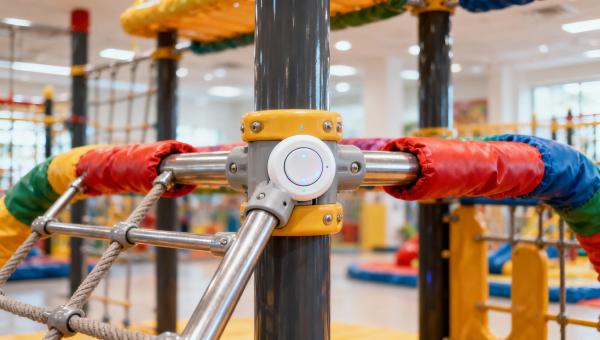
Vietnam Mandates Child Finger-Trap Sensors for Indoor Play Equipment
Vietnam’s Ministry of Industry and Trade issued a new regulatory requirement on April 24, 2026, mandating child finger-trap sensors on all commercial indoor playground equipment imported or sold in the country. Effective July 1, 2026, this rule directly impacts manufacturers, importers, distributors, and compliance service providers operating in or serving the Vietnamese children’s play equipment market.
Event Overview
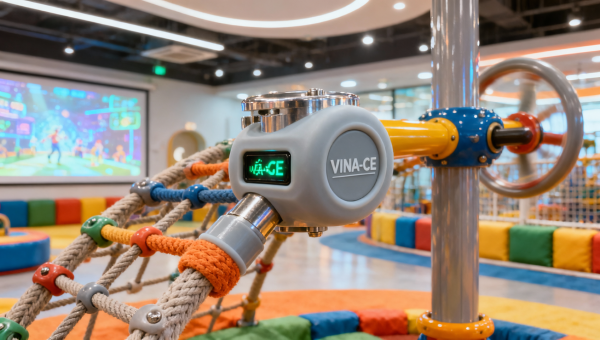
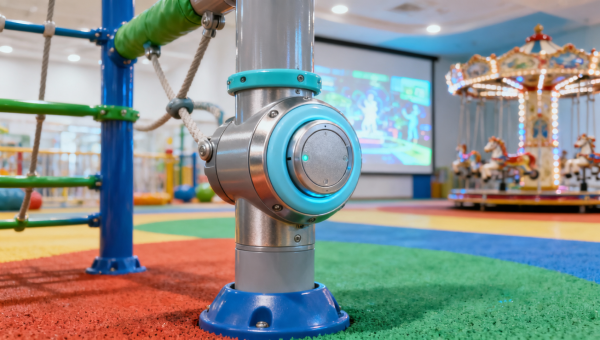
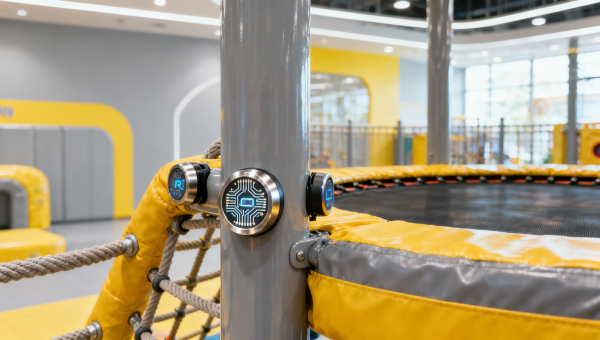
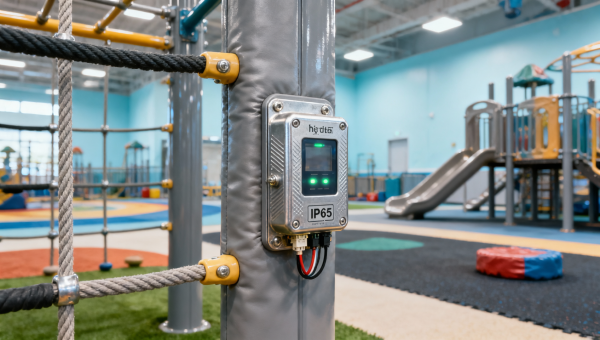
On April 24, 2026, Vietnam’s Ministry of Industry and Trade published Circular No. 28/2026/TT-BCT. It stipulates that, starting July 1, 2026, all commercially deployed indoor playground equipment—including carousels, interactive slides, and soft-climbing structures—must be equipped with child finger-trap sensors certified by the Vietnam Standards Institute (TCVN), with a maximum response time of ≤0.3 seconds. Non-compliant units will be denied customs clearance and prohibited from retail placement.
Industries Affected
Direct Trading Enterprises (Importers & Exporters)
These entities face immediate operational impact: shipments arriving in Vietnam after July 1, 2026, without TCVN-certified sensors will be held at customs. The requirement introduces a new conformity checkpoint beyond existing safety standards (e.g., EN 1176 or ASTM F1487), meaning pre-shipment verification must now include sensor functionality and certification documentation.
Manufacturing Enterprises (OEM/ODM Producers)
Producers supplying to the Vietnamese market must integrate certified sensors into product designs and production lines. This affects bill-of-materials planning, assembly workflows, and quality control testing protocols. Retrofitting existing models is not addressed in the circular, suggesting new production runs must comply from the effective date onward.
Supply Chain & Compliance Service Providers
Third-party testing labs, certification consultants, and logistics coordinators handling Vietnam-bound equipment must now verify sensor certification status—not just general product safety marks. TCVN certification is not interchangeable with international equivalents; confirmation of valid TCVN reference numbers (e.g., TCVN XXXX:202X) will become a routine audit item.
What Relevant Enterprises Should Monitor and Do Now
Track official implementation guidance from TCVN and MoIT
The circular references TCVN certification but does not list approved sensor models or designated testing laboratories. Enterprises should monitor updates from the Vietnam Standards Institute and the Ministry of Industry and Trade for technical specifications, application procedures, and recognized conformity assessment bodies.
Verify sensor integration across priority product categories
Rotating equipment (e.g., carousels), pinch-point-heavy structures (e.g., slide transitions, climbing frame joints), and motorized interactive elements are highest-risk categories. Manufacturers and importers should prioritize sensor validation for these types first—not only for compliance but also to inform inventory planning ahead of the July deadline.
Distinguish between policy issuance and enforceable enforcement readiness
While the regulation takes effect on July 1, 2026, customs enforcement capacity, inspector training, and document review timelines remain unconfirmed. Analysis来看, early enforcement may focus on high-volume imports and visible non-compliance (e.g., absence of sensor housing or wiring), rather than deep functional testing at first instance.
Prepare documentation and procurement pathways for certified sensors
TCVN-certified sensors are not yet widely listed in global component databases. Importers and OEMs should initiate supplier engagement now—not only to source compliant units but also to secure lead times and validate integration compatibility. Procurement contracts should explicitly require TCVN certification evidence prior to shipment.
Editorial Perspective / Industry Observation
From industry angle, this regulation signals Vietnam’s shift toward prescriptive, performance-based safety controls for children’s products—moving beyond structural requirements to real-time hazard mitigation. It is better understood as an early-stage regulatory signal rather than a fully matured enforcement regime: the narrow scope (indoor commercial equipment only), absence of grandfathering clauses, and lack of transitional provisions suggest it is intended to shape future supply chains, not retroactively penalize legacy stock. Observation来看, similar requirements may extend to outdoor equipment or daycare furniture in subsequent revisions—making current sensor integration experience strategically valuable beyond immediate compliance.
This is not merely a certification update; it reflects tightening alignment between Vietnam’s consumer product oversight and EU-style proactive risk prevention frameworks. Continued attention to MoIT and TCVN communications over Q2 2026 will be critical for accurate business planning.
Conclusion
This regulation establishes a clear, non-negotiable technical requirement for a defined segment of the children’s play equipment value chain in Vietnam. Its significance lies less in novelty—finger-trap prevention is well-established globally—than in its formalization as a mandatory, locally certified, time-bound performance criterion. Current understanding should treat it as an operational inflection point: one demanding concrete technical and documentation adjustments, not strategic repositioning—yet one that may foreshadow broader regulatory expectations in adjacent product categories.
Source Attribution
Main source: Vietnam Ministry of Industry and Trade, Circular No. 28/2026/TT-BCT, issued April 24, 2026.
Areas under observation: Official TCVN certification criteria, list of authorized testing bodies, and enforcement protocols—none confirmed as of publication date.
Search News
Hot Articles
- Pro Stage AudioFIFA Adopts Chinese Mini-LED Displays for 2026 World Cup VAR SystemApr 24, 2026
- Outdoor RidesChina FA Warns Nanjing City Over Fan Conduct; ISO 20785 Compliance AcceleratesApr 24, 2026
- Pro Stage AudioFan Zhendong Visits Silicon Valley as MLTT Investor, AI Ping-Pong Tech Draws US InterestApr 24, 2026
Popular Tags
Need ExpertConsultation?
Connect with our specialized leisureengineering team for procurementstrategies.
Recommended News
 Apr 24, 2026Vietnam Mandates Child Finger-Trap Sensors for Indoor Playground EquipmentVietnam mandates child finger-trap sensors for indoor playground equipment—VINA-CE certified & third-party tested. Act now to ensure compliance, avoid shipment delays, and meet April 23, 2026 deadline.● Theme Park Strategist
 Apr 23, 2026Fan Zhendong Visits Silicon Valley as MLTT Investor, AI Ping-Pong Tech Draws AttentionAI ping-pong tech takes center stage as Fan Zhendong visits Silicon Valley as MLTT investor—key for smart sports hardware, AI coaching platforms & SaaS providers.● Theme Park Strategist
 Apr 23, 2026Vietnam Mandates Child Finger-Trap Sensors for Indoor Play EquipmentChild finger-trap sensors now mandatory for indoor play equipment in Vietnam—learn how QCVN 121:2026 impacts exporters, manufacturers & suppliers ahead of July 1, 2026 enforcement.● Theme Park Strategist
 Apr 22, 2026Vietnam Mandates Child Finger-Trap Sensors for Indoor Playground EquipmentVietnam mandates child finger-trap sensors for indoor playground equipment—comply with QCVN 128:2026 & TCVN 9350:2023 before Oct 2026!● Theme Park Strategist
 Apr 21, 2026Vietnam Mandates Child Finger-Trap Sensors for Indoor Play EquipmentVietnam mandates child finger-trap sensors for indoor play equipment—comply with TCVN 9507:2023 by July 1, 2026 to clear customs & protect kids.● Theme Park Strategist
 Apr 20, 2026NES Launches Sports Community Curator ProgramSports Community Curator program launched by NES — join global fitness studios, uni clubs & outdoor groups to co-create, test gear & grow with Chinese sports brands.● Theme Park Strategist
 Apr 17, 2026CPSC AI Safety Alert: 200ms Delay in Child Playground AI Systems = HazardCPSC AI Safety Alert: 200ms delay in child playground AI systems = hazard. Learn how latency compliance impacts Target/Walmart listings, testing, and supply chain.● Theme Park Strategist
 Apr 17, 20262026 Shanghai Sailing Open Adopts Domestic SeaChronos Pro Timing SystemSeaChronos Pro timing system debuts at 2026 Shanghai Sailing Open — ITU-certified, millisecond-accurate, wind- and tide-integrated. A game-changer for marine sports tech.● Theme Park Strategist
 Apr 16, 2026FDA Proposes New Labeling Rules for Sports Nutrition Supplements with Chinese LabelsFDA's new labeling rules for sports nutrition supplements with Chinese labels take effect April 2026—learn compliance must-dos for U.S. importers, manufacturers & brands.● Theme Park Strategist
 Apr 15, 2026Saudi SASO Updates Amusement Ride Standards: VR Devices Now Require Mandatory EMC TestingSaudi SASO's new 2026 standard mandates EMC testing for VR amusement rides, impacting exporters. Learn key compliance strategies for Saudi market access.● Theme Park Strategist
 Apr 14, 2026Japan Mandates Multilingual E-Manuals for Fitness Equipment from April 2026Japan mandates multilingual e-manuals for fitness equipment from April 2026. Learn how this impacts manufacturers & importers with JIS T 0601-1 compliance requirements. Stay ahead of the regulation!● Theme Park Strategist
 Apr 13, 2026WTT Taiyuan Adopts Chinese AI Table Tennis Analysis System with ITTF Export CertificationWTT Taiyuan adopts Chinese AI table tennis analysis system with ITTF export certification, enabling real-time ball speed & spin tracking. A game-changer for sports tech in emerging markets like Southeast Asia & Middle East.● Theme Park Strategist
 Apr 13, 2026First Female Snooker Player Achieves Multiple Century Breaks as Chinese Table Gains WPBSA CertificationChinese snooker player Bai Yulu makes history with multiple century breaks using WPBSA-certified 'Tournament Pro X7' table, marking a milestone for Chinese manufacturing in professional snooker equipment. Discover how this impacts global markets.● Theme Park Strategist
 Apr 13, 2026RCEP Zero Tariff on China's TPU Sports Protective Gear Boosts ASEAN TradeRCEP's zero-tariff policy on China's TPU sports protective gear boosts ASEAN trade, giving Chinese exporters cost advantages over Korean rivals. Learn how manufacturers and distributors can capitalize on this opportunity.● Theme Park Strategist
 Apr 10, 2026Japan's JIS T 9001:2026 Sports Flooring Anti-Slip Standard Mandatory from April 2026Japan's JIS T 9001:2026 standard mandates anti-slip sports flooring (SCOF ≥ 0.6) from April 2026. Chinese exporters must adapt to meet new requirements. Learn key compliance strategies.● Theme Park Strategist
 Apr 10, 2026Bai Yulu Makes History at Snooker World Championship, Sparks Surge in Women's Sports Equipment DemandBai Yulu makes history at Snooker World Championship with two century breaks, sparking 185% surge in women's sports equipment demand. Discover how manufacturers, e-commerce & supply chains can capitalize on this trend.● Theme Park Strategist
 Apr 10, 20262026 Badminton Asia Championships Quarterfinals Schedule Announced, Shi Yuqi to Compete; Southeast Asia Racket Orders Face 6-8 Week Delays2026 Badminton Asia Championships quarterfinals schedule revealed with Shi Yuqi competing, while Southeast Asia faces 6-8 week racket delays. Learn how supply chain issues impact manufacturers and get strategies to navigate equipment shortages.● Theme Park Strategist
 Apr 10, 2026WTT Taiyuan Challenge Sparks Smart Equipment Demand: Japan Buyers Scrutinize AI Training TechDiscover how the WTT Taiyuan Challenge boosts demand for AI training tech as Japanese buyers evaluate smart sports equipment. Learn key opportunities for manufacturers with JIS-certified solutions.● Theme Park Strategist
 Apr 10, 2026Chinese Snooker Players' Success Spurs Global Demand for Cue AccessoriesChinese snooker players' success drives 210% global demand surge for cue accessories. Explore how manufacturers & exporters can capitalize on this trend with UK, German & Australian markets leading inquiries.● Theme Park Strategist
 Apr 10, 2026EU Updates EN 16830:2026 Eyewear Safety Standard, Impacting China's Sports Goggle ExportsEU's updated EN 16830:2026 eyewear safety standard impacts China's sports goggle exports with stricter CE certification requirements. Learn how manufacturers and exporters can adapt to new impact resistance, UV400+, and blue light blocking standards before the September 2026 deadline.● Theme Park Strategist
 Apr 25, 2026Vietnam Mandates Child Finger-Trap Sensors for Indoor Play EquipmentVietnam mandates child finger-trap sensors for indoor play equipment—TCVN-certified, ≤0.3s response. Critical for importers, OEMs & compliance teams ahead of July 1, 2026 deadline.● Theme Park Strategist
 Apr 24, 2026Which Playground Supplier Suits Your Project?Playground supplier selection starts with safety, playground planning, and playground surfacing. Learn how to compare compliance, support, and total value for smarter procurement.● Theme Park Strategist
 Apr 24, 2026Playground Safety Surfacing: Cost vs ValuePlayground safety surfacing cost vs value explained: compare playground surfacing options, compliance, maintenance, and ROI for smarter playground planning and supplier decisions.● Theme Park Strategist
 Apr 24, 2026How to Choose Playground Safety SurfacingPlayground safety surfacing guide for smarter playground planning: compare compliant playground surfacing options, lifecycle cost, and how to choose a reliable playground supplier.● Theme Park Strategist