FIFA Adopts Chinese MicroLED Displays for 2026 World Cup VAR System
On April 24, FIFA confirmed that the Video Assistant Referee (VAR) system for the 2026 FIFA World Cup in the USA, Canada, and Mexico will deploy MicroLED ultra-low-latency display modules supplied by a Chinese manufacturer — marking the first time a China-developed display solution has been certified under the FIFA Quality Programme for Video Assistant Referees. This development signals implications for display technology exporters, sports broadcast infrastructure providers, and high-performance visual equipment supply chain participants.
Event Overview
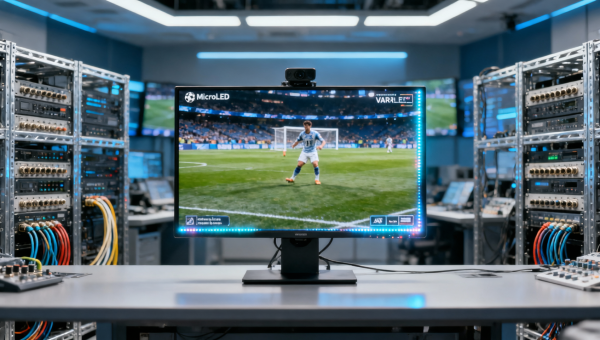
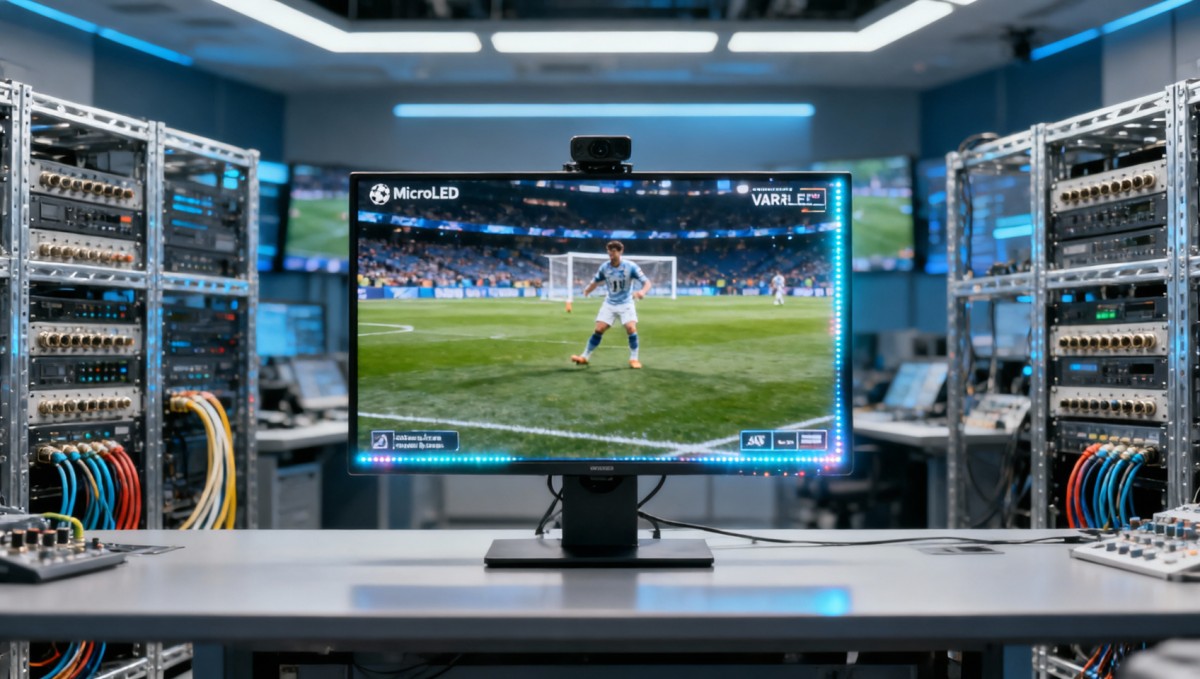
On April 24, FIFA announced that the main control monitors and pitch-side replay terminals for the VAR system at the 2026 FIFA World Cup will exclusively use MicroLED display modules from a Chinese vendor. These modules meet strict technical requirements: refresh rate ≥240Hz and end-to-end latency ≤8ms. The solution has passed the FIFA Quality Programme for Video Assistant Referees certification — the first such approval granted to a Chinese display technology provider for top-tier international football competitions.
Industries Affected
Display Module Exporters & OEM/ODM Manufacturers
These companies face direct implications as FIFA’s certification establishes a new benchmark for real-time sports visualization hardware. The approval validates technical compliance with elite global sporting standards — potentially opening procurement pathways beyond football (e.g., Olympic broadcasting, professional basketball, esports arenas). Impact centers on qualification credibility, not just volume: future tenders for international event infrastructure may now explicitly reference FIFA VAR-certified latency and refresh specifications.
Sports Broadcast Equipment Integrators
Integrators responsible for VAR control room build-outs or stadium replay systems must now assess compatibility with this certified MicroLED platform. Unlike legacy LCD or OLED solutions, the sub-8ms latency requirement introduces stricter signal path validation needs — including GPU rendering pipelines, video over IP transmission, and frame-synchronization protocols. Integration workflows may require updated testing protocols aligned with FIFA’s VAR quality framework.
High-Performance Visual Component Suppliers
Suppliers of drivers, timing controllers, micro-LED transfer equipment, and thermal management subsystems may see revised design priorities. The certified module’s performance envelope — particularly its combination of high refresh rate and ultra-low latency — implies tighter tolerances in component-level timing precision and power delivery stability. Demand signals may shift toward components validated for deterministic low-latency operation rather than peak brightness or contrast alone.
What Enterprises and Practitioners Should Monitor and Do Now
Track official updates to FIFA’s VAR Technical Specifications
FIFA has not yet published the full test methodology or pass/fail criteria used in the Quality Programme assessment. Enterprises should monitor FIFA’s official communications for any revisions to Section 5 (Display Requirements) of the VAR Technical Manual — especially regarding minimum latency thresholds, measurement procedures, and acceptable variance across ambient lighting conditions.
Assess alignment with key operational parameters — not just certification status
The certification confirms eligibility, not universal suitability. Companies evaluating adoption should verify whether their existing signal sources (e.g., broadcast cameras, graphics engines, network decoders) can consistently deliver clean, jitter-free feeds compatible with the 240Hz+ input requirements. Real-world deployment success depends on system-level integration, not module-level certification alone.
Review supply chain readiness for certified-grade production ramp-up
While the announcement confirms technical qualification, no volume procurement contract or delivery timeline has been disclosed. Firms preparing for potential orders should audit current capacity for batch consistency in latency-critical assembly (e.g., bonding yield, driver calibration repeatability), and confirm traceability documentation meets FIFA’s quality assurance expectations for event-critical infrastructure.
Editorial Perspective / Industry Observation
From an industry perspective, this is best understood as a validation milestone — not yet a market inflection point. The certification demonstrates that Chinese display technology can meet the most demanding real-time decision-support requirements in global sport, but widespread adoption hinges on subsequent commercial execution: tender participation, interoperability testing with existing broadcast ecosystems, and long-term reliability data under tournament conditions. Analysis来看, it signals growing technical parity in ultra-low-latency visual subsystems — yet remains narrowly scoped to one application (VAR) within one governing body (FIFA). Observation来看, the broader implication lies in benchmark-setting: other international federations (e.g., World Athletics, FIBA) may now formalize similar latency-based display requirements in their own technical regulations.
This development does not replace established display suppliers overnight, nor does it guarantee immediate export growth. Rather, it resets the threshold for technical credibility in mission-critical sports visualization — a threshold now demonstrably achievable by non-traditional vendors.
Current more appropriate interpretation is that this represents a precedent-setting technical endorsement — one that elevates visibility and credibility, but whose commercial impact remains contingent on follow-on procurement activity and cross-federation regulatory adoption.
Conclusion: The FIFA VAR certification for a Chinese MicroLED display module marks a meaningful step in the globalization of high-performance display supply chains. It affirms technical capability at the highest operational tier, yet its industry significance lies less in immediate market share shifts and more in the recalibration of technical benchmarks and procurement expectations across elite sports infrastructure. For stakeholders, sustained attention should focus on how — and whether — this certification translates into repeatable, scalable, and interoperable deployments beyond a single tournament.
Source: FIFA official announcement (April 24); FIFA Quality Programme for Video Assistant Referees documentation (publicly available version, v3.1). Note: Certification scope, procurement terms, and post-tournament scalability remain unconfirmed and subject to ongoing observation.
Search News
Hot Articles
- Pro Stage AudioFIFA Adopts Chinese Mini-LED Displays for 2026 World Cup VAR SystemApr 24, 2026
- Outdoor RidesChina FA Warns Nanjing City Over Fan Conduct; ISO 20785 Compliance AcceleratesApr 24, 2026
- Pro Stage AudioFan Zhendong Visits Silicon Valley as MLTT Investor, AI Ping-Pong Tech Draws US InterestApr 24, 2026
Popular Tags
Need ExpertConsultation?
Connect with our specialized leisureengineering team for procurementstrategies.
Recommended News
 Apr 24, 2026CCTV5 Snooker Broadcast Drives 37% Surge in Global Lighting Export InquiriesCCTV5 snooker broadcast drives 37% global lighting export inquiries—UK, Germany & UAE lead demand for stage lighting, DMX512 & LED follow-spots.● Pro Audio Engineer
 Apr 23, 20262026 FIBA Women's World Cup Draw Opens Export Window for Arena Lighting & Timing SystemsFIBA Women's World Cup 2026 draw unlocks export opportunities for FIBA Level 3 arena lighting & ITU-certified timing systems — act now.● Pro Audio Engineer
 Apr 23, 2026CCTV5 Snooker Broadcast Drives 37% Surge in Stage Lighting Export InquiriesCCTV5 snooker broadcast sparks 37% surge in global stage lighting export inquiries—UAE, Mexico & Indonesia lead demand for DMX512/IP65-compliant Chinese LED fixtures.● Pro Audio Engineer
 Apr 22, 2026Guangdong vs. Shanxi CBA Game Highlights Smart Arena LightingGuangdong vs. Shanxi CBA game showcased smart arena lighting — HDR-ready, UL/GB-certified, and proven for broadcast excellence. Key for lighting makers & stadium developers.● Pro Audio Engineer
 Apr 22, 2026CCTV5 Snooker Broadcast Drives 37% Rise in Lighting Export InquiriesCCTV5斯诺克直播引爆海外采购潮!LED摇头灯、DMX控制系统等专业舞台灯光出口询盘激增37%,低延迟与EMC Class B成关键门槛。立即洞察趋势→● Pro Audio Engineer
 Apr 21, 2026CCTV5 Snooker Broadcast Drives 37% Surge in Stage Lighting Export InquiriesCCTV5 snooker broadcast sparks 37% surge in global stage lighting export inquiries—key demand from Brazil, KSA & Indonesia for IP65, 20k-hr LED moving heads.● Pro Audio Engineer
 Apr 21, 2026Guangdong vs. Shanxi CBA Game Highlights Domestic Smart Arena LightingGuangdong vs. Shanxi CBA game spotlighted domestic smart arena lighting—EN 12193:2023-compliant, flicker-free 4K LED system powering global stadium upgrades.● Pro Audio Engineer
 Apr 20, 2026Guangdong vs. Shanxi CBA Game Highlights Domestic Smart Arena LightingGuangdong vs. Shanxi CBA game spotlighted China-made smart arena lighting—FIBA-certified, broadcast-ready LED system with <0.1s dimming & 5600K stability.● Pro Audio Engineer
 Apr 17, 2026JIS T 0601-2-77:2026 Enforces Stricter Laser Limits for Stage Equipment in JapanJIS T 0601-2-77:2026 enforces stricter laser limits for stage equipment in Japan — 35% lower MPE, AI beam monitoring required. Act now to comply.● Pro Audio Engineer
 Apr 16, 2026JIS T 0601-2-77:2026 Enforces New Audience Laser Limits in JapanJIS T 0601-2-77:2026 enforces strict new audience laser limits in Japan — ≤1.0 mW/cm² (0.25s). Critical for pro audio, stage lighting & laser exporters. Act now to ensure compliance.● Pro Audio Engineer
 Apr 25, 2026FIFA Adopts Chinese MicroLED Displays for 2026 World Cup VAR SystemFIFA VAR system adopts Chinese MicroLED displays for 2026 World Cup — ultra-low-latency, 240Hz+ certified tech. Game-changing for sports display exporters & broadcast integrators.● Pro Audio Engineer
 Apr 25, 20262026 FIBA Women's World Cup Draw Sparks Demand for Certified Arena Lighting & Timing SystemsFIBA Women's World Cup 2026 draw fuels global demand for certified arena lighting & timing systems—get FIBA-compliant, multi-standard solutions now.● Pro Audio Engineer
 Apr 25, 2026CCTV5 Snooker Broadcast Drives 37% Surge in Stage Lighting Export InquiriesCCTV5 snooker broadcast drives 37% surge in stage lighting export inquiries—UK, Germany & Australia lead demand for DMX512 & broadcast-ready LED fixtures.● Pro Audio Engineer
 Apr 18, 2026JIS T 0601-2-77:2026 Enforces Tighter Laser Brightness Limits in JapanJIS T 0601-2-77:2026 enforces tighter laser brightness limits in Japan—35% stricter + instantaneous peak detection. Critical for stage laser exporters, integrators & distributors.● Pro Audio Engineer
 Apr 17, 2026Stage lighting truss compatibility issues nobody checks before ordering hotel equipmentAvoid costly rework: Verify stage lighting truss compatibility with hotel equipment, amusement equipment, sensory playgrounds & commercial furniture—before you order.● Pro Audio Engineer
 Apr 15, 2026Stage lighting truss systems that ship pre-aligned — no on-site calibrationPre-aligned stage lighting truss systems for amusement equipment, sensory playgrounds & hotel entertainment — zero on-site calibration, certified safety & rapid deployment.● Pro Audio Engineer
 Apr 13, 2026Stage equipment rentals vs. buying: when the break-even point surprises youStage equipment rentals vs. buying? Discover when renting hotel desks, commercial playgrounds, microphone systems & more slashes TCO by 37–52%—get your free break-even analysis now!● Pro Audio Engineer
 Apr 13, 2026Stage equipment rigging specs—why ‘rated for 500kg’ doesn’t mean safe for your trussStage equipment rigging specs matter—especially for trampoline park manufacturers, commercial playgrounds & hospitality furniture. Don’t trust '500kg rated' labels alone.● Pro Audio Engineer
 Apr 04, 2026Stage Lighting & Truss Projects Often Depend on Office Supplies Manufacturer Fasteners — Here’s Why They FitOffice supplies manufacturer fasteners trusted by stage lighting & truss projects—precision, ISO-certified, and B2B-ready. Discover top office supplies supplier, OEM, and exporter solutions.● Pro Audio Engineer
 Mar 30, 2026Amusement park lighting projects stall at the dimming curve—not the fixtureCommercial sourcing for amusement park lighting, playground development & compliance—solve dimming curve bottlenecks before procurement. Expert OEM/ODM insights.● Pro Audio Engineer
 Mar 30, 2026Why commercial sourcing for amusement park lighting rarely delivers on photometric specscommercial sourcing for amusement park lighting often fails photometric specs—risking playground compliance, safety & ROI. Discover why OEM-certified solutions outperform generic hotel restaurant furniture, ride parts & electronic music gear.● Pro Audio Engineer
 Mar 27, 2026How stage lighting & truss projects avoid 4–6 week delays using integrated supply chain solutions with real-time trackingDiscover how integrated supply chain solutions, OEM manufacturing & ODM services slash 4–6 week delays in amusement park equipment, pro audio, and stage lighting projects—real-time tracking included.● Pro Audio Engineer
 Mar 19, 2026What Stage Lighting Suppliers Don’t Tell You About Percussion Instrument ReflectivityDiscover why adventure playground, trampoline park & theme park rides need reflectivity-aware lighting—especially near percussion instruments, playground safety, and soundproofing materials.● Pro Audio Engineer