2026 FIBA Women's World Cup Draw Sparks Demand for Certified Arena Lighting & Timing Systems
On April 24, 2026, the official draw for the FIBA Women’s Basketball World Cup placed China in Group D — a highly competitive pool featuring the USA, Australia, and Serbia. This grouping has triggered renewed global interest in FIBA-compliant venue infrastructure upgrades, particularly among commercial sports facility operators, lighting manufacturers, and timing system integrators serving international basketball markets.
Event Overview
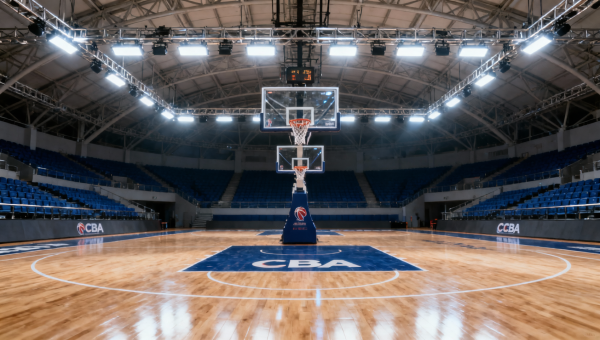
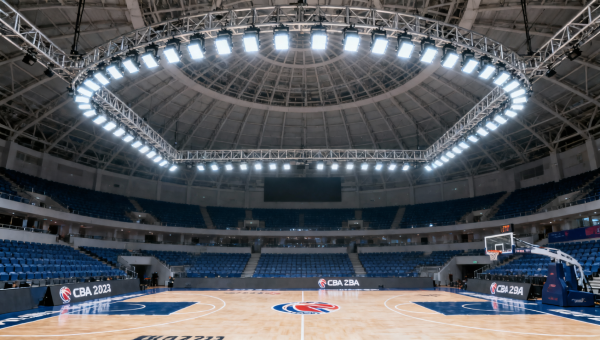
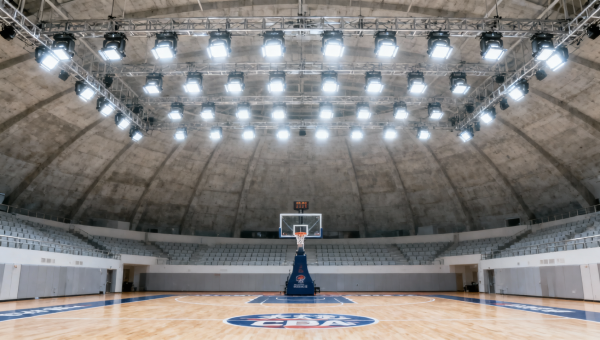
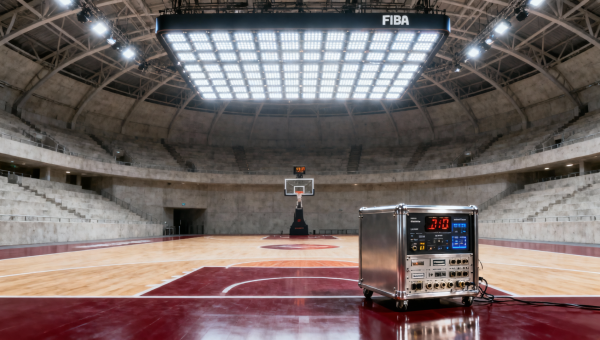
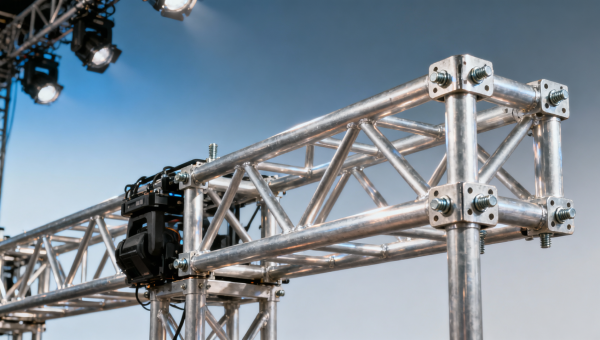
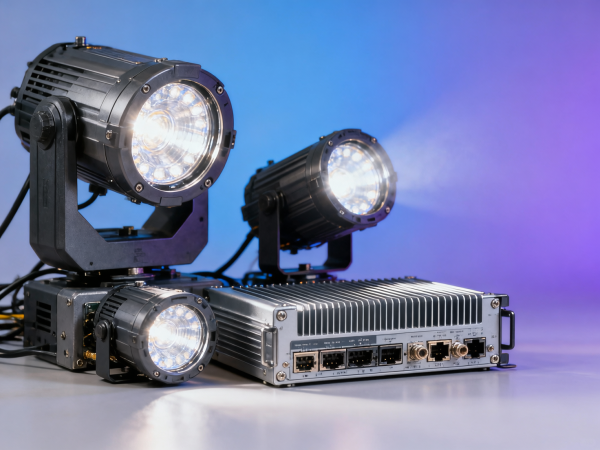
The 2026 FIBA Women’s Basketball World Cup draw concluded on April 24, 2026. As confirmed by FIBA, the People’s Republic of China national team was assigned to Group D alongside the United States, Australia, and Serbia. Publicly available information indicates that this grouping has intensified demand signals for certified arena lighting and timing systems — specifically LED court lighting meeting FIBA standards, multi-protocol timing systems compatible with FIBA, USAB, and NCAA rules, and anti-glare suspended truss mounting solutions. Early procurement activity has been reported from distribution partners in Southeast Asia and Latin America.
Which Subsectors Are Affected?
Direct Export Trading Enterprises
Export-oriented firms supplying FIBA-certified LED sports lighting and timing hardware face immediate order inquiries from regional distributors. The impact manifests as accelerated lead-time expectations and increased requests for documentation verifying FIBA compliance (e.g., FIBA Equipment Certification Reports) and multi-standard protocol support (FIBA/USAB/NCAA).
Manufacturing & Assembly Facilities
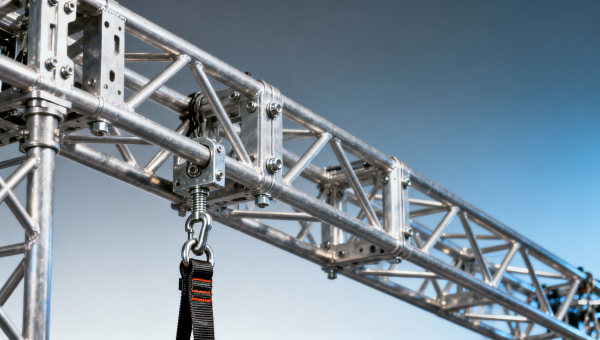
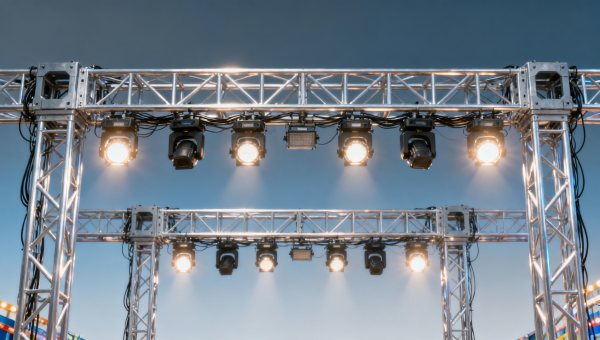
Factories producing arena lighting fixtures or digital scoreboard/timing controllers are seeing elevated interest in specific configurations: high-CRI, low-UGR LED luminaires designed for suspended truss mounting; and timing control units with firmware supporting both FIBA 2023 rulebook logic and NCAA/USAB clock behavior. Production planning may need adjustment to prioritize these variants over generic models.
Distribution & Channel Partners
Regional distributors — especially those active in Southeast Asia and Latin America — have initiated emergency inventory reviews. The impact centers on stock availability of certified products, lead time visibility for FIBA-approved components, and readiness to provide technical documentation (e.g., photometric reports, protocol compatibility matrices) to end customers during tender processes.
What Should Relevant Enterprises or Practitioners Focus On Now?
Monitor Official FIBA Venue Requirements Updates
FIBA periodically revises its Official Equipment Regulations. Current more attention should be paid to any near-term updates related to lighting uniformity thresholds (Emin/Eavg), glare control (UGR ≤ 22), or timing system fail-safe protocols — as these directly affect product qualification and tender eligibility.
Track Procurement Signals from Commercial Venue Operators
Commercial sports arenas — not just national federations — are initiating feasibility studies for lighting and timing upgrades ahead of potential hosting windows. Enterprises should distinguish between speculative interest and formal RFPs, and prioritize engagement where venue operators reference FIBA World Cup readiness or multi-standard compatibility as explicit criteria.
Verify Documentation Readiness for Key Markets
For exports to Southeast Asia and Latin America, ensure FIBA certification documents, multilingual user manuals (English + Spanish / Bahasa), and third-party test reports (e.g., IEC 62471 for photobiological safety) are current and locally accepted. Some jurisdictions require notarized translations or local agent registration — confirm status before quoting.
Assess Supply Chain Buffer for Critical Components
Key subsystems — such as high-precision optical lenses for anti-glare beam control or dual-protocol timing microcontrollers — may face constrained lead times. Analyze current inventory levels and supplier commitments for these items, and consider pre-positioning minimal buffer stock aligned with known distributor reorder patterns.
Editorial Observation / Industry Perspective
From an industry perspective, this draw outcome is best understood not as a sudden market shift, but as a timing catalyst amplifying pre-existing demand drivers: the global expansion of professional women’s basketball, rising broadcast production standards, and stricter enforcement of FIBA venue compliance for major events. Analysis suggests the ‘death group’ assignment has accelerated decision timelines for venues already evaluating upgrades — rather than creating entirely new demand. Observation shows that channel partners reporting urgent procurement interest are largely those with existing relationships to national federation projects or commercial league operators. It is therefore more accurate to view this as a short-term liquidity signal in a maturing segment, rather than a structural inflection point.
Current more relevant interpretation is that the draw serves as a near-term validation of ongoing product development and certification efforts — especially for firms with FIBA-certified lighting or multi-protocol timing systems already in their portfolio. The event does not alter long-term market fundamentals, but it does compress response windows for supply chain and sales execution.
Conclusion: This draw highlights how international sporting event scheduling can act as a coordination mechanism across fragmented infrastructure supply chains. Its primary industry significance lies in reinforcing the importance of verifiable certification, cross-standard interoperability, and regional documentation readiness — not in generating wholly new markets. For stakeholders, it is better understood as a prompt for operational calibration than a strategic pivot.
Information Sources: FIBA official draw announcement (April 24, 2026); verified procurement signals from registered distribution partners in Southeast Asia and Latin America (as reported through standard trade channels). Note: Ongoing observation is warranted for any subsequent FIBA announcements regarding venue inspection protocols or updated equipment guidelines ahead of the tournament.
Search News
Hot Articles
- Pro Stage AudioFIFA Adopts Chinese Mini-LED Displays for 2026 World Cup VAR SystemApr 24, 2026
- Outdoor RidesChina FA Warns Nanjing City Over Fan Conduct; ISO 20785 Compliance AcceleratesApr 24, 2026
- Pro Stage AudioFan Zhendong Visits Silicon Valley as MLTT Investor, AI Ping-Pong Tech Draws US InterestApr 24, 2026
Popular Tags
Need ExpertConsultation?
Connect with our specialized leisureengineering team for procurementstrategies.
Recommended News
 Apr 24, 2026CCTV5 Snooker Broadcast Drives 37% Surge in Global Lighting Export InquiriesCCTV5 snooker broadcast drives 37% global lighting export inquiries—UK, Germany & UAE lead demand for stage lighting, DMX512 & LED follow-spots.● Pro Audio Engineer
 Apr 23, 20262026 FIBA Women's World Cup Draw Opens Export Window for Arena Lighting & Timing SystemsFIBA Women's World Cup 2026 draw unlocks export opportunities for FIBA Level 3 arena lighting & ITU-certified timing systems — act now.● Pro Audio Engineer
 Apr 23, 2026CCTV5 Snooker Broadcast Drives 37% Surge in Stage Lighting Export InquiriesCCTV5 snooker broadcast sparks 37% surge in global stage lighting export inquiries—UAE, Mexico & Indonesia lead demand for DMX512/IP65-compliant Chinese LED fixtures.● Pro Audio Engineer
 Apr 22, 2026Guangdong vs. Shanxi CBA Game Highlights Smart Arena LightingGuangdong vs. Shanxi CBA game showcased smart arena lighting — HDR-ready, UL/GB-certified, and proven for broadcast excellence. Key for lighting makers & stadium developers.● Pro Audio Engineer
 Apr 22, 2026CCTV5 Snooker Broadcast Drives 37% Rise in Lighting Export InquiriesCCTV5斯诺克直播引爆海外采购潮!LED摇头灯、DMX控制系统等专业舞台灯光出口询盘激增37%,低延迟与EMC Class B成关键门槛。立即洞察趋势→● Pro Audio Engineer
 Apr 21, 2026CCTV5 Snooker Broadcast Drives 37% Surge in Stage Lighting Export InquiriesCCTV5 snooker broadcast sparks 37% surge in global stage lighting export inquiries—key demand from Brazil, KSA & Indonesia for IP65, 20k-hr LED moving heads.● Pro Audio Engineer
 Apr 21, 2026Guangdong vs. Shanxi CBA Game Highlights Domestic Smart Arena LightingGuangdong vs. Shanxi CBA game spotlighted domestic smart arena lighting—EN 12193:2023-compliant, flicker-free 4K LED system powering global stadium upgrades.● Pro Audio Engineer
 Apr 20, 2026Guangdong vs. Shanxi CBA Game Highlights Domestic Smart Arena LightingGuangdong vs. Shanxi CBA game spotlighted China-made smart arena lighting—FIBA-certified, broadcast-ready LED system with <0.1s dimming & 5600K stability.● Pro Audio Engineer
 Apr 17, 2026JIS T 0601-2-77:2026 Enforces Stricter Laser Limits for Stage Equipment in JapanJIS T 0601-2-77:2026 enforces stricter laser limits for stage equipment in Japan — 35% lower MPE, AI beam monitoring required. Act now to comply.● Pro Audio Engineer
 Apr 16, 2026JIS T 0601-2-77:2026 Enforces New Audience Laser Limits in JapanJIS T 0601-2-77:2026 enforces strict new audience laser limits in Japan — ≤1.0 mW/cm² (0.25s). Critical for pro audio, stage lighting & laser exporters. Act now to ensure compliance.● Pro Audio Engineer
 Apr 25, 2026FIFA Adopts Chinese MicroLED Displays for 2026 World Cup VAR SystemFIFA VAR system adopts Chinese MicroLED displays for 2026 World Cup — ultra-low-latency, 240Hz+ certified tech. Game-changing for sports display exporters & broadcast integrators.● Pro Audio Engineer
 Apr 25, 20262026 FIBA Women's World Cup Draw Sparks Demand for Certified Arena Lighting & Timing SystemsFIBA Women's World Cup 2026 draw fuels global demand for certified arena lighting & timing systems—get FIBA-compliant, multi-standard solutions now.● Pro Audio Engineer
 Apr 25, 2026CCTV5 Snooker Broadcast Drives 37% Surge in Stage Lighting Export InquiriesCCTV5 snooker broadcast drives 37% surge in stage lighting export inquiries—UK, Germany & Australia lead demand for DMX512 & broadcast-ready LED fixtures.● Pro Audio Engineer
 Apr 18, 2026JIS T 0601-2-77:2026 Enforces Tighter Laser Brightness Limits in JapanJIS T 0601-2-77:2026 enforces tighter laser brightness limits in Japan—35% stricter + instantaneous peak detection. Critical for stage laser exporters, integrators & distributors.● Pro Audio Engineer
 Apr 17, 2026Stage lighting truss compatibility issues nobody checks before ordering hotel equipmentAvoid costly rework: Verify stage lighting truss compatibility with hotel equipment, amusement equipment, sensory playgrounds & commercial furniture—before you order.● Pro Audio Engineer
 Apr 15, 2026Stage lighting truss systems that ship pre-aligned — no on-site calibrationPre-aligned stage lighting truss systems for amusement equipment, sensory playgrounds & hotel entertainment — zero on-site calibration, certified safety & rapid deployment.● Pro Audio Engineer
 Apr 13, 2026Stage equipment rentals vs. buying: when the break-even point surprises youStage equipment rentals vs. buying? Discover when renting hotel desks, commercial playgrounds, microphone systems & more slashes TCO by 37–52%—get your free break-even analysis now!● Pro Audio Engineer
 Apr 13, 2026Stage equipment rigging specs—why ‘rated for 500kg’ doesn’t mean safe for your trussStage equipment rigging specs matter—especially for trampoline park manufacturers, commercial playgrounds & hospitality furniture. Don’t trust '500kg rated' labels alone.● Pro Audio Engineer
 Apr 04, 2026Stage Lighting & Truss Projects Often Depend on Office Supplies Manufacturer Fasteners — Here’s Why They FitOffice supplies manufacturer fasteners trusted by stage lighting & truss projects—precision, ISO-certified, and B2B-ready. Discover top office supplies supplier, OEM, and exporter solutions.● Pro Audio Engineer
 Mar 30, 2026Amusement park lighting projects stall at the dimming curve—not the fixtureCommercial sourcing for amusement park lighting, playground development & compliance—solve dimming curve bottlenecks before procurement. Expert OEM/ODM insights.● Pro Audio Engineer
 Mar 30, 2026Why commercial sourcing for amusement park lighting rarely delivers on photometric specscommercial sourcing for amusement park lighting often fails photometric specs—risking playground compliance, safety & ROI. Discover why OEM-certified solutions outperform generic hotel restaurant furniture, ride parts & electronic music gear.● Pro Audio Engineer
 Mar 27, 2026How stage lighting & truss projects avoid 4–6 week delays using integrated supply chain solutions with real-time trackingDiscover how integrated supply chain solutions, OEM manufacturing & ODM services slash 4–6 week delays in amusement park equipment, pro audio, and stage lighting projects—real-time tracking included.● Pro Audio Engineer
 Mar 19, 2026What Stage Lighting Suppliers Don’t Tell You About Percussion Instrument ReflectivityDiscover why adventure playground, trampoline park & theme park rides need reflectivity-aware lighting—especially near percussion instruments, playground safety, and soundproofing materials.● Pro Audio Engineer