Vietnam Mandates Child Finger-Trap Sensors for Indoor Play Equipment
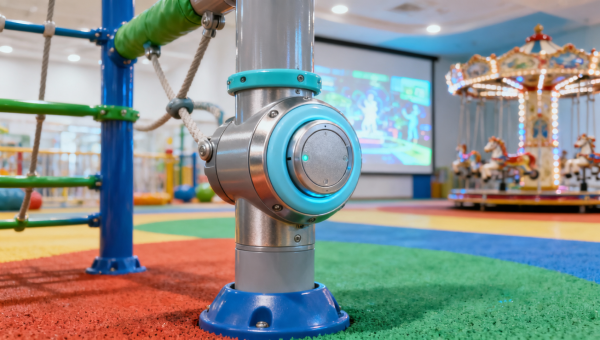
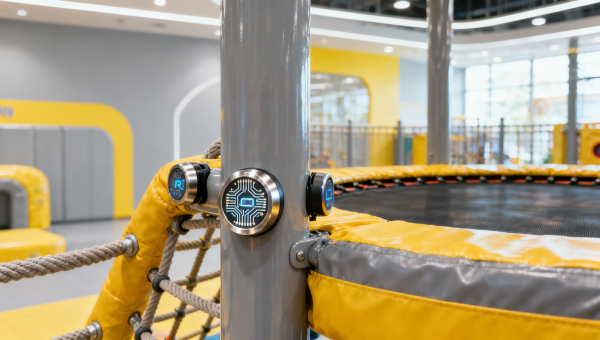
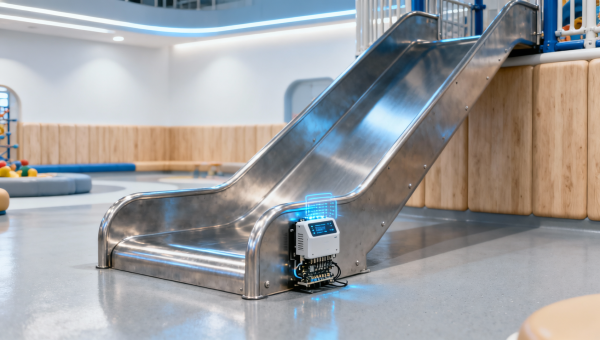
Vietnam’s National Directorate for Quality Control (STAMEQ) issued mandatory standard amendment QCVN 121:2026 on April 22, 2026, requiring child finger-trap sensors on all commercially deployed indoor playground equipment—including carousels, interactive projection walls, and soft-climbing structures. Effective July 1, 2026, this regulation directly affects exporters, manufacturers, and distributors serving the Vietnamese indoor play market.
Event Overview
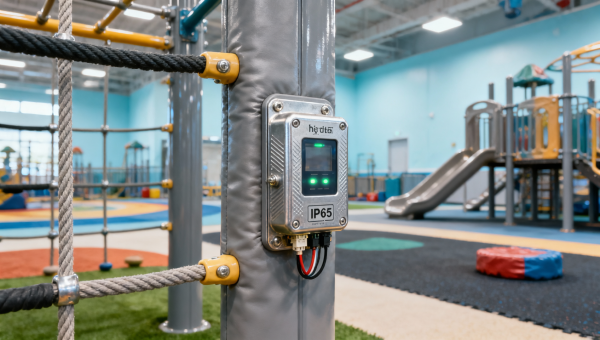
On April 22, 2026, Vietnam’s National Directorate for Quality Control (STAMEQ) published supplementary provisions to mandatory standard QCVN 121:2026. The amendment mandates that all imported commercial indoor playground equipment must integrate child finger-trap sensors certified by Vietnamese authorities. Sensor specifications require a response time of ≤0.3 seconds and a false-trigger rate of <0.1%. Enforcement begins July 1, 2026. As of the announcement date, only eight Chinese export enterprises have secured pre-certification for compatible sensor modules in Vietnam; over 200 Chinese indoor play equipment exporters are potentially impacted.
Which Sub-Sectors Are Affected
Direct Exporters (China-based)
These companies supply finished indoor play systems to Vietnamese importers or operators. They are affected because compliance now requires integrated, Vietnam-certified sensors—not just structural or electrical conformity. Non-compliant units will be denied customs clearance or market entry after July 1, 2026. Impact includes delayed shipments, rework costs, and potential contract renegotiation with local partners.
Equipment Manufacturers (OEM/ODM)
Manufacturers producing for export brands or white-label clients face design and assembly revisions. Integration of certified sensors may require new wiring layouts, firmware updates, or mechanical redesigns (e.g., hinge or joint modifications). Lead-time extensions and component sourcing adjustments are likely, especially given limited pre-certified module availability.
Component Suppliers (Sensor Module Providers)
Suppliers offering generic or CE/UL-marked proximity or pressure sensors are not automatically compliant. Only modules tested and certified under Vietnam’s national accreditation system (VINAQUATEST or designated labs) meet the requirement. This creates a bottleneck: current supply is constrained to eight pre-certified solutions, limiting scalability for broader adoption.
Distribution & Certification Intermediaries
Local Vietnamese import agents, certification consultants, and lab liaison services face increased demand for sensor integration verification, documentation review, and STAMEQ submission support. Their role shifts from general conformity assessment to specialized technical coordination—particularly around sensor interoperability, real-world trigger validation, and post-installation functional testing.
What Relevant Enterprises or Practitioners Should Focus On
Monitor official implementation guidance from STAMEQ
While QCVN 121:2026’s amendment is published, detailed technical annexes—such as test protocols for false-trigger validation, mounting requirements, or maintenance intervals—are not yet publicly available. Enterprises should track STAMEQ’s official notices and scheduled stakeholder briefings through Vietnam’s Ministry of Science and Technology portal.
Prioritize high-volume, high-risk product categories
Rotating and pinch-point-heavy equipment—e.g., carousel arms, folding soft-wall joints, and motorized swing mechanisms—carry higher inherent risk of finger entrapment. These should be prioritized for sensor integration and pre-submission verification, rather than applying uniform upgrades across entire product lines.
Distinguish between regulatory signal and operational readiness
The fact that only eight exporters hold pre-certification does not mean full compliance is currently feasible for most. Analysis来看, this reflects early-stage infrastructure development—not widespread technical unavailability. Enterprises should treat the July 1 deadline as binding but assess whether phased rollout (e.g., first shipments with certified modules, later batches pending lab capacity) may be accommodated under transitional arrangements—if formally announced.
Initiate sensor module procurement and integration planning now
Given lead times for certification testing (typically 8–12 weeks), firmware adaptation, and hardware integration, waiting until May or June 2026 is operationally risky. Current more suitable action is to identify and engage one of the eight pre-certified module suppliers—or initiate parallel application for module certification via a Vietnamese-accredited lab, contingent on module technical alignment with QCVN 121:2026’s sensor performance criteria.
Editorial Perspective / Industry Observation
From industry angle, this amendment signals Vietnam’s shift toward outcome-based safety enforcement—not just static product conformity. It moves beyond structural stability or material toxicity into dynamic interaction safety, aligning closer with EU EN 1176/1177 principles but with locally defined technical thresholds. Observation来看, it functions less as an isolated technical update and more as an early indicator of tightening regulatory scrutiny across ASEAN consumer product verticals where children’s physical interaction is central. Analysis来看, the low pre-certification uptake (8 of 200+) suggests market awareness and readiness lag behind regulatory pace—making proactive alignment, rather than reactive compliance, the more sustainable posture.
This regulation marks a concrete step in Vietnam’s maturing product safety framework for children’s environments. It does not reflect a broad market closure, but rather a targeted recalibration of risk accountability—shifting part of the safety assurance burden upstream to equipment designers and exporters. Currently, it is better understood as an enforceable requirement with near-term operational implications—not a speculative policy proposal or long-term guideline.
Information Source: National Directorate for Quality Control (STAMEQ), Vietnam Ministry of Science and Technology; official publication of QCVN 121:2026 supplementary provisions, dated April 22, 2026. Note: Detailed test methodology documents and transitional provisions remain pending official release and are subject to ongoing monitoring.
Search News
Hot Articles
- Indoor PlaygroundFan Zhendong Visits Silicon Valley as MLTT Investor, AI Ping-Pong Tech Draws AttentionApr 23, 2026
- Stage Lighting & Truss2026 FIBA Women's World Cup Draw Opens Export Window for Arena Lighting & Timing SystemsApr 23, 2026
- Pro Stage AudioChina Upgrades Security Compliance for International Sports EventsApr 23, 2026
Popular Tags
Need ExpertConsultation?
Connect with our specialized leisureengineering team for procurementstrategies.
Recommended News
 Apr 23, 2026Fan Zhendong Visits Silicon Valley as MLTT Investor, AI Ping-Pong Tech Draws AttentionAI ping-pong tech takes center stage as Fan Zhendong visits Silicon Valley as MLTT investor—key for smart sports hardware, AI coaching platforms & SaaS providers.● Theme Park Strategist
 Apr 23, 2026Vietnam Mandates Child Finger-Trap Sensors for Indoor Play EquipmentChild finger-trap sensors now mandatory for indoor play equipment in Vietnam—learn how QCVN 121:2026 impacts exporters, manufacturers & suppliers ahead of July 1, 2026 enforcement.● Theme Park Strategist
 Apr 22, 2026Vietnam Mandates Child Finger-Trap Sensors for Indoor Playground EquipmentVietnam mandates child finger-trap sensors for indoor playground equipment—comply with QCVN 128:2026 & TCVN 9350:2023 before Oct 2026!● Theme Park Strategist
 Apr 21, 2026Vietnam Mandates Child Finger-Trap Sensors for Indoor Play EquipmentVietnam mandates child finger-trap sensors for indoor play equipment—comply with TCVN 9507:2023 by July 1, 2026 to clear customs & protect kids.● Theme Park Strategist
 Apr 20, 2026NES Launches Sports Community Curator ProgramSports Community Curator program launched by NES — join global fitness studios, uni clubs & outdoor groups to co-create, test gear & grow with Chinese sports brands.● Theme Park Strategist
 Apr 17, 2026CPSC AI Safety Alert: 200ms Delay in Child Playground AI Systems = HazardCPSC AI Safety Alert: 200ms delay in child playground AI systems = hazard. Learn how latency compliance impacts Target/Walmart listings, testing, and supply chain.● Theme Park Strategist
 Apr 17, 20262026 Shanghai Sailing Open Adopts Domestic SeaChronos Pro Timing SystemSeaChronos Pro timing system debuts at 2026 Shanghai Sailing Open — ITU-certified, millisecond-accurate, wind- and tide-integrated. A game-changer for marine sports tech.● Theme Park Strategist
 Apr 16, 2026FDA Proposes New Labeling Rules for Sports Nutrition Supplements with Chinese LabelsFDA's new labeling rules for sports nutrition supplements with Chinese labels take effect April 2026—learn compliance must-dos for U.S. importers, manufacturers & brands.● Theme Park Strategist
 Apr 15, 2026Saudi SASO Updates Amusement Ride Standards: VR Devices Now Require Mandatory EMC TestingSaudi SASO's new 2026 standard mandates EMC testing for VR amusement rides, impacting exporters. Learn key compliance strategies for Saudi market access.● Theme Park Strategist
 Apr 14, 2026Japan Mandates Multilingual E-Manuals for Fitness Equipment from April 2026Japan mandates multilingual e-manuals for fitness equipment from April 2026. Learn how this impacts manufacturers & importers with JIS T 0601-1 compliance requirements. Stay ahead of the regulation!● Theme Park Strategist
 Apr 13, 2026WTT Taiyuan Adopts Chinese AI Table Tennis Analysis System with ITTF Export CertificationWTT Taiyuan adopts Chinese AI table tennis analysis system with ITTF export certification, enabling real-time ball speed & spin tracking. A game-changer for sports tech in emerging markets like Southeast Asia & Middle East.● Theme Park Strategist
 Apr 13, 2026First Female Snooker Player Achieves Multiple Century Breaks as Chinese Table Gains WPBSA CertificationChinese snooker player Bai Yulu makes history with multiple century breaks using WPBSA-certified 'Tournament Pro X7' table, marking a milestone for Chinese manufacturing in professional snooker equipment. Discover how this impacts global markets.● Theme Park Strategist
 Apr 13, 2026RCEP Zero Tariff on China's TPU Sports Protective Gear Boosts ASEAN TradeRCEP's zero-tariff policy on China's TPU sports protective gear boosts ASEAN trade, giving Chinese exporters cost advantages over Korean rivals. Learn how manufacturers and distributors can capitalize on this opportunity.● Theme Park Strategist
 Apr 10, 2026Japan's JIS T 9001:2026 Sports Flooring Anti-Slip Standard Mandatory from April 2026Japan's JIS T 9001:2026 standard mandates anti-slip sports flooring (SCOF ≥ 0.6) from April 2026. Chinese exporters must adapt to meet new requirements. Learn key compliance strategies.● Theme Park Strategist
 Apr 10, 2026Bai Yulu Makes History at Snooker World Championship, Sparks Surge in Women's Sports Equipment DemandBai Yulu makes history at Snooker World Championship with two century breaks, sparking 185% surge in women's sports equipment demand. Discover how manufacturers, e-commerce & supply chains can capitalize on this trend.● Theme Park Strategist
 Apr 10, 20262026 Badminton Asia Championships Quarterfinals Schedule Announced, Shi Yuqi to Compete; Southeast Asia Racket Orders Face 6-8 Week Delays2026 Badminton Asia Championships quarterfinals schedule revealed with Shi Yuqi competing, while Southeast Asia faces 6-8 week racket delays. Learn how supply chain issues impact manufacturers and get strategies to navigate equipment shortages.● Theme Park Strategist
 Apr 10, 2026WTT Taiyuan Challenge Sparks Smart Equipment Demand: Japan Buyers Scrutinize AI Training TechDiscover how the WTT Taiyuan Challenge boosts demand for AI training tech as Japanese buyers evaluate smart sports equipment. Learn key opportunities for manufacturers with JIS-certified solutions.● Theme Park Strategist
 Apr 10, 2026Chinese Snooker Players' Success Spurs Global Demand for Cue AccessoriesChinese snooker players' success drives 210% global demand surge for cue accessories. Explore how manufacturers & exporters can capitalize on this trend with UK, German & Australian markets leading inquiries.● Theme Park Strategist
 Apr 10, 2026EU Updates EN 16830:2026 Eyewear Safety Standard, Impacting China's Sports Goggle ExportsEU's updated EN 16830:2026 eyewear safety standard impacts China's sports goggle exports with stricter CE certification requirements. Learn how manufacturers and exporters can adapt to new impact resistance, UV400+, and blue light blocking standards before the September 2026 deadline.● Theme Park Strategist
 Apr 23, 2026What Makes a Good Sensory Playground?Discover what makes a good sensory playground with strong playground safety, playground borders, and playground climbers. Explore durable amusement equipment and music accessories for inclusive commercial spaces.● Theme Park Strategist
 Apr 23, 2026Best Playground Borders for Safer Play AreasPlayground borders improve playground safety, support sensory playground design, and pair with amusement equipment and playground climbers for durable, organized commercial play areas.● Theme Park Strategist
 Apr 23, 2026Are Playground Borders Worth the Cost?Playground borders improve playground safety, protect sensory playground layouts, and lower maintenance costs. Explore smart choices for amusement equipment and playground climbers.● Theme Park Strategist
 Apr 23, 2026What Playground Safety Complaints Usually Point to FirstPlayground safety complaints often first expose issues with playground borders, playground climbers, sensory playground surfacing, and amusement equipment planning. See what buyers should check.● Theme Park Strategist
 Apr 23, 2026Playground Safety Checks That Matter More Than CertificationsPlayground safety starts beyond certifications. Compare playground climbers, playground borders, sensory playground systems, and amusement equipment with practical checks that reduce risk and support smarter commercial projects.● Theme Park Strategist