What Playground Safety Complaints Usually Point to First
When playground safety complaints begin to surface, they often reveal deeper issues with playground borders, playground climbers, surfacing, and overall amusement equipment planning. For buyers, distributors, and commercial project evaluators, understanding these early warning signs is essential to building a safer sensory playground environment while meeting modern standards for playground safety, long-term durability, and smarter sourcing decisions.
What do playground safety complaints usually reveal first?
In commercial play environments, complaints rarely start with technical wording. A parent may mention a slippery landing zone, a school operator may report repeated falls, or a facility manager may note loose edging around a sensory playground. Yet these comments often point to the same first layer of risk: poor interface conditions between users, equipment, and ground surfaces. In many projects, the earliest warning signs appear within the first 3–6 months of active use, especially in high-traffic sites.
For procurement teams, the key mistake is treating complaints as isolated maintenance issues. In reality, playground safety complaints often expose gaps in initial specification, installation supervision, drainage planning, age zoning, or material compatibility. A playground climber may meet design intent on paper, but if surfacing settlement creates a lip of even a few millimeters at the base, complaint frequency can rise quickly in schools, parks, resorts, and mixed-use commercial developments.
This matters even more in the sports and entertainment sector, where amusement equipment must perform under repeated impact, variable weather, and diverse user behavior. Buyers are not only evaluating play value; they are also measuring liability exposure, maintenance burden, replacement cycles, and compliance alignment. A complaint log can therefore become one of the most practical tools for sourcing decisions, especially when comparing multiple suppliers or regional distributors.
From a B2B sourcing perspective, the first complaint usually points to one of 4 core categories: surfacing performance, border transitions, climber access design, or site layout conflicts. These are the visible symptoms that often indicate a deeper planning weakness rather than a single defective part.
The 4 complaint categories procurement teams should track first
- Surfacing complaints: slipping, hard impact feel, pooling water, separation, cracking, or loose-fill displacement after rain or heavy use.
- Border and edging complaints: trip points, exposed edges, migration of infill materials, wheelchair access interruption, or unstable perimeter containment.
- Playground climber complaints: handhold spacing issues, congestion at entry points, difficult transitions for mixed age groups, or overheating of exposed surfaces.
- Planning complaints: poor circulation, overlap of active and quiet zones, inadequate shade, and lack of visibility for supervisors across the full play path.
When these issues appear together, they usually indicate that amusement equipment was sourced without a full-system review. That is why commercial buyers increasingly need not only product quotations, but also risk-based comparison across materials, installation methods, and operational context.
Why surfacing and playground borders trigger the earliest complaints
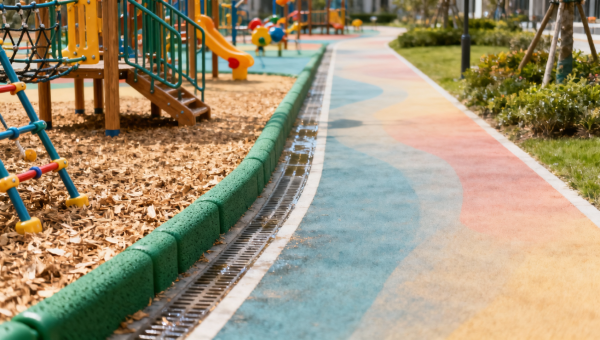
Among all playground safety issues, surfacing and playground borders tend to generate the earliest and most frequent complaints because they affect every movement. Children run, stop, turn, jump, and fall onto these areas hundreds of times per day. If drainage is poor, if impact attenuation is inconsistent, or if border details are not flush with the surrounding grade, risk becomes noticeable immediately. In commercial environments, these failures often appear before structural equipment defects do.
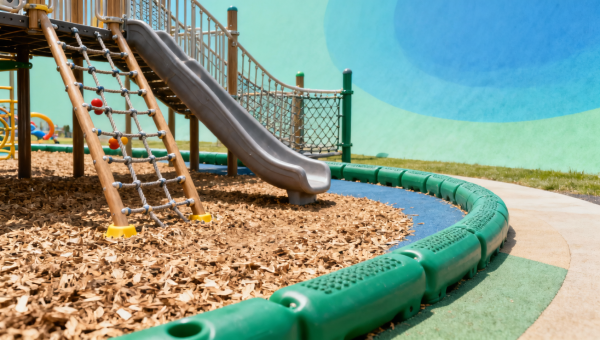
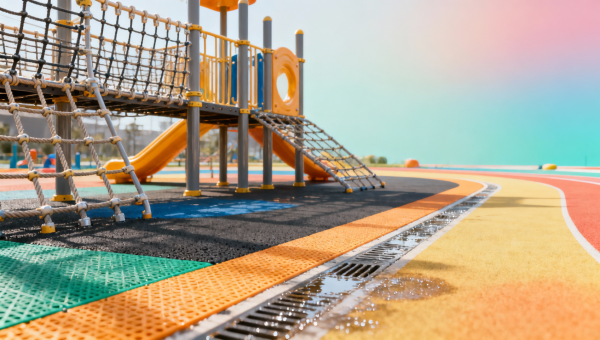
Different surfacing systems also create different complaint patterns. Poured-in-place rubber can produce edge separation or color fading if substrate preparation is weak. Rubber tiles may create seam movement if the base is uneven. Engineered wood fiber may shift out of critical zones after a few days of heavy use, requiring regular top-up cycles every week or every month depending on traffic and weather. Complaints are rarely about one material alone; they are about whether the chosen system matches the site’s maintenance capacity.
Playground borders are similarly underestimated during procurement. A border is not just a perimeter line. It controls loose-fill containment, drainage direction, visual separation, and transition safety for strollers, wheelchairs, maintenance carts, and caregivers. If the border sits too high or settles unevenly over time, it becomes one of the first trip-related complaint points, especially at entry zones and around high-traffic climber exits.
For project evaluators, the practical lesson is simple: if complaints mention “falls,” “slippery areas,” “uneven ground,” or “kids tripping near the edge,” the first audit should start from the ground plane and perimeter detailing, not from the tallest amusement equipment feature.
Typical complaint signals and what they usually indicate
The table below helps buyers and distributors connect common complaint language with likely root causes during site review, quotation comparison, or post-installation inspection.
This kind of mapping shortens evaluation time. Instead of asking only whether a product looks durable, procurement teams can ask whether the entire safety system has been specified to reduce complaint frequency over a 12–24 month operating period.
What to inspect on site in the first 30 days
- Check all entry transitions after the first week of use, especially where playground borders meet walkways or rubber surfacing.
- Inspect water movement after one or two moderate rain events instead of relying only on dry-weather acceptance.
- Review high-impact landing zones under climbers, slides, and transfer points for compression, displacement, or early seam stress.
- Document user behavior conflicts such as crowding, reverse climbing, and caregiver circulation limits during at least 2 peak periods.
A 30-day inspection cycle is often more useful than a one-time handover check because many complaint patterns only emerge after real user traffic begins.
How playground climbers and layout planning create hidden safety risks
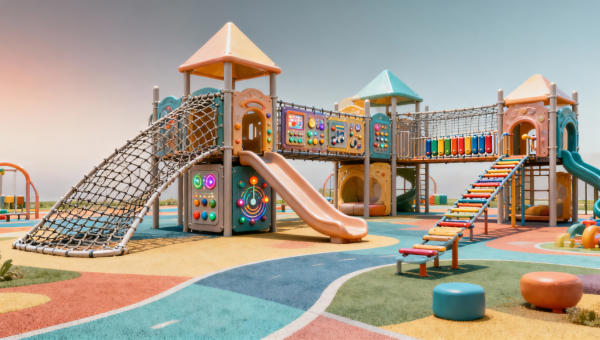
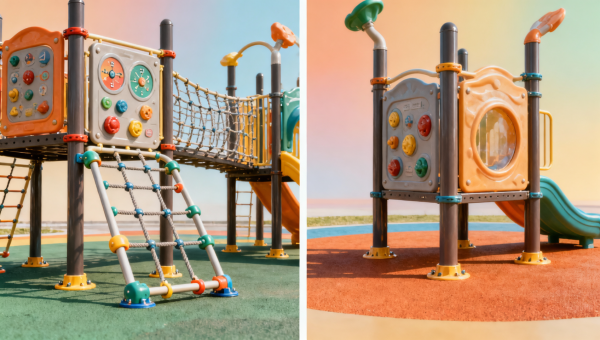
Playground climbers are usually the most visually attractive part of a project, but not always the safest from an operational standpoint. Complaints often arise not because the climber itself is structurally unsound, but because access points, circulation routes, and user age mixing were poorly planned. In a sensory playground, this becomes even more important because users may move unpredictably, seek repeated motion patterns, or need quieter decompression areas near more active zones.
One common problem is congestion at a single ladder, ramp, or net entry. If a climber is designed for children with different height, strength, or confidence levels, then a narrow access sequence can trigger pushing, waiting, and reverse movement. These are complaint drivers long before any part breaks. Another frequent issue is insufficient clearance between dynamic play zones and paths used by caregivers or younger children. A layout that works in a catalog may fail in a real park or hospitality setting.
Commercial buyers should also examine environmental exposure. Dark-colored surfaces can heat significantly under direct sun, metal touchpoints may become uncomfortable, and wet climbing components may change grip conditions after rain or morning condensation. This is especially relevant in outdoor amusement equipment deployed across multiple climates, where one specification cannot always serve every region equally well.
For procurement review, it helps to think in 3 layers: user approach, user activity, and user exit. Many complaints appear at transition moments rather than at the center of the climber. If a child can enter but not confidently descend, or if a landing zone feeds directly into another circulation path, the design has a planning problem even if each component individually appears compliant.
Layout questions that should be asked before purchase approval
- Does the playground climber serve one age band or two adjacent age groups, and how are the routes separated to reduce conflict?
- Are there at least 2 clear entry or exit choices in busier public sites to avoid queue buildup?
- Is there enough visible supervision range for caregivers, staff, or operators across the full play sequence?
- Does the layout reserve quieter sensory playground areas away from fast rotational or climbing equipment?
Typical planning failures behind early complaints
In school and municipal projects, a common failure is over-concentrating play value into one compact footprint. This may reduce initial land use, but it often increases collisions and supervision difficulty. In resort or retail-adjacent environments, the opposite problem appears: visually impressive amusement equipment is spread out, yet circulation between zones crosses service routes or seating areas, producing conflict during peak hours.
Another hidden issue is specification by appearance alone. A distributor may receive a request for a large rope climber or themed structure without a clear user-capacity review. If daily use is heavy, the project may need a more distributed configuration with several activity nodes rather than one dominant feature. Complaint prevention often starts with traffic distribution, not just material selection.
In practical sourcing terms, layout planning should be reviewed with 5 key checks: age zoning, fall zone overlap, entry and exit clarity, surface continuity, and line-of-sight management. These checks are simple, but they can prevent costly retrofits 6–12 months later.
What should buyers compare before choosing surfacing and amusement equipment?
A reliable procurement process compares not only unit price, but also maintenance rhythm, installation dependency, climate suitability, and complaint risk. This is where many B2B buyers, distributors, and project assessors gain value from structured sourcing support. A lower upfront cost can become more expensive if the site requires frequent top-ups, repeated edge repairs, or service callouts within the first year.
For playground safety, the most useful comparison method is to align product type with use intensity. A hotel family zone, a public park, a school campus, and an indoor sensory playground can all require different priorities. Some sites need easier cleaning. Others need stronger weather performance or faster installation within a 2–4 week construction window. Some buyers need OEM or ODM flexibility to match local branding or distributor channel strategy.
The table below summarizes how common surfacing approaches and supporting border solutions differ from a commercial evaluation standpoint. It is not a universal ranking. It is a decision aid for matching site conditions with realistic operating expectations.
The strongest sourcing outcome usually comes from comparing each system across 3 horizons: installation, first-year maintenance, and 3-year operational stability. This approach gives purchasers a better view of total ownership risk than price comparison alone.
A practical 6-point procurement checklist
- Confirm intended user age range and traffic intensity before selecting any playground climber or surfacing system.
- Request technical details for border construction, base preparation, drainage path, and transition treatment.
- Ask for expected maintenance rhythm, such as weekly grooming, monthly inspection, or seasonal replenishment.
- Review relevant compliance pathways, including regionally applicable playground safety standards and material safety considerations.
- Evaluate sample support, replacement component availability, and post-installation issue response time.
- Compare supplier ability to coordinate OEM or ODM customization without disrupting delivery schedules.
These six checks are especially useful for distributors and agents who must balance local market pricing with long-term product reputation.
Which standards, timelines, and risk controls matter most in real projects?
In playground safety procurement, standards matter most when translated into site decisions. Buyers often ask whether a play system is “compliant,” but the better question is whether the specified configuration, installation method, and operating environment can support compliance in use. Depending on market destination, teams may review frameworks such as ASTM, EN, or other local playground safety requirements, along with material and accessibility considerations relevant to the project.
Timelines also affect complaint risk. A rushed project with a 7–15 day installation window may leave little room for substrate curing, drainage verification, or phased inspection. By contrast, a more realistic 3-stage workflow—design confirmation, site preparation, and installation plus inspection—usually reduces early defects. In multi-party projects involving developers, contractors, and distributors, this phased approach is often more valuable than trying to compress every task into one handover event.
Another critical control is documentation. Commercial evaluators should request not only drawings and quotations, but also maintenance instructions, recommended inspection intervals, and replacement part logic. Without this, even well-made amusement equipment may attract complaints simply because the operator does not know what must be checked every week, every month, or after extreme weather.
For sports and entertainment projects with public exposure, it is wise to define 5 inspection domains from the start: surfacing condition, border stability, structural fasteners, climber grip zones, and drainage performance. This creates a repeatable framework for both operators and channel partners.
Project controls that reduce complaint escalation
The table below outlines common control points that help procurement teams manage playground safety from specification through operation.
For buyers, this means the best supplier is often the one who can explain the control process clearly, not merely the one who provides the shortest quotation sheet.
Common misconceptions that lead to preventable complaints
“If the equipment is strong, the site is safe.”
Strength is only one factor. Many complaint-driven incidents come from access, surfacing, or user flow rather than structural failure. A well-built climber on a poorly drained surface is still a complaint generator.
“One safety surface works for every site.”
Not true. Climate, cleaning routines, supervision level, and daily user volume all shape whether a surface performs well. What works in a controlled campus setting may not suit an open public leisure park.
“Complaints are just minor after-sales noise.”
Repeated complaints usually indicate a pattern. For distributors and developers, these patterns can affect brand reputation, warranty costs, and future tender success. Complaint logs should inform future sourcing decisions.
FAQ for buyers, evaluators, and channel partners
How should I choose playground surfacing for a sensory playground?
Start with user profile, maintenance capacity, and circulation behavior. A sensory playground often needs smoother transitions, clearer zone definition, and surfaces that support both active play and calmer movement. Review whether the site requires easier wheeled access, lower loose material migration, or more consistent tactile conditions. Then compare installation lead time, expected inspection frequency, and how the system performs in wet or high-heat conditions.
What are the first warning signs that a playground climber layout is wrong?
Look for repeated congestion, children reversing direction mid-route, frequent caregiver intervention, and fall incidents concentrated at entry or exit points rather than at elevated features. If those issues appear in the first few weeks, the problem is often route planning, age mixing, or landing zone design instead of a material defect.
What should distributors ask suppliers before listing amusement equipment?
Ask for age-range guidance, installation requirements, replacement component logic, surface compatibility, common maintenance intervals, and target project types. Also clarify whether the supplier supports custom branding, sample review, and documentation for local compliance review. These questions help channel partners reduce after-sales friction and improve bid confidence.
How long does a typical commercial playground sourcing cycle take?
It varies by project complexity, but a common range is 2–6 weeks for specification review and quotation alignment, followed by production and delivery schedules that depend on customization, shipping route, and installation readiness. If surfacing, borders, and amusement equipment are sourced as one coordinated package, decision speed often improves because interface risks are addressed earlier.
Why work with GCT when evaluating playground safety and sourcing options?
For commercial buyers in sports and entertainment, the challenge is not simply finding a playground product. The real challenge is identifying which surfacing system, playground border detail, climber configuration, and amusement equipment strategy fit the project’s safety targets, commercial timeline, and long-term operating model. That requires market intelligence as much as product access.
Global Commercial Trade supports this decision process by connecting sourcing analysis with sector-specific commercial understanding. For procurement personnel, that means clearer comparison across supplier capabilities, maintenance implications, and project-fit logic. For distributors and agents, it means better visibility into which specifications can travel across markets and which need local adaptation. For evaluators, it means more structured review before capital is committed.
If your team is reviewing playground safety complaints, planning a sensory playground, upgrading playground climbers, or comparing surfacing and border systems for public or hospitality use, the most productive next step is to clarify the project variables first. That typically includes 6 items: site type, target age group, traffic level, climate exposure, compliance destination, and expected delivery window.
You can contact GCT to discuss parameter confirmation, product selection, delivery cycle planning, custom solution matching, certification-related questions, sample support, and quotation coordination. This is especially valuable when you need to compare multiple commercial options quickly without overlooking the complaint patterns that usually signal risk first.
Search News
Hot Articles
- Indoor PlaygroundFan Zhendong Visits Silicon Valley as MLTT Investor, AI Ping-Pong Tech Draws AttentionApr 23, 2026
- Stage Lighting & Truss2026 FIBA Women's World Cup Draw Opens Export Window for Arena Lighting & Timing SystemsApr 23, 2026
- Pro Stage AudioChina Upgrades Security Compliance for International Sports EventsApr 23, 2026
Popular Tags
Need ExpertConsultation?
Connect with our specialized leisureengineering team for procurementstrategies.
Recommended News
 Apr 23, 2026Fan Zhendong Visits Silicon Valley as MLTT Investor, AI Ping-Pong Tech Draws AttentionAI ping-pong tech takes center stage as Fan Zhendong visits Silicon Valley as MLTT investor—key for smart sports hardware, AI coaching platforms & SaaS providers.● Theme Park Strategist
 Apr 23, 2026Vietnam Mandates Child Finger-Trap Sensors for Indoor Play EquipmentChild finger-trap sensors now mandatory for indoor play equipment in Vietnam—learn how QCVN 121:2026 impacts exporters, manufacturers & suppliers ahead of July 1, 2026 enforcement.● Theme Park Strategist
 Apr 22, 2026Vietnam Mandates Child Finger-Trap Sensors for Indoor Playground EquipmentVietnam mandates child finger-trap sensors for indoor playground equipment—comply with QCVN 128:2026 & TCVN 9350:2023 before Oct 2026!● Theme Park Strategist
 Apr 21, 2026Vietnam Mandates Child Finger-Trap Sensors for Indoor Play EquipmentVietnam mandates child finger-trap sensors for indoor play equipment—comply with TCVN 9507:2023 by July 1, 2026 to clear customs & protect kids.● Theme Park Strategist
 Apr 20, 2026NES Launches Sports Community Curator ProgramSports Community Curator program launched by NES — join global fitness studios, uni clubs & outdoor groups to co-create, test gear & grow with Chinese sports brands.● Theme Park Strategist
 Apr 17, 2026CPSC AI Safety Alert: 200ms Delay in Child Playground AI Systems = HazardCPSC AI Safety Alert: 200ms delay in child playground AI systems = hazard. Learn how latency compliance impacts Target/Walmart listings, testing, and supply chain.● Theme Park Strategist
 Apr 17, 20262026 Shanghai Sailing Open Adopts Domestic SeaChronos Pro Timing SystemSeaChronos Pro timing system debuts at 2026 Shanghai Sailing Open — ITU-certified, millisecond-accurate, wind- and tide-integrated. A game-changer for marine sports tech.● Theme Park Strategist
 Apr 16, 2026FDA Proposes New Labeling Rules for Sports Nutrition Supplements with Chinese LabelsFDA's new labeling rules for sports nutrition supplements with Chinese labels take effect April 2026—learn compliance must-dos for U.S. importers, manufacturers & brands.● Theme Park Strategist
 Apr 15, 2026Saudi SASO Updates Amusement Ride Standards: VR Devices Now Require Mandatory EMC TestingSaudi SASO's new 2026 standard mandates EMC testing for VR amusement rides, impacting exporters. Learn key compliance strategies for Saudi market access.● Theme Park Strategist
 Apr 14, 2026Japan Mandates Multilingual E-Manuals for Fitness Equipment from April 2026Japan mandates multilingual e-manuals for fitness equipment from April 2026. Learn how this impacts manufacturers & importers with JIS T 0601-1 compliance requirements. Stay ahead of the regulation!● Theme Park Strategist
 Apr 13, 2026WTT Taiyuan Adopts Chinese AI Table Tennis Analysis System with ITTF Export CertificationWTT Taiyuan adopts Chinese AI table tennis analysis system with ITTF export certification, enabling real-time ball speed & spin tracking. A game-changer for sports tech in emerging markets like Southeast Asia & Middle East.● Theme Park Strategist
 Apr 13, 2026First Female Snooker Player Achieves Multiple Century Breaks as Chinese Table Gains WPBSA CertificationChinese snooker player Bai Yulu makes history with multiple century breaks using WPBSA-certified 'Tournament Pro X7' table, marking a milestone for Chinese manufacturing in professional snooker equipment. Discover how this impacts global markets.● Theme Park Strategist
 Apr 13, 2026RCEP Zero Tariff on China's TPU Sports Protective Gear Boosts ASEAN TradeRCEP's zero-tariff policy on China's TPU sports protective gear boosts ASEAN trade, giving Chinese exporters cost advantages over Korean rivals. Learn how manufacturers and distributors can capitalize on this opportunity.● Theme Park Strategist
 Apr 10, 2026Japan's JIS T 9001:2026 Sports Flooring Anti-Slip Standard Mandatory from April 2026Japan's JIS T 9001:2026 standard mandates anti-slip sports flooring (SCOF ≥ 0.6) from April 2026. Chinese exporters must adapt to meet new requirements. Learn key compliance strategies.● Theme Park Strategist
 Apr 10, 2026Bai Yulu Makes History at Snooker World Championship, Sparks Surge in Women's Sports Equipment DemandBai Yulu makes history at Snooker World Championship with two century breaks, sparking 185% surge in women's sports equipment demand. Discover how manufacturers, e-commerce & supply chains can capitalize on this trend.● Theme Park Strategist
 Apr 10, 20262026 Badminton Asia Championships Quarterfinals Schedule Announced, Shi Yuqi to Compete; Southeast Asia Racket Orders Face 6-8 Week Delays2026 Badminton Asia Championships quarterfinals schedule revealed with Shi Yuqi competing, while Southeast Asia faces 6-8 week racket delays. Learn how supply chain issues impact manufacturers and get strategies to navigate equipment shortages.● Theme Park Strategist
 Apr 10, 2026WTT Taiyuan Challenge Sparks Smart Equipment Demand: Japan Buyers Scrutinize AI Training TechDiscover how the WTT Taiyuan Challenge boosts demand for AI training tech as Japanese buyers evaluate smart sports equipment. Learn key opportunities for manufacturers with JIS-certified solutions.● Theme Park Strategist
 Apr 10, 2026Chinese Snooker Players' Success Spurs Global Demand for Cue AccessoriesChinese snooker players' success drives 210% global demand surge for cue accessories. Explore how manufacturers & exporters can capitalize on this trend with UK, German & Australian markets leading inquiries.● Theme Park Strategist
 Apr 10, 2026EU Updates EN 16830:2026 Eyewear Safety Standard, Impacting China's Sports Goggle ExportsEU's updated EN 16830:2026 eyewear safety standard impacts China's sports goggle exports with stricter CE certification requirements. Learn how manufacturers and exporters can adapt to new impact resistance, UV400+, and blue light blocking standards before the September 2026 deadline.● Theme Park Strategist
 Apr 23, 2026What Makes a Good Sensory Playground?Discover what makes a good sensory playground with strong playground safety, playground borders, and playground climbers. Explore durable amusement equipment and music accessories for inclusive commercial spaces.● Theme Park Strategist
 Apr 23, 2026Best Playground Borders for Safer Play AreasPlayground borders improve playground safety, support sensory playground design, and pair with amusement equipment and playground climbers for durable, organized commercial play areas.● Theme Park Strategist
 Apr 23, 2026Are Playground Borders Worth the Cost?Playground borders improve playground safety, protect sensory playground layouts, and lower maintenance costs. Explore smart choices for amusement equipment and playground climbers.● Theme Park Strategist
 Apr 23, 2026What Playground Safety Complaints Usually Point to FirstPlayground safety complaints often first expose issues with playground borders, playground climbers, sensory playground surfacing, and amusement equipment planning. See what buyers should check.● Theme Park Strategist
 Apr 23, 2026Playground Safety Checks That Matter More Than CertificationsPlayground safety starts beyond certifications. Compare playground climbers, playground borders, sensory playground systems, and amusement equipment with practical checks that reduce risk and support smarter commercial projects.● Theme Park Strategist