Playground Safety Checks That Matter More Than Certifications
Certifications matter, but they do not always reveal the real risks in amusement equipment. For buyers comparing playground climbers, playground borders, and sensory playground solutions, effective playground safety starts with on-site inspections, material performance, and long-term maintenance planning. This practical guide helps procurement teams and distributors evaluate what truly protects users and supports reliable commercial projects.
In commercial playground procurement, a certificate can confirm that a product was tested under a defined method and at a specific time. It cannot confirm whether a weld was weakened during transport, whether a border system will shift after 6 months of heavy foot traffic, or whether a sensory panel will still operate smoothly after 10,000 interactions in a high-use public space.
For hotels, schools, leisure parks, mixed-use retail projects, and distributors serving municipal buyers, the real question is not whether safety documentation exists. The real question is whether the equipment will remain safe through installation, weather exposure, repeated use, and routine maintenance. That is where practical safety checks become more valuable than paperwork alone.
Why Certifications Alone Leave Gaps in Playground Risk Assessment
Most playground buyers correctly request compliance documents, but many stop the review there. In reality, certifications usually assess a product sample, a test condition, or a production batch. Commercial projects often involve 3 additional variables that certificates do not fully cover: site conditions, installation quality, and ongoing wear patterns.
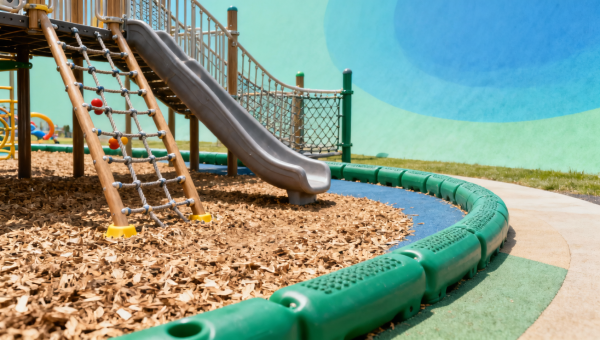
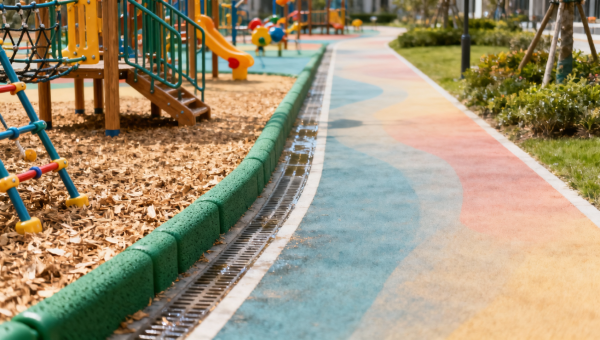
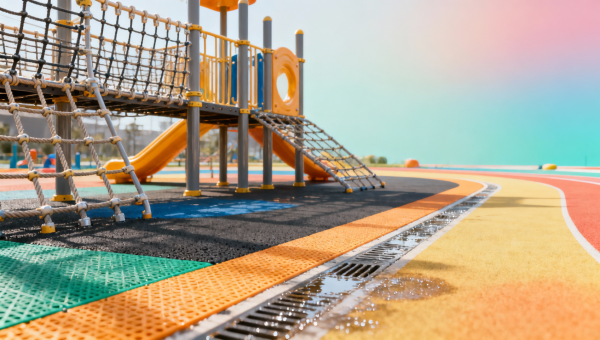
A playground climber installed on uneven ground can develop stress points that were never present during lab testing. A playground border that meets impact-area design requirements on paper may still fail in practice if drainage is poor and the edging settles by 15–30 mm after seasonal rain. A sensory playground feature may be compliant at delivery but become unreliable if seals, moving parts, or fixings are not checked every 30–90 days.
This is especially important for procurement teams comparing suppliers across regions. A factory may provide equivalent documentation, yet differences in steel thickness tolerance, fastener quality, UV stability, and packaging protection can lead to very different field outcomes. Distributors and agents who understand these gaps can reduce claims, protect reputation, and improve repeat business.
What certifications do well, and what they do not prove
Certifications are still necessary. They help buyers screen out unsuitable suppliers, compare baseline compliance, and align with public tender requirements. However, they are not a substitute for a full commercial playground safety review. A strong sourcing process should combine documentation review with site-specific inspection, material evaluation, and a post-installation maintenance plan.
Key limits procurement teams should remember
- A certificate does not confirm how the equipment performs after transport, unloading, and on-site assembly.
- It does not guarantee surfacing compatibility with local climate, drainage, or use intensity.
- It rarely reflects maintenance discipline over a 3-year to 10-year operating period.
- It does not eliminate design mismatch between target age groups and actual user behavior.
For commercial buyers, the practical conclusion is simple: documentation should be treated as the entry point, not the final decision point. That approach is safer, more defensible in procurement reviews, and better aligned with long-term operating cost control.
The Safety Checks That Matter Most on Real Projects
When evaluating playground safety in real environments, buyers should focus on a structured field checklist. The highest-value checks are usually visible, measurable, and linked to predictable failure modes. In most projects, 6 categories deserve priority: foundations, fasteners, impact zones, material aging, entrapment risk, and drainage.
Foundations are often overlooked because they are partly hidden after installation. Yet poor anchoring can create movement that accelerates frame fatigue and joint loosening. In public-facing playgrounds with moderate to heavy use, even 3–5 mm of recurring structural movement can indicate a mounting issue that deserves immediate correction.
Fasteners are another critical checkpoint. Commercial playgrounds should be checked for torque consistency, exposed thread length, missing caps, and corrosion initiation. Coastal installations, water-adjacent leisure sites, and humid resort environments may require more frequent inspection intervals, often every 30 days instead of every 90 days.
Field inspection priorities before handover
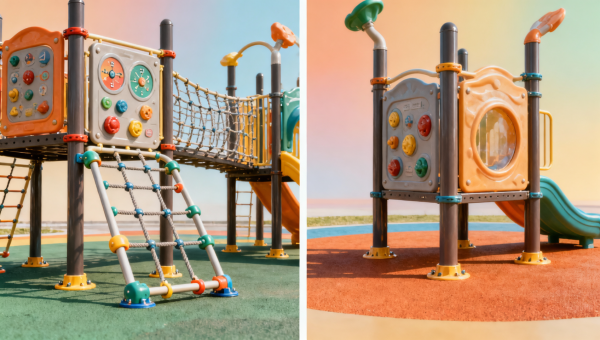
Before final acceptance, procurement teams, project managers, or distributors should verify that the installed system matches the approved drawings and operational intent. This is particularly important for playground climbers and sensory playground installations, where clearances, access spacing, and user flow directly affect safety and supervision quality.
The table below summarizes practical inspection points that often matter more than the existence of a certificate alone.
The most important insight is that these checks are operational, not theoretical. They show whether the equipment is actually safe where it will be used, by the people who will use it, under the conditions it will face every week.
A practical 5-step acceptance checklist
- Confirm installed components match approved specifications and bill of materials.
- Walk the entire fall zone and check for level changes, pooling, and exposed edges.
- Test moving parts, sensory panels, and grip surfaces under repeated use conditions.
- Inspect all connection points, caps, welds, and visible coatings.
- Document defects and require corrective action before handover sign-off.
Material Performance and Design Details That Predict Long-Term Safety
Long-term playground safety depends heavily on material behavior, especially in outdoor commercial settings. Buyers should not only ask what a component is made of, but also how it will perform after 12 months, 24 months, and 5 years of UV exposure, temperature change, moisture, and cleaning cycles.
For steel structures, coating quality, edge sealing, and weld consistency are often more meaningful than general claims of durability. Poor finishing around welds and cut edges can become the first corrosion points. In a high-humidity environment, that early corrosion may appear within 6–18 months, well before the buyer expected maintenance intervention.
For plastics, rubber, ropes, and tactile components used in sensory playground systems, surface temperature, color fade, crack resistance, and tactile integrity matter. A panel that becomes brittle or rough after repeated UV exposure creates both user discomfort and safety risk. Buyers should request realistic service-life expectations and recommended inspection frequency for each material family.
Material questions that help buyers avoid hidden failures
A useful sourcing discussion should move beyond broad claims like “weather-resistant” or “commercial grade.” Procurement teams should ask for measurable ranges, such as coating thickness range, rope construction type, panel edge treatment, expected replacement intervals, and maintenance sensitivity in coastal, dry, or freeze-thaw climates.
The table below helps compare common playground material concerns from a commercial buyer’s perspective.
For distributors and project evaluators, these checks also improve supplier comparison. Two products may look similar in catalog photos, yet design detailing around fixings, coatings, and modular replacement can create a large difference in total operating cost over a 5-year period.
Design details buyers should review closely
- Grip diameter and reach dimensions should suit the intended age range, not just general use.
- Platform edges and transitions should reduce snagging, slipping, and step hesitation.
- Modular components should allow replacement of worn parts without removing the entire structure.
- Sensory elements should remain accessible, durable, and easy to sanitize in public venues.
Maintenance Planning Is a Safety Decision, Not an Afterthought
Many commercial playground safety failures begin as maintenance failures. A loose cap, a shifted border, or a worn joint may seem minor in week 1, but after 60–120 days of use, small defects can become service interruptions or injury risks. For procurement teams, this means maintenance planning should be included in supplier evaluation before the purchase order is issued.
A robust maintenance approach usually includes 3 layers: routine visual checks, periodic technical inspections, and annual condition reviews. High-traffic sites such as leisure parks, hospitality family zones, and mixed-use public plazas often need weekly walk-throughs and monthly technical spot checks. Lower-traffic educational or private-use settings may operate effectively on monthly and quarterly intervals.
The commercial benefit is clear. Planned inspection lowers emergency repair cost, reduces downtime, and supports warranty management. It also gives distributors and agents a stronger service proposition when competing for institutional or multi-site contracts.
What a maintenance-ready supplier should provide
A capable supplier should be able to explain spare part availability, lead time for replacement components, recommended inspection cycles, and maintenance responsibilities after installation. If a supplier cannot define these basics, the buyer will likely carry higher operational risk later.
Core maintenance items for commercial playground assets
- Visual inspection every 7–30 days, depending on traffic, weather, and exposure conditions.
- Functional testing of moving and sensory elements every 30–90 days.
- Fastener, anchoring, and border stability review every quarter.
- Full annual assessment with repair log, wear rating, and replacement planning.
Buyers should also ask whether parts are standardized or custom. Standardized replacement parts may shorten service lead times to 7–21 days, while highly customized elements may require 4–8 weeks. That difference matters for operators who cannot leave key play zones partially closed for long periods.
In tender reviews or distributor screening, maintenance readiness can become a decisive differentiator. It translates safety from a one-time purchase feature into an ongoing operating discipline, which is exactly how commercial assets should be evaluated.
How Procurement Teams, Distributors, and Evaluators Should Compare Suppliers
A smarter supplier comparison process goes beyond price, catalog appearance, and certification files. In practice, playground safety sourcing should evaluate at least 4 dimensions together: compliance readiness, installation control, maintainability, and field durability. This helps buyers identify which partner can support long-term commercial performance instead of simply shipping product.
For distributors and agents, this approach is especially valuable when building a portfolio. Products with lower callback rates, clearer maintenance documentation, and better spare-part responsiveness are easier to scale across multiple accounts. They also reduce post-sale friction, which protects margin and customer trust.
Procurement evaluators should request sample inspection protocols, installation guidance, packaging protection details, and defect response commitments. Even basic details, such as whether components are labeled for assembly and whether fixings are packaged by zone, can affect installation error rates and handover quality.
A practical supplier comparison matrix
The matrix below can help institutional buyers and channel partners compare playground suppliers using criteria that influence real-world safety and project reliability.
This kind of comparison helps buyers make a stronger business case internally. It shifts the decision from “Which product is cheapest today?” to “Which solution will remain safer and easier to operate over the next several years?”
Common commercial sourcing mistakes
- Approving a product based only on a test document without reviewing the installation environment.
- Comparing prices without normalizing material quality, spare parts scope, and maintenance obligations.
- Ignoring playground borders and surfacing transitions, even though they generate many visible user complaints.
- Assuming a sensory playground system needs less maintenance because it appears less structural.
FAQ for Buyers Reviewing Playground Safety in Commercial Projects
How often should a commercial playground be inspected?
A practical schedule depends on traffic and environment. High-use public sites may require weekly visual checks, monthly technical reviews, and a full annual inspection. Moderate-use sites can often follow a 30-day visual cycle and quarterly technical checks, provided any defects are logged and corrected quickly.
What should buyers check first when evaluating playground climbers?
Start with anchoring, fall-zone clearance, grip surfaces, joint wear, and spacing consistency. Climbers create repeated dynamic loads, so small installation errors can become more serious over time. Also review how easily worn components can be replaced within a 2–6 week service window.
Are playground borders really a major safety issue?
Yes. Borders affect surfacing containment, trip risk, drainage behavior, and visual neatness. If edging shifts, rises, or separates from surfacing, the problem is immediately visible to users and can lead to complaints or incidents. Border stability should be checked at installation and again after the first heavy rain cycle.
Do sensory playground products require the same level of safety review?
They require a different but equally serious review. Instead of only structural load, buyers should assess tactile durability, moving-part wear, cleaning compatibility, accessible height, and entrapment risk around interactive features. In public spaces, repeated contact and sanitation cycles can affect performance faster than buyers expect.
For commercial playground projects, the strongest safety strategy combines verified compliance with disciplined field checks, material scrutiny, and a realistic maintenance plan. That is how buyers reduce operational risk, protect users, and support long-term asset value across hospitality, education, leisure, and public-use environments.
If you are comparing playground climbers, playground borders, or sensory playground solutions for a new development or distribution portfolio, a more rigorous evaluation framework will produce better outcomes than certifications alone. To review sourcing options, assess supplier readiness, or discuss a tailored commercial playground solution, contact us today and get a project-focused recommendation.
Search News
Hot Articles
- Indoor PlaygroundFan Zhendong Visits Silicon Valley as MLTT Investor, AI Ping-Pong Tech Draws AttentionApr 23, 2026
- Stage Lighting & Truss2026 FIBA Women's World Cup Draw Opens Export Window for Arena Lighting & Timing SystemsApr 23, 2026
- Pro Stage AudioChina Upgrades Security Compliance for International Sports EventsApr 23, 2026
Popular Tags
Need ExpertConsultation?
Connect with our specialized leisureengineering team for procurementstrategies.
Recommended News
 Apr 23, 2026Fan Zhendong Visits Silicon Valley as MLTT Investor, AI Ping-Pong Tech Draws AttentionAI ping-pong tech takes center stage as Fan Zhendong visits Silicon Valley as MLTT investor—key for smart sports hardware, AI coaching platforms & SaaS providers.● Theme Park Strategist
 Apr 23, 2026Vietnam Mandates Child Finger-Trap Sensors for Indoor Play EquipmentChild finger-trap sensors now mandatory for indoor play equipment in Vietnam—learn how QCVN 121:2026 impacts exporters, manufacturers & suppliers ahead of July 1, 2026 enforcement.● Theme Park Strategist
 Apr 22, 2026Vietnam Mandates Child Finger-Trap Sensors for Indoor Playground EquipmentVietnam mandates child finger-trap sensors for indoor playground equipment—comply with QCVN 128:2026 & TCVN 9350:2023 before Oct 2026!● Theme Park Strategist
 Apr 21, 2026Vietnam Mandates Child Finger-Trap Sensors for Indoor Play EquipmentVietnam mandates child finger-trap sensors for indoor play equipment—comply with TCVN 9507:2023 by July 1, 2026 to clear customs & protect kids.● Theme Park Strategist
 Apr 20, 2026NES Launches Sports Community Curator ProgramSports Community Curator program launched by NES — join global fitness studios, uni clubs & outdoor groups to co-create, test gear & grow with Chinese sports brands.● Theme Park Strategist
 Apr 17, 2026CPSC AI Safety Alert: 200ms Delay in Child Playground AI Systems = HazardCPSC AI Safety Alert: 200ms delay in child playground AI systems = hazard. Learn how latency compliance impacts Target/Walmart listings, testing, and supply chain.● Theme Park Strategist
 Apr 17, 20262026 Shanghai Sailing Open Adopts Domestic SeaChronos Pro Timing SystemSeaChronos Pro timing system debuts at 2026 Shanghai Sailing Open — ITU-certified, millisecond-accurate, wind- and tide-integrated. A game-changer for marine sports tech.● Theme Park Strategist
 Apr 16, 2026FDA Proposes New Labeling Rules for Sports Nutrition Supplements with Chinese LabelsFDA's new labeling rules for sports nutrition supplements with Chinese labels take effect April 2026—learn compliance must-dos for U.S. importers, manufacturers & brands.● Theme Park Strategist
 Apr 15, 2026Saudi SASO Updates Amusement Ride Standards: VR Devices Now Require Mandatory EMC TestingSaudi SASO's new 2026 standard mandates EMC testing for VR amusement rides, impacting exporters. Learn key compliance strategies for Saudi market access.● Theme Park Strategist
 Apr 14, 2026Japan Mandates Multilingual E-Manuals for Fitness Equipment from April 2026Japan mandates multilingual e-manuals for fitness equipment from April 2026. Learn how this impacts manufacturers & importers with JIS T 0601-1 compliance requirements. Stay ahead of the regulation!● Theme Park Strategist
 Apr 13, 2026WTT Taiyuan Adopts Chinese AI Table Tennis Analysis System with ITTF Export CertificationWTT Taiyuan adopts Chinese AI table tennis analysis system with ITTF export certification, enabling real-time ball speed & spin tracking. A game-changer for sports tech in emerging markets like Southeast Asia & Middle East.● Theme Park Strategist
 Apr 13, 2026First Female Snooker Player Achieves Multiple Century Breaks as Chinese Table Gains WPBSA CertificationChinese snooker player Bai Yulu makes history with multiple century breaks using WPBSA-certified 'Tournament Pro X7' table, marking a milestone for Chinese manufacturing in professional snooker equipment. Discover how this impacts global markets.● Theme Park Strategist
 Apr 13, 2026RCEP Zero Tariff on China's TPU Sports Protective Gear Boosts ASEAN TradeRCEP's zero-tariff policy on China's TPU sports protective gear boosts ASEAN trade, giving Chinese exporters cost advantages over Korean rivals. Learn how manufacturers and distributors can capitalize on this opportunity.● Theme Park Strategist
 Apr 10, 2026Japan's JIS T 9001:2026 Sports Flooring Anti-Slip Standard Mandatory from April 2026Japan's JIS T 9001:2026 standard mandates anti-slip sports flooring (SCOF ≥ 0.6) from April 2026. Chinese exporters must adapt to meet new requirements. Learn key compliance strategies.● Theme Park Strategist
 Apr 10, 2026Bai Yulu Makes History at Snooker World Championship, Sparks Surge in Women's Sports Equipment DemandBai Yulu makes history at Snooker World Championship with two century breaks, sparking 185% surge in women's sports equipment demand. Discover how manufacturers, e-commerce & supply chains can capitalize on this trend.● Theme Park Strategist
 Apr 10, 20262026 Badminton Asia Championships Quarterfinals Schedule Announced, Shi Yuqi to Compete; Southeast Asia Racket Orders Face 6-8 Week Delays2026 Badminton Asia Championships quarterfinals schedule revealed with Shi Yuqi competing, while Southeast Asia faces 6-8 week racket delays. Learn how supply chain issues impact manufacturers and get strategies to navigate equipment shortages.● Theme Park Strategist
 Apr 10, 2026WTT Taiyuan Challenge Sparks Smart Equipment Demand: Japan Buyers Scrutinize AI Training TechDiscover how the WTT Taiyuan Challenge boosts demand for AI training tech as Japanese buyers evaluate smart sports equipment. Learn key opportunities for manufacturers with JIS-certified solutions.● Theme Park Strategist
 Apr 10, 2026Chinese Snooker Players' Success Spurs Global Demand for Cue AccessoriesChinese snooker players' success drives 210% global demand surge for cue accessories. Explore how manufacturers & exporters can capitalize on this trend with UK, German & Australian markets leading inquiries.● Theme Park Strategist
 Apr 10, 2026EU Updates EN 16830:2026 Eyewear Safety Standard, Impacting China's Sports Goggle ExportsEU's updated EN 16830:2026 eyewear safety standard impacts China's sports goggle exports with stricter CE certification requirements. Learn how manufacturers and exporters can adapt to new impact resistance, UV400+, and blue light blocking standards before the September 2026 deadline.● Theme Park Strategist
 Apr 23, 2026What Makes a Good Sensory Playground?Discover what makes a good sensory playground with strong playground safety, playground borders, and playground climbers. Explore durable amusement equipment and music accessories for inclusive commercial spaces.● Theme Park Strategist
 Apr 23, 2026Best Playground Borders for Safer Play AreasPlayground borders improve playground safety, support sensory playground design, and pair with amusement equipment and playground climbers for durable, organized commercial play areas.● Theme Park Strategist
 Apr 23, 2026Are Playground Borders Worth the Cost?Playground borders improve playground safety, protect sensory playground layouts, and lower maintenance costs. Explore smart choices for amusement equipment and playground climbers.● Theme Park Strategist
 Apr 23, 2026What Playground Safety Complaints Usually Point to FirstPlayground safety complaints often first expose issues with playground borders, playground climbers, sensory playground surfacing, and amusement equipment planning. See what buyers should check.● Theme Park Strategist
 Apr 23, 2026Playground Safety Checks That Matter More Than CertificationsPlayground safety starts beyond certifications. Compare playground climbers, playground borders, sensory playground systems, and amusement equipment with practical checks that reduce risk and support smarter commercial projects.● Theme Park Strategist