Vietnam TUV SUD New Rule: VR Fitness Cabins Require Local Type Test
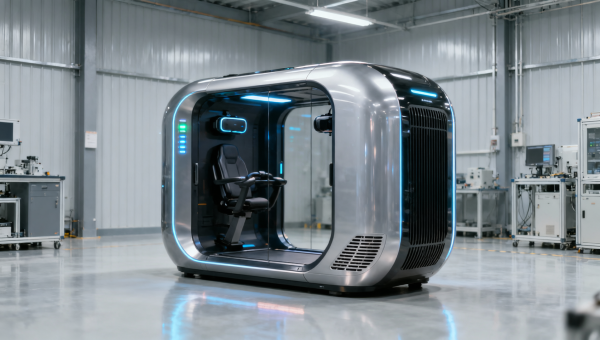
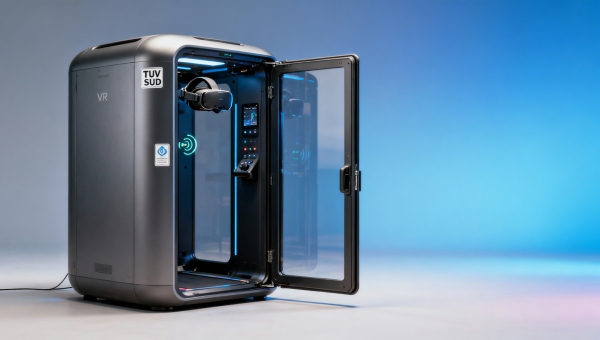
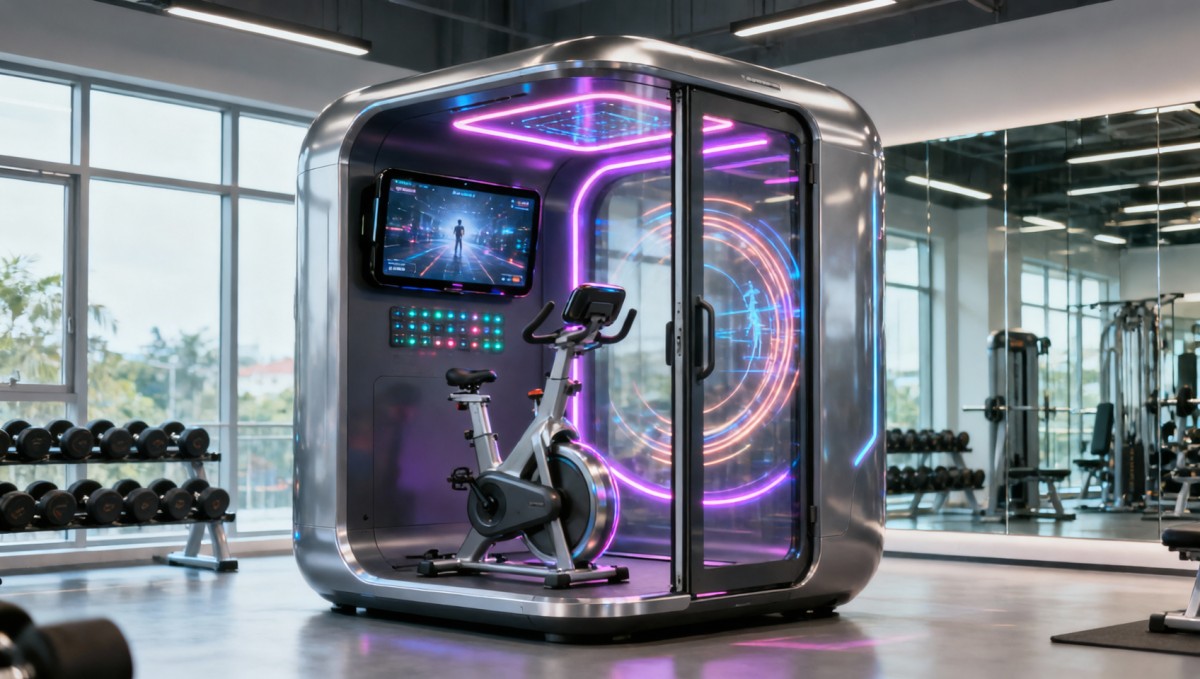
Starting April 23, 2026, Vietnam’s TUV SUD will enforce mandatory local type testing for all commercial VR fitness cabins—including interactive spin bikes, immersive rowing machines, and AI-powered body assessment pods—before market entry. This requirement directly impacts manufacturers and exporters in China and other third countries, extending delivery timelines by 7–12 weeks and increasing per-unit compliance costs by approximately USD 850. Companies supplying to Vietnam’s growing digital health and smart gym sectors should treat this as a material regulatory shift—not just a procedural update.
Event Overview
Effective April 23, 2026, Vietnam’s TUV SUD mandates that all commercial VR fitness cabins entering the Vietnamese market must undergo full-system type testing at designated laboratories in Hanoi or Ho Chi Minh City. Reports issued under China’s CNAS accreditation are explicitly not accepted as substitutes. No further details on test protocols, pass criteria, or lab accreditation scope have been publicly released as of the effective date.
Industries Affected
Direct Exporters (China-based OEM/ODM Manufacturers)
These companies supply VR fitness hardware to Vietnamese distributors or gym chains. They are affected because the rule eliminates reliance on existing CNAS-certified test reports, requiring new physical testing in Vietnam. Impact includes extended lead times, added logistics for sample shipping, and direct cost increases tied to lab fees and potential rework.
Channel Distributors & Importers (Vietnam-based)
Distributors responsible for customs clearance and local market compliance now bear primary accountability for test completion prior to import. Their inventory planning, pricing models, and channel agreements must be revised to accommodate longer certification cycles and higher landed costs.
Supply Chain Service Providers (Testing, Certification, Logistics)
Firms offering international conformity assessment support face increased demand for Vietnam-specific coordination—especially for sample management, lab liaison, and documentation translation. However, no official list of approved labs has been published, limiting immediate service readiness.
What Enterprises Should Monitor and Do Now
Track official updates from TUV SUD Vietnam and Vietnamese Ministry of Science and Technology
The current notice lacks technical annexes—such as applicable standards (e.g., IEC 62368-1, ISO/IEC 17025 alignment), test duration, or sample quantity requirements. These elements will define operational feasibility and should be prioritized for monitoring.
Identify and pre-qualify units destined for Vietnam shipments
Manufacturers should isolate production batches intended for Vietnam and avoid mixing them with units bound for other ASEAN markets where CNAS reports may still be accepted. Early identification enables staggered sample submission and mitigates schedule compression.
Prepare for dual-reporting workflows and budget reallocation
Since CNAS reports cannot substitute for local testing, companies must allocate separate budgets and internal resources for Vietnamese type testing—even if identical units have passed equivalent assessments elsewhere. Finance and QA teams should jointly revise cost-of-goods-sold assumptions accordingly.
Editor Perspective / Industry Observation
From industry perspective, this measure is better understood as a signal of tightening regulatory localization—not yet a fully matured framework. While enforcement begins April 2026, the absence of published test standards, lab accreditation lists, or appeal mechanisms suggests implementation remains transitional. Analysis来看, it reflects broader ASEAN trends toward asserting national conformity infrastructure, but its near-term impact hinges on execution clarity rather than policy intent alone. Current observability remains limited to the mandate itself; actual throughput capacity and inter-lab consistency are unconfirmed.
Conclusion
This regulation marks a concrete escalation in market access requirements for connected fitness hardware in Vietnam. It does not indicate a ban or technology restriction—but rather a shift toward localized verification as a non-negotiable gate. For stakeholders, it is more accurately interpreted as an operational recalibration point than a strategic inflection. Preparedness—not speculation—is the appropriate response.
Information Sources
Main source: Official announcement issued by TUV SUD Vietnam, effective April 23, 2026.
Note: Technical specifications, accredited laboratory list, and appeals process remain pending publication and are subject to ongoing observation.
Search News
Hot Articles
- Pro Stage AudioFIFA Adopts Chinese Mini-LED Displays for 2026 World Cup VAR SystemApr 24, 2026
- Outdoor RidesChina FA Warns Nanjing City Over Fan Conduct; ISO 20785 Compliance AcceleratesApr 24, 2026
- Pro Stage AudioFan Zhendong Visits Silicon Valley as MLTT Investor, AI Ping-Pong Tech Draws US InterestApr 24, 2026
Popular Tags
Need ExpertConsultation?
Connect with our specialized leisureengineering team for procurementstrategies.
Recommended News
 Apr 24, 2026Global VR Fitness Equipment Export Prices Up 12% QoQVR fitness equipment export prices surge 12% QoQ to $4,280 — driven by EU 2026/789 & UL 62368-1:Ed4 compliance. Key insight for exporters, suppliers & logistics teams.● Theme Park Strategist
 Apr 24, 2026Vietnam TUV SUD New Rule: VR Fitness Cabins Require Local Type TestVR fitness cabins entering Vietnam now require local type testing per new TUV SUD rule—impacting exporters, distributors & supply chains. Act now to avoid delays & added costs.● Theme Park Strategist
 Apr 24, 2026SASO Updates EMC Standard for VR Motion Devices in Saudi ArabiaSASO EMC update for VR motion devices in Saudi Arabia: Class B compliance now mandatory for fitness, entertainment & edutainment pods—avoid customs rejection!● Theme Park Strategist
 Apr 23, 2026Global VR Fitness Device Export Prices Rise 12% QoQVR fitness device export prices surge 12% QoQ to $3,820 — discover why IP65, AI calibration & 98.7% on-time delivery now define premium global supply.● Theme Park Strategist
 Apr 23, 2026Vietnam TUV SUD Enforces Local Type Testing for VR Fitness CabinsVR fitness cabins entering Vietnam must now undergo local TUV SUD type testing—mandatory from Apr 22, 2026. Learn costs, timelines & compliance steps.● Theme Park Strategist
 Apr 23, 2026SASO Updates EMC Standard for VR Motion Devices to Class BSASO Updates EMC Standard for VR Motion Devices to Class B: Critical compliance shift for VR fitness pods, AR/VR amusement systems & exporters targeting Saudi Arabia.● Theme Park Strategist
 Apr 22, 2026SASO Updates EMC Standard for VR Haptic Devices in Saudi ArabiaSASO EMC standard update for VR haptic devices in Saudi Arabia: Class B compliance required by July 1, 2026 — critical for VR treadmills, AR walls & training pods.● Theme Park Strategist
 Apr 22, 2026Global VR Fitness Device Export Price Up 12% in Q1 2026VR fitness device export prices surge 12% to $1,842/unit in Q1 2026 — discover why China’s 38-day lead times are reshaping global procurement strategies.● Theme Park Strategist
 Apr 22, 2026Vietnam TUV SUD New Rule: VR Fitness Pods Require Local Type TestVR fitness pods now require local type testing in Vietnam per TUV SUD’s new rule—impacting exporters, costs & lead times. Act now!● Theme Park Strategist
 Apr 21, 2026Global VR Fitness Equipment Export Prices Rise 12% in Q1 2026VR fitness equipment export prices surge 12% in Q1 2026—driven by EU safety mandates. Discover cost impacts, compliance risks & supply chain insights.● Theme Park Strategist
 Apr 21, 2026Vietnam TUV SUD Enforces Local Type Testing for VR Fitness CabinsVR fitness cabins entering Vietnam must now undergo local TUV SUD type testing—EMC & safety checks in Hanoi or Ho Chi Minh City starting April 2026. Key for exporters, certifiers & distributors.● Theme Park Strategist
 Apr 21, 2026SASO Updates EMC Standard for VR Motion Devices in Saudi ArabiaSASO EMC update for VR motion devices in Saudi Arabia: Class B compliance now mandatory for fitness pods, edutainment cabins & arcade systems—act now to avoid shipment delays.● Theme Park Strategist
 Apr 20, 2026Global VR Fitness Device Export Price Up 12% in Q1 2026VR fitness device export prices surged 12% in Q1 2026—discover key drivers, regional impacts, and strategic actions for exporters, suppliers & logistics partners.● Theme Park Strategist
 Apr 20, 2026SASO Updates VR Haptic Device EMC Standard to Class B in Saudi ArabiaSASO VR haptic device EMC update: Class B standard now mandatory in Saudi Arabia from July 1, 2026. Ensure compliance for VR/AR hardware, imports & venues.● Theme Park Strategist
 Apr 20, 2026Vietnam TUV SUD Enforces Local Type Test for Commercial VR Fitness CabinsVietnam TUV SUD now mandates local type testing for commercial VR fitness cabins — including latency, EMC & safety checks. Act now to secure QCVN compliance and market access.● Theme Park Strategist
 Apr 17, 2026Global VR Fitness Equipment Export Prices Rise 12% in Q1 2026VR fitness equipment export prices surge 12.3% in Q1 2026—key insights for exporters, manufacturers & supply chain partners on compliance, pricing, and delivery trends.● Theme Park Strategist
 Apr 17, 2026SASO 2891:2026 Updated: VR Haptic Devices Now Require EMC Class B in Saudi ArabiaSASO 2891:2026 update mandates EMC Class B for VR haptic devices in Saudi Arabia — critical for OEMs, exporters & EdTech suppliers. Act now to avoid delays!● Theme Park Strategist
 Apr 17, 2026Vietnam TUV SUD Mandates Local Type Testing for VR Fitness CabinsVR fitness cabins for gyms & hotels in Vietnam now require local type testing—EMC, thermal, and AI fall detection—to obtain VIEC certification. Act now to avoid delays!● Theme Park Strategist
 Apr 16, 2026VR Fitness Device Export Prices Up 12% — China Supply Stability LeadsVR fitness device export prices up 12%—China’s supply stability and modular hardware-software delivery redefine global competitiveness. Act now.● Theme Park Strategist
 Apr 16, 2026Vietnam Mandates Local TUV SUD Type Testing for VR Fitness CabinsVR fitness cabins entering Vietnam must now pass local TÜV SÜD type testing in Hanoi—key for compliance, customs clearance & market access by July 1, 2026.● Theme Park Strategist
 Apr 16, 2026SASO Updates Playground Standards: VR Devices Now Require EMC TestingSASO now mandates EMC testing for VR playground devices in Saudi Arabia—key update for VR cycling, climbing & motion cabins exporters.● Theme Park Strategist
 Apr 15, 2026Vietnam's New Regulation: Commercial VR Fitness Pods Require Local TUV SUD TestingVietnam's new regulation mandates TUV SUD testing for commercial VR fitness pods. Learn how this impacts exporters, compliance timelines, and market entry strategies for Chinese manufacturers.● Theme Park Strategist
 Apr 15, 2026Global VR Fitness Equipment Export Prices Rise 12% YoY, China Maintains Supply Chain StabilityGlobal VR fitness equipment export prices surge 12% YoY in 2026 Q1, with China maintaining 96.3% delivery reliability. Key insights for VR hardware manufacturers & fitness distributors facing cost pressures.● Theme Park Strategist
 Apr 14, 2026US CPSC Seeks Comments on New Fitness Tracker Rules, Chinese Exporters Need UL/ETL ComplianceUS CPSC proposes new UL/ETL compliance rules for fitness trackers, impacting Chinese exporters. Learn key action points and industry impacts to stay ahead of regulatory changes affecting wearable tech exports to America.● Theme Park Strategist