SASO Updates EMC Standard for VR Haptic Devices in Saudi Arabia
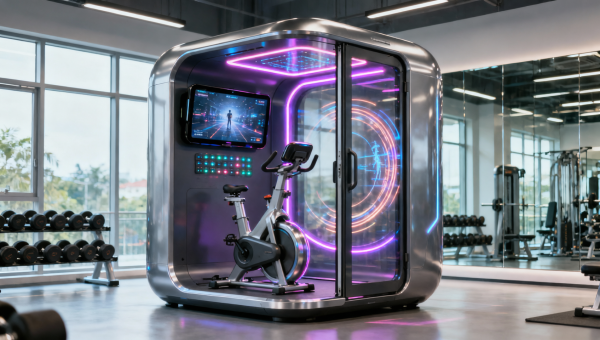
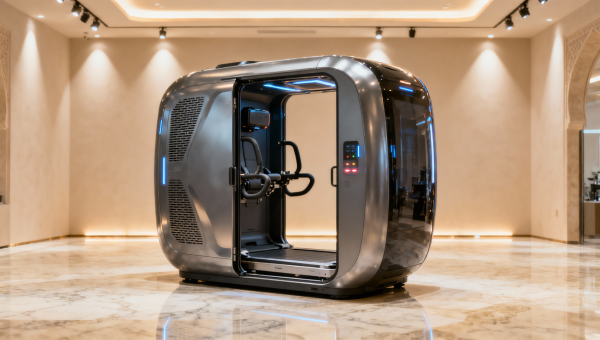
Saudi Arabia’s Standards, Metrology and Quality Organization (SASO) updated the EMC standard SR 2305:2026 on April 24, 2026, mandating Class B electromagnetic compatibility limits for commercial VR haptic devices—including interactive fitness pods and immersive training stations. This shift directly affects manufacturers and exporters of such equipment, especially those based in China, raising pre-market testing complexity and compliance costs.
Event Overview
On April 24, 2026, SASO issued an amendment to Annex A of SR 2305:2026, specifying that commercial VR haptic devices—defined as interactive fitness pods and immersive training stations—must now comply with Class B electromagnetic compatibility (EMC) emission and immunity limits. The update replaces the previously applicable, less stringent Class A requirements.
Industries Affected
Direct Exporters (especially China-based)
These companies face immediate impact because Class B limits are significantly stricter than Class A—particularly in radiated and conducted emissions testing across 30 MHz–1 GHz bands. Compliance now requires more rigorous PCB layout review, shielding validation, and filter redesign, increasing time-to-market and third-party lab testing frequency.
Contract Manufacturers & OEMs
OEMs supplying VR haptic hardware to global brands must revise design specifications and test plans for Saudi-bound units. Since Class B applies only to commercially deployed devices (not lab prototypes or internal-use systems), production line controls and final QA checkpoints must explicitly verify EMC performance under Class B conditions—not just Class A defaults.
Supply Chain Service Providers (EMC Labs, Certification Consultants)
Testing labs and conformity assessment bodies serving Chinese exporters will see increased demand for pre-compliance scans and full CISPR 32/IEC 61000-6-3 Class B validation. However, capacity constraints may emerge if multiple clients seek parallel certification cycles ahead of enforcement timelines—though no grace period has been publicly announced.
What Enterprises Should Monitor and Do Now
Track official implementation timing and transitional provisions
While the amendment was published on April 24, 2026, SASO has not yet confirmed whether a transition period applies or if Class B becomes effective immediately upon publication. Exporters should monitor SASO’s official portal and authorized notification channels for any follow-up circulars or enforcement guidance.
Verify product classification against SASO’s scope definition
The requirement applies specifically to commercial VR haptic devices, including interactive fitness pods and immersive training stations. Companies should cross-check their product’s intended use, sales channel (B2B vs. B2C), and installation environment (e.g., gym, training center) against SASO’s definitions—not assume all VR peripherals fall under this rule.
Review existing test reports and design documentation
Manufacturers holding valid Class A EMC reports for these products should assess whether retesting under Class B is required—or whether targeted design modifications (e.g., ferrite suppression, cable shielding upgrades) can bridge the gap without full revalidation. Early engineering review avoids last-minute redesign delays.
Engage with local SASO-accredited representatives early
As SASO mandates local representation for conformity assessment, exporters without established Saudi partners should initiate engagement now—not during submission. Pre-submission technical alignment helps avoid rejection due to misclassified device categories or incomplete test evidence.
Editorial Observation / Industry Perspective
From an industry perspective, this update is better understood as a regulatory signal than an isolated technical revision. It reflects SASO’s broader trend of aligning EMC requirements for emerging consumer-tech hardware with EU-level stringency—particularly where devices operate in shared public environments (e.g., gyms, training centers) with higher user density and proximity to other electronics. Analysis来看, it does not yet indicate a full-scale harmonization with EN IEC 61000-6-3, but rather a targeted escalation for one high-growth subcategory. Current enforcement remains tied to product registration and customs clearance—meaning non-compliant units may be held at port unless validated by SASO-accredited bodies. Therefore, ongoing monitoring—not reactive compliance—is the more strategic posture.
This update underscores how regional standards bodies increasingly treat immersive hardware not as niche electronics, but as mainstream consumer infrastructure subject to public-environment EMC safeguards. For exporters, it signals that product categorization—and not just technical specs—now carries decisive regulatory weight. It is neither a temporary adjustment nor a broad-based overhaul, but a calibrated threshold shift affecting a defined set of commercial deployment scenarios.
Information Source: Official SASO amendment notice for SR 2305:2026, published April 24, 2026. Note: Enforcement timeline, transitional arrangements, and official English translation of the amended annex remain pending confirmation and require continued observation.
Search News
Hot Articles
- Pro Stage AudioFIFA Adopts Chinese Mini-LED Displays for 2026 World Cup VAR SystemApr 24, 2026
- Outdoor RidesChina FA Warns Nanjing City Over Fan Conduct; ISO 20785 Compliance AcceleratesApr 24, 2026
- Pro Stage AudioFan Zhendong Visits Silicon Valley as MLTT Investor, AI Ping-Pong Tech Draws US InterestApr 24, 2026
Popular Tags
Need ExpertConsultation?
Connect with our specialized leisureengineering team for procurementstrategies.
Recommended News
 Apr 24, 2026Global VR Fitness Equipment Export Prices Up 12% QoQVR fitness equipment export prices surge 12% QoQ to $4,280 — driven by EU 2026/789 & UL 62368-1:Ed4 compliance. Key insight for exporters, suppliers & logistics teams.● Theme Park Strategist
 Apr 24, 2026Vietnam TUV SUD New Rule: VR Fitness Cabins Require Local Type TestVR fitness cabins entering Vietnam now require local type testing per new TUV SUD rule—impacting exporters, distributors & supply chains. Act now to avoid delays & added costs.● Theme Park Strategist
 Apr 24, 2026SASO Updates EMC Standard for VR Motion Devices in Saudi ArabiaSASO EMC update for VR motion devices in Saudi Arabia: Class B compliance now mandatory for fitness, entertainment & edutainment pods—avoid customs rejection!● Theme Park Strategist
 Apr 23, 2026Global VR Fitness Device Export Prices Rise 12% QoQVR fitness device export prices surge 12% QoQ to $3,820 — discover why IP65, AI calibration & 98.7% on-time delivery now define premium global supply.● Theme Park Strategist
 Apr 23, 2026Vietnam TUV SUD Enforces Local Type Testing for VR Fitness CabinsVR fitness cabins entering Vietnam must now undergo local TUV SUD type testing—mandatory from Apr 22, 2026. Learn costs, timelines & compliance steps.● Theme Park Strategist
 Apr 23, 2026SASO Updates EMC Standard for VR Motion Devices to Class BSASO Updates EMC Standard for VR Motion Devices to Class B: Critical compliance shift for VR fitness pods, AR/VR amusement systems & exporters targeting Saudi Arabia.● Theme Park Strategist
 Apr 22, 2026SASO Updates EMC Standard for VR Haptic Devices in Saudi ArabiaSASO EMC standard update for VR haptic devices in Saudi Arabia: Class B compliance required by July 1, 2026 — critical for VR treadmills, AR walls & training pods.● Theme Park Strategist
 Apr 22, 2026Global VR Fitness Device Export Price Up 12% in Q1 2026VR fitness device export prices surge 12% to $1,842/unit in Q1 2026 — discover why China’s 38-day lead times are reshaping global procurement strategies.● Theme Park Strategist
 Apr 22, 2026Vietnam TUV SUD New Rule: VR Fitness Pods Require Local Type TestVR fitness pods now require local type testing in Vietnam per TUV SUD’s new rule—impacting exporters, costs & lead times. Act now!● Theme Park Strategist
 Apr 21, 2026Global VR Fitness Equipment Export Prices Rise 12% in Q1 2026VR fitness equipment export prices surge 12% in Q1 2026—driven by EU safety mandates. Discover cost impacts, compliance risks & supply chain insights.● Theme Park Strategist
 Apr 21, 2026Vietnam TUV SUD Enforces Local Type Testing for VR Fitness CabinsVR fitness cabins entering Vietnam must now undergo local TUV SUD type testing—EMC & safety checks in Hanoi or Ho Chi Minh City starting April 2026. Key for exporters, certifiers & distributors.● Theme Park Strategist
 Apr 21, 2026SASO Updates EMC Standard for VR Motion Devices in Saudi ArabiaSASO EMC update for VR motion devices in Saudi Arabia: Class B compliance now mandatory for fitness pods, edutainment cabins & arcade systems—act now to avoid shipment delays.● Theme Park Strategist
 Apr 20, 2026Global VR Fitness Device Export Price Up 12% in Q1 2026VR fitness device export prices surged 12% in Q1 2026—discover key drivers, regional impacts, and strategic actions for exporters, suppliers & logistics partners.● Theme Park Strategist
 Apr 20, 2026SASO Updates VR Haptic Device EMC Standard to Class B in Saudi ArabiaSASO VR haptic device EMC update: Class B standard now mandatory in Saudi Arabia from July 1, 2026. Ensure compliance for VR/AR hardware, imports & venues.● Theme Park Strategist
 Apr 20, 2026Vietnam TUV SUD Enforces Local Type Test for Commercial VR Fitness CabinsVietnam TUV SUD now mandates local type testing for commercial VR fitness cabins — including latency, EMC & safety checks. Act now to secure QCVN compliance and market access.● Theme Park Strategist
 Apr 17, 2026Global VR Fitness Equipment Export Prices Rise 12% in Q1 2026VR fitness equipment export prices surge 12.3% in Q1 2026—key insights for exporters, manufacturers & supply chain partners on compliance, pricing, and delivery trends.● Theme Park Strategist
 Apr 17, 2026SASO 2891:2026 Updated: VR Haptic Devices Now Require EMC Class B in Saudi ArabiaSASO 2891:2026 update mandates EMC Class B for VR haptic devices in Saudi Arabia — critical for OEMs, exporters & EdTech suppliers. Act now to avoid delays!● Theme Park Strategist
 Apr 17, 2026Vietnam TUV SUD Mandates Local Type Testing for VR Fitness CabinsVR fitness cabins for gyms & hotels in Vietnam now require local type testing—EMC, thermal, and AI fall detection—to obtain VIEC certification. Act now to avoid delays!● Theme Park Strategist
 Apr 16, 2026VR Fitness Device Export Prices Up 12% — China Supply Stability LeadsVR fitness device export prices up 12%—China’s supply stability and modular hardware-software delivery redefine global competitiveness. Act now.● Theme Park Strategist
 Apr 16, 2026Vietnam Mandates Local TUV SUD Type Testing for VR Fitness CabinsVR fitness cabins entering Vietnam must now pass local TÜV SÜD type testing in Hanoi—key for compliance, customs clearance & market access by July 1, 2026.● Theme Park Strategist
 Apr 16, 2026SASO Updates Playground Standards: VR Devices Now Require EMC TestingSASO now mandates EMC testing for VR playground devices in Saudi Arabia—key update for VR cycling, climbing & motion cabins exporters.● Theme Park Strategist
 Apr 15, 2026Vietnam's New Regulation: Commercial VR Fitness Pods Require Local TUV SUD TestingVietnam's new regulation mandates TUV SUD testing for commercial VR fitness pods. Learn how this impacts exporters, compliance timelines, and market entry strategies for Chinese manufacturers.● Theme Park Strategist
 Apr 15, 2026Global VR Fitness Equipment Export Prices Rise 12% YoY, China Maintains Supply Chain StabilityGlobal VR fitness equipment export prices surge 12% YoY in 2026 Q1, with China maintaining 96.3% delivery reliability. Key insights for VR hardware manufacturers & fitness distributors facing cost pressures.● Theme Park Strategist
 Apr 14, 2026US CPSC Seeks Comments on New Fitness Tracker Rules, Chinese Exporters Need UL/ETL ComplianceUS CPSC proposes new UL/ETL compliance rules for fitness trackers, impacting Chinese exporters. Learn key action points and industry impacts to stay ahead of regulatory changes affecting wearable tech exports to America.● Theme Park Strategist