Global VR Fitness Equipment Export Prices Up 12% in Q1 2026
On April 24, 2026, China’s General Administration of Customs reported a 12% quarter-on-quarter increase in the export average unit price of VR fitness equipment — including commercial VR-enabled stationary bikes, motion-sensing boxing platforms, and immersive rock-climbing simulators — to $2,840 per unit. With on-time delivery (OTD) reaching 98.3%, Chinese manufacturers maintained leadership over peers in Vietnam (92.1%) and Mexico (87.6%), reinforcing their role in the high-end arcade and VR machines supply chain. This development is especially relevant for exporters, OEM/ODM partners, logistics integrators, and procurement teams operating across consumer electronics, interactive fitness, and out-of-home entertainment sectors.
Event Overview
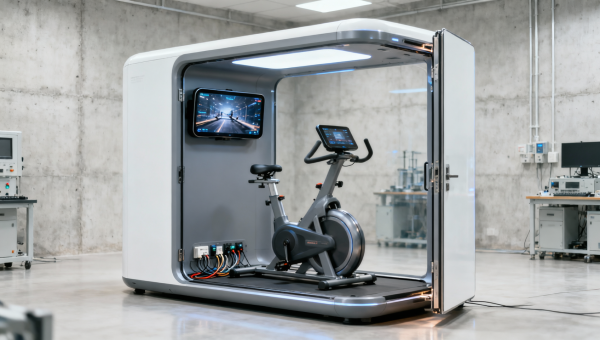
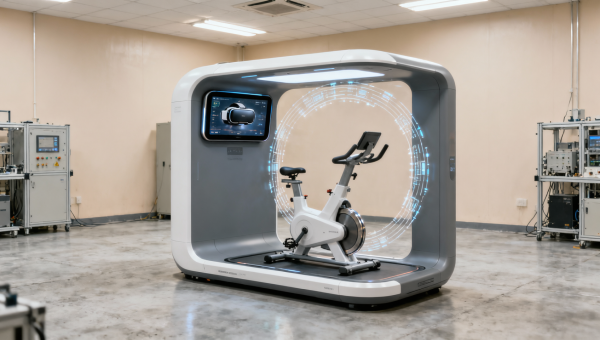
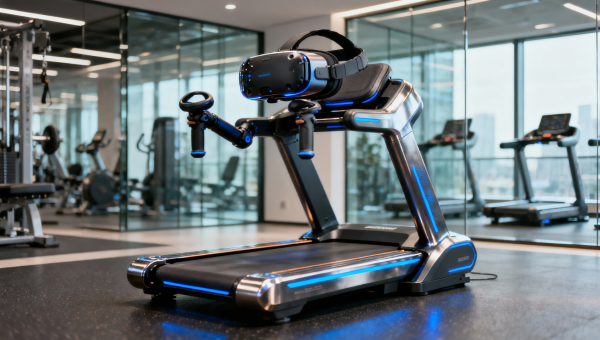
According to data released by China’s General Administration of Customs on April 24, 2026, the average export price of VR fitness equipment from China reached $2,840 per unit in Q1 2026, up 12% year-on-year. The reported on-time delivery (OTD) rate stood at 98.3%, exceeding that of Vietnamese (92.1%) and Mexican (87.6%) contract manufacturing facilities. The scope covers three product categories: commercial VR-enabled stationary bike kits, motion-sensing boxing platforms, and immersive rock-climbing simulators.
Industries Affected
Direct Exporters & Brand Owners
Exporters pricing VR fitness hardware for international markets face compressed margin pressure if input costs remain stable while downstream buyers resist price pass-through. The 12% export price rise may reflect either increased component costs, higher value-added integration (e.g., proprietary software licensing or certified content bundles), or strategic premium positioning — but the data alone does not specify causation.
Component & Raw Material Suppliers
Suppliers of motion sensors, haptic feedback modules, VR headset-compatible interfaces, and structural aluminum/carbon-fiber frames may observe elevated order volumes or revised BOM cost expectations. However, no data confirms changes in upstream procurement volume or material cost indices; the reported price shift applies only at the finished-unit export level.
OEM/ODM Manufacturing Partners
Manufacturers outside China — particularly those in Vietnam and Mexico — face intensified competitive scrutiny as their OTD gaps widen relative to Chinese facilities. Lower delivery reliability may affect bid competitiveness in tenders requiring strict SLA compliance, especially for enterprise or venue-based deployments (e.g., gyms, arcades, rehabilitation centers).
Distribution & Channel Integrators
Importers, regional distributors, and system integrators handling VR fitness hardware must reassess landed cost models and lead-time buffers. A sustained 98.3% OTD rate supports predictable inventory planning, yet the $2,840 baseline price implies revised retail MSRP or channel margin structures — particularly where local VAT, certification, or localization add-ons apply.
What Enterprises and Practitioners Should Monitor and Act On
Track official follow-up releases on export classification and HS code revisions
The Customs data references ‘VR fitness equipment’ as a consolidated category — but no breakdown is provided by HS code, destination market, or shipment mode. Subsequent bulletins may clarify whether this price uptick stems from shifts in product mix (e.g., more high-spec units), tariff treatment, or customs valuation methodology.
Monitor demand signals in key destination markets: EU, US, and Japan
The $2,840 average reflects aggregate export value — not market-specific pricing. Buyers in regions with stricter safety certifications (e.g., CE, UL, PSE) or localized content requirements may face higher effective unit costs. Companies should cross-reference this figure against recent tender awards or distributor price lists in those jurisdictions.
Distinguish between delivery performance and capacity constraints
A 98.3% OTD rate indicates strong operational execution, but it does not confirm available production headroom. Firms relying on Chinese factories should verify current lead times and minimum order quantities (MOQs) before committing to new sales cycles — especially ahead of peak seasonal demand windows (e.g., Q4 fitness campaigns).
Update supplier risk assessments for nearshoring alternatives
Vietnam’s 92.1% OTD and Mexico’s 87.6% — while lower than China’s — still represent functional delivery benchmarks. Companies evaluating dual- or multi-sourcing strategies should assess whether the OTD gap reflects systemic limitations (e.g., logistics infrastructure) or addressable process gaps (e.g., quality inspection bottlenecks), rather than assuming irreversible disadvantage.
Editorial Perspective / Industry Observation
From an industry perspective, this data point is best understood not as evidence of broad-based inflation or supply shortage, but as a marker of evolving value capture within the VR fitness hardware segment. The combination of rising unit prices and sustained high delivery reliability suggests Chinese manufacturers are consolidating position in the upper tier of the value chain — moving beyond pure assembly toward integrated hardware-software solutions validated for commercial deployment. Analysis来看, the OTD differential is likely more consequential than the price change itself: reliability at scale remains a scarce capability in global electronics manufacturing, especially for products requiring tight firmware-hardware synchronization and post-deployment support readiness. Current more appropriate interpretation is that this reflects a structural advantage — not a transient pricing event.
It functions less as an immediate market signal and more as a benchmark confirming existing trends: clients prioritizing uptime, certification readiness, and long-term serviceability continue to favor established Chinese OEM/ODM partners — even amid geopolitical diversification efforts. Sustained monitoring is warranted, however, as OTD metrics can shift rapidly under regulatory, labor, or logistics stress — and no subsequent quarterly data has yet been published to confirm trend continuity.
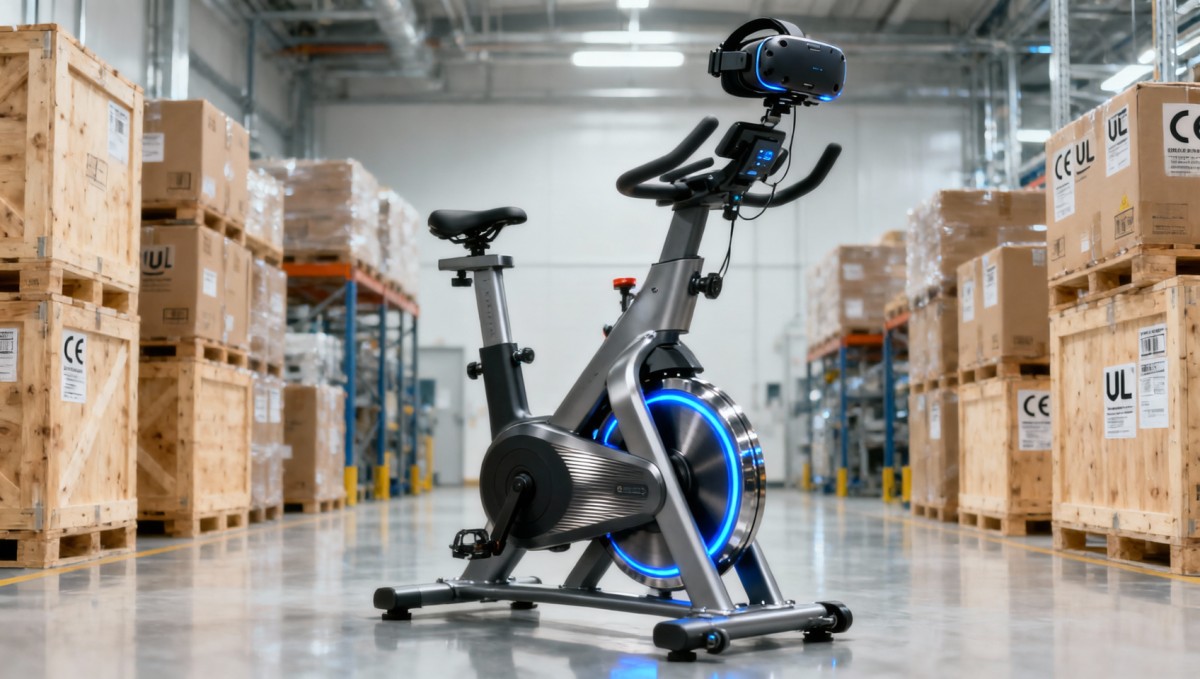
In summary, the Q1 2026 export data underscores China’s continued centrality in the high-reliability segment of VR fitness hardware manufacturing — not due to lowest cost, but due to proven delivery discipline and integration maturity. For stakeholders, the implication is not urgency to pivot, but precision in segmentation: distinguishing between price-sensitive commodity-tier procurement and mission-critical, uptime-dependent deployments where delivery consistency carries measurable ROI. This information is better suited as a reference point for strategic sourcing calibration than as a trigger for reactive procurement changes.
Source: General Administration of Customs of the People’s Republic of China, April 24, 2026 release. Note: No further breakdown (by destination, HS code, or product subcategory) was included in the initial publication; subsequent updates remain pending observation.
Search News
Hot Articles
- Pro Stage AudioFIFA Adopts Chinese Mini-LED Displays for 2026 World Cup VAR SystemApr 24, 2026
- Outdoor RidesChina FA Warns Nanjing City Over Fan Conduct; ISO 20785 Compliance AcceleratesApr 24, 2026
- Pro Stage AudioFan Zhendong Visits Silicon Valley as MLTT Investor, AI Ping-Pong Tech Draws US InterestApr 24, 2026
Popular Tags
Need ExpertConsultation?
Connect with our specialized leisureengineering team for procurementstrategies.
Recommended News
 Apr 24, 2026Global VR Fitness Equipment Export Prices Up 12% QoQVR fitness equipment export prices surge 12% QoQ to $4,280 — driven by EU 2026/789 & UL 62368-1:Ed4 compliance. Key insight for exporters, suppliers & logistics teams.● Theme Park Strategist
 Apr 24, 2026Vietnam TUV SUD New Rule: VR Fitness Cabins Require Local Type TestVR fitness cabins entering Vietnam now require local type testing per new TUV SUD rule—impacting exporters, distributors & supply chains. Act now to avoid delays & added costs.● Theme Park Strategist
 Apr 24, 2026SASO Updates EMC Standard for VR Motion Devices in Saudi ArabiaSASO EMC update for VR motion devices in Saudi Arabia: Class B compliance now mandatory for fitness, entertainment & edutainment pods—avoid customs rejection!● Theme Park Strategist
 Apr 23, 2026Global VR Fitness Device Export Prices Rise 12% QoQVR fitness device export prices surge 12% QoQ to $3,820 — discover why IP65, AI calibration & 98.7% on-time delivery now define premium global supply.● Theme Park Strategist
 Apr 23, 2026Vietnam TUV SUD Enforces Local Type Testing for VR Fitness CabinsVR fitness cabins entering Vietnam must now undergo local TUV SUD type testing—mandatory from Apr 22, 2026. Learn costs, timelines & compliance steps.● Theme Park Strategist
 Apr 23, 2026SASO Updates EMC Standard for VR Motion Devices to Class BSASO Updates EMC Standard for VR Motion Devices to Class B: Critical compliance shift for VR fitness pods, AR/VR amusement systems & exporters targeting Saudi Arabia.● Theme Park Strategist
 Apr 22, 2026SASO Updates EMC Standard for VR Haptic Devices in Saudi ArabiaSASO EMC standard update for VR haptic devices in Saudi Arabia: Class B compliance required by July 1, 2026 — critical for VR treadmills, AR walls & training pods.● Theme Park Strategist
 Apr 22, 2026Global VR Fitness Device Export Price Up 12% in Q1 2026VR fitness device export prices surge 12% to $1,842/unit in Q1 2026 — discover why China’s 38-day lead times are reshaping global procurement strategies.● Theme Park Strategist
 Apr 22, 2026Vietnam TUV SUD New Rule: VR Fitness Pods Require Local Type TestVR fitness pods now require local type testing in Vietnam per TUV SUD’s new rule—impacting exporters, costs & lead times. Act now!● Theme Park Strategist
 Apr 21, 2026Global VR Fitness Equipment Export Prices Rise 12% in Q1 2026VR fitness equipment export prices surge 12% in Q1 2026—driven by EU safety mandates. Discover cost impacts, compliance risks & supply chain insights.● Theme Park Strategist
 Apr 21, 2026Vietnam TUV SUD Enforces Local Type Testing for VR Fitness CabinsVR fitness cabins entering Vietnam must now undergo local TUV SUD type testing—EMC & safety checks in Hanoi or Ho Chi Minh City starting April 2026. Key for exporters, certifiers & distributors.● Theme Park Strategist
 Apr 21, 2026SASO Updates EMC Standard for VR Motion Devices in Saudi ArabiaSASO EMC update for VR motion devices in Saudi Arabia: Class B compliance now mandatory for fitness pods, edutainment cabins & arcade systems—act now to avoid shipment delays.● Theme Park Strategist
 Apr 20, 2026Global VR Fitness Device Export Price Up 12% in Q1 2026VR fitness device export prices surged 12% in Q1 2026—discover key drivers, regional impacts, and strategic actions for exporters, suppliers & logistics partners.● Theme Park Strategist
 Apr 20, 2026SASO Updates VR Haptic Device EMC Standard to Class B in Saudi ArabiaSASO VR haptic device EMC update: Class B standard now mandatory in Saudi Arabia from July 1, 2026. Ensure compliance for VR/AR hardware, imports & venues.● Theme Park Strategist
 Apr 20, 2026Vietnam TUV SUD Enforces Local Type Test for Commercial VR Fitness CabinsVietnam TUV SUD now mandates local type testing for commercial VR fitness cabins — including latency, EMC & safety checks. Act now to secure QCVN compliance and market access.● Theme Park Strategist
 Apr 17, 2026Global VR Fitness Equipment Export Prices Rise 12% in Q1 2026VR fitness equipment export prices surge 12.3% in Q1 2026—key insights for exporters, manufacturers & supply chain partners on compliance, pricing, and delivery trends.● Theme Park Strategist
 Apr 17, 2026SASO 2891:2026 Updated: VR Haptic Devices Now Require EMC Class B in Saudi ArabiaSASO 2891:2026 update mandates EMC Class B for VR haptic devices in Saudi Arabia — critical for OEMs, exporters & EdTech suppliers. Act now to avoid delays!● Theme Park Strategist
 Apr 17, 2026Vietnam TUV SUD Mandates Local Type Testing for VR Fitness CabinsVR fitness cabins for gyms & hotels in Vietnam now require local type testing—EMC, thermal, and AI fall detection—to obtain VIEC certification. Act now to avoid delays!● Theme Park Strategist
 Apr 16, 2026VR Fitness Device Export Prices Up 12% — China Supply Stability LeadsVR fitness device export prices up 12%—China’s supply stability and modular hardware-software delivery redefine global competitiveness. Act now.● Theme Park Strategist
 Apr 16, 2026Vietnam Mandates Local TUV SUD Type Testing for VR Fitness CabinsVR fitness cabins entering Vietnam must now pass local TÜV SÜD type testing in Hanoi—key for compliance, customs clearance & market access by July 1, 2026.● Theme Park Strategist
 Apr 16, 2026SASO Updates Playground Standards: VR Devices Now Require EMC TestingSASO now mandates EMC testing for VR playground devices in Saudi Arabia—key update for VR cycling, climbing & motion cabins exporters.● Theme Park Strategist
 Apr 15, 2026Vietnam's New Regulation: Commercial VR Fitness Pods Require Local TUV SUD TestingVietnam's new regulation mandates TUV SUD testing for commercial VR fitness pods. Learn how this impacts exporters, compliance timelines, and market entry strategies for Chinese manufacturers.● Theme Park Strategist
 Apr 15, 2026Global VR Fitness Equipment Export Prices Rise 12% YoY, China Maintains Supply Chain StabilityGlobal VR fitness equipment export prices surge 12% YoY in 2026 Q1, with China maintaining 96.3% delivery reliability. Key insights for VR hardware manufacturers & fitness distributors facing cost pressures.● Theme Park Strategist
 Apr 14, 2026US CPSC Seeks Comments on New Fitness Tracker Rules, Chinese Exporters Need UL/ETL ComplianceUS CPSC proposes new UL/ETL compliance rules for fitness trackers, impacting Chinese exporters. Learn key action points and industry impacts to stay ahead of regulatory changes affecting wearable tech exports to America.● Theme Park Strategist