SASO Updates EMC Standard for VR Motion Devices in Saudi Arabia
Saudi Arabia’s Standards Organization (SASO) has revised its electromagnetic compatibility (EMC) requirements for VR motion devices, effective 24 April 2026. The update mandates Class B emission limits for all VR motion equipment intended for commercial venues—including mall-based VR experience centers and hotel entertainment facilities—starting 1 October 2026. Exporters of VR hardware from China and other manufacturing hubs must now align product designs and certification workflows with this new regulatory threshold.
Event Overview
On 24 April 2026, SASO published the updated standard SASO IEC 61000-6-3:2026. This revision formally adopts the Class B radiated emission limits defined in IEC 61000-6-3 Ed. 4.0 (2023) for VR motion devices sold into commercial premises in Saudi Arabia. Compliance is required from 1 October 2026. Affected products must be tested by SASO-authorized laboratories, and test reports must be submitted as part of the conformity assessment process.
Industries Affected
Direct Exporters (e.g., Chinese VR Hardware Manufacturers)
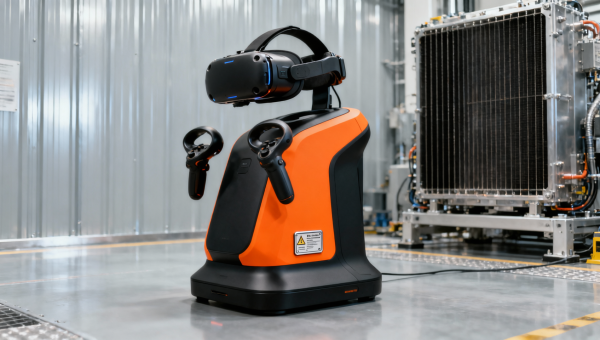
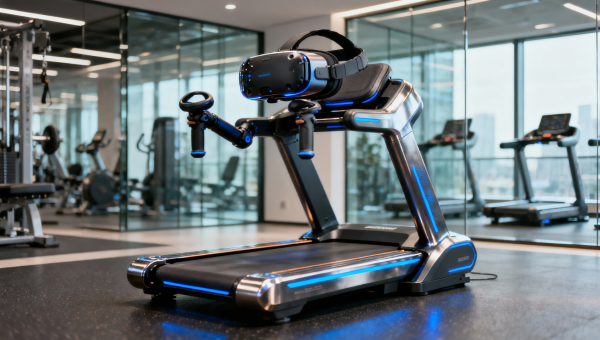
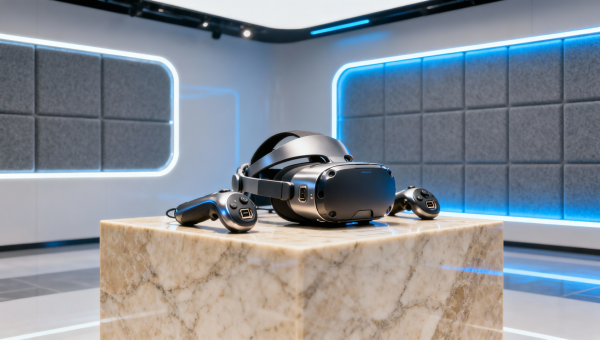
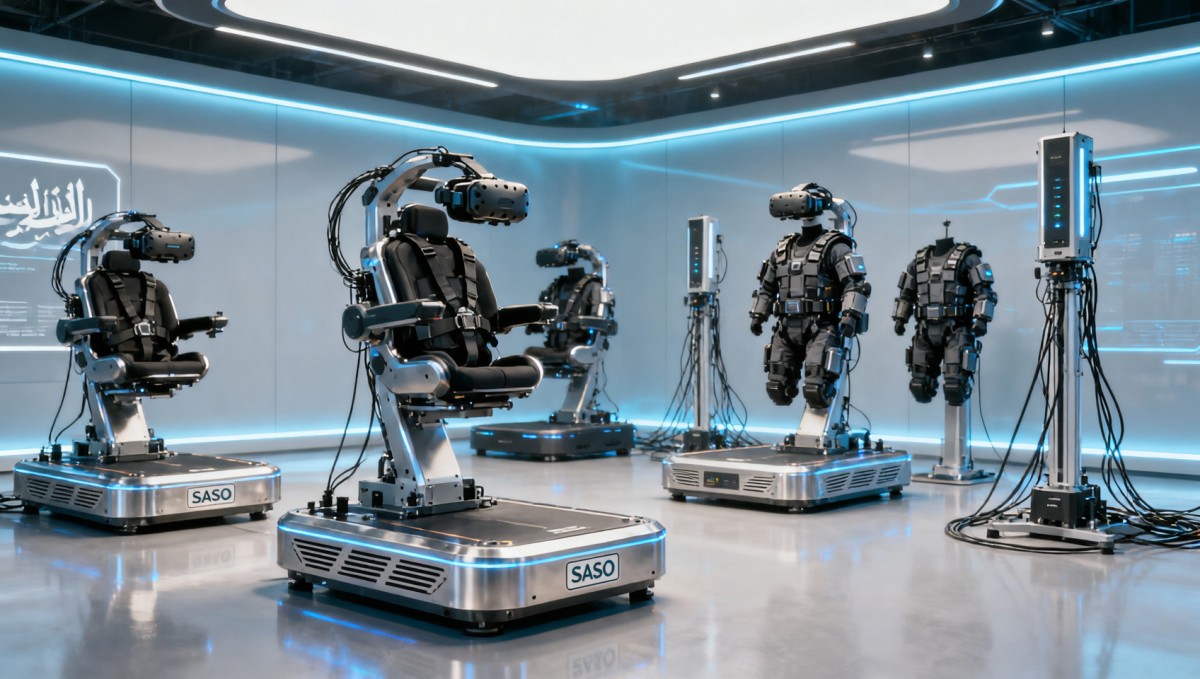
These companies supply VR motion devices—including haptic vests, motion platforms, and full-body tracking systems—to Saudi distributors or end-users. They are directly responsible for product compliance. The Class B requirement introduces stricter radiated emission thresholds than typical Class A limits used for industrial equipment, necessitating redesigns of shielding, grounding, and power supply filtering.
Contract Manufacturers & ODMs
Firms producing VR motion hardware under private labels or OEM agreements must adapt production lines and bill-of-materials to meet the updated EMC specification. Any pre-2026 design iteration may no longer qualify for SASO market access without retesting and documentation updates.
Distribution & Channel Partners in KSA
Local importers and authorized resellers face increased pre-market verification responsibilities. Stocking non-compliant units after 1 October 2026 risks customs rejection or post-import non-conformance actions. Their technical coordination with upstream suppliers becomes critical to verify lab accreditation and report validity.
EMC Testing & Certification Service Providers
Laboratories outside Saudi Arabia must confirm SASO recognition status for VR motion device testing. Non-accredited labs—even those accredited to IEC 61000-6-3:2023—cannot issue valid reports unless explicitly listed by SASO for this product category and standard version.
What Stakeholders Should Monitor and Do Now
Track official SASO communications on scope clarification
The standard references ‘VR motion devices’ without a formal product definition. Analysis来看, SASO may issue supplementary guidance on boundary cases—e.g., whether standalone VR headsets without motion feedback fall under this mandate. Exporters should monitor SASO’s official portal and notification channels for such clarifications.
Verify laboratory authorization status before initiating testing
Not all SASO-recognized labs are approved for VR motion devices under the 2026 edition. From industry角度看, early engagement with labs to confirm inclusion in SASO’s updated list—and their capacity to test complex motion-system EMI signatures—is essential to avoid delays.
Review PCB layout, enclosure shielding, and AC/DC power filter designs
Class B limits are typically 10 dB stricter than Class A in the 30–230 MHz range. Current more suitable interpretation is that legacy designs relying on basic ferrite beads or ungrounded metal housings will likely fail. Engineering teams should prioritize iterative pre-scan testing and revise filtering topologies (e.g., adding common-mode chokes and Y-capacitors) before formal submission.
Update technical documentation and labeling for KSA-bound shipments
Test reports must reference SASO IEC 61000-6-3:2026 explicitly—not generic IEC standards. Product labels and user manuals destined for Saudi markets should reflect compliance with this specific version. Analysis来看, SASO inspectors may cross-check report version numbers against shipment manifests during port clearance.
Editorial Observation / Industry Perspective
This update is better understood as a signal of SASO’s broader shift toward harmonizing consumer-facing electronics regulations with international best practices—not merely a technical revision. Observation来看, the timing (six months between publication and enforcement) suggests SASO intends this to be an operational transition, not a sudden barrier. However, the absence of a grace period for existing inventory indicates enforcement will be applied uniformly from day one. From industry角度, it reflects growing scrutiny of immersive tech in public spaces—especially where multiple RF-emitting devices operate in proximity (e.g., VR arenas with Wi-Fi 6E, Bluetooth trackers, and motion actuators). Continuous monitoring of SASO’s alignment with future IEC editions remains advisable.
In summary, SASO’s 2026 EMC update establishes a clear, enforceable benchmark for VR motion devices entering Saudi commercial markets. It does not introduce novel testing methods but elevates the performance bar for radiated emissions. For stakeholders, the priority is not speculation about policy intent—but concrete action on design validation, lab coordination, and documentation alignment. The regulation is now codified; its implementation is operational, not provisional.
Source: SASO Official Gazette, SASO IEC 61000-6-3:2026, published 24 April 2026. Note: Scope applicability to hybrid or modular VR systems remains pending further SASO guidance and is subject to ongoing observation.
Search News
Hot Articles
- Pro Stage AudioFIFA Adopts Chinese Mini-LED Displays for 2026 World Cup VAR SystemApr 24, 2026
- Outdoor RidesChina FA Warns Nanjing City Over Fan Conduct; ISO 20785 Compliance AcceleratesApr 24, 2026
- Pro Stage AudioFan Zhendong Visits Silicon Valley as MLTT Investor, AI Ping-Pong Tech Draws US InterestApr 24, 2026
Popular Tags
Need ExpertConsultation?
Connect with our specialized leisureengineering team for procurementstrategies.
Recommended News
 Apr 24, 2026Global VR Fitness Equipment Export Prices Up 12% QoQVR fitness equipment export prices surge 12% QoQ to $4,280 — driven by EU 2026/789 & UL 62368-1:Ed4 compliance. Key insight for exporters, suppliers & logistics teams.● Theme Park Strategist
 Apr 24, 2026Vietnam TUV SUD New Rule: VR Fitness Cabins Require Local Type TestVR fitness cabins entering Vietnam now require local type testing per new TUV SUD rule—impacting exporters, distributors & supply chains. Act now to avoid delays & added costs.● Theme Park Strategist
 Apr 24, 2026SASO Updates EMC Standard for VR Motion Devices in Saudi ArabiaSASO EMC update for VR motion devices in Saudi Arabia: Class B compliance now mandatory for fitness, entertainment & edutainment pods—avoid customs rejection!● Theme Park Strategist
 Apr 23, 2026Global VR Fitness Device Export Prices Rise 12% QoQVR fitness device export prices surge 12% QoQ to $3,820 — discover why IP65, AI calibration & 98.7% on-time delivery now define premium global supply.● Theme Park Strategist
 Apr 23, 2026Vietnam TUV SUD Enforces Local Type Testing for VR Fitness CabinsVR fitness cabins entering Vietnam must now undergo local TUV SUD type testing—mandatory from Apr 22, 2026. Learn costs, timelines & compliance steps.● Theme Park Strategist
 Apr 23, 2026SASO Updates EMC Standard for VR Motion Devices to Class BSASO Updates EMC Standard for VR Motion Devices to Class B: Critical compliance shift for VR fitness pods, AR/VR amusement systems & exporters targeting Saudi Arabia.● Theme Park Strategist
 Apr 22, 2026SASO Updates EMC Standard for VR Haptic Devices in Saudi ArabiaSASO EMC standard update for VR haptic devices in Saudi Arabia: Class B compliance required by July 1, 2026 — critical for VR treadmills, AR walls & training pods.● Theme Park Strategist
 Apr 22, 2026Global VR Fitness Device Export Price Up 12% in Q1 2026VR fitness device export prices surge 12% to $1,842/unit in Q1 2026 — discover why China’s 38-day lead times are reshaping global procurement strategies.● Theme Park Strategist
 Apr 22, 2026Vietnam TUV SUD New Rule: VR Fitness Pods Require Local Type TestVR fitness pods now require local type testing in Vietnam per TUV SUD’s new rule—impacting exporters, costs & lead times. Act now!● Theme Park Strategist
 Apr 21, 2026Global VR Fitness Equipment Export Prices Rise 12% in Q1 2026VR fitness equipment export prices surge 12% in Q1 2026—driven by EU safety mandates. Discover cost impacts, compliance risks & supply chain insights.● Theme Park Strategist
 Apr 21, 2026Vietnam TUV SUD Enforces Local Type Testing for VR Fitness CabinsVR fitness cabins entering Vietnam must now undergo local TUV SUD type testing—EMC & safety checks in Hanoi or Ho Chi Minh City starting April 2026. Key for exporters, certifiers & distributors.● Theme Park Strategist
 Apr 21, 2026SASO Updates EMC Standard for VR Motion Devices in Saudi ArabiaSASO EMC update for VR motion devices in Saudi Arabia: Class B compliance now mandatory for fitness pods, edutainment cabins & arcade systems—act now to avoid shipment delays.● Theme Park Strategist
 Apr 20, 2026Global VR Fitness Device Export Price Up 12% in Q1 2026VR fitness device export prices surged 12% in Q1 2026—discover key drivers, regional impacts, and strategic actions for exporters, suppliers & logistics partners.● Theme Park Strategist
 Apr 20, 2026SASO Updates VR Haptic Device EMC Standard to Class B in Saudi ArabiaSASO VR haptic device EMC update: Class B standard now mandatory in Saudi Arabia from July 1, 2026. Ensure compliance for VR/AR hardware, imports & venues.● Theme Park Strategist
 Apr 20, 2026Vietnam TUV SUD Enforces Local Type Test for Commercial VR Fitness CabinsVietnam TUV SUD now mandates local type testing for commercial VR fitness cabins — including latency, EMC & safety checks. Act now to secure QCVN compliance and market access.● Theme Park Strategist
 Apr 17, 2026Global VR Fitness Equipment Export Prices Rise 12% in Q1 2026VR fitness equipment export prices surge 12.3% in Q1 2026—key insights for exporters, manufacturers & supply chain partners on compliance, pricing, and delivery trends.● Theme Park Strategist
 Apr 17, 2026SASO 2891:2026 Updated: VR Haptic Devices Now Require EMC Class B in Saudi ArabiaSASO 2891:2026 update mandates EMC Class B for VR haptic devices in Saudi Arabia — critical for OEMs, exporters & EdTech suppliers. Act now to avoid delays!● Theme Park Strategist
 Apr 17, 2026Vietnam TUV SUD Mandates Local Type Testing for VR Fitness CabinsVR fitness cabins for gyms & hotels in Vietnam now require local type testing—EMC, thermal, and AI fall detection—to obtain VIEC certification. Act now to avoid delays!● Theme Park Strategist
 Apr 16, 2026VR Fitness Device Export Prices Up 12% — China Supply Stability LeadsVR fitness device export prices up 12%—China’s supply stability and modular hardware-software delivery redefine global competitiveness. Act now.● Theme Park Strategist
 Apr 16, 2026Vietnam Mandates Local TUV SUD Type Testing for VR Fitness CabinsVR fitness cabins entering Vietnam must now pass local TÜV SÜD type testing in Hanoi—key for compliance, customs clearance & market access by July 1, 2026.● Theme Park Strategist
 Apr 16, 2026SASO Updates Playground Standards: VR Devices Now Require EMC TestingSASO now mandates EMC testing for VR playground devices in Saudi Arabia—key update for VR cycling, climbing & motion cabins exporters.● Theme Park Strategist
 Apr 15, 2026Vietnam's New Regulation: Commercial VR Fitness Pods Require Local TUV SUD TestingVietnam's new regulation mandates TUV SUD testing for commercial VR fitness pods. Learn how this impacts exporters, compliance timelines, and market entry strategies for Chinese manufacturers.● Theme Park Strategist
 Apr 15, 2026Global VR Fitness Equipment Export Prices Rise 12% YoY, China Maintains Supply Chain StabilityGlobal VR fitness equipment export prices surge 12% YoY in 2026 Q1, with China maintaining 96.3% delivery reliability. Key insights for VR hardware manufacturers & fitness distributors facing cost pressures.● Theme Park Strategist
 Apr 14, 2026US CPSC Seeks Comments on New Fitness Tracker Rules, Chinese Exporters Need UL/ETL ComplianceUS CPSC proposes new UL/ETL compliance rules for fitness trackers, impacting Chinese exporters. Learn key action points and industry impacts to stay ahead of regulatory changes affecting wearable tech exports to America.● Theme Park Strategist