Distributor or Supplier for Fast Reorders
Need a reliable partner for fast reorders in the office supplies market? Whether you are comparing an office supplies supplier, office supplies wholesaler, or office supplies distributor, speed, stock stability, and quality consistency are critical. This guide helps buyers, sourcing teams, and channel partners evaluate the right office supplies B2B supplier for repeat orders, bulk supply, and long-term procurement efficiency.
In office supplies procurement, the first order often looks easy. The real test begins with the second, third, and tenth reorder. A missed delivery of copier paper, toner, filing products, writing instruments, or classroom stationery can interrupt departments, delay tenders, and increase emergency buying costs within 24 to 72 hours.
For procurement managers, commercial evaluators, and distribution partners, the key question is not only who can ship once, but who can support stable replenishment over 6 to 12 months. That is why the distinction between a supplier and a distributor matters, especially when reorder speed, regional inventory, and SKU continuity directly affect service performance.
Within the office and educational supplies sector, Global Commercial Trade (GCT) focuses on practical sourcing intelligence for institutional buyers, channel partners, and commercial project teams. The goal is to help buyers compare office supplies B2B supplier models with clearer criteria, lower supply risk, and stronger long-term purchasing control.
Understanding the Difference: Supplier, Wholesaler, or Distributor
Many buyers use these terms interchangeably, but in repeat-purchase office supplies, the business model behind each role can materially affect lead time, MOQ, pricing flexibility, and after-sales coordination. A supplier may be a factory, a trading company, or a sourcing consolidator. A distributor usually operates with stocked inventory in a defined territory. A wholesaler often focuses on volume resale, sometimes with less technical support or SKU management discipline.
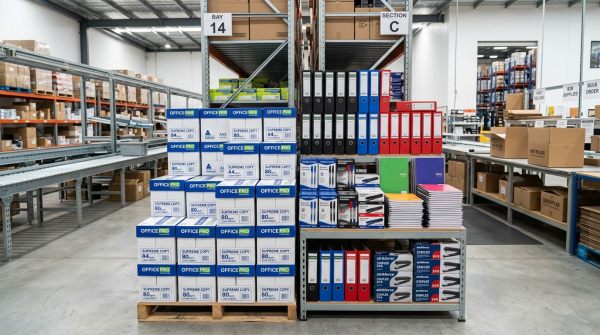
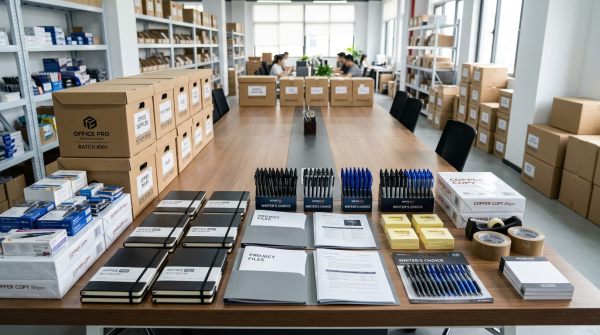
For fast reorders, distributors often perform well when buyers need 48-hour to 7-day replenishment on standard items such as A4 paper, folders, notebooks, markers, staplers, or desk accessories. Suppliers become more valuable when the requirement includes private label, custom packaging, mixed container loading, or annual contract supply across 50 to 500 SKUs.
The right choice depends on procurement structure. A school chain with predictable monthly demand may prefer a local office supplies distributor with rolling inventory. A regional importer building its own brand may need a manufacturer-backed office supplies supplier that can ensure consistent materials, packaging artwork approval, and batch traceability over multiple production runs.
The comparison below shows how each model typically performs in reorder-driven buying environments.
The practical takeaway is simple: if your top priority is rapid replenishment of standardized office essentials, a distributor may be the better operational fit. If your business requires assortment development, packaging control, or direct factory economics, a supplier may create more long-term value, provided reorder planning is handled correctly.
When the distinction matters most
This distinction becomes especially important in four situations: seasonal back-to-school demand spikes, multi-branch office networks, government or institutional tenders, and private-label resale programs. In each case, buyers should evaluate not only unit price, but also stock depth, replenishment method, and exception handling speed.
- If monthly demand fluctuates by more than 20%, local inventory support becomes more valuable.
- If branding or packaging changes every 1 to 2 quarters, factory-linked supply is usually safer.
- If the purchase list contains over 100 SKUs, data accuracy and assortment management should be reviewed early.
What Fast Reorders Really Depend On in Office Supplies
Fast reorder performance is rarely about shipping speed alone. In office supplies, the deeper drivers are inventory planning, SKU standardization, packaging consistency, and order processing discipline. A partner can promise 3-day dispatch, but if carton labels change, barcodes mismatch, or substitutes are sent without approval, operational speed loses its value.
For high-frequency categories such as printing paper, envelopes, pens, correction products, sticky notes, and binding accessories, reorder reliability should be measured through three operational signals: stock availability rate, order accuracy rate, and average replenishment cycle. Even without public statistics, buyers commonly target at least 95% line-fill performance on standard SKUs and a reorder confirmation turnaround within 24 hours.
Another critical factor is SKU continuity. Office buyers often run approved supply lists, internal coding systems, or framework contracts. If a vendor changes material thickness, paper brightness, ink type, or packaging count without notice, the buyer may need to restart approval workflows. That creates hidden internal costs far beyond the invoice value.
Fast reorders also depend on how the supplier handles low-complexity and high-complexity items. Commodity items like copy paper or ballpoint pens can often be stocked. Products involving logo printing, custom blister cards, multi-piece stationery kits, or educational bundles may require forecast-based manufacturing windows of 20 to 35 days.
Four operating metrics buyers should request
Before signing an annual or semiannual supply plan, request performance indicators that are directly tied to repeat ordering outcomes, not just sales claims.
- Reorder lead time by category, for example 2 to 5 days for stock items and 15 to 30 days for made-to-order lines.
- Average monthly stock coverage, such as 3 weeks, 6 weeks, or 8 weeks on top 20 SKUs.
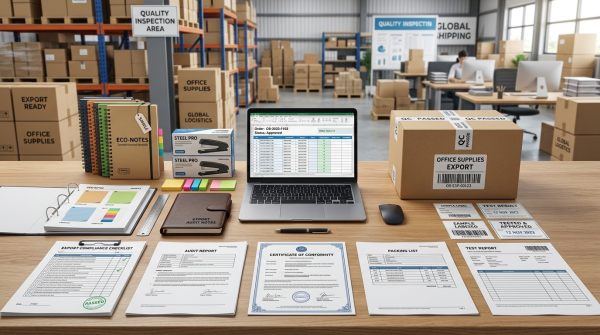
- Order accuracy controls, including barcode check, carton count verification, and batch labeling.
- Substitution approval policy, especially for paper GSM, ink color standards, or pack-size changes.
Typical reorder-risk points
The most common problems in repeat office supply procurement are not dramatic supply chain failures. They are smaller recurring issues: one missing SKU in a mixed shipment, a revised carton quantity that affects branch allocation, delayed label approval for private label products, or stock-outs on fast-moving items during peak months. Each issue appears minor, but over 6 to 12 months it can weaken service levels and planning confidence.
How to Evaluate a B2B Partner for Repeat Orders
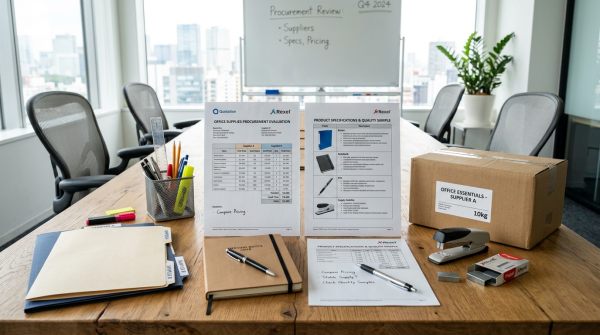
A structured evaluation process helps procurement teams compare an office supplies supplier and an office supplies distributor on the same commercial basis. Instead of asking who has the lowest price today, ask who can sustain acceptable cost, stable quality, and dependable replenishment over repeated order cycles.
Start by segmenting your demand into three groups: fast-moving standard items, project-specific items, and custom or branded items. This simple split often reveals whether one partner can manage all categories or whether a hybrid sourcing model is more efficient. In many organizations, 20 to 30 core SKUs account for most urgent reorder demand, while the remaining assortment can be planned with longer lead times.
Buyers should also test operational responsiveness before awarding a larger contract. A 2- to 4-week pilot covering 10 to 20 SKUs can show how the partner handles quotation updates, stock communication, partial shipments, invoice accuracy, and issue resolution. This is especially useful for resellers and agents that need dependable support for downstream customers.
The following decision table can help teams score vendors more objectively.
A strong result in only one category is not enough. For example, a partner with low prices but unstable stock can raise emergency procurement costs. Likewise, a fast distributor with narrow assortment may not support private-label expansion. The most suitable office supplies B2B supplier is the one whose operating model matches your reorder pattern.
Questions commercial evaluators should ask
- Which 10 SKUs are stocked year-round, and which are seasonal or forecast-based?
- How are paper weight, ink performance, plastic thickness, or pack counts controlled from batch to batch?
- What happens if reorder volume increases by 30% within one month?
- Can the partner support both bulk institutional supply and reseller-oriented mixed orders?
Building a Reorder Strategy for Different Office Supply Scenarios
Not every buyer should use the same sourcing model. The right reorder setup depends on demand stability, item standardization, branch count, and whether the business sells onward through distribution channels. In office supplies, practical success often comes from matching sourcing structure to use case rather than forcing one vendor to serve every purpose.
For corporate offices, the priority is usually uninterrupted supply of routine consumables. This includes paper, toner-compatible accessories, notebooks, writing tools, and basic desk organization items. In these cases, a regional office supplies distributor with scheduled replenishment every 2 or 4 weeks may provide the best balance between speed and simplicity.
For educational projects and tender supply, compliance, pack uniformity, and delivery coordination matter more. Buyers may need classroom kits, exam stationery, filing sets, whiteboard markers, and art-related items delivered in phased lots. Here, a supplier with stronger assortment planning and carton-level standardization may outperform a pure stock distributor.
For distributors, agents, and private-label resellers, the model is different again. They need a partner that can protect pricing structure, keep packaging stable, support barcode or labeling requirements, and scale from trial orders to container-level replenishment. That usually points toward a factory-backed supplier or a sourcing hub with category coordination strength.
Scenario-based sourcing guidance
The matrix below summarizes which partner type often works best by scenario.
This comparison shows there is no universal winner. Buyers that understand their reorder profile can usually improve service stability more effectively than buyers who focus only on headline price discounts of 3% to 5%.
Practical reorder planning steps
- Identify the top 20 recurring SKUs by monthly usage or revenue contribution.
- Separate stock items from custom items and assign target lead times to each group.
- Set reorder trigger points, such as 2 weeks of stock remaining for core office consumables.
- Review supplier performance every quarter using fill rate, delay frequency, and complaint resolution time.
Common Risks, Misjudgments, and FAQ for Buyers
One of the most common procurement mistakes is selecting an office supplies supplier purely on initial quotation. In repeat ordering, the total cost of supply includes stock-outs, substitutions, internal approval delays, split shipments, and additional labor needed to reconcile differences in product specs or pack sizes.
Another frequent misjudgment is assuming that all standard stationery is fully interchangeable. In reality, buyers may need specific paper opacity, pen line width, folder thickness, adhesive strength, or carton labeling formats. Even a small change can create user complaints or channel friction if the product is being resold.
Buyers should also avoid overcommitting on MOQ without confirmed consumption patterns. A lower unit price on 6 months of stock may look attractive, but slow-moving items can tie up working capital and storage space. In many office supply programs, a balanced reorder cadence every 30 to 60 days is more efficient than oversized one-time buying.
The FAQ below addresses common decision points that appear during commercial evaluation.
How do I choose between a supplier and a distributor for fast reorders?
Choose a distributor when you need short lead times on standard office items, local stock, and easier emergency replenishment. Choose a supplier when your program includes custom packaging, private label, broad assortment development, or direct manufacturing support. Many buyers use a two-tier model: distributor for urgent top-up orders, supplier for planned bulk procurement.
What reorder lead time is reasonable in office supplies?
For stocked commodity items, 2 to 7 days is common in many regional markets. For import-based or custom lines, 15 to 45 days is a more realistic planning range. Buyers should ask for lead times by category instead of accepting one average promise across all SKUs.
Which indicators matter most for repeat-order quality control?
Focus on approved samples, specification sheets, pack count consistency, barcode accuracy, and batch communication. For products like copy paper, folders, markers, and notebooks, even small deviations in thickness, brightness, or count per box can create downstream issues, especially in institutional contracts or reseller channels.
Is a wholesaler enough for long-term procurement?
A wholesaler can be effective when your needs are mainly standard stock products and price competitiveness. However, if your business needs documentation control, custom labeling, stable specification management, or deeper supply coordination, a supplier or distributor with stronger account support may be a better long-term fit.
Choosing a Partner That Supports Procurement Efficiency Over Time
The best partner for fast reorders is not defined by title alone. An office supplies distributor may outperform a supplier in urgent restocking. A supplier may deliver better long-term value when customization, assortment planning, and consistent manufacturing are central to the buying strategy. The right decision comes from matching supply model to reorder behavior, SKU mix, and service expectations.
For information researchers, purchasing teams, business evaluators, and channel partners, the most reliable path is to compare lead time structure, stock depth, quality consistency, and commercial flexibility side by side. This reduces reactive purchasing and improves continuity across 3, 6, and 12-month planning cycles.
GCT supports commercial buyers in the office and educational supplies sector with focused sourcing guidance designed for real procurement decisions. Whether you are reviewing an office supplies wholesaler, supplier, or distributor, a structured evaluation can help you secure faster reorders, better SKU stability, and stronger downstream service performance.
If you are assessing sourcing options for repeat office supply orders, bulk programs, or channel expansion, contact us to discuss your requirements, request a tailored sourcing approach, or explore more office supplies solutions built for dependable B2B procurement.
Search News
Hot Articles
- Stage Lighting & Truss2026 FIBA Women's World Cup Draw Sets LED Timing Screen RequirementsApr 27, 2026
- Hotel Room AmenitiesIranian Delegation’s Ritual Gesture at Sanya ASG Sparks Mideast Hospitality Procurement ShiftApr 27, 2026
- Arcade & VR MachinesSnooker World Championship 'China Derby' Drives VR Viewing DemandApr 27, 2026
Popular Tags
Need ExpertConsultation?
Connect with our specialized leisureengineering team for procurementstrategies.
Recommended News
 Apr 27, 2026Office Supplies Manufacturer MOQ ExplainedOffice supplies manufacturer MOQ explained: compare an office supplies supplier, wholesaler, distributor, OEM manufacturer, and factory to reduce cost, improve flexibility, and source smarter.● Institutional Buyer
 Apr 27, 2026Distributor or Supplier for Fast ReordersOffice supplies supplier or distributor for fast reorders? Compare lead times, stock stability, and bulk supply options to choose a reliable office supplies B2B supplier.● Institutional Buyer
 Apr 27, 2026How Wholesalers Cut Office Supply CostsOffice supplies supplier and office supplies wholesaler solutions help cut costs through bulk buying, OEM options, and smarter sourcing. Compare distributors and manufacturers to save more.● Institutional Buyer
 Apr 27, 2026Office Supplies Supplier Pricing Red FlagsOffice supplies supplier pricing red flags explained: compare an office supplies wholesaler, distributor, or manufacturer, spot hidden risks, and choose a reliable B2B partner with confidence.● Institutional Buyer
 Apr 27, 2026How to Vet an Office Supplies ExporterOffice supplies supplier vetting made simple: learn how to assess an office supplies exporter, manufacturer, wholesaler, and distributor for quality, compliance, and reliable B2B growth.● Institutional Buyer
 Apr 27, 2026What to Ask an Office Supplies Producer FirstOffice supplies supplier screening starts with the right questions. Learn how to evaluate an office supplies manufacturer, wholesaler, or producer on quality, OEM, compliance, pricing, and delivery.● Institutional Buyer
 Apr 27, 2026How to Compare Office Supplies Bulk SuppliersCompare every office supplies supplier model—wholesaler, distributor, OEM manufacturer, and bulk supplier—to evaluate quality, compliance, lead times, and costs for smarter B2B sourcing.● Institutional Buyer
 Apr 27, 2026Is an Office Supplies OEM Manufacturer Worth ItOffice supplies OEM manufacturer or standard sourcing? Compare an office supplies supplier, wholesaler, and distributor to find the best B2B fit for cost, branding, and scalable growth.● Institutional Buyer
 Apr 27, 2026Best Office Supplies B2B Supplier for ScaleFind the best office supplies B2B supplier for scale. Compare an office supplies supplier, wholesaler, distributor, and OEM manufacturer to secure reliable bulk sourcing and growth.● Institutional Buyer
 Apr 27, 2026Office Supplies Factory Audit ChecklistOffice supplies factory audit checklist for choosing a reliable office supplies manufacturer, supplier, or OEM partner. Learn key quality, compliance, and capacity checks before sourcing.● Institutional Buyer
 Apr 27, 2026When to Work With an Office Supplies ManufacturerOffice supplies manufacturer or office supplies supplier? Learn when to source direct, compare wholesaler vs OEM options, and improve cost, quality, and supply stability.● Institutional Buyer
 Apr 27, 2026What Makes a Reliable Office Supplies DistributorDiscover what sets a reliable office supplies distributor apart. Compare an office supplies supplier, wholesaler, or B2B supplier by quality, lead times, inventory, and global delivery.● Institutional Buyer
 Apr 27, 2026Office Supplies Wholesaler vs DistributorOffice supplies wholesaler vs distributor: learn how an office supplies supplier, distributor, or manufacturer impacts pricing, lead time, and growth—choose the best B2B sourcing model.● Institutional Buyer
 Apr 27, 2026How to Choose an Office Supplies SupplierLearn how to choose the right office supplies supplier by comparing an office supplies wholesaler, distributor, manufacturer, or B2B supplier for quality, price, delivery, and growth.● Institutional Buyer
 Apr 24, 2026How to Pick Educational Supplies by AgeEducational supplies by age: discover how commercial furniture, sensory playground designs, playground safety, climbers, borders, music accessories, hotel tables and amusement equipment improve ROI.● Institutional Buyer
 Apr 24, 2026Educational Supplies That Schools Reorder MostEducational supplies schools reorder most: from commercial furniture support and music accessories to playground safety, playground borders, and sensory playground essentials—discover high-demand categories buyers need year-round.● Institutional Buyer
 Apr 23, 2026How to Compare Educational Supplies Beyond Unit PriceEducational supplies buying guide: compare commercial furniture, sensory playground, music accessories, and playground safety beyond unit price to cut risk and boost long-term value.● Institutional Buyer
 Apr 23, 2026Educational Supplies That Wear Out Fast in Shared UseEducational supplies wear out fast in shared spaces. Learn how commercial furniture, music accessories, playground borders, playground climbers, sensory playground systems, and playground safety solutions reduce risk and replacement costs.● Institutional Buyer
 Apr 22, 2026When Cheap Office Supplies End Up Costing MoreOffice supplies that seem cheap can cost more over time for trampoline park, indoor playground, arcade games, musical instruments, and luxury jewelry businesses—discover smarter sourcing tips.● Institutional Buyer
 Apr 22, 2026Office Supplies Costs That Quietly Add Up Over a YearOffice supplies costs can quietly rise alongside arcade games, musical instruments, indoor playground and trampoline park operations. Discover smarter sourcing to protect margins.● Institutional Buyer
 Apr 21, 2026Office supplies wholesaler terms that cause reorder problemsOffice supplies wholesaler terms can quietly trigger costly reorders. Learn how a reliable office supplies supplier should handle MOQ, lead times, substitutions, and pricing before you sign.● Institutional Buyer
 Apr 21, 2026The hidden service gaps between office supplies suppliersOffice supplies supplier insights: uncover hidden service gaps in office supplies wholesaler selection, plus sourcing links to musical instruments for bands, custom jewelry manufacturer, and indoor playground supplier.● Institutional Buyer
 Apr 24, 2026Why office supplies wholesalers vary so much on MOQ and lead timeOffice supplies supplier insights: learn why an office supplies wholesaler differs on MOQ and lead time, and compare sourcing logic across custom jewelry manufacturer and indoor playground supplier options.● Institutional Buyer
 Apr 24, 2026How to compare an office supplies supplier beyond priceCompare an office supplies supplier beyond price—evaluate quality, compliance, customization, and delivery. Learn how the right office supplies wholesaler reduces risk and boosts long-term value.● Institutional Buyer