How to Pick Educational Supplies by Age
Choosing educational supplies by age is not just a classroom planning issue. For schools, indoor play areas, training centers, family entertainment venues, and commercial operators, it directly affects safety, engagement, durability, compliance, and budget efficiency. The right age-based selection helps buyers avoid common procurement mistakes: buying products that children outgrow too quickly, selecting items that create safety risks, or investing in equipment that does not match how users actually learn and play. For B2B buyers sourcing educational supplies, amusement equipment, playground safety systems, music accessories, commercial furniture, or related hotel equipment such as hotel tables for family-oriented spaces, age alignment should be one of the first filtering criteria.
What buyers really need to get right when picking educational supplies by age
The core search intent behind this topic is practical decision-making. Buyers are usually not looking for a generic list of school items. They want to know how age affects product suitability, what standards matter, how to reduce procurement risk, and how to build spaces that support real use cases.
For procurement teams, distributors, and commercial evaluators, the most important question is simple: which supplies are appropriate for each age group, and how do we choose options that are safe, commercially viable, and worth the investment?
That means an effective buying framework should consider five factors together:
- Developmental fit: whether the product matches physical, cognitive, and social abilities
- Safety compliance: whether materials, structure, and dimensions meet relevant standards
- Engagement value: whether the item will actually be used often and meaningfully
- Durability and maintenance: whether it performs well in high-traffic commercial or institutional settings
- Lifecycle value: whether the product remains useful long enough to justify procurement cost
If buyers start with age segmentation rather than product category alone, they usually make better sourcing decisions.
Why age matters more than product type alone
Many sourcing errors happen because products are selected by appearance, trend, or price without enough attention to user age. A sensory activity wall, playground climber, classroom chair, or beginner music accessory may all look well designed, but if the size, complexity, or safety profile does not match the user group, the result is poor adoption and higher operational risk.
Age-based planning matters because children and learners at different stages interact with their environment differently:
- Younger children need low-height, soft-touch, high-supervision equipment
- Early learners benefit from sensory, motor, and imitation-based materials
- Primary-age users need more challenge, collaboration, and structured exploration
- Older learners need functional, skill-building, and identity-supporting supplies
In commercial environments, this also influences layout, traffic flow, supervision zones, furniture height, cleaning frequency, and replacement cycles. For example, a play zone serving toddlers requires very different playground safety solutions and playground borders than a mixed-age family venue. Likewise, educational lounges in hotels, museums, or retail family spaces need furniture and accessories matched to the intended age range.
How to choose educational supplies for ages 0 to 3
For infants and toddlers, safety and sensory appropriateness come first. At this stage, children are developing basic motor coordination, tactile awareness, balance, and early cause-and-effect understanding. Products should encourage exploration without introducing unnecessary complexity or detachable hazards.
Best-fit supplies for this age group include:
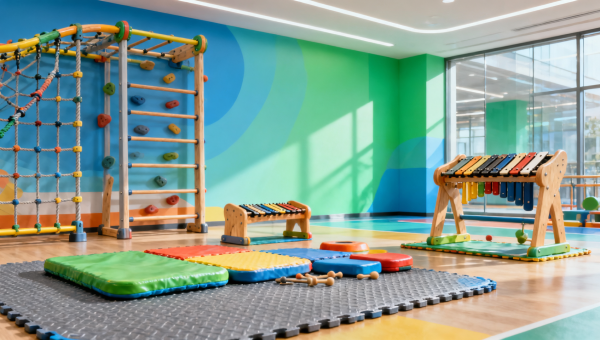
- Soft play modules and padded climbing forms
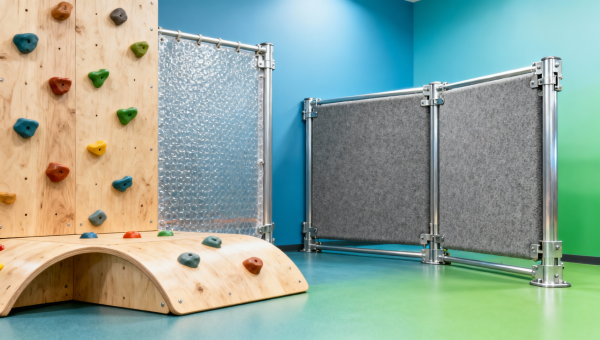
- Sensory panels with fixed components
- Large-format manipulative toys
- Rounded-edge low furniture
- Non-toxic mats and flooring systems
- Protected mirrors, soft seating, and quiet sensory corners
What buyers should check:
- No small detachable parts
- Easy-clean, antimicrobial, and non-toxic materials
- Stable construction with anti-tip performance
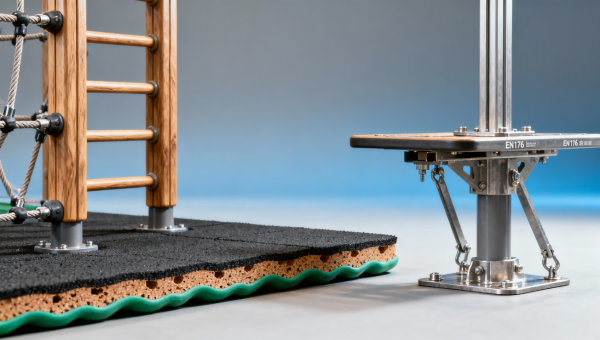
- Soft-impact surfaces and age-appropriate fall protection
- Simple visual stimulation rather than overstimulating design
In amusement and leisure-related spaces, this age group often needs enclosed, clearly separated zones. Playground borders and safety barriers are especially important to prevent cross-use by older children. For commercial buyers, this is also where material certification and maintenance efficiency have strong long-term value.
How to choose educational supplies for ages 3 to 5
Preschool users are more active, more social, and more curious. They need equipment that supports gross motor skills, creativity, early literacy, role play, and cooperative interaction. This is one of the most important age groups for balancing developmental benefit with durability because use intensity is high.
Recommended supply categories include:
- Playground climbers designed for early childhood proportions
- Pretend-play stations
- Art easels, washable craft tables, and storage units
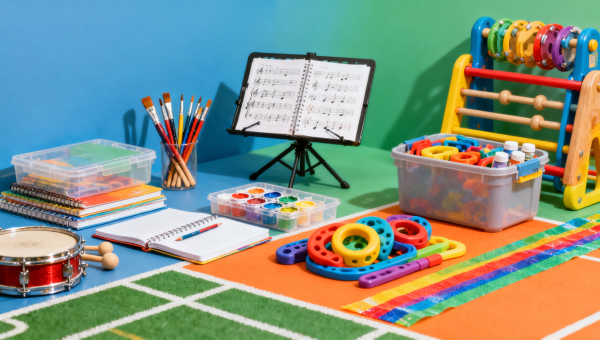
- Introductory music accessories such as rhythm instruments
- Early STEM manipulatives
- Low bookshelves and modular seating
Selection priorities:
- Clear activity purpose with manageable challenge level
- Smooth edges, low climbing heights, and safe grip points
- High-visibility design for easier supervision
- Products that support independent use and group interaction
- Surfaces that withstand frequent cleaning and rough handling
For commercial operators, this group often delivers high engagement value when equipment combines movement and imagination. A well-designed preschool area can improve dwell time in mixed-use venues and enhance customer experience in hospitality, retail, and leisure settings.
How to choose educational supplies for ages 6 to 8
Children in this range are ready for more structure, more challenge, and more skill-focused activities. They can follow rules, complete short tasks independently, and benefit from supplies that support problem-solving, teamwork, and creativity.
Strong options for this age group include:
- More advanced playground structures with moderate challenge
- Basic science and construction kits
- Reading corners with ergonomic seating
- Music accessories for coordinated rhythm and early performance
- Collaborative tables and classroom furniture
- Thematic activity stations for hands-on learning
What matters most in procurement:
- Products should be challenging but not frustrating
- Supplies should support repeat use, not one-time novelty
- Furniture dimensions must match growing body size
- Equipment should allow both solo and group interaction
- Replacement parts and maintenance support should be available
This is also the stage where buyers should pay closer attention to long-term modularity. Products that can be reconfigured or combined often deliver better return on investment than fixed single-purpose items.
How to choose educational supplies for ages 9 to 12
Older children usually seek more autonomy and more meaningful challenge. Supplies should feel less “babyish” and more purposeful. Design matters more than many buyers expect: if products look too juvenile, adoption drops quickly even if the functionality is sound.
Suitable categories include:
- STEM kits with problem-solving depth
- Performance-oriented music accessories
- Makerspace tools and project tables
- Library and study furniture with better ergonomics
- Interactive wall systems and collaborative boards
- Age-appropriate climbing and active recreation systems
Buyer checklist:
- Avoid oversimplified designs
- Prioritize durability under heavier physical use
- Include products that build practical skill or achievement
- Assess whether the environment supports independent movement and self-directed learning
- Make sure the aesthetic is suitable for pre-teens
For distributors and institutional buyers, this is where educational supplies start overlapping more clearly with commercial furniture, recreational design, and user-experience planning. In some projects, spaces may also include adjacent hospitality elements such as hotel tables in family learning lounges, event zones, or education-focused guest amenities.
How to choose educational supplies for teens and mixed-age environments
Teen users need utility, flexibility, and identity-relevant design. They are more likely to engage with supplies that feel professional, social, or skill-building rather than overtly instructional. In mixed-age environments, zoning becomes critical.
Recommended solutions include:
- Modular seating and collaborative tables
- Presentation tools and media accessories
- Music practice and performance equipment
- Project-based learning stations
- Commercial-grade storage and mobile furniture
- Recreation equipment designed for youth engagement
For mixed-age procurement, buyers should focus on:
- Clear zoning by age and activity type
- Flexible furniture systems
- Separate safety planning for active and quiet areas
- Visual guidance and circulation planning
- Products with broader use ranges where appropriate
This is especially relevant in public venues, hotel family facilities, museums, education centers, and leisure destinations. A mixed-age strategy should not mean one-size-fits-all buying. It should mean thoughtful layering of products, furniture, barriers, and safety systems to support different user groups without conflict.
What procurement teams should evaluate beyond age labels
Age labels are helpful, but they are not enough on their own. Serious buyers should look deeper before approving a supplier or product line.
Key evaluation areas include:
- Compliance documentation: safety testing, material certifications, and regional conformity
- Commercial durability: wear resistance, structural integrity, cleanability, and maintenance demand
- OEM/ODM capability: customization for dimensions, colors, branding, and project-specific use cases
- Installation requirements: on-site fit, anchoring, flooring compatibility, and supervision visibility
- After-sales support: spare parts, replacement timelines, technical guidance, and warranty terms
- Total cost of ownership: purchase price plus maintenance, replacement frequency, and operational impact
For educational supplies used in sports and entertainment-related spaces, one of the most overlooked issues is operational mismatch. Buyers sometimes select school-style products for commercial environments with much higher traffic and more demanding cleaning cycles. This often leads to early failure and hidden cost.
Common buying mistakes and how to avoid them
Even experienced sourcing teams can make avoidable mistakes when selecting educational supplies by age. The most common ones include:
- Choosing by appearance instead of developmental suitability
- Using broad age ranges without defining the actual user profile
- Ignoring supervision, traffic flow, and space layout
- Underestimating cleaning and maintenance needs
- Buying low-cost products with short commercial lifespan
- Failing to separate active play, quiet learning, and mixed-use zones
The best way to avoid these issues is to build a simple procurement framework:
- Define the primary age group and secondary user group
- List developmental and operational requirements
- Match products to use intensity and commercial setting
- Check safety compliance and material quality
- Review maintenance and replacement implications
- Compare supplier reliability and customization support
This approach helps buyers make decisions that are both user-centered and commercially sound.
How age-based selection improves commercial value
When educational supplies are matched correctly to age, the benefits go beyond child development. Commercially, age-based procurement can improve space performance in several ways:
- Higher user engagement and better space utilization
- Lower risk of safety incidents and complaints
- More efficient maintenance and replacement planning
- Stronger customer satisfaction in family-facing venues
- Better project credibility for schools, hospitality groups, and leisure operators
- Improved ROI through longer product relevance and usability
For buyers in sports and entertainment, this matters because experience quality increasingly drives business outcomes. Whether the project is a smart campus, children’s activity zone, family lounge, indoor recreation center, or hospitality venue with educational features, the right supplies create better experiences and better procurement results.
Conclusion
Picking educational supplies by age is ultimately about reducing mismatch. The right products are not simply attractive, affordable, or popular. They are suitable for the user’s developmental stage, safe in real operating conditions, durable enough for the setting, and valuable over time.
For information researchers, procurement professionals, business evaluators, and distributors, the most effective approach is to treat age as a strategic sourcing filter. Start with who will use the space, how they will interact with it, what safety and durability standards apply, and how long the investment needs to perform. From sensory products and playground climbers to music accessories, commercial furniture, playground borders, playground safety solutions, and even related hospitality furnishings such as hotel tables, age-based planning leads to better decisions and stronger commercial outcomes.
If buyers keep developmental fit, safety compliance, and lifecycle value at the center of evaluation, they will be far more likely to source educational supplies that work in practice, not just on paper.
Search News
Hot Articles
- Indoor PlaygroundFan Zhendong Visits Silicon Valley as MLTT Investor, AI Ping-Pong Tech Draws AttentionApr 23, 2026
- Stage Lighting & Truss2026 FIBA Women's World Cup Draw Opens Export Window for Arena Lighting & Timing SystemsApr 23, 2026
- Pro Stage AudioChina Upgrades Security Compliance for International Sports EventsApr 23, 2026
Popular Tags
Need ExpertConsultation?
Connect with our specialized leisureengineering team for procurementstrategies.
Recommended News
 Apr 14, 2026HaiRong Tech Serves 85°C Bakery Brands: Custom Packaging Demand RisesHaiRong Tech partners with 85°C bakery brands to offer custom packaging solutions, blending food-grade standards with office supplies. Discover how this innovation creates new OEM/ODM opportunities for global distributors.● Institutional Buyer
 Apr 11, 2026New Carbon Neutrality Standard for Printing Industry Impacts Global Green Office SuppliesDiscover how the new Carbon Neutrality Standard for the printing industry impacts global green office supplies. Learn about key metrics, compliance for EU/Canada exports, and strategic actions for manufacturers and suppliers.● Institutional Buyer
 Apr 11, 2026Wuhan East Lake High-Tech Zone Office Supplies Tender: Deli Wins with 78% DiscountDeli wins Wuhan East Lake High-Tech Zone office supplies tender with 78% discount, showcasing China's cost-efficient manufacturing. Learn how this impacts office supplies industry trends and green procurement strategies.● Institutional Buyer
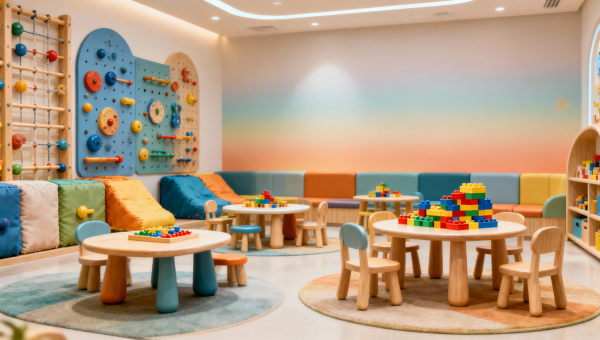
 Apr 24, 2026How to Pick Educational Supplies by AgeEducational supplies by age: discover how commercial furniture, sensory playground designs, playground safety, climbers, borders, music accessories, hotel tables and amusement equipment improve ROI.● Institutional Buyer
 Apr 24, 2026Educational Supplies That Schools Reorder MostEducational supplies schools reorder most: from commercial furniture support and music accessories to playground safety, playground borders, and sensory playground essentials—discover high-demand categories buyers need year-round.● Institutional Buyer
 Apr 23, 2026How to Compare Educational Supplies Beyond Unit PriceEducational supplies buying guide: compare commercial furniture, sensory playground, music accessories, and playground safety beyond unit price to cut risk and boost long-term value.● Institutional Buyer
 Apr 23, 2026Educational Supplies That Wear Out Fast in Shared UseEducational supplies wear out fast in shared spaces. Learn how commercial furniture, music accessories, playground borders, playground climbers, sensory playground systems, and playground safety solutions reduce risk and replacement costs.● Institutional Buyer
 Apr 22, 2026When Cheap Office Supplies End Up Costing MoreOffice supplies that seem cheap can cost more over time for trampoline park, indoor playground, arcade games, musical instruments, and luxury jewelry businesses—discover smarter sourcing tips.● Institutional Buyer
 Apr 22, 2026Office Supplies Costs That Quietly Add Up Over a YearOffice supplies costs can quietly rise alongside arcade games, musical instruments, indoor playground and trampoline park operations. Discover smarter sourcing to protect margins.● Institutional Buyer
 Apr 21, 2026Office supplies wholesaler terms that cause reorder problemsOffice supplies wholesaler terms can quietly trigger costly reorders. Learn how a reliable office supplies supplier should handle MOQ, lead times, substitutions, and pricing before you sign.● Institutional Buyer
 Apr 21, 2026The hidden service gaps between office supplies suppliersOffice supplies supplier insights: uncover hidden service gaps in office supplies wholesaler selection, plus sourcing links to musical instruments for bands, custom jewelry manufacturer, and indoor playground supplier.● Institutional Buyer
 Apr 24, 2026Why office supplies wholesalers vary so much on MOQ and lead timeOffice supplies supplier insights: learn why an office supplies wholesaler differs on MOQ and lead time, and compare sourcing logic across custom jewelry manufacturer and indoor playground supplier options.● Institutional Buyer
 Apr 24, 2026How to compare an office supplies supplier beyond priceCompare an office supplies supplier beyond price—evaluate quality, compliance, customization, and delivery. Learn how the right office supplies wholesaler reduces risk and boosts long-term value.● Institutional Buyer
 Apr 18, 2026Office supplies sustainability claims: Which certifications actually hold up?Trampoline park, indoor playground & office supplies sustainability claims—cut through greenwashing. See which certifications truly hold up for adventure playgrounds, musical instruments & arcade games.● Institutional Buyer
 Apr 17, 2026Office supplies for hybrid teams: Are bulk orders still cost-effective?Trampoline park, indoor playground & adventure playground suppliers: Discover if bulk office supplies still cut costs—plus arcade games, musical instruments & luxury jewelry sourcing insights.● Institutional Buyer
 Apr 17, 2026Educational supplies: When 'eco-friendly' labels hide real safety gapsEducational supplies, playground safety & commercial furniture—uncover hidden risks behind 'eco-friendly' labels. Get actionable compliance insights now.● Institutional Buyer
 Apr 15, 2026Stationery & uniforms that hold up to school laundry cycles — not just first-day wearDurable educational supplies, playground safety gear & commercial furniture—engineered for 30+ wash cycles, ASTM/EN compliance, and high-traffic school & amusement environments.● Institutional Buyer
 Apr 14, 2026Office supplies with BPA-free plastics: verified claims vs. third-party test reportsOffice supplies with verified BPA-free plastics — backed by third-party test reports. Trusted for trampoline parks, indoor playgrounds, luxury jewelry packaging & more.● Institutional Buyer
 Apr 14, 2026Office supplies that actually reduce desk clutter—tested and rankedOffice supplies that cut desk clutter—tested for luxury jewelry counters, trampoline parks, indoor playgrounds & more. Smart, certified, space-saving solutions.● Institutional Buyer
 Apr 12, 2026Office supplies with inconsistent color matching across batches — why it happensOffice supplies color inconsistency? Discover why luxury furniture, contract furniture & educational supplies mismatch—and how top suppliers ensure perfect chromatic fidelity across batches.● Institutional Buyer
 Apr 08, 2026Weifang's 100% Green Office Supplies Procurement Signals Shift in Sustainable SourcingDiscover how Weifang's 100% green office supplies procurement with FSC-certified paper & recycled PP signals China's sustainable sourcing shift. Learn key impacts on stationery manufacturers & suppliers.● Institutional Buyer
 Apr 08, 2026Sichuan Drug Testing Institute Restarts Office Supplies Procurement with Digital RequirementsSichuan Drug Testing Institute mandates digital integration & GPS logistics tracking in office supplies procurement. Key impact for B2G suppliers in healthcare, education sectors. Stay ahead of China's procurement digitization trends.● Institutional Buyer
 Apr 08, 2026China's NMPA CDE Launches 2026 Office Supplies Procurement with Green and Domestic FocusChina's NMPA CDE launches 2026 office supplies procurement with 80M RMB budget, mandating green standards (GB/T 38375-2022 & HJ 572-2020) and prioritizing MIIT-certified suppliers. Learn how this impacts manufacturers and exporters.● Institutional Buyer
 Apr 08, 2026Chinese Stationery Suppliers Accelerate Low-Carbon Notebook Production, Extending Delivery TimesChinese stationery suppliers like Deli Group and Lifeng are accelerating low-carbon notebook production with FSC-certified materials, causing 5-7 day delivery delays for欧美 markets. Learn how this ESG shift impacts文具 manufacturers and global distributors.● Institutional Buyer