Amusement Equipment: Buy New or Used?
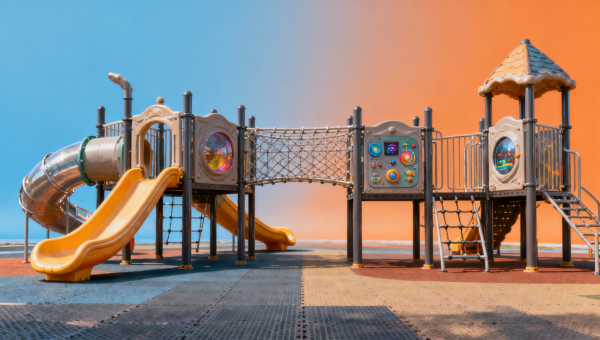
Choosing between new and used amusement equipment can impact safety, branding, and long-term ROI. For buyers comparing playground climbers, playground borders, and sensory playground solutions, the decision goes beyond price. It also affects playground safety, maintenance costs, compliance, and customer experience. This guide helps procurement teams and distributors assess value, risk, and sourcing strategy with greater confidence.
For B2B buyers in amusement parks, family entertainment centers, schools, resorts, community playgrounds, and public recreation projects, the new-versus-used question is rarely simple. A lower upfront purchase price may look attractive, but installation complexity, spare parts access, expected lifespan, and safety documentation often determine the true cost over 3 to 10 years.
This is especially relevant when sourcing playground climbers, modular play systems, sensory playground components, and playground borders. Commercial buyers are not only purchasing equipment; they are investing in guest satisfaction, brand consistency, uptime, and regulatory readiness. The right sourcing decision depends on site conditions, user age group, target throughput, and maintenance resources.
Why the New vs. Used Decision Matters in Commercial Amusement Projects
In the sports and entertainment sector, amusement equipment functions as both an asset and a public-facing experience tool. A climbing structure, rope course element, swing set, or sensory play panel may be used by dozens or even hundreds of visitors per day. In high-traffic sites, equipment condition has a direct impact on user confidence, queue flow, and maintenance workload.
New equipment is generally favored when buyers need a predictable service life, current safety design, and a unified visual identity. Many commercial operators plan around a 5 to 12 year asset horizon. In that context, the premium paid for new equipment may be offset by lower refurbishment requirements, better parts support, and fewer unplanned closures during peak operating months.
Used amusement equipment can still be a practical option, especially for secondary sites, seasonal facilities, budget-limited municipal projects, or distributors serving price-sensitive regions. However, used units often require more extensive verification. Missing maintenance logs, discontinued components, weather damage, surface wear, and unclear compliance history can quickly erode the initial savings.
For playground safety, the decision becomes even more critical. Buyers should verify structural integrity, entrapment risks, surfacing compatibility, and age-appropriate design. On used equipment, repainting or cosmetic cleaning does not replace technical inspection. A visually acceptable unit may still have compromised welds, corroded anchors, degraded plastics, or UV-damaged surfaces.
Core procurement priorities
- Safety compliance status, including available inspection records and manufacturer documentation.
- Total cost of ownership across purchase, transport, installation, maintenance, and downtime.
- Availability of replacement parts over the next 24 to 60 months.
- Fit with branding goals, user demographics, and expected traffic volume.
- Resale value, upgrade flexibility, and warranty coverage.
The table below compares common B2B evaluation points when deciding between new and used amusement equipment.
The practical takeaway is clear: used amusement equipment can reduce capital pressure, but only if the buyer has a disciplined inspection process and realistic refurbishment budget. For premium venues, high-footfall sites, or projects with strict safety and image requirements, new equipment often delivers a more stable long-term return.
When Buying New Amusement Equipment Makes Better Commercial Sense
New amusement equipment is often the preferred route when the project involves flagship branding, long operating hours, or multi-year maintenance planning. Resorts, destination parks, shopping mall play zones, and premium family entertainment centers typically expect strong visual impact from day one. In these environments, inconsistent finishes or older design lines can weaken the customer experience.
A major advantage of buying new is configuration flexibility. Buyers can specify color schemes, panel layouts, surfacing compatibility, accessibility features, and age-zone design. For example, a sensory playground may need tactile panels, quiet interaction zones, low-height transfer points, and inclusive route planning. These features are easier to integrate at the design stage than through post-purchase modifications on used equipment.
New systems also simplify compliance management. Documentation such as assembly manuals, material data, installation drawings, and maintenance schedules is usually available at handover. That matters for procurement teams that must coordinate with contractors, insurers, inspectors, and facility managers within a 2 to 8 week commissioning window.
For distributors and project developers, new equipment can also improve commercial positioning. It allows a cleaner sales narrative around warranty support, customization, and lifecycle planning. In a competitive tender environment, documented lead times, replacement-part availability, and installation guidance can become decisive factors beyond headline pricing.
Typical use cases for new equipment
- New park construction where design consistency and phased expansion are required.
- Hospitality projects where guest perception and premium finish quality are high priorities.
- Public playgrounds needing inclusive or sensory playground solutions built to current specifications.
- Operators expecting daily heavy use, such as 150 to 500 user interactions per day on key structures.
- Sites where downtime must be minimized during peak weekends or holiday seasons.
Lead time and budgeting realities
Commercial buyers should still plan carefully. New equipment may involve production and delivery cycles of 4 to 12 weeks, with installation adding another 3 to 10 days depending on complexity. Custom finishes, imported components, or larger multi-tower systems can extend this timeline. Budgeting should include freight, surfacing, anchoring, inspection, and spare-parts packages rather than focusing only on the factory price.
The following table outlines when new equipment usually creates stronger business value.
In short, new amusement equipment is not simply about buying the latest model. It is about securing design control, predictable lifespan, service support, and a lower risk profile in projects where safety, appearance, and uptime directly influence revenue or public trust.
When Used Equipment Can Be a Smart Buy and What Must Be Checked
Used amusement equipment can work well in selected business cases. Smaller community projects, temporary installations, resale channels, secondary locations, and refurbishment-oriented distributors may achieve meaningful savings when the equipment has a traceable history and limited structural wear. The key is not to ask whether the equipment looks acceptable, but whether it can perform safely and economically after reinstallation.
The most common mistake is evaluating only purchase price. A used playground climber offered at 40% below the new price may still become more expensive after transport, disassembly, missing hardware replacement, repainting, UV-damaged panel renewal, and labor for foundation adaptation. If 15% to 30% of the unit requires refurbishment, the cost advantage can narrow quickly.
Another issue is compatibility. Used equipment may not fit the available footprint, fall zone, surfacing depth, or local installation requirements. Playground borders also need checking. Borders that appear reusable may have hidden cracking, warping, or fastening fatigue, especially in climates with freeze-thaw cycles or sustained UV exposure. Sensory panels may present wear in moving parts or fading that reduces user engagement.
For procurement teams, the right approach is a structured audit before payment. That audit should cover structural condition, documentation, logistics, site suitability, and parts support. If one of these five pillars fails, the buyer should either renegotiate the price or reject the offer.
Used equipment inspection checklist
- Check the age of the equipment and request a service history covering at least the last 12 to 24 months.
- Inspect metal parts for corrosion, weld fatigue, loose joints, and anchor-point wear.
- Examine plastic and coated surfaces for brittleness, cracking, sharp edges, and color degradation.
- Confirm whether replacement parts are still available within 2 to 6 weeks if failures occur.
- Review dimensions, fall zones, and reinstallation requirements against the target site layout.
- Verify whether original installation manuals and maintenance recommendations are included.
Red flags that should delay or stop the purchase
Buyers should be cautious if the seller cannot provide the origin of the unit, if structural parts have been modified without clear records, or if major components are no longer supported. Heavy cosmetic refurbishment can also mask defects. Fresh paint, for example, should trigger closer examination of weld lines, bolt seats, and stress areas rather than immediate confidence.
A practical benchmark is to cap refurbishment at a manageable ratio of the purchase value. If estimated repair, transport, and reinstallation costs exceed roughly 35% to 50% of the used purchase price, many buyers find that new equipment becomes more attractive due to warranty and lifecycle certainty.
Safety, Compliance, and Lifecycle Cost: The Three Factors That Change the Math
Safety is the first filter in any commercial amusement equipment decision. Whether the equipment is new or used, buyers should review structural condition, entrapment risk, impact-zone planning, surface temperatures, moving part tolerances, and age suitability. In playground environments, one missing cap, exposed fastener, or unstable border segment can become a high-visibility operational problem.
Compliance is the second filter. Requirements vary by market and application, but procurement teams generally need installation guidance, inspection criteria, and product traceability. New equipment usually arrives with stronger paperwork support. Used equipment may still be acceptable, but only if the buyer can document condition and verify that the installed configuration remains appropriate for the intended user group and setting.
Lifecycle cost is the third filter, and it is where many purchasing decisions change. A low acquisition price can be outweighed by higher maintenance frequency, spare-parts delays, and downtime losses. For a venue operating 7 days per week, even 2 to 3 days of closure on a key attraction zone may have a greater commercial impact than the initial savings achieved through a used purchase.
Buyers should therefore model at least a 3-year cost outlook. This should include inspection frequency, expected part replacement, cleaning labor, repainting or recoating, surfacing repair, and service response time. In many amusement and leisure projects, lifecycle thinking is the difference between a cheap purchase and a sound purchase.
A simple lifecycle comparison framework
The table below offers a practical comparison method for business evaluators deciding how to balance budget against operational risk.
This framework does not mean used equipment is automatically risky. It means the buyer must quantify risk before approving the order. In many cases, a used unit with verified maintenance records and limited exposure can outperform a neglected low-cost alternative that looks similar on paper.
How Procurement Teams and Distributors Should Evaluate Suppliers and Offers
A disciplined sourcing process is essential whether the equipment is new or used. Buyers should not treat amusement procurement as a one-line item. The commercial outcome depends on supplier responsiveness, technical transparency, logistics competence, and after-sales support. A distributor may also need marketing materials, spare-parts plans, and adaptation advice for different local markets.
One useful approach is to score each offer across 4 to 6 weighted criteria. Typical criteria include product condition, documentation quality, price competitiveness, support availability, estimated remaining service life, and compatibility with local installation needs. This helps remove bias from decisions driven only by headline cost or seller claims.
Procurement teams should also ask practical questions early. What is the realistic lead time: 7 days, 30 days, or 10 weeks? Is installation supervision available? Can the supplier provide spare hardware kits? For sensory playground and inclusive play projects, can they confirm accessibility-oriented layout support or replacement options if one module becomes unavailable?
For international sourcing, the details matter even more. Crating quality, corrosion protection during transit, packing lists, and destination handling can affect the final condition of the equipment. A low-price used shipment that arrives with undocumented disassembly losses can create weeks of delay at the project site.
Recommended supplier evaluation steps
- Request a complete equipment list with dimensions, material condition notes, and age estimate.
- Ask for close-up images or inspection videos of structural joints, fasteners, panels, and wear points.
- Confirm available documents: manuals, maintenance logs, installation drawings, and parts lists.
- Estimate landed cost, including transport, unloading, site preparation, and reassembly labor.
- Map post-installation support, including spare-part lead time and response process for failures.
Questions that improve negotiation quality
Instead of asking only for the “best price,” buyers should ask what is included. Does the quote include anchor kits, border connectors, touch-up materials, inspection assistance, or parts substitution? Clarifying these points before purchase often reduces disputes later and supports more accurate comparison between suppliers.
For distributors, this sourcing discipline also improves resale credibility. Buyers downstream respond better to offers backed by clear condition grading, estimated remaining lifespan, and maintenance planning than to vague claims of “good condition” or “lightly used.”
FAQ: Common Buying Questions About New and Used Amusement Equipment
How do I know if used playground equipment is still safe to install?
Start with a physical inspection and document review. Focus on structural joints, corrosion, cracks, missing parts, impact zones, and anchoring points. If the equipment is more than several years old and records are limited, buyers should budget for a more detailed technical review before installation. Safety depends on condition, not just age.
Is new equipment always better for ROI?
Not always. New equipment often produces stronger ROI in premium, high-traffic, or long-term projects because it reduces uncertainty. Used equipment may deliver better ROI in smaller or budget-sensitive projects if refurbishment needs are limited and spare parts remain available. The decision should be based on 3-year to 5-year ownership cost, not purchase price alone.
What should buyers check when comparing playground borders and sensory playground parts?
For playground borders, review material integrity, fastening method, edging stability, and weather exposure history. For sensory playground elements, check moving mechanisms, panel fading, tactile component wear, and replacement availability. These parts may seem secondary, but they affect user safety, accessibility, and visual quality.
How long does sourcing and installation usually take?
For new equipment, a typical commercial timeline may range from 4 to 12 weeks including production and shipping, plus several days for installation. Used equipment may ship faster, but verification, refurbishment, and missing-part replacement can still extend the project timeline by 2 to 6 weeks. Fast purchase does not always mean fast opening.
Which buyers are best suited to used amusement equipment?
Used equipment is often more suitable for municipal budget projects, expansion of secondary sites, resellers with refurbishment capability, and operators running seasonal or temporary installations. Buyers without technical inspection resources or long-term maintenance planning are usually better served by new equipment with stronger documentation and support.
The choice between new and used amusement equipment should be made through a commercial lens: safety, documentation, lifecycle cost, site fit, and support capacity all matter more than sticker price alone. For playground climbers, playground borders, and sensory playground solutions, the best option depends on how the equipment will perform over years of real use, not just on the day it is purchased.
For procurement teams, business evaluators, and distributors, a structured sourcing process reduces risk and improves long-term value. If you need support comparing suppliers, reviewing amusement equipment options, or building a more reliable sourcing strategy for commercial recreation projects, contact us today to discuss your requirements, request a tailored solution, or learn more about available sourcing pathways.
Search News
Hot Articles
- Indoor PlaygroundFan Zhendong Visits Silicon Valley as MLTT Investor, AI Ping-Pong Tech Draws AttentionApr 23, 2026
- Stage Lighting & Truss2026 FIBA Women's World Cup Draw Opens Export Window for Arena Lighting & Timing SystemsApr 23, 2026
- Pro Stage AudioChina Upgrades Security Compliance for International Sports EventsApr 23, 2026
Popular Tags
Need ExpertConsultation?
Connect with our specialized leisureengineering team for procurementstrategies.
Recommended News
 Apr 20, 2026China's Smart Timing System Gains ITU Certification at Shanghai Bike EventChina's smart timing system wins ITU-T L.1800 certification — the first Chinese sports timing platform approved for UCI-accredited cycling events. Discover how it reshapes reliability, security & global competitiveness in sports tech.● Theme Park Strategist
 Apr 17, 2026Popular Badminton AI Protocol Launched in ChengduPopular Badminton AI protocol launched in Chengdu — a game-changer for smart sports hardware, VR simulators & outdoor ride manufacturers targeting Asian youth academies.● Theme Park Strategist
 Apr 17, 2026EN 1176-7:2026 Enforced: AI Behavior Recognition Required for EU Outdoor Interactive Play EquipmentEN 1176-7:2026 is now enforced — AI behavior recognition is mandatory for EU outdoor interactive play equipment. Ensure CE compliance now.● Theme Park Strategist
 Apr 16, 2026EN 1176-7:2026 Enforces AI Safety Rules for EU Outdoor Interactive Play EquipmentEN 1176-7:2026 enforces AI safety rules for EU outdoor interactive play equipment — mandatory false-trigger ≤0.3% & local-only data processing. Act now to comply.● Theme Park Strategist
 Apr 13, 20262026 CKC China Karting Championship in Macau Sparks Export Interest for Domestic Racing GearThe 2026 CKC China Karting Championship in Macau showcased FIA-compliant racing gear, sparking export interest for domestic timing systems, carbon fiber kits & sustainable tires. Discover how this event opens global opportunities.● Theme Park Strategist
 Apr 13, 2026Japan Revises Sports Equipment Safety Standards: Mandatory Multilingual E-Manuals for Imported Fitness Gear from April 2026Japan's new Sports Equipment Safety Standards mandate multilingual e-manuals for imported fitness gear from 2026. Learn how this impacts global exporters and key compliance strategies for smooth market entry.● Theme Park Strategist
 Apr 10, 2026Middle East Tensions Raise Shipping Risks in Hormuz Strait, Air Freight Costs for Sports Equipment Surge 12%Middle East tensions escalate shipping risks in Hormuz Strait, causing a 12% surge in air freight costs for sports equipment. Learn how this impacts supply chains and strategies to mitigate delays.● Theme Park Strategist
 Apr 24, 2026What to Check Before Buying Amusement EquipmentAmusement equipment buyers: check playground safety, playground borders, playground climbers, and sensory playground features before purchase to reduce risk and improve long-term value.● Theme Park Strategist
 Apr 24, 2026Amusement Equipment: Buy New or Used?Amusement equipment buying guide: compare new vs. used options for playground climbers, playground borders, sensory playground design, and playground safety to reduce risk and improve ROI.● Theme Park Strategist
 Apr 23, 2026Amusement Equipment Upgrades That Change Guest ExperienceAmusement equipment upgrades improve guest experience with sensory playground features, playground climbers, playground safety, playground borders, and smart commercial furniture solutions.● Theme Park Strategist
 Apr 23, 2026Amusement Equipment Safety Issues Often Missed at InstallAmusement equipment and playground safety start at install. Learn how sensory playground, playground borders, and playground climbers affect compliance, durability, and safer commercial projects.● Theme Park Strategist
 Apr 23, 2026Playground Swings for Parks or SchoolsPlayground swings for parks or schools: compare durable playground structures, inclusive playground options, and leisure park solutions with expert sourcing tips for safer, smarter buying.● Theme Park Strategist
 Apr 22, 2026How to Compare Theme Park RidesCompare theme park rides for safety, capacity, and ROI in a leisure park, while aligning playground structures, inclusive playground zones, and playground swings with smarter sourcing.● Theme Park Strategist
 Apr 22, 2026Is a Leisure Park Worth the InvestmentLeisure park investment guide: compare theme park rides, playground structures, inclusive playground design, swings, soundproofing materials, and custom furniture for stronger returns.● Theme Park Strategist
 Apr 22, 2026Adventure Playground Ideas That Work in Small Outdoor SpacesAdventure playground ideas for small outdoor spaces: compare layouts, indoor playground and trampoline park concepts, plus arcade games and musical instruments features to boost family appeal.● Theme Park Strategist
 Apr 22, 2026Adventure Playground Features That Improve Safety Without Feeling BoringAdventure playground and indoor playground safety features that keep fun high—compare trampoline park layouts, arcade games, and smart design tips for safer, more engaging venues.● Theme Park Strategist
 Apr 18, 20262026 Shanghai Sailing Open Adopts Domestic Smart Timing System2026 Shanghai Sailing Open adopts China's first ITU-R M.2412–certified smart timing system — a game-changer for marine sports exporters, integrators & event organizers worldwide.● Theme Park Strategist
 Apr 18, 2026EN 1176-7:2026 Enforced: AI Behavior Recognition Mandatory for EU Outdoor Play EquipmentEN 1176-7:2026 is now mandatory — AI behavior recognition required for EU outdoor play equipment. Ensure CE compliance, low-latency certification & market access before shipment.● Theme Park Strategist
 Apr 20, 2026Park benches with bolt corrosion you can’t see until it’s too latePark benches with hidden bolt corrosion risk luxury furniture, hotel furniture & commercial furniture safety—spot invisible degradation before failure.● Theme Park Strategist
 Apr 19, 2026Park benches built for coastal climates—what actually worksDiscover coastal-proof park benches, luxury furniture & custom hotel furniture built to last 25+ years in salt, sun & humidity—engineered for resorts, hotels & commercial spaces.● Theme Park Strategist
 Apr 19, 2026Why park benches fail after two seasons of outdoor usePark benches failing in 2 seasons? Discover why luxury furniture, hotel furniture, and commercial furniture specs matter—and how to choose resilient park benches, hotel chairs, and hotel tables.● Theme Park Strategist
 Apr 19, 2026Outdoor playground shade planning affects more than comfortOutdoor playground shade planning improves safety, durability, and visitor flow for outdoor playground, indoor playground, and trampoline park projects—explore smarter sourcing for swings and more.● Theme Park Strategist
 Apr 19, 2026Why playground swings fail early at busy public sitesPlayground swings at busy public sites fail early due to heavy traffic, weak materials, and poor maintenance. Compare outdoor playground, indoor playground, and trampoline park solutions for safer, longer-lasting performance.● Theme Park Strategist
 Apr 19, 2026Playground swings with fewer maintenance calls over timePlayground swings built for fewer maintenance calls: compare durable options for outdoor playground, indoor playground, and trampoline park projects with smarter lifecycle value.● Theme Park Strategist