What to Check Before Buying Amusement Equipment
Before investing in amusement equipment, buyers should evaluate far more than price and appearance. From playground safety and compliant playground borders to durable playground climbers and inclusive sensory playground features, every detail affects long-term value and user experience. For procurement teams, distributors, and commercial project planners, understanding these checkpoints helps reduce risk, improve sourcing decisions, and align with broader needs across hotel equipment, educational supplies, and commercial furniture environments.
In the sports and entertainment sector, amusement equipment is rarely a simple one-time purchase. It is a long-term operational asset that influences guest satisfaction, maintenance budgets, liability exposure, and brand reputation. Whether the project involves an indoor family entertainment center, a hotel recreation zone, a school playground, or a public leisure park, the buyer must assess performance, compliance, installation conditions, and after-sales capability before signing a contract.
For B2B buyers working across multiple commercial categories, the evaluation process should be structured. A visually attractive unit may still fail under high daily traffic, harsh weather, poor spare-parts availability, or local regulatory review. The checkpoints below are designed to help sourcing teams, commercial evaluators, and channel partners compare suppliers more effectively and reduce procurement risk.
Start with Safety, Compliance, and Site Suitability
Safety is the first filter when buying amusement equipment. For playground systems, climbing structures, slides, rope courses, or interactive play panels, the equipment must match the age group, user capacity, and expected usage intensity. A unit designed for light community use may not perform well in a commercial park receiving 300 to 800 users per day during peak periods.
Buyers should verify which safety standards apply in the target market before requesting quotations. Depending on the installation country and application scenario, review structural safety, impact attenuation, entrapment risks, edge treatment, flame resistance for indoor products, and material suitability for public use. Borders, surfacing, fasteners, and anchor systems should be checked as a complete system rather than as isolated components.
Site suitability is equally important. The same amusement equipment can perform very differently in coastal humidity, strong UV conditions, or indoor high-traffic environments. Procurement teams should confirm floor loading limits, clearance zones, drainage requirements, power supply for interactive units, and available installation access. Even a 20 cm mismatch in clearance planning can create rework costs during installation.
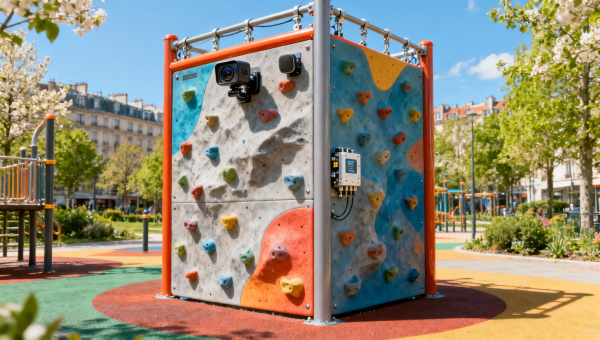
For projects connected to hotels, schools, and mixed-use commercial spaces, equipment also needs to fit circulation patterns and supervision visibility. A visually dense playground climber may look impressive in a catalog, but if it blocks sightlines for staff or parents, it can increase safety management pressure. In many B2B settings, operators prefer layouts that allow 360-degree visibility or at least clear supervision from 2 to 3 fixed points.
Core safety checkpoints before supplier shortlisting
- Age segmentation is clearly defined, such as 2–5 years, 5–12 years, or mixed-age supervised use.
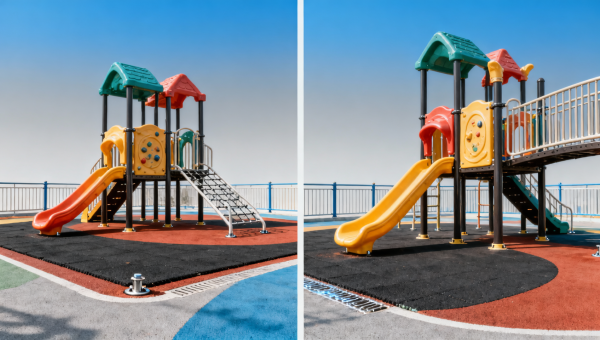
- Required fall zones, perimeter space, and compliant playground borders are included in layout drawings.
- Load-bearing values, anchoring method, and material specifications are documented in technical sheets.
- Replacement parts and maintenance intervals are stated, ideally with a 12–24 month service plan.
- Indoor equipment confirms fire-related material performance where relevant, while outdoor units confirm weather resistance.
The table below helps buyers compare key compliance and site-fit issues before moving from inquiry to sample approval or contract negotiation.
The main takeaway is that safety evaluation should cover the full installation ecosystem. Buyers who review only the main structure and ignore borders, surfacing, clearances, and service documentation often face the highest post-installation costs within the first 6 to 18 months.
Assess Durability, Materials, and Whole-Life Cost
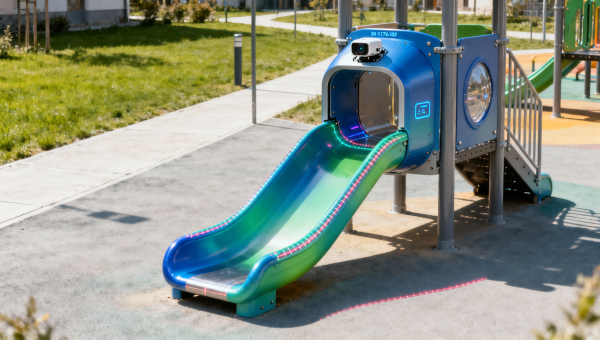
A lower purchase price does not always mean a better commercial deal. In amusement equipment procurement, durability directly affects total cost of ownership. This is especially important for playground climbers, swings, slides, trampolines, inflatable zones, and sensory playground features that experience repeated contact, impact, and exposure to weather or cleaning chemicals.
Buyers should ask which materials are used in frames, panels, connectors, coatings, ropes, bearings, and soft components. For outdoor projects, corrosion resistance and UV stability are critical. For indoor entertainment venues, abrasion resistance, surface hygiene, and maintenance access may matter more. A commercial buyer should also confirm whether components can be replaced module by module, rather than replacing an entire assembly after localized damage.
Maintenance frequency is another cost driver. Equipment that requires weekly adjustment, specialized tools, or imported spare parts with a 6–8 week lead time can disrupt operations. By contrast, standardized fasteners, modular panels, and a spare-parts package for the first 12 months often reduce downtime and service complexity. Distributors and resellers should pay special attention to this point because after-sales speed affects channel reputation.
Commercial planners should model costs over at least 3 to 5 years. Include the initial purchase price, shipping, installation, surfacing, inspection, routine maintenance, replacement parts, and potential seasonal shutdown losses. In many cases, equipment priced 10% to 15% higher upfront delivers better financial value because it lasts longer and requires fewer interventions.
Material and maintenance review points
Frame and structural components
Ask about material thickness, protective treatment, anti-rust performance, and structural connection design. For high-use public environments, hidden weak points usually appear in joints, weld zones, and anchor interfaces rather than in the main visible frame.
Panels, ropes, and user-contact surfaces
These components affect user comfort and maintenance frequency. Check abrasion resistance, touch temperature in hot climates, anti-slip texture, and whether the supplier can provide replacement sets in 7–21 days for common wear items.
The comparison below shows how procurement teams can move beyond price and evaluate the financial impact of material quality and serviceability.
For commercial buyers, the best choice is often the option with the most stable lifecycle cost, not the lowest unit price. This is particularly true when amusement equipment is part of a broader destination strategy in hospitality, education, or family recreation.
Review Design Function, Inclusion, and User Experience
Modern amusement equipment must do more than entertain. It should support age-appropriate development, inclusive access, and repeat engagement. For commercial spaces, user experience influences dwell time, social sharing, return visits, and the perceived quality of the venue. This is why layout logic and play value matter as much as structure and finish.
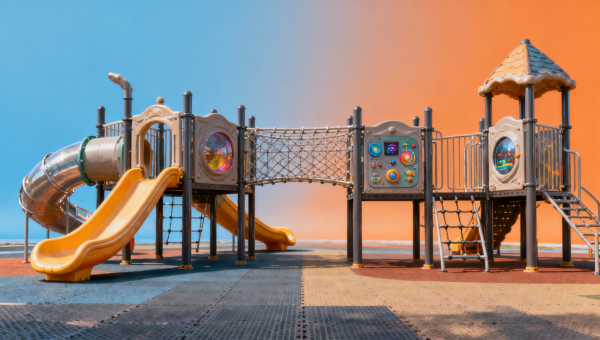
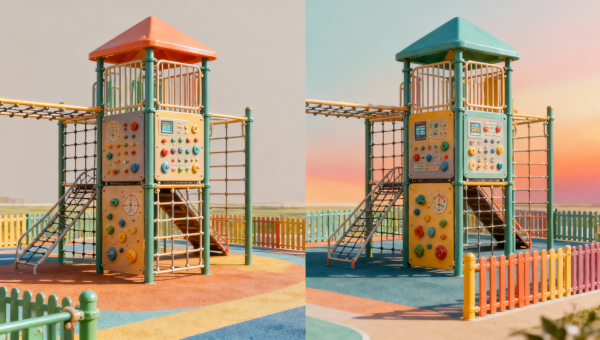
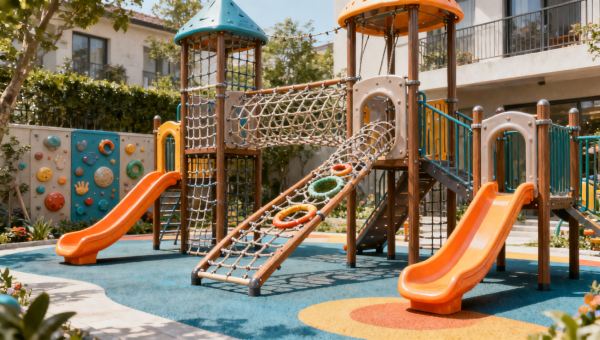
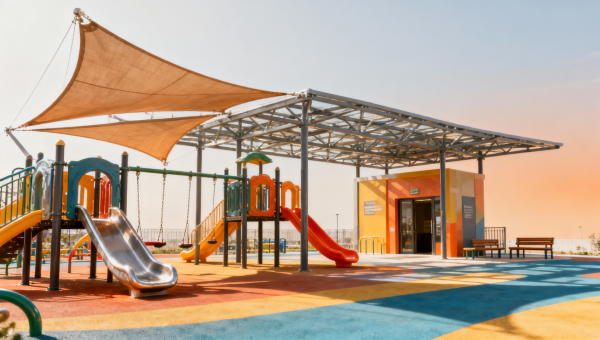
Buyers should assess whether the design offers multiple play modes rather than a single repetitive action. In playground projects, durable playground climbers can be combined with balance elements, sensory playground features, interactive panels, and shaded rest zones. A stronger layout often serves at least 3 user behaviors: active movement, social interaction, and lower-intensity sensory engagement.
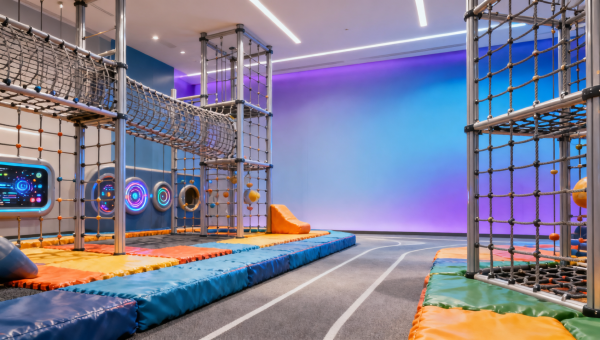
Inclusion is increasingly relevant in schools, hotels, retail family zones, and municipal projects. Sensory elements, easier access points, supportive handholds, and mixed-height play components can widen usability without compromising commercial appeal. For example, adding tactile panels, sound elements, or ground-level interaction areas can improve accessibility for younger children and users with different mobility or sensory profiles.
A practical design review should also examine circulation and wait-time behavior. If one signature play element creates a queue while surrounding areas remain underused, the layout may look impressive but perform poorly. In many medium-size projects, planners aim to distribute activity across 4 to 6 play zones to reduce crowd concentration and improve supervision.
Questions to test play value before purchase
- Does the equipment support more than one activity type, such as climbing, balancing, sliding, tactile discovery, or role play?
- Can children of different ages or abilities use adjacent zones safely without conflict?
- Does the layout encourage throughput, or will one popular node create bottlenecks in 5–10 minutes during peak demand?
- Are rest, shade, and caregiver sightlines integrated into the plan?
Commercial environments where inclusive design adds value
Hotels and resorts can use inclusive play zones to expand family appeal and lengthen guest stay. Educational environments benefit when play equipment supports motor, sensory, and social development in one system. Retail and mixed-use spaces gain when children remain engaged for 20–40 minutes, giving families more time on-site.
Distributors should also remember that inclusive design can strengthen product differentiation. In a competitive catalog, equipment that combines safety, durability, and broader usability is easier to position to commercial buyers than generic structures with limited play variation.
Examine Supplier Capability, Documentation, and Delivery Control
Even well-designed amusement equipment can become a procurement problem if the supplier lacks process discipline. Buyers should review factory communication quality, drawing accuracy, packaging method, lead-time reliability, and post-shipment support before placing a production order. A supplier’s responsiveness during the quotation stage often predicts how smoothly technical issues will be handled later.
Documentation should be treated as part of the product. Commercial buyers need itemized specifications, installation guidance, recommended maintenance schedules, exploded parts references where possible, and a clear list of exclusions. If a quotation does not define borders, surfacing, anchors, freight terms, or installation supervision, the project budget may be incomplete by 15% to 30%.
Lead time must also be broken into stages. Instead of accepting one broad estimate, ask for a schedule covering design confirmation, production, quality checks, packing, shipping, customs preparation, and installation readiness. For many standard commercial projects, production may range from 3 to 8 weeks, while custom-themed systems can require 8 to 14 weeks depending on complexity and finish requirements.
For dealers and agents, spare-parts planning is a major differentiator. Request a recommended first-order parts kit based on expected wear patterns and usage intensity. This is especially useful for imported equipment serving seasonal venues, where even a 10-day delay can disrupt revenue during peak operation windows.
Supplier evaluation matrix
A structured scorecard helps commercial teams compare multiple suppliers without focusing only on purchase price. The matrix below can be adapted for direct procurement, distributor sourcing, or project tender review.
This type of matrix helps buyers identify hidden execution gaps early. In practice, delivery quality often depends less on promises and more on how precisely the supplier defines scope, milestones, and service responsibility before production begins.
Plan Procurement, Installation, and Long-Term Operations
The final buying decision should connect procurement with installation and ongoing operation. Many amusement equipment issues appear after delivery because the site team, installer, and supplier were not aligned on sequence, tools, anchoring conditions, or acceptance criteria. A strong procurement process reduces these failures before goods leave the factory.
Commercial buyers should define a practical 5-step workflow: needs analysis, technical review, supplier comparison, installation planning, and post-installation acceptance. Each step should have named owners and deadlines. For multi-party projects such as hotels, schools, or public recreation sites, this structure prevents responsibility gaps between the buyer, architect, contractor, and operator.
Acceptance should cover more than appearance. A proper handover typically includes dimensional verification, fastener checks, surface condition review, movement testing for dynamic components, border and surfacing interface review, and a maintenance briefing for the operator. Buyers should also schedule the first maintenance review within 30 to 90 days depending on usage intensity.
For channel partners and distributors, long-term operations are part of the value proposition. Offering clients spare-part planning, inspection reminders, and upgrade suggestions can create repeat business. In the amusement and leisure market, buyers increasingly prefer suppliers and intermediaries that support the full asset lifecycle rather than just the initial transaction.
Common mistakes that increase project risk
- Approving a concept drawing without verifying clearances, borders, and surfacing scope.
- Comparing quotations that use different assumptions for freight, anchors, installation, or spare parts.
- Choosing equipment based only on appearance, while ignoring maintenance access and replacement-part availability.
- Skipping an early site survey, which can lead to drainage conflicts, ceiling-height issues, or delivery-access problems.
- Failing to plan periodic inspections every 1, 3, or 6 months according to traffic and equipment type.
FAQ: How long does a typical commercial amusement equipment project take?
A standard project may take 6 to 12 weeks from technical confirmation to delivered goods, while custom-themed or multi-zone installations can take 12 to 20 weeks. The exact schedule depends on design changes, material choice, freight mode, and site readiness.
FAQ: What should procurement teams prioritize if budgets are limited?
Prioritize safety, structural durability, spare-parts availability, and supervision-friendly layout. It is usually better to buy fewer well-specified components than to overfill a site with visually attractive but hard-to-maintain equipment.
FAQ: Are sensory playground features only relevant for schools?
No. Sensory elements can also add value in hospitality, retail family areas, clinics, and community leisure spaces. They broaden user engagement and often improve inclusivity without requiring a large increase in footprint.
Buying amusement equipment is a strategic decision that should balance safety, compliance, durability, play value, supplier capability, and operational efficiency. For information researchers, procurement professionals, evaluators, and distribution partners, the most successful purchases come from disciplined comparison rather than quick price-driven decisions.
If you are sourcing for a hotel recreation area, school campus, leisure park, or mixed commercial project, a structured review process can protect budget, reduce downtime, and improve user experience over the next 3 to 5 years. To explore tailored sourcing guidance, compare suitable equipment options, or discuss project-specific requirements, contact GCT to get a customized solution and learn more about practical commercial sourcing strategies.
Search News
Hot Articles
- Indoor PlaygroundFan Zhendong Visits Silicon Valley as MLTT Investor, AI Ping-Pong Tech Draws AttentionApr 23, 2026
- Stage Lighting & Truss2026 FIBA Women's World Cup Draw Opens Export Window for Arena Lighting & Timing SystemsApr 23, 2026
- Pro Stage AudioChina Upgrades Security Compliance for International Sports EventsApr 23, 2026
Popular Tags
Need ExpertConsultation?
Connect with our specialized leisureengineering team for procurementstrategies.
Recommended News
 Apr 20, 2026China's Smart Timing System Gains ITU Certification at Shanghai Bike EventChina's smart timing system wins ITU-T L.1800 certification — the first Chinese sports timing platform approved for UCI-accredited cycling events. Discover how it reshapes reliability, security & global competitiveness in sports tech.● Theme Park Strategist
 Apr 17, 2026Popular Badminton AI Protocol Launched in ChengduPopular Badminton AI protocol launched in Chengdu — a game-changer for smart sports hardware, VR simulators & outdoor ride manufacturers targeting Asian youth academies.● Theme Park Strategist
 Apr 17, 2026EN 1176-7:2026 Enforced: AI Behavior Recognition Required for EU Outdoor Interactive Play EquipmentEN 1176-7:2026 is now enforced — AI behavior recognition is mandatory for EU outdoor interactive play equipment. Ensure CE compliance now.● Theme Park Strategist
 Apr 16, 2026EN 1176-7:2026 Enforces AI Safety Rules for EU Outdoor Interactive Play EquipmentEN 1176-7:2026 enforces AI safety rules for EU outdoor interactive play equipment — mandatory false-trigger ≤0.3% & local-only data processing. Act now to comply.● Theme Park Strategist
 Apr 13, 20262026 CKC China Karting Championship in Macau Sparks Export Interest for Domestic Racing GearThe 2026 CKC China Karting Championship in Macau showcased FIA-compliant racing gear, sparking export interest for domestic timing systems, carbon fiber kits & sustainable tires. Discover how this event opens global opportunities.● Theme Park Strategist
 Apr 13, 2026Japan Revises Sports Equipment Safety Standards: Mandatory Multilingual E-Manuals for Imported Fitness Gear from April 2026Japan's new Sports Equipment Safety Standards mandate multilingual e-manuals for imported fitness gear from 2026. Learn how this impacts global exporters and key compliance strategies for smooth market entry.● Theme Park Strategist
 Apr 10, 2026Middle East Tensions Raise Shipping Risks in Hormuz Strait, Air Freight Costs for Sports Equipment Surge 12%Middle East tensions escalate shipping risks in Hormuz Strait, causing a 12% surge in air freight costs for sports equipment. Learn how this impacts supply chains and strategies to mitigate delays.● Theme Park Strategist
 Apr 24, 2026What to Check Before Buying Amusement EquipmentAmusement equipment buyers: check playground safety, playground borders, playground climbers, and sensory playground features before purchase to reduce risk and improve long-term value.● Theme Park Strategist
 Apr 24, 2026Amusement Equipment: Buy New or Used?Amusement equipment buying guide: compare new vs. used options for playground climbers, playground borders, sensory playground design, and playground safety to reduce risk and improve ROI.● Theme Park Strategist
 Apr 23, 2026Amusement Equipment Upgrades That Change Guest ExperienceAmusement equipment upgrades improve guest experience with sensory playground features, playground climbers, playground safety, playground borders, and smart commercial furniture solutions.● Theme Park Strategist
 Apr 23, 2026Amusement Equipment Safety Issues Often Missed at InstallAmusement equipment and playground safety start at install. Learn how sensory playground, playground borders, and playground climbers affect compliance, durability, and safer commercial projects.● Theme Park Strategist
 Apr 23, 2026Playground Swings for Parks or SchoolsPlayground swings for parks or schools: compare durable playground structures, inclusive playground options, and leisure park solutions with expert sourcing tips for safer, smarter buying.● Theme Park Strategist
 Apr 22, 2026How to Compare Theme Park RidesCompare theme park rides for safety, capacity, and ROI in a leisure park, while aligning playground structures, inclusive playground zones, and playground swings with smarter sourcing.● Theme Park Strategist
 Apr 22, 2026Is a Leisure Park Worth the InvestmentLeisure park investment guide: compare theme park rides, playground structures, inclusive playground design, swings, soundproofing materials, and custom furniture for stronger returns.● Theme Park Strategist
 Apr 22, 2026Adventure Playground Ideas That Work in Small Outdoor SpacesAdventure playground ideas for small outdoor spaces: compare layouts, indoor playground and trampoline park concepts, plus arcade games and musical instruments features to boost family appeal.● Theme Park Strategist
 Apr 22, 2026Adventure Playground Features That Improve Safety Without Feeling BoringAdventure playground and indoor playground safety features that keep fun high—compare trampoline park layouts, arcade games, and smart design tips for safer, more engaging venues.● Theme Park Strategist
 Apr 18, 20262026 Shanghai Sailing Open Adopts Domestic Smart Timing System2026 Shanghai Sailing Open adopts China's first ITU-R M.2412–certified smart timing system — a game-changer for marine sports exporters, integrators & event organizers worldwide.● Theme Park Strategist
 Apr 18, 2026EN 1176-7:2026 Enforced: AI Behavior Recognition Mandatory for EU Outdoor Play EquipmentEN 1176-7:2026 is now mandatory — AI behavior recognition required for EU outdoor play equipment. Ensure CE compliance, low-latency certification & market access before shipment.● Theme Park Strategist
 Apr 20, 2026Park benches with bolt corrosion you can’t see until it’s too latePark benches with hidden bolt corrosion risk luxury furniture, hotel furniture & commercial furniture safety—spot invisible degradation before failure.● Theme Park Strategist
 Apr 19, 2026Park benches built for coastal climates—what actually worksDiscover coastal-proof park benches, luxury furniture & custom hotel furniture built to last 25+ years in salt, sun & humidity—engineered for resorts, hotels & commercial spaces.● Theme Park Strategist
 Apr 19, 2026Why park benches fail after two seasons of outdoor usePark benches failing in 2 seasons? Discover why luxury furniture, hotel furniture, and commercial furniture specs matter—and how to choose resilient park benches, hotel chairs, and hotel tables.● Theme Park Strategist
 Apr 19, 2026Outdoor playground shade planning affects more than comfortOutdoor playground shade planning improves safety, durability, and visitor flow for outdoor playground, indoor playground, and trampoline park projects—explore smarter sourcing for swings and more.● Theme Park Strategist
 Apr 19, 2026Why playground swings fail early at busy public sitesPlayground swings at busy public sites fail early due to heavy traffic, weak materials, and poor maintenance. Compare outdoor playground, indoor playground, and trampoline park solutions for safer, longer-lasting performance.● Theme Park Strategist
 Apr 19, 2026Playground swings with fewer maintenance calls over timePlayground swings built for fewer maintenance calls: compare durable options for outdoor playground, indoor playground, and trampoline park projects with smarter lifecycle value.● Theme Park Strategist