Amusement Equipment Safety Issues Often Missed at Install
Many amusement equipment failures do not start with heavy use or poor maintenance. They start at installation. For buyers, sourcing teams, distributors, and commercial project evaluators, this is the key judgment: even certified equipment can become a safety risk if install conditions, anchoring, spacing, surfacing, and site coordination are handled poorly. In practical terms, the most common install-stage mistakes are not dramatic—they are small omissions that later lead to instability, pinch points, drainage problems, accelerated wear, and compliance disputes. If you are evaluating playground safety, sensory playground planning, playground borders, or playground climbers for a commercial site, the real question is not only “Is the equipment compliant?” but also “Can this specific site and installer deliver safe performance after installation?”
What buyers should check first before approving an amusement equipment installation
For commercial readers, the fastest way to reduce risk is to focus on a few high-impact checkpoints before looking at cosmetic details or supplier claims. The first is whether the installation plan matches the actual site conditions. A design may be compliant on paper, but the finished project can still fail if grade changes, underground utilities, drainage paths, or surface tolerances were not properly verified before install.
The second is responsibility clarity. Many safety issues arise when no one clearly owns transitions between design, civil works, delivery, assembly, surfacing, and final inspection. In amusement and leisure projects, gaps between trades are a major hidden risk. For example, equipment may be installed correctly, but if impact surfacing is laid at the wrong finished height, critical fall zones can become non-compliant.
The third is documentation quality. Serious suppliers and installers should provide layout drawings, anchor details, surfacing specifications, load or footing requirements, torque or fastening guidance where relevant, and a post-install inspection record. If documentation is incomplete, commercial buyers should treat that as a sourcing risk, not just an admin issue.
The safety issues most often missed at install
When procurement teams investigate amusement equipment safety issues, they often focus on manufacturing defects. In reality, many field problems come from installation-stage oversights that are easy to miss during handover.
1. Incorrect anchoring or foundation execution
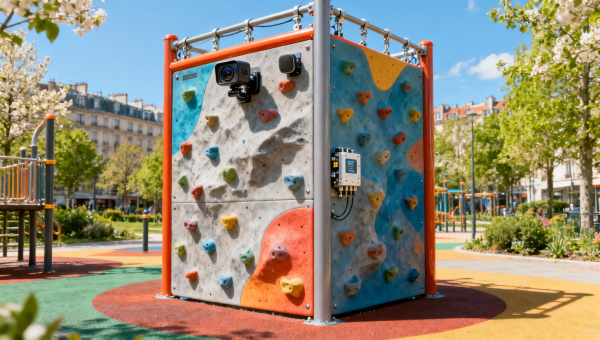
Equipment designed for one footing depth, concrete strength, or anchor method may be installed differently on site because of soil conditions, contractor shortcuts, or timeline pressure. This can affect structural stability, long-term movement, and user safety. For playground climbers and dynamic play systems, even small deviations can change performance under repeated loads.
2. Improper use-zone and clearance spacing
A frequent issue is insufficient clearance between components, between equipment and borders, or between equipment and surrounding walls, seating, fencing, or landscaping. This is especially important in compact commercial recreation layouts, hotel family zones, schools, and mixed-use leisure sites. A visually efficient layout can still create collision, entrapment, or circulation problems.
3. Finished surfacing depth does not match the design
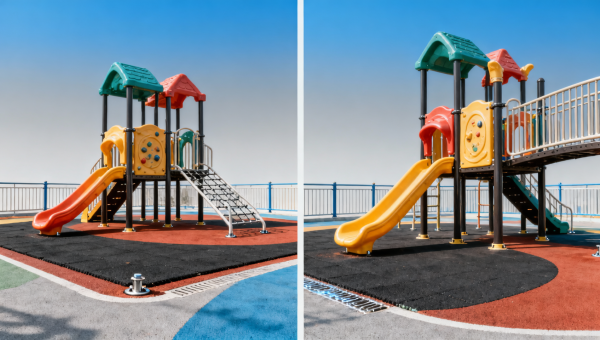
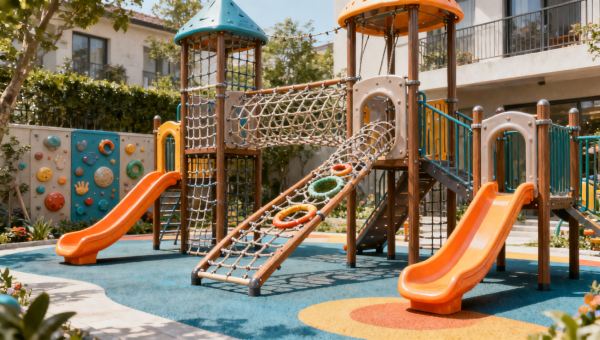
Impact attenuation depends on actual installed surfacing, not specification sheets alone. Loose-fill materials may settle. Rubber surfacing may be installed thinner than required in certain zones. If the final depth under and around the equipment is inconsistent, fall protection performance may not meet expectations. This is one of the most important playground safety checks during project acceptance.
4. Drainage is ignored
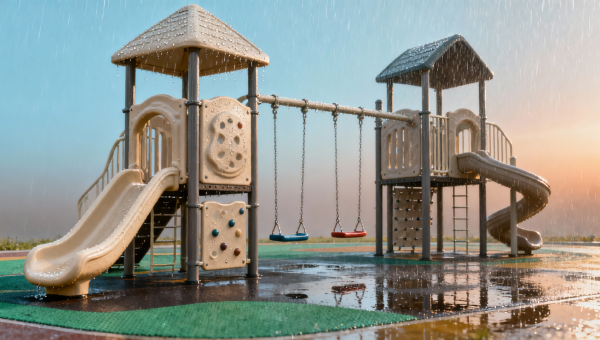
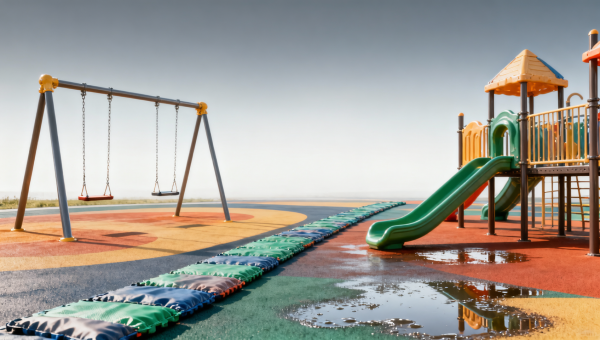
Standing water around footings, under surfacing, or along playground borders can degrade materials, weaken base layers, create slip hazards, and shorten service life. Drainage is often under-prioritized because it is less visible at handover, yet it is one of the strongest predictors of early performance problems.
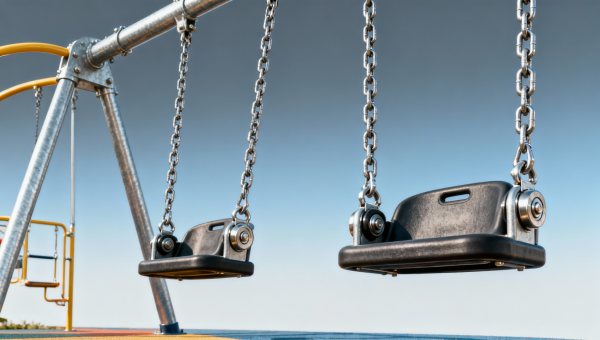
5. Fasteners, joints, and moving interfaces are not fully checked after assembly
Install teams under schedule pressure may complete assembly without a disciplined final check on torque settings, joint alignment, caps, guards, and pinch-point exposure. This is especially relevant for ride elements, rotating features, accessible sensory components, and modular systems shipped in multiple packages.
6. Site-built additions interfere with safe use
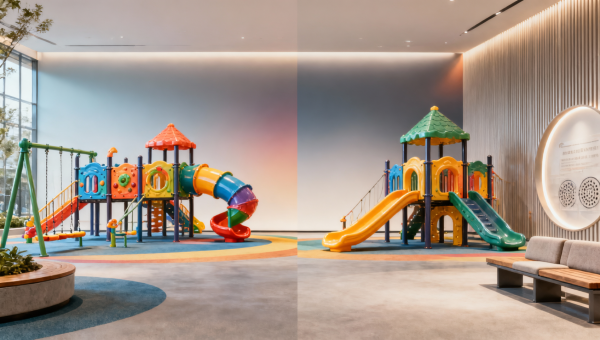
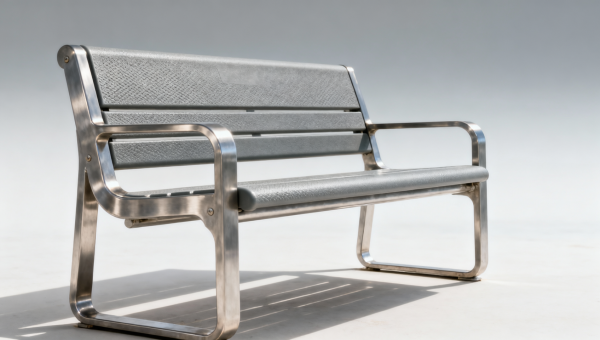
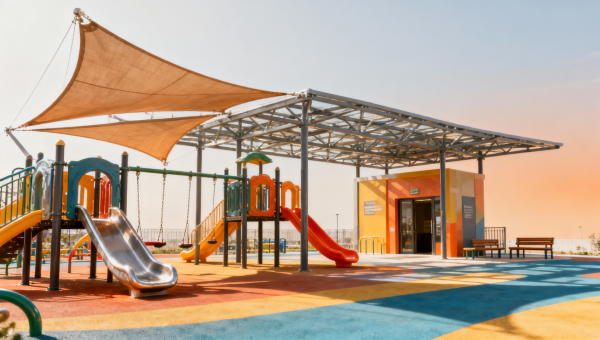
Commercial projects often add benches, signage, planters, shade structures, decorative borders, or nearby furniture after the core amusement equipment is installed. These additions can unintentionally intrude into fall zones, alter circulation, or create climb-out and impact risks. Safety should be reviewed at the full site level, not only at the equipment level.
Why sensory playgrounds and inclusive layouts need extra installation attention
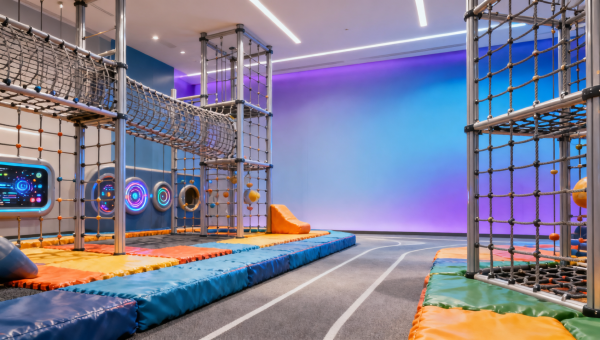
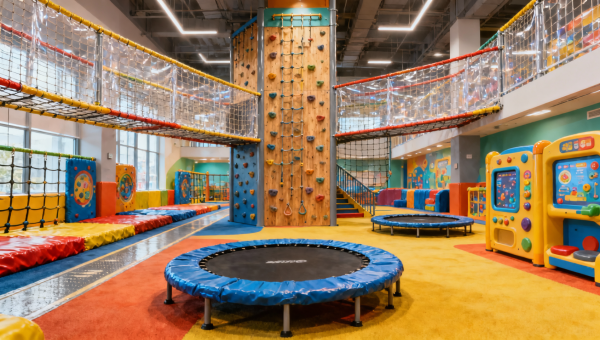
Sensory playground projects often include musical panels, tactile features, quiet areas, accessible routes, and lower-height interactive play elements. These spaces can appear lower-risk because they are less visually extreme than tall climbers or major structures, but installation quality is still critical.
The main reason is that inclusive play depends heavily on transitions. If pathway connections are uneven, surfacing joints are poorly finished, or component heights are slightly off, usability drops immediately for wheelchair users, children with balance challenges, or caregivers assisting movement. In other words, a sensory playground can meet design intent but still fail user experience and safety expectations because of poor field execution.
Buyers evaluating inclusive or sensory play installations should check route continuity, transfer access, edge treatment, sensory panel reach ranges, and whether surrounding playground borders create obstacles rather than guidance. This is where commercial value and safety overlap: a poorly installed inclusive area can damage both user trust and project reputation.
How playground borders and edges create hidden safety and maintenance risks
Playground borders are often treated as minor accessories, but they strongly affect both safety and lifecycle cost. During installation, border placement can reduce usable safety zones, create trip edges, trap water, or allow loose-fill surfacing migration. These problems usually appear after opening, which is why they are often missed during procurement review.
For commercial buyers, the key questions are practical. Does the border maintain required containment without encroaching on circulation space? Is it compatible with the surfacing system? Will it remain stable under weather, cleaning, and heavy foot traffic? Does it introduce hard-edge exposure near active play paths?
In hotel, resort, school, and public recreation projects, poor border detailing often leads to repeated maintenance calls, uneven surfacing levels, and customer complaints. A border decision should never be evaluated only on appearance or unit price.
What procurement and evaluation teams should ask suppliers and installers
If you are comparing suppliers, distributors, or project partners, the best way to reduce installation risk is to ask more precise questions. General promises about safety are far less useful than field-specific answers.
- What site information must be confirmed before final layout approval?
- Who is responsible for verifying grade, drainage, utilities, and substrate readiness?
- What tolerances are allowed for surfacing height, spacing, and foundation placement?
- What post-install inspection checklist is used before handover?
- How are non-conformities documented and corrected?
- Can the supplier provide installation guidance specific to sensory playgrounds, playground climbers, or mixed-use recreation layouts?
- What standards, local codes, and regional safety requirements does the final installation need to satisfy?
- What warranty limitations apply if site preparation or third-party surfacing work is handled separately?
These questions help buyers move from product comparison to project risk assessment. That shift is especially important in B2B sourcing, where liability, reopening costs, and brand impact can far exceed the original equipment price.
How to evaluate install quality during handover
Handover should not be treated as a visual walkthrough only. A proper evaluation should confirm that the installed condition matches the approved design intent and safety requirements. For business-focused readers, this is the moment that protects future operating performance.
A useful handover review should include:
- Verification of equipment location, orientation, and spacing
- Confirmation of foundation and anchor completion records
- Measurement of surfacing depth or installed system thickness in critical areas
- Inspection of edges, transitions, and accessible routes
- Review of fasteners, caps, guards, and moving parts
- Drainage observation after water testing or rainfall, where possible
- Confirmation that nearby furniture, signage, fencing, and landscaping do not compromise use zones
- Collection of manuals, maintenance instructions, and inspection records
For distributors and agents, supporting clients at this stage adds real value. It positions the business not just as a product channel, but as a more reliable commercial solution partner.
The business cost of installation mistakes is usually higher than buyers expect
Installation errors are expensive because they create layered consequences. First comes rework cost. Then delays, failed inspections, or soft-opening disruption. After that come maintenance claims, user complaints, and in serious cases, injury exposure and reputational damage. For hotels, family entertainment venues, educational settings, and municipal leisure spaces, the reputational downside can be greater than the technical repair cost.
This is why experienced procurement teams do not treat amusement equipment sourcing the same way they would treat simple furniture procurement. Although some commercial buyers may also compare categories such as hotel equipment, educational supplies, commercial furniture, hotel tables, or music accessories, amusement installations require stronger coordination between design, compliance, civil preparation, and final use conditions.
The smartest sourcing decision is often not the lowest quoted price. It is the supplier and install pathway that produces the lowest total project risk.
What a safer sourcing decision looks like
A safer sourcing decision combines product compliance, site-fit planning, installer capability, and documented handover control. Buyers should favor partners who can explain where installation failures typically happen and how those risks will be managed before work begins. That level of detail is often a better trust signal than broad marketing claims.
In practice, this means selecting vendors and project teams that can coordinate layout verification, border and surfacing integration, inclusive access details, and post-install inspection evidence. For playground safety and commercial recreation projects, value comes from predictable field performance, not just catalog specifications.
Amusement equipment safety issues often missed at install are rarely “minor.” They are the exact details that determine whether a project remains safe, compliant, durable, and commercially credible after opening day. For researchers, procurement teams, and business evaluators, the right approach is clear: assess installation risk as seriously as product quality, and make approval decisions based on real site execution—not assumptions.
Search News
Hot Articles
- Indoor PlaygroundFan Zhendong Visits Silicon Valley as MLTT Investor, AI Ping-Pong Tech Draws AttentionApr 23, 2026
- Stage Lighting & Truss2026 FIBA Women's World Cup Draw Opens Export Window for Arena Lighting & Timing SystemsApr 23, 2026
- Pro Stage AudioChina Upgrades Security Compliance for International Sports EventsApr 23, 2026
Popular Tags
Need ExpertConsultation?
Connect with our specialized leisureengineering team for procurementstrategies.
Recommended News
 Apr 20, 2026China's Smart Timing System Gains ITU Certification at Shanghai Bike EventChina's smart timing system wins ITU-T L.1800 certification — the first Chinese sports timing platform approved for UCI-accredited cycling events. Discover how it reshapes reliability, security & global competitiveness in sports tech.● Theme Park Strategist
 Apr 17, 2026Popular Badminton AI Protocol Launched in ChengduPopular Badminton AI protocol launched in Chengdu — a game-changer for smart sports hardware, VR simulators & outdoor ride manufacturers targeting Asian youth academies.● Theme Park Strategist
 Apr 17, 2026EN 1176-7:2026 Enforced: AI Behavior Recognition Required for EU Outdoor Interactive Play EquipmentEN 1176-7:2026 is now enforced — AI behavior recognition is mandatory for EU outdoor interactive play equipment. Ensure CE compliance now.● Theme Park Strategist
 Apr 16, 2026EN 1176-7:2026 Enforces AI Safety Rules for EU Outdoor Interactive Play EquipmentEN 1176-7:2026 enforces AI safety rules for EU outdoor interactive play equipment — mandatory false-trigger ≤0.3% & local-only data processing. Act now to comply.● Theme Park Strategist
 Apr 13, 20262026 CKC China Karting Championship in Macau Sparks Export Interest for Domestic Racing GearThe 2026 CKC China Karting Championship in Macau showcased FIA-compliant racing gear, sparking export interest for domestic timing systems, carbon fiber kits & sustainable tires. Discover how this event opens global opportunities.● Theme Park Strategist
 Apr 13, 2026Japan Revises Sports Equipment Safety Standards: Mandatory Multilingual E-Manuals for Imported Fitness Gear from April 2026Japan's new Sports Equipment Safety Standards mandate multilingual e-manuals for imported fitness gear from 2026. Learn how this impacts global exporters and key compliance strategies for smooth market entry.● Theme Park Strategist
 Apr 10, 2026Middle East Tensions Raise Shipping Risks in Hormuz Strait, Air Freight Costs for Sports Equipment Surge 12%Middle East tensions escalate shipping risks in Hormuz Strait, causing a 12% surge in air freight costs for sports equipment. Learn how this impacts supply chains and strategies to mitigate delays.● Theme Park Strategist
 Apr 23, 2026Amusement Equipment Upgrades That Change Guest ExperienceAmusement equipment upgrades improve guest experience with sensory playground features, playground climbers, playground safety, playground borders, and smart commercial furniture solutions.● Theme Park Strategist
 Apr 23, 2026Amusement Equipment Safety Issues Often Missed at InstallAmusement equipment and playground safety start at install. Learn how sensory playground, playground borders, and playground climbers affect compliance, durability, and safer commercial projects.● Theme Park Strategist
 Apr 23, 2026Playground Swings for Parks or SchoolsPlayground swings for parks or schools: compare durable playground structures, inclusive playground options, and leisure park solutions with expert sourcing tips for safer, smarter buying.● Theme Park Strategist
 Apr 22, 2026How to Compare Theme Park RidesCompare theme park rides for safety, capacity, and ROI in a leisure park, while aligning playground structures, inclusive playground zones, and playground swings with smarter sourcing.● Theme Park Strategist
 Apr 22, 2026Is a Leisure Park Worth the InvestmentLeisure park investment guide: compare theme park rides, playground structures, inclusive playground design, swings, soundproofing materials, and custom furniture for stronger returns.● Theme Park Strategist
 Apr 22, 2026Adventure Playground Ideas That Work in Small Outdoor SpacesAdventure playground ideas for small outdoor spaces: compare layouts, indoor playground and trampoline park concepts, plus arcade games and musical instruments features to boost family appeal.● Theme Park Strategist
 Apr 22, 2026Adventure Playground Features That Improve Safety Without Feeling BoringAdventure playground and indoor playground safety features that keep fun high—compare trampoline park layouts, arcade games, and smart design tips for safer, more engaging venues.● Theme Park Strategist
 Apr 18, 20262026 Shanghai Sailing Open Adopts Domestic Smart Timing System2026 Shanghai Sailing Open adopts China's first ITU-R M.2412–certified smart timing system — a game-changer for marine sports exporters, integrators & event organizers worldwide.● Theme Park Strategist
 Apr 18, 2026EN 1176-7:2026 Enforced: AI Behavior Recognition Mandatory for EU Outdoor Play EquipmentEN 1176-7:2026 is now mandatory — AI behavior recognition required for EU outdoor play equipment. Ensure CE compliance, low-latency certification & market access before shipment.● Theme Park Strategist
 Apr 20, 2026Park benches with bolt corrosion you can’t see until it’s too latePark benches with hidden bolt corrosion risk luxury furniture, hotel furniture & commercial furniture safety—spot invisible degradation before failure.● Theme Park Strategist
 Apr 19, 2026Park benches built for coastal climates—what actually worksDiscover coastal-proof park benches, luxury furniture & custom hotel furniture built to last 25+ years in salt, sun & humidity—engineered for resorts, hotels & commercial spaces.● Theme Park Strategist
 Apr 19, 2026Why park benches fail after two seasons of outdoor usePark benches failing in 2 seasons? Discover why luxury furniture, hotel furniture, and commercial furniture specs matter—and how to choose resilient park benches, hotel chairs, and hotel tables.● Theme Park Strategist
 Apr 19, 2026Outdoor playground shade planning affects more than comfortOutdoor playground shade planning improves safety, durability, and visitor flow for outdoor playground, indoor playground, and trampoline park projects—explore smarter sourcing for swings and more.● Theme Park Strategist
 Apr 19, 2026Why playground swings fail early at busy public sitesPlayground swings at busy public sites fail early due to heavy traffic, weak materials, and poor maintenance. Compare outdoor playground, indoor playground, and trampoline park solutions for safer, longer-lasting performance.● Theme Park Strategist
 Apr 19, 2026Playground swings with fewer maintenance calls over timePlayground swings built for fewer maintenance calls: compare durable options for outdoor playground, indoor playground, and trampoline park projects with smarter lifecycle value.● Theme Park Strategist
 Apr 19, 2026How weather exposure changes outdoor playground safety plansOutdoor playground safety starts with weather planning. Learn how trampoline park, indoor playground, and playground swings buyers reduce risk, protect value, and choose climate-smart equipment.● Theme Park Strategist
 Apr 19, 2026Outdoor playground surfaces that hide higher lifetime costsOutdoor playground surface choices can raise hidden lifetime costs for trampoline park and indoor playground projects. Compare safer, longer-lasting options around playground swings.● Theme Park Strategist