What Makes a Reliable Office Supplies Distributor
Choosing a reliable office supplies distributor is about more than price—it requires consistent quality, scalable supply, and proven global delivery capabilities. Whether you are comparing an office supplies supplier, office supplies wholesaler, or office supplies B2B supplier, understanding what sets a dependable partner apart can reduce sourcing risk and improve long-term procurement performance. This guide explores the key traits buyers, distributors, and commercial evaluators should examine before selecting a trusted partner.
In the office supplies sector, procurement decisions often affect daily operations more than buyers expect. A delayed toner shipment, mismatched paper specifications, or inconsistent packaging for stationery can interrupt administrative work, raise internal handling costs, and weaken service standards across multi-site organizations. For distributors and sourcing teams, reliability means performance under routine orders as well as under pressure.
This is especially relevant for institutional buyers, regional distributors, and commercial evaluators working across schools, offices, hospitality groups, and smart campuses. A dependable office supplies distributor should combine product consistency, transparent communication, and scalable fulfillment. The strongest partners are not simply sellers of pens, paper, filing products, and desk accessories; they are supply chain operators that help reduce uncertainty over 3 months, 12 months, and longer contract cycles.
Core Qualities That Define a Reliable Office Supplies Distributor
A reliable office supplies distributor usually stands out in 4 practical areas: product consistency, inventory depth, response speed, and order accuracy. Buyers may compare several vendors offering similar catalogs, yet the real difference appears after the first 2 or 3 purchase cycles. If one supplier maintains stable quality while another varies by batch, the lower initial quote often becomes the more expensive option over time.
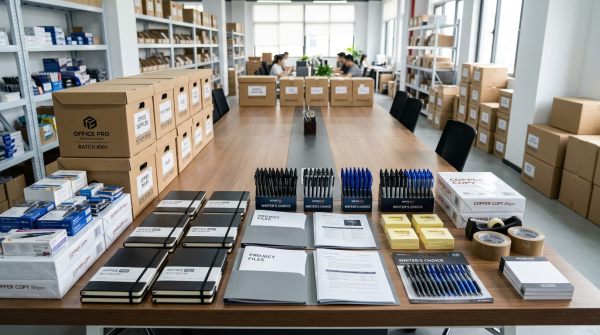
Consistency matters across high-volume categories such as copy paper, notebooks, writing instruments, printer consumables, labeling materials, desk organizers, and mailing supplies. For example, even a small variance in paper brightness, weight, or moisture performance can lead to printer jams, poor print contrast, or storage issues. In procurement reviews, these operational costs should be assessed alongside unit price.
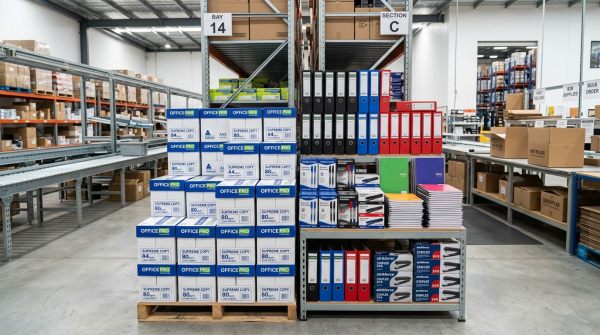
Another key indicator is inventory planning. A strong office supplies wholesaler should be able to support routine replenishment and seasonal spikes, such as back-to-school demand, year-end office resets, or large project openings. In many B2B supply arrangements, buyers look for lead times within 3–10 business days for stock items and 2–6 weeks for custom-labeled or OEM-packed products.
Communication also separates dependable suppliers from transactional traders. Reliable partners provide clear SKU mapping, order confirmation within 24–48 hours, shipment status updates, and pre-alerts when stock risk appears. This reduces the need for urgent substitutions, which can disrupt internal approval workflows and reseller commitments.
Operational signals buyers should verify
Before onboarding a new office supplies B2B supplier, commercial teams should examine operational signals rather than relying only on sales promises. These signals are often visible in sample quality, packing discipline, and quotation transparency.
- Stable product specifications across at least 2 sample rounds or prior shipment batches.
- Documented MOQ ranges, such as 500 units for standard stationery or 2,000–5,000 units for private-label packaging.
- Clear lead time commitments for stocked items, replenishment items, and custom orders.
- Defined replacement or claims process for defective, short-shipped, or damaged goods.
- Ability to consolidate multiple product lines into 1 shipment or 1 invoice stream.
The table below highlights common criteria used by procurement teams when screening an office supplies distributor for medium- to large-volume business.
These benchmarks are not absolute, but they create a useful baseline. Buyers managing frequent replenishment programs should prioritize predictability and issue resolution speed over headline discounts, especially when monthly usage volumes are high and substitution costs spread across multiple departments or downstream reseller channels.
Why Product Range, Specification Control, and Inventory Depth Matter
Many sourcing problems in office supplies do not come from complete supply failure; they come from partial mismatch. A distributor may deliver on time but provide the wrong binding size, paper GSM, folder thickness, cartridge compatibility, or carton packing ratio. For corporate procurement and distribution resale, this creates hidden costs in returns, repacking, and user complaints.
Specification control is particularly important when purchasing across several branches or institutions. Standardized product files should define details such as dimensions, color coding, material grade, sheet count, page ruling, adhesive type, and compatible equipment models. Even for simple categories like sticky notes or lever arch files, these details determine usability and warehouse efficiency.
Inventory depth matters because office supply demand is rarely flat. A school network may need a 20% to 40% increase in notebooks and markers before a new term. A hospitality back office may require rapid replenishment of printer consumables and record-keeping materials during peak occupancy seasons. A capable office supplies supplier should plan for these spikes rather than react after stockouts occur.
For distributors, broad category coverage also supports cross-selling and freight efficiency. Sourcing copy paper, pens, folders, desk accessories, and mailing materials from a single office supplies wholesaler can lower handling complexity compared with splitting orders across 4 or 5 small vendors. Consolidation often improves visibility, invoice control, and reorder discipline.
Common specification points to standardize
The most reliable supply relationships are built on detailed item standards. This is especially important for repeat procurement contracts lasting 6–12 months or longer.
- Paper: size, GSM, brightness range, sheet count, ream packaging, printer compatibility.
- Pens and markers: tip size, ink type, drying speed, packaging count, barrel material.
- Filing products: board thickness, ring mechanism type, spine width, carton quantity.
- Toner and ink supplies: machine compatibility, page yield range, packaging protection, shelf-life guidance.
- Desktop accessories: material finish, color standard, unit dimensions, assembly requirements.
The comparison table below shows how specification clarity can influence purchasing outcomes in routine office supplies sourcing.
A distributor with disciplined specification control will usually make quotation sheets, packing lists, and repeat order records easier to manage. This becomes even more valuable when buyers handle multi-market procurement, private-label programs, or annual framework agreements where standardization drives both service quality and cost visibility.
Supply Chain Reliability, Global Delivery, and Risk Management
For importers, regional dealers, and institutional buyers, delivery capability is often the deciding factor when selecting an office supplies distributor. Price differences of 3% to 8% can be absorbed if the supplier consistently ships complete orders, packages goods correctly, and provides traceable dispatch timelines. Repeated delays, however, can break internal supply schedules and damage reseller confidence.
A dependable office supplies B2B supplier should be able to explain how orders move from confirmation to dispatch. Buyers should understand whether the supplier is shipping from ready stock, consolidating from multiple factories, or producing under OEM/ODM arrangements. Each model has a different risk profile. Stocked items may move in 3–7 days, while custom packaging programs may require 15–45 days depending on volume and print approval.
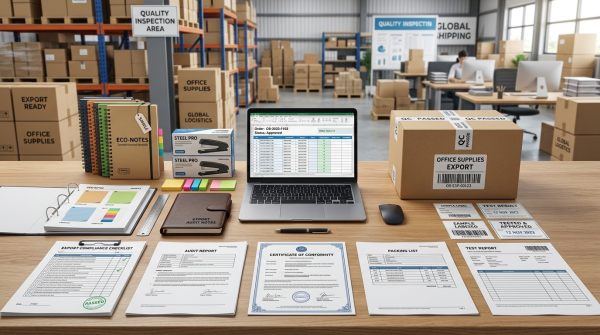
Risk management also depends on packaging and documentation. Office supplies may seem low risk compared with heavy industrial goods, but damage, moisture exposure, crushed cartons, and mislabeling can still create serious distribution problems. This is especially true for paper products, boxed consumables, and mixed cartons containing small stationery items that are easy to miscount.
Commercial buyers should also review how the distributor handles substitutions. When a selected SKU is unavailable, a weak supplier may ship a “similar” item without approval. A reliable partner will notify the buyer before dispatch, provide a clear alternative specification, and document any price or packaging differences. This preserves contract discipline and avoids downstream disputes.
A practical 5-step supply reliability check
The following process helps buyers reduce risk before awarding volume business to an office supplies wholesaler or distributor.
- Validate top 20 high-rotation SKUs for stock status, pack ratio, and lead time.
- Test a trial order with at least 10–15 line items to measure accuracy and carton integrity.
- Review export packing details, labeling format, and shipping mark consistency.
- Confirm escalation contacts for delays, quality claims, and replacement decisions.
- Measure actual performance over 1–3 purchase cycles before expanding spend volume.
Red flags that signal future delivery problems
- Lead times change significantly between quote, PI, and shipment without explanation.
- Carton counts and unit packs are inconsistent across documents.
- No batch reference, shipment traceability, or claims response timeline is provided.
- Samples and bulk orders differ in color, finish, or packaging quality.
Distributors serving global commercial buyers need stronger coordination than vendors focused only on domestic spot sales. This is one reason buyers increasingly value sourcing intelligence platforms such as GCT, which emphasize commercially relevant supply discipline, category knowledge, and sourcing visibility across office and educational supplies.
How Procurement Teams Should Compare Suppliers Beyond Unit Price
Unit price remains important, but it should be evaluated within total procurement performance. A low-cost office supplies supplier may still produce a higher landed cost if defects, urgent replenishment, split shipments, or manual reconciliation consume internal resources. For procurement managers, the better comparison model includes service metrics, risk exposure, and reorder efficiency.
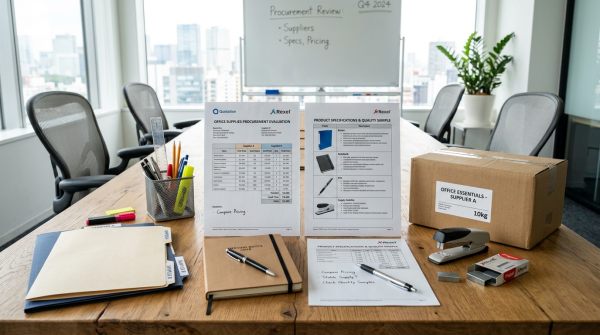
One useful method is to score each office supplies distributor across 5 weighted dimensions: commercial competitiveness, quality stability, delivery reliability, communication speed, and catalog fit. Buyers can assign percentage weights based on business model. For example, a reseller may give 30% weight to delivery reliability, while a private-label buyer may assign 25% to packaging accuracy and specification control.
Payment and contract terms also influence reliability. Shorter payment windows do not always create better supply outcomes. In many cases, the more relevant question is whether the supplier can maintain agreed service levels under an annual forecast, rolling 60-day demand plan, or mixed SKU container program. Good distributors usually welcome structured forecasting because it improves stock preparation and production planning.
Another overlooked factor is data readiness. A professional office supplies wholesaler should provide clean item codes, carton dimensions, unit counts, and shipping data that integrate smoothly into ERP, distributor listings, and procurement systems. This can save hours of manual correction each month, especially when managing 100 or more recurring SKUs.
Sample supplier comparison framework
The matrix below offers a practical framework for commercial evaluation teams comparing multiple office supplies B2B suppliers.
Used correctly, this framework helps teams compare suppliers on procurement value rather than headline pricing alone. In long-term office supplies sourcing, a partner that saves 6 hours of weekly coordination or avoids 2 failed deliveries per quarter may outperform a cheaper but unstable option by a wide margin.
Questions Buyers, Distributors, and Evaluators Should Ask Before Signing
The final selection stage is where many sourcing teams become too general. Asking broad questions such as “Can you handle large orders?” often produces vague answers. Better results come from specific operational questions tied to volume, service windows, and category complexity. This is especially important when the supplier will support branch offices, contract customers, schools, or multi-country distribution partners.
For example, instead of asking whether a supplier offers customization, ask what the minimum run is for branded notebooks, file folders, or pen packs, how many artwork revisions are included, and whether lead time begins after artwork approval or deposit receipt. The difference can easily add 7–14 days to a launch schedule.
Buyers should also request clarity on nonconformance handling. If 3% of cartons arrive damaged or if a toner line shows compatibility issues, what is the response window? Will the supplier offer credit, replacement in the next shipment, or local resolution support? Reliable office supplies distributors usually define this process in advance rather than negotiating under pressure after the problem appears.
For commercial evaluators and distributors, another important question is scalability. A vendor that performs well at 500 cartons per month may struggle at 2,000 cartons during a regional rollout. Capacity discussions should therefore include packaging throughput, consolidation ability, and seasonal planning discipline.
FAQ for office supplies sourcing decisions
How many product categories should a capable distributor cover?
For general B2B purchasing, a practical baseline is 5–8 core categories, including paper, writing instruments, filing products, desktop items, and printer consumables. More advanced distributors may also cover educational supplies, mailing materials, presentation tools, and private-label packs.
What lead time is reasonable for standard office supplies?
For stocked items, 3–10 business days is common depending on order size and destination. For custom packaging or OEM office stationery, 2–6 weeks is a more realistic range. Buyers should always separate stock lead time from production lead time when comparing quotations.
What is a common mistake in supplier evaluation?
A frequent mistake is comparing quotations without normalizing pack size, carton ratio, specification details, and freight assumptions. Two offers may look similar, but one may use thinner board material, lower sheet count, or less protective packaging, which affects both performance and resale value.
When should a buyer request a trial order?
A trial order is advisable before committing to annual volume, private-label launches, or multi-branch contracts. A useful test usually includes 10 or more SKUs and should assess packing, labeling, accuracy, transit condition, and user feedback over at least 1 complete receiving cycle.
Choosing the right office supplies distributor means identifying a partner that can deliver stable quality, controlled specifications, scalable inventory, and dependable communication across the full procurement cycle. For buyers, distributors, and business evaluators, the strongest supplier is not necessarily the one with the lowest opening price, but the one with the clearest process and the fewest operational surprises. If you are assessing office supplies sourcing options for institutional procurement, distribution growth, or custom commercial programs, explore more solutions through GCT and contact us to discuss tailored sourcing support, supplier evaluation, and category-specific recommendations.
Search News
Hot Articles
- Stage Lighting & Truss2026 FIBA Women's World Cup Draw Sets LED Timing Screen RequirementsApr 27, 2026
- Hotel Room AmenitiesIranian Delegation’s Ritual Gesture at Sanya ASG Sparks Mideast Hospitality Procurement ShiftApr 27, 2026
- Arcade & VR MachinesSnooker World Championship 'China Derby' Drives VR Viewing DemandApr 27, 2026
Popular Tags
Need ExpertConsultation?
Connect with our specialized leisureengineering team for procurementstrategies.
Recommended News
 Apr 27, 2026Office Supplies Manufacturer MOQ ExplainedOffice supplies manufacturer MOQ explained: compare an office supplies supplier, wholesaler, distributor, OEM manufacturer, and factory to reduce cost, improve flexibility, and source smarter.● Institutional Buyer
 Apr 27, 2026Distributor or Supplier for Fast ReordersOffice supplies supplier or distributor for fast reorders? Compare lead times, stock stability, and bulk supply options to choose a reliable office supplies B2B supplier.● Institutional Buyer
 Apr 27, 2026How Wholesalers Cut Office Supply CostsOffice supplies supplier and office supplies wholesaler solutions help cut costs through bulk buying, OEM options, and smarter sourcing. Compare distributors and manufacturers to save more.● Institutional Buyer
 Apr 27, 2026Office Supplies Supplier Pricing Red FlagsOffice supplies supplier pricing red flags explained: compare an office supplies wholesaler, distributor, or manufacturer, spot hidden risks, and choose a reliable B2B partner with confidence.● Institutional Buyer
 Apr 27, 2026How to Vet an Office Supplies ExporterOffice supplies supplier vetting made simple: learn how to assess an office supplies exporter, manufacturer, wholesaler, and distributor for quality, compliance, and reliable B2B growth.● Institutional Buyer
 Apr 27, 2026What to Ask an Office Supplies Producer FirstOffice supplies supplier screening starts with the right questions. Learn how to evaluate an office supplies manufacturer, wholesaler, or producer on quality, OEM, compliance, pricing, and delivery.● Institutional Buyer
 Apr 27, 2026How to Compare Office Supplies Bulk SuppliersCompare every office supplies supplier model—wholesaler, distributor, OEM manufacturer, and bulk supplier—to evaluate quality, compliance, lead times, and costs for smarter B2B sourcing.● Institutional Buyer
 Apr 27, 2026Is an Office Supplies OEM Manufacturer Worth ItOffice supplies OEM manufacturer or standard sourcing? Compare an office supplies supplier, wholesaler, and distributor to find the best B2B fit for cost, branding, and scalable growth.● Institutional Buyer
 Apr 27, 2026Best Office Supplies B2B Supplier for ScaleFind the best office supplies B2B supplier for scale. Compare an office supplies supplier, wholesaler, distributor, and OEM manufacturer to secure reliable bulk sourcing and growth.● Institutional Buyer
 Apr 27, 2026Office Supplies Factory Audit ChecklistOffice supplies factory audit checklist for choosing a reliable office supplies manufacturer, supplier, or OEM partner. Learn key quality, compliance, and capacity checks before sourcing.● Institutional Buyer
 Apr 27, 2026When to Work With an Office Supplies ManufacturerOffice supplies manufacturer or office supplies supplier? Learn when to source direct, compare wholesaler vs OEM options, and improve cost, quality, and supply stability.● Institutional Buyer
 Apr 27, 2026What Makes a Reliable Office Supplies DistributorDiscover what sets a reliable office supplies distributor apart. Compare an office supplies supplier, wholesaler, or B2B supplier by quality, lead times, inventory, and global delivery.● Institutional Buyer
 Apr 27, 2026Office Supplies Wholesaler vs DistributorOffice supplies wholesaler vs distributor: learn how an office supplies supplier, distributor, or manufacturer impacts pricing, lead time, and growth—choose the best B2B sourcing model.● Institutional Buyer
 Apr 27, 2026How to Choose an Office Supplies SupplierLearn how to choose the right office supplies supplier by comparing an office supplies wholesaler, distributor, manufacturer, or B2B supplier for quality, price, delivery, and growth.● Institutional Buyer
 Apr 24, 2026How to Pick Educational Supplies by AgeEducational supplies by age: discover how commercial furniture, sensory playground designs, playground safety, climbers, borders, music accessories, hotel tables and amusement equipment improve ROI.● Institutional Buyer
 Apr 24, 2026Educational Supplies That Schools Reorder MostEducational supplies schools reorder most: from commercial furniture support and music accessories to playground safety, playground borders, and sensory playground essentials—discover high-demand categories buyers need year-round.● Institutional Buyer
 Apr 23, 2026How to Compare Educational Supplies Beyond Unit PriceEducational supplies buying guide: compare commercial furniture, sensory playground, music accessories, and playground safety beyond unit price to cut risk and boost long-term value.● Institutional Buyer
 Apr 23, 2026Educational Supplies That Wear Out Fast in Shared UseEducational supplies wear out fast in shared spaces. Learn how commercial furniture, music accessories, playground borders, playground climbers, sensory playground systems, and playground safety solutions reduce risk and replacement costs.● Institutional Buyer
 Apr 22, 2026When Cheap Office Supplies End Up Costing MoreOffice supplies that seem cheap can cost more over time for trampoline park, indoor playground, arcade games, musical instruments, and luxury jewelry businesses—discover smarter sourcing tips.● Institutional Buyer
 Apr 22, 2026Office Supplies Costs That Quietly Add Up Over a YearOffice supplies costs can quietly rise alongside arcade games, musical instruments, indoor playground and trampoline park operations. Discover smarter sourcing to protect margins.● Institutional Buyer
 Apr 21, 2026Office supplies wholesaler terms that cause reorder problemsOffice supplies wholesaler terms can quietly trigger costly reorders. Learn how a reliable office supplies supplier should handle MOQ, lead times, substitutions, and pricing before you sign.● Institutional Buyer
 Apr 21, 2026The hidden service gaps between office supplies suppliersOffice supplies supplier insights: uncover hidden service gaps in office supplies wholesaler selection, plus sourcing links to musical instruments for bands, custom jewelry manufacturer, and indoor playground supplier.● Institutional Buyer
 Apr 24, 2026Why office supplies wholesalers vary so much on MOQ and lead timeOffice supplies supplier insights: learn why an office supplies wholesaler differs on MOQ and lead time, and compare sourcing logic across custom jewelry manufacturer and indoor playground supplier options.● Institutional Buyer
 Apr 24, 2026How to compare an office supplies supplier beyond priceCompare an office supplies supplier beyond price—evaluate quality, compliance, customization, and delivery. Learn how the right office supplies wholesaler reduces risk and boosts long-term value.● Institutional Buyer