How Wholesalers Cut Office Supply Costs
For buyers seeking smarter procurement, understanding how an office supplies wholesaler reduces costs can unlock major savings across daily operations. Whether you source from an office supplies supplier, office supplies distributor, or office supplies B2B supplier, strategic bulk purchasing, OEM options, and supply chain consolidation can significantly improve value. This guide explores practical ways wholesalers help procurement teams, distributors, and evaluators control office supply spending without sacrificing quality or reliability.
Why office supply costs rise faster than buyers expect
In the office supplies sector, cost inflation rarely comes from a single source. Buyers often focus on unit price, yet the real expense sits across ordering frequency, mixed-SKU handling, packaging waste, urgent replenishment, and inconsistent quality. A procurement team may save 3% on paper clips but lose far more through fragmented orders placed every week or through products that fail in daily use.
For information researchers and business evaluators, the first useful question is not “Who has the cheapest item?” but “Which office supplies wholesaler lowers total procurement cost over 3 to 12 months?” In B2B purchasing, total cost includes warehousing, delivery coordination, supplier communication time, replacement rates, and the hidden administrative load created by too many vendors.
Wholesalers reduce these pressures by aggregating sourcing, standardizing specifications, and creating more predictable replenishment cycles. This matters for offices, campuses, hospitality back offices, co-working projects, and multi-site institutions that may manage 50 to 500 recurring office supply SKUs. Once volume rises, even small process inefficiencies begin to compound.
Global Commercial Trade (GCT) supports this decision process by connecting buyers with category-specific intelligence, sourcing visibility, and supplier evaluation logic tailored to commercial environments. That is especially useful when procurement teams must compare not only office supplies suppliers, but also OEM capability, packaging consistency, compliance readiness, and long-term fulfillment reliability across regions.
Common cost drivers that are often missed
- Low-value orders placed too frequently, such as weekly top-ups for pens, notebooks, toner accessories, folders, and desk consumables.
- Multiple suppliers using different pack sizes, carton counts, lead times, and labeling rules, which complicates internal receiving and inventory control.
- Quality inconsistency that increases return handling, user complaints, and replacement purchases within 30 to 90 days.
- Urgent shipping charges caused by poor demand planning or by suppliers unable to consolidate mixed-category office products.
How wholesalers actually cut office supply costs
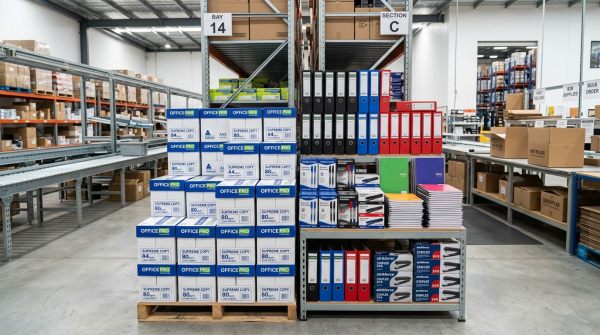
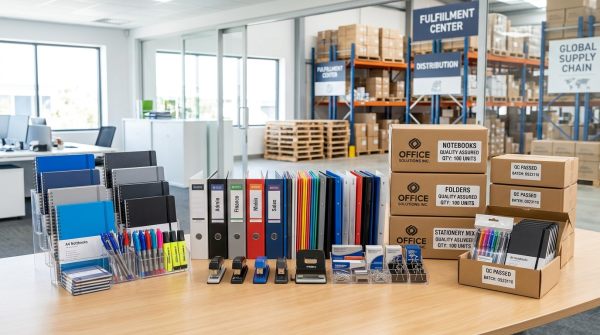
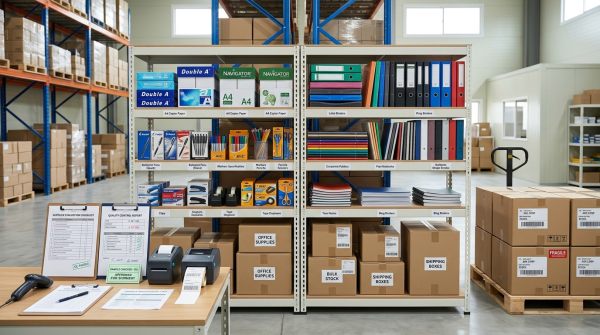
A capable office supplies wholesaler does more than resell products. The wholesaler compresses the supply chain. Instead of a buyer managing separate sources for writing tools, paper products, filing systems, mailing supplies, desk accessories, and school or institutional stationery, one wholesaler can merge these into a smaller number of purchase orders and delivery windows. That alone can reduce internal ordering effort across 4 to 6 routine process steps.
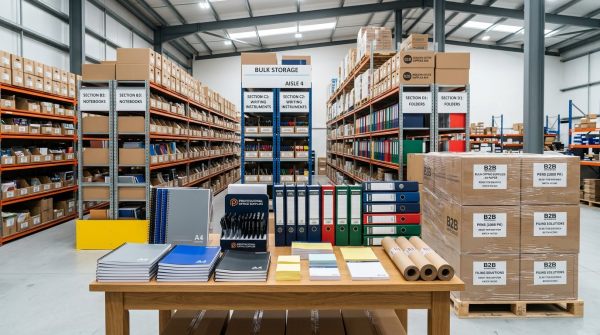
Volume pricing is the most visible saving lever, but not the only one. Better wholesalers negotiate factory-side production slots, optimize carton utilization, and recommend pack-size adjustments that reduce open-stock handling. For example, moving from ad hoc monthly buying to quarterly planning can improve price stability and reduce urgent freight exposure, especially for fast-moving office consumables.
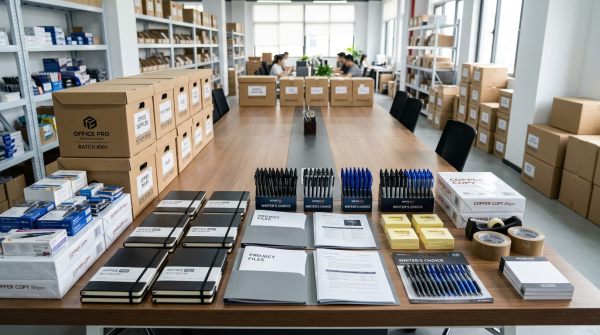
Another major saving channel is SKU rationalization. Many organizations carry too many near-identical products. A wholesaler with category knowledge can cut duplication by mapping 20 similar stationery items into 6 to 8 approved standards. This reduces training time for staff, simplifies reorder points, and improves inventory turnover without weakening user experience.
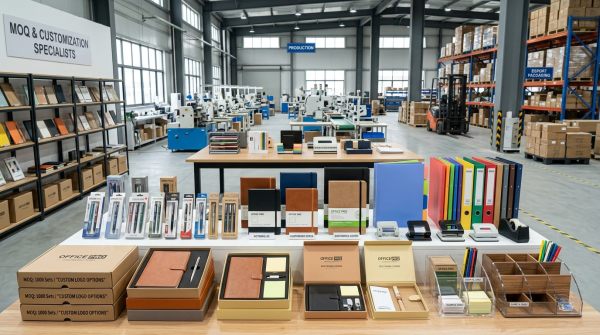
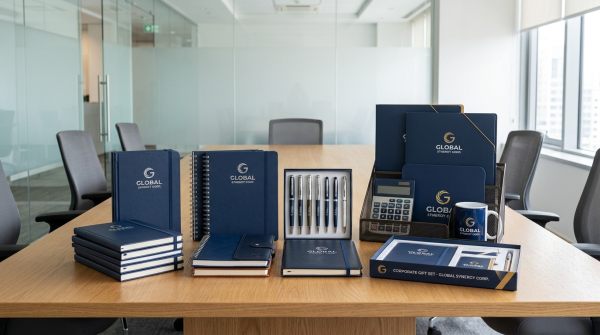
OEM and private label options can also lower costs for distributors and regional dealers. When carton design, barcode format, color assortment, and pack quantity are aligned with the reseller’s channel, the result is better margin protection and fewer relabeling costs. GCT is particularly valuable here because it helps buyers compare sourcing pathways and identify where custom supply arrangements make commercial sense.
Cost-saving mechanisms compared
The table below shows how different wholesale practices influence cost control in office supplies procurement. It can help purchasing teams, distributors, and commercial evaluators identify where savings are most likely to appear.
The strongest savings usually come from combining at least 3 methods rather than relying on one. Buyers that only chase a lower unit price often miss freight, handling, and process cost. A strong office supplies distributor reduces waste across the whole procurement chain, not just the invoice line.
Where wholesalers create the biggest efficiency gains
High-mix organizations benefit the most. These include school systems, hotel back offices, serviced offices, public institutions, and dealer networks that carry 100 or more active items. In such settings, a wholesaler’s role shifts from simple supply to category management, replenishment planning, and supplier coordination.
Lead time visibility is another advantage. Standard office products may move in 7 to 15 days when regionally stocked, while custom-pack or OEM items can require 3 to 6 weeks depending on artwork approval, pack count, and production queue. Wholesalers that communicate these ranges clearly help procurement teams avoid premium freight and stockouts.
What procurement teams should compare before choosing an office supplies supplier
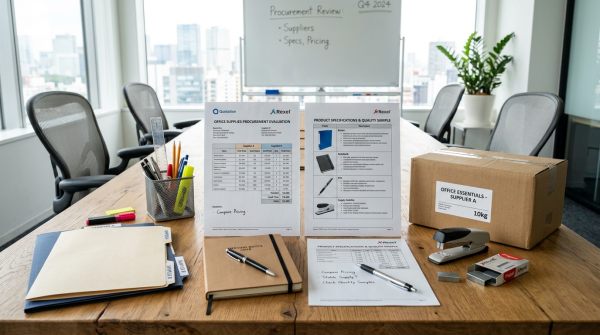
A buyer comparing office supplies suppliers should use a structured scorecard rather than a simple price sheet. In most B2B scenarios, at least 5 decision categories matter: product consistency, lead time, carton and pallet logic, documentation accuracy, and after-sales issue resolution. If one category fails repeatedly, the cheapest quote can become the most expensive supply arrangement.
Procurement teams should also separate strategic items from routine items. Printer paper, folders, binders, pens, and adhesive products often justify contract pricing because demand is stable. Lower-frequency products, such as presentation materials or specialty desk tools, may fit a flexible ordering model. This distinction helps avoid overstocking while protecting the top 20% of SKUs that drive the majority of usage.
Commercial evaluators and distributors should ask whether the supplier supports mixed-category sourcing, sample approval, custom labeling, and replacement handling within a defined service window. A practical target is to confirm issue response within 24 to 72 hours and replacement processing within one agreed cycle, especially for recurring commercial accounts.
GCT adds value at this stage by helping buyers move from broad supplier lists to narrower, commercially relevant sourcing choices. Instead of comparing vendors only by catalogue size, buyers can evaluate fit for institutional projects, smart campus procurement, hospitality administration needs, or regional distribution expansion.
Supplier evaluation checklist for office supplies B2B purchasing
Use the following framework when comparing an office supplies B2B supplier, wholesaler, or distributor. It is designed for purchasing teams that need a defensible shortlist, not just a quick quote comparison.
A table like this helps stakeholders align across sourcing, finance, and operations. It also avoids a frequent procurement mistake: approving a supplier based only on first-order price while ignoring replenishment performance, documentation quality, or warehouse handling practicality.
Questions buyers should ask before approval
- Can the supplier support both standard catalog items and custom requests in the same sourcing program?
- What is the normal lead time for stocked items versus OEM items, and what happens during seasonal spikes?
- Are carton quantities optimized for distribution, project delivery, or direct institutional use?
- What documentation accompanies the shipment, and how are discrepancies resolved within 1 to 3 business days?
Cost control by scenario: offices, campuses, dealers, and multi-site buyers
Not every buyer saves money in the same way. A corporate office with stable consumption usually benefits from reorder planning and standardization. A school or campus buyer may prioritize durable, high-turnover basics in semester cycles. A distributor may care more about carton economics, sell-through flexibility, and private label presentation. Cost reduction only works when the sourcing model matches the operating scenario.
For multi-site organizations, consolidation is especially important. If 10 branches place separate small orders every month, transport and administrative cost can easily exceed the savings achieved from negotiating lower item prices. A wholesaler that supports monthly consolidation, branch coding, or location-based packing can create a more controlled supply flow.
For resellers and agents, margin leakage often comes from packaging mismatch. Buying a low-priced office supplies line is not enough if carton quantities are unsuitable for channel demand or if relabeling becomes necessary. In these cases, OEM pack-size changes, barcode adaptation, and mixed assortment planning can improve commercial performance more than a minor price discount.
GCT’s commercial sourcing perspective is useful because it bridges product selection with market use. Instead of treating office supplies as generic low-value items, it frames them as operational assets inside hospitality, education, commercial workspaces, and institutional procurement programs where consistency and delivery timing matter.
Which sourcing model fits which buyer?
The comparison below helps buyers match their purchasing model to their operational reality. This is often the missing step when organizations try to lower office supply costs but keep using a poorly aligned supply structure.
A scenario-based approach helps buyers avoid overbuying and under-planning. The right sourcing model should fit demand frequency, stock capacity, and resale requirements. That is why experienced commercial buyers look at process design together with pricing.
Compliance, quality checks, and risk control in office supplies procurement
Although many office products are considered low-risk categories, procurement quality control still matters. Buyers should verify product descriptions, material suitability, packaging durability, and, where relevant, common labeling and safety expectations for inks, adhesives, cutters, or school-use items. A low-cost purchase becomes expensive when products arrive with incorrect quantities, damaged packaging, or unclear specification matching.
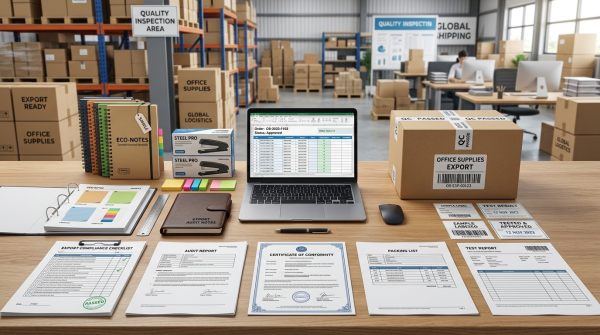
A practical risk-control process usually involves 4 checkpoints: sample confirmation, order specification lock, pre-shipment verification, and receipt inspection. Even for routine stationery, these checkpoints help align expectations on color, dimensions, pack count, and carton labeling. For OEM projects, artwork approval and barcode confirmation should be treated as separate sign-off steps.
Lead time risk should also be managed. Buyers should distinguish stocked items from make-to-order items and maintain a buffer for fast movers. Depending on category and region, a reasonable planning window may range from 2 to 4 weeks for regular replenishment and 4 to 8 weeks for customized packaging or private label runs. This is especially important before peak school, fiscal, or project onboarding seasons.
GCT helps organizations navigate these details by aligning sourcing decisions with commercial-use expectations rather than one-off trading shortcuts. For procurement teams that must satisfy internal audit, project timelines, and supply continuity, reliable specification control is as important as negotiating price.
Basic risk checks buyers should not skip
- Confirm unit of measure clearly: piece, box, ream, set, dozen, or carton. Many cost disputes start with packaging misunderstandings.
- Ask for pre-production or pre-shipment confirmation on private label items, especially when barcode position and carton markings affect downstream distribution.
- Inspect the first delivered batch within 24 to 48 hours for pack count accuracy, damage, and visible quality deviation.
- Define a replacement or claim process before ordering, including evidence requirements and response timing.
FAQ and final buying guidance for smarter wholesale sourcing
Many buyers know they should optimize office supply purchasing, but they are unsure where to begin. The most effective path is usually straightforward: identify fast-moving items, consolidate supplier exposure, standardize pack and SKU logic, and build a replenishment schedule that fits actual usage. These steps often create more durable savings than chasing isolated discounts.
For decision-makers comparing an office supplies wholesaler, office supplies supplier, or office supplies distributor, the goal should be practical control. You want fewer order exceptions, more consistent lead times, clearer documentation, and a supply model that can scale from routine office use to institutional or channel distribution requirements.
That is where GCT can support the process. By combining commercial sourcing knowledge, category-specific market insight, and procurement-oriented content across office and educational supplies, GCT helps buyers make better comparisons and approach suppliers with stronger technical and commercial questions.
Before moving into quotation or supplier approval, define your 3 priorities clearly: cost stability, delivery reliability, and specification consistency. Once these are documented, your negotiations become faster, and supplier comparisons become more meaningful.
How do I know if a wholesaler is better than buying from multiple vendors?
If your team buys across several product categories, places orders more than once per month, or manages many sites or users, a wholesaler often provides better total cost control. The key sign is process duplication. When your team repeats the same sourcing, approval, and receiving tasks across 3 to 5 vendors, consolidation usually becomes commercially attractive.
What office supplies are best suited for contract pricing?
Items with stable consumption and repeat specifications are the best candidates. Typical examples include copy paper, pens, notebooks, files, folders, adhesive tapes, labels, and basic desk consumables. Contracting these items for 1 quarter or longer helps reduce spot-buying volatility and improves replenishment planning.
When does OEM or private label make sense?
OEM is most suitable for distributors, agents, and institutional programs that need custom branding, pack count control, or channel-specific labeling. It usually makes more sense when reorder frequency is predictable and when packaging format affects resale efficiency. Buyers should allow extra time for artwork approval, often adding 1 to 2 weeks before production begins.
What should I prepare before requesting a quotation?
Prepare a product list with units of measure, target pack size, estimated quantity range, delivery location, and preferred lead time. If you need custom packaging, include branding files, barcode requirements, and carton marking instructions. A clearer RFQ usually shortens quote clarification time and improves supplier accuracy from the first round.
Why work with us for office supply sourcing intelligence and procurement support
Global Commercial Trade is built for commercial buyers who need more than a basic vendor directory. We focus on sourcing intelligence for sectors where purchasing decisions affect user experience, operational continuity, and brand presentation. In office and educational supplies, that means helping buyers evaluate supply options with attention to category fit, commercial practicality, and fulfillment reliability.
If you are reviewing an office supplies wholesaler, office supplies supplier, or office supplies B2B supplier, you can contact GCT to discuss the points that shape real procurement outcomes: product selection logic, quotation comparison, delivery cycle expectations, OEM feasibility, packaging requirements, sample support, and commercial documentation questions.
We can also help narrow sourcing priorities for different buyer profiles, whether you are a procurement manager standardizing 80 recurring SKUs, a business evaluator comparing supplier structures, or a distributor planning private label expansion in a competitive office supplies market. The objective is not to create more options, but to identify better-fit options.
Contact us when you need support on parameter confirmation, product selection, lead time planning, custom packaging pathways, sample coordination, compliance-oriented sourcing questions, or quotation discussions for bulk office supplies procurement. Clearer sourcing decisions begin with better commercial intelligence.
Search News
Hot Articles
- Stage Lighting & Truss2026 FIBA Women's World Cup Draw Sets LED Timing Screen RequirementsApr 27, 2026
- Hotel Room AmenitiesIranian Delegation’s Ritual Gesture at Sanya ASG Sparks Mideast Hospitality Procurement ShiftApr 27, 2026
- Arcade & VR MachinesSnooker World Championship 'China Derby' Drives VR Viewing DemandApr 27, 2026
Popular Tags
Need ExpertConsultation?
Connect with our specialized leisureengineering team for procurementstrategies.
Recommended News
 Apr 27, 2026Office Supplies Manufacturer MOQ ExplainedOffice supplies manufacturer MOQ explained: compare an office supplies supplier, wholesaler, distributor, OEM manufacturer, and factory to reduce cost, improve flexibility, and source smarter.● Institutional Buyer
 Apr 27, 2026Distributor or Supplier for Fast ReordersOffice supplies supplier or distributor for fast reorders? Compare lead times, stock stability, and bulk supply options to choose a reliable office supplies B2B supplier.● Institutional Buyer
 Apr 27, 2026How Wholesalers Cut Office Supply CostsOffice supplies supplier and office supplies wholesaler solutions help cut costs through bulk buying, OEM options, and smarter sourcing. Compare distributors and manufacturers to save more.● Institutional Buyer
 Apr 27, 2026Office Supplies Supplier Pricing Red FlagsOffice supplies supplier pricing red flags explained: compare an office supplies wholesaler, distributor, or manufacturer, spot hidden risks, and choose a reliable B2B partner with confidence.● Institutional Buyer
 Apr 27, 2026How to Vet an Office Supplies ExporterOffice supplies supplier vetting made simple: learn how to assess an office supplies exporter, manufacturer, wholesaler, and distributor for quality, compliance, and reliable B2B growth.● Institutional Buyer
 Apr 27, 2026What to Ask an Office Supplies Producer FirstOffice supplies supplier screening starts with the right questions. Learn how to evaluate an office supplies manufacturer, wholesaler, or producer on quality, OEM, compliance, pricing, and delivery.● Institutional Buyer
 Apr 27, 2026How to Compare Office Supplies Bulk SuppliersCompare every office supplies supplier model—wholesaler, distributor, OEM manufacturer, and bulk supplier—to evaluate quality, compliance, lead times, and costs for smarter B2B sourcing.● Institutional Buyer
 Apr 27, 2026Is an Office Supplies OEM Manufacturer Worth ItOffice supplies OEM manufacturer or standard sourcing? Compare an office supplies supplier, wholesaler, and distributor to find the best B2B fit for cost, branding, and scalable growth.● Institutional Buyer
 Apr 27, 2026Best Office Supplies B2B Supplier for ScaleFind the best office supplies B2B supplier for scale. Compare an office supplies supplier, wholesaler, distributor, and OEM manufacturer to secure reliable bulk sourcing and growth.● Institutional Buyer
 Apr 27, 2026Office Supplies Factory Audit ChecklistOffice supplies factory audit checklist for choosing a reliable office supplies manufacturer, supplier, or OEM partner. Learn key quality, compliance, and capacity checks before sourcing.● Institutional Buyer
 Apr 27, 2026When to Work With an Office Supplies ManufacturerOffice supplies manufacturer or office supplies supplier? Learn when to source direct, compare wholesaler vs OEM options, and improve cost, quality, and supply stability.● Institutional Buyer
 Apr 27, 2026What Makes a Reliable Office Supplies DistributorDiscover what sets a reliable office supplies distributor apart. Compare an office supplies supplier, wholesaler, or B2B supplier by quality, lead times, inventory, and global delivery.● Institutional Buyer
 Apr 27, 2026Office Supplies Wholesaler vs DistributorOffice supplies wholesaler vs distributor: learn how an office supplies supplier, distributor, or manufacturer impacts pricing, lead time, and growth—choose the best B2B sourcing model.● Institutional Buyer
 Apr 27, 2026How to Choose an Office Supplies SupplierLearn how to choose the right office supplies supplier by comparing an office supplies wholesaler, distributor, manufacturer, or B2B supplier for quality, price, delivery, and growth.● Institutional Buyer
 Apr 24, 2026How to Pick Educational Supplies by AgeEducational supplies by age: discover how commercial furniture, sensory playground designs, playground safety, climbers, borders, music accessories, hotel tables and amusement equipment improve ROI.● Institutional Buyer
 Apr 24, 2026Educational Supplies That Schools Reorder MostEducational supplies schools reorder most: from commercial furniture support and music accessories to playground safety, playground borders, and sensory playground essentials—discover high-demand categories buyers need year-round.● Institutional Buyer
 Apr 23, 2026How to Compare Educational Supplies Beyond Unit PriceEducational supplies buying guide: compare commercial furniture, sensory playground, music accessories, and playground safety beyond unit price to cut risk and boost long-term value.● Institutional Buyer
 Apr 23, 2026Educational Supplies That Wear Out Fast in Shared UseEducational supplies wear out fast in shared spaces. Learn how commercial furniture, music accessories, playground borders, playground climbers, sensory playground systems, and playground safety solutions reduce risk and replacement costs.● Institutional Buyer
 Apr 22, 2026When Cheap Office Supplies End Up Costing MoreOffice supplies that seem cheap can cost more over time for trampoline park, indoor playground, arcade games, musical instruments, and luxury jewelry businesses—discover smarter sourcing tips.● Institutional Buyer
 Apr 22, 2026Office Supplies Costs That Quietly Add Up Over a YearOffice supplies costs can quietly rise alongside arcade games, musical instruments, indoor playground and trampoline park operations. Discover smarter sourcing to protect margins.● Institutional Buyer
 Apr 21, 2026Office supplies wholesaler terms that cause reorder problemsOffice supplies wholesaler terms can quietly trigger costly reorders. Learn how a reliable office supplies supplier should handle MOQ, lead times, substitutions, and pricing before you sign.● Institutional Buyer
 Apr 21, 2026The hidden service gaps between office supplies suppliersOffice supplies supplier insights: uncover hidden service gaps in office supplies wholesaler selection, plus sourcing links to musical instruments for bands, custom jewelry manufacturer, and indoor playground supplier.● Institutional Buyer
 Apr 24, 2026Why office supplies wholesalers vary so much on MOQ and lead timeOffice supplies supplier insights: learn why an office supplies wholesaler differs on MOQ and lead time, and compare sourcing logic across custom jewelry manufacturer and indoor playground supplier options.● Institutional Buyer
 Apr 24, 2026How to compare an office supplies supplier beyond priceCompare an office supplies supplier beyond price—evaluate quality, compliance, customization, and delivery. Learn how the right office supplies wholesaler reduces risk and boosts long-term value.● Institutional Buyer