What to Ask an Office Supplies Producer First
Before choosing an office supplies producer, buyers should ask the right questions about quality control, OEM capability, compliance, pricing, and delivery reliability. Whether you are evaluating an office supplies manufacturer, office supplies supplier, or office supplies wholesaler, early due diligence helps reduce sourcing risks and improve long-term value. This guide outlines the first questions procurement teams, distributors, and B2B buyers should raise before moving forward.
Why your first questions matter in office supplies sourcing
In the office supplies industry, the first conversation often determines whether a supplier becomes a long-term sourcing partner or a hidden operational risk. A low unit price on files, pens, desk organizers, whiteboards, paper products, or educational stationery can quickly lose its appeal if quality complaints appear within 30–60 days, packaging fails during export, or replenishment lead times stretch from 2 weeks to 8 weeks.
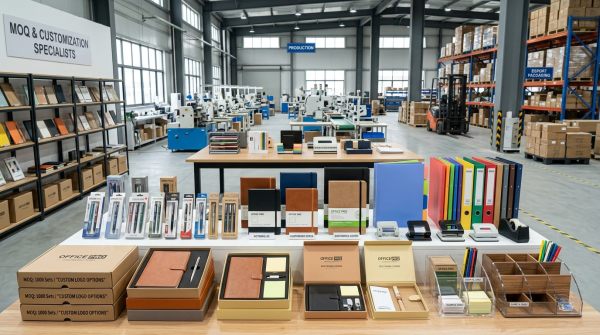
For procurement teams, business evaluators, and distributors, the early stage is not just about asking for a catalog. It is about identifying whether an office supplies producer can support your target channel, whether that is institutional purchasing, retail distribution, contract supply, or private label development. A credible office supplies manufacturer should be able to explain production scope, material consistency, quality checkpoints, and realistic minimum order quantities without vague promises.
This is especially important when product ranges are broad. Office supplies sourcing often involves mixed categories with different risk profiles: paper-based items need moisture control, plastic accessories require dimensional consistency, metal components need corrosion resistance, and printed branding needs color accuracy across batches. A buyer who asks only about price misses 4 critical areas: compliance, capacity, customization, and after-sales accountability.
At GCT, sourcing analysis is built around practical B2B decision points. Instead of treating office supplies as simple commodities, the evaluation framework considers commercial use intensity, brand presentation, cross-border logistics, and supplier responsiveness. That approach helps buyers compare an office supplies supplier not only on quotation level, but also on fit for long-cycle procurement, repeat orders, and distributor margin protection.
- A first-round supplier review should usually cover 5 core areas: product quality, manufacturing capability, compliance readiness, delivery reliability, and commercial terms.
- For mixed office supplies programs, buyers commonly need 3 layers of validation: sample review, document review, and production or shipment review.
- If the producer cannot answer basic questions within 24–72 hours, communication efficiency may become a future supply chain issue.
What should you ask an office supplies producer first?
The best first questions are practical, measurable, and directly linked to sourcing risk. They should reveal whether the producer understands your intended application, order volume, compliance market, and packaging expectations. If a supplier gives only generic answers, that is a sign to slow down and request supporting details.
Start by clarifying the producer’s manufacturing role. Some companies are true factories, while others operate as office supplies wholesalers or trading intermediaries. There is nothing inherently wrong with a hybrid model, but buyers need transparency. A direct manufacturer may offer stronger OEM control, while a trading-led supplier may provide category consolidation across 20–50 product lines.
The next step is to move from broad questions to verification questions. Instead of asking, “Do you have quality control?” ask how many inspection stages exist, what defects are checked, and whether batch retention samples are stored. Instead of asking, “Can you customize?” ask about artwork formats, mold lead times, color matching process, and minimum order quantity by SKU.
The table below summarizes the first-round questions procurement teams can use when screening an office supplies manufacturer or office supplies supplier.
A useful answer should include specifics such as sample timing of 5–10 working days, standard production windows of 20–45 days, and different MOQ thresholds for stock items versus custom items. Buyers should be cautious when all products, regardless of complexity, are quoted with the same lead time and no explanation of production constraints.
Questions about quality and defect control
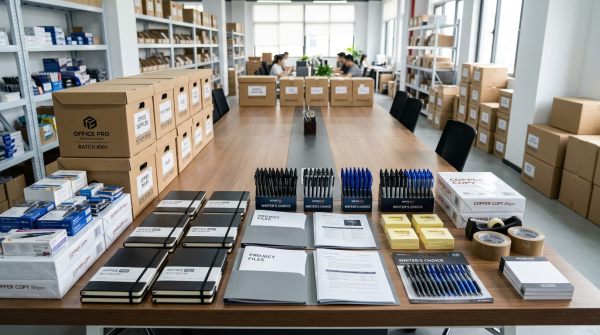
Ask what defines an acceptable batch. In office supplies, defects are often small but commercially significant: rough plastic edges, weak clip tension, ink inconsistency, unstable color matching, poor adhesive strength, or carton damage. A competent producer should be able to explain inspection criteria by product type and identify which defects are critical, major, and minor.
You should also ask whether they keep reference samples and whether they can share photo-based or checklist-based pre-shipment reports. For distributors and agents, this matters because end-market complaints can spread quickly across multiple channels. One recurring packaging issue can affect 3 parties at once: importer, distributor, and retailer.
Questions about supply continuity
A producer may deliver well once and still fail under repeat-order pressure. Ask what materials are sourced locally and what materials depend on external vendors. If ink cartridges, specialty paper, PP resin, metal springs, or printing films have different sourcing cycles, the supplier should be able to explain buffer planning and reorder lead times.
A strong office supplies wholesaler or manufacturer should also explain what happens when demand increases by 20%–30% in a quarter. Can they scale? Do they use backup suppliers? Can they reserve packaging materials for repeat clients? These answers often matter more than a small price gap.
How to compare an office supplies manufacturer, supplier, and wholesaler
Many buyers use the terms office supplies manufacturer, office supplies supplier, and office supplies wholesaler interchangeably, but the sourcing implications are different. The right choice depends on order complexity, SKU breadth, branding needs, and delivery model. Asking the wrong type of partner to perform the wrong function often creates hidden cost and communication friction.
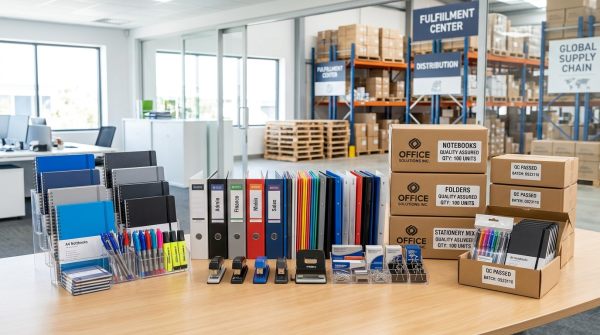
A manufacturer is often best for stable, recurring items with customization needs. A supplier may combine factory resources and category management, which is useful for projects that require 10–30 item types under one shipment plan. A wholesaler can be effective when speed matters more than deep customization and buyers need mixed stock products for quick replenishment.
The comparison below helps procurement teams align partner type with business model and risk tolerance.
For many B2B buyers, the most practical approach is hybrid. Source strategic SKUs directly from the office supplies manufacturer, then consolidate complementary items through a reliable supplier. This model can improve cost control on high-volume lines while preserving flexibility on secondary products.
When a direct factory is the better fit
Choose a direct producer when your program includes custom molds, branded packaging, strict color control, or annual volume planning. This is common for private-label notebooks, filing systems, markers, desktop sets, and school-office crossover supplies. If your annual forecast exceeds 3 purchase cycles and repeatability matters, factory-level process visibility becomes valuable.
When a broader supplier model works better
If your buyer team needs one consolidated shipment for office basics, writing instruments, desk accessories, and presentation products, a supplier-led model can reduce coordination time. This is often efficient for facility setup projects, educational procurement, distributor starter programs, and regional inventory launches where breadth matters as much as unit cost.
Which compliance, packaging, and delivery points should buyers verify?
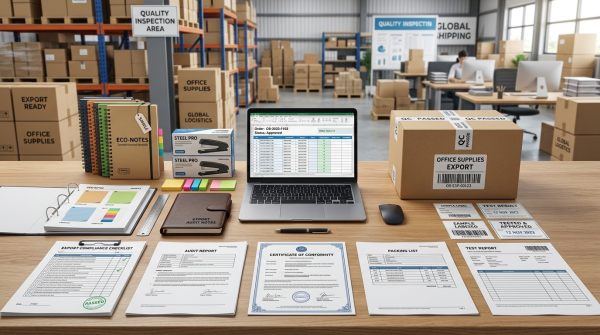
Compliance in office supplies is not limited to one universal checklist. Requirements vary by product type and destination market. For example, material declarations may matter for plastic items, labeling accuracy may matter for retail packaging, and performance safety may matter for products used by children or in educational environments. Buyers should ask what documentation is available before discussing shipment schedules.
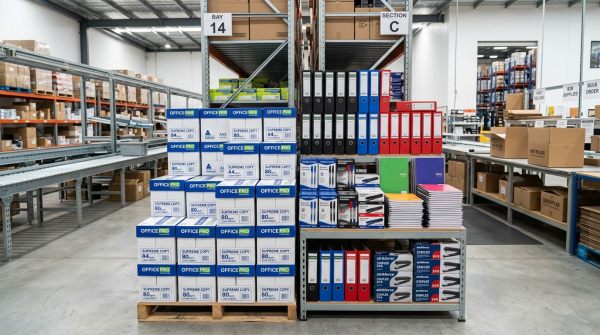
Packaging is equally important. Office supplies may look simple, but export losses often come from crushed cartons, moisture exposure, mixed-SKU confusion, or weak inner packaging. A supplier should explain carton specifications, barcode support, packing ratios, and whether drop-test or transit-oriented packaging review is part of the order process. Even one damaged carton per pallet can disrupt fulfillment and claims processing.
Lead time should be discussed in stages rather than as one number. Buyers should separate 3 timelines: sample preparation, mass production, and outbound booking readiness. For standard office supplies, sample review may take 5–10 working days, production 20–40 days, and shipment scheduling another 3–10 days depending on consolidation and season. Without this breakdown, promised lead times are hard to manage.
The following checklist helps buyers review compliance and logistics readiness before placing the first purchase order.
- Request market-relevant documentation for materials, labeling, or product safety where applicable, especially for school or institutional use products.
- Confirm packaging details at 3 levels: unit pack, inner box, and export carton, including dimensions and carton count.
- Ask for shipping mark format, barcode support, and mixed-SKU carton rules if the order includes multiple product families.
- Verify whether the office supplies supplier can support pre-shipment inspection, photo confirmation, or third-party inspection coordination.
For distributors and agents, these details directly affect warehouse handling, channel labeling, and claims exposure. GCT’s sourcing perspective emphasizes this operational layer because commercial buyers often lose more money through delays, relabeling, and returns than through modest purchase price differences.
Common compliance questions to ask first
Ask whether the producer can provide material-related documents, packaging specifications, and test records where needed for the destination market. If the response is unclear, ask which documents are standard and which require extra time. A reasonable preparation period may be 3–7 working days for existing documents, while new testing can take longer depending on product complexity.
Delivery questions that reveal real capacity
Instead of accepting “fast delivery,” ask for last-order ranges by product type. How long do standard pens take? How long do custom binders take? What happens during peak season? Can partial shipments be arranged? These questions show whether the office supplies producer manages scheduling systematically or simply quotes optimistically to win the order.
How to assess pricing, MOQs, and total procurement cost
The cheapest quote is rarely the lowest total cost. In office supplies sourcing, total procurement cost includes unit price, tooling or artwork setup, packaging changes, inspection, shipping efficiency, defect replacement risk, and reorder stability. A lower factory price can become more expensive if it forces larger MOQs, higher warehousing costs, or repeated quality claims.
Ask for price structure by quantity tier. Many office supplies manufacturers quote differently for stock products, semi-custom products, and full OEM projects. Buyers should request at least 3 quantity brackets where possible, such as trial order, standard order, and volume order. This helps distributors model margin before entering a new line or territory.
MOQ also needs clarification at multiple levels. A supplier may quote one MOQ per item, another per color, and a third per private label packaging design. For example, a stock desk organizer may support a lower entry quantity, while a custom printed notebook set may require higher batch volume because of print setup and packaging coordination.
The table below shows common cost areas buyers should compare before approving an office supplies supplier.
A disciplined buyer compares landed value, not just factory offer. That means looking at price together with lead time, fill rate reliability, packaging efficiency, and reorder predictability. In many cases, a mid-range quote from a more organized office supplies producer creates better margin over 2–4 buying cycles than the lowest initial price.
A simple 4-step pricing review process
- Separate stock-item pricing from customized-item pricing so you do not compare unlike offers.
- Confirm all packaging, barcode, and artwork costs before internal approval.
- Test reorder economics, not only first-order economics, especially if the product is for distribution.
- Review defect replacement terms and who covers cost if the issue appears after import arrival.
This process is useful for business evaluators because it turns a simple quotation review into a commercial viability review. It also helps distributors calculate channel pricing more accurately.
Common mistakes buyers make in early supplier evaluation
One common mistake is assuming all office supplies are easy to source because the product value per unit is low. In reality, low-cost items can carry high coordination risk when they are ordered in mixed cartons, branded assortments, or institutional quantities. A small packaging error across 5,000 units is still a major commercial issue.
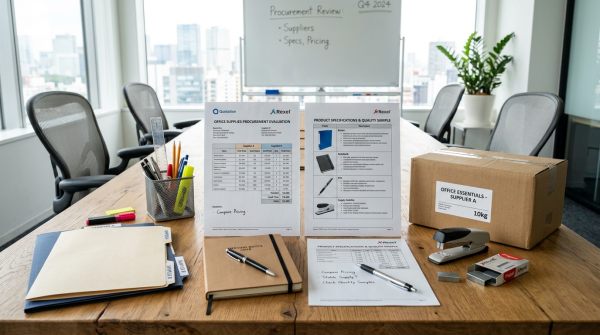
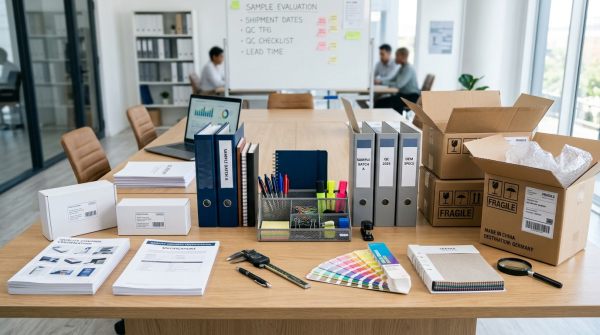
Another mistake is skipping sample evaluation for “standard” products. Even standard items vary in finish, durability, writing feel, odor level, color consistency, and pack presentation. Sample review should check both product and packaging, not only one or the other. For high-volume procurement, even a basic review cycle of 7–10 days can prevent costly rework.
Buyers also underestimate communication quality. If technical questions need repeated follow-up, or if basic carton and MOQ information changes frequently, the supplier may not be ready for stable B2B execution. This is especially risky for distributors managing monthly or quarterly replenishment targets.
The most avoidable error is choosing a supplier before defining internal priorities. Buyers should know whether they value low entry MOQ, stronger OEM support, faster shipment, tighter compliance handling, or broader SKU integration. Without this ranking, almost any office supplies wholesaler can appear suitable in the first quote stage.
FAQ: what buyers often ask first
How do I know if an office supplies producer is really a factory?
Ask which products are produced in-house, request factory process photos or a production overview, and compare answers across categories. A real manufacturer usually gives more specific details about equipment, production steps, QC points, and lead times. If every category has the same generic explanation, the company may be operating mainly as a sourcing intermediary.
What lead time is normal for office supplies orders?
It depends on product type and customization level. Stock items may move faster, while custom packaging or logo work adds time. A practical planning range is often 5–10 working days for samples and 20–45 days for production, with additional booking time depending on shipping mode and season.
What should distributors care about more than importers with one-time projects?
Distributors should focus more on batch consistency, reorder stability, packaging identification, and claim handling. One-time project buyers may prioritize speed and consolidation, but distributors need a supplier who can maintain product identity and margin over several purchasing cycles.
Is a lower MOQ always better for first cooperation?
Not always. A very low MOQ can come with higher unit cost, limited customization, or inconsistent packaging options. The better question is whether the MOQ matches your trial strategy, warehouse capacity, and resale pace. A balanced first order often performs better than the smallest possible order.
Why work with GCT when evaluating office supplies partners
GCT supports buyers who need more than a list of office supplies suppliers. In commercial procurement, decision quality improves when product sourcing is reviewed alongside channel fit, compliance expectations, customization feasibility, and delivery planning. That is particularly useful for institutional buyers, business evaluators, and distributors balancing cost control with long-term supply stability.
Because GCT focuses on commercial experience-driven sectors, the sourcing perspective is practical and buyer-oriented. The evaluation framework looks at OEM and ODM readiness, project suitability, packaging execution, and cross-border procurement logic. This helps users compare office supplies manufacturers and office supplies wholesalers through a more structured lens, rather than relying on surface-level catalog claims.
If you are reviewing new office supplies producers, GCT can help you narrow the conversation to the points that matter most: specification confirmation, sample planning, compliance discussion, quotation interpretation, and lead-time realism. That shortens internal evaluation cycles and reduces the chance of selecting a supplier that looks attractive on paper but performs poorly in execution.
You can reach out to discuss product selection, MOQ strategy, private label feasibility, packaging requirements, shipment timing, and documentation expectations. If your team is comparing multiple office supplies suppliers, GCT can help structure the review process around actual procurement priorities, so your next conversation starts with the right questions and leads to a more reliable sourcing decision.
Search News
Hot Articles
- Stage Lighting & Truss2026 FIBA Women's World Cup Draw Sets LED Timing Screen RequirementsApr 27, 2026
- Hotel Room AmenitiesIranian Delegation’s Ritual Gesture at Sanya ASG Sparks Mideast Hospitality Procurement ShiftApr 27, 2026
- Arcade & VR MachinesSnooker World Championship 'China Derby' Drives VR Viewing DemandApr 27, 2026
Popular Tags
Need ExpertConsultation?
Connect with our specialized leisureengineering team for procurementstrategies.
Recommended News
 Apr 27, 2026Office Supplies Manufacturer MOQ ExplainedOffice supplies manufacturer MOQ explained: compare an office supplies supplier, wholesaler, distributor, OEM manufacturer, and factory to reduce cost, improve flexibility, and source smarter.● Institutional Buyer
 Apr 27, 2026Distributor or Supplier for Fast ReordersOffice supplies supplier or distributor for fast reorders? Compare lead times, stock stability, and bulk supply options to choose a reliable office supplies B2B supplier.● Institutional Buyer
 Apr 27, 2026How Wholesalers Cut Office Supply CostsOffice supplies supplier and office supplies wholesaler solutions help cut costs through bulk buying, OEM options, and smarter sourcing. Compare distributors and manufacturers to save more.● Institutional Buyer
 Apr 27, 2026Office Supplies Supplier Pricing Red FlagsOffice supplies supplier pricing red flags explained: compare an office supplies wholesaler, distributor, or manufacturer, spot hidden risks, and choose a reliable B2B partner with confidence.● Institutional Buyer
 Apr 27, 2026How to Vet an Office Supplies ExporterOffice supplies supplier vetting made simple: learn how to assess an office supplies exporter, manufacturer, wholesaler, and distributor for quality, compliance, and reliable B2B growth.● Institutional Buyer
 Apr 27, 2026What to Ask an Office Supplies Producer FirstOffice supplies supplier screening starts with the right questions. Learn how to evaluate an office supplies manufacturer, wholesaler, or producer on quality, OEM, compliance, pricing, and delivery.● Institutional Buyer
 Apr 27, 2026How to Compare Office Supplies Bulk SuppliersCompare every office supplies supplier model—wholesaler, distributor, OEM manufacturer, and bulk supplier—to evaluate quality, compliance, lead times, and costs for smarter B2B sourcing.● Institutional Buyer
 Apr 27, 2026Is an Office Supplies OEM Manufacturer Worth ItOffice supplies OEM manufacturer or standard sourcing? Compare an office supplies supplier, wholesaler, and distributor to find the best B2B fit for cost, branding, and scalable growth.● Institutional Buyer
 Apr 27, 2026Best Office Supplies B2B Supplier for ScaleFind the best office supplies B2B supplier for scale. Compare an office supplies supplier, wholesaler, distributor, and OEM manufacturer to secure reliable bulk sourcing and growth.● Institutional Buyer
 Apr 27, 2026Office Supplies Factory Audit ChecklistOffice supplies factory audit checklist for choosing a reliable office supplies manufacturer, supplier, or OEM partner. Learn key quality, compliance, and capacity checks before sourcing.● Institutional Buyer
 Apr 27, 2026When to Work With an Office Supplies ManufacturerOffice supplies manufacturer or office supplies supplier? Learn when to source direct, compare wholesaler vs OEM options, and improve cost, quality, and supply stability.● Institutional Buyer
 Apr 27, 2026What Makes a Reliable Office Supplies DistributorDiscover what sets a reliable office supplies distributor apart. Compare an office supplies supplier, wholesaler, or B2B supplier by quality, lead times, inventory, and global delivery.● Institutional Buyer
 Apr 27, 2026Office Supplies Wholesaler vs DistributorOffice supplies wholesaler vs distributor: learn how an office supplies supplier, distributor, or manufacturer impacts pricing, lead time, and growth—choose the best B2B sourcing model.● Institutional Buyer
 Apr 27, 2026How to Choose an Office Supplies SupplierLearn how to choose the right office supplies supplier by comparing an office supplies wholesaler, distributor, manufacturer, or B2B supplier for quality, price, delivery, and growth.● Institutional Buyer
 Apr 24, 2026How to Pick Educational Supplies by AgeEducational supplies by age: discover how commercial furniture, sensory playground designs, playground safety, climbers, borders, music accessories, hotel tables and amusement equipment improve ROI.● Institutional Buyer
 Apr 24, 2026Educational Supplies That Schools Reorder MostEducational supplies schools reorder most: from commercial furniture support and music accessories to playground safety, playground borders, and sensory playground essentials—discover high-demand categories buyers need year-round.● Institutional Buyer
 Apr 23, 2026How to Compare Educational Supplies Beyond Unit PriceEducational supplies buying guide: compare commercial furniture, sensory playground, music accessories, and playground safety beyond unit price to cut risk and boost long-term value.● Institutional Buyer
 Apr 23, 2026Educational Supplies That Wear Out Fast in Shared UseEducational supplies wear out fast in shared spaces. Learn how commercial furniture, music accessories, playground borders, playground climbers, sensory playground systems, and playground safety solutions reduce risk and replacement costs.● Institutional Buyer
 Apr 22, 2026When Cheap Office Supplies End Up Costing MoreOffice supplies that seem cheap can cost more over time for trampoline park, indoor playground, arcade games, musical instruments, and luxury jewelry businesses—discover smarter sourcing tips.● Institutional Buyer
 Apr 22, 2026Office Supplies Costs That Quietly Add Up Over a YearOffice supplies costs can quietly rise alongside arcade games, musical instruments, indoor playground and trampoline park operations. Discover smarter sourcing to protect margins.● Institutional Buyer
 Apr 21, 2026Office supplies wholesaler terms that cause reorder problemsOffice supplies wholesaler terms can quietly trigger costly reorders. Learn how a reliable office supplies supplier should handle MOQ, lead times, substitutions, and pricing before you sign.● Institutional Buyer
 Apr 21, 2026The hidden service gaps between office supplies suppliersOffice supplies supplier insights: uncover hidden service gaps in office supplies wholesaler selection, plus sourcing links to musical instruments for bands, custom jewelry manufacturer, and indoor playground supplier.● Institutional Buyer
 Apr 24, 2026Why office supplies wholesalers vary so much on MOQ and lead timeOffice supplies supplier insights: learn why an office supplies wholesaler differs on MOQ and lead time, and compare sourcing logic across custom jewelry manufacturer and indoor playground supplier options.● Institutional Buyer
 Apr 24, 2026How to compare an office supplies supplier beyond priceCompare an office supplies supplier beyond price—evaluate quality, compliance, customization, and delivery. Learn how the right office supplies wholesaler reduces risk and boosts long-term value.● Institutional Buyer