2026 Office Supplies Supplier Trends to Watch
In 2026, choosing the right office supplies supplier will depend on far more than price alone. Buyers now expect smarter sourcing, reliable compliance, faster fulfillment, and scalable customization from every office supplies wholesaler, distributor, and manufacturer. This article explores the key trends reshaping the market, helping procurement teams, dealers, and business evaluators identify which office supplies B2B supplier partners are best positioned for long-term growth.
The core takeaway is straightforward: the strongest office supplies suppliers in 2026 will be the ones that combine dependable supply chain performance, compliance readiness, digital ordering efficiency, customization capability, and category intelligence. For buyers, distributors, and sourcing teams, the question is no longer simply “Who offers the lowest quote?” but “Which supplier can reduce risk, support growth, and stay reliable under changing market conditions?”
What Buyers Are Really Looking for in 2026
Searchers looking into office supplies supplier trends are usually trying to make a practical decision. They want to know which supplier capabilities will matter most over the next 12 to 24 months, how to compare vendors beyond price, and what warning signs may affect procurement stability.
For procurement teams and business evaluators, the top concerns tend to be clear:
- Supply continuity: Can the supplier maintain consistent delivery across core SKUs?
- Cost control: Can they help manage total landed cost, not just unit price?
- Compliance and product safety: Are documentation, standards, and labeling handled properly for target markets?
- Digital efficiency: Do they support fast quoting, catalog integration, and order visibility?
- Customization: Can they adapt products, packaging, or branding for different channels?
- Scalability: Will they still perform well when demand increases or product lines expand?
This is why the most relevant trends are not vague market predictions. They are operational shifts that directly affect supplier selection, contract negotiations, and channel strategy.
Trend 1: Supplier Evaluation Is Shifting from Unit Price to Total Value
One of the biggest changes in the office supplies market is that buyers are becoming more disciplined about evaluating total supplier value. A low quoted price can quickly lose its appeal if the supplier causes delays, inconsistent quality, excess replacement rates, or weak after-sales support.
In 2026, office supplies wholesalers and manufacturers will be judged more often on metrics such as:
- Order fill rate
- On-time delivery performance
- MOQ flexibility
- Defect and claim rates
- Response speed for replenishment
- Packaging efficiency and shipping optimization
- Account management quality
For dealers and distributors, this trend is especially important. If your supplier cannot support consistent replenishment or stable specifications, your own customer relationships become vulnerable. A supplier that costs slightly more but improves continuity and lowers service issues may deliver better margins over time.
How to apply this trend: Build supplier scorecards that include operational KPIs, not just pricing tables. Ask vendors to provide historical performance data and service commitments before final selection.
Trend 2: Compliance, Product Safety, and Documentation Are Becoming Competitive Advantages
Compliance is no longer a back-office issue. For many institutional buyers, commercial resellers, and importers, it is now a frontline supplier selection factor. Office and educational supplies often cross multiple regulatory, safety, and labeling requirements depending on the product category and destination market.
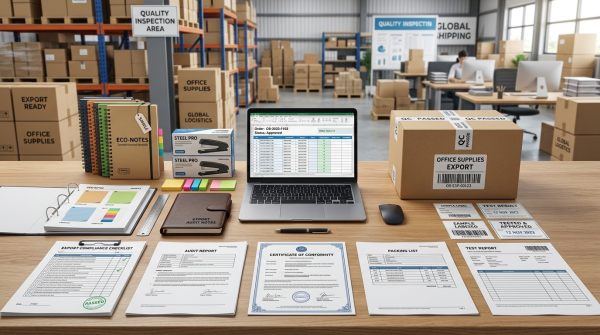
In 2026, stronger suppliers will stand out by offering:
- Clear product specifications and material disclosures
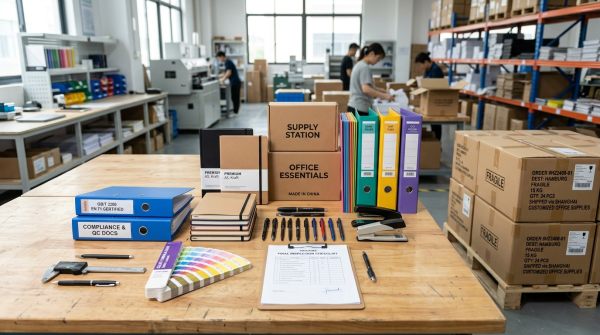
- Testing reports where applicable
- Consistent export and customs documentation
- Traceable batch or production records
- Packaging and labeling adapted to local requirements
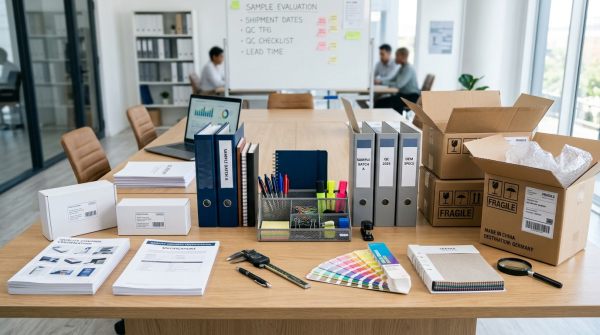
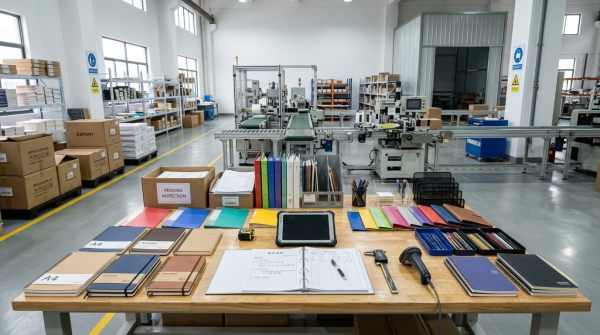
This matters most for buyers sourcing items such as writing instruments, filing products, adhesives, desk accessories, educational materials, and other high-volume office essentials. Even when products are relatively simple, poor documentation can create shipment delays, reputational risk, or compliance disputes.
What to ask suppliers:
- What certifications or testing support can you provide by category?
- How do you manage regulatory updates across export markets?
- Can you standardize documentation across repeat orders?
- What is your process if a compliance issue arises after shipment?
Suppliers that answer these questions confidently are often more mature operationally, not just administratively.
Trend 3: Faster Fulfillment and Inventory Visibility Will Separate Strong Partners from Weak Ones
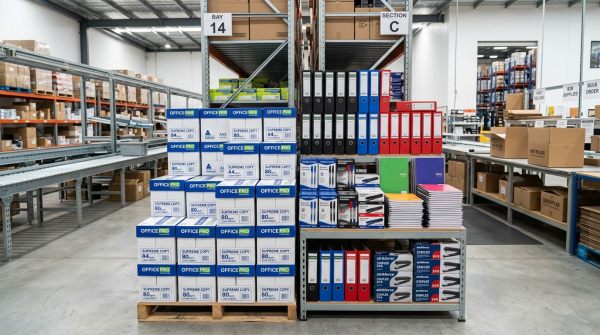
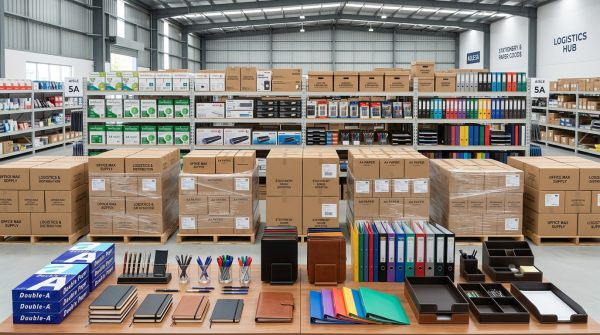
Lead time reliability continues to shape buying decisions. In many office supplies categories, end users expect fast replenishment, and distributors need dependable stock planning. As a result, 2026 will favor suppliers that can offer better visibility into production schedules, inventory levels, and shipping timelines.
Buyers are increasingly prioritizing partners that can provide:
- Real-time or near-real-time stock updates
- Shorter replenishment cycles
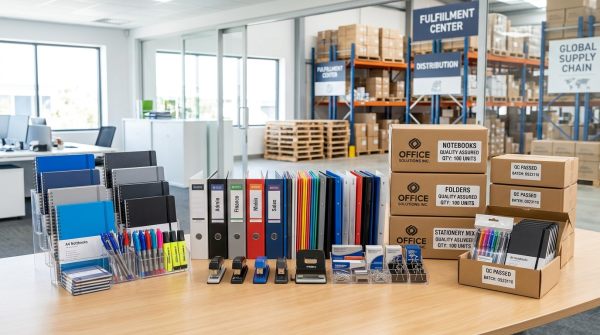
- Regional warehousing or flexible distribution models
- Clear ETA communication
- Backup production or sourcing plans
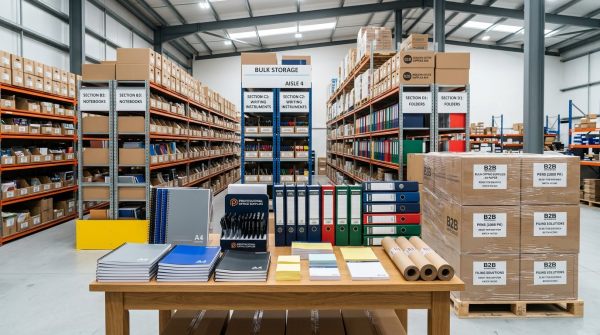
This trend is particularly relevant for high-turnover office supplies B2B orders. If a supplier relies on long, inflexible production cycles with limited transparency, buyers face more forecasting pressure and more working capital tied up in safety stock.
For procurement teams: Ask not only for standard lead times, but also for lead time variance. A supplier quoting 30 days but delivering between 25 and 50 days is riskier than one quoting 35 days with high consistency.
Trend 4: Digital Procurement Experience Is Becoming a Baseline Expectation
In 2026, buyers will increasingly expect an office supplies supplier to function as a digitally capable business partner. This does not mean every supplier needs a complex platform, but it does mean they should reduce friction in the sourcing and ordering process.
Useful digital capabilities include:
- Searchable and structured product catalogs
- Fast quotation workflows
- ERP or procurement system compatibility
- Order tracking and status visibility
- SKU data standardization
- Digital approval and document sharing
For sourcing managers, these capabilities save time. For dealers and distributors, they improve listing management, replenishment planning, and internal coordination. For business evaluators, they indicate that a supplier is more likely to scale cleanly with larger or more complex accounts.
Practical takeaway: If two suppliers offer similar products and prices, the one with better digital process support will often create lower hidden operating costs.
Trend 5: Customization and Private Label Demand Will Continue to Grow
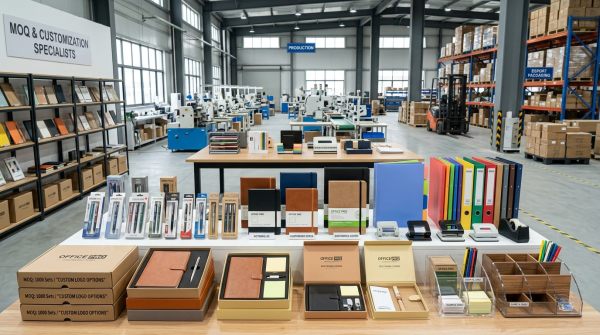
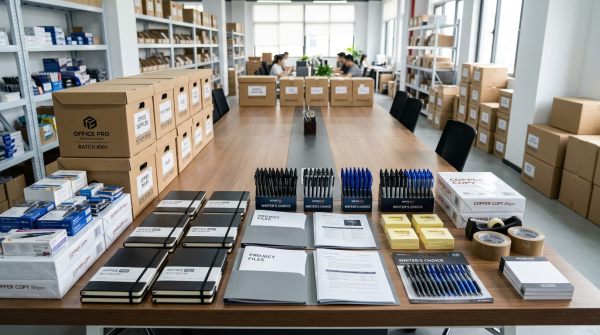
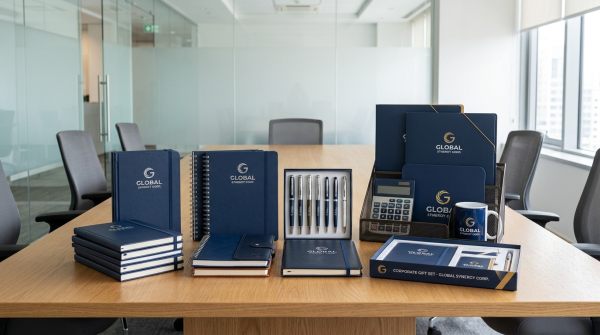
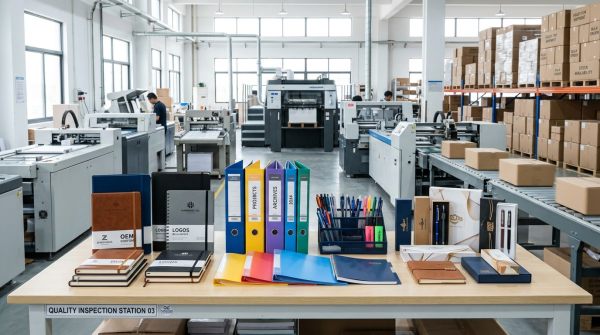
Another major trend is the expansion of OEM and ODM opportunities in office supplies. Buyers increasingly want suppliers that can support differentiated packaging, private label programs, product bundles, and channel-specific adaptations.
This is especially relevant for:
- Distributors building exclusive product lines
- Retailers creating private label ranges
- Institutional buyers with branding or specification needs
- Regional importers adapting products for local markets
In 2026, competitive suppliers will not just manufacture standard office supplies. They will also help customers shape commercial offers that fit local channels, price bands, and branding strategies.
However, buyers should evaluate customization carefully. The right question is not simply “Can you customize?” but:
- What is the minimum volume for custom work?
- How stable is your quality across custom runs?
- Can you manage packaging artwork efficiently?
- How much added lead time does customization require?
- Do you support sample validation and revision control?
Suppliers with strong private label systems can become long-term strategic partners. Suppliers with weak process control may create unnecessary complexity.
Trend 6: Sustainable Sourcing Will Matter More When It Is Verifiable and Commercially Practical
Sustainability remains an important market direction, but in 2026 buyers are likely to become more selective and evidence-driven. Instead of responding to generic claims, they will look for practical sustainability measures that align with procurement realities.
For office supplies suppliers, this may include:
- Use of recycled or responsibly sourced materials
- Reduced packaging waste
- Longer-lasting product design
- Supply chain transparency
- Documented environmental claims
For many commercial buyers, sustainability only becomes meaningful when it is tied to usable outcomes such as tender compliance, brand positioning, waste reduction, or customer demand. Unsupported green claims are becoming less persuasive, especially in B2B environments where vendor scrutiny is increasing.
Best practice for buyers: Ask suppliers for specific proof points, not general sustainability language. The goal is to assess whether sustainability is operationally embedded or merely promotional.
Trend 7: Category Expertise Will Be More Valuable Than Broad but Shallow Product Coverage
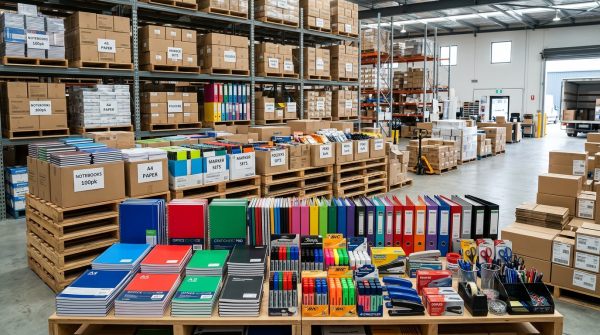
Many buyers once preferred suppliers with extremely broad catalogs. That still has value, but in 2026 deeper category expertise may matter more than sheer product count. An experienced office supplies manufacturer or wholesaler can often add value through better material selection, product fit, packaging design, and market-specific recommendations.
Category expertise becomes especially important when sourcing for:
- Educational institutions
- Corporate offices with standardization requirements
- Project-based commercial outfitting
- Multi-country distribution programs
- Private label product development
Suppliers with real category knowledge are more likely to understand demand cycles, substitution logic, compliance concerns, and end-user expectations. This reduces mistakes and improves decision quality during sourcing.
How to spot real expertise: Look for evidence such as detailed product data, market guidance, project references, clear category segmentation, and knowledgeable communication during technical discussions.
How to Evaluate an Office Supplies Supplier for 2026 Readiness
To turn these trends into a useful decision framework, buyers should assess suppliers across a few core dimensions:
- Commercial strength: pricing structure, cost stability, payment flexibility
- Operational performance: lead times, fill rates, quality consistency, claim handling
- Compliance readiness: testing support, documentation, export capability
- Digital support: catalog quality, ordering efficiency, system compatibility
- Customization capability: OEM/ODM process, packaging options, sample development
- Strategic fit: category expertise, market alignment, scalability
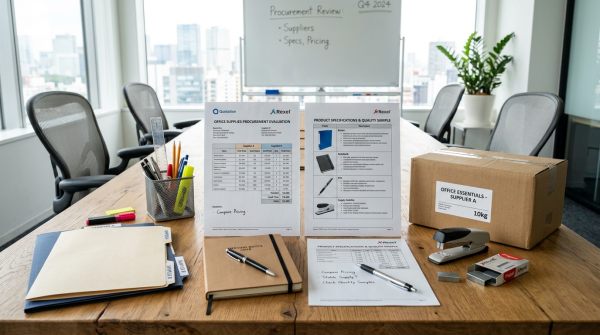
A simple supplier review matrix can help teams compare multiple options side by side. This is particularly useful when selecting between office supplies distributors, wholesalers, and direct manufacturers, since each model offers different trade-offs in speed, margin, control, and flexibility.
For example:
- Distributors may offer easier replenishment and lower sourcing complexity.
- Wholesalers may deliver broad assortment and favorable buying terms.
- Manufacturers may offer stronger customization, cost advantages, and direct control.
The right choice depends on your order volume, channel model, branding needs, and operational tolerance for complexity.
Common Mistakes Buyers Should Avoid
Even experienced sourcing teams can misjudge supplier quality if they focus too narrowly. In the current market, the most common mistakes include:
- Choosing based only on initial quote price
- Failing to verify documentation and compliance support
- Ignoring lead time consistency
- Overestimating a supplier’s customization maturity
- Not checking communication responsiveness before onboarding
- Assuming large catalogs equal strong operational capability
These mistakes often result in avoidable costs later: stockouts, claim disputes, relabeling problems, delayed launches, or dissatisfied downstream customers.
A more resilient approach is to validate performance early through samples, pilot orders, documentation checks, and scenario-based discussions around fulfillment and exception handling.
Final Outlook for Buyers, Distributors, and Sourcing Teams
The office supplies market in 2026 will reward suppliers that are reliable, transparent, digitally capable, and commercially flexible. For buyers, the smartest sourcing strategy is to evaluate suppliers as long-term operational partners rather than interchangeable vendors.
If a supplier can combine compliance readiness, dependable fulfillment, usable digital workflows, and scalable customization, they are likely to create stronger long-term value than a lower-cost supplier with weaker systems. This matters not only for procurement efficiency, but also for brand protection, channel stability, and future growth.
In short, the most important office supplies supplier trends to watch in 2026 are the ones that improve decision quality: better supply chain reliability, stronger compliance control, more efficient procurement processes, practical customization, and verifiable sustainability. Buyers who prioritize these factors will be in a better position to reduce risk, support expansion, and build more competitive sourcing networks.
Search News
Hot Articles
- Stage Lighting & Truss2026 FIBA Women's World Cup Draw Sparks LED Timing Screen Upgrade DemandApr 28, 2026
- Pro Stage AudioKenyan Marathon WR Break Drives Demand for Timing Chips & Track SensorsApr 28, 2026
- Smart Campus Tech2026 Shanghai Smart Campus Expo: VR Teaching Devices Gain ITU & ISO/IEC 23053 CertificationApr 28, 2026
Popular Tags
Need ExpertConsultation?
Connect with our specialized leisureengineering team for procurementstrategies.
Recommended News
 Apr 28, 2026How to Shortlist an Office Supplies WholesalerOffice supplies wholesaler selection starts with the right criteria. Learn how to compare an office supplies supplier, distributor, or manufacturer for cost, quality, compliance, and scalable B2B sourcing.● Institutional Buyer
 Apr 28, 20262026 Office Supplies Supplier Trends to WatchExplore 2026 office supplies supplier trends and learn how every office supplies wholesaler, distributor, and manufacturer can improve sourcing, compliance, fulfillment, and OEM growth.● Institutional Buyer
 Apr 28, 2026What to Check Before Choosing an ExporterOffice supplies supplier and exporter checklist: compare quality, compliance, lead times, MOQ, and service to choose a reliable office supplies manufacturer or wholesaler with confidence.● Institutional Buyer
 Apr 28, 2026Can an Office Supplies Producer Improve MarginsCan an office supplies producer improve margins? Learn how an office supplies manufacturer, supplier, and exporter boosts profit through smarter sourcing, lean production, and OEM value.● Institutional Buyer
 Apr 28, 2026How Bulk Suppliers Handle Custom PackingOffice supplies supplier insights: learn how an office supplies wholesaler, distributor, or OEM manufacturer manages custom packing to reduce risk, control cost, and improve delivery.● Institutional Buyer
 Apr 28, 2026Office Supplies OEM Manufacturer Pros and ConsOffice supplies OEM manufacturer pros and cons explained for every office supplies supplier, wholesaler, distributor, and B2B buyer—compare cost, quality, MOQ, and delivery before sourcing.● Institutional Buyer
 Apr 28, 2026Who Needs an Office Supplies B2B SupplierOffice supplies supplier guide for procurement teams, distributors, and institutions. Learn when to choose an office supplies wholesaler or manufacturer for stable supply and better B2B sourcing.● Institutional Buyer
 Apr 28, 2026How to Avoid Risks With Office Supplies FactoriesOffice supplies supplier risk guide: learn how to vet an office supplies manufacturer, wholesaler, distributor, or factory for quality, compliance, OEM reliability, and on-time delivery.● Institutional Buyer
 Apr 27, 2026Office Supplies Manufacturer MOQ ExplainedOffice supplies manufacturer MOQ explained: compare an office supplies supplier, wholesaler, distributor, OEM manufacturer, and factory to reduce cost, improve flexibility, and source smarter.● Institutional Buyer
 Apr 27, 2026Distributor or Supplier for Fast ReordersOffice supplies supplier or distributor for fast reorders? Compare lead times, stock stability, and bulk supply options to choose a reliable office supplies B2B supplier.● Institutional Buyer
 Apr 27, 2026How Wholesalers Cut Office Supply CostsOffice supplies supplier and office supplies wholesaler solutions help cut costs through bulk buying, OEM options, and smarter sourcing. Compare distributors and manufacturers to save more.● Institutional Buyer
 Apr 27, 2026Office Supplies Supplier Pricing Red FlagsOffice supplies supplier pricing red flags explained: compare an office supplies wholesaler, distributor, or manufacturer, spot hidden risks, and choose a reliable B2B partner with confidence.● Institutional Buyer
 Apr 27, 2026How to Vet an Office Supplies ExporterOffice supplies supplier vetting made simple: learn how to assess an office supplies exporter, manufacturer, wholesaler, and distributor for quality, compliance, and reliable B2B growth.● Institutional Buyer
 Apr 27, 2026What to Ask an Office Supplies Producer FirstOffice supplies supplier screening starts with the right questions. Learn how to evaluate an office supplies manufacturer, wholesaler, or producer on quality, OEM, compliance, pricing, and delivery.● Institutional Buyer
 Apr 27, 2026How to Compare Office Supplies Bulk SuppliersCompare every office supplies supplier model—wholesaler, distributor, OEM manufacturer, and bulk supplier—to evaluate quality, compliance, lead times, and costs for smarter B2B sourcing.● Institutional Buyer
 Apr 27, 2026Is an Office Supplies OEM Manufacturer Worth ItOffice supplies OEM manufacturer or standard sourcing? Compare an office supplies supplier, wholesaler, and distributor to find the best B2B fit for cost, branding, and scalable growth.● Institutional Buyer
 Apr 27, 2026Best Office Supplies B2B Supplier for ScaleFind the best office supplies B2B supplier for scale. Compare an office supplies supplier, wholesaler, distributor, and OEM manufacturer to secure reliable bulk sourcing and growth.● Institutional Buyer
 Apr 27, 2026Office Supplies Factory Audit ChecklistOffice supplies factory audit checklist for choosing a reliable office supplies manufacturer, supplier, or OEM partner. Learn key quality, compliance, and capacity checks before sourcing.● Institutional Buyer
 Apr 27, 2026When to Work With an Office Supplies ManufacturerOffice supplies manufacturer or office supplies supplier? Learn when to source direct, compare wholesaler vs OEM options, and improve cost, quality, and supply stability.● Institutional Buyer
 Apr 27, 2026What Makes a Reliable Office Supplies DistributorDiscover what sets a reliable office supplies distributor apart. Compare an office supplies supplier, wholesaler, or B2B supplier by quality, lead times, inventory, and global delivery.● Institutional Buyer
 Apr 27, 2026Office Supplies Wholesaler vs DistributorOffice supplies wholesaler vs distributor: learn how an office supplies supplier, distributor, or manufacturer impacts pricing, lead time, and growth—choose the best B2B sourcing model.● Institutional Buyer
 Apr 27, 2026How to Choose an Office Supplies SupplierLearn how to choose the right office supplies supplier by comparing an office supplies wholesaler, distributor, manufacturer, or B2B supplier for quality, price, delivery, and growth.● Institutional Buyer
 Apr 24, 2026How to Pick Educational Supplies by AgeEducational supplies by age: discover how commercial furniture, sensory playground designs, playground safety, climbers, borders, music accessories, hotel tables and amusement equipment improve ROI.● Institutional Buyer
 Apr 24, 2026Educational Supplies That Schools Reorder MostEducational supplies schools reorder most: from commercial furniture support and music accessories to playground safety, playground borders, and sensory playground essentials—discover high-demand categories buyers need year-round.● Institutional Buyer