How to Shortlist an Office Supplies Wholesaler
Choosing the right office supplies wholesaler can directly impact cost control, product consistency, and delivery reliability. Whether you are comparing an office supplies supplier, office supplies distributor, or office supplies manufacturer, a smart shortlist should go beyond price alone. This guide explains how buyers can evaluate sourcing capabilities, compliance, customization, and long-term service value when selecting a trusted office supplies B2B supplier for scalable commercial procurement.
Why shortlisting an office supplies wholesaler requires more than a price comparison
In office supplies procurement, the visible unit price is only one part of the commercial equation. Buyers also need to assess fill rate, packaging consistency, inventory depth, and the supplier’s ability to support recurring orders across 3 common demand levels: routine replenishment, seasonal project buying, and multi-site rollout purchasing. A low-cost office supplies wholesaler may still create hidden costs if lead times fluctuate or substitute products without approval.
For procurement teams, the shortlist stage matters because it reduces sourcing risk before RFQ negotiations begin. Instead of reviewing 20 or 30 potential vendors, most B2B buyers narrow the field to 3–5 qualified candidates. That shortlist should reflect operational fit, not just catalog size. An office supplies distributor serving small retailers may not be suitable for institutional procurement, contract supply, or distributor channel development.
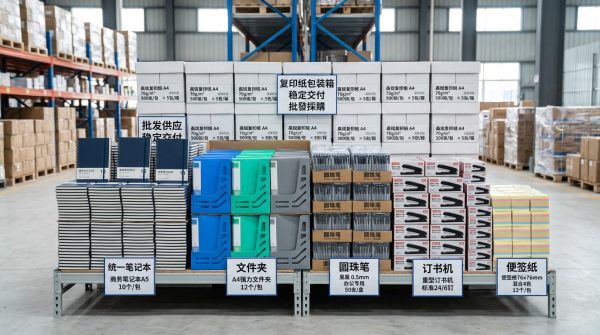
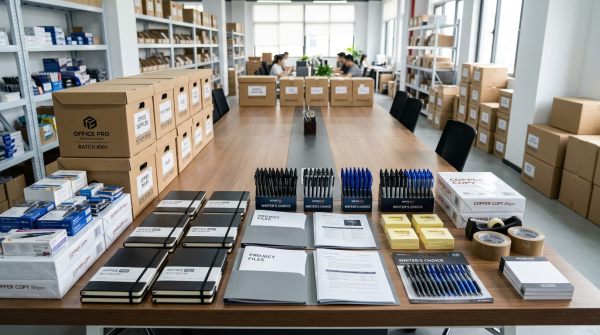
This is especially important in categories such as paper products, writing instruments, filing systems, desktop accessories, educational office items, and private label consumables. Product quality variation can affect brand image, daily usability, and return rates. In practical terms, a buyer is not only choosing products. The buyer is choosing a supply system with expected delivery windows of 7–15 days for stocked items and 3–6 weeks for customized office supplies programs.
Global Commercial Trade supports this process by helping buyers compare sourcing capabilities in a more structured way. For information researchers, procurement managers, business evaluators, and distributors, a stronger shortlist comes from understanding vendor type, manufacturing depth, compliance readiness, and after-sales responsiveness before commercial discussions move forward.
What a qualified office supplies B2B supplier should demonstrate early
- A stable product portfolio covering core SKUs and repeat-purchase items rather than a fragmented catalog with inconsistent stock.
- Clear MOQ policy, sample support, and realistic replenishment schedules for small batch, mid-volume, and large-volume buying.
- Defined handling of OEM, ODM, private label, and packaging adaptation requests for channel partners and institutional tenders.
- Reliable communication on substitutions, discontinued items, transit packaging, and claims handling within a defined service window.
How to compare supplier, distributor, and manufacturer models before you shortlist
Many buyers use the terms office supplies supplier, office supplies distributor, and office supplies manufacturer interchangeably, but these models offer different strengths. A manufacturer may provide stronger cost control and customization, while a distributor may offer broader mixed-SKU availability and local inventory advantages. The right shortlist often includes 2 different supplier models so buyers can compare strategic fit rather than evaluating all vendors by the same criteria.
If your sourcing goal is standard office replenishment, a distributor with frequent shipment cycles and consolidated warehousing may perform well. If your goal is branded stationery, custom notebooks, logo packaging, or tender-based institutional supply, a manufacturer or integrated office supplies wholesaler may be more suitable. For distributors and agents, the decision also depends on territory protection, product differentiation, and margin structure across 6–12 month sales cycles.
The table below helps clarify how each sourcing model typically performs in B2B office supplies procurement. These are practical evaluation patterns rather than fixed rules, because some wholesalers combine sourcing, assembly, packaging, and export coordination under one commercial structure.
A good shortlist usually balances immediate purchasing needs with future scaling needs. If a supplier meets current demand but cannot support packaging updates, export documentation, or volume growth over the next 2–4 quarters, that supplier may not belong on the final shortlist. GCT’s industry-focused sourcing perspective helps buyers compare these models in the context of actual commercial use cases rather than generic supplier claims.
Questions to ask during the first screening round
Before requesting a formal quote, ask each office supplies wholesaler 5 basic questions. What are the main stocked categories? What is the standard lead time for repeat orders? Which items are factory-made versus outsourced? What level of private label support is available? How are quality complaints documented and resolved? These answers often reveal more than a price sheet.
It is also helpful to ask whether the supplier supports mixed-carton orders, carton labeling, barcode application, export carton standards, and drop-ship or regional warehouse coordination. For distributors and resellers, these service details can directly affect downstream efficiency and margin recovery.
Which procurement criteria matter most when evaluating an office supplies wholesaler
The most effective shortlist uses a weighted scorecard rather than informal judgment. In office supplies sourcing, buyers typically review 5 key dimensions: product scope, quality consistency, commercial terms, logistics reliability, and service flexibility. Depending on the project, each dimension may carry a different weight. For a school system rollout, compliance and packaging control may matter more. For a reseller, margin and assortment breadth may rank higher.
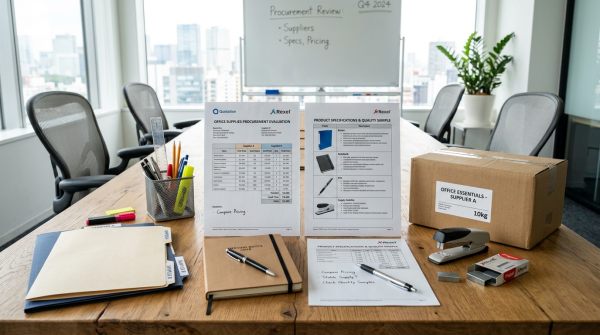
A practical review should include both product-level and supplier-level indicators. Product-level indicators include paper gsm range, binding durability, ink smoothness, surface finish, packaging resistance, and labeling accuracy. Supplier-level indicators include average response time, sample turnaround, reorder predictability, claim handling, and export readiness. A supplier with a large catalog but unstable service performance can create long-term operational friction.
The next table provides a procurement-oriented framework that buyers can use to score office supplies suppliers during shortlist creation. The target ranges are not mandatory benchmarks, but they are useful for comparing vendors in a structured and commercially relevant way.
When using this framework, do not score everything equally. If your main challenge is rapid replenishment, give more weight to stock visibility and order accuracy. If your challenge is market differentiation, prioritize branding support and customization depth. This kind of weighting is where professional sourcing guidance adds value, especially for buyers working across multiple office and educational supplies categories.
A 4-step shortlist method for procurement teams
- Create a long list of 8–12 vendors based on category fit, trade capability, and geographic service relevance.
- Reduce to 5–6 vendors after checking MOQ, lead time, category depth, and communication quality.
- Request samples, documentation, and quote structure from the top 3–5 candidates.
- Finalize 2–3 shortlisted suppliers for negotiation, trial order, or pilot program review.
What business evaluators should document internally
Business evaluators should record not only supplier claims but also response discipline. Was the quotation complete within 48–72 hours? Were substitutions clearly marked? Was sample dispatch aligned with promised timing? These details matter because they forecast service quality after the purchase order is placed.
For channel buyers and distributors, add another layer of review: resale readiness. Confirm carton labeling, barcode support, shelf presentation consistency, and whether the office supplies wholesaler can maintain the same packaging version across multiple production runs.
How to verify compliance, product consistency, and customization capability
Office supplies are often seen as simple products, but commercial buyers know the category can involve real compliance and quality control concerns. Paper products may require specification consistency, inks and coatings may need material declarations depending on destination market, and children’s or school-use items may face additional safety review. The shortlist process should therefore include 3 review tracks: product specification, regulatory suitability, and packaging compliance.
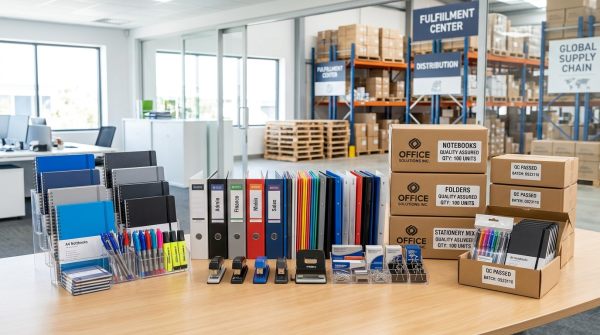
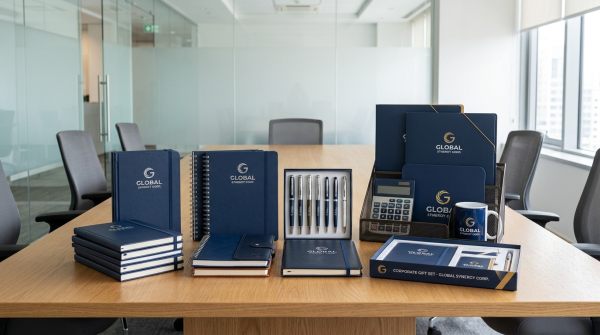
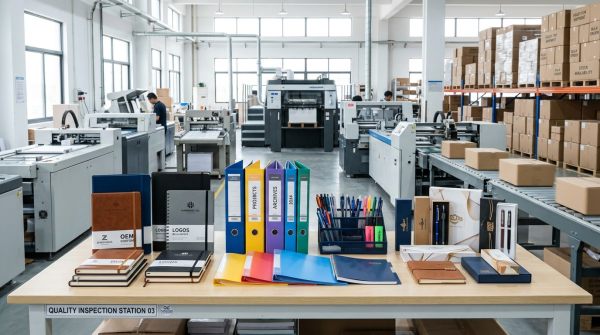
For example, a buyer sourcing notebooks, binders, markers, folders, and desk organizers for institutional use should verify whether the office supplies supplier can provide stable material descriptions, color consistency, and packaging labels suitable for the destination market. A supplier does not need to hold every possible certificate to be considered, but the supplier should understand which documents are commonly requested and how quickly they can be prepared.
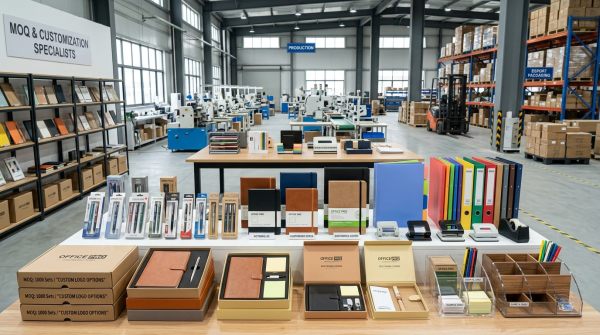
Customization also needs careful scrutiny. Some wholesalers advertise OEM service but only support logo printing. Others can adjust dimensions, cover materials, pack count, barcode format, and carton marking. Buyers should ask for a capability breakdown across 4 points: product design change, print or decoration, retail packaging, and export packaging. This prevents misunderstanding during quotation and approval.
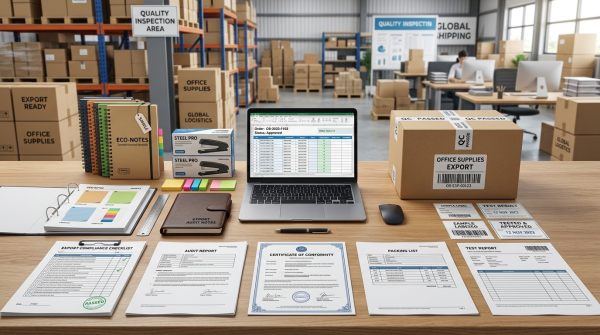
Common compliance and documentation checkpoints
- Product specification sheet showing key materials, dimensions, pack count, and intended use category.
- Labeling review for carton marks, unit labels, barcode placement, and language requirements where applicable.
- Material or safety declarations requested by the buyer, importer, or institutional tender process.
- Sample approval workflow with version control to reduce mismatch between sample and bulk order.
Why sample review is still essential
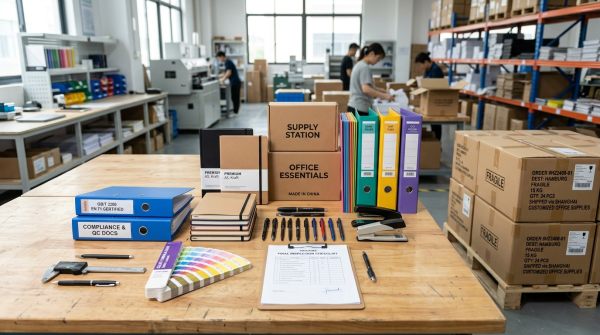
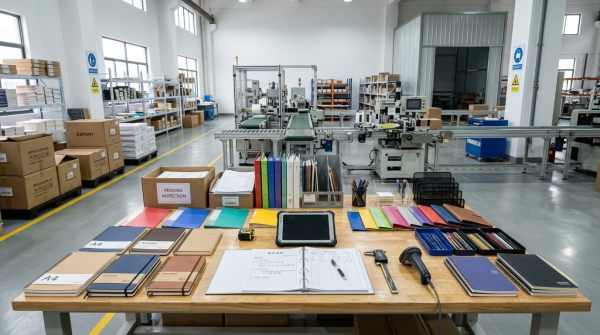
Even when catalogs look complete, sample review remains one of the most reliable filters. For office supplies procurement, a sample check can be completed within 5–10 working days in many standard cases and should examine at least 6 items: material feel, finish consistency, print quality, functional usability, packaging resistance, and labeling accuracy. For repeat categories such as notebooks or pens, sample review helps establish a reference standard for future orders.
GCT’s sourcing approach is valuable here because buyers often need cross-category judgment, not isolated product inspection. A wholesaler may perform well in writing tools but weakly in filing products or custom packaging. Comparative category assessment helps prevent overly broad approval based on one successful sample.
What mistakes buyers make when building an office supplies wholesaler shortlist
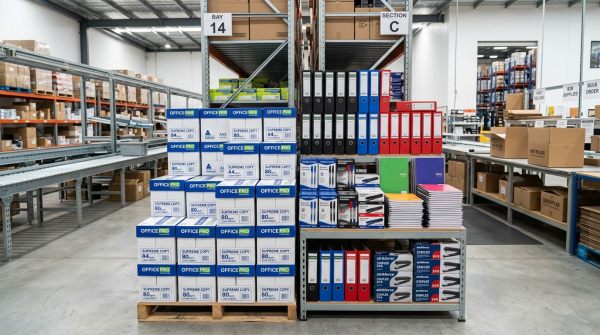
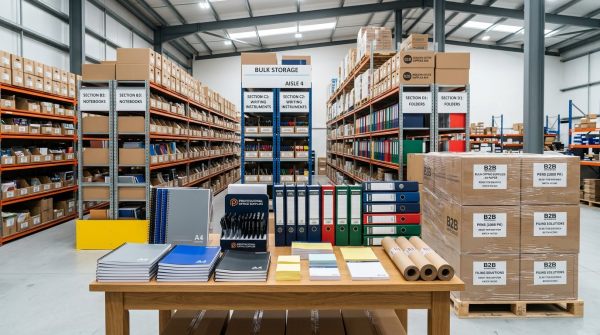
One common mistake is shortlisting vendors based only on catalog breadth. A supplier with thousands of SKUs may still have weak stock discipline, uneven sourcing quality, or limited after-sales accountability. In office supplies B2B sourcing, consistency across the top 20–50 regularly ordered items is usually more valuable than a massive long-tail catalog with unstable availability.
Another mistake is failing to separate trader capability from manufacturing capability. This does not mean traders should be avoided. Many integrated wholesalers perform well. The issue is transparency. Buyers need to know which categories are factory-controlled, which are externally sourced, and which require longer consolidation cycles. Without this visibility, the shortlist may look strong on paper but collapse during implementation.
A third mistake is ignoring service detail during early communication. Slow quotation, incomplete documentation, vague sample policy, and inconsistent answers often predict future execution problems. If a supplier cannot clearly explain a 4-step order process, expected lead time bands, and complaint resolution practice before onboarding, that risk rarely improves after payment terms are agreed.
Finally, many buyers evaluate only current price rather than total sourcing efficiency. Freight consolidation, packaging optimization, claim frequency, reorder reliability, and internal approval workload all affect landed procurement performance. This is why experienced procurement teams compare not just cost per unit, but also cost per usable order cycle.
FAQ for office supplies wholesaler selection
How many suppliers should be on a final shortlist?
For most B2B office supplies projects, 3–5 suppliers are enough for meaningful comparison. Fewer than 3 reduces negotiating leverage. More than 5 often slows evaluation without improving decision quality. A final negotiation stage may narrow that to 2–3 suppliers for trial orders or category-specific allocation.
What is a normal lead time for office supplies orders?
For stocked products, 7–15 days is a common operational range, depending on order size and warehouse readiness. For custom packaging, logo printing, or non-standard specifications, 3–6 weeks is common. Buyers should always ask for lead time by category rather than one general estimate.
Should I prioritize manufacturers over distributors?
Not always. Manufacturers are often stronger for customization and cost control on repeated SKUs. Distributors may be stronger for mixed-category procurement and faster dispatch. The right office supplies wholesaler depends on whether your priority is assortment, speed, private label development, or long-term category management.
What documents should I request before placing a trial order?
Request a detailed quotation, product specifications, packaging details, sample confirmation, and any applicable material or compliance declarations relevant to your market. For distributors and agents, also request barcode, carton marking, and packaging consistency details for resale planning.
Why work with GCT when evaluating office supplies sourcing partners
Global Commercial Trade is built for buyers who need more than a list of vendors. In office and educational supplies sourcing, the challenge is often not finding suppliers. The challenge is filtering them efficiently, comparing them intelligently, and matching them to the right commercial scenario. GCT helps procurement teams, business evaluators, and channel buyers move from broad market search to practical shortlist formation with stronger decision confidence.
Because GCT focuses on commercial-use industries, the sourcing perspective is aligned with institutional procurement, project rollout, brand presentation, and long-term supplier suitability. That matters when evaluating office supplies wholesaler options for smart campuses, hospitality back-office operations, educational environments, and specialty retail distribution. Buyers benefit from category context, not just isolated product descriptions.
If you are shortlisting an office supplies supplier, office supplies distributor, or office supplies manufacturer, you can use GCT to clarify 6 practical areas before moving forward: product matching, supplier model fit, customization depth, lead time expectations, compliance checkpoints, and quotation readiness. This reduces internal review friction and helps teams make more defensible sourcing decisions.
Contact GCT if you need support with parameter confirmation, product selection, supplier comparison, delivery lead time review, custom packaging planning, documentation expectations, sample coordination, or quotation alignment. If your goal is to build a reliable office supplies B2B supplier shortlist for commercial procurement or channel expansion, a focused sourcing discussion can save weeks of trial-and-error evaluation.
Search News
Hot Articles
- Stage Lighting & Truss2026 FIBA Women's World Cup Draw Sparks LED Timing Screen Upgrade DemandApr 28, 2026
- Pro Stage AudioKenyan Marathon WR Break Drives Demand for Timing Chips & Track SensorsApr 28, 2026
- Smart Campus Tech2026 Shanghai Smart Campus Expo: VR Teaching Devices Gain ITU & ISO/IEC 23053 CertificationApr 28, 2026
Popular Tags
Need ExpertConsultation?
Connect with our specialized leisureengineering team for procurementstrategies.
Recommended News
 Apr 28, 2026How to Shortlist an Office Supplies WholesalerOffice supplies wholesaler selection starts with the right criteria. Learn how to compare an office supplies supplier, distributor, or manufacturer for cost, quality, compliance, and scalable B2B sourcing.● Institutional Buyer
 Apr 28, 20262026 Office Supplies Supplier Trends to WatchExplore 2026 office supplies supplier trends and learn how every office supplies wholesaler, distributor, and manufacturer can improve sourcing, compliance, fulfillment, and OEM growth.● Institutional Buyer
 Apr 28, 2026What to Check Before Choosing an ExporterOffice supplies supplier and exporter checklist: compare quality, compliance, lead times, MOQ, and service to choose a reliable office supplies manufacturer or wholesaler with confidence.● Institutional Buyer
 Apr 28, 2026Can an Office Supplies Producer Improve MarginsCan an office supplies producer improve margins? Learn how an office supplies manufacturer, supplier, and exporter boosts profit through smarter sourcing, lean production, and OEM value.● Institutional Buyer
 Apr 28, 2026How Bulk Suppliers Handle Custom PackingOffice supplies supplier insights: learn how an office supplies wholesaler, distributor, or OEM manufacturer manages custom packing to reduce risk, control cost, and improve delivery.● Institutional Buyer
 Apr 28, 2026Office Supplies OEM Manufacturer Pros and ConsOffice supplies OEM manufacturer pros and cons explained for every office supplies supplier, wholesaler, distributor, and B2B buyer—compare cost, quality, MOQ, and delivery before sourcing.● Institutional Buyer
 Apr 28, 2026Who Needs an Office Supplies B2B SupplierOffice supplies supplier guide for procurement teams, distributors, and institutions. Learn when to choose an office supplies wholesaler or manufacturer for stable supply and better B2B sourcing.● Institutional Buyer
 Apr 28, 2026How to Avoid Risks With Office Supplies FactoriesOffice supplies supplier risk guide: learn how to vet an office supplies manufacturer, wholesaler, distributor, or factory for quality, compliance, OEM reliability, and on-time delivery.● Institutional Buyer
 Apr 27, 2026Office Supplies Manufacturer MOQ ExplainedOffice supplies manufacturer MOQ explained: compare an office supplies supplier, wholesaler, distributor, OEM manufacturer, and factory to reduce cost, improve flexibility, and source smarter.● Institutional Buyer
 Apr 27, 2026Distributor or Supplier for Fast ReordersOffice supplies supplier or distributor for fast reorders? Compare lead times, stock stability, and bulk supply options to choose a reliable office supplies B2B supplier.● Institutional Buyer
 Apr 27, 2026How Wholesalers Cut Office Supply CostsOffice supplies supplier and office supplies wholesaler solutions help cut costs through bulk buying, OEM options, and smarter sourcing. Compare distributors and manufacturers to save more.● Institutional Buyer
 Apr 27, 2026Office Supplies Supplier Pricing Red FlagsOffice supplies supplier pricing red flags explained: compare an office supplies wholesaler, distributor, or manufacturer, spot hidden risks, and choose a reliable B2B partner with confidence.● Institutional Buyer
 Apr 27, 2026How to Vet an Office Supplies ExporterOffice supplies supplier vetting made simple: learn how to assess an office supplies exporter, manufacturer, wholesaler, and distributor for quality, compliance, and reliable B2B growth.● Institutional Buyer
 Apr 27, 2026What to Ask an Office Supplies Producer FirstOffice supplies supplier screening starts with the right questions. Learn how to evaluate an office supplies manufacturer, wholesaler, or producer on quality, OEM, compliance, pricing, and delivery.● Institutional Buyer
 Apr 27, 2026How to Compare Office Supplies Bulk SuppliersCompare every office supplies supplier model—wholesaler, distributor, OEM manufacturer, and bulk supplier—to evaluate quality, compliance, lead times, and costs for smarter B2B sourcing.● Institutional Buyer
 Apr 27, 2026Is an Office Supplies OEM Manufacturer Worth ItOffice supplies OEM manufacturer or standard sourcing? Compare an office supplies supplier, wholesaler, and distributor to find the best B2B fit for cost, branding, and scalable growth.● Institutional Buyer
 Apr 27, 2026Best Office Supplies B2B Supplier for ScaleFind the best office supplies B2B supplier for scale. Compare an office supplies supplier, wholesaler, distributor, and OEM manufacturer to secure reliable bulk sourcing and growth.● Institutional Buyer
 Apr 27, 2026Office Supplies Factory Audit ChecklistOffice supplies factory audit checklist for choosing a reliable office supplies manufacturer, supplier, or OEM partner. Learn key quality, compliance, and capacity checks before sourcing.● Institutional Buyer
 Apr 27, 2026When to Work With an Office Supplies ManufacturerOffice supplies manufacturer or office supplies supplier? Learn when to source direct, compare wholesaler vs OEM options, and improve cost, quality, and supply stability.● Institutional Buyer
 Apr 27, 2026What Makes a Reliable Office Supplies DistributorDiscover what sets a reliable office supplies distributor apart. Compare an office supplies supplier, wholesaler, or B2B supplier by quality, lead times, inventory, and global delivery.● Institutional Buyer
 Apr 27, 2026Office Supplies Wholesaler vs DistributorOffice supplies wholesaler vs distributor: learn how an office supplies supplier, distributor, or manufacturer impacts pricing, lead time, and growth—choose the best B2B sourcing model.● Institutional Buyer
 Apr 27, 2026How to Choose an Office Supplies SupplierLearn how to choose the right office supplies supplier by comparing an office supplies wholesaler, distributor, manufacturer, or B2B supplier for quality, price, delivery, and growth.● Institutional Buyer
 Apr 24, 2026How to Pick Educational Supplies by AgeEducational supplies by age: discover how commercial furniture, sensory playground designs, playground safety, climbers, borders, music accessories, hotel tables and amusement equipment improve ROI.● Institutional Buyer
 Apr 24, 2026Educational Supplies That Schools Reorder MostEducational supplies schools reorder most: from commercial furniture support and music accessories to playground safety, playground borders, and sensory playground essentials—discover high-demand categories buyers need year-round.● Institutional Buyer