Can an Office Supplies Producer Improve Margins
Can an office supplies producer improve margins in today’s cost-sensitive market? Yes—but not by relying on broad price increases alone. For most manufacturers, suppliers, and wholesalers in office supplies, margin improvement comes from fixing a few specific profit leaks: undifferentiated product mix, inefficient sourcing, avoidable production waste, weak OEM positioning, and channel strategies that reward volume more than value. In practice, the producers that protect and expand margins are the ones that combine cost discipline with stronger commercial control.
For procurement teams, distributors, and business evaluators, the real question is not simply whether margins can improve. It is how sustainably they can improve without damaging quality, delivery reliability, compliance, or customer retention. That is especially important in the office and educational supplies sector, where buyers compare suppliers aggressively and often treat many categories as interchangeable unless clear value is demonstrated.
This article explains where margin pressure usually comes from, what levers actually work, and how an office supplies manufacturer or office supplies exporter can build healthier profitability while remaining competitive in global B2B markets.
Why margins are under pressure in the office supplies market
Margin pressure in office supplies is rarely caused by one issue alone. It usually comes from a combination of structural and operational factors:
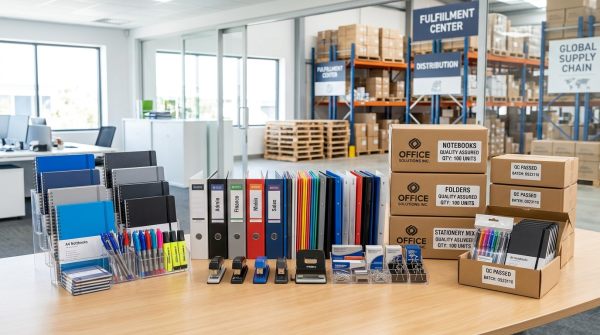
- Commoditization of core products: Standard items such as notebooks, filing products, writing instruments, desk accessories, and basic educational supplies are easy to compare across suppliers.
- Raw material volatility: Paper, plastics, metals, packaging inputs, and freight costs can move quickly, while customer contracts may lag behind cost increases.
- Buyer consolidation: Large importers, contract stationers, e-commerce sellers, and institutional buyers often have stronger negotiating power.
- Channel inefficiency: Producers sometimes depend on intermediaries without enough control over end-market positioning, resulting in lower realized margins.
- Over-customization without pricing discipline: Small-batch changes, packaging revisions, and urgent orders often create hidden costs that are not properly recovered.
- Quality inconsistency and rework: Even modest defect rates can erase profit quickly in high-volume, low-unit-value product lines.
For many office supplies factories, the problem is not weak sales alone. It is that revenue growth may come from low-quality orders, overly aggressive discounting, or product categories that consume capacity without delivering acceptable contribution margin.
Can an office supplies producer improve margins? The short answer
Yes. A capable office supplies producer can improve margins if it shifts focus from selling more units to earning more value per unit of capacity, labor, sourcing activity, and customer relationship.
In practical terms, that means working across five areas at the same time:
- Product mix optimization
- Sourcing and materials control
- Lean manufacturing and yield improvement
- OEM/ODM value creation and pricing power
- Smarter channel and customer management
Producers that improve only one area may see limited gains. Producers that align all five usually achieve stronger and more durable results.
Which products and customers actually support better margins?
One of the fastest ways to improve profitability is to identify where margin is truly earned. Many office supplies suppliers assume their best-selling items are also their most profitable. Often that is not the case.
A more useful analysis includes:
- Gross margin by SKU
- Contribution margin by customer account
- Profitability by production line or machine group
- Return and defect cost by category
- Packaging and compliance cost by destination market
- Sales support and customization cost by customer
This often reveals three common realities:
- Some high-volume products are margin traps because they face constant price competition.
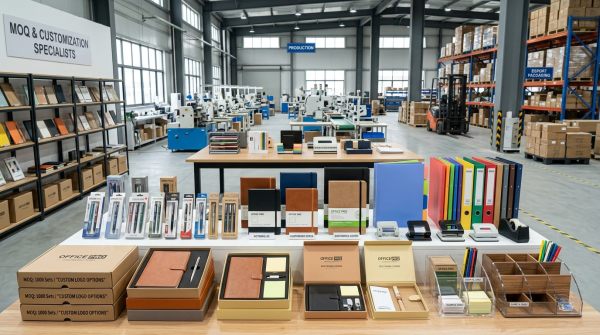
- Some mid-volume customized products generate better margins because buyers value design, packaging, branding, or assortment flexibility.
- Some customers are unprofitable after freight adjustments, claim rates, payment terms, and service demands are included.
For distributors and procurement evaluators, this matters because a supplier with a disciplined product mix is usually more stable, more reliable, and less likely to cut corners under pricing pressure.
How better sourcing improves margin without weakening quality
For an office supplies wholesaler or manufacturer, sourcing is more than price negotiation. Better sourcing means reducing total landed cost while protecting specification consistency.
Effective sourcing improvement usually includes:
- Supplier base rationalization: Fewer, stronger material suppliers can improve pricing, lead times, and quality accountability.
- Dual-sourcing for critical inputs: This reduces disruption risk and improves bargaining leverage.
- Material standardization: Using common components across multiple SKUs lowers complexity and purchasing fragmentation.
- Packaging redesign: Smarter carton dimensions, lighter materials, and more efficient palletization can reduce freight cost meaningfully.
- Should-cost analysis: Breaking down paper weight, resin consumption, trim loss, labor assumptions, and logistics helps detect overpriced inputs or inefficient specifications.
However, margin-focused sourcing should not lead to silent spec downgrades. Buyers in office and educational supplies increasingly monitor consistency, safety, durability, and sustainability claims. A short-term cost saving that creates complaints, failed audits, or reputational damage will usually destroy margin later.
The strongest office supplies B2B suppliers improve sourcing through transparency and engineering discipline, not hidden substitution.
Where lean production creates the biggest profit gains
In many factories, margin is lost inside daily operations rather than during customer negotiations. Small inefficiencies accumulate across thousands or millions of units.
High-impact operational areas include:
- Setup time reduction: Long changeovers reduce effective capacity and increase cost per unit.
- Waste control: Paper trim waste, plastic scrap, rejected prints, and damaged packaging directly reduce profitability.
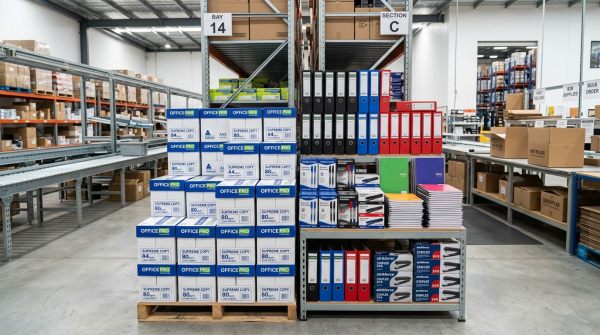
- Batch sizing: Poor production planning creates extra inventory, more handling, and higher obsolescence risk.
- Quality at source: Detecting issues early costs less than sorting or reworking finished goods.
- Labor balancing: Uneven staffing across lines lowers throughput and raises hidden cost.
- Energy efficiency: For some product categories, utility management can materially improve margins over time.
For business decision-makers, the key point is simple: margin improvement often comes from process capability, not just purchasing leverage. A factory that measures OEE, waste rates, first-pass yield, and rework cost is usually in a much stronger position than one that only monitors shipment volume.
How OEM and ODM services strengthen pricing power
When products are easy to compare, price becomes the main decision factor. That is why OEM and ODM capability matters. It allows an office supplies exporter to move away from pure commodity competition and sell greater business value.
Higher-margin OEM/ODM opportunities often come from:
- Private label programs for distributors and retailers
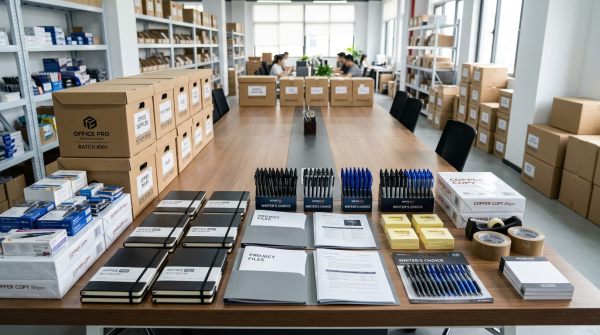
- Custom assortments for school, corporate, or institutional buyers
- Packaging design adapted for regional retail formats
- Eco-focused product lines with verified material claims
- Ergonomic or design-led desk organization solutions
- Bundled solutions rather than single-item quotes
The commercial advantage is clear. Once a buyer depends on a supplier for design adaptation, packaging execution, regulatory understanding, and reliable project coordination, the relationship is harder to replace based on price alone.
For distributors and agents, this creates a stronger resale proposition. For procurement teams, it can reduce sourcing complexity by consolidating multiple needs under one capable partner.
How should a producer price more effectively in a price-sensitive market?
Margin improvement is not always about charging more across the board. It is about pricing with precision.
Stronger pricing strategy usually includes:
- Segmented pricing: Different customer types, order sizes, and service levels should not receive the same pricing logic.
- Clear minimum order economics: Small runs, urgent production, or high-mix customization should carry appropriate charges.
- Value-based quoting: If a product offers better packaging efficiency, lower defect rates, or reduced procurement complexity, that value should be reflected in pricing.
- Freight-aware quotation models: Margin can disappear if logistics assumptions are outdated or poorly allocated.
- Index-linked or review-based agreements: For volatile input categories, pricing mechanisms should allow periodic adjustment.
Many office supplies suppliers underprice simply because they do not fully capture service cost. If a customer requires frequent artwork revisions, split deliveries, multilingual packaging, compliance documentation, and tighter payment support, those inputs should be visible in the commercial model.
What do procurement teams and distributors look for in a profitable, reliable supplier?
Target buyers do not want a supplier that improves margins by becoming difficult, risky, or inconsistent. They want a partner that is financially healthy and operationally dependable.
That is why procurement teams, commercial evaluators, and channel partners often assess suppliers on the following points:
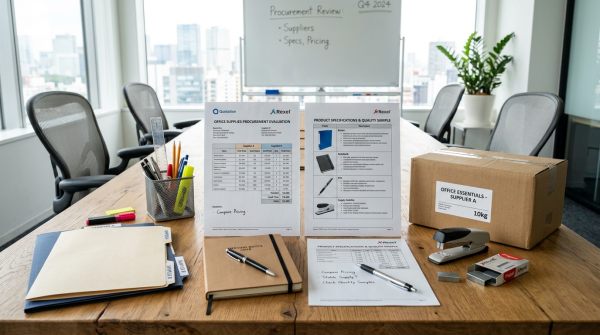
- Cost transparency and quote consistency
- On-time delivery performance
- Defect and claims history
- Scalability during peak demand periods
- OEM/ODM responsiveness
- Compliance with destination market standards
- Financial stability and supply continuity
In other words, buyers generally support supplier profitability when it is linked to better systems, stronger quality assurance, and more dependable service. They resist it when it appears to come from arbitrary price inflation or declining product value.
How can office supplies exporters improve margins in global markets?
For companies serving international buyers, margin strategy must account for geography. Export growth can look attractive while quietly eroding profitability through documentation cost, freight volatility, tariff exposure, and fragmented SKU requirements.
Profitable export expansion usually depends on:
- Market prioritization: Focus on regions where product fit, compliance capability, and channel structure support sustainable pricing.
- Incoterm discipline: Know where risk, freight cost, and margin responsibility begin and end.
- Localized packaging strategy: Avoid over-complexity while still meeting language and retail requirements.
- Distributor quality: Strong channel partners often preserve value better than weak multi-layer distribution.
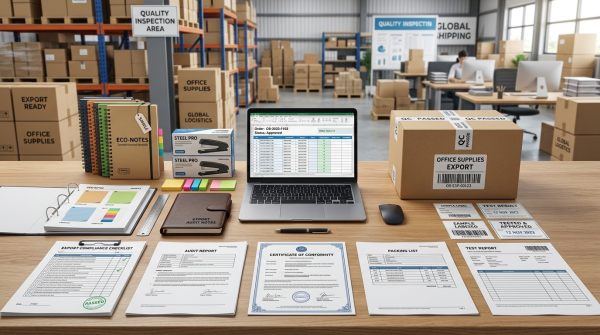
- Documentation readiness: Delays and customs issues can quickly turn profitable orders into costly ones.
For an office supplies exporter, not every market should be pursued in the same way. Some markets reward standardized volume. Others reward branded customization, educational-sector specialization, or premium office organization solutions. The right margin strategy depends on channel economics, not just shipment opportunity.
What are the clearest warning signs that a producer’s margins are structurally weak?
Buyers, investors, and managers can often identify margin weakness early if they know what to look for. Common warning signs include:
- Revenue grows but cash flow remains tight
- Sales teams rely heavily on discounting to win repeat business
- Too many low-volume SKUs create planning and inventory complexity
- Claim rates or rework costs are rising
- Freight surcharges repeatedly erase expected profit
- Key customers account for a large share of revenue but have weak price acceptance
- Product development activity exists, but few launches command premium pricing
If several of these signs appear together, the issue is usually not temporary. It suggests that the business needs deeper changes in product strategy, operations, and customer selection.
A practical margin improvement framework for office supplies manufacturers
For companies seeking a realistic roadmap, a staged approach often works best:
- Measure true profitability: Review margin by SKU, customer, channel, and region.
- Remove hidden loss points: Identify waste, rework, freight leakage, and service-cost distortion.
- Simplify where possible: Standardize materials, rationalize SKUs, and reduce unnecessary variation.
- Build higher-value offers: Expand private label, customization, bundled solutions, and design-led programs.
- Reprice intelligently: Align quotes with actual service level, lead time, and complexity.
- Strengthen buyer trust: Support margin with reliable quality, compliance, and fulfillment performance.
This approach helps both producers and procurement-side stakeholders make better decisions. It separates healthy margin improvement from short-term tactics that may create future supply risk.
Conclusion: better margins come from better control, not just higher prices
An office supplies producer can improve margins, but the most effective path is rarely a simple price increase. Stronger profitability usually comes from a more disciplined product mix, smarter sourcing, leaner manufacturing, better OEM/ODM positioning, and tighter channel strategy.
For office supplies manufacturers, suppliers, wholesalers, and exporters, the goal should be to create margin through capability and relevance. For procurement teams, distributors, and commercial evaluators, the best partners are those that can explain how they protect profit while still delivering quality, reliability, and market-fit solutions.
In a competitive B2B environment, margin improvement is not just a financial outcome. It is a sign that the business has built enough operational strength and commercial value to compete on more than price alone.
Search News
Hot Articles
- Stage Lighting & Truss2026 FIBA Women's World Cup Draw Sparks LED Timing Screen Upgrade DemandApr 28, 2026
- Pro Stage AudioKenyan Marathon WR Break Drives Demand for Timing Chips & Track SensorsApr 28, 2026
- Smart Campus Tech2026 Shanghai Smart Campus Expo: VR Teaching Devices Gain ITU & ISO/IEC 23053 CertificationApr 28, 2026
Popular Tags
Need ExpertConsultation?
Connect with our specialized leisureengineering team for procurementstrategies.
Recommended News
 Apr 28, 2026How to Shortlist an Office Supplies WholesalerOffice supplies wholesaler selection starts with the right criteria. Learn how to compare an office supplies supplier, distributor, or manufacturer for cost, quality, compliance, and scalable B2B sourcing.● Institutional Buyer
 Apr 28, 20262026 Office Supplies Supplier Trends to WatchExplore 2026 office supplies supplier trends and learn how every office supplies wholesaler, distributor, and manufacturer can improve sourcing, compliance, fulfillment, and OEM growth.● Institutional Buyer
 Apr 28, 2026What to Check Before Choosing an ExporterOffice supplies supplier and exporter checklist: compare quality, compliance, lead times, MOQ, and service to choose a reliable office supplies manufacturer or wholesaler with confidence.● Institutional Buyer
 Apr 28, 2026Can an Office Supplies Producer Improve MarginsCan an office supplies producer improve margins? Learn how an office supplies manufacturer, supplier, and exporter boosts profit through smarter sourcing, lean production, and OEM value.● Institutional Buyer
 Apr 28, 2026How Bulk Suppliers Handle Custom PackingOffice supplies supplier insights: learn how an office supplies wholesaler, distributor, or OEM manufacturer manages custom packing to reduce risk, control cost, and improve delivery.● Institutional Buyer
 Apr 28, 2026Office Supplies OEM Manufacturer Pros and ConsOffice supplies OEM manufacturer pros and cons explained for every office supplies supplier, wholesaler, distributor, and B2B buyer—compare cost, quality, MOQ, and delivery before sourcing.● Institutional Buyer
 Apr 28, 2026Who Needs an Office Supplies B2B SupplierOffice supplies supplier guide for procurement teams, distributors, and institutions. Learn when to choose an office supplies wholesaler or manufacturer for stable supply and better B2B sourcing.● Institutional Buyer
 Apr 28, 2026How to Avoid Risks With Office Supplies FactoriesOffice supplies supplier risk guide: learn how to vet an office supplies manufacturer, wholesaler, distributor, or factory for quality, compliance, OEM reliability, and on-time delivery.● Institutional Buyer
 Apr 27, 2026Office Supplies Manufacturer MOQ ExplainedOffice supplies manufacturer MOQ explained: compare an office supplies supplier, wholesaler, distributor, OEM manufacturer, and factory to reduce cost, improve flexibility, and source smarter.● Institutional Buyer
 Apr 27, 2026Distributor or Supplier for Fast ReordersOffice supplies supplier or distributor for fast reorders? Compare lead times, stock stability, and bulk supply options to choose a reliable office supplies B2B supplier.● Institutional Buyer
 Apr 27, 2026How Wholesalers Cut Office Supply CostsOffice supplies supplier and office supplies wholesaler solutions help cut costs through bulk buying, OEM options, and smarter sourcing. Compare distributors and manufacturers to save more.● Institutional Buyer
 Apr 27, 2026Office Supplies Supplier Pricing Red FlagsOffice supplies supplier pricing red flags explained: compare an office supplies wholesaler, distributor, or manufacturer, spot hidden risks, and choose a reliable B2B partner with confidence.● Institutional Buyer
 Apr 27, 2026How to Vet an Office Supplies ExporterOffice supplies supplier vetting made simple: learn how to assess an office supplies exporter, manufacturer, wholesaler, and distributor for quality, compliance, and reliable B2B growth.● Institutional Buyer
 Apr 27, 2026What to Ask an Office Supplies Producer FirstOffice supplies supplier screening starts with the right questions. Learn how to evaluate an office supplies manufacturer, wholesaler, or producer on quality, OEM, compliance, pricing, and delivery.● Institutional Buyer
 Apr 27, 2026How to Compare Office Supplies Bulk SuppliersCompare every office supplies supplier model—wholesaler, distributor, OEM manufacturer, and bulk supplier—to evaluate quality, compliance, lead times, and costs for smarter B2B sourcing.● Institutional Buyer
 Apr 27, 2026Is an Office Supplies OEM Manufacturer Worth ItOffice supplies OEM manufacturer or standard sourcing? Compare an office supplies supplier, wholesaler, and distributor to find the best B2B fit for cost, branding, and scalable growth.● Institutional Buyer
 Apr 27, 2026Best Office Supplies B2B Supplier for ScaleFind the best office supplies B2B supplier for scale. Compare an office supplies supplier, wholesaler, distributor, and OEM manufacturer to secure reliable bulk sourcing and growth.● Institutional Buyer
 Apr 27, 2026Office Supplies Factory Audit ChecklistOffice supplies factory audit checklist for choosing a reliable office supplies manufacturer, supplier, or OEM partner. Learn key quality, compliance, and capacity checks before sourcing.● Institutional Buyer
 Apr 27, 2026When to Work With an Office Supplies ManufacturerOffice supplies manufacturer or office supplies supplier? Learn when to source direct, compare wholesaler vs OEM options, and improve cost, quality, and supply stability.● Institutional Buyer
 Apr 27, 2026What Makes a Reliable Office Supplies DistributorDiscover what sets a reliable office supplies distributor apart. Compare an office supplies supplier, wholesaler, or B2B supplier by quality, lead times, inventory, and global delivery.● Institutional Buyer
 Apr 27, 2026Office Supplies Wholesaler vs DistributorOffice supplies wholesaler vs distributor: learn how an office supplies supplier, distributor, or manufacturer impacts pricing, lead time, and growth—choose the best B2B sourcing model.● Institutional Buyer
 Apr 27, 2026How to Choose an Office Supplies SupplierLearn how to choose the right office supplies supplier by comparing an office supplies wholesaler, distributor, manufacturer, or B2B supplier for quality, price, delivery, and growth.● Institutional Buyer
 Apr 24, 2026How to Pick Educational Supplies by AgeEducational supplies by age: discover how commercial furniture, sensory playground designs, playground safety, climbers, borders, music accessories, hotel tables and amusement equipment improve ROI.● Institutional Buyer
 Apr 24, 2026Educational Supplies That Schools Reorder MostEducational supplies schools reorder most: from commercial furniture support and music accessories to playground safety, playground borders, and sensory playground essentials—discover high-demand categories buyers need year-round.● Institutional Buyer