How to Avoid Risks With Office Supplies Factories
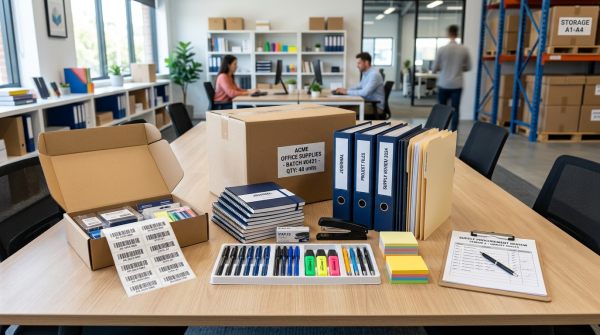
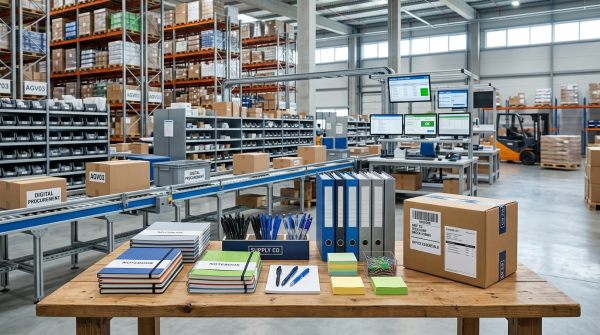
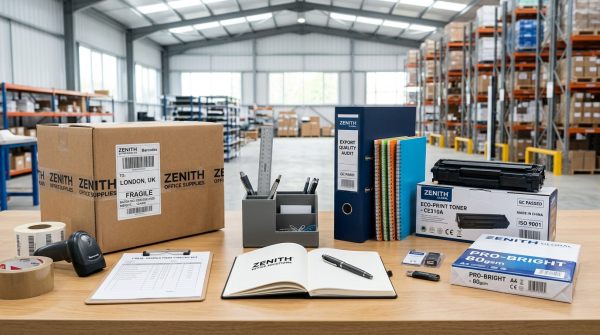
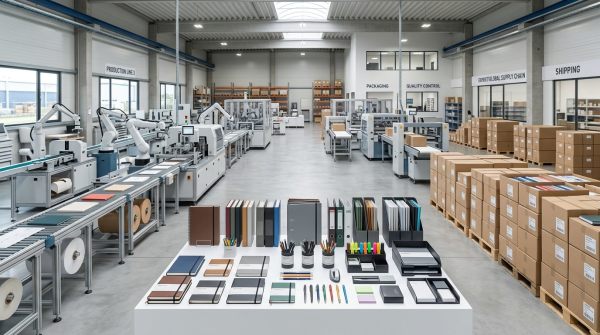
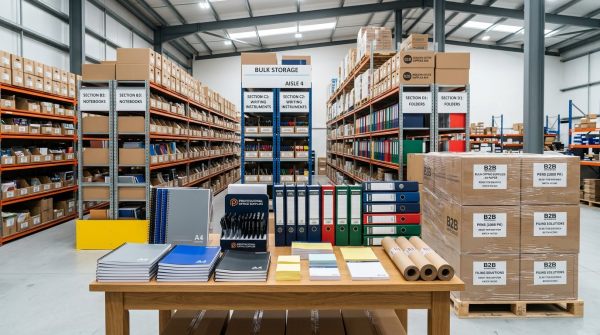
Choosing the right office supplies factory is critical for buyers who need consistent quality, compliance, and delivery performance. Whether you are evaluating an office supplies supplier, office supplies manufacturer, or office supplies wholesaler, understanding the hidden risks behind pricing, OEM capability, and export reliability can protect your sourcing strategy. This guide explains how to assess partners carefully and reduce procurement risks in global office supplies B2B supply chains.
What Buyers Are Really Trying to Avoid When Choosing an Office Supplies Factory
When buyers search for how to avoid risks with office supplies factories, they are usually not looking for generic sourcing advice. They want to prevent expensive mistakes: unstable quality, missed shipment dates, weak compliance, poor communication, hidden subcontracting, and suppliers that look capable on paper but fail during scale-up.
For procurement teams, distributors, and commercial evaluators, the main issue is not simply finding a low-cost producer. It is finding an office supplies manufacturer that can consistently meet commercial requirements across product quality, documentation, packaging, lead times, and after-sales accountability.
In practical terms, the safest sourcing strategy is to verify four things early: whether the factory is truly capable of producing your category, whether its quality systems are reliable, whether its export and compliance processes are mature, and whether its commercial terms match your real risk exposure.
Why Office Supplies Sourcing Carries More Risk Than Many Buyers Expect
Office supplies may appear to be a straightforward category, but the risks are often hidden in product detail and fulfillment complexity. A notebook, pen, stapler, whiteboard accessory, filing product, or school-office hybrid item may seem easy to source, yet the quality and compliance requirements can vary significantly by market.
Common risks include:
- Material inconsistency that affects durability, safety, or brand perception
- Color, print, logo, and packaging deviations in OEM or private label orders
- Product performance issues such as ink leakage, binding weakness, poor adhesive strength, or component breakage
- Failure to meet chemical or safety requirements for destination markets
- Production bottlenecks during back-to-school or peak office procurement seasons
- Trading companies presenting themselves as factories without full production control
- Unexpected delays caused by incomplete export documentation or weak shipment planning
This is why buyers should evaluate an office supplies supplier as an operating partner, not just a quote provider.
How to Check If the Factory Is a Real Manufacturer or Just a Middle Layer
One of the first risk controls is confirming the supplier’s actual role in the supply chain. Some office supplies wholesalers and exporters are legitimate and valuable partners, but buyers should know whether they are dealing with a direct factory, a sourcing company, or a mixed model.
Ask for evidence beyond a website claim. Useful verification points include:
- Factory business license and export license details
- Production workshop photos and videos specific to your product category
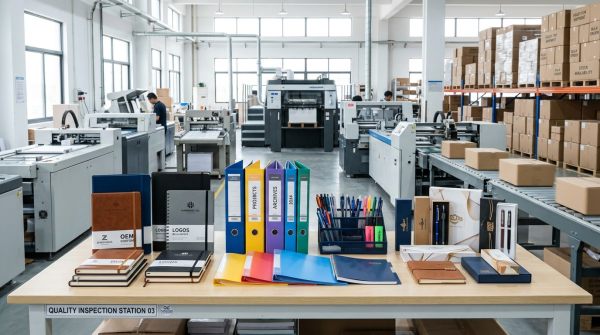
- Equipment lists for printing, injection molding, assembly, binding, packing, or other relevant processes
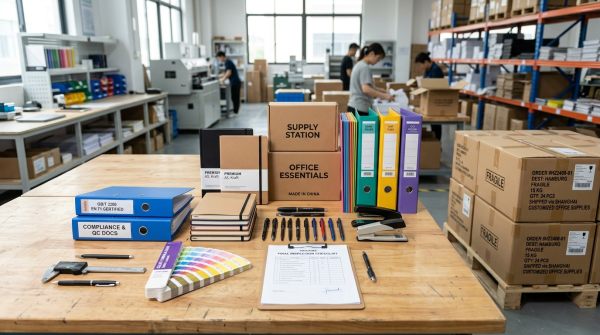
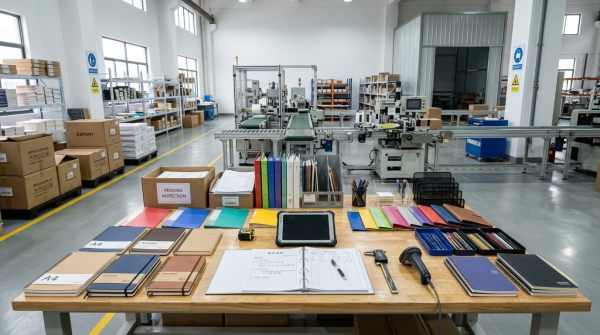
- Quality control records and in-line inspection procedures
- Recent production schedules or anonymized order references
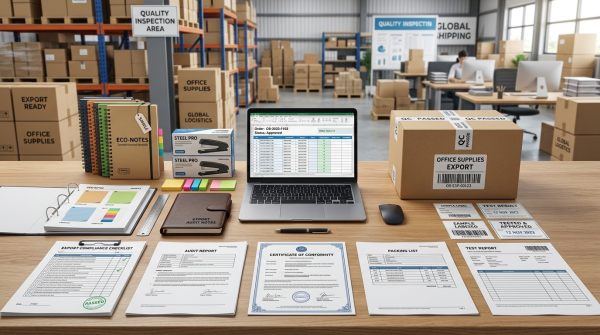
- Audit reports from third-party inspection firms if available
If the supplier cannot clearly explain which processes are done in-house and which are subcontracted, that is a risk signal. Subcontracting is not automatically a problem, but undisclosed subcontracting can lead to weak quality control, inconsistent lead times, and unclear accountability.
What to Review Before Trusting Product Quality Claims
Many office supplies factories can provide samples that look acceptable. The real question is whether they can maintain the same standard across mass production. This is where many sourcing projects fail.
Before placing a large order, review quality from five angles:
- Sample consistency: Request multiple samples from different production moments, not just one polished pre-sales sample.
- Material specification: Confirm paper weight, plastic grade, metal thickness, ink quality, adhesive formulation, or other key inputs.
- Functional testing: Check writing smoothness, binding durability, closure strength, cutting safety, storage performance, or mobility depending on the item.
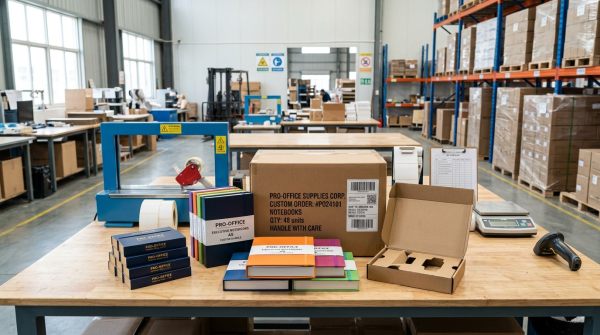
- Packaging durability: Outer cartons, inner packs, barcode labels, and shipping marks should match your logistics needs.
- Defect tolerance: Define AQL standards, acceptable cosmetic deviation, and rework procedures before order confirmation.
For repeat programs, ask the office supplies manufacturer how they control batch variation. Strong factories can explain incoming material inspection, process checks, final inspection, and corrective action workflows with confidence.
How to Reduce Compliance and Product Safety Risks
Compliance is one of the most underestimated issues in office supplies B2B sourcing. Depending on the destination market and product type, buyers may need to evaluate chemical safety, labeling, packaging regulations, child-use considerations, and environmental claims.
Do not rely on vague statements such as “our products meet international standards.” Instead, ask targeted questions:
- Which test reports are available for this exact product or material?
- Are reports current, product-specific, and issued by recognized laboratories?
- Can the supplier support market-specific requirements in the EU, US, UK, Middle East, or other target regions?
- Are inks, coatings, adhesives, plastics, and metal finishes traceable to approved materials?
- Can packaging and labels be customized to meet importer and retail compliance requirements?
If a supplier struggles to provide clear and recent documentation, buyers should slow down. Compliance gaps can create customs problems, retail rejection, legal exposure, and damage to distributor relationships.
Why OEM and Customization Projects Require Extra Caution
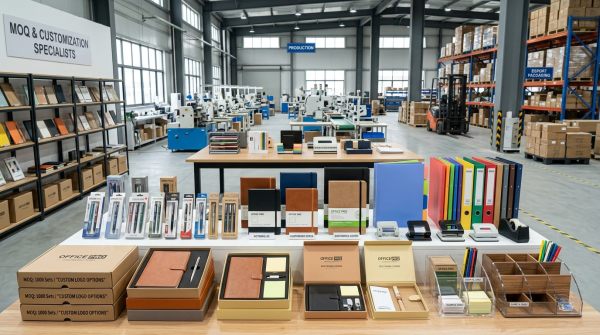
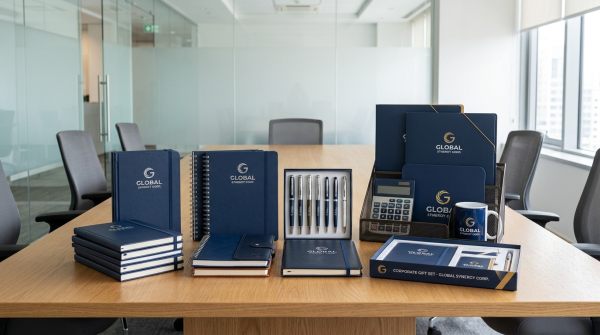
Custom office supplies sourcing often looks attractive because it supports private label growth, margin improvement, and channel differentiation. But OEM and ODM projects carry more risk than standard catalog purchases.
The main issues usually involve artwork accuracy, packaging mistakes, color mismatch, mold limitations, intellectual property concerns, and unrealistic production promises. A supplier may be strong at standard products but weak in customized execution.
To reduce OEM risk, buyers should confirm:
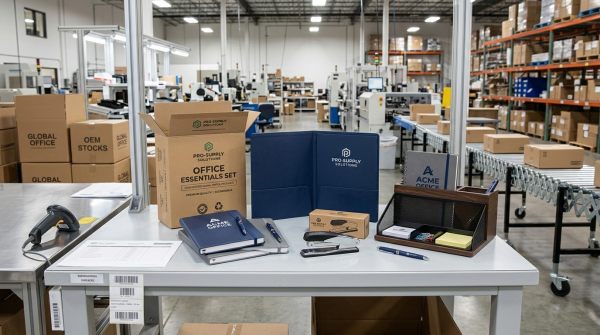
- Whether the factory has dedicated design and pre-press support
- How approval is handled for artwork, color references, and packaging dielines
- Whether there is a signed golden sample before mass production
- What the mold ownership and usage terms are for custom components
- How order changes are controlled once production begins
- Whether confidential branding information is protected
If your brand depends on visual consistency, request a formal pre-production approval process. This single step prevents a large share of avoidable disputes.
How to Evaluate Delivery Reliability Before It Becomes a Problem
Late delivery can be more damaging than moderate price differences, especially for institutional procurement, retail season launches, or distributor replenishment cycles. Buyers should assess delivery capability before they negotiate price too aggressively.
Important questions include:
- What is the normal lead time for this product in low and peak seasons?
- Which raw materials are stocked and which are purchased per order?
- How much reserve capacity does the factory actually have?
- How are urgent orders handled?
- What percentage of shipments were delivered on time in recent months?
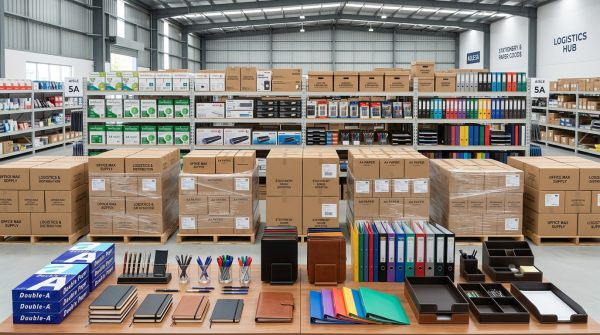
- Who manages booking, export documentation, and loading coordination?
A reliable office supplies supplier should be able to explain production planning in practical terms. Buyers should be cautious if every lead time sounds unusually short or if the answers change during negotiation.
Price Is Important, but the Lowest Quote Often Creates the Highest Risk
Many sourcing failures start with an attractive quotation. Low pricing can reflect real manufacturing efficiency, but it can also indicate downgraded materials, thin quality control, unstable labor arrangements, missing compliance costs, or unrealistic assumptions.
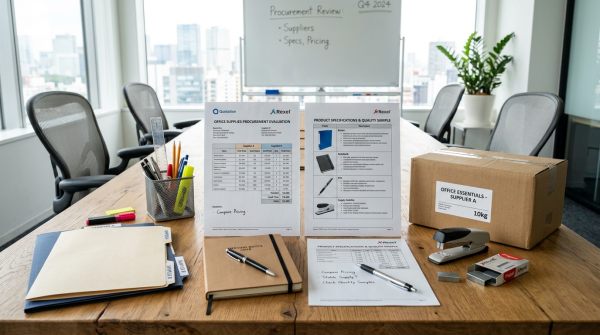
When comparing office supplies manufacturers, analyze total procurement risk, not just unit price. A quote should be reviewed against:
- Material and specification alignment
- Included testing or certification cost
- Packaging standard
- Tooling or setup charges
- Sampling policy
- Inspection terms
- Payment structure
- Claims and after-sales handling
If one supplier is significantly cheaper than others, ask why. The answer is often more important than the discount.
What a Safe Factory Evaluation Process Looks Like
For buyers who want a practical method, a safer sourcing process usually follows a staged evaluation model rather than a one-step selection.
- Initial screening: Review product focus, export history, certifications, and communication quality.
- Capability validation: Confirm factory role, category experience, and production equipment.
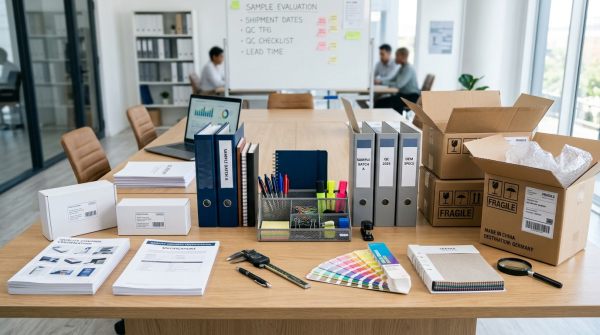
- Sample evaluation: Test quality, packaging, functionality, and consistency.
- Compliance check: Review documents, testing, labeling, and market-specific requirements.
- Commercial negotiation: Clarify pricing logic, MOQ, payment terms, and delivery conditions.
- Pilot order: Start with a smaller controlled order before long-term commitment.
- Performance review: Measure defect rate, response speed, on-time delivery, and claim handling.
This approach gives procurement teams real evidence before they increase exposure.
Red Flags That Should Not Be Ignored
Even experienced buyers sometimes continue with a supplier despite obvious warning signs because the quote is good or the sample arrived quickly. That often leads to avoidable loss later.
Major red flags include:
- Inconsistent company identity across documents, email domains, and bank details
- Slow or evasive answers about production location and subcontracting
- Test reports that do not match the actual product
- Repeated changes in lead time or MOQ during negotiation
- Reluctance to define quality standards in writing
- Unclear complaint resolution process
- Pressure to move quickly without proper sample or specification approval
One red flag may not end the opportunity, but several together usually indicate a higher-risk office supplies factory relationship.
How Distributors and Commercial Buyers Can Protect Themselves Contractually
Factory selection is only one part of risk control. Contracts, purchase orders, and quality agreements should also protect the buyer if something goes wrong.
At minimum, documentation should clearly define:
- Approved product specifications and quality standards
- Packaging and labeling requirements
- Inspection rights and acceptance criteria
- Delivery terms and delay responsibilities
- Claim timelines and replacement or compensation methods
- Confidentiality and intellectual property terms for custom products
- Restrictions or approval rules for subcontracting if relevant
For larger programs, buyers may also use third-party inspection, production monitoring, and periodic supplier scorecards to maintain control over long-term performance.
Choosing the Right Partner Means Balancing Cost, Capability, and Trust
The best office supplies manufacturer is not always the largest, cheapest, or fastest to respond. The right partner is the one whose real capabilities match your product requirements, compliance obligations, commercial goals, and service expectations.
For sourcing teams, the smartest way to avoid risk is to make supplier evaluation evidence-based. Verify the factory role, test product consistency, review compliance carefully, assess delivery systems, and structure contracts around measurable expectations.
In global office supplies B2B trade, good sourcing decisions are rarely based on price alone. They are built on operational transparency, category expertise, and dependable execution.
If you are evaluating an office supplies supplier, office supplies wholesaler, or office supplies factory for long-term procurement, the safest approach is simple: ask deeper questions early, validate what matters most, and treat risk prevention as part of the buying strategy, not as an afterthought.
Search News
Hot Articles
- Stage Lighting & Truss2026 FIBA Women's World Cup Draw Sets LED Timing Screen RequirementsApr 27, 2026
- Hotel Room AmenitiesIranian Delegation’s Ritual Gesture at Sanya ASG Sparks Mideast Hospitality Procurement ShiftApr 27, 2026
- Arcade & VR MachinesSnooker World Championship 'China Derby' Drives VR Viewing DemandApr 27, 2026
Popular Tags
Need ExpertConsultation?
Connect with our specialized leisureengineering team for procurementstrategies.
Recommended News
 Apr 28, 2026How to Shortlist an Office Supplies WholesalerOffice supplies wholesaler selection starts with the right criteria. Learn how to compare an office supplies supplier, distributor, or manufacturer for cost, quality, compliance, and scalable B2B sourcing.● Institutional Buyer
 Apr 28, 20262026 Office Supplies Supplier Trends to WatchExplore 2026 office supplies supplier trends and learn how every office supplies wholesaler, distributor, and manufacturer can improve sourcing, compliance, fulfillment, and OEM growth.● Institutional Buyer
 Apr 28, 2026What to Check Before Choosing an ExporterOffice supplies supplier and exporter checklist: compare quality, compliance, lead times, MOQ, and service to choose a reliable office supplies manufacturer or wholesaler with confidence.● Institutional Buyer
 Apr 28, 2026Can an Office Supplies Producer Improve MarginsCan an office supplies producer improve margins? Learn how an office supplies manufacturer, supplier, and exporter boosts profit through smarter sourcing, lean production, and OEM value.● Institutional Buyer
 Apr 28, 2026How Bulk Suppliers Handle Custom PackingOffice supplies supplier insights: learn how an office supplies wholesaler, distributor, or OEM manufacturer manages custom packing to reduce risk, control cost, and improve delivery.● Institutional Buyer
 Apr 28, 2026Office Supplies OEM Manufacturer Pros and ConsOffice supplies OEM manufacturer pros and cons explained for every office supplies supplier, wholesaler, distributor, and B2B buyer—compare cost, quality, MOQ, and delivery before sourcing.● Institutional Buyer
 Apr 28, 2026Who Needs an Office Supplies B2B SupplierOffice supplies supplier guide for procurement teams, distributors, and institutions. Learn when to choose an office supplies wholesaler or manufacturer for stable supply and better B2B sourcing.● Institutional Buyer
 Apr 28, 2026How to Avoid Risks With Office Supplies FactoriesOffice supplies supplier risk guide: learn how to vet an office supplies manufacturer, wholesaler, distributor, or factory for quality, compliance, OEM reliability, and on-time delivery.● Institutional Buyer
 Apr 27, 2026Office Supplies Manufacturer MOQ ExplainedOffice supplies manufacturer MOQ explained: compare an office supplies supplier, wholesaler, distributor, OEM manufacturer, and factory to reduce cost, improve flexibility, and source smarter.● Institutional Buyer
 Apr 27, 2026Distributor or Supplier for Fast ReordersOffice supplies supplier or distributor for fast reorders? Compare lead times, stock stability, and bulk supply options to choose a reliable office supplies B2B supplier.● Institutional Buyer
 Apr 27, 2026How Wholesalers Cut Office Supply CostsOffice supplies supplier and office supplies wholesaler solutions help cut costs through bulk buying, OEM options, and smarter sourcing. Compare distributors and manufacturers to save more.● Institutional Buyer
 Apr 27, 2026Office Supplies Supplier Pricing Red FlagsOffice supplies supplier pricing red flags explained: compare an office supplies wholesaler, distributor, or manufacturer, spot hidden risks, and choose a reliable B2B partner with confidence.● Institutional Buyer
 Apr 27, 2026How to Vet an Office Supplies ExporterOffice supplies supplier vetting made simple: learn how to assess an office supplies exporter, manufacturer, wholesaler, and distributor for quality, compliance, and reliable B2B growth.● Institutional Buyer
 Apr 27, 2026What to Ask an Office Supplies Producer FirstOffice supplies supplier screening starts with the right questions. Learn how to evaluate an office supplies manufacturer, wholesaler, or producer on quality, OEM, compliance, pricing, and delivery.● Institutional Buyer
 Apr 27, 2026How to Compare Office Supplies Bulk SuppliersCompare every office supplies supplier model—wholesaler, distributor, OEM manufacturer, and bulk supplier—to evaluate quality, compliance, lead times, and costs for smarter B2B sourcing.● Institutional Buyer
 Apr 27, 2026Is an Office Supplies OEM Manufacturer Worth ItOffice supplies OEM manufacturer or standard sourcing? Compare an office supplies supplier, wholesaler, and distributor to find the best B2B fit for cost, branding, and scalable growth.● Institutional Buyer
 Apr 27, 2026Best Office Supplies B2B Supplier for ScaleFind the best office supplies B2B supplier for scale. Compare an office supplies supplier, wholesaler, distributor, and OEM manufacturer to secure reliable bulk sourcing and growth.● Institutional Buyer
 Apr 27, 2026Office Supplies Factory Audit ChecklistOffice supplies factory audit checklist for choosing a reliable office supplies manufacturer, supplier, or OEM partner. Learn key quality, compliance, and capacity checks before sourcing.● Institutional Buyer
 Apr 27, 2026When to Work With an Office Supplies ManufacturerOffice supplies manufacturer or office supplies supplier? Learn when to source direct, compare wholesaler vs OEM options, and improve cost, quality, and supply stability.● Institutional Buyer
 Apr 27, 2026What Makes a Reliable Office Supplies DistributorDiscover what sets a reliable office supplies distributor apart. Compare an office supplies supplier, wholesaler, or B2B supplier by quality, lead times, inventory, and global delivery.● Institutional Buyer
 Apr 27, 2026Office Supplies Wholesaler vs DistributorOffice supplies wholesaler vs distributor: learn how an office supplies supplier, distributor, or manufacturer impacts pricing, lead time, and growth—choose the best B2B sourcing model.● Institutional Buyer
 Apr 27, 2026How to Choose an Office Supplies SupplierLearn how to choose the right office supplies supplier by comparing an office supplies wholesaler, distributor, manufacturer, or B2B supplier for quality, price, delivery, and growth.● Institutional Buyer
 Apr 24, 2026How to Pick Educational Supplies by AgeEducational supplies by age: discover how commercial furniture, sensory playground designs, playground safety, climbers, borders, music accessories, hotel tables and amusement equipment improve ROI.● Institutional Buyer
 Apr 24, 2026Educational Supplies That Schools Reorder MostEducational supplies schools reorder most: from commercial furniture support and music accessories to playground safety, playground borders, and sensory playground essentials—discover high-demand categories buyers need year-round.● Institutional Buyer